2025-11-12 12:26
BERLIN, Nov 12 (Reuters) - The German government is considering acquiring a 25.1% minority stake in electricity grid operator TenneT's German unit, an economy ministry spokesperson said on Wednesday, for which it plans to allocate several billion euros in the 2026 budget. With more than 14,000 km (8,700 miles) of power lines, TenneT Germany is the country's biggest operator of high-voltage transmission grids, upgrades of which have been key to strengthening grids during times of more input from renewables. Sign up here. Germany already holds minority participation in high-voltage power grids TransnetBW (EBKG.DE) , opens new tab and 50Hertz (ELI.BR) , opens new tab. "We see potential for an economically sensible investment" and the opportunity to contribute to a stable financing structure for the unit and grid expansion, said the spokesperson. According to a finance ministry document seen by Reuters, Germany plans to allocate up to 7.6 billion euros ($8.9 billion) in the coming years towards acquiring a stake in the unit. The document foresees around 102 million euros in expenditures for 2026 and makes commitments for the following years with the remaining 7.48 billion euros. The funds are initially subject to a budget freeze and may only be released with the approval of the budget committee. The spokesperson said the draft provisions do not mean a decision has been made, and if the acquisition were to take place via state-owned lender KfW (KFW.UL), only refinancing costs in the low three-figure millions would affect the budget. The Dutch government said in September it is selling 46% of the unit to an investor consortium, following an unsuccessful attempt to sell it to Berlin last year under the previous government. The Handelsblatt business newspaper first reported on Wednesday on the inclusion of the TenneT unit in ministry budget documents. ($1 = 0.8575 euros) https://www.reuters.com/business/energy/germany-set-aside-76-bln-euros-tennet-germany-stake-2025-11-12/

2025-11-12 12:09
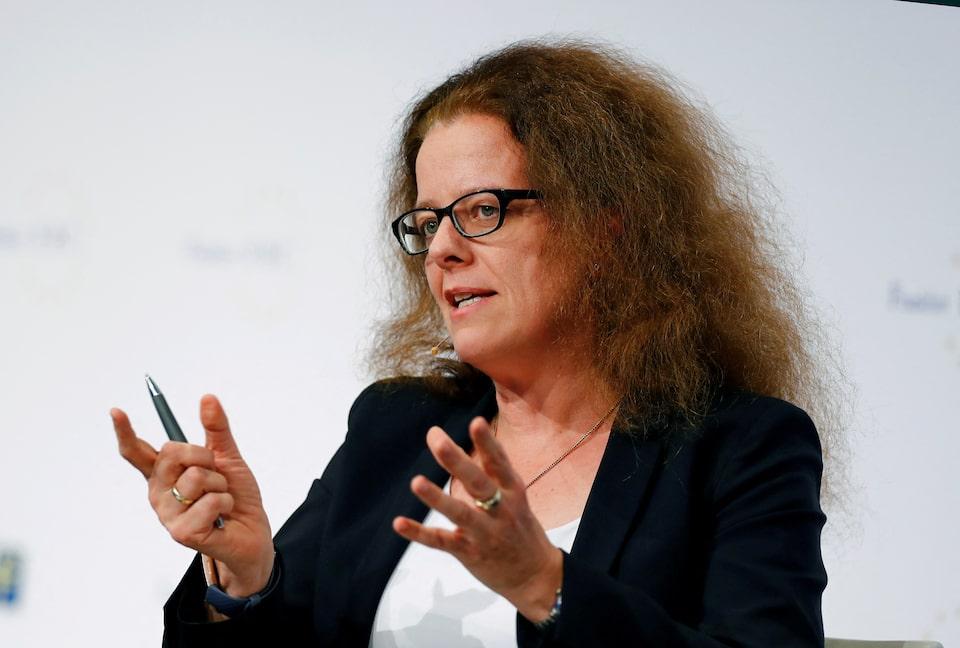
FRANKFURT, Nov 12 (Reuters) - Euro zone inflation is unlikely to fall too low and risks may actually be skewed toward higher than forecast readings, but the European Central Bank can tolerate small target deviations, ECB board member Isabel Schnabel said on Wednesday. Euro zone inflation has been holding around the bank's 2% target for most of this year but may slip below it next year, fuelling a debate about the risk of a more persistent undershooting, much like in the pre-pandemic decade. Sign up here. Schnabel, an outspoken hawk, dismissed such worries and argued that many of the factors which could have pulled price growth too low are showing rather benign developments. "My narrative is one of an economy that is recovering, with a closing output gap, expecting a significant fiscal impulse, which stimulates the economy," Schnabel told a BNP Paribas conference. "And all of that is not an economy that produces disinflationary pressures," Schnabel said. "If anything, it goes in the other direction." The exchange rate, which curbs imported inflation, has now stabilized, while fears that China would dump surplus export goods on the bloc are also not materialising. "Actually, exports from China to the EU are actually now going down," Schnabel said. "So far this risk hasn't materialised." She argued that geopolitical fragmentation may push up costs and the same goes for supply chain disruptions, like the loss of access to rare earths. Food price inflation is also relatively high and wage growth has come down more slowly than thought, she added. "Overall, this leads me to the conclusion that, if anything, risks are rather tilted a little bit to the upside," she said. https://www.reuters.com/business/euro-zone-inflation-risks-may-be-tilted-upside-schnabel-argues-2025-11-12/
2025-11-12 11:59
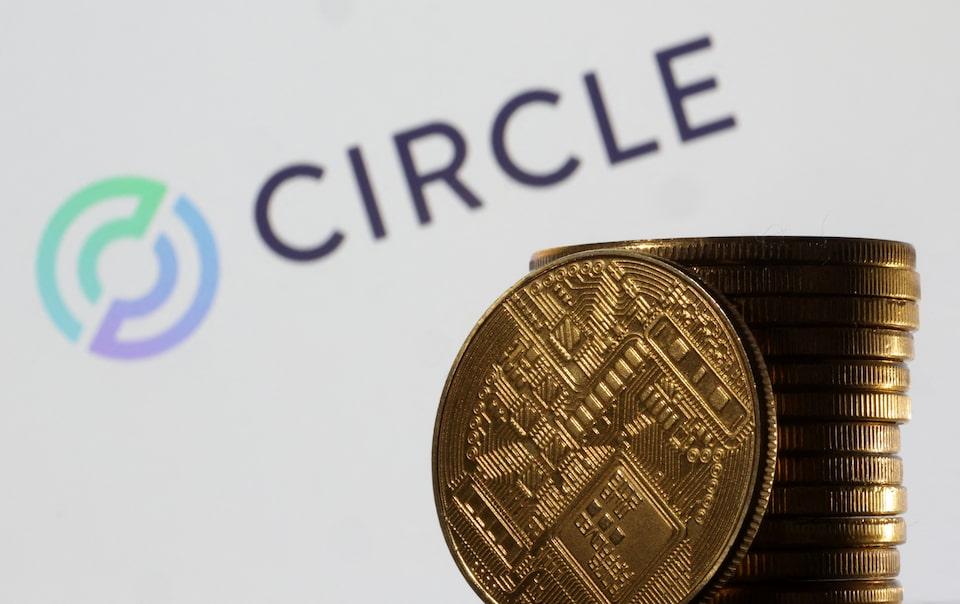
Nov 12 (Reuters) - Circle's (CRCL.N) , opens new tab third-quarter profit beat Wall Street expectations on Wednesday, driven by higher reserve income amid rising circulation of its flagship stablecoin, but shares fell on concerns over potential competition and valuation. Global adoption of stablecoins — digital tokens backed by low-risk assets such as the U.S. dollar or Treasuries — is gaining momentum as traditional financial firms roll out new offerings in the space and regulators worldwide move toward clearer rules. Sign up here. The Trump administration, which has pledged to position the U.S. as a global leader in cryptocurrency, enacted the Genius Act earlier this year, establishing a legal framework for regulating dollar-backed stablecoins aimed at enhancing the safety of digital payments. "This isn't just crypto speculation anymore, this is the plumbing of digital finance getting laid brick by brick," said David Bartosiak, stock strategist at Zacks Investment Research. Circulation of USDC more than doubled from a year earlier to $73.7 billion in the third quarter. Circle, the issuer of USDC, earns reserve income from investing the fiat reserves that back its stablecoin. The company posted adjusted earnings of 36 cents per share, beating analysts' estimates of 22 cents, according to data compiled by LSEG. Total revenue, including reserve income, jumped 66% to $739.8 million. In recent months, Circle has struck partnerships with traditional financial institutions and rolled out several initiatives to boost USDC circulation. The company's shares fell 10% on Wednesday. The stock has more than tripled over its IPO price since its listing in June, despite recent weakness. U.S. Tiger Securities analyst Bo Pei attributed the stock decline to Circle's revised annual gross margin outlook of 38%, which implied a weaker fourth quarter. "It (stock move) could be due to the still elevated expectation for the growth of USDC reflected in valuation, as well as the potential launch of Arc native token which could impact the adoption of USDC," Owen Lau, managing director at Clear Street, told Reuters. https://www.reuters.com/business/circle-quarterly-revenue-rises-stablecoin-growth-2025-11-12/
2025-11-12 11:46
SAO PAULO, Nov 12 (Reuters) - Brazil's fiscal balance will become a top priority from 2027 regardless of the outcome of next year's presidential election, Goldman Sachs' head of Latin America macroeconomic research, Alberto Ramos, told Reuters. Even if President Luiz Inacio Lula da Silva secures a fourth non-consecutive term, fiscal policy will need to shift from the current approach, which has seen rising revenues alongside increased spending. Sign up here. "A fourth Lula term cannot repeat his third term's fiscal management," Ramos said, warning of potential market volatility or even a financial crisis. Brazil's current fiscal targets include a zero primary result for 2025 and a surplus of 0.25% of gross domestic product (GDP) in 2026, with a tolerance margin of 0.25 percentage points – meaning that in the worst-case scenario, the government could post a 0.25% deficit this year and still meet its goal. However, Goldman Sachs estimates Brazil needs a primary surplus above 2.5% of GDP to reverse its rising debt trajectory. Ramos said a fiscal adjustment of 3 percentage points of GDP is still required. Central bank data shows gross public debt reached 78.1% of GDP in September, the highest since November 2021. It stood at 71.7% at the end of former president Jair Bolsonaro's term. Treasury projections show debt rising to 84.2% of GDP by end-2028 before declining. Ramos cautioned that stabilizing debt at high levels could leave Brazil vulnerable to future shocks. Recent polls show Lula leading the 2026 race. Ramos noted that markets may rally if an opposition candidate gains traction, but emphasized that investors respond to sound policies, not ideology. On monetary policy, Goldman expects the central bank to begin cutting the Selic benchmark rate, currently at 15%, in January, though Ramos sees a chance of a delay to March or later, citing resilient activity and election-year spending. https://www.reuters.com/world/americas/brazils-fiscal-discipline-crucial-post-2026-election-warns-goldman-sachs-2025-11-12/

2025-11-12 11:45
Wakatabe, Nagahama appointed as private-sector members of top economic panel New stimulus must exceed last year's in size, both say PM Takaichi's expansionary agenda could complicate BOJ policy TOKYO, Nov 12 (Reuters) - Two newly appointed members of the Japanese government's top economic panel called on Wednesday for an economic stimulus package larger than last year's, highlighting a stronger reflationist sway on fiscal policy under the new administration. Former Bank of Japan Deputy Governor Masazumi Wakatabe and Toshihiro Nagahama, chief economist at Dai-ichi Life Research Institute, both known advocates of former Prime Minister Shinzo Abe's "Abenomics" stimulus, now serve as two of the four private-sector members on the Council of Economic and Fiscal Policy. Sign up here. At the panel's first meeting since Prime Minister Sanae Takaichi's administration kicked in, Wakatabe and Nagahama both said the planned economic stimulus must exceed last year's 13.9 trillion yen ($92.2 billion). NEW PM VOWS TO WORK WITH BOJ TO BOOST ECONOMY "Expectations for proactive fiscal policy could weaken if the general account expenditure for the package fails to exceed the previous year's level," Nagahama said. The package will focus on measures to cushion the blow to households from the rising cost of living, investment in crisis management and growth areas, as well as steps to boost Japan's defence capabilities. At the end of the meeting, Takaichi stressed that the government would work with the BOJ to revitalise the economy. "It is extremely important that appropriate monetary policy management be carried out to achieve both future economic growth and stable price increases," Takaichi told the meeting. As the government's top economic panel, the council lays out Japan's long-term fiscal blueprint and policy priorities. Key economic ministers and the BOJ governor participate in the discussions. The Takaichi administration's focus on expansionary policies could complicate the BOJ's decision on how soon to resume a rate-hike cycle that has been paused due to uncertainty over the economic fallout from higher U.S. tariffs. Wakatabe and Nagahama both cited a likely sharp GDP contraction in the July–September quarter as signs of economic deterioration that underscore the need for aggressive stimulus measures. A Reuters poll showed Japan's gross domestic product, due for release on Monday, likely shrank an annualised 2.5% in the third quarter, the first contraction in six quarters driven by a hit to exports from U.S. tariffs. Japanese stock prices have risen since Takaichi was elected the nation's first female prime minister on October 21 on market expectations that her administration will ramp up spending to revive the economy. Wakatabe, a long-time proponent of reflationary policy, emphasized the need to move beyond deflation-era fiscal thinking. He urged policymakers to abandon the single-year budget principle in favour of multi-year investment planning with some room for deficits, echoing Takaichi's own calls for such a shift. Wakatabe also emphasised the importance of close coordination between fiscal and monetary policy, citing Article 4 of the Bank of Japan Act, which calls for policy alignment to ensure stable and sustainable economic growth. ($1 = 150.7800 yen) https://www.reuters.com/world/asia-pacific/new-reflationist-members-japans-top-economic-panel-push-big-stimulus-2025-11-12/

2025-11-12 11:42
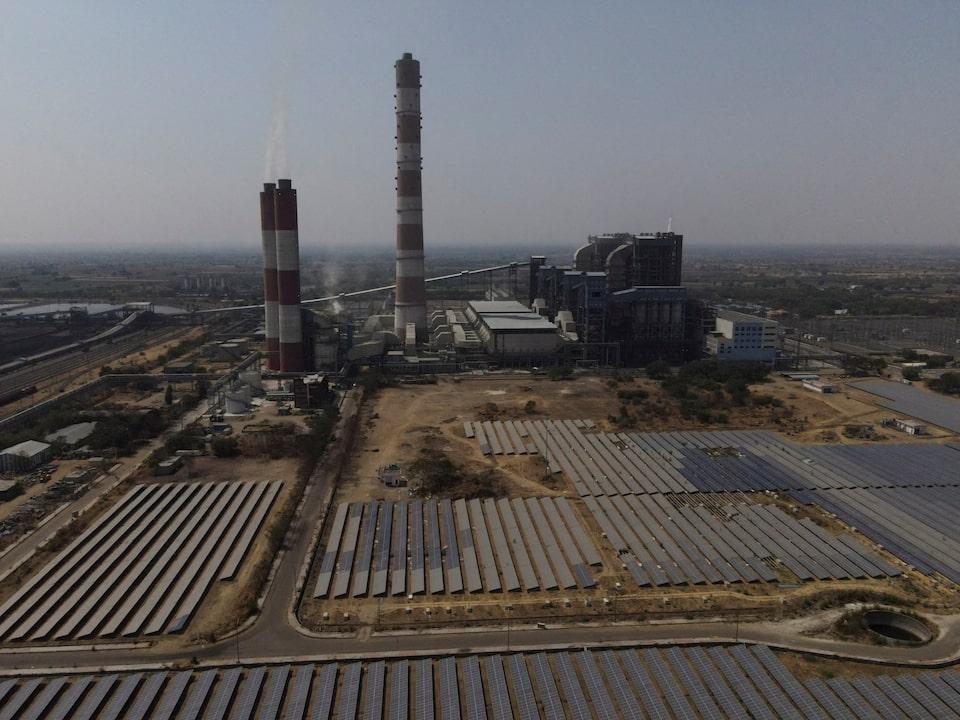
NEW DELHI, Nov 12 (Reuters) - Indian coal power giant NTPC (NTPC.NS) , opens new tab is looking to enter the coal gasification business with a plan to start producing 5-10 million tonnes per annum of synthetic gas over the next three-four years, a source familiar with the move said on Wednesday. The tender for technical consultation for the project is expected within this fiscal year ending March 31 and the company is looking at sites for the project, the source said. Sign up here. NTPC, which also uses coal from its own mines, is looking to use coal for producing synthetic gas, the source said. India in 2024 approved plans to provide incentives worth 85 billion rupees ($967.06 million) for projects to convert coal into gas, that could be used for fertilisers and petrochemical projects. India aims to gasify 100 million tonnes of coal by 2030. Globally, several countries are looking to explore coal gasification technology, including the United States, as a part of reducing emissions. NTPC has also started scouting land for nuclear projects in 16 indian states as a part of its plan to build 30 gigawatts of nuclear portfolio, the source said. India is seeking to expand its nuclear power generation capacity to at least 100 gigawatts by 2047, up from just over 8 gigawatts currently. NTPC's projects would range from 700 megawatt to 1600 MW and will be using multiple technologies as a part of the process, the source said. NTPC did not immediately respond to Reuters request seeking comment. The cost of 1 gw of nuclear project is estimated at around 150 billion rupees to 200 billion rupees. ($1 = 87.8950 Indian rupees) https://www.reuters.com/sustainability/climate-energy/indias-power-giant-ntpc-plans-enter-coal-gasification-business-source-says-2025-11-12/