2025-11-12 11:45
Wakatabe, Nagahama appointed as private-sector members of top economic panel New stimulus must exceed last year's in size, both say PM Takaichi's expansionary agenda could complicate BOJ policy TOKYO, Nov 12 (Reuters) - Two newly appointed members of the Japanese government's top economic panel called on Wednesday for an economic stimulus package larger than last year's, highlighting a stronger reflationist sway on fiscal policy under the new administration. Former Bank of Japan Deputy Governor Masazumi Wakatabe and Toshihiro Nagahama, chief economist at Dai-ichi Life Research Institute, both known advocates of former Prime Minister Shinzo Abe's "Abenomics" stimulus, now serve as two of the four private-sector members on the Council of Economic and Fiscal Policy. Sign up here. At the panel's first meeting since Prime Minister Sanae Takaichi's administration kicked in, Wakatabe and Nagahama both said the planned economic stimulus must exceed last year's 13.9 trillion yen ($92.2 billion). NEW PM VOWS TO WORK WITH BOJ TO BOOST ECONOMY "Expectations for proactive fiscal policy could weaken if the general account expenditure for the package fails to exceed the previous year's level," Nagahama said. The package will focus on measures to cushion the blow to households from the rising cost of living, investment in crisis management and growth areas, as well as steps to boost Japan's defence capabilities. At the end of the meeting, Takaichi stressed that the government would work with the BOJ to revitalise the economy. "It is extremely important that appropriate monetary policy management be carried out to achieve both future economic growth and stable price increases," Takaichi told the meeting. As the government's top economic panel, the council lays out Japan's long-term fiscal blueprint and policy priorities. Key economic ministers and the BOJ governor participate in the discussions. The Takaichi administration's focus on expansionary policies could complicate the BOJ's decision on how soon to resume a rate-hike cycle that has been paused due to uncertainty over the economic fallout from higher U.S. tariffs. Wakatabe and Nagahama both cited a likely sharp GDP contraction in the July–September quarter as signs of economic deterioration that underscore the need for aggressive stimulus measures. A Reuters poll showed Japan's gross domestic product, due for release on Monday, likely shrank an annualised 2.5% in the third quarter, the first contraction in six quarters driven by a hit to exports from U.S. tariffs. Japanese stock prices have risen since Takaichi was elected the nation's first female prime minister on October 21 on market expectations that her administration will ramp up spending to revive the economy. Wakatabe, a long-time proponent of reflationary policy, emphasized the need to move beyond deflation-era fiscal thinking. He urged policymakers to abandon the single-year budget principle in favour of multi-year investment planning with some room for deficits, echoing Takaichi's own calls for such a shift. Wakatabe also emphasised the importance of close coordination between fiscal and monetary policy, citing Article 4 of the Bank of Japan Act, which calls for policy alignment to ensure stable and sustainable economic growth. ($1 = 150.7800 yen) https://www.reuters.com/world/asia-pacific/new-reflationist-members-japans-top-economic-panel-push-big-stimulus-2025-11-12/

2025-11-12 11:42
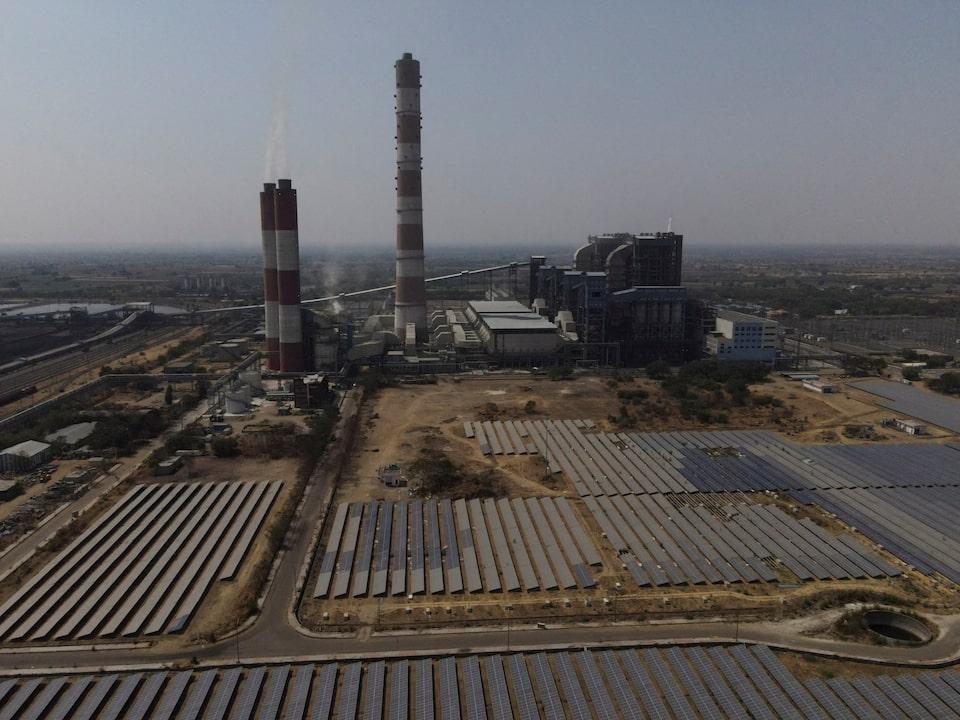
NEW DELHI, Nov 12 (Reuters) - Indian coal power giant NTPC (NTPC.NS) , opens new tab is looking to enter the coal gasification business with a plan to start producing 5-10 million tonnes per annum of synthetic gas over the next three-four years, a source familiar with the move said on Wednesday. The tender for technical consultation for the project is expected within this fiscal year ending March 31 and the company is looking at sites for the project, the source said. Sign up here. NTPC, which also uses coal from its own mines, is looking to use coal for producing synthetic gas, the source said. India in 2024 approved plans to provide incentives worth 85 billion rupees ($967.06 million) for projects to convert coal into gas, that could be used for fertilisers and petrochemical projects. India aims to gasify 100 million tonnes of coal by 2030. Globally, several countries are looking to explore coal gasification technology, including the United States, as a part of reducing emissions. NTPC has also started scouting land for nuclear projects in 16 indian states as a part of its plan to build 30 gigawatts of nuclear portfolio, the source said. India is seeking to expand its nuclear power generation capacity to at least 100 gigawatts by 2047, up from just over 8 gigawatts currently. NTPC's projects would range from 700 megawatt to 1600 MW and will be using multiple technologies as a part of the process, the source said. NTPC did not immediately respond to Reuters request seeking comment. The cost of 1 gw of nuclear project is estimated at around 150 billion rupees to 200 billion rupees. ($1 = 87.8950 Indian rupees) https://www.reuters.com/sustainability/climate-energy/indias-power-giant-ntpc-plans-enter-coal-gasification-business-source-says-2025-11-12/
2025-11-12 11:34
Nov 12 - What matters in U.S. and global markets today By Mike Dolan , opens new tab, Editor-At-Large, Finance and Markets Sign up here. Markets have already effectively priced in the U.S. government's reopening on Monday, with today's House vote to restore funding , opens new tab through January seen as a formality. Attention has now turned more to tech sector wobbles and the deluge of delayed economic data now due. Veterans Day stock market trading was relatively subdued, even though the S&P500 eked out a modest gain and the Dow Jones Industrial Average clocked a new record high. Unusually, the tech sector underperformed and the Nasdaq ended in the red - unnerved by CoreWeave's 16% slide on data center flubs and as SoftBank's sale of its stake in Nvidia knocked back the world's most valuable company by more than 2%. SoftBank's shares slid as much as 10% in Tokyo on Wednesday as Nvidia highlighted the scale of the funding demands it faces to bankroll an "all-in" bet on ChatGPT-creator OpenAI. And Japan was volatile for other reasons - with the yen sliding to a nine-month low of 154.9 per dollar after new Prime Minister Sanae Takaichi once again urged the Bank of Japan not to be overzealous in raising interest rates. The yen move was arrested somewhat by comments from Finance Minister Satsuki Katayama, who warned about the negative effects of "one-sided and rapid movements" in the currency. Currency traders doubt intervention alarm bells will ring before the yen hits 160 - but that level is fast approaching. Asian and European shares were higher and Wall Street stock futures in positive territory ahead of Wednesday's bell, however. The prospect of a reopening of the federal government came against another set of mixed signals on the U.S. economy, with weekly updates of ADP's preliminary payroll figures showing private sector employers shed an average of 11,250 jobs a week through October. That cosseted persistent speculation the Fed will cut interest rates again next month, with futures clinging to a two-thirds chance of another move in December despite clear disquiet in some parts of the central bank about further easing. A slew of Fed officials are on Wednesday's speaking diary, including resident board doves Christopher Waller and Stephen Miran. Treasury Secretary Scott Bessent is also due to address a joint Fed-Treasury conference later in the day. After Tuesday's holiday, Treasury markets reopen with yields under wraps ahead of today's 10-year note auction. President Donald Trump is expected to host a private dinner at the White House with several top business executives, including the chief executives of Nasdaq and JPMorgan Chase. Aside from its move against the yen, the dollar was flatter against the euro and other currencies on Wednesday. The Swiss franc continued to push higher on reports that U.S. tariffs on Swiss imports will be slashed to 15% from 39%. Britain's pound and government bond prices weakened in tandem, meanwhile, on overnight reports that Prime Minister Keir Starmer may face a leadership challenge from within his own Labour Party. Health minister Wes Streeting denied he was plotting to bring down Starmer after unnamed allies of the prime minister claimed a leadership bid could come after this month's critical government budget. In today's column, I argue that Europe's equity outperformance this year has been flattered by currency shifts, so the long-term test of its companies and economy rests on how it fosters its emerging tech ecosystem , opens new tab. Today's Market Minute Chart of the day SoftBank's shares slid as much as 10% on Wednesday after a $5.8 billion sale of its stake in Nvidia highlighted the growing funding demands it faces to bankroll an "all-in" bet on ChatGPT creator OpenAI and other investments. The conglomerate needs to fund a $22.5 billion follow-on investment in OpenAI, is acquiring chipmaker Ampere in a $6.5 billion deal and has agreed to buy the robotics business of Swiss group ABB for $5 billion. A total spending commitment of $41 billion compares with the group's $28 billion cash position as of September. Today's events to watch * Canada September building permits (8:30 AM EDT) * Republican-controlled U.S. House of Representatives to vote Wednesday afternoon on restoring funding to government agencies and ending a shutdown now in its 42nd day * Federal Reserve Board Governors Christopher Waller, Stephen Miran and Michael Barr all speak, New York Fed President John Williams, Philadelphia Fed President Anna Paulson, Boston Fed chief Susan Collins and Atlanta Fed boss Raphael Bostic all speak; European Central Bank Vice-President Luis de Guindos and ECB board member Isabel Schnabel speak; Bank of England chief economist Huw Pill and BoE's Director for Financial Stability, Strategy and Risk Lee Foulger speak * Treasury Secretary Scott Bessent speaks at 2025 U.S. Treasury Market Conference (10:45 AM EDT) * U.S. Treasury sells $42 billion of 10-year notes * U.S. corporate earnings: Cisco, TransDigm * U.S. Securities and Exchange Commission chair Paul Atkins speaks about SEC's "Project Crypto" * Euro zone finance ministers meet in Brussels, with European Central Bank President Christine Lagarde, ECB board member Piero Cipollone and ECB chief supervisor Claudia Buch all attending. Want to receive the Morning Bid in your inbox every weekday morning? Sign up for the newsletter here. You can find ROI on the Reuters website , opens new tab, and you can follow us on LinkedIn , opens new tab and X. , opens new tab Opinions expressed are those of the author. They do not reflect the views of Reuters News, which, under the Trust Principles , opens new tab, is committed to integrity, independence, and freedom from bias. https://www.reuters.com/business/finance/global-markets-view-usa-2025-11-12/

2025-11-12 11:27
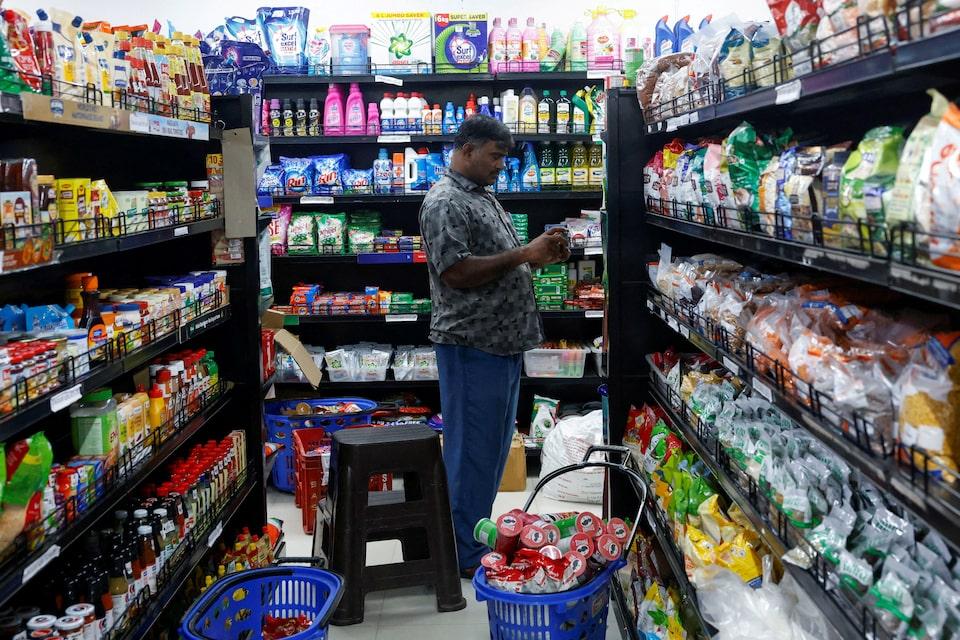
October retail inflation at record low of 0.25% Food prices fall a record 5.02% y/yCore inflation at 4.4% on higher gold pricesEconomists expect rate cut by RBI in December review NEW DELHI, Nov 12 (Reuters) - India's retail inflation (INCPIY=ECI) , opens new tab slumped to a record low of 0.25% in October, driven by a sharp fall in food prices and tax cuts on consumer goods, paving the way for a rate cut by the central bank in December. Low inflation, declining interest rates and consumer tax cuts are seen offsetting pressure on Asia's third-largest economy after the U.S. imposed punitive tariffs on Indian exports. The economy, which grew at 7.8% in the April-June period is seen slowing over the second half of this year. Sign up here. Inflation in October was below the Reserve Bank of India's 2%-6% tolerance band for a second month in a row. The central bank is mandated to ensure that inflation does not remain outside of its tolerance range for more than three consecutive quarters. Inflation for September was also revised marginally lower to 1.44%. A Reuters poll had projected October inflation at 0.48%. "We see FY26 CPI below 2% paving way for a December 2025 rate cut by the RBI and see another 25-basis-point cut in February 2026," said Garima Kapoor of Elara Securities. The decline in headline inflation and food inflation during the month is mainly due to the full impact of consumer tax cuts, the government said in a statement. India in late September slashed goods and services tax (GST) on hundreds of mass consumption items, including dairy and personal care products, to spur domestic demand amid trade-related uncertainties due to 50% punitive tariffs by the U.S. Food prices fell a record 5.02% year-on-year in October against a revised fall of 2.33% in September. Vegetable prices declined 27.57% after a 21.38% fall in the prior month. GOLD PRICES KEEP CORE INFLATION ELEVATED Core inflation, which excludes volatile items such as food and energy and is an indicator of demand in the economy, was at 4.4% in October compared with 4.5% in September, according to two economists, offsetting impact of tax cuts. The elevated core inflation was partly because of a rally in domestic gold prices, which rose nearly 5% in October. "The continued surge in gold price inflation, which feeds into the miscellaneous goods and services category, appears to have more than offset the impact of the GST cuts," Shivaan Tandon, Asia Economist at Capital Economics, said. Cereal prices increased 0.92% in October, against a 2.1% rise in September, while prices of pulses dropped 16.2% after a decline of 15.3% in the previous month. "To prevent the economy from slipping into sluggish and weak economic growth, the RBI may go for a 25-50 basis points cut in repo rate in its December 2025 monetary policy," said Devendra Pant, chief economist at India Ratings and Research. Pant expects retail inflation for the current financial year at around 2.5%, leaving enough room for the central bank to pare rates further after a 100-basis-point cut so far in 2025. "The current macroeconomic conditions and the outlook have opened up policy space for further supporting growth," Reserve Bank of India governor Sanjay Malhotra said at the October policy review , opens new tab. The RBI's rate-setting panel will meet from December 3-5. https://www.reuters.com/world/india/indias-retail-inflation-slows-record-low-025-october-2025-11-12/
2025-11-12 11:19
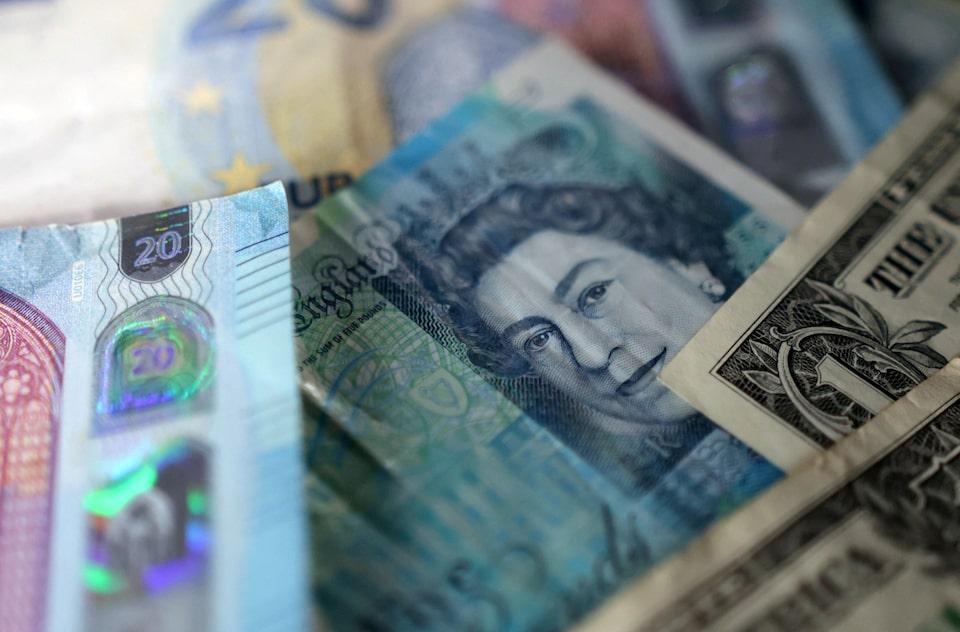
Pound weakens amid political uncertainty and budget concerns Sterling down 0.2% against dollar, 0.1% against euro 75% chance of BoE rate cut next month after labour data LONDON, Nov 12 (Reuters) - The British pound fell for a second day on Wednesday after soft labour market data the day before and reports in British newspapers that Prime Minister Keir Starmer was on alert for an attempted plot to oust him. Several British media outlets on Wednesday cited allies of Starmer saying the prime minister would fight any challenge to his leadership. Health Secretary Wes Streeting denied reports he was plotting to bring down the prime minister. Sign up here. "The pound is staying weak and you'd think it probably does relate to this Starmer story," said ING head of research Chris Turner. "The uncertainty around the post-budget environment demands extra risk premium for sterling." The pound was last down 0.2% against the dollar to $1.3125. Against the euro , sterling slipped as much as 0.2% to 88.26 pence, close to its lowest level in 2-1/2 years. BUDGET IN FOCUS Sterling is still sitting on a hefty 5% gain against the dollar this year, but angst is rising ahead of the November 26 budget, where tax rises are expected to be needed to balance the public accounts. The outlook for the public finances has deteriorated because of previous plans to water down welfare spending cuts and an expected cut to productivity forecast by Britain's budget watchdog. British bonds were underperforming peers in Europe and the U.S. on Wednesday, with the 10-year gilt yield up 3 basis points. Bond yields move inversely with prices. BOE DECEMBER CUT STILL ON RADAR Markets were placing about a 75% chance of a quarter-point reduction in borrowing costs from the Bank of England next month after Tuesday's labour market data that showed a tick up in the unemployment rate to 5%. Meanwhile, pay growth, excluding bonuses, slowed to 4.6% in the three months to September. The pound fell against both the dollar and euro on Tuesday as the data provided hints that inflation pressures were easing. "We think the UK economy is weaker relative to the euro area, which should pave the way for a weaker pound here," said Mohamad Al-Saraf, FX strategist at Danske Bank. In remarks on Tuesday, BoE rate-setter Megan Greene welcomed the fall in wage growth, although she showed concern about surveys pointing towards relatively high pay settlements next year. Greene voted with the majority to keep the Bank Rate unchanged at last week's policy meeting. https://www.reuters.com/world/uk/pound-dips-possible-starmer-leadership-plot-sparks-uncertainty-2025-11-12/
2025-11-12 11:04
BRUSSELS, Nov 12 (Reuters) - European Union countries have agreed to start talks with the UK to link the two sides' carbon markets, a spokesperson for Denmark's EU presidency said on Wednesday, in a move billed as part of a reset in relations following Britain's exit from the bloc. By linking their carbon markets, the two sides would exempt one another from their respective carbon border tariffs. However the linkage is unlikely to happen in time for British firms to avoid the EU's carbon border levy, which from January 1 will impose fees on the bloc's imports of steel, cement and other goods. Sign up here. EU countries' ambassadors agreed unanimously in a closed-door meeting that negotiations on the link would go ahead, said a spokesperson for Denmark, which holds the EU's rotating presidency. The EU mandate needs approval at a meeting of EU countries' ministers on Monday, but that is a formality and they are expected to wave it through with no changes. The link has been backed by both European and UK industries, with British firms noting that a key upside would be avoiding the EU's carbon border levy - which would not apply if the two sides link their carbon markets. The UK government has said the EU carbon border tariff would cost UK companies around 800 million pounds a year. But it will take several years to link the markets, given the technical complexity of the schemes and the required technical changes. British industries could face the EU carbon levy in the meantime. The UK plans to launch its own carbon border levy, but a year after the EU, in 2027. https://www.reuters.com/sustainability/climate-energy/eu-countries-ready-negotiate-uk-carbon-market-link-2025-11-12/


