2025-11-12 06:04
NAIROBI, Nov 12 (Reuters) - A European Union naval mission has taken control of an Iranian-flagged dhow used by pirates last week to attack an oil products tanker off the coast of Somalia and later abandoned. A recent spate of attacks on vessels off the Horn of Africa, including the first in a year by suspected Somali pirates, has rekindled concerns over the security of shipping lanes carrying critical energy and goods to global markets. Sign up here. The crew of the dhow are safe and in good condition, said the EU naval force, known as Operation Atalanta, adding that it was working with Somali authorities to track down the pirates. "The dhow, abandoned by the alleged pirates on the northwestern coast of Somalia, was closely tracked and monitored by the operation's flagship ... and an Indian Navy warship," it said in a statement on Tuesday. "The pirate ... group operating in the area has been definitely disrupted." The pirates had seized the dhow, a fishing vessel, early this month and used it days later to board the Maltese-flagged tanker, the Hellas Aphrodite, carrying gasoline to South Africa from India. The EU naval force secured the tanker on Friday. https://www.reuters.com/world/africa/eu-naval-force-takes-charge-dhow-used-somalia-pirate-attack-2025-11-12/

2025-11-12 05:58
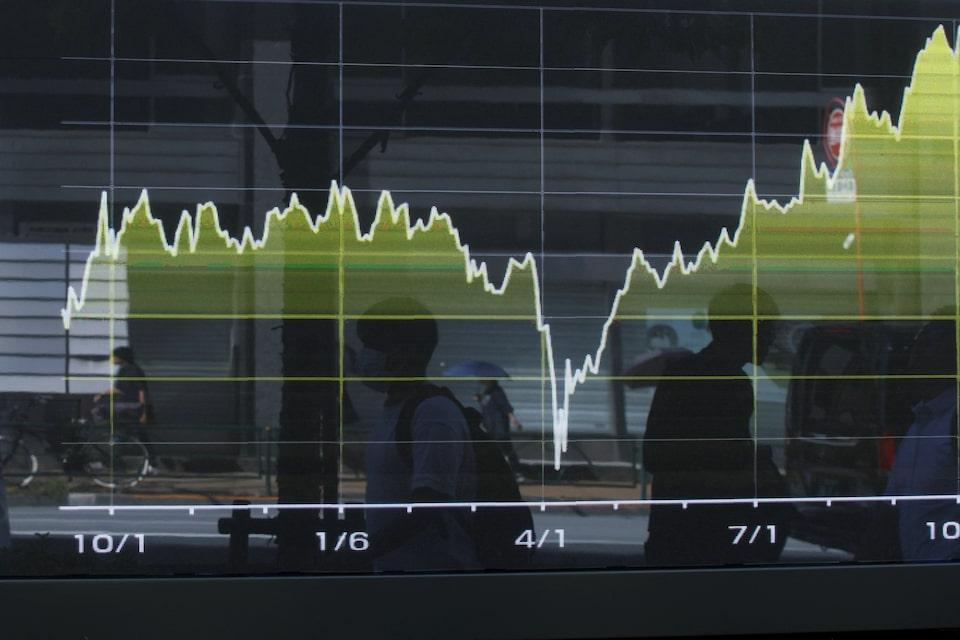
Nov 12 (Reuters) - Asian equities witnessed steep cross-border outflows in the first week of November as investors booked profits on caution over lofty tech valuations and uncertainty about the sustainability of an extended market rally. Foreigners divested approximately $10.18 billion worth of stocks in Taiwan, South Korea, India, Thailand, Indonesia, Vietnam and the Philippines for the week ended November 7 in a turnaround from $2.28 billion worth of net purchase in October, data compiled by LSEG showed. Sign up here. South Korean stocks witnessed roughly $5.05 billion net foreign outflows last week, reversing $4.21 billion inflows for the prior month. Taiwan stocks saw $3.86 billion net cross-border sales, exceeding $3.21 billion outflows for October. "Foreign outflows in Korea and Taiwan equities are primarily driven by the weakness in leading AI-related companies, which is consistent with the global headwinds across other markets such as Japan and the US," said Jason Lui, the head of APAC equity and derivative strategy at BNP Paribas. The MSCI's Asia ex-Japan information technology sector index (.MIAX0IT00PUS) , opens new tab lost 4.23% last week after registering 62.5% gains in the six-month period through October. The MSCI's global information technology sector index (.MIWD0IT00PUS) , opens new tab shed 4.38% in the previous week. "Renewed worries over elevated tech valuations have triggered volatility, but solid fundamentals suggest current levels are justified," said Mark Haefele, chief investment officer, UBS Global Wealth Management. "We forecast an earnings growth of 15% for global tech this year, followed by a solid 12.5% increase in 2026." LSEG data showed that the MSCI Asia Pacific ex-Japan index (.MIAPJ0000PUS) , opens new tab had a 12-month forward PE ratio of 15.81, as of end-October, the highest since June 2021. Indian equities, meanwhile, saw a net $1.42 billion foreign outflows last week after securing $1.66 billion in inflows in October. "India is now the biggest underweight in GEM portfolios and only a quarter of funds we track are overweight India vs their benchmark," according to an HSBC report last Friday. "We see India as a good AI hedge and provides diversification for those who feel uncomfortable with the AI rally. India will be an outsized beneficiary of any additional money coming into the EM region," the report said. Vietnam and Thai stocks also saw foreign outflows of $95 million and $40 million, respectively, while Indonesia and the Philippines attracted inflows of $207 million and $77 million, respectively, in the previous week. https://www.reuters.com/world/asia-pacific/asian-equities-witness-over-10-billion-foreign-outflows-november-ai-rally-stalls-2025-11-12/
2025-11-12 05:53
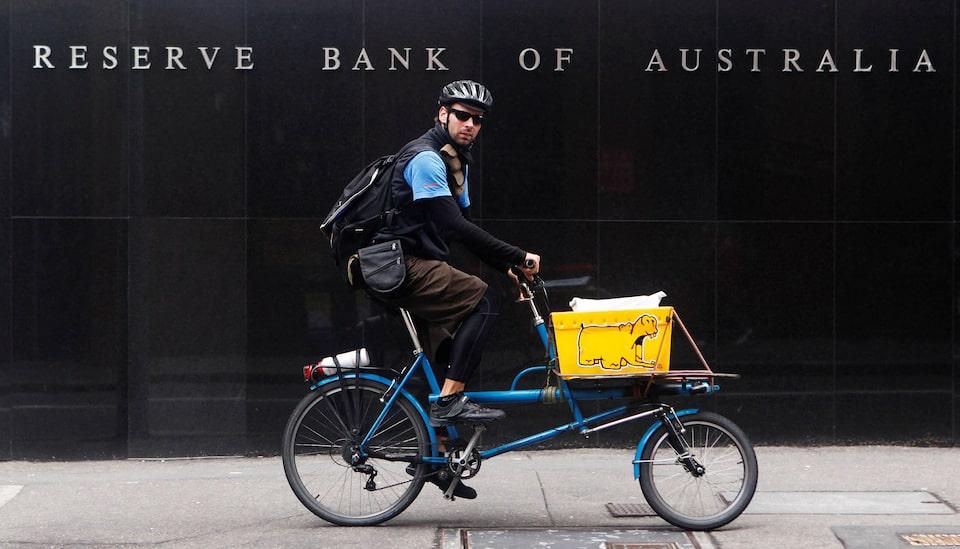
SYDNEY, Nov 12 (Reuters) - A top Australian central banker said on Wednesday that there was increasing debate about whether the current cash rate of 3.6% is restrictive enough to keep inflation in check, adding that the question is critical for the policy outlook. In an interview with Reuters in Sydney, Reserve Bank of Australia (RBA) Deputy Governor Andrew Hauser said the current judgment that monetary policy is mildly restrictive is central to the expectations that inflation would still slow in the economy. Sign up here. "I think our best guess is that policy is still marginally restrictive, but that judgment is an increasingly important part of the policy challenge," said Hauser. "If it turns out that the judgment is we are no longer mildly restrictive, that has important implications for our future policy stance." The RBA held interest rates steady this month after three rate cuts this year, saying it was cautious about easing further given higher inflation, firmer consumer demand and a revival in the housing market. It noted for the first time that there were uncertainties regarding the assessment that monetary policy remains a little restrictive. A shockingly high third-quarter inflation reading meant the central bank now sees inflation stuck above the 2-3% target band until mid-2026 and settling at 2.6%, above the 2.5% mid-point, based on the assumption of one more rate cut next year. Three-year government bond futures came off earlier highs to be flat at 96.285, just a touch above a seven-month low of 96.26. Swaps pared back the amount of easing expected next year to just 17 basis points from about 20 bps before. A growing number of economists, including the Commonwealth Bank of Australia and Citi, have called for an end of the current easing cycle. Adding to signs that financial conditions might not be that restrictive, data on Wednesday showed a large lift in new housing loans in the third quarter, driven by a nearly 18% jump in investor lending. A surge in consumer sentiment on Tuesday has raised the risk of an upside surprise on household consumption, but Hauser cautioned that it seems a bit of an "erratic" reading and the central bank wants to spend time to see if it persisted before giving it too much weight. The central case is still for a modest and gradual recovery in consumer spending, he added. When asked if markets are in an artificial intelligence bubble, the deputy governor said he does not know and an imminent market crash is not his central case. "We need to be alert to the fact that some of these financial measures are at historic extremes, and that might be telling us something about the outlook or it might be telling us we are genuinely in the middle of a new paradigm." He also noted that the Australian dollar has remained a natural hedge for pension funds investing overseas, while there have been substantial shifts in behaviours for the yen and euro. "None of those worries have yet come to pass. The Aussie dollar remains as an effective natural hedge today as it did a year ago. It's stunning, actually," said Hauser. https://www.reuters.com/sustainability/sustainable-finance-reporting/australias-central-bank-debates-if-monetary-policy-is-restrictive-deputy-2025-11-12/
2025-11-12 05:36
TOKYO, Nov 12 (Reuters) - Japanese Finance Minister Satsuki Katayama said on Wednesday she would not deny that the negative aspects of the weak yen on the economy have become more pronounced than the positive ones. "Recently, we have been seeing one-sided and rapid movements in the foreign exchange market," Katayama told parliament. The government is closely monitoring developments with a strong sense of vigilance against excessive volatility or disorderly fluctuations, she said. Sign up here. "Exchange rate movements have both positive and negative effects on the economy, and I do not deny that the negative aspects have become more pronounced in some respects," Katayama said. https://www.reuters.com/world/asia-pacific/japan-finance-minister-says-weak-yens-disadvantages-more-pronounced-than-2025-11-12/

2025-11-12 05:33
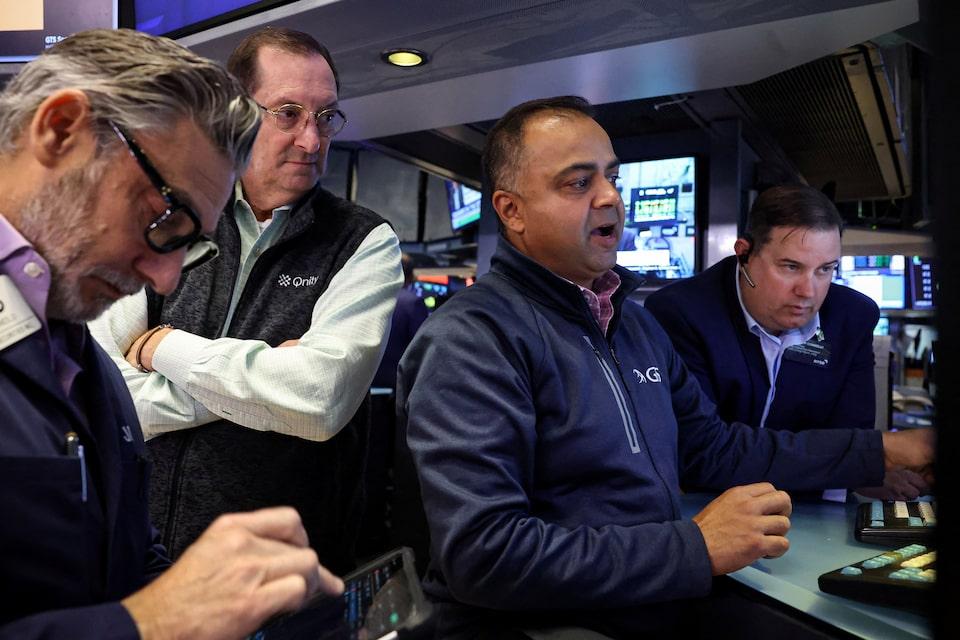
A look at the day ahead in European and global markets from Gregor Stuart Hunter The U.S. government is on the brink of reopening, potentially restoring pay to unpaid federal workers and ending a drought of economic data that has left the Federal Reserve flying virtually blind for more than a month. Sign up here. Members of Congress jumping on the opportunity for free publicity could be the latest sign of a return to normalcy. With thousands of delayed and cancelled flights because of the shutdown, some Congressmen have carpooled with colleagues or taken a 16-hour Harley Davidson ride across the country as they return to Washington D.C. to reopen the government. The Republican-controlled House is due to vote later today on a compromise that would restore funding to government agencies and end a shutdown that started on October 1 and is now the longest in U.S. history. Optimism around the looming end to the shutdown drove stocks higher, and pushed the dollar away from its lowest levels for the month. U.S. S&P 500 e-mini futures were slightly higher ahead of the vote, after a third consecutive day of gains for the benchmark on Tuesday, while MSCI's broadest index of Asia-Pacific shares outside Japan (.MIAPJ0000PUS) , opens new tab added 0.3%. In Tokyo, the Topix surged 1% to a fresh record. That's despite a fall of as much as 10% for SoftBank Group (9984.T) , opens new tab, taking its month-to-date loss to as much as 25% after it said it had sold its entire stake in Nvidia (NVDA.O) , opens new tab on Tuesday. Even so, shares in Japan's biggest tech sector investor have more than doubled this year. Still, it's not all bad news from the AI patch. Advanced Micro Devices (AMD.O) , opens new tab shares jumped 4.8% in after-hours trading, buoyed by its expectations to post $100 billion of annual data center chip revenue within the next five years, and more than triple its earnings. In early European trading, pan-region futures were up 0.3%, German DAX futures advanced 0.4%, and FTSE futures were flat. Key developments that could influence markets on Wednesday: Earnings: -Infineon Technologies, Experian PLC, SSE PLC Economic data: -Germany: CPI for October Debt auctions: -Germany: 21-year and 31-year government debt https://www.reuters.com/world/china/global-markets-view-europe-2025-11-12/
2025-11-12 05:02
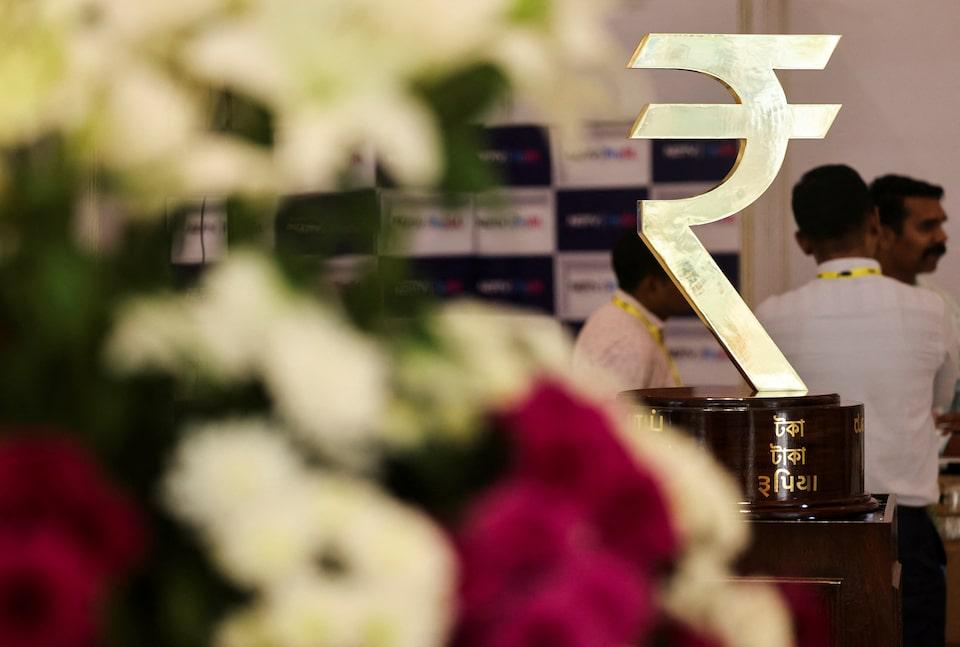
Importer hedging up over 30% on average in 2025, outpacing 11% rise in exporter activity Exporters face uncertainty in U.S. shipment volumes and payment timing RBI has been intervening routinely to support rupee over last two months MUMBAI, Nov 12 (Reuters) - Months of uncertainty over a U.S.-India trade deal have distorted India’s FX hedging landscape as expectations that the rupee may weaken further have amplified importer hedging while exporters hesitate, leaving the central bank to shoulder the resulting pressure on the currency. Hefty U.S. tariffs on Indian goods went into effect in August and despite multiple rounds of talks, a deal has proven elusive. Both New Delhi and Washington, though, have said an agreement is within sight. Sign up here. The delay has created a gulf in hedging activity that has hurt the rupee. Importer dollar hedging averaged about $43 billion a month between January and October, up 32% from its 2020–24 average, while exporter hedging has risen only 11% to $25 billion, per data from the Clearing Corporation of India. The skew has thinned natural dollar supply and coincided with about $17 billion in equity outflows this year, prompting the Reserve Bank of India to intervene to bolster the rupee and offset one-sided dollar demand. "Over recent months, there has been a notable decrease in hedging actions by exporters, while hedging activity by importers has remained robust," said Sameer Karyatt, executive director and head of trading at DBS Bank India. Thanks to consistent intervention, implied rupee volatility remains contained despite the currency hovering near its all-time low of 88.80 per dollar. Since the level was first hit in September, the RBI has firmly defended it, anchoring expectations and ensuring that the strain on the currency does not spill over into the broader market. The central bank's heightened efforts to support the rupee have shown up in a $10 billion decline in foreign exchange reserves over the past month, while it has added to its short dollar forward positions for the first time in six months. Despite this, the rupee, down 3.5% year-to-date, ranks among Asia's weakest currencies in 2025. UNCERTAIN PAYMENTS, RUPEE WEAKNESS EXPECTATIONS Exporters seem reluctant to add hedges, anticipating further rupee weakness and facing uncertainty about the timing of payments from the United States. "The view is that if he (the exporter) hedges now, he would receive only a small forward premium and risk missing out on the full depreciation that seems more or less inevitable in the current situation," said Pankaj Chadha, managing partner at Mumbai-based Jyoti Steel Industries. Exporters remain uncertain about both shipment volumes and the timing of payment receipts, according to Chadha, who also chairs the Engineering Export Promotion Council of India. This lack of clarity makes forward hedging difficult, he added. Some exporters had sought a more favorable exchange rate from the central bank to convert their dollar earnings to rupees, Reuters reported in September, but the RBI is unlikely to agree, a source familiar with the matter said. The RBI did not immediately respond to a request for comment. U.S. tariffs have dented India’s exports to its largest market, with shipments falling to $5.43 billion in September from $6.87 billion in August. https://www.reuters.com/world/india/yawning-gulf-importer-exporter-hedging-heightens-indian-rupees-reliance-rbi-2025-11-12/