2025-11-11 21:11
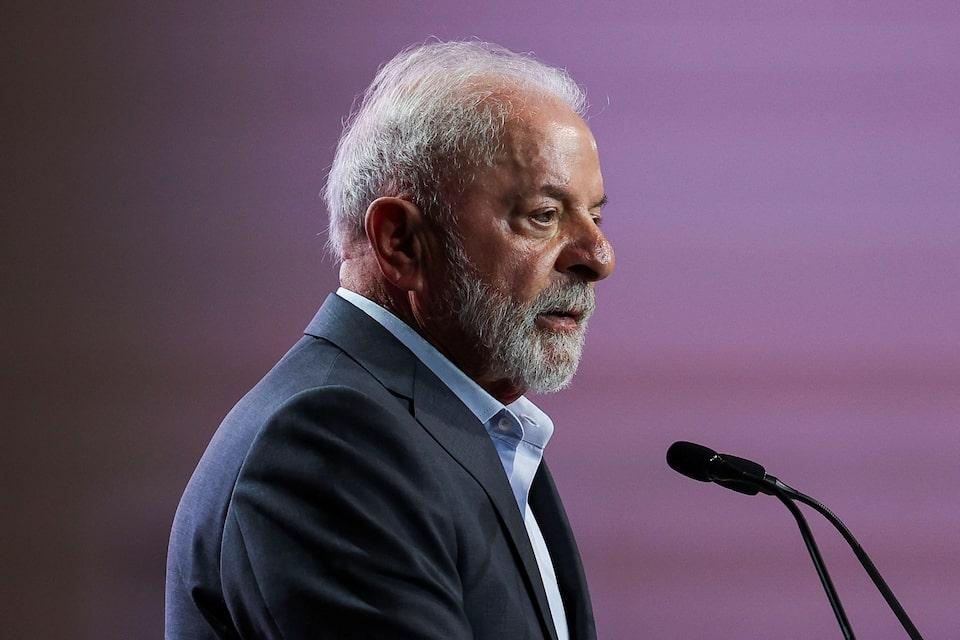
BRASILIA, Nov 11 (Reuters) - Brazilian President Luiz Inacio Lula da Silva signed on Tuesday a decree seeking to lower intermediation costs in the country's multi-billion-real meal voucher market, which will cap card processor fees and shorten settlement periods. Meal and food vouchers move about 170 billion reais ($31.46 billion) annually in Brazil under the Worker Food Program (PAT), created in 1976 to grant tax benefits to companies providing meals to formal employees, covering more than 22 million workers. Sign up here. Four companies - Ticket-owner Edenred (EDEN.PA) , opens new tab, Sodexo operator Pluxee (PLX.PA) , opens new tab, and privately-owned Alelo and VR - currently control about 85% of the market in Latin America's largest economy. The government so far has refrained from enforcing previous legislation that would effectively open the sector to greater competition. Starting in 90 days, a cap of 3.6% will apply to the merchant discount rate (MDR), the fee charged to merchants per transaction, according to Lula's decree. Government estimates seen by Reuters show that restaurants currently pay about 8% more on meal voucher transactions than on credit card sales. The Lula administration also set a maximum settlement period of 15 days for these transactions, compared with contracts that typically required payment after 30 days. Both measures had been under discussion for months. The move follows a 2022 law intended to liberalize the sector, which remains largely unregulated. That law introduced "interoperability," allowing vouchers from different brands to be accepted on the same card machines. The government said that under Lula's decree, this rule will take effect within a year. Another provision of that law, "portability," which would let workers transfer meal credits to providers of their choice, remains stalled. https://www.reuters.com/world/americas/brazil-caps-fees-shortens-payment-terms-billion-dollar-meal-voucher-market-2025-11-11/
2025-11-11 19:53
Palestinians struggle without power Some use solar charging points Gaza needed 600 megawatts before the war, now receives none GAZA, Nov 11 (Reuters) - Palestinian mother Hanan al-Joujou, 31, has to feed her three children in the dark with a flashlight as there is no electricity in Gaza even after last month's Israel-Hamas ceasefire. When they cannot afford to charge the flashlight, they go without food. Sign up here. "We stay in the darkness - once the sun sets and the Maghrib prayer is called," al-Joujou said, referring to the Muslim sunset devotion. "If the light of the flashlight is available, we light it. If not, we go to sleep without dinner or light." Her family has been without electricity since war broke out more than two years ago, relying on candles when first displaced to the city of Rafah in the south of the Palestinian enclave. Eventually they gave up even that, fearing a fire hazard in their tent. "We tried a simple LED light, but it broke. We do not have the money to fix it. We tried to get a battery, but it's expensive and unavailable," al-Joujou said. Before the war, Gaza mainly depended on imported electricity from Israel though supplies were shaky. It received 120 megawatts from Israel while the enclave's lone power plant supplied another 60 MW, according to Gaza officials. Shortly after October 7, 2023, when Hamas militants triggered the war by attacking south Israel, killing 1,200 people according to Israeli tallies, Israel put Gaza under "total siege". Electricity went out in Gaza after its power station ran out of fuel within days. In response to questions for this article, the Israeli military said civilian infrastructure, including electrify facilities, were not military targets “in and of themselves” and that it took measure to minimize harm to “civilians and civilian structures”, while also asserting that Hamas operated from within civilian areas. Now in a displacement camp in central Gaza's Nuseirat neighbourhood, most family activities end when the sun goes down. Al-Joujou's children also use a flashlight for homework when possible to charge it. "We barely have enough money to get by in our daily lives," added Hanan's husband Ahmed, 35. Some residents run charging points, supplied by solar power or private generators given how the war has destroyed Gaza's electrical grid and cables. Mohammed al-Hor's family have run one such charging business using solar power. They set it up at their own home which was hit by an Israeli strike. "The charging point was also bombed, and my brother was martyred inside," the 32-year-old said. PUNISHMENT In March of this year, Israeli minister Eli Cohen said he instructed the Electric Corporation to not sell electricity to Gaza as a punitive measure against Hamas. But even after the ceasefire, restoring power to Gaza — which has been reduced to ruins by Israeli bombardment — would require a massive infrastructure rebuild. The war has already destroyed more than 80% of the enclave's electricity distribution networks, with initial estimated losses to infrastructure and machinery amounting to $728 million, the media director of Gaza's electricity company told Reuters. "For the past two years, no electricity has reached the Gaza Strip. The amount of electricity reaching Gaza is zero," Mohammed Thabet told Reuters, saying pre-war needs were 600 megawatts. COGAT, the arm of the Israeli military that oversees aid flows into the Gaza Strip, said Israel is fully committed to its obligation to facilitate the entry of humanitarian aid trucks, which include fuel supplies for electricity, in accordance with the terms of the ceasefire agreement. COGAT added that the Kela power line from Israel was connected to support two desalination facilities. In July 2024, Israel also connected a power line to a U.N.-managed desalination plant in the southern Gaza city of Khan Younis to provide additional drinking water to Palestinian residents. https://www.reuters.com/world/middle-east/gaza-families-still-without-electricity-despite-ceasefire-2025-11-11/

2025-11-11 19:32
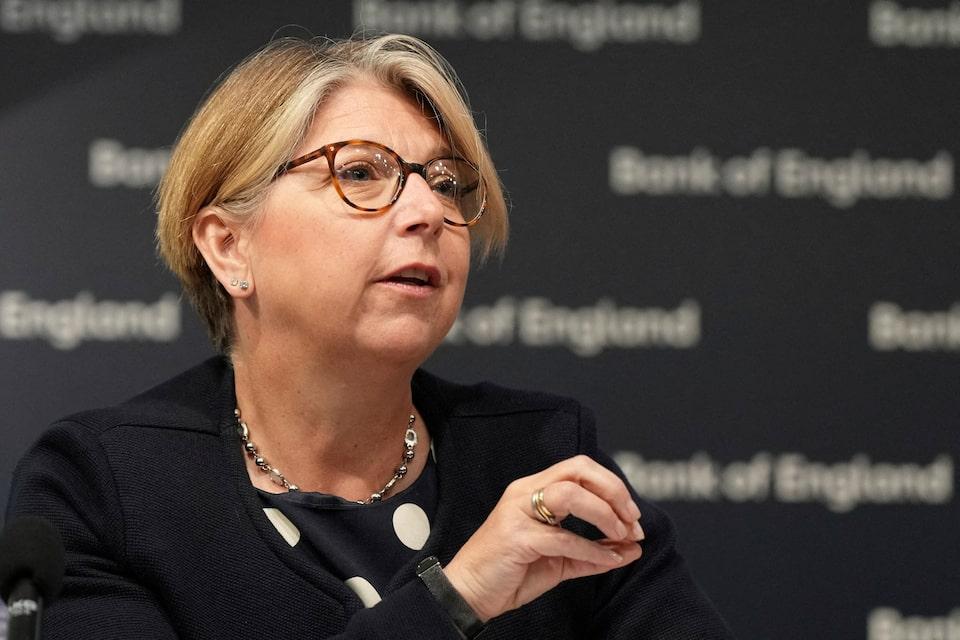
Bank of England softens stablecoin stance with new proposals Silicon Valley Bank, Circle Withdrawals guided latest proposals Holding limits for stablecoins will 'halve stress' on banks LONDON, Nov 11 (Reuters) - Bank of England Deputy Governor Sarah Breeden on Tuesday warned that further diluting rules for stablecoins risked endangering financial stability and causing a credit crunch, and said that the UK needed a different approach to the United States. The Bank of England on Monday set out a raft of new rules for systemic stablecoins - digital tokens designed to keep a constant value - used for payments. It marked a softening of its earlier approach, but the crypto industry said it did not go far enough and could inhibit the growth of stablecoins in Britain. Sign up here. Those rules include limiting stablecoin holdings to 20,000 pounds ($26,840) per person - which no other major jurisdiction does - and requiring stablecoin issuers to hold 40% of the assets backing the coins with the BoE, where they would be unremunerated. NEW RULES GROUNDED IN PAST STRESS EVENTS In an interview with Reuters, Breeden said the 40% figure was "grounded" in past stress events when depositors and coinholders ran for the exit, such as the 2023 collapse of Silicon Valley Bank and when the USDC stablecoin, issued by Circle (CRCL.N) , opens new tab, lost its dollar peg. "Look at what happened with SVB, with Circle – those numbers are broadly in line with that. That’s why we’re proposing 40% rather than a smaller number," she said. Breeden also defended the 20,000 pound limit for individuals and 10 million pounds for most companies, saying they would be temporary and "halve the stress" on banks and credit creation caused by customers withdrawing bank deposits to buy stablecoins. Whereas the U.S. has a much larger, more liquid market for non-bank finance, about 85% of mortgages and other consumer borrowing comes from bank finance in Britain, Breeden noted. DIFFERENT SET OF RISKS IN UK VERSUS US "We have a different set of risks to manage as we transition to bringing in this new form of money," Breeden said. The United States' embrace of cryptocurrencies under President Donald Trump is forcing other countries to assess if they remain competitive. Breeden declined to elaborate on when caps would be lifted, but said that if stablecoins gain traction, the BoE would expect banks to adapt and develop wholesale funding sources to replace lost deposits. The BoE’s latest proposals mark a shift from a 2023 plan that would have required issuers to hold 100% of backing assets as unremunerated deposits at the central bank, which the industry said would have made the stablecoin sector unviable. The industry has indicated it would push the BoE to go further on backing assets and holding limits. Breeden told Reuters the Bank was open to further feedback. The BoE said on Monday it would finalise the regime next year, in line with the United States. The BoE will regulate only systemic stablecoins that can be used for everyday payments, while the Financial Conduct Authority will oversee non-systemic ones used for crypto trading under a lighter regime. CONSUMERS NEED TO KNOW WHICH COINS ARE NOT SAFE The stablecoin market is dominated by two dollar-based issuers: Tether, which moved its headquarters to El Salvador in January, and Circle, based in the United States. As major financial centres move to set guardrails for the fast-growing technology, Breeden said there was "more work to do" on coins issued in jurisdictions such as El Salvador to ensure "people in the UK know which are safe and which are not." She did not identify Tether by name. ($1 = 0.7451 pounds) https://www.reuters.com/sustainability/boards-policy-regulation/bank-englands-breeden-says-diluting-stablecoin-rules-further-could-damage-2025-11-11/
2025-11-11 19:19
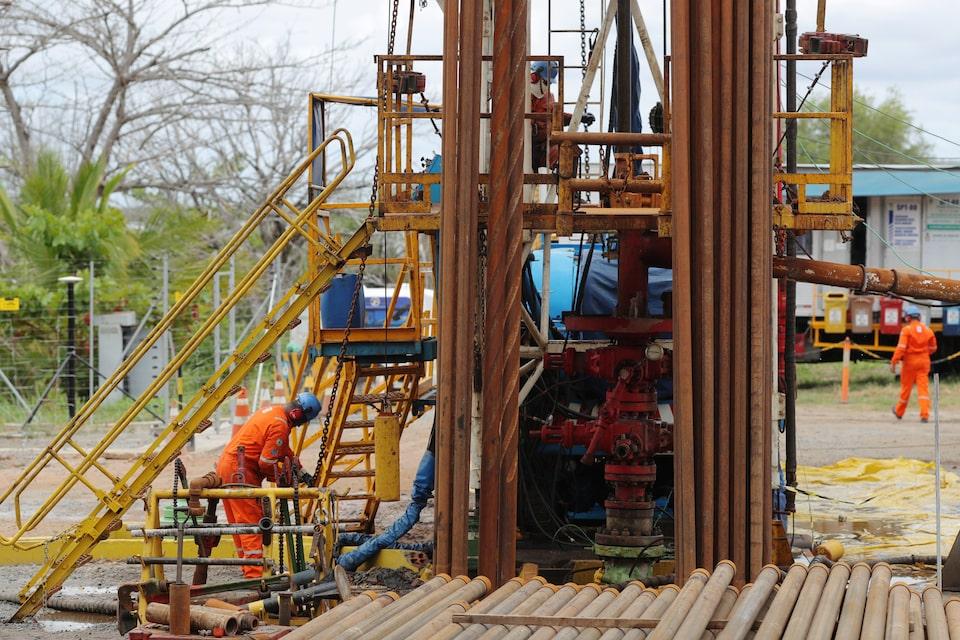
RIO DE JANEIRO, Nov 11 (Reuters) - Brazilian engineering group Novonor is close to reaching an agreement to sell most of its controlling stake in petrochemical firm Braskem to IG4 Capital, four sources familiar with the matter told Reuters. Sao Paulo-listed Braskem shares soared more than 17% on Tuesday following a Bloomberg News report on the potential deal, making it the biggest gainer on the benchmark stock index Bovespa (.BVSP) , opens new tab, which rose 1.5%. Sign up here. According to the sources, who spoke on condition of anonymity, Braskem's two largest shareholders, conglomerate Novonor and state-run oil firm Petrobras (PETR3.SA) , opens new tab, are negotiating with asset manager IG4, and a deal could be finalized in the next few days. Under the potential deal, IG4 would fully acquire Novonor's debt while the conglomerate would retain a small stake in Braskem, according to two of the sources. In a call with journalists to discuss the firm's third-quarter results, Braskem executives declined to provide comment on the matter, and said they were not participating in any ongoing negotiations. Novonor currently holds 50.1% of Braskem's voting shares and 38.3% of its total shares, while Petrobras owns 47.0% of voting shares and 36.1% of total shares. Reuters reported in August that IG4's talks with key stakeholders had progressed since the firm signed exclusive rights to acquire billions of reais of Novonor's debt from Brazil's largest banks, including state development bank BNDES. A deal between the firms could also resolve the outstanding debt hanging over Novonor, formerly known as Odebrecht, which ballooned during the Car Wash corruption scandal about a decade ago, when the group pledged its Braskem shares as collateral for 15 billion reais in bank loans. The debt has since grown to close to 20 billion reais. A new controlling shareholder - and a potential injection of fresh capital - could breathe new life into Braskem, which has struggled with tight margins in the petrochemical business and lingering liabilities from neighborhoods damaged by its salt-mining operations under the northeastern city of Maceio. Braskem reported on Tuesday a 26 million reais ($4.81 million) net loss for the July-September period, narrower than the 592 million reais net loss reported a year earlier. ($1 = 5.4039 reais) https://www.reuters.com/business/energy/novonor-close-deal-sell-braskem-shares-ig4-say-sources-2025-11-11/
2025-11-11 18:50
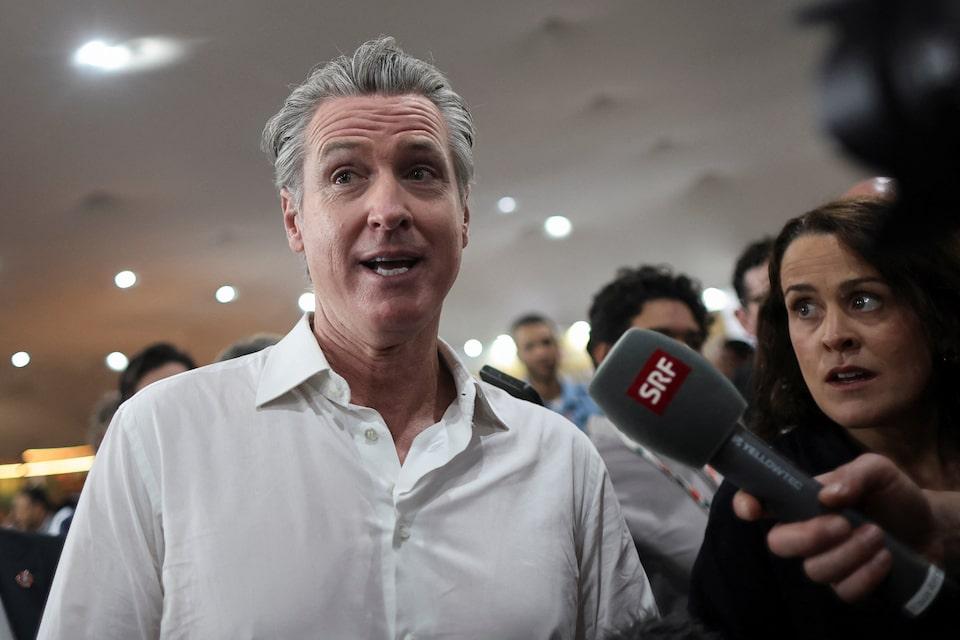
Trump allowing China to 'dominate' clean energy, Newsom says Newsom says politicians need to change climate messaging California has the world's No. 4 economy BELEM, Brazil, Nov 11 (Reuters) - California Governor Gavin Newsom assured an audience at the COP30 climate summit in Brazil that his state would continue to prioritize green technology, while blasting U.S. President Donald Trump's "dumb" decision to reverse the federal government's course on climate action. Newsom, widely considered a leading candidate for the Democratic presidential nomination in 2028, also sounded alarm bells at the Republican Trump's policies, calling them threats to rule of law and democracy. Sign up here. Making several appearances at the annual climate summit on Tuesday in the Amazonian city of Belem, Newsom took every opportunity to slam Trump's attacks on the fast-growing clean energy economy. He said Republicans were ceding the fast-growth market to China, which "will dominate in the next great global industry." "The United States of America is as dumb as we want to be on this topic, but the state of California is not. And so we are going to assert ourselves, we're going to lean in, and we are going to compete in this space." A strident political foe of Trump, Newsom has for months been teasing a run for the White House in 2028. Escorted by UN police around the sprawling venue, Newsom was swarmed by conference attendees and cheered for representing the U.S. at COP. He declined to answer questions about a possible run for president, saying he was more concerned about the upcoming mid-term U.S. congressional elections. "I don't worry about 2028. I worry about fair and free elections. I'm more worried about 2026 and taking back the House of Representatives and getting the speakership," he told reporters on the sidelines of COP30. He said he was alarmed that eight of his fellow Democrats in the U.S. Senate "rolled over" to vote to support an end to the U.S. government shutdown. But he did not say whether he supported calls by some Democrats to replace Senator Chuck Schumer as the party's Senate leader. CALIFORNIA VS. WASHINGTON California is just one of 50 U.S. states, but its economy is the world's fourth-largest, making it a key player in influencing markets and energy policy. Dressed casually in a white business shirt in the sweltering tropical heat, Newsom made a point of listing climate actions made by two Republican presidents from California, Ronald Reagan and Richard Nixon. While Democrats have long made climate change a central part of their policy priorities, Newsom said the messaging needs to change so average citizens can connect with the issue on factors such as economics and cost, making them less vulnerable to climate skeptics like Trump. "Climate change seems abstract. We need to talk in terms that people understand," Newsom said. Trump has falsely dismissed the issue of climate change as a "hoax" and battled to boost global use of polluting fossil fuels. Washington has conspicuously snubbed the COP30 summit. California, in contrast, has among the world's most ambitious climate change policies, including a goal to decarbonize its economy by 2045 and ban the sale of new gasoline-powered cars by 2035. Newsom said California's partnership on the issue was secure. "But we can't do that without all of you ... So we're here with an open hand, not a closed fist." On Monday, Newsom spoke with investors at a conference in the Brazilian financial hub of Sao Paulo, telling them the vacuum in U.S. climate leadership was "jaw-dropping." Newsom has touted California's embrace of green tech, highlighting that the state has seven times more renewable energy jobs than fossil fuel jobs and reminding people that electric vehicle giant Tesla (TSLA.O) , opens new tab was founded in California. He blasted an expected Trump administration order to open up drilling in federal waters off the coast of California, calling it "dead on arrival." Some diplomats worried that Trump's administration might try to disrupt the summit from afar. Last month, Newsom said he was mulling a presidential run in 2028. He has started to Last week, California voters backed his proposal to redraw the state's voting districts to offset redistricting in other states aimed at boosting the number of congressional seats held by Republicans. On Tuesday, Newsom noted that Trump's tenure was set to end in January 2029, even as Trump occasionally teases that he wants to seek a third term. "He's the most unpopular president in U.S. history. That's why he's trying to rig the election," Newsom told reporters. "Trump is temporary. He's reckless. He's chaotic," Newsom added. "People need to stand up. You need to stand up to a bully." https://www.reuters.com/sustainability/cop/newsom-brazils-cop30-summit-assure-that-california-is-reliable-partner-climate-2025-11-11/
2025-11-11 18:32
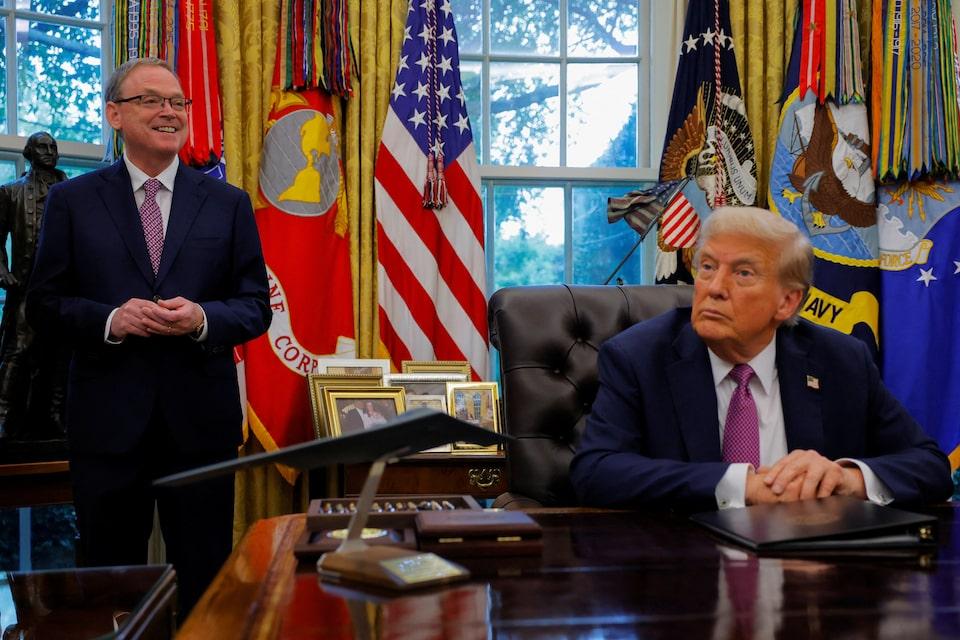
Hassett says Trump administration focused on affordability One-time dividend and 50-year mortgage could help Americans, Hassett says inflation trajectory looks good despite seasonal fluctuations WASHINGTON, Nov 11 (Reuters) - The U.S. economy should return to growth of 3% to 4% by the first quarter of 2026, White House economic adviser Kevin Hassett said on Tuesday. Hassett cited economists' estimates that the government shutdown would knock about 1 percentage point to 1.5 percentage points off growth rates that had reached close to 4% during the past year. Sign up here. "The question is, when does it all come back. And I think that some of the stuff is lost forever, and some of it isn't. But I would guess that by the first quarter of next year, we'll be back at the 3% or 4% growth pace," Hassett said in an interview with CNBC. Economists have warned that weaker growth in consumption and global trade, along with slow job growth, higher unemployment and stickier inflation are marring the U.S. economic outlook, although surging business investment could provide a key offset. A survey by the National Association for Business Economics released in mid-October said more than 60% of the 40 economists in its poll expected President Donald Trump's sweeping tariffs to knock up to half a percentage point from economic growth. None saw tariffs boosting growth. Their median projection was for the economy to grow 1.8% in 2025, compared to 1.3% projected in the June survey. Hassett said the Trump administration was working to address persistent affordability issues and boost people's purchasing power, which he said fell by about $3,400 during the Biden administration but had increased by $1,200 since Trump took office in January. He said the overall trajectory for inflation was "really, really good" despite ups and downs that he said were seasonally related. A deficit reduction this year would help reduce macroeconomic pressure on prices, he said. The Trump administration was also focusing on housing and how to make people's lives more affordable, Hassett said, acknowledging that the prices of milk and hamburgers were still "way higher" than during Trump's first term. Hassett said Trump's plan to pay lower- and middle-income Americans a dividend of about $2,000 and introduce a 50-year mortgage were both "really good ideas." Higher tax revenues of about $200 billion this year made room for a dividend payment, he said, adding that a longer mortgage term could help first-time home buyers by reducing monthly payments. https://www.reuters.com/markets/us/white-house-eyes-return-growth-3-4-by-early-2026-after-shutdown-knock-2025-11-11/