2025-11-11 06:19
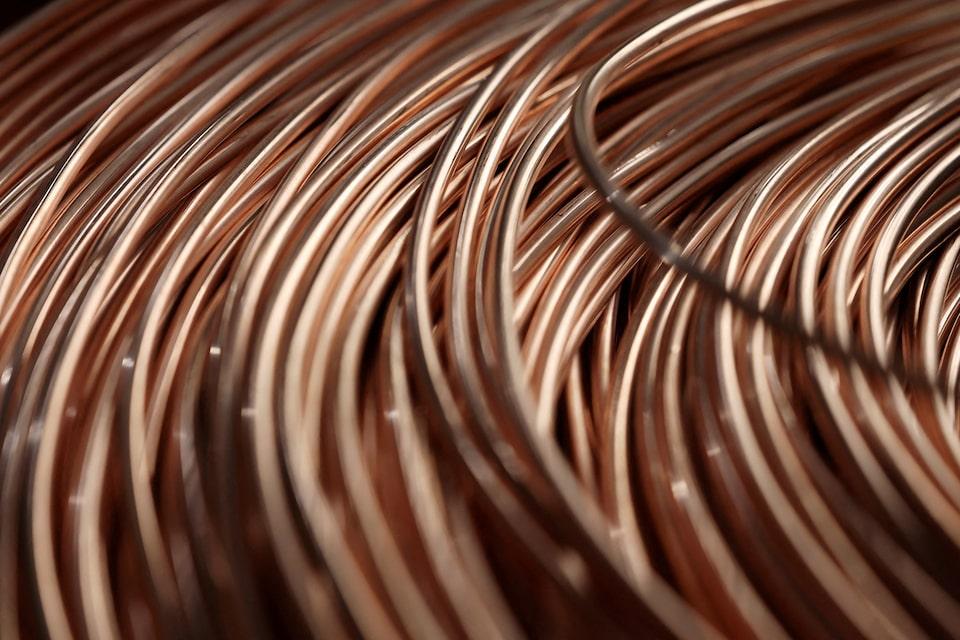
LONDON, Nov 11 (Reuters) - Copper has been added to the U.S. government's list of critical minerals - the metals deemed vital to the country's economic and national security. Fortunately, the United States has already accumulated what is the world's second largest copper stockpile, behind China's state reserves. Sign up here. It has done so without spending a dollar of federal money. Rather, the copper market has done all the work in the form of a yawning arbitrage gap between the U.S. price traded by the CME (CME.O) , opens new tab, and the international price traded on the London Metal Exchange (LME). The pricing differential has already drawn massive amounts of physical copper into the United States. And it's still doing so as the market bets that the critical mineral designation, first flagged in August, increases the chances of U.S. import tariffs. TRADING THE GAP When U.S. President Donald Trump ordered an investigation into copper imports on national security grounds in February, the market moved quickly to price in the potential for U.S. import tariffs similar to those already imposed on steel and aluminium. The CME spot premium over the London market stretched to almost $3,000 per metric ton at one stage in July, creating an extraordinary opportunity for the world's largest traders to ship as much physical metal as they could get their hands on to the United States. The premium imploded in July when the Trump administration blind-sided the market by imposing tariffs on imports of copper semi-manufactured products but deferring until July 2026 a decision on refined metal. Tariff trade over? So it seemed, but the arbitrage gap has been widening again. The spot CME premium has rebounded from under $100 per ton in August to over $300, while the 10-month forward premium is now priced at almost $800 per ton. Sure, the current arbitrage gap is not nearly as wide as it was in July, but it's more than enough to cover the physical costs of shipping units to the United States. MARKET OF FIRST RESORT This year's tariff trade is visible in the form of rising copper stocks held by the CME, which has only domestic U.S. delivery points. CME stocks have mushroomed from a February low of 83,900 tons to over 335,000 tons. CME warehouses now hold more copper than the LME and Shanghai Futures Exchange combined. Metal is still arriving in the CME delivery network every day, mostly at New Orleans but there have also been inflows at Baltimore, Salt Lake City and Tucson. What's on the CME may be just the tip of the iceberg. Consultancy Benchmark Minerals Intelligence thinks there is in total between 731,000 and 831,000 tons of "economically trapped" copper in the United States. Trapped in the sense that it would now require a huge inversion of the arbitrage between the United States and the rest of the world to free up metal for re-export. Indeed, given the renewed widening in the U.S. premium, the likelihood is for more metal to join the growing copper mountain rather than move the other way. U.S. trade statistics have fallen foul of the government shutdown but refined copper imports were already over one million tons in the first seven months of the year, up almost 400,000 tons on the year-earlier period. More recent export data from major copper suppliers such as Chile, Peru and Australia suggest no let-up in the physical tariff trade. The United States remains the market of first resort for spare copper, which is why Europe's largest producer Aurubis (NAFG.DE) , opens new tab has been able to hike its premium for 2026 deliveries by an aggressive 38% to a record $315 per ton over the LME basis price. US STRATEGIC STOCKPILE Market dynamics have generated a tectonic redistribution of global copper to the United States, where it is now locked in by the same dynamics. Without anyone seeming to plan it, the country is successfully building what might be described as a strategic stockpile, just one held by the commercial rather than the state sector. The stockpile is still growing and will continue to do so as long as the arbitrage allows traders to make an easy profit by scooping up metal everywhere else and sending it to a U.S. port. No-one knows how much copper is held by China's Strategic Reserves Administration. It's a state secret but a two-million ton target has floated around the market for many years. The United States isn't there yet, but it's well on its way to building a similar-sized reserve. There may, though, be yet another ironic twist in the copper tariff trade. The Trump administration has said it will look again at U.S. import dependency in July next year, with the option of phasing in a tariff on refined copper from 2027. Every ton of copper clearing U.S. customs reduces that dependency, even without factoring in the intended tariff booster to domestic production. Andy Home is a Reuters columnist. The opinions expressed are his own Enjoying this column? Check out Reuters Open Interest (ROI) for thought-provoking, data-driven commentary on markets and finance. Follow ROI on LinkedIn , opens new tab and X , opens new tab. https://www.reuters.com/markets/commodities/copper-joins-critical-minerals-list-us-has-plenty-already-2025-11-11/
2025-11-11 06:14
Reuters Open Interest (ROI) is your essential source for global financial commentary. LAUNCESTON, Australia, Nov 11 (Reuters) - The decision by Saudi Aramco to cut the price of its crude oil for Asian refiners for December cargoes has been viewed as a move to build market share amid concerns of looming global oversupply. But the reduction was at the lower end of forecasts by Asian refiners and seems more of a move to keep Saudi oil just competitive enough against other grades, while also giving the world's biggest crude exporter flexibility should China and India shun Russian barrels amid U.S. sanctions. Sign up here. Aramco (2222.SE) , opens new tab last week lowered its official selling price (OSP) for its benchmark Arab Light grade for Asian customers to a premium of $1 a barrel over the Oman/Dubai average for December-loading cargoes. This was down $1.20 a barrel from a premium of $2.20 for November-loading crude and takes the OSP to the lowest level in 11 months. However, the reduction in the OSP was expected by Asia's refiners, who buy about 80% of Aramco's seaborne exports. Asian refiners forecast that Aramco would drop the OSP for Arab Light by between $1.20 and $1.50 a barrel in a survey conducted by Reuters ahead of the announcement. This means the actual reduction was at the lower end of expectations, a move that doesn't really fit with a market narrative that the Saudis are slashing oil prices in order to build market share. Rather, the lower OSP reflects Aramco's long-standing practice of following the current market dynamics in setting prices. The premium of cash Dubai crude to swaps has been trending lower in recent weeks, averaging $1.12 a barrel so far this month, down from $1.73 in September. The price of global benchmark Brent crude over Dubai has also been trending lower, with the exchange for swaps dropping to a rare discount last week. Brent's discount to Middle East benchmark Dubai widened to 26 cents a barrel on Monday, the most in more than five years and down from a premium of $3.77 a barrel as recently as June 19. What this means is that crude grades that are priced against Brent are becoming relatively cheaper compared with those priced against Dubai. Crudes that are priced against Brent include grades from West Africa, Latin America and even U.S. grades, given West Texas Intermediate Midland is deliverable into the Brent benchmark. In effect, what Aramco is doing with the cut to its December OSP is ensuring that its crude remains competitive against other grades. This means that Saudi crude will remain in the mix when Asian refiners are deciding what they need for December and January processing. RUSSIAN UNCERTAINTY It also means that Aramco can take advantage of any reduction in the supply of Russian crude, which has been hit by new sanctions by U.S. President Donald Trump. Some refiners in the main buyers of Russian crude, China and India, have been reported to be looking for alternative supplies. There is some evidence of this happening in top crude importer China, with commodity analysts Kpler estimating November seaborne imports from Russia will drop to around 926,000 barrels per day (bpd) from 1.45 million bpd in October. At the same time China's imports of Saudi crude are on track to rise to 1.78 million bpd in November from 1.20 million bpd in October. However, Asia's second-biggest oil importer, India, is expected to receive about 589,000 bpd of Saudi crude in November, down from 691,000 bpd in October, according to Kpler estimates. India is still buying Russian crude, with 2.26 million bpd expected to land in November, up from 1.70 million bpd in October. However, India's purchases of Russian oil may start to ease from December onwards if its refiners are genuine in their stated commitment to buy less. With uncertainty over how much Russian crude will be bought by China and India, it seems that Aramco has positioned to take advantage of any gaps in supply by making more crude available at prices that are at least competitive with other grades. Enjoying this column? Check out Reuters Open Interest (ROI), your essential new source for global financial commentary. ROI delivers thought-provoking, data-driven analysis of everything from swap rates to soybeans. Markets are moving faster than ever. ROI can help you keep up. Follow ROI on LinkedIn , opens new tab and X , opens new tab. The views expressed here are those of the author, a columnist for Reuters. https://www.reuters.com/markets/commodities/saudi-crude-oil-price-cut-is-just-enough-stay-competitive-2025-11-11/

2025-11-11 06:13
Nov 11 (Reuters) - The boss of German potash and salt miner K+S (SDFGn.DE) , opens new tab has called on Berlin to accelerate permits for raw material extraction projects and ease energy costs, warning that the country’s industrial base is at risk. "It is unacceptable that, as a raw materials extraction company in Germany, we often have to wait years for important permits. This has to be faster. And it can be faster. Other countries, such as Canada, where we also have production facilities, are showing us how it can be done," said K+S Chief Executive Officer Christian Meyer. Sign up here. K+S has invested around 600 million euros ($700 million) in its Werra potash plant, but Meyer said high energy prices were weighing heavily on both the company and the wider economy. "The situation is so dramatic that, without exaggeration, the future of industry in our country is at stake," he added. The German chemical sector, the country's third-largest, has been struggling for years with subdued demand, high energy costs, supply chain issues, while global inflation and trade tensions continue to pile on pressure. "Politicians must understand this and remedy this situation now," Meyer said. ($1 = 0.8575 euros) https://www.reuters.com/business/energy/ks-boss-urges-faster-permits-lower-energy-costs-safeguard-german-industry-2025-11-11/

2025-11-11 05:33
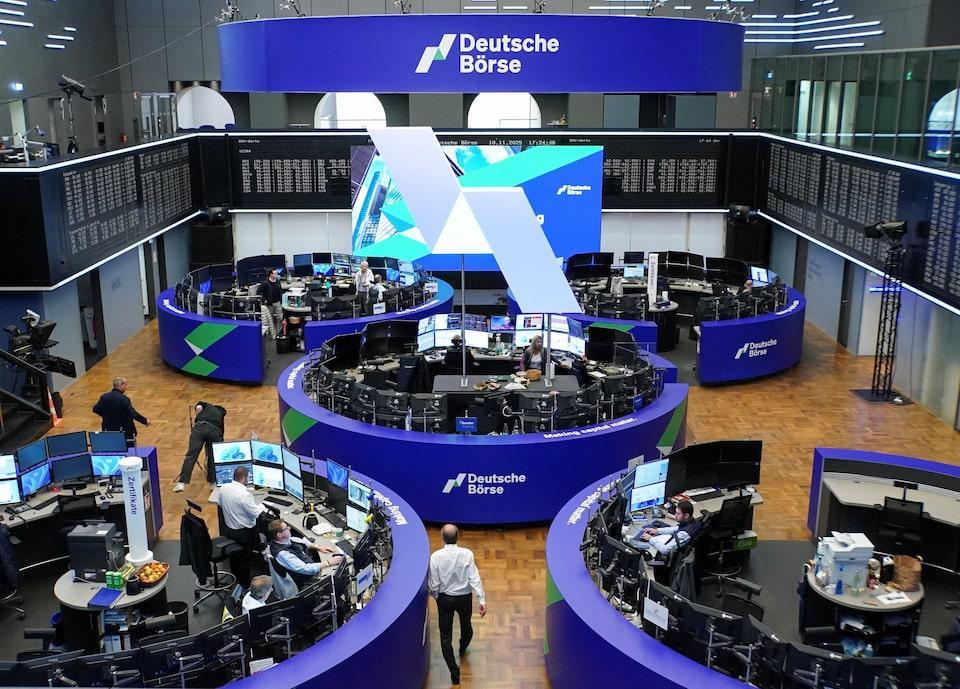
A look at the day ahead in European and global markets from Tom Westbrook The longest U.S. government shutdown on record looks to be nearly over, and traders are riding the tail end of a wave of relief that began late last week. Sign up here. The Senate approved a compromise that would restore U.S. government funding. It next heads to the House, where Speaker Mike Johnson has said he would like to pass it as soon as Wednesday and send it on to President Donald Trump to sign into law. Gold and the Nasdaq (.IXIC) , opens new tab have logged their best gains in months, with gold in particular attempting to recover the momentum that shot it to record highs in October with an added boost from bets on future U.S. interest rate cuts. Asian share markets were mostly steady or a little higher through Tuesday and the risk-on mood pushed the safe-haven yen to a nine-month low. The U.S. bond market is closed on Tuesday for a holiday, but long bonds have been sold and shorter ones were steadier, reflecting markets' shift out of riskier assets as well as an expectation that the resumption of U.S. data publication builds a case for rate cuts. Elsewhere, Japanese tech investor SoftBank Group (9984.T) , opens new tab is about to report second-quarter earnings in the midst of feverish investment in artificial intelligence that has sent its share price soaring. Sony (6758.T) , opens new tab raised its operating profit forecast for the year ending March 2026 by 8%, citing a smaller impact from U.S. tariffs and the strength of its music and chips businesses. In Australia, shares in one of the world's most expensive banks, Commonwealth Bank (CBA.AX) , opens new tab, fell nearly 5% after the country's biggest lender said competition was cutting margins. In China, Tuesday is Singles Day and the culmination of what has evolved into a weeks-long shopping bonanza. Last year, 1.44 trillion yuan ($202 billion) of goods were sold during the period. That's almost five times the $41.1 billion U.S. shoppers spent last year during Cyber Week, the period from Black Friday to Cyber Monday. Key developments that could influence markets on Tuesday: - Earnings from SoftBank, Vodafone and Munich Re - German ZEW survey, British weekly employment data https://www.reuters.com/world/china/global-markets-view-europe-2025-11-11/
2025-11-11 05:14
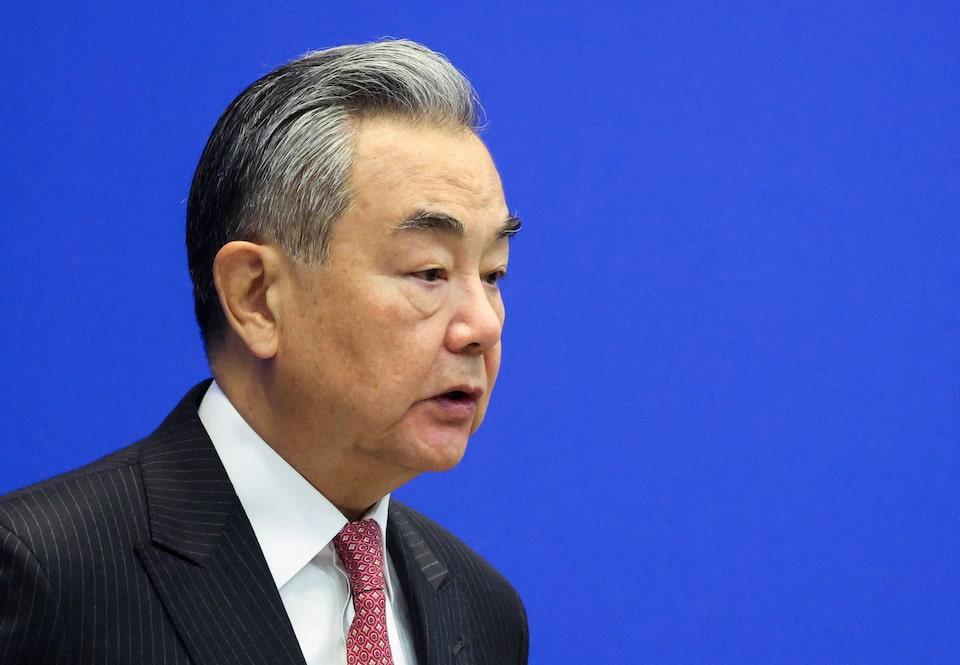
BEIJING, Nov 11 (Reuters) - China is willing to resume exchanges with Canada and cooperate in various fields, its foreign minister said to his Canadian counterpart without specifying the sectors, the official Xinhua news agency reported on Tuesday. Foreign Minister Wang Yi said China is willing to strengthen communication with Canada, adding that the diplomatic, commercial and other departments of both countries could enhance coordination and properly address their respective concerns. Sign up here. Wang made the remarks to Canada's Anita Anand over a phone call, following a meeting between Chinese President Xi Jinping and Canadian Prime Minister Mark Carney on the sidelines of the Asia-Pacific Economic Cooperation (APEC) forum in South Korea last month. Both leaders discussed trade issues including agriculture and electric vehicles. Wang also said the leaders' meeting marked the return of bilateral ties to the right track after years of turbulence. https://www.reuters.com/world/china/china-ready-resume-exchanges-cooperate-with-canada-foreign-minister-says-2025-11-11/
2025-11-11 05:08
Nov 11 (Reuters) - Australia's corporate regulator said on Tuesday it has sued AVZ Minerals and two of its directors, alleging the miner failed to disclose an escalating legal dispute with the Democratic Republic of the Congo over its stake in a lithium project. The Australian Securities and Investments Commission (ASIC) accused the Perth-based company of breaching disclosure obligations and engaging in "misleading and deceptive conduct" by withholding information about the dispute. Sign up here. AVZ holds a 75% stake in the Manono lithium project , opens new tab through its subsidiary, Dathcom Mining. It has been embroiled in a legal dispute with the DRC government since 2022 over ownership rights to the project, which comprises the world's largest deposits of hard-rock lithium. The watchdog also alleged that Managing Director Nigel Ferguson and Technical Director Graeme Johnston breached their director duties by authorising exchange filings that were "false or misleading, or omitted matters" relating to the dispute. "We allege Mr Ferguson and Mr Johnston failed to inform investors of the ongoing issues in this matter for nearly 12 months," ASIC Deputy Chair Sarah Court said in a s , opens new tab tatement , opens new tab. "The pair allegedly failed to take reasonable steps to ensure AVZ complied with its continuous disclosure obligations and that statements to the ASX (Australian Securities Exchange) were not misleading or deceptive." AVZ went on a halt in May 2022 and was delisted from the ASX in May 2024. The company did not immediately respond to a Reuters request for comment. https://www.reuters.com/sustainability/boards-policy-regulation/australia-watchdog-sues-avz-minerals-over-congo-disclosure-breaches-2025-11-11/