2025-11-11 04:42
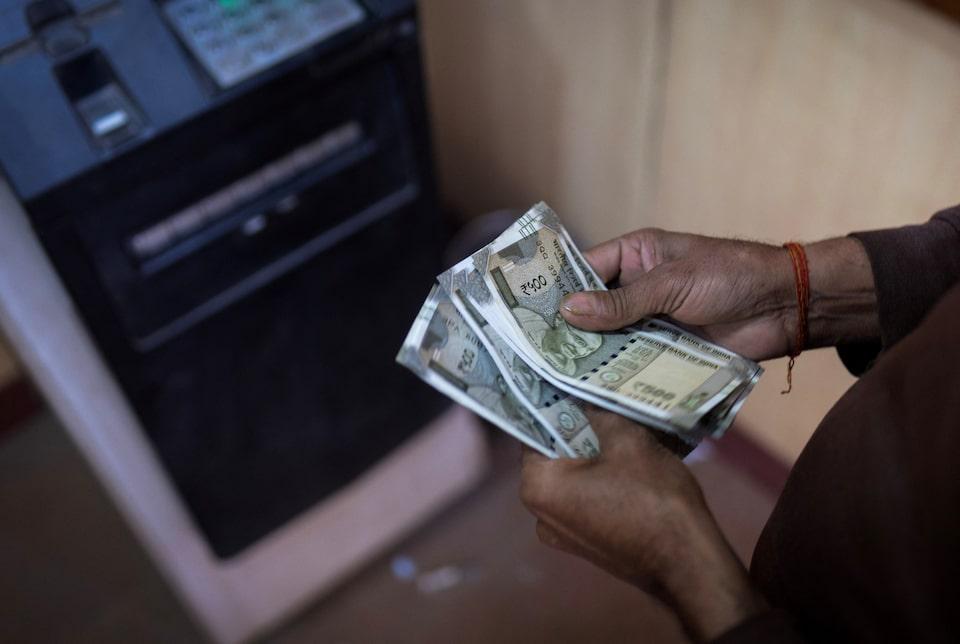
MUMBAI, Nov 11 (Reuters) - The Indian rupee inched up on Tuesday, helped by modest inflows and dollar sales from state-run banks, but progress in U.S.-India trade negotiations remained the focal point for future direction, traders said. The rupee closed at 88.5675 against the U.S. dollar, up 0.1% on the day. Sign up here. The currency lingered near the 88.70 mark for most of the session, with dollar sales from a few foreign banks prompting an uptick in the latter half, traders said. The market took note of the optimistic remarks on U.S.-India negotiations but the reaction was muted as investors wait for concrete developments. On Monday, U.S. President Donald Trump said that Washington was getting close to reaching a deal with India. Analysts at ING expect India to clinch a trade deal in the coming few months but warned that "prevailing uncertainty around tariffs may weigh on investor sentiment in the near term." India's benchmark equity indexes, the BSE Sensex (.BSESN) , opens new tab and Nifty 50 (.NSEI) , opens new tab, rose about 0.5% each. The dollar index was steady at 99.6 and most Asian currencies slipped. The focus for global markets is on the imminent end of the U.S. government shutdown, which has delayed economic data, central to gauging the outlook for interest rates in the world's largest economy. The Federal Reserve cut interest rates at its most recent meeting, but Chair Jerome Powell cautioned against assuming another cut in December. Money markets are currently pricing in a 63% chance of a 25 basis point rate cut next month. An end to the shutdown is expected to lead to a raft of data releases which could prompt a reassessment of these expectations. https://www.reuters.com/world/india/rupee-draw-support-trumps-trade-optimism-curbed-by-firm-dollar-2025-11-11/
2025-11-11 02:03
LOS ANGELES, CALIFORNIA, Nov 10 (Reuters) - Paramount Skydance (PSKY.O) , opens new tab said it will make incremental programming investments of more than $1.5 billion next year to grow its streaming video business and revitalize its film studio, as it delivered its first quarterly results since the completion of the $8.4 billion merger. The company projected total revenue of $30 billion in 2026, as its streaming business grows more profitable and the company runs more efficiently. Sign up here. Shares of the company were up 5% in trading after the bell. Paramount Global and Skydance Media completed their merger in August, installing new leadership at the media company.CEO David Ellison has been moving rapidly to revive the venerable studio, winning a bidding war in August to distribute a new James Mangold heist film starring Timothée Chalamet, locking up "South Park" co-creators Matt Stone and Trey Parker in a five-year exclusive deal, and striking a partnership with Activision to bring its popular "Call of Duty" game to the big screen. "Our industry is undergoing a generational transformation, and at Paramount, we are determined not only to adapt, but to lead," Ellison wrote in a letter to investors. In his letter, Ellison highlighted the streamlining of Paramount Skydance's studio and distribution operations under one leadership team, and plans to reinvigorate the film studio, whose 2025 film slate "underperformed." The company also plans to implement a unified technology stack for Paramount+, Pluto TV and BET+ to drive cost efficiencies and enhance performance. "This isn't about nostalgia for Hollywood's past; it's about proving a legacy studio can move with tech-company speed. Ellison is pairing consolidation with investment, betting that a smaller, sharper Paramount can grow faster than its sprawling predecessor," said eMarketer senior director Jeremy Goldman. Paramount has also looked to acquire Warner Bros Discovery (WBD.O) , opens new tab, submitting a trio of bids to take over its film and television studios, its HBO Max streaming service and its cable networks, which include CNN and TNT. Asked about the reports during the investor call on Thursday, Ellison declined to comment, but added that when it comes to acquisitions, "there's no must haves for us — we really look at this as buy versus build." Paramount, whose assets include the CBS broadcast network, its namesake film studio and cable networks including Comedy Central, Nickelodeon and MTV, reported total revenue of $6.7 billion for its third quarter. Analysts were expecting a revenue of $6.97 billion. Streaming revenue increased 17% year over year, largely due to the growth of Paramount+. Television revenue declined 12% from the same time last year, as advertising revenue fell. The film group's revenue rose 30% from a year ago, primarily due to the consolidation of Skydance. Paramount raised its cost-cutting target to at least $3 billion, up from initial forecasts of $2 billion in savings. The company said it will reduce its workforce by about 1,600 jobs as it divests Telefe in Argentina, which operates television stations in Buenos Aires and other markets, and Chilevision in Chile. The reductions are on top of the 1,000 employees it laid off in late October, and the 600 employees who opted to take voluntary severance packages rather than return to the office full-time. (This story has been corrected to clarify that the 1,600-job reduction in Argentina and Chile is tied to the asset sale, not to a workforce cut, in paragraph 14) https://www.reuters.com/business/media-telecom/paramount-skydance-misses-revenue-estimates-first-earnings-report-since-merger-2025-11-10/

2025-11-11 00:20
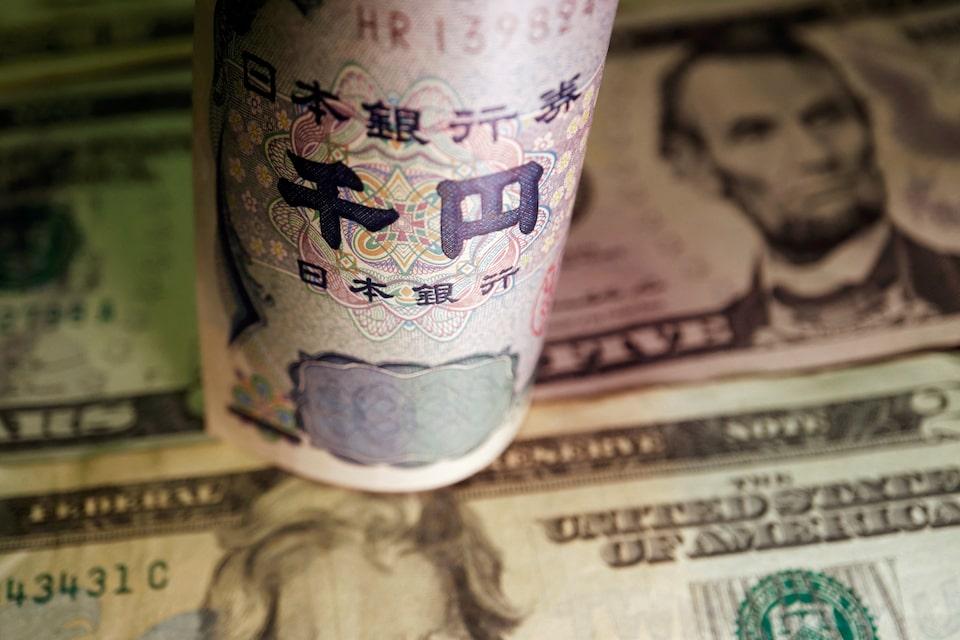
US labor market weakens, dollar drops against euro and yen ADP report shows private employers cut jobs in October Euro gains on stable ECB policy, Fed expected to ease rates Nov 11 (Reuters) - The U.S. dollar weakened against the euro and yen on Tuesday on concerns about the deteriorating U.S. labor market after a report showed that private employers cut jobs last month. ADP Research said on Tuesday that its preliminary estimates show that private employers shed an average of 11,250 jobs a week in the four weeks ending October 25. Sign up here. It comes as the federal government moves closer to reopening, which will unleash a flood of economic data that may point to a slowing economy. “When the government is closed, the news stream is non-existent. With the government going to reopen, I think we're going to begin seeing more cracks,” said Marc Chandler, chief market strategist at Bannockburn Global Forex in New York. The U.S. Senate approved a compromise on Monday that would end the longest government shutdown in U.S. history, breaking a weeks-long stalemate that has disrupted food benefits for millions, left hundreds of thousands of federal workers unpaid and snarled air traffic. It next heads to the Republican-controlled House of Representatives, where Speaker Mike Johnson has said he expects to pass it on Wednesday and send it on to U.S. President Donald Trump to sign into law. Goldman Sachs expects the Bureau of Labor Statistics to publish a new data schedule between November 13 and 17, assuming the government reopens later this week. The government may also publish its September employment report a few days after reopening, likely on Nov. 18 or 19, Goldman economist David Mericle said in a report. The dollar has bounced since mid-September as traders price in fewer rate cuts on a more positive growth outlook for the U.S. economy. Many Federal Reserve officials are also wary of making further rate cuts on concerns about the inflation outlook. But on Tuesday, the euro rose back above its declining trend line against the dollar that has held since September 17, Chandler noted. “The underlying sentiment toward the dollar still remains negative,” he said. The dollar index , which measures the greenback against a basket of currencies including the yen and the euro, fell 0.24% to 99.39, with the euro up 0.29% at $1.159. The euro is supported by the outlook for European Central Bank policy, with its key rate expected to stay unchanged through 2027, while the Fed is seen easing policy. The market is pricing in 67% odds the Fed will cut rates in December. Trading volumes were low on Tuesday with the U.S. bond market closed for the Veterans Day holiday. The Japanese yen strengthened 0.06% against the greenback to 154.06 per dollar. The British pound was flat on the day, after earlier dropping on data showing that Britain's labor market cooled noticeably in the third quarter as the unemployment rate jumped and wage growth slowed. In cryptocurrencies, bitcoin fell 2.28% to $103,198. https://www.reuters.com/world/asia-pacific/safe-haven-yen-under-pressure-traders-eye-end-us-shutdown-2025-11-11/
2025-11-11 00:04
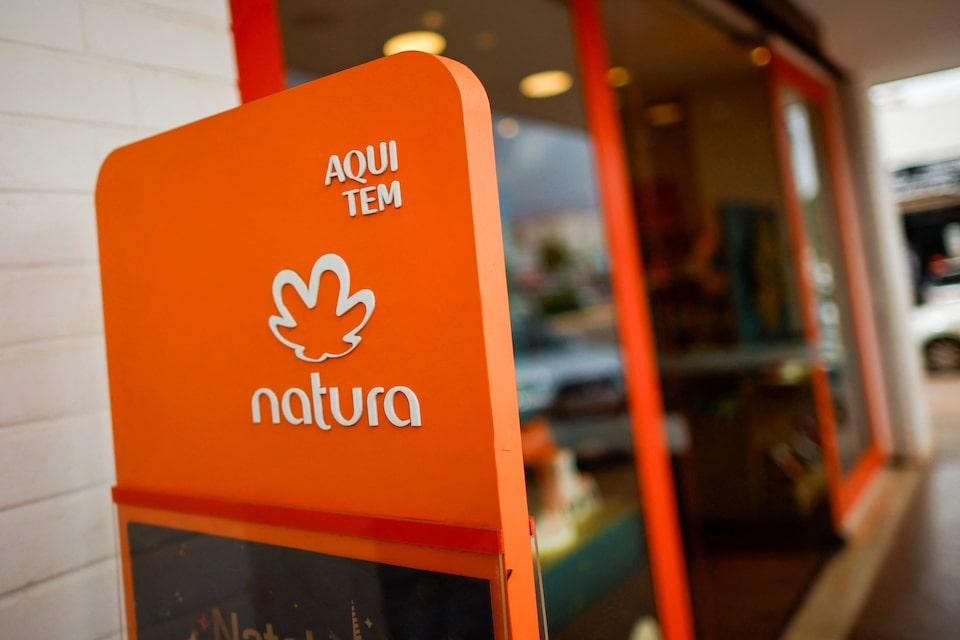
SAO PAULO, Nov 10 (Reuters) - Brazilian cosmetic maker Natura (NATU3.SA) , opens new tab swung to a recurring net loss in the third quarter on Monday, hit by slowing consumer demand in its local market, as well as challenges in the firm's brand integration in Latin America. The company's net loss came in at 119 million reais ($22.02 million) in the July-September quarter, reversing a 301 million real net profit recorded in the same period a year earlier. Sign up here. It also reported recurring earnings before interest, taxes, depreciation and amortization (EBITDA) at 577 million reais in the period, a decline of 33.7% year-on-year. According to Natura's financial statement, the firm faced revenue challenges throughout its operations, with net revenue reaching 5.2 billion reais in the third quarter, down 13.1% from a year earlier. In Brazil, Natura's largest market, where economic growth has slowed amid the highest interest rates in nearly two decades, net revenue fell 3.7% year-on-year to 3.2 billion reais. "The slowdown in the beauty market in Brazil, first identified in June 2025 and still ongoing, has led to the growth of the Natura brand stabilizing after a period of low double-digit expansion," the company added. In its Spanish-speaking Latin American markets, Natura cited integration challenges following the July merger of its Natura and Avon brands in Argentina. Net revenue in these markets fell 3.9% year-on-year to around 2 billion reais. ($1 = 5.4039 reais) https://www.reuters.com/world/americas/brazils-natura-swings-loss-third-quarter-2025-11-10/
2025-11-10 23:22
Nov 10 (Reuters) - Beyond Meat (BYND.O) , opens new tab posted a bigger quarterly loss and forecast fourth-quarter sales below Wall Street estimates on Monday, as the plant-based meat maker grappled with sluggish demand for its products. The highly shorted stock was down 8% in extended trading. The shares had soared more than 1,350% over a span of three days in late October, reviving memories of the meme stock frenzy on Wall Street. Sign up here. The faux-meat producer has faced waning demand after an early boom, as inflation-weary consumers turned away from its pricier products amid a shift toward less processed and, more recently, the influence of the "Make America Healthy Again" movement. CEO Ethan Brown reiterated that "category headwinds and an accompanying softer top-line continue" to weigh on the company. It expects sales between $60 million and $65 million for the fourth quarter, compared with estimates of $70.03 million, according to data compiled by LSEG. Beyond Meat posted a net loss of $110.7 million for the third quarter, compared with $26.6 million a year ago, mainly due to impairment charges related to certain assets and the suspension of its China operations earlier this year. Brown said the company was pursuing further and sizable cost cuts. The company, which had delayed its quarterly results, posted an adjusted loss per share of 47 cents. Quarterly revenue was in line with what was pre-announced, down 13.3% at $70.2 million but edged past the $69 million average estimate. Shares of Beyond Meat have lost two-thirds of their value this year, as investors also reacted to a debt-for-equity swap in September to help avoid near-term default on its credit. https://www.reuters.com/business/retail-consumer/beyond-meat-third-quarter-loss-widens-costs-mount-demand-slumps-2025-11-10/

2025-11-10 23:03
Rice prices soar despite emergency stock release and supply reassurances New PM Takaichi faces challenge with inflation, farm minister favours rice coupon High rice prices boon for cheaper imports, in risk for food security KISARAZU, Japan, Nov 11 (Reuters) - At a farmer's market not far from Tokyo, more than 100 shoppers queued for a chance to get a kilo or so of Japanese rice for 500 yen ($3.32) by carefully heaping as much of the grain into a small wooden box as possible. The weekend event was largely a gimmick, but as inflation continues to outpace wage growth it was a chance for some to secure the staple food for about 40% less than average retail prices. Sign up here. "When I go shopping I'm shocked at the expenditure," said Tasuku Uchida, a 28-year-old shopper who took part in the event. "So I look back at the receipt and when I realise that I haven't bought anything extra, it dawns on me just how far prices have risen. I want the government to hurry up and tackle inflation." It is déjà vu in Japan as near-record rice prices eat into consumers' wallets - despite government efforts since spring to alleviate the pain - presenting a major challenge for newly elected Prime Minister Sanae Takaichi, who took office on October 21. Takaichi, with early opinion polls showing her approval rating above 60%, is preparing to lay out her gameplan for tackling the issue with an economic package to be compiled by the end of the month. Her new farm minister Norikazu Suzuki has mentioned rice coupons for certain households as one idea. Inflation, led by food items, has outpaced wage growth nearly every month for more than three years. RICE PRICES NEAR RECORD HIGH Rice prices first began to surge in the middle of last year amid supply shortages, but eased this summer after the government's unprecedented release of emergency stockpiled rice into the market at cut-rate prices.The government also sought to talk down prices with reassurances of plentiful supply, but the impact has proven short-lived. Former Prime Minister Shigeru Ishiba had said prices of the staple should be well under 4,000 yen. In the week to October 27, supermarket rice prices averaged 4,235 yen for a 5-kg bag, up 23% from a year ago, double 2023 levels and near May's record high of 4,285 yen. Average wholesale prices for September, which reflect the new harvest, hit a record 36,895 yen per 60 kg, up 36% from the previous month. The reason: fearing a repeat of last year's shortage, which was fuelled by factors including extreme heat and a miscalculation of demand, dealers have ignored the government's assurances over supply and set about procuring rice at any cost, pushing transaction prices higher. "We are traumatised by last year's rice shortage turmoil," one rice wholesaler said, declining to be identified because of the sensitivity of the issue. "Our top priority is to stably supply rice to customers. So it can't be helped if rice prices are high as we have to secure it." Shunsuke Orikasa, chief researcher at the Distribution Economics Institute of Japan, said he did not expect retail prices to fall meaningfully in the months until March, unless the market confirmed a significant surplus. Expensive domestic rice is a worry for the nation's food security, Takaichi has said, as businesses and some consumers flock to cheaper, imported rice. Even with Japan's steep tariffs on imported rice, imports by private companies grew nearly 160-fold in September from the previous year, data by the finance ministry showed. Japan imposes A levy of 341 yen per kilo on rice imports by private firms, but imported grain is still cheaper than homegrown rice. Despite the surge in the price of the local grain, the new government may move away from previous consumer-facing rice policies back towards farmers and distributors, some say. After a planned rise in production to 7.48 million tonnes this crop year, the new administration has announced a target of 7.11 million tonnes for 2026, hoping to closely match supply with demand. "Policies appear to have shifted to ones that take producers and distributors into consideration," said Takahide Kiuchi, executive economist at Nomura Research Institute and a former Bank of Japan board member. "It doesn't look like there will be any policies that would bring rice prices down from around 4,000 yen, which will be a big disappointment for consumers." Even farmers say current levels are exceptionally high. "It's too expensive -- this is something the market has inflated," said Yasuji Oshima, a farmer in Ibaraki prefecture, northeast of Tokyo. He stressed, though, that a return to pre-2024 levels amid higher labour, equipment and other costs would squeeze profits so much that rice farming would become even less attractive to the younger generation. "I hope the new government will implement policies that will ensure sustainable agriculture in Japan for the next 10 and 50 years." ($1 = 150.7800 yen) https://www.reuters.com/world/asia-pacific/japans-rice-prices-rise-again-test-new-prime-minister-2025-11-10/