2025-11-08 14:47
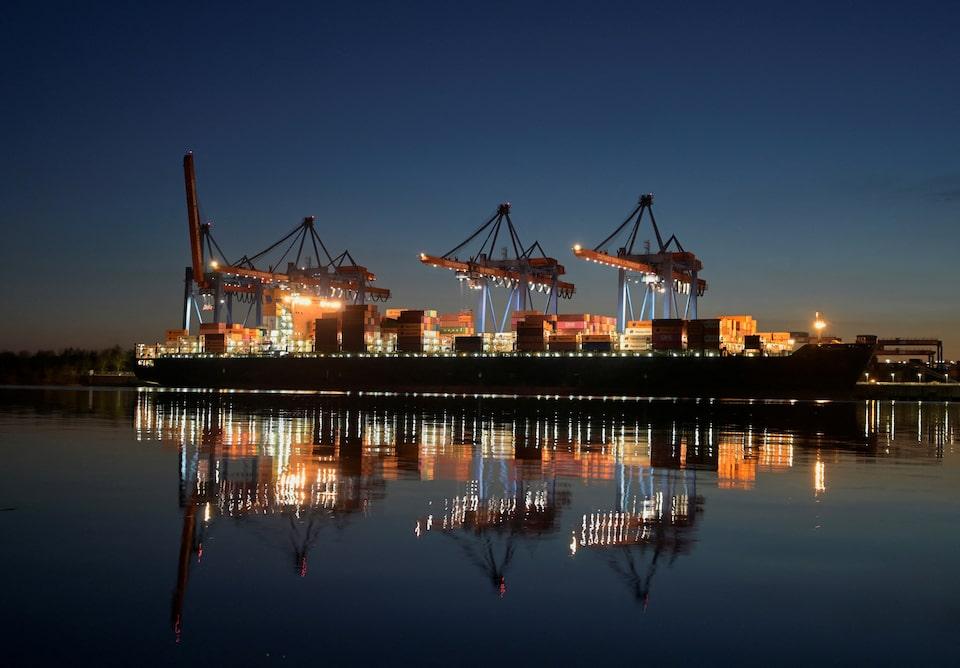
BERLIN, Nov 8 (Reuters) - Germany's coalition government plans to re-examine its trade policies towards China including on energy, raw material imports and Chinese investment in critical German infrastructure and will set up a committee of experts to report to parliament. The plan comes after a recent rise in trade tensions between the world's second and third biggest economies. The committee will examine "security-relevant trade relations between Germany and China" and make recommendations to the government, according to a motion submitted by Chancellor Friedrich Merz's conservatives and their Social Democratic coalition partners, seen by Reuters on Saturday. Sign up here. The motion is likely to be passed next Friday and the committee - which will be staffed by a dozen academics, industry associations, labour representatives and think tank members - will be established shortly afterwards. For decades, Germany saw China, another major exporter, as a natural ally in advocating for the open global trading system that helped Germany's manufacturing sector flourish. But a series of recent blows - including Chinese restrictions on rare earth exports that threatened to paralyse Germany's crucial car industry - have prompted a rethink. The new committee will report to parliament twice a year. "The aim of the committee is to examine from a legal, economic and political perspective the need for changes to foreign trade rules," the motion read. The committee will also look at other countries' trade ties with China. Last month, German Foreign Minister Johann Wadephul, who has criticised China's rare earth export restrictions and tacit backing for Russia in its war against Ukraine, postponed a trip to China at the last minute after Beijing confirmed only one of his requested meetings. This week Chancellor Merz broke with decades of German free trade dogma by calling for Europe to adopt protectionist measures to sustain Europe's steel industry in the face of a Chinese competitive onslaught. Social Democrat Finance Minister Lars Klingbeil talked of the need for "a little more European patriotism". https://www.reuters.com/world/china/germany-re-examine-security-relevant-china-trade-policies-2025-11-08/
2025-11-08 12:41
FLORENCE, Italy, Nov 8 (Reuters) - Italian banks support the European Central Bank's digital euro project but want investments required by them to implement it to be staggered over time because the costs are high, a top official of the Italian Banking Association (ABI) said. The ECB has been working on a digital version of the single currency to strengthen the euro area's monetary sovereignty, but the legislative process has been slow as some French and German banks in particular have opposed the project. They say it could see millions of Europeans use an online ECB wallet for daily payments, draining away their bank deposits. Sign up here. "We're in favour of the digital euro because it embodies a concept of digital sovereignty," ABI General Manager Marco Elio Rottigni told a press seminar in Florence on Friday. "Costs for the project, however, are very high in the context of the capital expenditure banks must sustain, they could be spread over time." The ECB's plan aims to ensure that central bank money remains accessible and relevant in an increasingly digital economy, while also reducing reliance on non-European payment service providers, and responding to the rise of stablecoins. At its meeting in Florence on October 29-30, the ECB's Governing Council decided to advance the digital euro project to its next phase, after completing a two-year preparation period. The launch is expected in 2029 after a pilot phase in 2027, contingent on the adoption of EU legislation expected in 2026. European parliament member Fernando Navarrete, of Spain's Partido Popular, is heading the parliament's assessment of the digital euro. On October 28 he presented his draft report promoting a scaled down version of the scheme to safeguard private payment initiatives such as Wero, which is backed by 14 European lenders. "We're in favour of a twin approach, a central bank digital currency and commercial bank digital currencies which may develop faster, because what Europe shouldn't do is fall behind," Rottigni said. https://www.reuters.com/business/finance/italys-banks-back-digital-euro-want-costs-spread-over-time-2025-11-08/

2025-11-08 10:11
Brazil, COP30 host, produces over 80% of energy with renewables Critics of coal power bemoan political clout of plant owners Candiota coal plant sells power on spot market Local community depends on jobs at coal mine, cement company CANDIOTA, Brazil, Nov 8 (Reuters) - One of Brazil's last coal plants roared back to life in July after a powerful business group invested millions to keep its turbines turning in the southern mining town of Candiota. The plant's owner Ambar, controlled by billionaire brothers Wesley and Joesley Batista, is betting that even Brazil, where cheap renewable energy sources produce over 80% of electricity, would not soon stop burning coal, a major driver of global warming. Sign up here. Brazil, as host of the United Nations climate summit COP30 this month, is urging nations to transition away from fossil fuels. President Luiz Inacio Lula da Silva lamented at a leaders summit in the Amazonian city of Belem this week that the war in Ukraine had led to the reopening of coal mines. Yet Candiota and five other coal plants still produce 3% of Brazil's electricity, illustrating how pressure from interest groups and lack of a transition plan can keep coal burning, even in a renewable energy powerhouse. "Brazil absolutely has the potential, with all the solar resources in addition to the hydro and the wind, that it could basically close these coal plants down," said Christine Shearer, who monitors coal for the think tank Global Energy Monitor. "The strength of the coal lobby, particularly in these coal mining states, is the reason that you see these coal plants sticking around," she said. The Candiota plant's government contract expired last year, leading local businesses to shut down and many residents to leave town. The plant now sells energy on the spot market, helping to meet demand at peak hours when solar and wind generation fades. Brazil's Congress and federal government also have thrown a lifeline to coal plants. Last month, lawmakers approved a bill granting contracts until 2040 for plants run on domestic coal, such as Candiota. Lula could still veto it. NEW AUCTION OPEN TO COAL The Brazilian government also made coal eligible for a planned capacity auction in March, aiming to boost energy security by contracting thermal plants that can be quickly activated when wind and solar sources are not producing. Brazil's Ministry of Energy said the additional contracts would make the electric system more reliable, allowing more renewables to also enter the grid. The inclusion of coal surprised experts, who say coal plants are not quick to start and so lack the needed flexibility. Critics blame poor long-term planning for continued coal burning even as vast amounts of clean energy go unused due to weak demand and lack of transmission lines. They say this makes the government vulnerable to lobbying from coal and natural gas groups, despite higher financial and environmental costs. The billionaire Batista brothers bought the Candiota plant before it had a new contract in sight because "they saw a possibility of being successful with their pressure tactics," said Luiz Eduardo Barata, head of the National Front of Energy Consumers, a group critical of government support for coal. Environmental group Arayara, another critic of Ambar, is seeking to suspend the plant's environmental license in court. In a statement, Ambar said the coal that fuels its Candiota plant is "secure and widely available to the power system, making it ideal for ensuring supply reliability." The company denied relying on political influence to secure a new contract for Candiota or plants in its portfolio. Ambar accused critics of representing the interests of large energy consumers at the expense of smaller ones — "regardless of the needs of the power system, the environment or the Brazilian population." NO JUST TRANSITION Ambar's work to keep coal alive puts Brazil in the company of countries such as India and South Africa, where powerful interest groups have undermined efforts to wean the energy system off coal, which is key to local economies in places like Candiota. Shutting the coal plant there could lead to the loss of 10,000 jobs not only at Ambar's operation but at the local mine feeding it and cement factories repurposing its ashes. Jose Adolfo de Carvalho Junior, who manages a coal mine in Candiota, said the cost of shutting down the region's only industry with quality jobs was not worth it. "Will turning this off solve the planet's carbon problem? No, it's literally a drop in the ocean," he said. The uncertain future of the plant has residents on edge about their livelihoods, said Graca dos Santos, who was fired from the plant after it lost government contracts. The life of the plant "needs to be extended so that a just energy transition can happen," she said. "It's not fair to leave an entire population without work." Lula's government has no transition plan for Candiota and has not made much progress on plans for other coal plants. The Candiota region's beef, wine and olive oil sectors could employ coal workers with some retraining, said Joao Camargo, who founded a seed producers cooperative. "They didn't create any condition for the transition," he said. The head of the local coal miners' union, Hermelindo Ferreira, pointed at maps showing areas that would lose industrial activity and jobs if the Candiota plant shuts down. Still, confidence in coal's long-term prospects is slowly fading in Candiota, he admitted. Some workers have already moved to nearby towns in search of better employment. Even as he fights to save jobs, Ferreira said he is urging colleagues to learn new skills. He has earned a certification for maintenance on towers measuring wind speed, hoping the wind power industry will invest in the region. "You don't put all your eggs in one basket," he said. https://www.reuters.com/business/energy/why-coal-still-clings-renewable-energy-powerhouse-brazil-2025-11-08/

2025-11-08 05:18
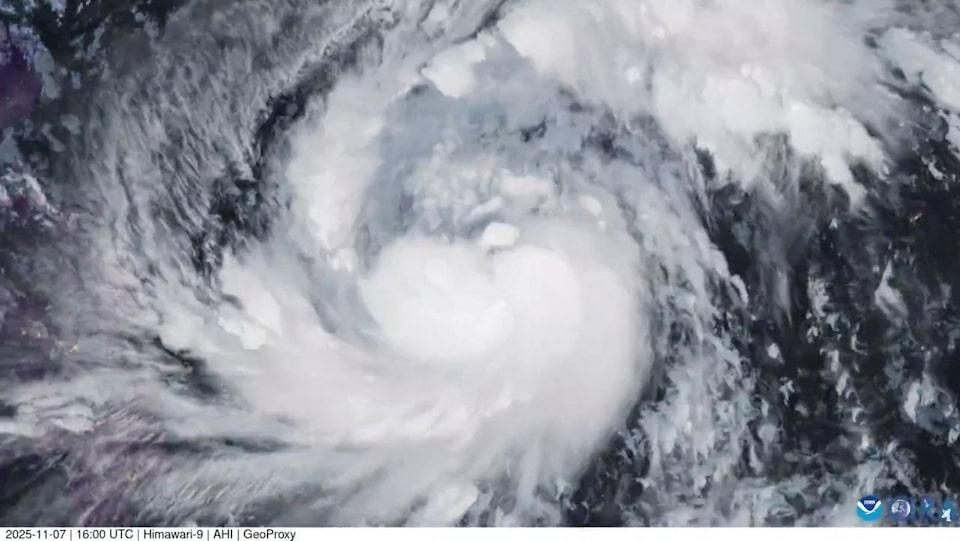
MANILA, Nov 8 (Reuters) - The Philippines' weather bureau warned of life-threatening storm surges of up to five metres and destructive winds as Typhoon Fung-wong churns toward the country's eastern coast, where it is forecast to intensify into a super typhoon before making landfall on Sunday night. The typhoon's massive circulation, spanning 1,500 kilometres (932 miles), is already lashing parts of eastern Philippines with heavy rains and winds, PAGASA weather forecaster Benison Estareja said in a briefing. Sign up here. "It can cover almost the entire country," Estareja said. Fung-wong, locally named Uwan, is currently packing maximum sustained winds of 140 kph and gusts of up to 170 kph, and could intensify to 185 kph as it nears land, Estareja said, powerful enough to destroy homes, topple trees and structures. Up to 200 mm of rainfall is expected in eastern Philippine provinces, particularly in the Bicol region, as well as parts of Samar, raising the risk of widespread flooding and landslides, while northern and central Luzon could see 100-200 mm rainfall during its passage. PAGASA urged residents in low-lying and coastal areas to evacuate to higher ground and halt all marine activities, warning of destructive storm surges that could inundate coastal communities, and warned of violent winds. Several local governments have suspended classes for Monday, and the Philippines' flag carrier has cancelled some flights, ahead of Fung-wong's expected landfall. The warning comes just days after Typhoon Kalmaegi left a trail of destruction across the region, ripping through coastal communities, toppling trees, and shredding roofs and windows. Kalmaegi killed 204 people in the Philippines and five in Vietnam, displaced hundreds of thousands, and knocked out power across wide areas. Vietnam's disaster agency reported damage to nearly 2,800 homes, and said about 500,000 people remain without electricity. In the Philippines, raging floods destroyed homes and clogged streets with debris. Vietnam and the Philippines are highly vulnerable to tropical storms and typhoons due to their locations along the Pacific typhoon belt, regularly experiencing damage and casualties during peak storm seasons. In Thailand, Kalmaegi's lingering impact caused heavy rain and localised flooding in parts of the northeast and central regions. Scientists have warned that storms such as Kalmaegi are becoming more powerful as global temperatures rise. https://www.reuters.com/business/environment/philippines-warns-deadly-storm-surges-massive-typhoon-fung-wong-nears-super-2025-11-08/
2025-11-08 00:58
Nov 7 (Reuters) - Qcells, the U.S. solar manufacturing arm of Korea's Hanwha (000880.KS) , opens new tab, said it would furlough 1,000 workers at its Georgia factories because shipments of components it needs from overseas are being routinely stalled by U.S. customs officials. The announcement comes months after the company said some of its shipments of solar cells had been detained at U.S. ports under a 2021 law banning imports from China's Xinjiang region due to concerns about forced labor. Sign up here. Qcells has committed to investing $2.5 billion to build a complete U.S. solar panel supply chain to compete with China. The company manufactures cells in Malaysia and South Korea that are imported to be assembled into panels. It is also ramping up its U.S. cell manufacturing in Cartersville, Georgia. “Qcells expects to resume full production in the coming weeks and months. Our commitment to building the entire solar supply chain in the United States remains," Qcells spokesperson Marta Stoepker said in a statement. "We will soon be back on track with the full force of our Georgia team delivering American-made energy to communities around the country.” The company's detained shipments have been clearing customs, Stoepker said, but the delays have forced the company to curtail production. Qcells has implemented temporary reduced hours and furloughs for about half of its manufacturing employees at plants in Cartersville and Dalton, Georgia. It has also cut about 300 staffing agency workers. https://www.reuters.com/sustainability/climate-energy/qcells-furloughs-1000-workers-us-solar-factories-due-stalled-shipments-2025-11-08/

2025-11-07 23:49
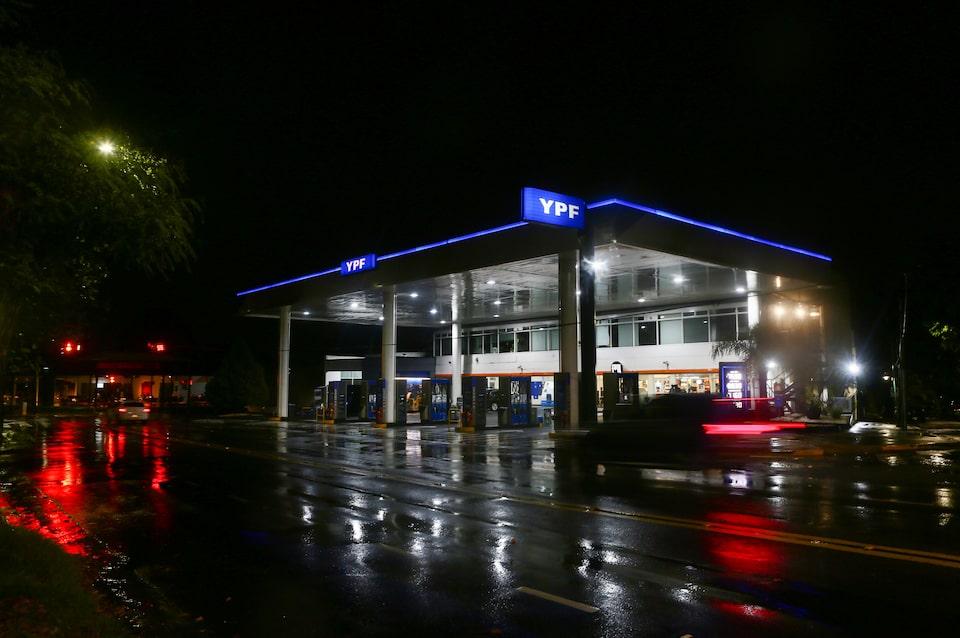
BUENOS AIRES, Nov 7 (Reuters) - Argentine state-controlled energy company YPF (YPFDm.BA) , opens new tab swung to a net loss of $198 million in the third quarter, the company said on Friday, saying the loss reflected a deferred tax charge. The company's adjusted earnings before interest, tax, depreciation and amortization (EBITDA), a key measure of industry profitability, stood at $1.36 billion for the July-to-September period, down 1% from a year earlier and in line with expectations of analysts polled by LSEG. Sign up here. Revenues were $4.64 billion, YPF said, down 12% from the same quarter last year and a touch below analysts' $4.76 billion estimate. The company said its total hydrocarbon production was down 6% to 523,100 barrels per day. Shale oil production, however, surged by 35% year-on-year to average 170,000 barrels per day, and now represents 70% of the company's total oil output. Shale production reached a record in October, YPF said in a separate statement on Friday, reaching 190,000 bpd. YPF's performance is a critical indicator for Argentina's economy, which relies on the company's Vaca Muerta operations in its push to become a net energy exporter. The huge formation in western Argentina accounts for 64% of the country's oil production even though only 8% of it is under development. The formation is also vital to President Javier Milei's government, which needs to increase Argentina's energy exports to bolster its dollar reserves and build confidence in the government's ability to maintain a stable currency. In YPF's downstream business, which includes refining and marketing, refinery utilization was at 97%. Domestic fuel sales volume rose by 3% from the second quarter, as YPF gained market share. https://www.reuters.com/business/energy/argentinas-ypf-swings-q3-net-loss-198-mln-2025-11-07/