2025-11-07 23:07
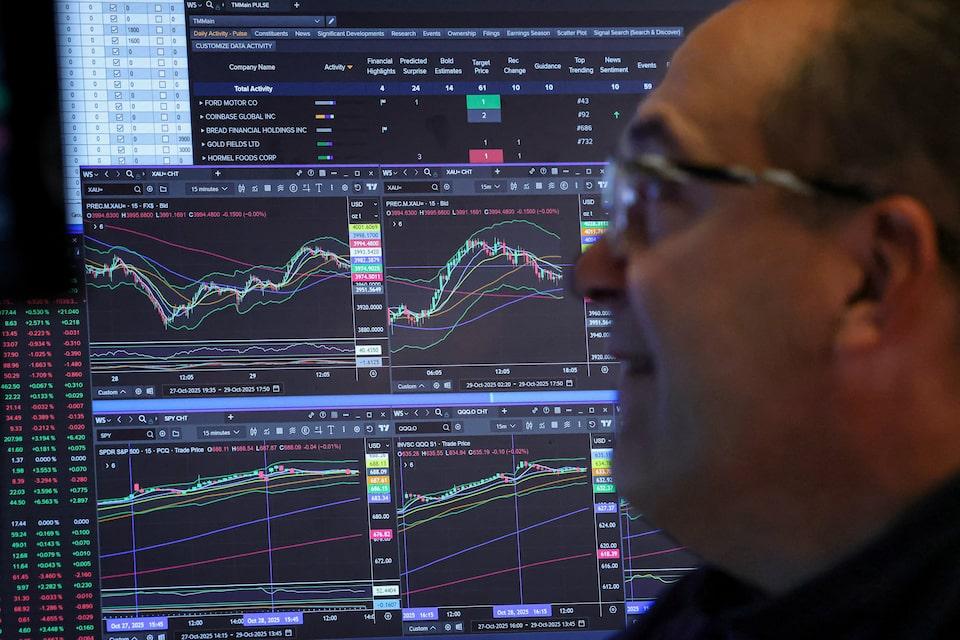
Indexes: Dow up 0.16%, S&P 500 up 0.13%, Nasdaq off 0.21% Democrats propose a deal to end shutdown Tesla shareholders approve $1 trillion CEO pay package Microchip Technology falls following its disappointing sales forecast Expedia jumps after annual revenue growth forecast hike NEW YORK, Nov 7 (Reuters) - The Nasdaq closed lower but the S&P 500 and the Dow eked out late-session gains on Friday as investors turned the page on a roller-coaster week with economic worries, the longest-ever federal government shutdown, and sky-high tech stock valuations dampening risk appetite. All three major U.S. stock indexes spent much of the session sharply lower, but losses shrank, with the S&P 500 and the Dow turning higher late in the day following reports of progress on the congressional impasse which has resulted in the longest federal government shutdown in U.S. history. Sign up here. "A resolution to the shutdown will clearly improve sentiment, particularly at a time when the margin of error is narrow," said Terry Sandven, chief equity strategist at U.S. Bank Wealth Management in Minneapolis. "Stocks are at all-time highs and valuations are elevated, and if the shutdown gets resolved, it's one less thing weighing on the minds of investors." All three indexes lost ground from last Friday's close, with the Nasdaq registering its largest weekly percentage drop since late March/early April amid mounting concerns over inflated valuations of artificial intelligence-related momentum stocks, which have provided much of the upside muscle to the stock market's rally over recent months. "Ups and downs and periods of consolidation are part of the normal ebb and flow of a bull market," Sandven added. Concerns arising from the government shutdown were apparent in the University of Michigan's preliminary take on November Consumer Sentiment, which fell to its lowest level in over three years. Survey participants' assessment of current conditions plunged to its most pessimistic reading in the survey's history. Overall sentiment has slid 29.9% since November 2024, when U.S. President Donald Trump was elected to his second term in the Oval Office. The shutdown has also led to a blackout of official economic indicators, complicating the Federal Reserve's dual mandate of promoting full employment and price stability. "Flying in the dark in the absence of economic data due to the shutdown is weighing on investors as well, adding a layer of uncertainty," said Ryan Detrick, chief market strategist at Carson Group in Omaha. "We know earnings were strong, but the housing market is weak." "Clearly the labor market is weakening and investors are taking a 'sell first, ask questions later' mentality so far in November." On the trade front, Beijing has begun creating a new rare earth licensing program that could speed up shipments but is likely to fall short of Washington's hopes for a complete rollback of restrictions. The Dow Jones Industrial Average (.DJI) , opens new tab rose 74.80 points, or 0.16%, to 46,987.10, the S&P 500 (.SPX) , opens new tab gained 8.48 points, or 0.13%, to 6,728.80 and the Nasdaq Composite (.IXIC) , opens new tab lost 49.45 points, or 0.21%, to 23,004.54. Third-quarter reporting season continued to barrel toward its conclusion, with 446 of the companies in the S&P 500 having reported. Of those, 83% have delivered better-than-expected earnings, according to LSEG data. Analysts now predict year-on-year S&P 500 earnings growth of 16.8% for the July-September period, a significant improvement over the 8.0% annual growth. Microchip Technology (MCHP.O) , opens new tab shares dropped 5.2% after forecasting quarterly net sales below estimates. Tesla (TSLA.O) , opens new tab shareholders approved the largest corporate pay package in history for CEO Elon Musk. The electric vehicle maker's shares fell 3.7%. Shares of Expedia (EXPE.O) , opens new tab surged 17.6% after the travel platform reported solid bookings from its business-to-business segment. Block (XYZ.N) , opens new tab slumped 7.7% after missing third-quarter profit expectations, and Take-Two Interactive (TTWO.O) , opens new tab fell 8.1% following the company's decision to delay the launch of its popular video game Grand Theft Auto VI to November 2026. Advancing issues outnumbered decliners by a 1.44-to-1 ratio on the NYSE. There were 97 new highs and 195 new lows on the NYSE. On the Nasdaq, 2,422 stocks rose and 2,201 fell as advancing issues outnumbered decliners by a 1.1-to-1 ratio. The S&P 500 posted 14 new 52-week highs and 14 new lows while the Nasdaq Composite recorded 43 new highs and 323 new lows. Volume on U.S. exchanges was 20.15 billion shares, compared with the 20.77 billion average for the full session over the last 20 trading days. https://www.reuters.com/world/asia-pacific/wall-street-futures-struggle-traction-end-wobbly-week-2025-11-07/
2025-11-07 21:49
WASHINGTON, Nov 7 (Reuters) - The Trump administration will hold an auction for drilling oil and gas off the U.S. Gulf next month and has proposed another in a waterway in southern Alaska, it said on Friday. The lease sale in the U.S. Gulf of Mexico, which President Donald Trump refers to as the Gulf of America, will make about 80 million acres available. The sale, which will take place on December 10, will be the first of 30 sales in the region through 2040 that were included in Trump's tax law which he signed in July. Sign up here. The Bureau of Ocean Energy Management, an office of the Interior Department, also proposed to make about 1 million acres available for leasing in Alaska's Cook Inlet. The sale, scheduled for March 4 next year, would be the first of at least six Cook Inlet lease sales required by the law, scheduled annually from 2026 to 2028, and from 2030 to 2032. The sales align with Trump's policy of maximizing oil, gas and coal output while slashing regulations on fossil fuels and subsidies for green energy. "BOEM is now moving forward with a predictable, congressionally mandated leasing schedule that will support offshore oil and gas development for decades to come," Matt Giacona, acting director of the office, said in a statement. BOEM has set a 12.5% royalty rate, the lowest rate allowed, for both shallow and deepwater leases in both places "to encourage strong industry participation." https://www.reuters.com/business/energy/trump-finalizes-us-gulf-oil-lease-sale-proposes-alaska-sale-2026-2025-11-07/
2025-11-07 21:22
Trump administration had asked Supreme Court to allow it to withhold court-ordered money for SNAP benefits Appeals court had declined to set aside Rhode Island judge's order requiring full funding Group says not funding food stamps would harm 1 in 8 Americans WASHINGTON, Nov 7 (Reuters) - The U.S. Supreme Court on Friday allowed President Donald Trump's administration to withhold for now about $4 billion needed to fully fund a food aid program for 42 million low-income Americans this month amid the federal government shutdown. The court's order, , opens new tab known as an administrative stay, gives a lower court additional time to consider the administration's formal request to only partially fund the Supplemental Nutrition Assistance Program, known as SNAP or food stamps, for November. The administration had faced a judge-ordered Friday deadline to fully fund the program. Sign up here. Justice Ketanji Brown Jackson, who issued the stay, set it to expire two days after the Boston-based 1st U.S. Circuit Court of Appeals rules on the administration's request to halt a judge's order that the U.S. Department of Agriculture promptly pay the full amount of this month's SNAP benefits, which cost $8.5 billion to $9 billion per month. JACKSON EXPECTS LOWER COURT TO ACT QUICKLY The ruling by U.S. District Judge John McConnell in Providence, Rhode Island, on Thursday came after the administration said it would provide $4.65 billion in emergency funding to partially cover SNAP benefits for November. Jackson, the liberal justice assigned to review emergency appeals from a group of states that include Rhode Island, said the 1st Circuit was expected to rule on the administration's request to block McConnell's order "with dispatch." U.S. Attorney General Pam Bondi noted the Supreme Court's decision in a post on X, which paused a court ruling she deemed "judicial activism at its worst." Department of Justice lawyers told the Supreme Court that McConnell's ruling, if allowed to stand, would "sow further shutdown chaos" by prompting "a run on the bank by way of judicial fiat." The administration originally planned to suspend SNAP benefits altogether in November, citing a lack of funding because of the shutdown. But McConnell last week ordered the USDA to use emergency SNAP funding to cover part of this month's cost. In Thursday's ruling, he ordered the USDA to make up for the shortfall with money from a separate department program with $23.35 billion in funding, derived from tariffs, that supports child nutrition. McConnell, an appointee of Democratic President Barack Obama, accused the Republican Trump administration of withholding SNAP benefits for "political reasons." His ruling was a win for a coalition of legal challengers comprising cities, unions and nonprofits represented by the liberal legal group Democracy Forward, and prompted the administration to ask the 1st Circuit on Friday to halt the order. The plaintiffs told the 1st Circuit that the administration showed disregard for the harm that would befall nearly one in eight Americans if McConnell's decision were paused and SNAP recipients were denied full benefits. "The court should deny Defendants' motion and not allow them to further delay getting vital food assistance to individuals and families who need it now," the lawyers wrote. CONFUSION OVER STATES' FUNDING The 1st Circuit on Friday denied the Trump administration's request to administratively stay McConnell's ruling. It has yet to issue a ruling on the administration's formal request to halt the judge's order, but the 1st Circuit panel, which consisted of three judges appointed by Democratic presidents, said it would do so "as quickly as possible." Skye Perryman, the head of Democracy Forward, told MSNBC that the courts hearing cases over the withholding of SNAP benefits "have been very clear, that this administration not only had the legal authority to make these payments but that the administration must make these payments." Hours before Friday's Supreme Court order, the USDA informed states it was working to comply with McConnell's order by making funds available to fully fund SNAP, even as the administration moved to appeal McConnell's ruling, causing confusion. After receiving the USDA memo, states including New York, New Jersey and Massachusetts said they had directed state agencies to issue SNAP benefits in full for November. "President Trump should never have put the American people in this position," Massachusetts Governor Maura Healey, a Democrat, said in a statement. SNAP benefits lapsed at the start of the month for the first time in the program's 60-year history. Recipients have turned to already strained food pantries and made sacrifices like forgoing medications to stretch tight budgets. SNAP benefits are paid monthly to eligible Americans whose income is less than 130% of the federal poverty line. The maximum monthly benefit for the 2026 fiscal year is $298 for a one-person household and $546 for a two-person household. https://www.reuters.com/world/us/usda-says-it-is-working-comply-with-court-order-pay-food-aid-benefits-2025-11-07/

2025-11-07 21:18
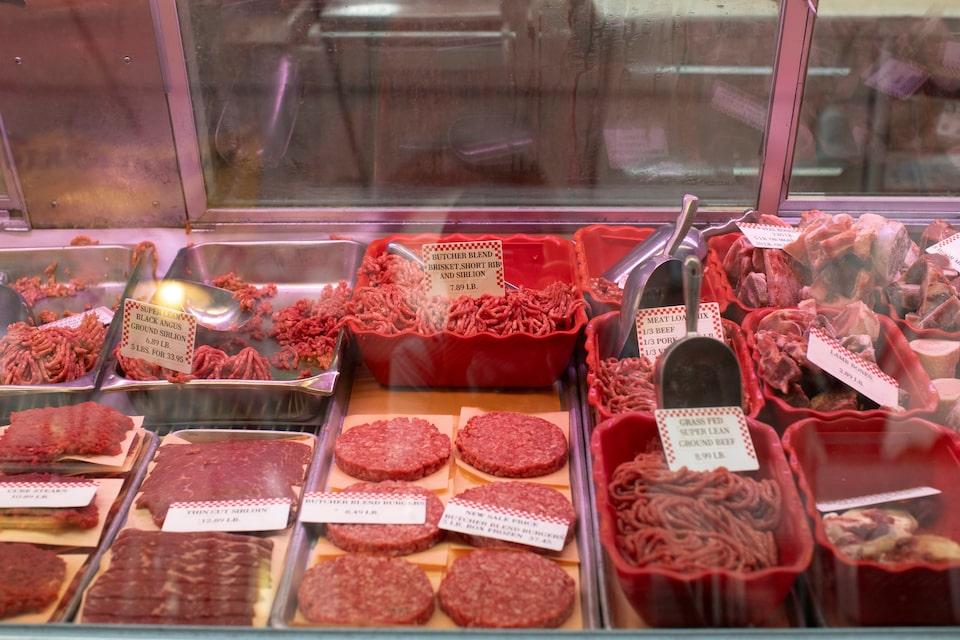
Trump accuses meatpackers of price manipulation and collusion DOJ probes meatpackers, focusing on anticompetitive conduct Consumers worry about affordability WASHINGTON/CHICAGO, Nov 7 (Reuters) - President Donald Trump on Friday accused meatpacking companies of driving up U.S. beef prices, which have hit records, through manipulation and collusion, and ordered the Justice Department to investigate. Attorney General Pam Bondi said in an X post the probe was under way and being run by Agriculture Secretary Brooke Rollins and Assistant Attorney General Gail Slater. Slater leads the Justice Department's antitrust division, which investigates price-fixing and other practices that stifle competition. Sign up here. No targets of the probe were identified. Tyson Foods (TSN.N) , opens new tab, Cargill, JBS USA and National Beef Packing Company slaughter about 85% of U.S. grain-fattened cattle that become steaks, beef roasts and other cuts of meat in supermarkets. In a post on Truth Social, the president said he directed the Justice Department to launch "an investigation into the Meat Packing Companies who are driving up the price of Beef through Illicit Collusion, Price Fixing, and Price Manipulation." The move comes as Americans are focused on pocketbook worries, like food prices that have outpaced inflation. A Reuters/Ipsos poll in late October found that 40% of respondents said cost-of-living was the most important election issue. The Department of Justice is also probing whether egg producers conspired to inflate the price of eggs. Beef prices set records in 2025 after a years-long drought burned up pasture lands and hiked costs of cattle feed, forcing ranchers to slash the nation's herd to the smallest level in nearly 75 years. Consumer demand has remained generally strong despite high prices. A pound of ground chuck beef cost retail consumers about $6.33 in September, up 13.5% from a year earlier, according to the Bureau of Labor Statistics. Ranchers have long complained about consolidation in the packing industry. Cargill declined to comment. Spokespeople for the other companies did not immediately respond to requests for comment. "We need transparency, accountability, and a fair market that rewards those who actually raise and produce our beef — not the corporate middlemen gaming the system," Rollins said in a post on X. The Meat Institute, a trade group representing meatpackers, said the beef industry was heavily regulated and that market transactions were transparent. "Despite high consumer prices for beef, beef packers have been losing money because the price of cattle is at record highs," said Julie Anna Potts, the institute's CEO. The administration of former President Joe Biden also blamed meatpacking companies for rising food prices. JBS USA is owned by Brazilian meatpacker JBS, while Brazil's Marfrig Global Foods SA (MBRF3.SA) , opens new tab holds a controlling stake in National Beef Packing Company. "This entire industry is highly concentrated and well beyond the level that's normally considered a harm to the economy," said Bill Bullard, CEO of cattle producers' group R-CALF USA. PRICE-FIXING LAWSUITS Tyson, Cargill and JBS have paid tens of millions of dollars to settle lawsuits accusing the companies of conspiring to inflate U.S. beef prices by restricting supply. They have denied wrongdoing. The Justice Department's antitrust division has both civil and criminal investigative authority, and can issue subpoenas for documents and witness testimony in its investigations into suspected anticompetitive conduct. Slater, a former economic adviser to Vice President JD Vance, has said the division will focus on "pocketbook issues" facing consumers, such as food, housing and transportation. Bipartisan calls for antitrust enforcement in the packing industry have mounted in recent years. At a hearing in June, Senator Josh Hawley, a Republican from Missouri, and Cory Booker, a Democratic senator from New Jersey, called for antitrust enforcement in the sector. "It’s time to fix this broken system once and for all," said Angela Huffman, president of advocacy group Farm Action. Trump recently angered ranchers by urging them to lower cattle prices and suggesting the country could increase low-tariff imports of Argentine beef to reduce U.S. beef prices. Economists said increased imports from Argentina would not meaningfully lower grocery store prices for U.S. consumers. In August, Trump implemented a 50% tariff on Brazilian goods that slowed imports of a major source of beef that was mixed with U.S. hamburger meat, further tightening supplies. https://www.reuters.com/world/us/trump-says-he-asked-doj-investigate-meat-packing-companies-driving-up-beef-2025-11-07/
2025-11-07 20:12
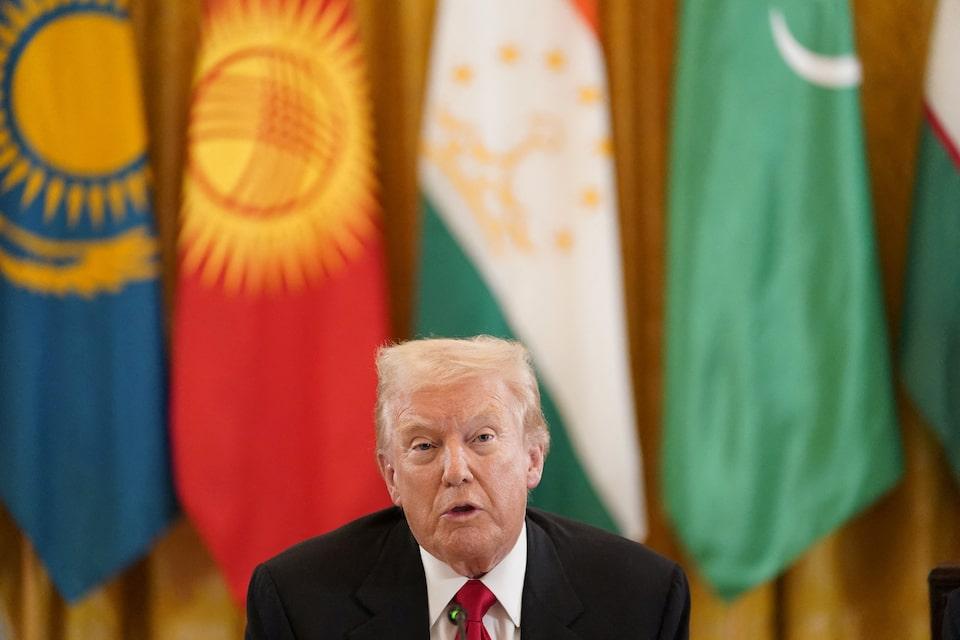
Stablecoin adoption may lower Fed's short-term rates, Miran says Stablecoins boost dollar's dominance, increase demand for US Treasury bills Miran compares stablecoin impact to past global savings affecting US rates NEW YORK, Nov 7 (Reuters) - Federal Reserve Governor Stephen Miran on Friday said that if stablecoins end up enjoying widespread adoption it could mean the central bank needs to keep short-term interest rates lower than they would otherwise be. “Even relatively conservative estimates of stablecoin growth imply an increase in the net supply of loanable funds in the economy that pushes down” the economy’s neutral rate, Miran said in the text of a speech to be delivered before the BCVC Summit 2025 in New York. Sign up here. The neutral rate, which is the short-term interest rate that neither stimulates nor slows the economy, is called R-star. And if R-star “is lower, policy rates should also be lower than they would otherwise be to support a healthy economy,” Miran said, adding “a failure of the central bank to cut rates in response to a reduction in R-star is contractionary.” Stablecoins are cryptocurrencies designed to have a stable value versus the dollar, and while the broader sector remains extremely volatile, stablecoins are increasingly being integrated into the financial system. Miran said dollar-denominated stablecoins make the dollar and other dollar assets more attractive, with implications for the U.S. economy. “Stablecoins are also contributing to the dollar’s dominance by allowing an ever-growing share of people around the globe to hold assets and conduct transactions in the most trusted currency,” the official said. He added, “stablecoins are already increasing demand for U.S. Treasury bills and other dollar-denominated liquid assets by purchasers outside the United States" and "this demand will continue growing.” “This new demand lowers borrowing costs for the U.S. government,” he said. With stablecoins likely to bolster the dollar’s value on the global stage, “depending on the strength of this effect relative to other forces affecting the Fed’s price-stability and maximum-employment mandates, that might be something that monetary policy reacts to.” Miran, the Fed’s newest policymaker, did not address the near-term monetary policy outlook in his prepared remarks. Miran is controversially on leave from serving the Trump White House, and has been a steadfast supporter of aggressive interest rate cuts. Miran noted the impact of broad stablecoin adoption could be akin to the period where excessive global savings helped depress U.S. interest rates for many years ahead of the great financial crisis two decades ago. Miran noted this sort of environment, which would keep Fed rates low, would also increase the chance of the Fed cutting its rate target to near-zero levels. https://www.reuters.com/markets/asia/feds-miran-stablecoin-adoption-could-put-downward-pressure-interest-rates-2025-11-07/
2025-11-07 18:58
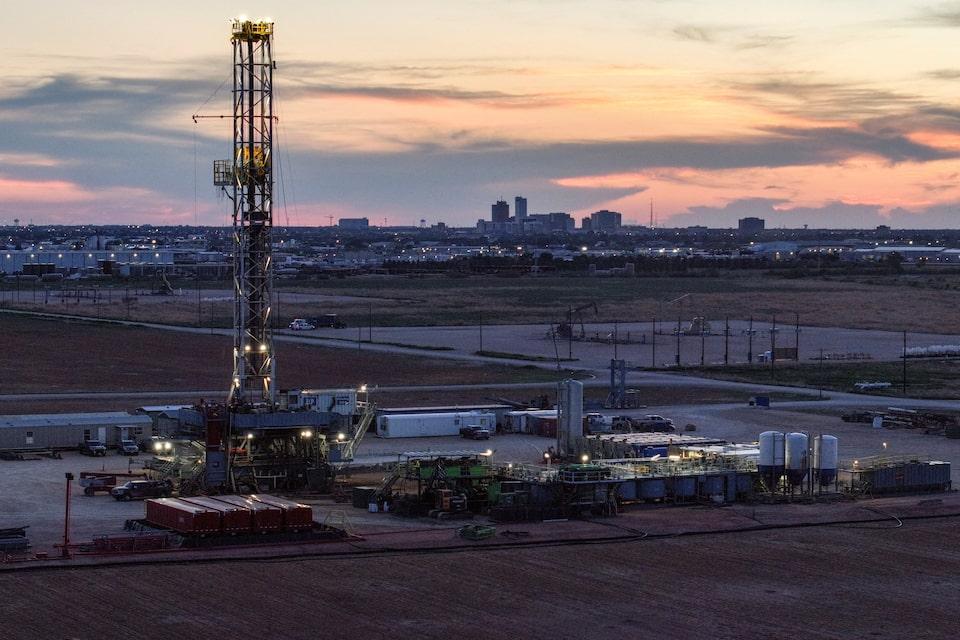
Rig count still 6% below last year, despite recent increase Gas rigs reach highest level since August 2023 EIA projects rise in crude and gas output in 2025 NEW YORK, Nov 7 (Reuters) - U.S. energy firms this week added oil and natural gas rigs for the third time in four weeks, energy services firm Baker Hughes (BKR.O) , opens new tab said in its closely followed report on Friday. The oil and gas rig count, an early indicator of future output, rose by two to 548 in the week to November 7. , , Sign up here. Despite this week's rig increase, Baker Hughes said the total count was still down 37 rigs, or 6% below this time last year. Baker Hughes said oil rigs held steady at 414 this week, while gas rigs rose by three to 128, their highest since August 2023. The number of miscellaneous rigs also declined by one to six. In Texas, the biggest oil and gas producing state, the rig count fell by one to 234, the lowest since September 2021. In Louisiana, meanwhile, the rig count rose by two to 43, the highest since September 2024. The oil and gas rig count declined by about 5% in 2024 and 20% in 2023 as lower U.S. oil and gas prices prompted energy firms to focus more on boosting shareholder returns and paying down debt rather than increasing output. The independent exploration and production (E&P) companies tracked by U.S. financial services firm TD Cowen said they planned to cut capital expenditures by around 4% in 2025 from levels seen in 2024. That compares with roughly flat year-to-year spending in 2024, increases of 27% in 2023, 40% in 2022, and 4% in 2021. Even though analysts forecast U.S. spot crude prices would decline for a third year in a row in 2025, the U.S. Energy Information Administration (EIA) projected crude output would rise from a record 13.2 million barrels per day (bpd) in 2024 to around 13.5 million bpd in 2025. On the gas side, EIA projected a 56% increase in spot gas prices in 2025 would prompt producers to boost drilling activity this year after a 14% price drop in 2024 caused several energy firms to cut output for the first time since the COVID-19 pandemic reduced demand for the fuel in 2020. EIA projected gas output would rise to 107.1 billion cubic feet per day (bcfd) in 2025, up from 103.2 bcfd in 2024 and a record 103.6 bcfd in 2023. https://www.reuters.com/business/energy/us-drillers-add-oil-gas-rigs-third-time-four-weeks-says-baker-hughes-2025-11-07/