2025-11-07 10:52
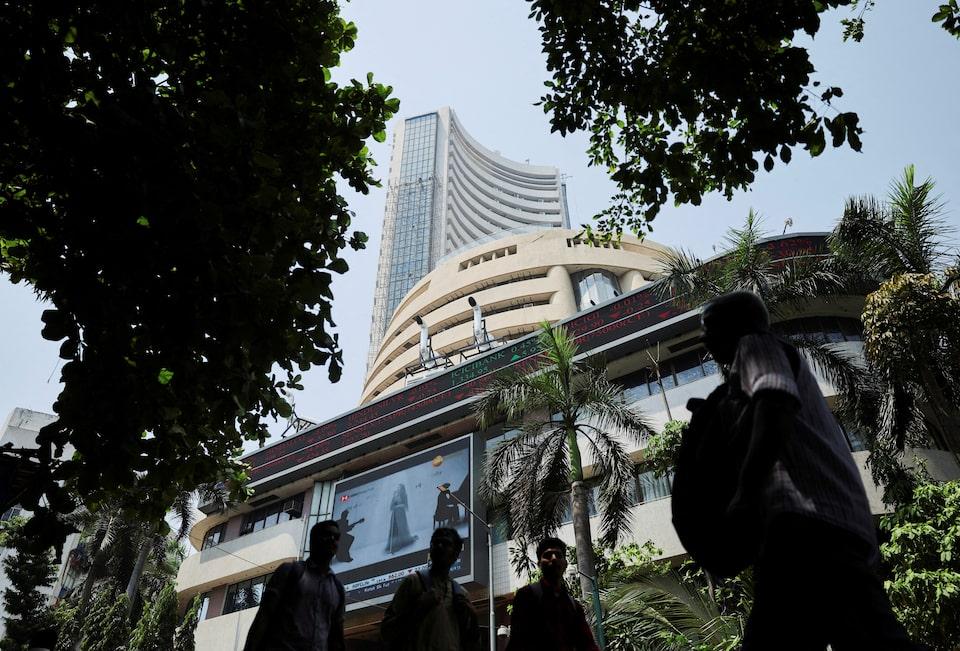
MUMBAI, Nov 7 (Reuters) - Indian financial assets are looking attractive across the board, HSBC said on Friday, citing equities' appeal as a hedge against the searing rally in global AI stocks, a favourable risk-profile for holding the rupee and value in government bonds. Analysts at the firm recommend an "overweight" position on Indian equities, saying that they now offer better value compared to Chinese stocks. Sign up here. The country's equity markets are also "a good AI hedge" and provide diversification for investors uncomfortable with the AI rally, the firm said in a note. The Reserve Bank of India's defense of the rupee over recent weeks provides good risk-reward for holding the currency, while improving domestic investor demand offers a tactical buying opportunity for the country's 10-year government bond, the note said. WHY IT MATTERS The positive outlook contrasts with the underperformance of Indian equities and the rupee this year amid trade friction with the U.S. Indian equities' weakness was exacerbated earlier in the year by limited exposure to artificial intelligence, prompting fund managers to adopt volatile high-growth strategies. Indian equities bounced back in October though, with the BSE Sensex (.BSESN) , opens new tab ending 4.5% higher for the month, while foreign investors snapped a three-month selling streak to pick up $1.6 billion worth of local stocks. BY THE NUMBERS HSBC has an end-2026 target for the BSE Sensex (.BSESN) , opens new tab at 94,000, a near-13% rise from current market levels. It also recommends buying the country's 10-year sovereign bond with a target of the yield declining to 6.25%, down from around 6.51% currently. For the rupee , meanwhile, the firm its backing a relative value trade that wagers on the Indian currency outperforming its Indonesian peer. GRAPHIC: KEY QUOTES: Indian "equities and bonds have performed better since September, and we see room for more ... If US tariffs on India’s exports are lowered, thereby improving growth expectations, then there may be more room for a rise in returns." "Foreign investors have heavily gravitated towards AI names in Asia in recent months, and some of that was funded by cutting their exposure to India. We see India as a good AI hedge and provides diversification for those who feel uncomfortable with the AI rally." https://www.reuters.com/world/india/hsbc-sees-indian-stocks-hedge-against-global-ai-rally-finds-value-fx-bonds-2025-11-07/
2025-11-07 10:51
KINSHASA, Nov 7 (Reuters) - The Democratic Republic of Congo has suspended activities at a Chinese-operated mining site in the south of the resource-rich country after a spill, mines minister Louis Watum Kabamba said late on Thursday. Congo Dongfang International Mining (CDM), which mainly sources copper and cobalt from the Central African country, is a unit of China's Zhejiang Huayou Cobalt (603799.SS) , opens new tab. Sign up here. Watum said on X that he came to Congo's second-largest city Lubumbashi after hearing about a spill from the site that had affected several neighborhoods. He said that the company does not meet environmental standards, causing water pollution and exposing the population to serious health risks. The three-month suspension can be extended if necessary, he added. "CDM must fully repair the environmental damage, ensure the remuneration of its staff, compensate the affected populations, and strictly comply with the requirements of the Mining Code," Watum said, adding that an investigation would be conducted into the incident. Congo, which accounts for over 70% of global cobalt output, froze exports of the metal in February to curb supply and drive up prices. Authorities lifted the ban from October 16 to resume exports under a quota system. However, cobalt producers are still waiting for government approval to restart shipments, industry sources told Reuters last month. https://www.reuters.com/sustainability/climate-energy/congo-suspends-activities-chinese-mine-after-spill-2025-11-07/

2025-11-07 10:42
JAKARTA, Nov 7 (Reuters) - Indonesia plans to invest 371 trillion rupiah ($22 billion) in agricultural processing for several commodities in a bid to create eight million jobs, agriculture minister Amran Sulaiman said on Friday. Developing domestic processing is one of president Prabowo Subianto's top priorities in a drive to achieve 8% economic growth. Sign up here. "The total plan of 371 trillion rupiah will be invested in the agriculture, food, livestock, horticulture, and plantation sectors,” said Amran in a statement. Amran added that a big portion of the investment would be allocated for plantation commodities such as sugar cane, cocoa, and cashews. "Processing of agricultural commodities has a much greater impact on job creation. Together, we want to accelerate this," said investment minister Rosan Roslani after a meeting with Amran. In addition to the processing investment, the government is planning a 20 trillion rupiah investment to boost chicken and egg supplies for its free meals programme. The programme, rolled out in January, was a major election campaign promise by Prabowo, expected to reach around 70 million recipients by the end of this year. "We will supply, so that there will be no shortage of eggs and chicken in the future. We are preparing for it now," Amran said. ($1 = 16,570.0000 rupiah) https://www.reuters.com/sustainability/society-equity/indonesia-invest-22-billion-agricultural-processing-minister-says-2025-11-07/

2025-11-07 10:30
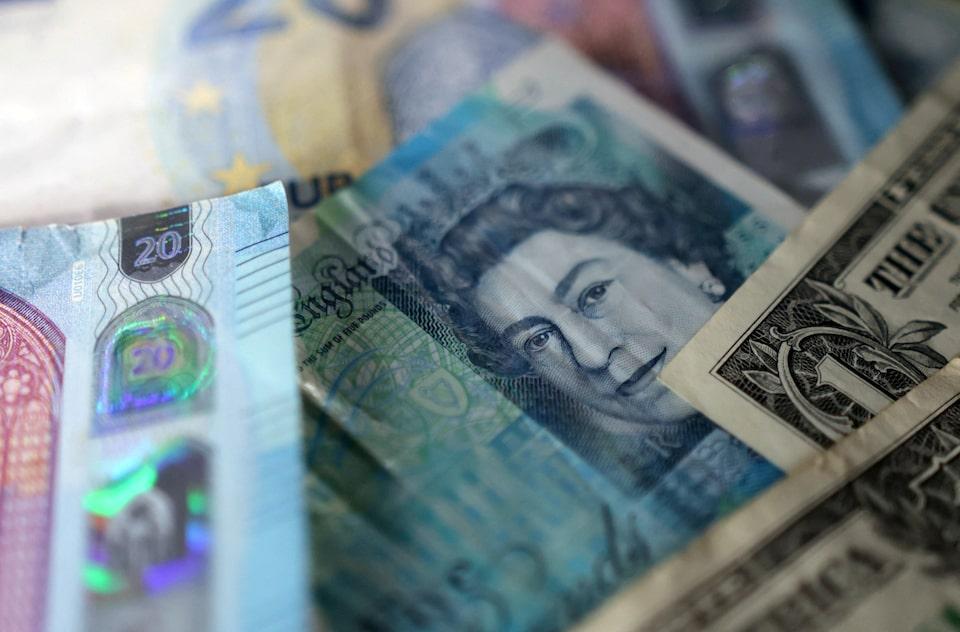
Nov 7 (Reuters) - Sterling was headed for its third straight weekly loss against the dollar and the euro on Friday as investors digested the Bank of England’s rate decision and looked ahead to the government’s budget later this month. A narrow vote and signs that BoE Governor Andrew Bailey may soon join those favouring a cut have raised the odds of a December easing move. Sign up here. The BoE held rates, disappointing the most dovish expectations after a minority of analysts had bet on a 25-basis-point cut. MORE ROOM TO EASE IN 2026 Markets now expect the British government to unveil a significant fiscal tightening package in its Autumn Statement, creating more room for the BoE to ease further next year. The greenback was on track for a modest weekly gain as investors weighed the Fed's hawkish tilt against lingering concerns over the U.S. economy. Sterling fell 0.27% to $1.3105, set for a 0.50% weekly drop. It fell 1.1% last week and 0.90% the week before. Investors are betting on a December rate cut after Thursday's tight vote, with this month’s budget likely to add volatility for the pound. “We expect pound weakness to extend against the euro into year-end if slower inflation is confirmed in October and November,” said Lee Hardman, senior currency analyst at MUFG. The euro rose 0.25% to 88.10 pence and was on track to end the week up 0.44%, after gains of 0.42% last week and 0.64% the week before. "There is scope for lower short-term rates and a weaker pound," said Chris Turner, global head of forex strategy at ING, noting markets were not fully pricing a December cut. “We expect the euro to find good support near 0.8760 and trade above 0.88 heading into the Budget later this month,” he added. Traders are pricing a 60% chance of a 25 bps BoE cut and 58 bps of easing by end-2026. British 2-year yields , more sensitive to expectations for policy rates, were up 1.5 bps at 4.11% on Friday, after falling 6.5 bps the day before. Markets expect the European Central Bank's key policy rate to remain steady at 2% through early 2027. (This story has been refiled to add a byline, with no changes to text) https://www.reuters.com/world/uk/pound-set-third-consecutive-weekly-fall-versus-euro-dollar-2025-11-07/
2025-11-07 10:12
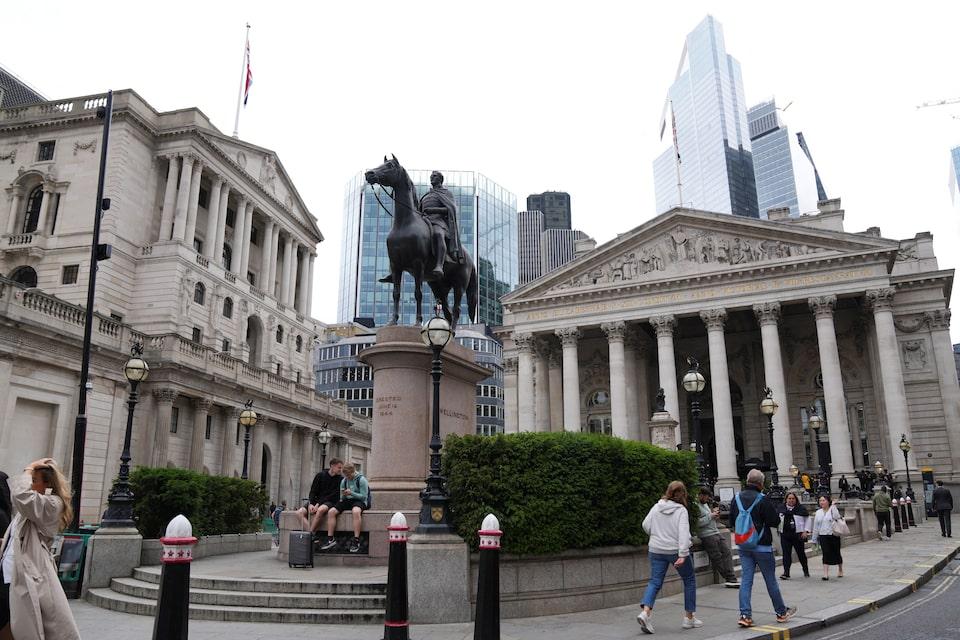
LONDON, Nov 6 (Reuters) - The Bank of England kept borrowing costs on hold on Thursday, but the narrow vote signals a rate cut could come in December, when they hold their next meeting after the government budget later this month. Mindful of Britain's still high headline inflation rate, the nine-strong Monetary Policy Committee voted 5-4 to keep the central bank's benchmark Bank Rate at 4.0%, the BoE said. Sign up here. Here's what Bank of England officials said in a press conference following that decision: ANDREW BAILEY, GOVERNOR On the future path of rates "We are likely to continue to be on a gradual downward path for bank rate." "The market curve at the moment, does give a reasonable view of, I think, of a sensible path (for rates)." On inflation "We need to wait and see that the downward path of inflation becomes more established before we can cut bank rate again." "The recent pickup in inflation has been driven in part by food and energy prices. These are salient to consumers and often affect inflation expectations, so we have to remain careful that this does not lead to any additional second round effects on wage and price setting in the UK economy." "The point is that we are, you know, we are quite an important moment here, because we've had one set of inflation numbers, which I think can give us some encouragement, can point us in a direction, but we need to see more than that." On terminal rate "There are those, and I'm in this group, who don't actually, frankly, feel that there is enough confidence around any measure of an equilibrium terminal rate, and that when we look at this question of restrictiveness, we're looking much more at the at the evidence on the sort of the change over time, as it were, in the path of restrictiveness, rather than looking at terminal rates." On asset purchase costs "(The) upcoming APF Quarterly Report will include a new measure which will take into account wider implications for government debt issuance and servicing costs, including continuing savings resulting from quantitative easing...This will show a somewhat different picture of the costs." On AI "It is, of course, perfectly possible and perfectly consistent that AI could be the next big mover in terms of productivity ... My own view personally is, I think, more likely than not it probably is. "But we've still got quite a way to go to actually sort of see that demonstrated. At the same time, we could have a bubble, because obviously the markets are pricing the future stream of returns from this, and that's uncertain. And so, you know, those two things are not inconsistent." "The markets could overprice the returns, but the returns could still be substantial...So we'll see, but we are watching the ... implications for financial stability." DAVE RAMSDEN, DEPUTY GOVERNOR On AI "Were that (AI) bubble to deflate or burst, that would represent a tightening in financial conditions that would weaken global demand, and that would have spillovers back to the UK." https://www.reuters.com/business/finance/bank-england-policymakers-speak-after-keeping-rates-hold-2025-11-06/
2025-11-07 09:03
LONDON, Nov 10 (Reuters) - From a focus on how quickly tech-driven, frothy equity markets unwind, to the impact of the U.S. shutdown, there's plenty to mull over next week. And don't forget China data, UK budget speculation and a U.N. climate change summit. Sign up here. Here's all you need to know about the coming week in financial markets by Rae Wee in Singapore, Alden Bentley in New York and Amanda Cooper, Marc Jones and Libby George in London. 1/ BACK TO REALITY? The week starts on an upbeat mood as the U.S. Senate on Sunday moved forward on a measure aimed at reopening the federal government and ending a now 40-day shutdown that has sidelined federal workers, delayed food aid and snarled air travel. If an agreement is finalised, data must still be compiled and rescheduled, meaning a scheduled inflation release on Thursday is unlikely. So the data fog may continue for now. The disruption since October 1 has surpassed the record shutdown in Donald Trump's first term as president. Relief may prove temporary, as the impact of the shutdown on the economy emerges. Others note that any agreement might be temporary, meaning markets could be back to shutdown watch in the not too distant future. 2/ LACKING DATA CHEER As investors look past an uneasy Sino-U.S. trade truce, at least until things turn sour again, focus returns to domestic data for clues on how China will score on the 2025 economic report card as the year nears a close. Data on Sunday showed producer price deflation eased in October and consumer prices returned to positive territory. House prices and retail sales, among the slew of Friday's data releases, are also unlikely to move the needle on a bleak outlook. China's exports unexpectedly fell in October, data last week showed. But markets are less sensitive to China's weak run of economic data, with stocks still ripping higher, buoyed by the nation's push for greater technological self-reliance and a modern industrial system. 3/ A VERY BRITISH DATA MINEFIELD UK investors are gearing up for a December rate cut from the Bank of England. But first, there's a forest of data to get through - much of which will be key to BoE decision-making - before finance minister Rachel Reeves reveals her budget on November 26. Reeves paved the way for tax rises in a rare pre-budget speech on Tuesday, although she did not indicate whether her plan would break any manifesto pledges. Sterling is at its weakest since 2023 against the euro and at its lowest since April against the dollar . The coming week's numbers on consumer prices, wage inflation and economic growth may set the tone for UK markets before that key budget, while trade balance numbers may outline how much Trump's tariffs have affected the UK/U.S. "special relationship". 4/ EMERGING MARKETS: NOT GETTING TRUMPED? Nigeria joined a list of emerging nations in Trump's crosshairs after the U.S. president threatened military action if the West African oil producer doesn't do more to protect its Christians. Investors barely registered the threat, and days later, a Nigerian bond sale was oversubscribed. A pattern of Trump threats over trade or other perceived failures followed by a modest market reaction has played out in Brazil, Mexico, Colombia and South Africa. Trump's aid cuts have hurt vulnerable economies and his trade policy puts hundreds of thousands of jobs at risk in exporting nations. But investors' risk-on mood, lower global borrowing costs, a softer dollar and positive local growth and reform stories suggest a strong anti-Trump buffer is in place. Even China is luring cash. Nigerian stocks dipped after Trump's Sunday salvo, but emerging market equities broadly have notched returns of nearly 32% in dollar terms this year, an asset performance second only to gold, according to BofA. 5/BAD COP The COP30 global climate summit kicks off on Monday in Belem, the Brazilian city symbolically chosen for its rainforest location at the mouth of the Amazon. It's shaping up to be a highly contentious few weeks. The diminished set of leaders attending are bemoaning the fracturing of global consensus on climate action, taking swipes at the climate-change-denying U.S. government while trying to assure the world they remain unswerving in their own commitments. Whether the world buys that is another question. Even host Brazil, trying to drum up $125 billion to protect world rainforests, has just taken the highly controversial decision to begin drilling for oil in the Amazon. The gathering also marks three decades since global climate negotiations began. Countries have curbed a climb in carbon emissions somewhat, but not enough to prevent what scientists consider extreme climate change in coming decades. https://www.reuters.com/business/take-five/global-markets-themes-graphic-2025-11-07/