2025-11-06 23:07
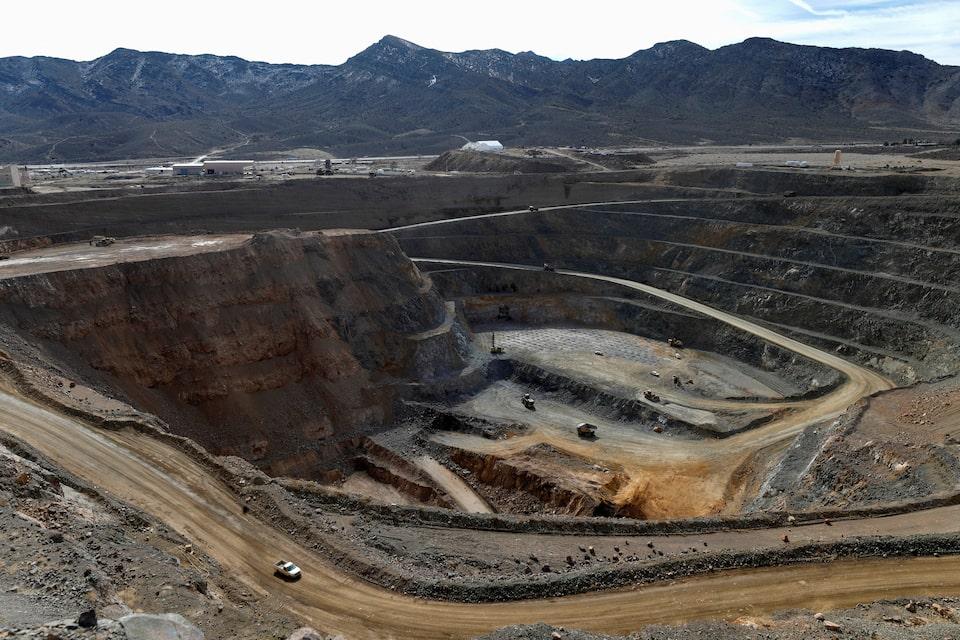
Hong Kong, November 7 (Reuters) - The copper-gold ratio recently touched a multi-decade low even as the world economy and stock markets continued to roll along. However, this does not mean the indicator is broken. It is just telling a new narrative about global transition and fragmentation. The commonly cited copper-gold ratio, or price of copper divided by that of gold, based on generic front-end COMEX futures contracts traded in New York, has historically been a go-to indicator of investor sentiment about global economic growth. Sign up here. Copper is the quintessential industrial metal used across a range of industries, including construction, power, telecoms, machinery and appliances. Demand in those sectors tends to track the pace of global GDP growth, so when the world economy booms, demand for copper typically soars. Gold, on the other hand, is the ultimate safe haven. Its price tends to rise during periods of economic and geopolitical stress or when real interest rates are low or negative. Typically, in the past, when the ratio rose, it was an indication of a “risk on” environment. Investment expanded, appetite for safe assets fell, and the cyclical growth outlook improved. And whenever the ratio fell, it signaled the opposite. However, that relationship has started to unravel recently. Global growth has proven more resilient than many expected, especially in the United States where the artificial intelligence boom has underpinned investment and stock markets have repeatedly hit all-time highs, even as the copper-gold ratio has declined sharply. To understand why, one needs to look closely at both the ratio’s numerator and denominator. COPPER’S COMPLEX RIDE The dramatic drop in the copper-gold ratio might suggest that copper demand is severely depressed, but this isn’t the case. While the dominant source of demand for copper over the past two decades – Chinese fixed asset investment – has slowed in recent years, there is now a new secular demand driver, electrification. Electric vehicles, renewables, grid upgrades and broader electrification, including power-hungry data centers are responsible for a rising share of copper use. This has lifted the metal’s long-run demand outlook. Meanwhile, supply has been somewhat fragile. Copper mining projects are notoriously vulnerable to delays, due to a complex combination of operational, environmental and social risks. Outages can quickly tighten the market, as was seen in September at Indonesia’s Grasberg mine, one of the world’s largest copper reserves, which led to a force majeure declaration and cuts to global copper supply growth forecasts. Strong demand and limited supply have pushed copper on the London Metal Exchange to record highs. However, the copper-gold ratio, which is based on U.S. prices, has been distorted by trade policy. Copper flooded into the U.S. ahead of expected tariffs from President Donald Trump’s administration. When a 50% tariff on semi-finished copper finally did take effect in July, raw and refined copper were unexpectedly exempted, shocking investors. New York copper futures plunged nearly 20% before rebounding partially, highlighting how disruptive trade policy can be. Ultimately, what happens with copper prices over the long term will likely reflect the electrification of the world’s two largest economies, the U.S. and China, suggesting that structural growth in copper demand still has significant runway ahead. SAFE HAVEN? That explains what’s happening with the numerator of the copper-gold ratio, but what about the denominator? Gold has been an enduring global store of value for centuries, but it has recently started behaving more like an equity. Gold hit a record high above $4,300 per ounce last month. While prices have since fallen, gold is still up over 100% in the past five years, as of November 5. One statistics currently making the rounds is the fact that gold’s five-year U.S. dollar return tops the S&P 500’s performance over that period. This comparison is getting attention precisely because it goes against intuition. However, if you look more closely, you will see that most of gold’s outperformance occurred in 2025. For most of the prior years, gold largely languished while equities advanced on steady earnings growth. Central bank purchases of gold did pick up after 2022, when Russia’s official foreign exchange reserves were frozen following the outbreak of the Ukraine war. But buying interest from financial investors truly accelerated this year, likely ignited by increased geopolitical risk and currency debasement fears. Gold then picked up significant momentum from retail investors as its price skyrocketed. Momentum can cut both ways, however. In late October, gold experienced its sharpest one-day decline since 2013, a reminder that when a safe-haven becomes the object of speculative flows, its safety starts to come into question. TRANSITION AND FRAGMENTATION What this all ultimately means is that the copper-gold ratio is not “broken” but merely “bent” because the numerator and denominator are responding to different narratives. The copper price reflects transition: massive investment in an AI-powered, electrified, renewables-heavy economy that should require more copper over time. The gold price reflects fragmentation: more siloed geopolitical blocs and a reassessment of unquestioned U.S. dominance across the global financial system. These two narratives are occurring simultaneously, while a third factor – shifts in market behavior, including the rise of retail investment and momentum-based trading – is amplifying market movements. This evolution means the ratio is no longer a clean, high frequency “risk on/risk off” signal. Instead, this metric now tells a more complex story about how capital is being allocated between our economic future and our geopolitical present. (The views expressed here are those of the author. Taosha Wang is a portfolio manager and creator of the “Thematically Thinking” newsletter at Fidelity International.) Enjoying this column? Check out Reuters Open Interest (ROI), , opens new tab your essential new source for global financial commentary. ROI delivers thought-provoking, data-driven analysis of everything from swap rates to soybeans. Markets are moving faster than ever. ROI , opens new tab can help you keep up. Follow ROI on LinkedIn, , opens new tab and X. , opens new tab https://www.reuters.com/markets/commodities/copper-gold-ratio-is-bent-not-broken-2025-11-06/
2025-11-06 21:51
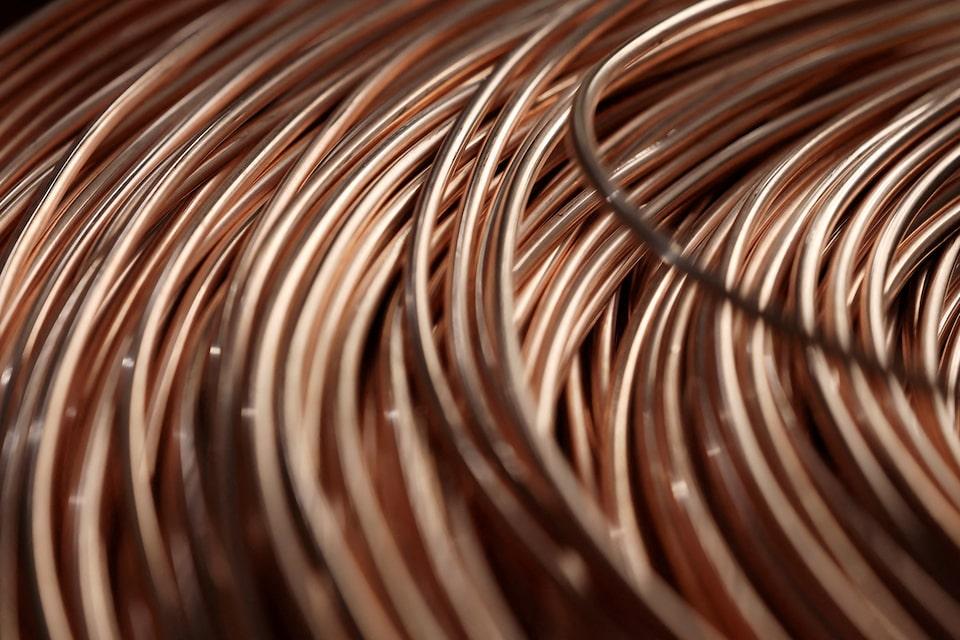
Trump to host talks with five Central Asian leaders US seeks partnerships on critical minerals, energy and trade routes Central Asia remains economically tied to Russia, with China in the wings Nov 6 (Reuters) - U.S. President Donald Trump will host the leaders of five Central Asian nations at the White House on Thursday as the U.S. seeks to gain influence in a region long dominated by Russia and increasingly courted by China. The talks take place amid intensifying competition for Central Asia's vast mineral resources. Western nations are seeking to diversify supply chains away from Moscow and Beijing. Sign up here. In particular, the U.S. is pursuing new partnerships to secure critical minerals, energy, and overland trade routes that circumvent its geopolitical rivals. Launched in 2015, the so-called C5+1 platform brings together the United States and the five Central Asian states — Kazakhstan, Kyrgyzstan, Tajikistan, Turkmenistan, and Uzbekistan — to advance cooperation on economic, energy and security issues. Their leaders will also attend a dinner with Trump at the White House on Thursday. CRITICAL MINERALS MEMORANDUM SIGNED U.S. and Kazakh representatives signed a memorandum of cooperation on critical minerals, according to the news service of the country's President Kassym-Jomart Tokayev. It did not elaborate. The White House had no immediate comment on that report. Among business deals to be announced is an agreement for Boeing (BA.N) , opens new tab to sell up to 37 airplanes to airlines in Kazakhstan, Tajikistan and Uzbekistan combined, according to a government statement. A U.S. company, Cove Capital, will mine tungsten in Kazakhstan with government-backed financing. Kazakhstan was also set to take a symbolic step of joining the Abraham Accords that have normalized relations between Israel and Muslim-majority nations, according to a senior U.S. official. Gracelin Baskaran, a director at the Center for Strategic and International Studies, said the administration will pursue government-to-government engagement but also commercial deals that secure U.S. access to vital minerals. "As China and Russia entrench their control over the region’s mining, processing, and infrastructure systems, Washington is seeking to establish a tangible foothold through targeted strategic projects," Baskaran said. NATIONS ARE RICH IN URANIUM, COPPER, GOLD Rich in minerals and energy, the five nations remain economically tied to Russia, their former Soviet ruler, while neighboring China has expanded its influence through large-scale infrastructure and mining investments. Together, the countries are home to 84 million people and hold vast deposits of uranium, copper, gold, rare earths and other strategic minerals essential to global efforts to transition to greener forms of energy. Kazakhstan, the region’s largest economy, is the world’s leading uranium supplier, producing nearly 40% of global output in 2024, while Uzbekistan ranks among the top five. Together, they account for just over half of the world’s uranium production — a vital resource for U.S. nuclear power, which is a significant source of U.S. electricity. Russia supplies roughly 20% of the U.S.' imported uranium, making diversification increasingly urgent. Under Trump, the U.S. has pursued a multi-pronged strategy to secure critical minerals and reduce reliance on China, which dominates global supply chains for strategic metals including uranium, rare earth elements, copper, and titanium. China, at times, has leveraged its dominance by restricting exports. https://www.reuters.com/world/china/trump-meet-central-asian-presidents-us-seeks-counter-china-russia-influence-2025-11-06/

2025-11-06 21:45
AMSTERDAM, Nov 6 (Reuters) - The Netherlands' economy minister, Vincent Karremans, said on Thursday he trusts computer chips made by Dutch chipmaker Nexperia will reach customers in Europe and the rest of the world in the coming days. A shortage of Nexperia chips following a dispute with China over ownership and control of the company has disrupted auto supply chains, hit production and caused some buyers to furlough staff. The chips are also widely used in industrial, computing, mobile and consumer products. Sign up here. In a statement, Karremans said the Netherlands had been informed by China and the U.S. that the trade deal they struck last week would enable the resumption of supplies from Nexperia's facilities in China. "This is also consistent with information provided to the European Commission by the Chinese Ministry of Commerce," he said. Karremans seized control of Nexperia on September 30, citing fears its operations would be moved to China where its parent, Wingtech, (600745.SS) , opens new tab is based. The Chinese government responded by blocking exports on October 4. This week carmakers and auto parts distributors began to apply to the Chinese Ministry of Commerce for exemptions but it is unclear whether any have received the chips. https://www.reuters.com/world/china/dutch-official-says-he-trusts-nexperia-chips-will-reach-world-coming-days-2025-11-06/

2025-11-06 21:44
Nov 6 (Reuters) - EOG Resources (EOG.N) , opens new tab beat analysts' estimates for third-quarter profit on Thursday, as a rise in output helped the U.S. oil and gas producer offset a drop in crude prices. The company received a production boost from its $5.6 billion deal for Encino Acquisition Partners, which helped expand EOG's presence in the Utica and Marcellus region, one of the most prolific natural gas basins in the world. Sign up here. Meanwhile, oil and gas production in the U.S. rose to record highs in August, data from the Energy Information Administration showed. EOG said it produced 1.3 million barrels of oil equivalent per day, which rose from 1.08 million boepd a year earlier. The Houston-based company posted an adjusted profit of $2.71 per share for the quarter ended September 30, compared with analysts' average estimate of $2.43, according to data compiled by LSEG. https://www.reuters.com/business/energy/us-shale-producer-eog-resources-beats-third-quarter-profit-estimates-2025-11-06/
2025-11-06 21:29
Cove Capital to control 70% of joint venture with Tau-Ken Samruk US Export-Import Bank to fund $900 million of $1.1 billion project Deal aims to prioritize US government and commercial tungsten needs WASHINGTON, Nov 6 (Reuters) - Mining investment firm Cove Capital will develop a large tungsten deposit in Kazakhstan with the state mining firm JSC Tau-Ken Samruk under a deal to be announced by the Trump administration on Thursday. The agreement is part of a suite of deals announced between Washington and Astana to tighten economic partnerships between the countries. Sign up here. Cove Capital will control 70% of a joint venture and sales of the metal, with Tau-Ken Samruk controlling the remaining 30%, according to a document seen by Reuters. Costs to develop the Northern Katpar and Upper Kairakty projects - in the country's east - are estimated at $1.1 billion, while the U.S. Export-Import Bank has issued a letter of interest to fund $900 million. Tungsten, used to harden steel for a range of industries, is considered a critical mineral by the U.S. government. The U.S. has not mined the metal since 2015 and China is by far the world's largest producer. Supplies of the metal from the Kazakhstan projects will be used "to prioritize U.S. government and American commercial needs," according to the document. "This is a generational win for the U.S. and its critical minerals needs," Cove CEO Pini Althaus told Reuters. Althaus, who was previously the CEO of USA Rare Earth (USAR.O) , opens new tab, said U.S. President Donald Trump and Commerce Secretary Howard Lutnick personally helped negotiate the deal to prevent Chinese companies from developing the asset. "This has just been a very under-explored part of the world, from a U.S. point of view, and vice versa," Deputy Secretary of State Christopher Landau said at a C5+1 business conference event at the Kennedy Center on Thursday, which included Kazakhstan officials. Mine construction should start within two years and production should commence within 3-1/2 years, with refining also occurring inside Kazakhstan, Althaus said. https://www.reuters.com/world/asia-pacific/cove-capital-mine-kazakhstan-tungsten-trump-announced-deal-2025-11-06/
2025-11-06 21:22
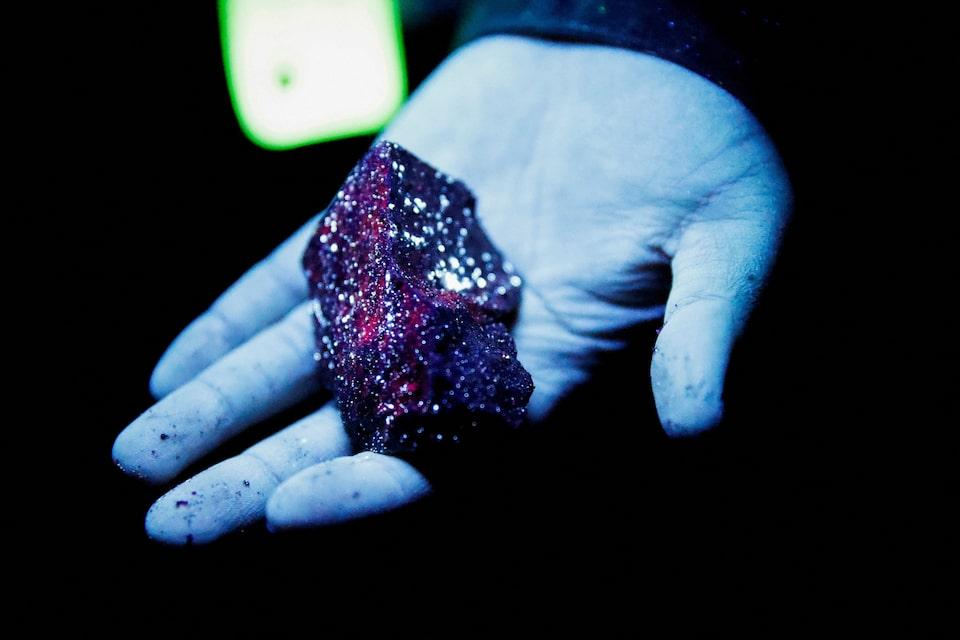
Quarterly loss widens to $41.8 million, or 24 cents per share No revenue from rare earths concentrate sales this quarter Plans to produce 200 metric tons of dysprosium and terbium annually by 2026 Nov 6 (Reuters) - U.S. rare earths company MP Materials (MP.N) , opens new tab said on Thursday its third-quarter loss widened as it stopped sales to Chinese customers as part of an agreement with the U.S. government, although the results surpassed Wall Street expectations. Shares fell 7.4% to $48.40 in after-hours trading. Sign up here. The results reflect the company's transition from dependence on foreign sales to a focus on being a major U.S. miner and processor of rare earths and manufacturer of the magnets made from them that are used widely across the automotive, electronics and defense industries. MP owns the only U.S. rare earths mine and is developing a magnet facility in Texas. Las Vegas-based MP posted a quarterly loss of $41.8 million, or 24 cents per share, compared to a loss of $11.2 million, or 16 cents per share, in the year-ago quarter. Excluding one-time items, MP lost 10 cents per share. By that measure, analysts expected a loss of 18 cents per share, according to LSEG data. The company reported no revenue from sales of rare earths concentrate during the quarter. Those sales had formed the majority of its revenue for years, but a July investment agreement with the Pentagon precludes any future shipments. As part of that agreement, the Pentagon on October 1 began guaranteeing a floor price of $110 per kilogram for the two most-popular rare earths, neodymium and praseodymium, MP executives said on a conference call with investors. CEO SEES NEW COLD WAR Jim Litinsky, the miner's CEO, described what he sees as a "new Cold War" between Washington and Beijing requiring government investment in critical industries. "In the last Cold War, America prevailed through military strength, empowered by economic might," Litinsky said on the investor call. "In Cold War 2.0 the equation has reversed," he said. "Economic might itself, expressed through control of critical materials, advanced technologies and the supply chains that sustain them, has become the decisive measure of national power." Litinsky, also one of MP's largest shareholders, added he did not believe many of the company's peers could be competitive. "The vast majority of projects being promoted today simply will not work at virtually any price," Litinsky said. NEW FACILITY ONLINE SOON MP did record $21.9 million in sales during the quarter of magnetic precursor products, which are essentially the building blocks for magnets. MP said it expects commercial magnet production from its Texas site to begin by the end of the year. To make magnets, MP has had to build a facility to process so-called heavy rare earths. The company said it plans to commission that facility in mid-2026 using ore extracted from its California mine and purchased from third parties. The company aims to produce 200 metric tons per year of dysprosium and terbium - two key heavy rare earths used to make magnets - at that facility. https://www.reuters.com/world/china/mp-materials-quarterly-loss-widens-after-stopping-sales-chinese-customers-2025-11-06/