2025-11-06 20:31
Global emissions are up 34% since the first climate conference The market for solar panels and EVs has grown - but so has fossil fuel use UN climate negotiations are bogged down by bureaucratic inertia, some critics say Nov 6 (Reuters) - As leaders gather for the U.N. climate summit in Brazil this week - three decades after the world's first annual climate conference - the data charting progress in the fight against global warming tells a sobering story. Despite years of negotiations, pledges, and summits, greenhouse gas emissions have climbed by a third since that first meeting; fossil fuel consumption continues to rise; and global temperatures are on track to breach thresholds scientists say will unleash catastrophic damage to the planet. Sign up here. "Yes, some good has come out of these conventions, but not enough to ensure the promise of life on Earth," said Juan Carlos Monterrey, Panama’s special representative for climate change, who is leading a push to streamline major environmental agreements. LOOKING BEYOND THE DATA That grim assessment raises a fundamental question ahead of the Nov. 10-21 summit in Belem, Brazil: Is global climate diplomacy failing? Or have the gatherings succeeded in ways that raw data cannot capture? Simon Stiell, the head of the U.N. Framework Convention on Climate Change (UNFCCC), says the annual meetings have made "vast progress." But he said: "Clearly much more is needed, and much faster, as climate disasters hit every country." Global greenhouse gas emissions have increased by 34% since 1995. While this is a slower rate than the 64% rise in the three previous decades, it still represents a trajectory incompatible with climate stability, according to scientists. "We still have time to solve this problem. We still can win this fight if we will do the things we promise to do. We just have to kick ourselves in the rear end and get going," said John Kerry, U.S. climate envoy under Democratic President Joe Biden. The World Resources Institute, a climate research and advocacy group, said in an October report , opens new tab that government targets for greenhouse gas emissions reductions for 2035 remain insufficient to keep global temperatures from rising more than 1.5C above pre-industrial times - the threshold world governments set at a landmark 2015 climate agreement in Paris. Global temperatures have surged past that 1.5C mark in some years, with 2023 and 2024 ranking among the hottest on record, although the 30-year rolling average – the benchmark used by the Paris deal – is still below that level. "There will be an overshoot, which is very unfortunate," James Fletcher, the climate envoy for the Caribbean Community (CARICOM) and former energy minister to St. Lucia, said in an interview. "Anything above 1.5 degrees Celsius will be catastrophic for small island developing states," he said. Stiell told Reuters that without the COP process, world temperatures would be headed for a catastrophic 5C of heating, instead of the under 3C increase that is now projected. Meanwhile, fossil fuel consumption - the primary source of planet-warming emissions - remains stubbornly high, driven by economic growth and, more recently, the energy demands of data centers powering artificial intelligence. The International Energy Agency projects that demand for coal - one of the dirtiest fossil fuels when combusted - will hold around record highs through 2027 as rising demand in China, India and other developing countries offsets declines elsewhere. On the other side of the ledger, solar and wind power adoption have accelerated, electric vehicle sales have surged globally, and energy efficiency overall has improved, according to data from the International Energy Agency. Global investment in clean energy reached $2.2 trillion last year, surpassing the $1 trillion invested in fossil fuels, according to IEA data. "We could not have dreamt that those technological advances and the drop in price for EVs and renewables would have happened 10 years ago," said Jennifer Morgan, Germany's former climate envoy and a veteran of every COP summit. Still, the rise in renewables and EVs has largely offset growing energy demand rather than replace fossil fuels. And in the United States, President Donald Trump - who has called climate change the world's greatest "con job" - has slashed subsidies for wind and solar power and electric vehicles, added permitting obstacles to renewable projects and opened more lands to drilling and mining. "President Trump will not jeopardize our country's economic and national security to pursue vague climate goals that are killing other countries," Taylor Rogers, a White House spokeswoman, told Reuters. SUCCESSES AND SHORTCOMINGS Yet despite those setbacks in the U.S., the Paris climate agreement - perhaps the biggest achievement of the COP process - has endured, even after the withdrawal of the U.S. during both of Trump's terms. That means countries theoretically remain committed to preventing the worst of climate change. However, the consensus-based nature of COP negotiations, which require unanimous decision-making from nearly 200 nations, has come under fire. "We are drowning in paperwork, drowning in reports, drowning in mandates that are only evaluated based on how many pages the document has versus how many lives that we're saving," said Monterrey, the Panama climate envoy. "We need systematic reform." Christiana Figueres, who was the lead U.N. climate official during the Paris talks, said the COPs could consider shifting toward a voting approach, similar to the International Monetary Fund. But Figueres also said the political haggling was becoming less important as world economies embrace clean energy technologies. "Today, the pull force for the transition is no longer coming from governments. It's in the private sector, in industry, in technology development." She pointed to China, which alone accounts for one-third of global investment in clean energy across solar, wind, batteries and the electric vehicle industry, according to the IEA. CATALYST OR CULPRIT Some COP veterans argue the current process is the best option to ensure all countries have a seat at the table to address a global problem. "I don't think that there are any alternatives to the multilateral process," said Manuel Pulgar Vidal, who served as president of COP20 in Peru and is currently climate director of the World Wildlife Fund. Former U.S. climate envoy Kerry acknowledged the flaws in these annual gatherings, but said they have remained vital. "We know they're not enough, but banging away and keeping the process moving is better than absolute, abject nihilism." https://www.reuters.com/sustainability/cop/30-years-climate-talks-progress-pitfalls-planet-peril-2025-11-06/

2025-11-06 20:00
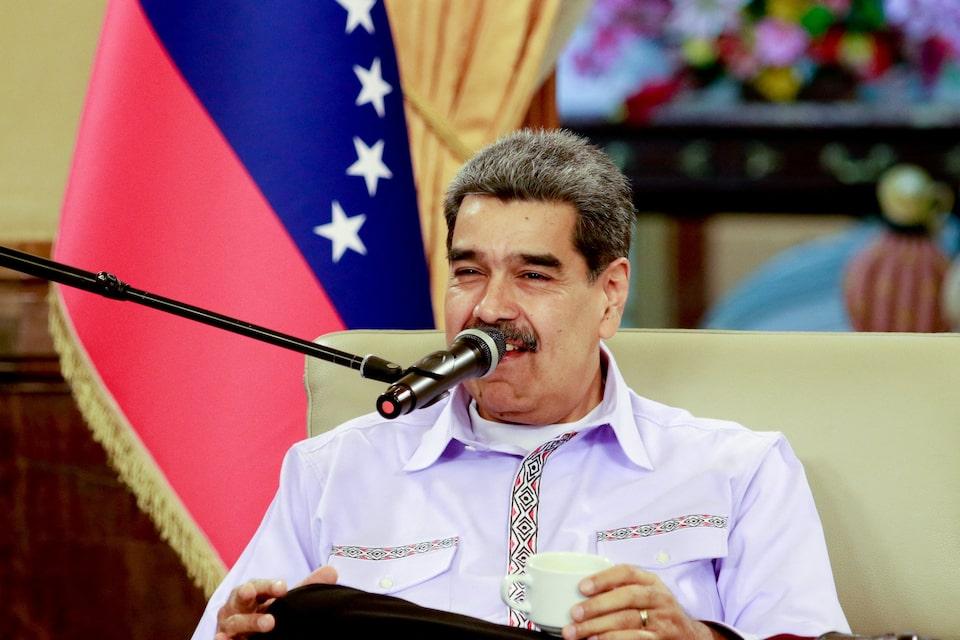
Investors cautious despite pressure on Caracas U.S. actions against Maduro influence bond rally NEW YORK, Nov 6 (Reuters) - Venezuela, a debt-defaulted nation with an economy devastated by years of mismanagement and international sanctions, has become a surprise darling of bond investors, with returns for its dollar bonds of over 80% poised to lead emerging markets this year. The surge in prices to six-year highs, on the back of renewed expectations for a change of government, is warranted according to investors. But as declines on Thursday show, the duration of the rally is in doubt. Sign up here. "I think it's justified, but in terms of how much further you can go, it is a question of what comes next with respect to U.S. action," said Kathryn Exum, co-head of sovereign research at Gramercy. The latest leg of the bonds' rally began in September, when ships off the Venezuelan Caribbean coast were targeted by U.S. strikes. U.S. President Donald Trump later heightened his rhetoric against President Nicolas Maduro's government, confirming he authorized the CIA to conduct covert operations in Venezuela and offering a $50 million reward for information leading to Maduro's arrest. Regime change, investors say, could dislodge long-awaited debt restructuring talks that could enable them to get money out of the notably cheap securities, which have nearly doubled in value this year but remain in deeply distressed territory below 30 cents on the dollar. Yet Polymarket, which allows users to place bets on real-world events, showed the probability of a U.S.-Venezuela military confrontation before the end of 2025 stood at 30%, down from 70% late last month. The South American oil producer defaulted on its international bonds in 2017, and prices have for years fluctuated alongside the relationship between Washington and Caracas. SEB's Erik Meyersson said the still-trading bonds are "allowing investors to effectively bet on an eventual debt workout via political change." The Trump administration has a "trifecta of reasons" to pursue regime change, from the country's oil and gas assets to a desire to counter China's influence in Latin America, he added. But those betting on Venezuela have been burned before. The bonds last hit current levels in 2019, when the U.S. recognized opposition leader Juan Guaido as president. The next leg of the rally appears less straightforward, investors said. "We view the recent rally in Venezuelan bond prices as an opportunity to reduce exposure, rather than to add risk," Alejo Czerwonko, chief investment officer for emerging markets Americas at UBS Global Wealth Management, said in a note. "Even if regime change were to occur and the U.S. were to ease sanctions, Venezuela has been in default regarding debt payments for eight years, and faces one of the most complex sovereign debt restructurings in modern history," he said. With a basket of diversified sovereign dollar bonds returning around 4% to 7%, Czerwonko said "waiting for a resolution to the Venezuela debt saga is far from costless." Venezuela's unpaid stock is about $60 billion in defaulted bonds and balloons up to around $150 billion once interest, loans to state oil company PDVSA, arbitration awards and bilateral debt are included. https://www.reuters.com/world/americas/venezuela-bonds-surge-us-pressure-intensifies-maduro-2025-11-06/
2025-11-06 19:30
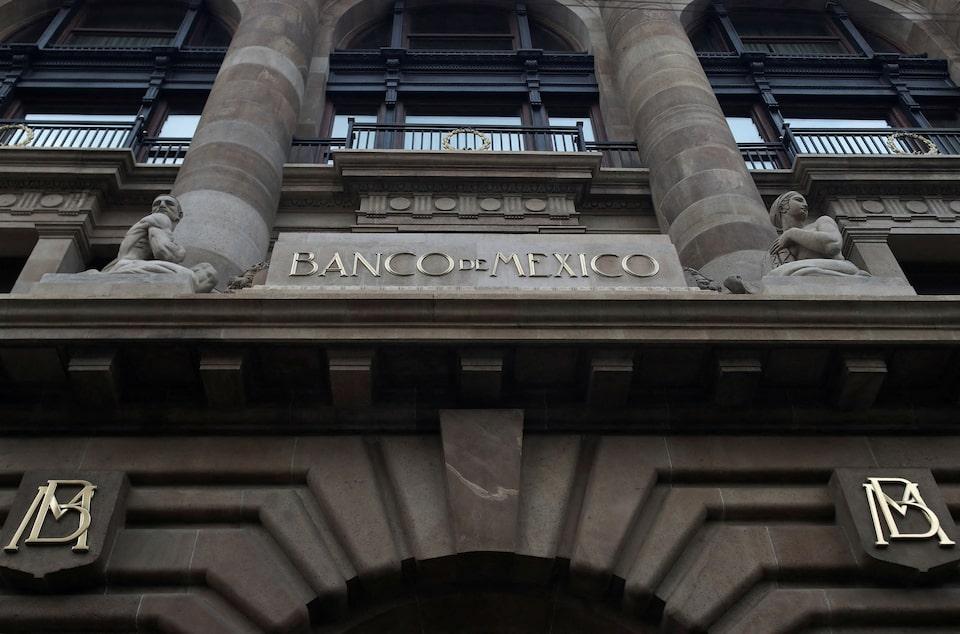
MEXICO CITY, Nov 6 (Reuters) - The Bank of Mexico cut its benchmark rate by 25 basis points on Thursday but struck a more cautious tone on the outlook for further easing, as the economy shows weakness but core inflation remains sticky. The rate's reduction to 7.25%, its lowest level since May 2022, was widely expected, though the central bank in a change from recent meetings offered guidance only for its next meeting, while also emphasizing lingering risks from stubborn core inflation. Sign up here. For the fourth consecutive rate decision, Deputy Governor Jonathan Heath was the only person on the five-member board to vote against the reduction, the bank said in a statement. Heath has repeatedly called for caution around rate cuts, pointing to stubborn core inflation that exceeds the central bank's 3% target, which has a tolerance range of plus or minus a percentage point. The most recent official data showed that headline inflation, as well as the closely watched core index, declined in the first half of October, though core inflation, which strips out volatile products, remained outside of the bank's target range at 4.24%. Banxico, as the bank is known, moved the persistence of core inflation higher in its list of upside inflation risks, noted Capital Economics senior economist Liam Peach. Peach said the bank's statement "was perhaps a bit more hawkish than expected," adding that its change in guidance "suggests a bit more caution with further interest rate cuts, which may now become more data dependent and stop-start." Alberto Ramos, chief Latin America economist at Goldman Sachs, also noted that the bank only gave easing forward guidance for its next meeting, in December, but not after that. The bank is leaving the door open to future cuts but "abstaining from providing any explicit signal," he said. Despite concerns about core inflation, the bank's board cited the ongoing weakness in Mexico's economy - GDP contracted in the third quarter - as factoring into its decision. For Alfredo Coutiño, Latin America director at Moody's, the bank's majority is "hoping that weak economic performance will help bring down headline inflation." Coutiño warned that headline inflation alone is too volatile to base rate decisions on. Mexico's national statistics agency will report inflation data for the full month of October on Friday morning. A Reuters poll of analysts forecasts headline inflation to fall by about 20 basis points, with core inflation expected to remain largely unchanged. https://www.reuters.com/world/americas/bank-mexico-lowers-benchmark-interest-rate-725-2025-11-06/
2025-11-06 19:26
Nov 6 (Reuters) - U.S. holiday sales are expected to surpass $1 trillion for the first time, the National Retail Federation said on Thursday, though growth is forecast to slow as economic pressures weigh on consumer sentiment. The holiday season includes major shopping days such as Thanksgiving, Black Friday, Cyber Monday and Christmas, and accounts for a significant portion of major retailers' revenues. Sign up here. Persistent inflation, the fallout from the Trump administration's tariffs and the federal government shutdown pose risks, as shoppers think twice about buying extravagant gifts. "American consumers may be cautious in sentiment, yet remain fundamentally strong," NRF CEO Matthew Shay said. NRF chief economist Mark Mathews said lower-income consumers are shifting toward essentials. "More of the non-essentials that they're cutting out are in the services side of the economy, like recreation, travel, and eating out. They're not doing that, but they're continuing to spend on goods." The economic stress on spending had led to multiple forecasts of a subdued holiday shopping season this year as well as muted forecasts for the period from companies including Tapestry (TPR.N) , opens new tab, Under Armour (UAA.N) , opens new tab and Canada Goose (GOOS.TO) , opens new tab on Thursday. "Consumers are highly promotional right now. They're looking for deals," Mathews told Reuters. "Most retailers recognize that," he added, saying companies will take a hit to stay competitive in the market. Sales during November and December are projected to rise between 3.7% and 4.2% to $1.01 trillion–$1.02 trillion, compared with a 4.3% increase to $976.1 billion last year. Retailers are expected to hire between 265,000 and 365,000 seasonal workers, down from 442,000 last year, reflecting a softer labor market, NRF said. NRF’s forecast is based on economic modeling using indicators such as consumer spending, employment, wages and historical retail data. It excludes auto, gas and restaurant sales. https://www.reuters.com/business/retail-consumer/us-holiday-sales-set-top-1-trillion-first-time-nrf-forecasts-2025-11-06/

2025-11-06 19:20
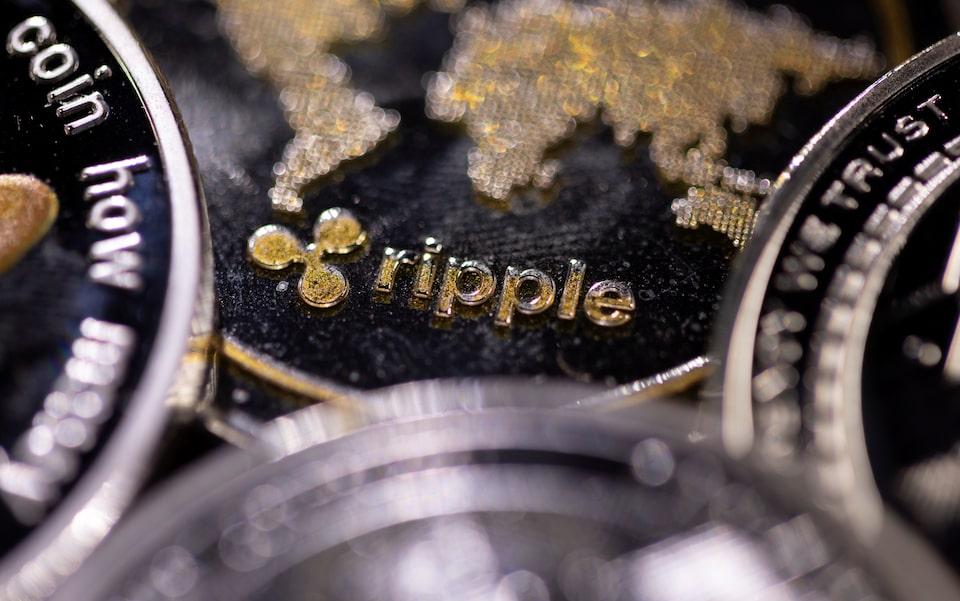
Ripple is seeking Fed master account for stablecoin reserves Crypto company said 'skinny' account idea is attractive Wall Street banks fear fintech access could destabilize system Nov 6 (Reuters) - Crypto giant Ripple supports the idea of a "skinny" Federal Reserve payments account for non-banks, which could still be a game changer while addressing banks' concerns over financial stability and competition risks, a top company executive said. "I think it's an attractive idea, and I think it should give traditional banks some comfort," Stu Alderoty, the chief legal officer of Ripple, said in an interview with Reuters on Tuesday. Sign up here. Ripple in July said it had applied for a Fed "master account" which would allow it to plug directly into the U.S. central bank's payments infrastructure, rather than relying on intermediaries. The Fed has long been wary of allowing lightly-regulated non-banks to access its plumbing, and banks have also opposed the idea, arguing it would create risks to the financial system. In a potentially major change of policy, Fed Governor Christopher Waller last month said the central bank was exploring a "skinny" master account which would give firms access to Fed payments but not other key services and benefits, such as interest, overdrafts and access to its emergency lending window. Despite those limitations, a "skinny" account, if granted, would still allow Ripple to quickly redeem reserves for its dollar-pegged stablecoin RLUSD, rather than relying on bank intermediaries, which slows down transactions and is more expensive. "Thinking about that issue of redeemability, to be able to get in and out of Treasury or U.S. dollar assets quickly, the most efficient and transparent and quickest way to do that would be with access to a master account," Alderoty said. Waller said the idea is just a prototype and could change. "You're using it for a limited purpose, and you're not going to be using it for a broader purpose, which potentially could infringe upon the business of a traditional bank," Alderoty said. It remains to be seen how banks will respond to the idea of a "skinny" Fed master account, and if the prototype goes far enough to address their longstanding concerns about non-banks accessing critical infrastructure for the financial system. https://www.reuters.com/sustainability/boards-policy-regulation/ripple-says-skinny-fed-master-account-is-attractive-despite-limitations-2025-11-06/
2025-11-06 19:18
PARIS, Nov 6 (Reuters) - Global hedge funds' exposure to crypto markets is increasing, and more than half are now invested in the sector, with the U.S. government's embrace of digital assets boosting interest, according to an industry report published on Thursday. Fifty-five percent of hedge funds hold some crypto-related assets, up from 47% the year before, with funds allocating on average 7% of their holdings to crypto, a survey of 122 investors and fund managers by the Alternative Investment Management Association (AIMA) in the first six months of 2025 found. Sign up here. The investments are relatively small. More than half of the hedge funds with crypto are investing less than 2% of their assets in it, the report by AIMA and PwC said. Cryptocurrency prices have risen in 2025 with bitcoin hitting a series of record highs, boosted by U.S. President Donald Trump's support for the industry and his administration's push for crypto-friendly regulations. Regulators around the world have warned about risks to financial stability, as crypto becomes more connected to mainstream finance. "The past year has marked a turning point for US crypto regulation," the report said. "The US may finally be laying the groundwork for long-term regulatory stability." Funds that are already invested in crypto say they are planning to buy more in the next 12 months. A majority (67%) are investing via crypto derivatives, which allow them to take a position on cryptocurrency price movements without holding the underlying assets. These derivatives can introduce market risks, the report said, citing a flash crash in October which it said "exposed vulnerabilities related to excessive leverage and a lack of institutional-grade infrastructure." The funds surveyed by AIMA are responsible for investing around $982 billion of assets, the report said. There has been an influx of new money into hedge funds, with capital hitting a record high of nearly $5 trillion in the third quarter of 2025. https://www.reuters.com/business/more-than-half-hedge-funds-invested-crypto-global-survey-says-2025-11-06/