2025-11-06 16:56
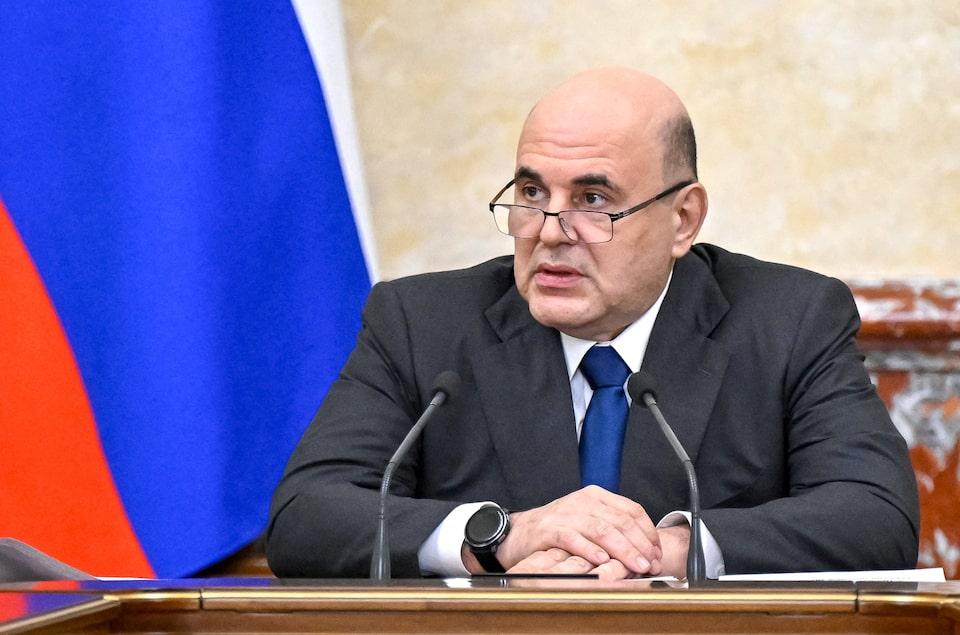
Government offers phased VAT threshold changes for small businesses PM says there will be moratorium on tax-violation punishments Offer falls short of business lobbies counter-proposal Government proposes "technology tax" on imports MOSCOW, Nov 6 (Reuters) - The Russian government has agreed to phase in a planned lowering of its value-added tax thresholds for small businesses from 2026 rather than impose it in one go, Prime Minister Mikhail Mishustin said on Thursday, after a backlash from business owners. In its draft budget for 2026, the government had proposed that all businesses with annual revenues above 10 million roubles ($123,000) would have to pay VAT. Currently businesses with revenues of up to 60 million roubles are exempt from VAT. Sign up here. Business lobbies argued that this move, aimed at mobilising state finances for Russia's military operation in Ukraine, would hit 1 in 10 small-business owners, many of whom might have to shut down as a result. The government's new proposal is to lower the tax-free revenue threshold to 20 million roubles in 2026, then to 15 million roubles in 2027 and 10 million in 2028 from the current 60 million. "The conditions for applying VAT by small and medium-sized businesses will be eased with a phased change in the payment thresholds starting in 2026," Mishustin said. Mishustin also proposed a moratorium on punishments for first tax violations by businesses that will start paying VAT in 2026. Many small businesses were complaining that they don't have the expertise to process the new tax payments. The new numbers fell short of the business compromise proposal to lower the threshold for VAT payments to 30 million roubles instead of 10 million, as expressed during the budget debate in parliament. "The transition has been made smoother, but the trend is clear in any case. The tax pressure on small businesses is increasing," said economist Evgeny Kogan. This hike comes on top of a proposal to raise the general VAT rate to 22% from 20%, which is expected to generate about 1 trillion roubles to help fund military spending and address the country's growing budget deficit. Small and medium-sized businesses account for more than one-fifth of Russia's gross domestic product, according to the latest available data from the Economy Ministry, and they employ 31 million people, about 40% of the total workforce. Russia defines small and medium-sized companies as those employing up to 250 people and generating up to 2 billion roubles in annual revenue. The government expects to raise 200 billion roubles ($2.5 billion) from these measures. In a separate initiative, the government proposed introducing a "technology tax" on industrial electronics imports. The tax revenues would then be used to support domestic producers. ($1 = 81.3000 roubles) https://www.reuters.com/world/russia-softens-some-vat-hike-initiatives-after-small-businesses-push-back-2025-11-06/
2025-11-06 15:29
TORONTO, Nov 6 (Reuters) - Canadian economic activity expanded at a slower pace in October as a measure of prices edged higher, Ivey Purchasing Managers Index (PMI) data showed on Thursday. The seasonally adjusted index fell to 52.4 last month from 59.8 in September. Sign up here. The Ivey PMI measures the month to month variation in economic activity as indicated by a panel of purchasing managers from across Canada. A reading above 50 indicates an increase in activity. The gauge of employment rose to an adjusted 51.8 from 50.2 in September, while the prices index was at 64.3, up from 63.2. The unadjusted PMI fell to 51.7 from 61.6. https://www.reuters.com/world/americas/canadas-ivey-pmi-shows-activity-expanding-slower-pace-october-2025-11-06/

2025-11-06 14:25
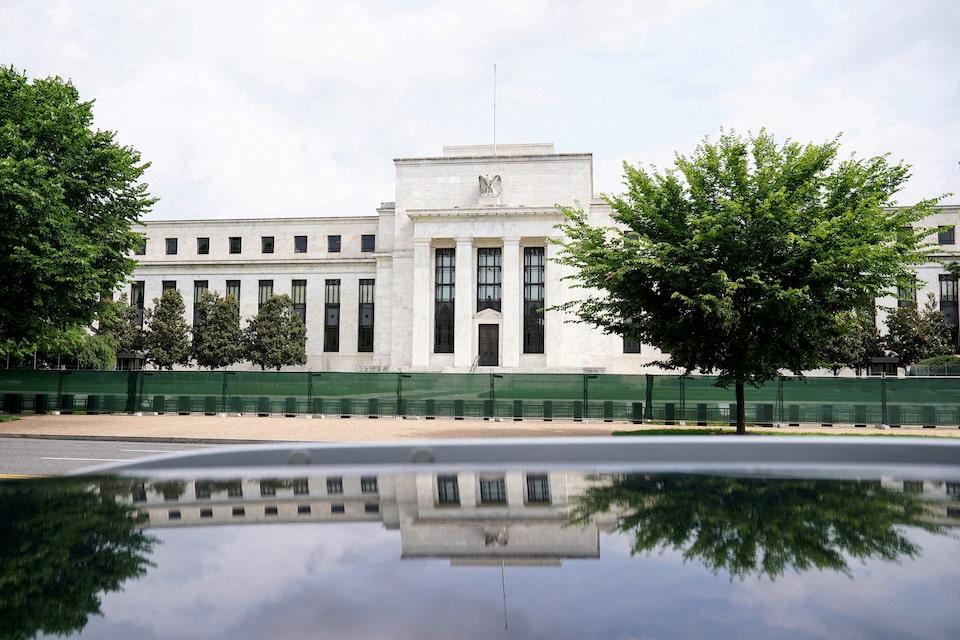
Bank of England holds rates steady but door open to December cut Australia, Sweden and Norway also hold rates steady this week US data leads traders to pare back bets on December Fed easing LONDON, Nov 6 (Reuters) - Central banks in big economies are nearing the end of their rate-cutting cycles, though some, like the U.S. Federal Reserve and Bank of England - which were more cautious earlier in the year - have scope to ease a little more. Australia, Sweden and Norway all left rates unchanged this week, as did the BoE, albeit in a tight decision. Sign up here. Here's where 10 major central banks stand after the latest round of meetings: 1/ SWITZERLAND The Swiss National Bank has been on hold since it cut its key rate to 0% in June, and markets expect it to remain there for now. Swiss inflation unexpectedly fell to 0.1% in October, government data showed this week, but analysts said this would not be enough to cause the SNB to cut rates into negative territory. 2/ CANADA The Bank of Canada, battling an economic slowdown exacerbated by U.S. tariffs and the inflationary impact of the trade war, cut rates to a more than three-year low of 2.25% last week. It too has eased policy more aggressively than many developed market peers, but is now sending strong signals that the easing ends here. Traders see a further cut this year or next as unlikely. 3/ SWEDEN Sweden's Riksbank, another big mover, held its policy rate unchanged at 1.75% on Wednesday and said it expected to remain at this level "for some time to come" unless the outlook for inflation and growth shifts. 4/ NEW ZEALAND The Reserve Bank of New Zealand cut rates by a punchy 50 basis points (bps) to 2.5% last month to bolster a frail economy. Markets see a good chance of a further cut in late November, although inflation sitting at the top of the RBNZ's 1-3% target band could be a complication. 5/ EURO ZONE The ECB last week held its main deposit rate at 2% for a third straight meeting, flagging the bloc's economic resilience. Traders see this ECB easing cycle as all but over, pricing in less than a 50% chance of further easing by July 2026. 6/ UNITED STATES The Fed last week executed a widely flagged 25 bps cut but pushed back against market bets for more by warning that data gaps caused by the U.S. government shutdown were fogging up its forecasting lens. The rate cut drew dissent from two policymakers, with Stephen Miran calling for a deeper reduction and Kansas City Fed President Jeffrey Schmid favouring no cut given above-target inflation. Strong data this week has further trimmed bets and traders price in a roughly 60% probability of a 25 bps December cut, down from 84% ahead of the Fed meeting. 7/ BRITAIN Bank of England rate setters on Thursday voted 5-4 to leave rates unchanged at 4%, leaving the door open for a cut in December that would follow the government's all-important November 26 budget announcement. The BoE said it saw a bigger risk of weaker demand in the economy while the chance of inflation getting stuck too high had diminished. 8/ AUSTRALIA Australia's central bank on Tuesday left its cash rate steady as expected at 3.60%, saying it was cautious about easing further given higher inflation, firmer consumer demand and a revival in the housing market. That was no surprise given uncomfortably hot third-quarter inflation, but markets now see little chance of further easing until well into 2026. RBA governor Michele Bullock said it is possible there will be no more rate cuts. 9/ NORWAY The Norges Bank kept its key rate on hold at 4% on Thursday as it tries to keep the pressure on inflation above its official target. It has cut by just 50 bps in total this cycle, though policymakers say some further easing is expected next year. 10/ JAPAN The Bank of Japan, the sole central bank in hiking mode, kept rates steady last week but repeated its pledge to keep increasing borrowing costs if the economy moves as it projects, shifting investor focus to December's meeting. The yen weakened after the announcement. U.S. Treasury Secretary Scott Bessent has called for speedier BOJ rate hikes to avoid weakening the currency too much. https://www.reuters.com/business/finance/global-markets-cenbank-2025-11-06/
2025-11-06 14:23
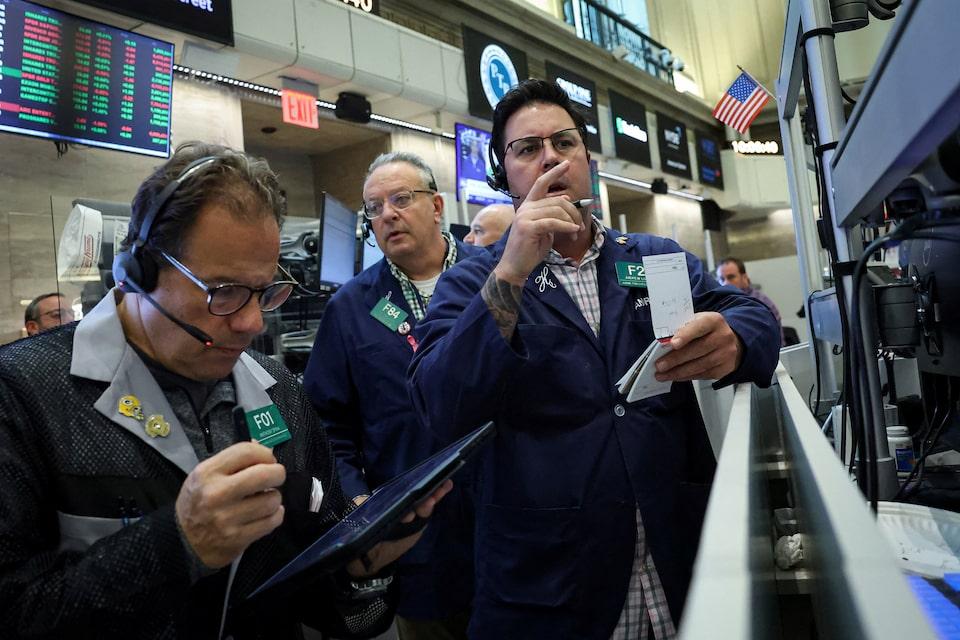
Tech sector amounts to 36% weight in S&P 500, more than in dot-com era Tech remains best performing sector YTD AI-related declines could prompt broader weakness NEW YORK, Nov 6 (Reuters) - This week's wobble in shares connected to artificial intelligence is a stark reminder that the U.S. stock market is ever more reliant on the technology sector to drive it higher. The S&P 500 (.SPX) , opens new tab and Nasdaq Composite (.IXIC) , opens new tab on Tuesday suffered their biggest one-day drops in nearly a month, weighed down by a sharp tech decline. The indexes recovered somewhat on Wednesday, while the tech group extended losses slightly. Sign up here. Fueled by a long period of strong performance, tech is by far the biggest sector in the S&P 500 (.SPX) , opens new tab, accounting for a roughly 36% weight in the benchmark index - a higher level than during the dot-com bubble era 25 years ago, according to Howard Silverblatt, senior index analyst at S&P Dow Jones Indices. Adding in megacap companies that are not classified as part of the technology sector - Google parent Alphabet (GOOGL.O) , opens new tab, Amazon (AMZN.O) , opens new tab, Tesla (TSLA.O) , opens new tab and Facebook parent Meta Platforms (META.O) , opens new tab - the combined weight amounts to nearly half of the S&P 500. With so much riding on prospects for AI, the sector's heavy weighting in major indexes leaves broader markets vulnerable to negative developments, investors said. "A significant percentage of the S&P is tied to one single sector and one single theme," said Walter Todd, chief investment officer at Greenwood Capital in South Carolina. "If there is some hiccup around (AI) ... anything like that is a risk to the individual names, but also the market overall." The sector has declined over 3% since last week, with weakness in names such as Palantir Technologies (PLTR.O) , opens new tab and Nvidia (NVDA.O) , opens new tab that have been signature stocks in the AI trade. Investors say tech shares might have been due for a breather after a strong run, and such a pullback can serve as a healthy reset that paves the way for further gains. At the same time, with much of Wall Street wary of signs of an "AI bubble" in the stock market, any weakness is being scrutinized as potentially the start of more severe declines. The CEOs of Morgan Stanley (MS.N) , opens new tab and Goldman Sachs (GS.N) , opens new tab on Tuesday cautioned that equity markets could be heading toward a drawdown, underscoring concerns about elevated equity valuations. The S&P 500's forward price-to-earnings ratio is around 23 times, above its 10-year average of 18.8, according to LSEG Datastream. The tech sector's forward P/E ratio of about 32 times is also well above its 10-year average of 22.2. Stellar tech performance has been a hallmark of the current bull market, which recently surpassed three years. While the S&P 500 has gained 90% during its bull run, the tech sector has gained 186% over that period. Its recent decline notwithstanding, tech has also been the best-performing of the 11 S&P 500 sectors year-to-date, rising about 27% against an over-15% gain for the broader S&P 500, which remains not far from record highs. That outperformance means tech's weighting in the S&P 500 has increased from just under 33% at the start of the year to its current level of about 36%. The next biggest sector, financials, has a weight of 13%. "If the tech stocks go down in any kind of sustained meaningful way, the indexes will go down," said Matt Maley, chief market strategist at Miller Tabak. Strong tech profits have been supporting the stocks' gains and their heavy index weightings. Tech is expected to account for about 25% of aggregate S&P 500 earnings in the third quarter, according to Tajinder Dhillon, head of earnings research at LSEG. Indeed, investors are quick to say that the tech companies at the heart of the AI theme are financially much stronger in general than many of those during the dawn of the internet 25 years ago. "The companies that are leading the charge and making money off AI, these are real companies with real cash flows," said Scott Wren, senior global market strategist at Wells Fargo Investment Institute. Wren said large tech companies' ability to maintain strong capital spending related to AI has been one of the key drivers of the stock market. "If it's just even a whiff that that's not going to play out, markets are going to be immediately low on that," Wren said. https://www.reuters.com/business/finance/ai-stock-wobble-points-us-market-reliance-tech-2025-11-06/
2025-11-06 13:42
Nov 6 (Reuters) - The U.S. jobless rate likely edged up in October to the highest in four years as the hiring rate for unemployed workers slowed and the rate of layoffs and other job separations increased, according to an estimate by the Chicago Fed released Thursday. The regional Fed bank estimated the unemployment rate climbed to 4.36% last month - 4.4% on the rounded basis typically reported by the Bureau of Labor Statistics - from 4.35% in September. Sign up here. The bank has been providing twice-monthly estimates of the jobless rate since shortly before a now-record-long federal government shutdown cut off the flow of published reports on the economy from the BLS, Bureau of Economic Analysis and Census Bureau. The last U.S. jobless figure published by the BLS, for August, put the rate at 4.3% - the highest since October 2021 when it was 4.5%. "The October 2025 reference week (October 12th through October 18th) for the BLS survey used to estimate the unemployment rate overlapped with the federal government shutdown that began in early October," the Chicago Fed said. "This special factor is likely to be only partially reflected in the October 2025 Final release of the Chicago Fed Labor Market Indicators. The Congressional Budget Office expects that as many as 750,000 federal government workers have been furloughed during the government shutdown, representing up to 0.4 percent of the civilian labor force (as of August 2025 data)." https://www.reuters.com/world/us/us-unemployment-rate-rounds-up-44-october-chicago-fed-estimates-2025-11-06/

2025-11-06 12:54
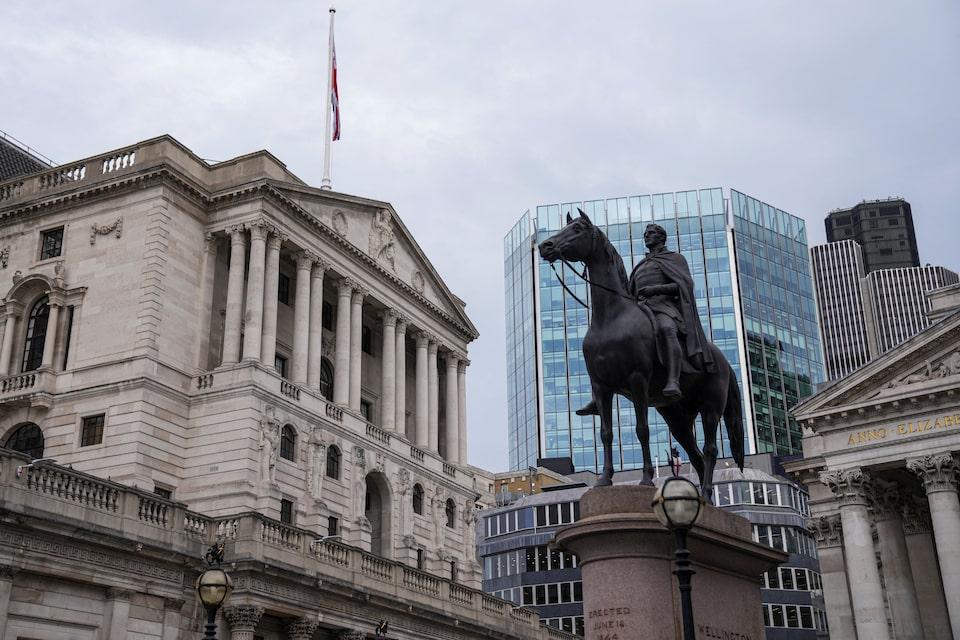
LONDON, Nov 6 (Reuters) - The Bank of England kept rates unchanged on Thursday in a tight decision following recent signs that inflation is slowing, which brought the pound below the highs of the day, while boosting UK government bond prices. The pound was last up 0.2% on the day at $1.30799, from around $1.30925 prior to the decision. It weakened a touch against the euro, which was up 0.1% at 88.1 pence, from 87.98 earlier . Sign up here. British government bond yields fell, with two-year gilt yields last trading at 3.78% , down 3 basis points on the day and down from 3.802% previously, while the blue-chip FTSE-100 index (.FTSE) , opens new tab was down 0.2%, having pared some of the day's losses. COMMENTS: SANJAY RAJA, CHIEF UK ECONOMIST, DEUTSCHE BANK, LONDON: "We continue to think that the MPC will cut Bank Rate once more this year – taking Bank Rate to 3.75% by year-end. We also maintain that Bank Rate will likely settle closer to 3.25% by summer next year. The big question now is whether there is enough dovish momentum in the data to back a faster reduction in Bank Rate over the first half of next year." KIRSTINE KUNDBY-NIELSEN, ANALYST, DANSKE BANK, COPENHAGEN: "The bar for a December cut is definitely low, with only one vote needed to tip the scale. With significant tightening in the budget in a couple of weeks' time, this should further underpin this view of the next cut being delivered in December. "For sterling, I still think we are in for more weakness with a dovish sentiment still present in the MPC. The cut is just postponed to the next meeting." KENNETH BROUX, HEAD OF CORPORATE RESEARCH FX AND RATES, SOCIETE GENERALE, LONDON: "There's certainly a dovish tone, for example they are talking about the upside risk to inflation decreasing, and that along with the voting split gives it a dovish feel. December is certainly in play, but not a done deal." "It's going to be tough for the pound, but good for rates, especially at the front end." NEIL WILSON, UK INVESTOR STRATEGIST, SAXO MARKETS, LONDON: "No surprise cut, no fireworks - the market called this one, just. Andrew Bailey cast the deciding vote to hold rates unchanged at 4.0% in a 5/4 split with four members preferring to cut. The calculation is that it's best to wait until after the Budget before moving - no big risk in waiting six weeks is the assumption. But equally, I would argue: why wait?" MICHAEL BROWN, SENIOR RESEARCH STRATEGIST, PEPPERSTONE, LONDON: "On the whole, it’s a more dovish decision than expected, it’s the narrowest possible margin in terms of the 5-4 vote." "(There is) also a bit more of an explicit easing bias to the statement, having got rid of this reference to gradual and careful, and instead explicitly saying if there is further progress on disinflation then we are going to continue cutting rates." "This is a Bank of England that is fairly confident that inflation has peaked, and it’s a Bank of England that clearly wants to continue lowering rates." NEIL MEHTA, INVESTMENT GRADE PORTFOLIO MANAGER, RBC BLUEBAY ASSET MANAGEMENT, LONDON: "The market was pricing in a 25% chance of a cut today, but it was always going to be a difficult one ahead of the Budget. The fact that it was 5-4 means that Bailey really does have the swing vote here and the reason for a quite muted market reaction is that focus has shifted to December. Bailey's comments do read more tilted towards the dovish side. If we have another month where wage and inflation remain in line I think December is very much a goal and Bailey will be tilted towards swinging that 5-4 towards a cut." ZARA NOKES, GLOBAL MARKET ANALYST, JPMORGAN ASSET MANAGEMENT, LONDON: “While there has been some positive news on the inflation front in recent weeks, the bottom line is that headline inflation is running at 3.8% - almost twice the BoE’s target." "On the growth side, the labour market is cooling, but other economic data such as retail sales and consumer confidence paint a more resilient picture of the UK economy. The balance of risks could shift next year if large near-term tax hikes are announced at the Autumn budget. But until there is more meaningful progress on bringing inflation down, the Bank must exercise a high degree of caution in lowering rates.” GEORGE BROWN, SENIOR ECONOMIST, SCHRODERS, LONDON: "Holding rates today was the right decision, with inflation still nearly double the 2% target. The Bank will be in a stronger position after the dust settles from the budget, armed with additional jobs and inflation data, to judge whether further easing is warranted in December." "A cautious approach remains appropriate given the risk that high inflation becomes entrenched, due to sticky wage growth and subdued productivity. However, this may change if reports the Chancellor intends to double her fiscal headroom to 20 billion pounds($26.84 billion), through fiscal tightening in the region of 40 billion pounds, are true. Alongside mooted tax cuts on household energy bills, if these measures materialise, they could create scope for the Bank to cut multiple times next year." MATHIEU SAVARY, CHIEF STRATEGIST, BCA RESEARCH, MONTREAL: "The BoE opted for a dovish hold. The MPC is not rushed and is waiting for the Treasury’s Autumn Statement, but the labour market is clearly softening and wage inflation is slowing faster than the Committee expected this summer. With fiscal tightening ahead, a December cut remains our base case. We stay overweight gilts.” ($1 = 0.7451 pounds) https://www.reuters.com/world/uk/view-bank-england-keeps-rates-hold-knife-edge-vote-2025-11-06/