2025-11-06 12:28
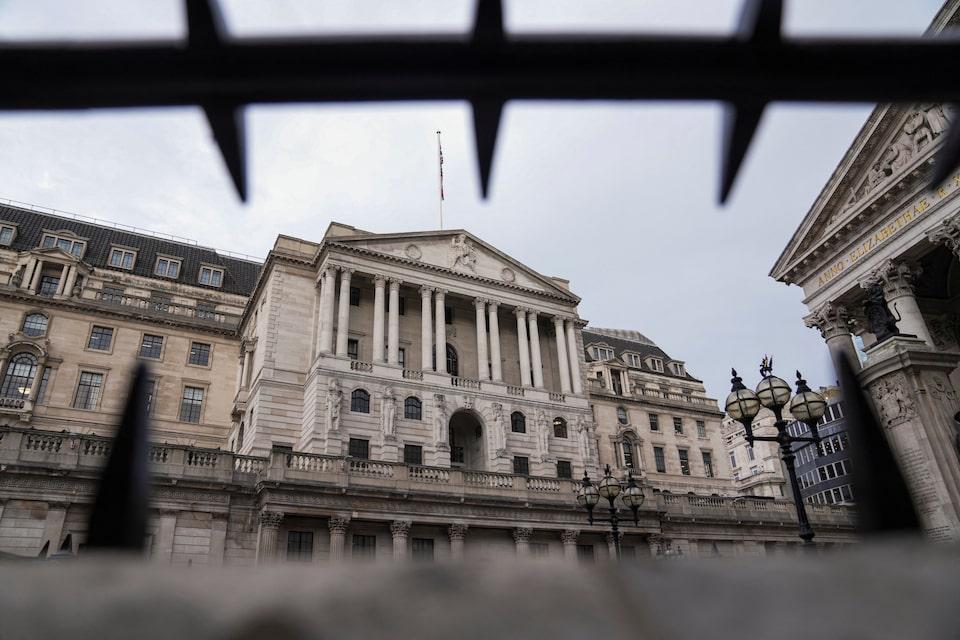
Policymakers voted 5-4 to keep interest rates at 4% Analysts had expected a 6-3 split in favour of unchanged rates Focus turns to UK budget on November 26 LONDON, Nov 6 (Reuters) - Sterling trimmed earlier gains on Thursday, moving back towards its lowest in months, after the Bank of England kept borrowing costs on hold, although a narrow vote and signs that Governor Andrew Bailey might soon join those seeking a policy easing kept the door open for a December cut. Mindful of Britain's still-high headline inflation rate, the nine-strong Monetary Policy Committee voted 5-4 to keep the central bank's benchmark Bank Rate at 4.0%, the BoE said. Sign up here. Most economists polled by Reuters last week predicted a 6-3 decision to leave the rate unchanged. Earlier this morning, markets were pricing a one-in-three chance of a cut. FOCUS ON THE BUDGET Sterling was 0.16% higher at $1.3072, having been up 0.3% before the decision, after hitting a seven-month low of $1.3011 on Wednesday. The pound weakened a touch against the euro , which rose 0.1% to 88.13 pence after touching its highest since May 2023 on Wednesday. While Bailey was among those who decided to keep borrowing costs unchanged, he was the only one of the five who felt that overall inflation risks had moved down. However, he felt there was "value in waiting for further evidence" of this in upcoming economic developments this year, the BoE said. As part of a wider overhaul of how it explains its thinking, the MPC tweaked its key message about the outlook for rates. A line from previous statements that it thought "a gradual and careful approach" to cutting rates was appropriate was replaced by the phrase: "If progress on disinflation continues, Bank Rate is likely to continue on a gradual downward path." Focus will be on what the central bank will do next month. By then, the BoE will have seen official inflation and jobs data for October and November and it will know the extent of tax increases which are widely expected in finance minister Rachel Reeves' November 26 budget. Reeves paved the way on Tuesday for broad tax rises to avoid a return to "austerity", framing her second annual budget as one of "hard choices" to protect public spending while reducing Britain's debt. “The BoE made the right call to leave rates unchanged today. While there has been some positive news on the inflation front in recent weeks, the bottom line is that headline inflation is running at 3.8% - almost twice the BoE’s target," said Zara Nokes, Global Market Analyst at J.P. Morgan Asset Management. "The balance of risks could shift next year if large near-term tax hikes are announced at the Autumn budget, but until there is more meaningful progress on bringing inflation down, the Bank must exercise a high degree of caution in lowering rates," Nokes added. Not everyone agrees. "The calculation is that it's best to wait until after the Budget before moving - no big risk in waiting six weeks is the assumption. But equally, I would argue why wait?" said Neil Wilson, UK investor strategist at Saxo Markets. https://www.reuters.com/world/uk/sterling-steadies-near-multi-month-lows-ahead-boe-decision-2025-11-06/
2025-11-06 12:21
2,700 suspicious transactions identified due to fault, central bank says Over 30 million transactions not properly monitored, it says Coinbase says errors quickly fixed, systems enhanced DUBLIN, Nov 6 (Reuters) - Ireland's central bank fined an Irish subsidiary of cryptocurrency exchange Coinbase Global (COIN.O) , opens new tab 21.5 million euros ($25 million) on Thursday for breaching anti-money laundering and counter-terrorist transaction monitoring obligations. The Irish regulator said the fine related to faults in the configuration of Coinbase Europe's transaction monitoring system, which resulted in more than 30 million transactions worth over 176 billion euros not being properly monitored over a 12-month period. Sign up here. It added that it took Coinbase almost three years to fully complete the monitoring of the affected transactions, leading to the reporting of 2,708 suspicious transactions to the authorities for further analysis and potential investigation. The transactions contained suspicions associated with serious criminal activities including money laundering, fraud, drug trafficking, cyber attacks and child sexual exploitation, the central bank said. COINBASE SAYS IT INADVERTENTLY MADE CODING ERRORS Coinbase Europe provides crypto asset and wallet services to customers globally to facilitate their use of the Coinbase Group’s trading platform to buy and sell crypto assets, the central bank said. Coinbase said in a statement that it inadvertently made three coding errors in its transaction monitoring system that caused five of the 21 scenarios which look for certain red flags to not fully screen all transactions in 2021 and 2022. It said it fixed the coding errors within two to three weeks of detecting them. As part of the settlement, Coinbase and the central bank cannot say that the suspicious transactions cumulatively valued at 13 million euros actually resulted in criminal activity, it said. Coinbase added that it has taken steps to prevent the types of errors from happening again, including enhancing its testing and monitoring. The fine was reduced from 30.7 million euros by way of a settlement discount and based on Coinbase Europe's average annual revenue of 417 million euros for the period. "The failure of such a system within any financial institution creates an opportunity for criminals to evade detection – and criminals will take that opportunity," Irish Central Bank Deputy Governor Colm Kincaid said in a statement. "Crypto has particular technological features which, together with its anonymity-enhancing capabilities and cross-border nature, makes it especially attractive to criminals looking to move their funds." ($1 = 0.8575 euros) https://www.reuters.com/business/irish-central-bank-fines-coinbase-europe-215-million-euros-2025-11-06/
2025-11-06 12:20
Still retains plans to get to net-zero by 2050 Follows updated analysis from the International Energy Agency Company on track to hit $1 trillion sustainable finance goal LONDON/SAO PAULO, Nov 6 (Reuters) - HSBC (HSBA.L) , opens new tab on Thursday issued a set of new, softer near-term climate targets for sectors such as oil and gas in response to the slow pace of change in the real economy. The end-decade targets follow a review announced earlier this year as the British bank dropped a goal of reaching net-zero carbon emissions across its own operations by 2030. Sign up here. HSBC still aims for operations funded by its loan book to produce net-zero emissions by 2050. It and other banks that have set similar climate targets say they aim to help clients finance transitions to lower-emission business models. HSBC had originally based its targets on the International Energy Agency's 2021 analysis of what it would take to reach the world's goal of limiting global warming by 1.5 degrees Celsius by mid-century, work which has since been updated to reflect the slower than expected progress. HSBC's updated policy announced on Thursday now sets its targets for financed emissions for high-emitting sectors by 2030 as a range, rather than a single metric. The lower bound of each range is aligned with the IEA's net zero emissions 2024 scenario, consistent with a global warming pathway of 1.5 degrees, while the upper bound aligns with a 1.7 degrees pathway. For the bank's oil and gas clients, for example, the bank said it aims to see a reduction in financed emissions of between 14% and 30% by 2030 from a 2019 baseline, consistent with the IEA's two scenarios. The update on its transition plans from Europe's biggest bank shows how lenders are watering down some of their own commitments to help clients reduce emissions, amid wider setbacks in the fight against climate change. The bank's announcement also comes as world leaders gather in Brazil this week for the UN COP30 climate talks, and as EU climate ministers agreed a softened target to cut emissions 90% by 2040, from 1990 levels. HSBC said its new policy reflects commercial realities, and that the bank is still on track to meet a target of providing or facilitating $750 billion - $1 trillion in sustainable finance by 2030. https://www.reuters.com/sustainability/cop/hsbc-softens-near-term-emissions-targets-polluting-sectors-2025-11-06/
2025-11-06 12:16
LONDON, Nov 6 (Reuters) - Chemicals group Solvay (SOLB.BR) , opens new tab would be interested in building a rare earths processing plant in the United States, where financial support is stronger than in Europe, its CEO said on Thursday. Solvay, one of a few companies outside of China capable of the complex rare earths separation, in April launched modest processing of minerals needed for permanent magnets at its French plant, but said commercial production would depend on support from customers and governments. Sign up here. The United States, Europe and allies have been racing to create domestic industries to make super-strong rare earth magnets vital for defence, electric vehicles, electronics and wind turbines and cut dependence on China. Solvay has not yet given the green light for an investment of 50-100 million euros to expand its French plant as it continues talks with customers and governments, CEO Philippe Kehren told reporters on a results call. "We feel limited support today still in Europe, so we continue to work with the European policymakers in order to see how to create those conditions. We see more support coming from North America to be perfectly clear," he said. MP Materials (MP.N) , opens new tab, which owns the only U.S. rare earths mine, sealed a multi-billion dollar deal with the U.S. government in July so it could boost processing and produce magnets. When asked if Solvay would be interested in building a U.S. separation plant if it received government support similar to MP Materials, Kehren said: "The answer is yes". "We're a global company and we have a unique know-how. We can take any source of rare earth material and separate, purify, and supply any type of customers," he said. "And MP Materials is a miner, so they also need this know-how, you know, to separate and purify their material." When asked if Solvay had held talks with the U.S. government, a spokesperson noted that Kehren had said Solvay is global and is "in talks with all stakeholders". Four decades ago, Solvay's plant in La Rochelle on France's Atlantic coast was one of the largest in the world, but production spiralled lower over the years as China ramped up cheaper output to now account for about 90% of the world's processed rare earths. So far the 161-year-old company is producing a few hundred metric tons a year of magnet rare earths neodymium and praseodymium and plans to add heavy elements dysprosium and terbium next year, Kehren said. https://www.reuters.com/world/china/solvay-open-building-rare-earths-plant-us-where-support-is-stronger-2025-11-06/
2025-11-06 12:12
US dollar slips from four-month peak US Supreme Court raises doubts over legality of Trump's tariffs Traders see 72% chance of US interest rate cut in December Nov 6 (Reuters) - Gold prices edged up on Thursday, buoyed by a weaker dollar and a resurgence of safe-haven demand on concerns over a prolonged U.S. government shutdown and uncertainty over the legality of tariffs. Spot gold was up 0.2% at $3,989.91 per ounce by 1:40 p.m. ET (1840 GMT). U.S. gold futures for December delivery settled little changed at $3,991. Sign up here. The dollar (.DXY) , opens new tab fell 0.5% after hitting a four-month high in the previous session, making gold cheaper for overseas buyers. With the U.S. government shutdown and skepticism from U.S. Supreme Court justices on the legality of U.S. President Donald Trump's sweeping tariffs, "we're seeing a revival of the haven bid," said Peter Grant, vice president and senior metals strategist at Zaner Metals. "(Gold) is on track for a fairly decent close to the year ... I’d say a year-end target in the $4,300 to $4,400/oz range seems reasonable." The U.S. Federal Reserve cut interest rates for the second time this year last week, with markets anticipating a 72% chance of another cut in December. /FEDWATCH Fed Bank of Cleveland President Beth Hammack said on Thursday ongoing high levels of inflation argue against the U.S. central bank cutting interest rates again. Gold is considered a hedge during times of uncertainty. The non-yielding asset also benefits in low-interest rate environments. Traders remain cautious, watching for fallout from U.S. President Donald Trump’s trade policies and risks tied to a prolonged U.S. government shutdown. "It would surprise us were gold to stay rangebound around $4,000/oz as speculative capital exits, with central bank buying remaining the primary positive tailwind going forward," SP Angel said in a note. Elsewhere, spot silver added 0.3% to $48.22 per ounce, platinum was down 1.8% at $1,533.93, and palladium fell 2.7% to $1,381.18. https://www.reuters.com/world/india/gold-firms-softer-dollar-us-government-shutdown-2025-11-06/

2025-11-06 12:12
LONDON, Nov 6 (Reuters) - The Bank of England, which kept interest rates on hold on Thursday in a tight vote, for the first time set out the views of the individual members of its Monetary Policy Committee. The MPC voted 5-4 to keep borrowing costs at 4%. Deputy governors Sarah Breeden and Dave Ramsden, external MPC members Swati Dhingra and Alan Taylor backed a cut to 3.75%. Most economists polled by Reuters had predicted a 6-3 split to leave Bank Rate unchanged. Sign up here. Below is a summary of the reasoning behind the nine policymakers' decisions: MPC MEMBERS WHO VOTED FOR NO CHANGE ANDREW BAILEY, GOVERNOR Bailey said he wanted to confirm that the slowdown in inflation is sustained this year in order to start cutting rates. British consumer price inflation unexpectedly held at 3.8% in September, below the BoE's forecast for a rise to 4%. He said that the current market pricing for rates reflected his position. "Recent evidence points to building slack in the economy, and the latest CPI data were promising. But this is just one month of data. Labour costs remain elevated and wage growth, while on a downward path of late, may plateau." "Rather than cutting Bank Rate now, I would prefer to wait and see if the durability of disinflation is confirmed in upcoming economic developments this year." CLARE LOMBARDELLI, DEPUTY GOVERNOR Lombardelli said she was worried there might still be underlying inflationary pressures in the economy, despite the recent slowdown in price growth. "Structural changes in the labour market may mean there is less slack in the economy, leading to more persistent inflationary pressures." "While I find the ongoing weaker consumption scenario compelling, we have plenty of policy space to lower Bank Rate should it be necessary, while a policy reversal would be costly for the MPC's credibility." HUW PILL, CHIEF ECONOMIST Pill judged that the pace of rate cuts so far had been too fast, saying that he preferred a more cautious approach to reducing borrowing costs due to the risks of persistent underlying inflation pressures. "I continue to prefer a slower pace for the withdrawal of monetary policy restriction than delivered over the past 18 months, reflecting my longstanding concern that structural changes in price and wage-setting behavior have generated stronger intrinsic inflation persistence in the UK, resulting in more sustained above-target underlying inflation." CATHERINE MANN, EXTERNAL MPC MEMBER Mann said the cooldown in the labour market was slow, and a firm stance was needed to ensure inflation returns to the BoE's 2% target. "Administered prices could jump again, elevated household inflation expectations risk further second-round effects, and wage inflation is expected to remain above target-consistent levels next year." "Monetary policy needs to rein in both inflation and expectations drift so as to reinforce commitment to our 2% target." MEGAN GREENE, EXTERNAL MPC MEMBER Greene said she was concerned inflation risks were on the upside, and that the disinflation process in Britain had slowed, with wage growth remaining elevated next year due to firms' increased employment costs. "I am not convinced the monetary policy stance is meaningfully restrictive. There is huge uncertainty around the neutral rate, but as we approach it the risk of cutting too far or too fast rises and it becomes more difficult to discern whether inflation is driven by the monetary policy stance or underlying dynamics." MPC MEMBERS WHO VOTED FOR 25 BASIS POINT CUT TO 3.75% SARAH BREEDEN, DEPUTY GOVERNOR Breeden voted against the majority for the first time in the November meeting. She said the upside risks to inflation had not materialized and that some slack in the jobs market would continue to weigh down on pay growth. "Combined with my view that policy remains restrictive and slack continues to build, this gives me enough confidence to cut now." "We will need a higher accumulation of evidence on disinflation as we feel our way towards neutral next year, where I see benefits in retaining some insurance against potential structural changes in the labour market. But in the absence of conclusive evidence that this is happening, I support gradual policy reduction now." DAVE RAMSDEN, DEPUTY GOVERNOR Ramsden said that a gradual pace of reducing rates remained appropriate as the jobs market loosens and uncertainties around the slowdown in inflation dissipate. "I place weight on our central projection and see risks around it as broadly balanced, although the downside risks are now more prominent to me relative to August, particularly as previous uncertainties around the disinflation process have reduced." SWATI DHINGRA, EXTERNAL MPC MEMBER Dhingra said disinflation remained on track and there was limited risk of food price inflation generating second-round effects. "My view remains that Bank Rate should have been lower already to account for lags in its transmission to the real economy." "Policy is overly restrictive and could exacerbate risks from weak demand and reduce supply." ALAN TAYLOR, EXTERNAL MPC MEMBER Taylor said borrowing costs were too restrictive, and that his outlook was weaker than the central projection, partly due to the slowdown in wage growth and inflation. He said there was a risk that price growth falls below the 2% target. "I judge that the current slack is larger, and the terminal rate lower, implying that the current stance is more restrictive than intended." "I place weight on our other models that suggest inflation may not stop falling in the second half of next year and could undershoot." https://www.reuters.com/business/finance/bank-england-policymakers-views-close-november-rates-decision-2025-11-06/