2025-11-06 10:24
LONDON, Oct 6 (Reuters) - To say investors were unprepared for 5% U.S. Treasury yields is perhaps the market understatement of the year - but they are now frantically feeling around to see if rates can go higher still and what landmines that might set off. Real and nominal U.S. government borrowing rates have exploded over the past month, with benchmark 10-year yields coming within 12 basis points of the 5% mark this week for the first time since 2007. Sign up here. Twenty-year bonds are now above that and 30-year paper briefly topped it on Tuesday. And in the backdrop, 30-year fixed mortgage rates have ballooned above 7.5% for the first time since 2000. The speed of the move is breathtaking. With very little change in thinking on Federal Reserve policy rates through next year, 10-year Treasury yields have rocketed some 80bp in little over four weeks. Investors seem to have rapidly switched their attention from cyclical ebb and flow and short-term second guessing of the Fed to the possible return of the U.S. economy to a pre-2008 high-pressure, higher interest rate environment over the longer term. But they are also now accounting for rising debt and debt servicing costs and a likely divided and often dysfunctional congressional system of budget setting. And many fear Washington will now struggle to rein in deficits for years to come just as the Fed's balance sheet unwind removes the central bank as a stabilising force in the debt market. Re-enter risk premia on what should be 'risk free' bonds. This comes in the shape of the so-called 'term premium' - a sometimes nebulous measure of the compensation required to buy and hold a long-term bond as opposed to simply rolling over short-term paper at prevailing rates. While the Fed has almost deliberately sown uncertainty about future interest rates, the term premium is really supposed to capture fear of things that can go bump in the night longer term. And that's often fiscal policy and debt supply in the absence of a central bank backstop of quantitative easing (QE). The New York Fed's favoured measure of the term premium - actually negative for much of the past decade due largely to repeated bouts of Fed bond buying - has surged by a whopping 130bp since July to stand positive for the first time in two years and at its highest since 2015 at 35bp. And if you think that's the end, then a quick consideration of where it used to be in a pre-2008 world puts its 65-year average at 150bp - almost another 120bp higher than today. Even getting back to the average of the past 20 years would see it rise further to 50bp - not to mention 2013 highs of 190bp or periods during the Great Financial Crisis (GFC) about 300bp. THERE BE DRAGONS When you add that sort of risk premium to standing bond math on future real policy rates and inflation, the argument for long-term investors jumping back in at these elevated rates weakens considerably. Barclays strategist Ajay Rajadhyaksha compares today's resurfaced term premium to the 50bp that existed just before the GFC - but points out that U.S. public debt to GDP levels have more than doubled since then. "We are now facing persistently high deficits for years (and) under such circumstances, even 120-130bp in term premia might plausibly not be enough," he wrote, adding Fed models see an average 1.5% real policy rate over 10 years as plausible given 2% inflation over the period. "Add it all up – 3.5% for the nominal policy rate and another 130bp in term premia – and the 10 year at 4.8% does not exactly scream cheap." And if 'risk free' government bond yields have not yet peaked, then the pressure on equities, credit and mortgage markets priced off this benchmark rate only rise further too. Another way to look at fair value in Treasuries, however, is simply to look at the nominal economic growth - published real GDP growth plus prevailing inflation - for guidance. Societe Generale's multi-asset team seem convinced Treasuries now offer close to fair value near 5%. Their models use a rolling annualised nominal growth average over 10 years as the best guide to 10-year yields and say this is currently throwing up 5% - putting bonds on reasonably neutral footing going forward. The SocGen strategists point out Treasury yields were below this nominal growth measure for the past 20 years due a mix of structural disinflation from China's emergence into the world economy and serial bouts of Fed QE. Now they're just becoming better priced. They expect a 'long plateau' for rates given that many cyclical growth signals are turning up again - and fear only a mild recession next year. The renewed corporate profits upswing riffs off this relatively robust nominal growth picture too - as do still benign corporate debt premia. "When will rising yields become a problem leading to a potential default risk? The answer is when the profit/growth cycle turns negative," they conclude, adding the catalyst for peak bond yields will likely be an external demand shock from China or Europe. However, keeping a lid on 5% nominal GDP may well be what's irking bonds as much as anything. While turning 10-year averages takes some time, nominal GDP growth according to a real time model from the Atlanta Fed is closer to 8% right now. And perhaps that is really what's keeping wider credit markets relatively calm even as bedrock bonds quake. The opinions expressed here are those of the author, a columnist for Reuters. https://www.reuters.com/world/risk-free-risk-re-emerges-bonds-minesweep-5-plus-mike-dolan-2025-11-06/

2025-11-06 10:18
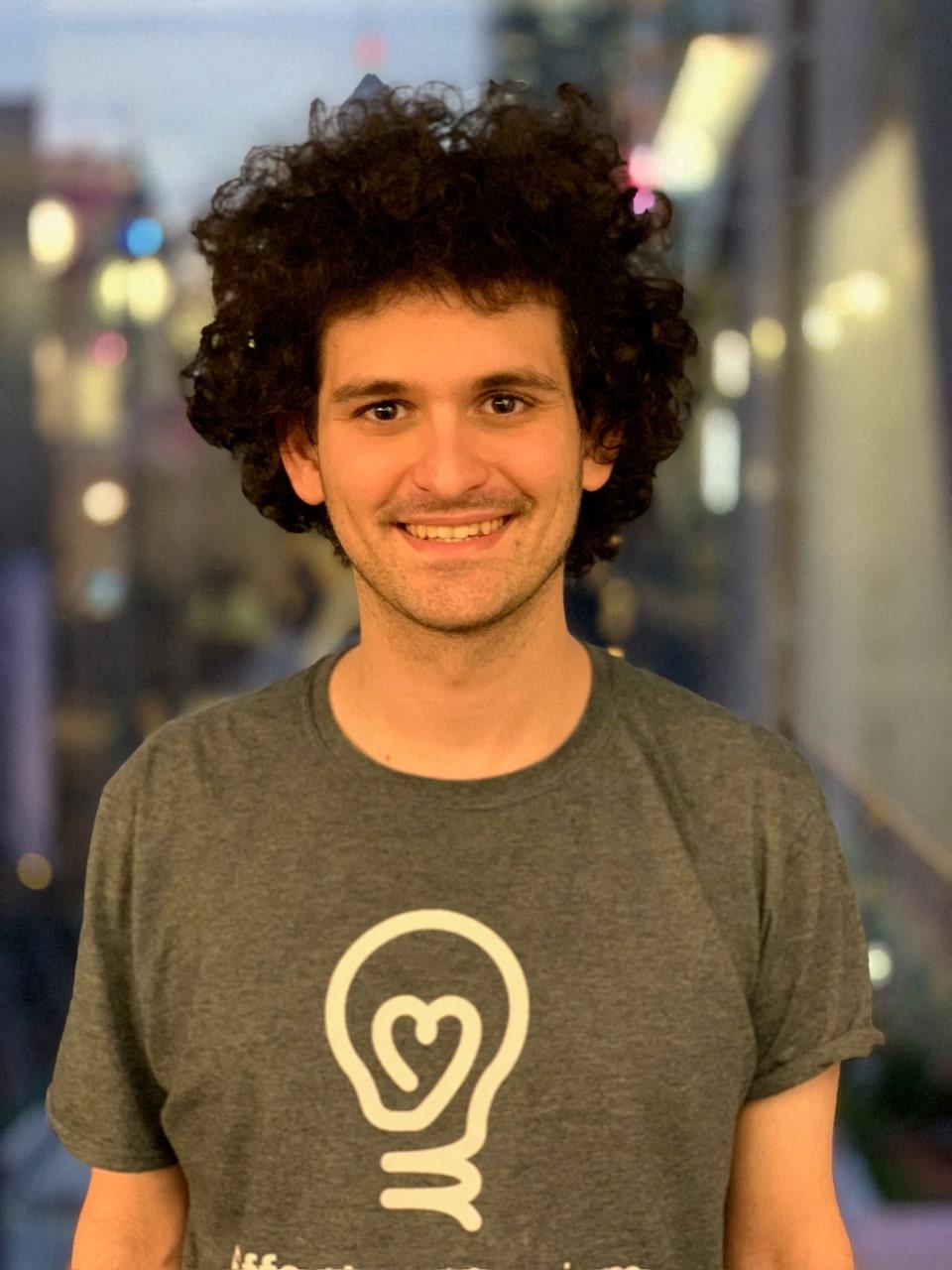
Dec 13 (Reuters) - The sudden fall from grace and arrest of FTX's former CEO Sam Bankman-Fried has stunned investors and crypto enthusiasts who once hailed the 30-year-old American as the savior of the industry. Bankman-Fried was charged by the U.S. Securities and Exchange Commission (SEC) on Tuesday with defrauding investors in what regulators called "a house of cards," hours before he was set to appear before a magistrate in the Bahamas. Sign up here. The fallen crypto entrepreneur was arrested by Bahamian authorities late on Monday at the request of the U.S. government, U.S. Attorney Damian Williams said in a statement. The Bahamian attorney general said in a separate statement the United States was likely to request his extradition. Bankman-Fried amassed billions of dollars in personal wealth running FTX, one of the world's largest crypto exchanges that was valued earlier this year at $32 billion. Since stepping down, Bankman-Fried has said he no longer has a role at the company. Yet he also told a Vox reporter , opens new tab he believed FTX's bankruptcy filing was a mistake and has suggested on Twitter and in media interviews that he can still raise liquidity to repay customers. He did not specify how he planned to do so. FTX appointed restructuring expert John Ray as CEO after Bankman-Fried stepped down on Nov. 11, shortly before filing for bankruptcy. Ray oversaw the liquidation of Enron, the energy trading giant that collapsed in scandal and bankruptcy in 2001. WILD HAIR, T-SHIRTS, CELEBRITY PALS Known in financial circles by his initials, SBF, Bankman-Fried had become a prominent and unconventional figure known for his wild hair, t-shirts and shorts. He appeared on panels with celebrity politicians such as former U.S. President Bill Clinton and former British Prime Minister Tony Blair as well as with supermodel Gisele Bundchen. Bankman-Fried contributed $5.2 million to President Joe Biden's 2020 campaign and became one of the largest donors to Democratic political candidates. "Nobody was saying that anything was wrong with SBF," said Marius Ciubotariu, co-founder of the Hubble protocol, a decentralized lending platform. The collapse of FTX caught markets by surprise because Bankman-Fried was seen as a business-savvy founder adept at striking deals, he said. The one-time crypto wunderkind was raised in California by two Stanford University law professors, Joseph Bankman and Barbara Fried. Bankman-Fried started his career at Jane Street Capital, a choice he has said was influenced by a desire to make money to pursue his interest in effective altruism, a movement that encourages people to prioritize donations to charities. FROM BILLIONS TO BANKRUPTCY Taking advantage of the price differences in bitcoin in Asia and the United States, SBF amassed a fortune that Forbes estimated a year ago was as high as $26.5 billion. He eventually started crypto trading firm Alameda Research in 2017 and founded FTX a year later. It was valued in January at $32 billion. Reuters has reported that over the past two years, FTX, Bankman-Fried's parents and FTX senior executives bought at least 19 properties worth nearly $121 million in the Bahamas, where FTX is based. Since FTX filed for bankruptcy, Bankman-Fried has distanced himself from the image he projected in media interviews and on Capitol Hill, telling the Vox reporter his advocacy for a crypto regulatory framework was "just PR" and his discussions on ethics within the industry were at least partly a front. As traders rushed to withdraw funds from FTX in the days before the company collapsed, Bankman-Fried told investors he was convinced the business would be rescued, according to a source familiar with the situation. FTX's meltdown sent bitcoin plunging to a two-year low as investors worried the company's problems would spread to other crypto firms. Employees were blindsided; some sent apologetic notes to clients expressing shock at what had happened, according to a person familiar with the matter. Bankman-Fried himself has apologized multiple times to customers and employees. For all his recent celebrity endorsements, notoriety and big-name backers, Bankman-Fried said he was not always confident about FTX's prospects. "I thought we would fail," Bankman-Fried said at a June conference weeks before FTX and Alameda extended lifelines to two struggling crypto platforms. "I thought we would fail because no one would ever use it." https://www.reuters.com/world/sam-bankman-frieds-sudden-turn-white-knight-detainee-2025-11-06/
2025-11-06 10:18
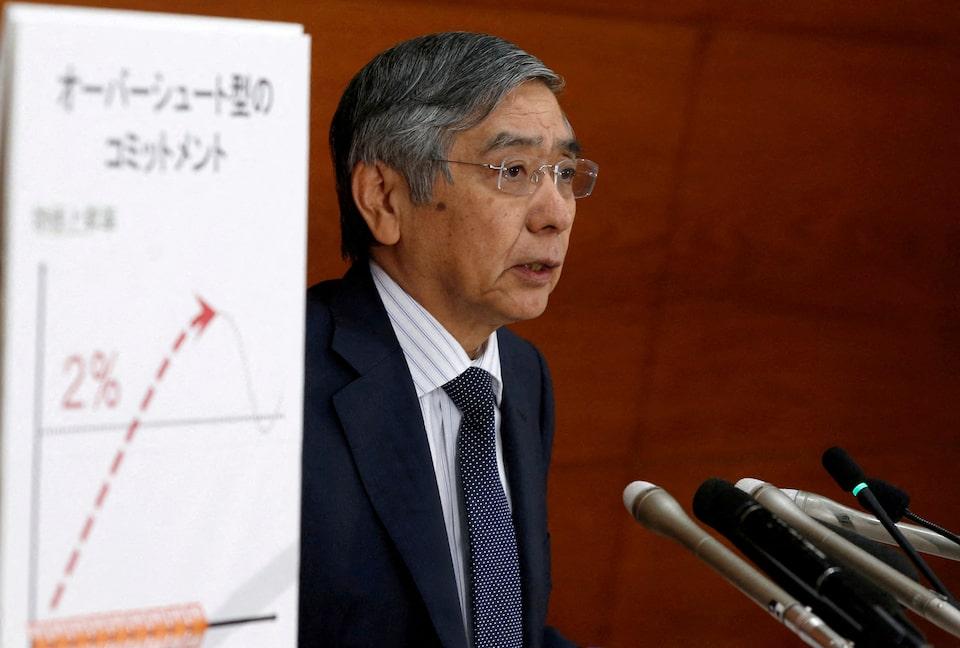
March 18 (Reuters) - The Bank of Japan maintained its massive stimulus on Friday and warned of heightening risks to a fragile economic recovery from the Ukraine crisis, reinforcing expectations it will remain an outlier in the global shift towards tighter monetary policy. read more The BOJ's dovish tone is in stark contrast with the U.S. Federal Reserve and the Bank of England, which raised interest rates this week to stop fast-rising inflation becoming entrenched. Sign up here. As widely expected, the BOJ maintained its short-term rate target at -0.1% and that for the 10-year bond yield around 0% at the two-day policy meeting that ended on Friday. Following are excerpts from BOJ Governor Haruhiko Kuroda's comments at his post-meeting news conference, which was conducted in Japanese, as translated by Reuters: UKRAINE CRISIS' IMPACT "The biggest impact on Japan's economy from the Ukraine crisis is through rising raw material costs. Japan's inflation is likely to accelerate clearly for the time being. But it also weigh on the economy from a longer-term perspective by pushing down corporate profits and households' real income." "Developments regarding the Ukraine crisis are highly uncertain. We will closely watch whether they inflect negative impact on Japan's economy that is still in the midst of recovering from the pandemic's hit." INFLATION "It will depend on future crude oil price moves and the government's steps to cushion the blow. But we could see inflation move at around 2% for some time from April. Rising costs will push up inflation. But it weighs on households and corporate profits, and could have a negative impact on Japan's economy. We will maintain our powerful monetary easing patiently to achieve sustainable, stable inflation." WEAK YEN "A weak yen affects Japan's economy in different ways as the country's economic and trade structure changes. But overall, there's no change to how a weak yen is basically positive for Japan's economy. It's true the impact is felt unevenly among sectors, corporate size and economic entities..." "The recent rise in import costs is driven more by surging raw material costs than by a weak yen." "The relationship between interest-rate differentials and exchange-rate moves isn't clear-cut ... I don't think interest rate differentials alone would weaken the yen further." STAGFLATION "I don't think Europe, the United States and Japan will face stagflation" INFLATION AND MONETARY POLICY "There's a chance Japan will see inflation move around 2% from April onward. But most of that is due to rising commodity prices, so there's no reason to tighten monetary policy. Doing so would be inappropriate. We need to tweak monetary policy if inflation expectations or wages see second-round effects. But Japan isn't in such a situation." JAPAN'S ECONOMY "So far the spring wage negotiations are turning very positive results. It's hard to predict how the Ukraine situation develops, so that needs close attention. But at this stage, I don't think the positive economic cycle has been disrupted." BOJ RESPONSE TO WEAK YEN "Exchange rate policy falls upon the jurisdiction of the finance ministry. The BOJ does not need to, and does not have the power to influence exchange rates. But it's true exchange rate moves affect the economy and prices, so we're watching moves carefully." PRICE RISE "Japan's consumer inflation may move around 2% from April onward but that's unlikely to persist for a long period of time ... Price rises driven mostly by cost-push inflation are basically temporary and unlikely to be sustained." JAPAN INFLATION OUTLOOK "When we look at various data, short-term inflation expectations are heightening, but medium- and long-term expectations are barely moving. At least for now, we're not seeing any major change in Japan's inflation expectations." https://www.reuters.com/world/boj-governor-kurodas-comments-news-conference-2025-11-06/
2025-11-06 07:59
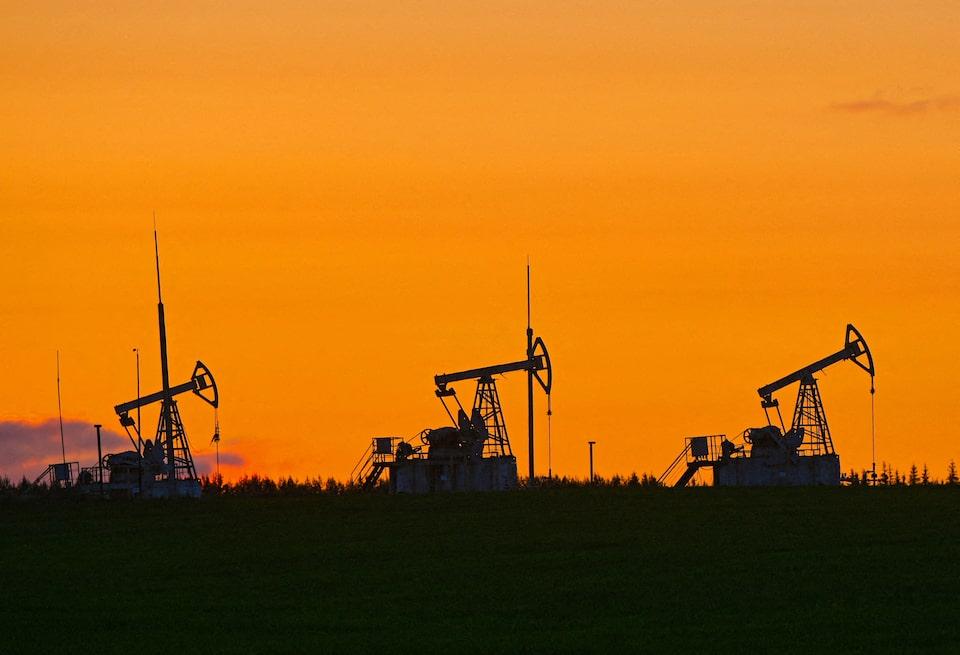
Global oil demand falls short of JPMorgan projections Low US refinery run rates show weak crude demand Saudi Arabia cuts December crude prices for Asia Investors weigh impact of Russia sanctions HOUSTON, Nov 6 (Reuters) - Oil prices declined on Thursday as investors considered a potential supply glut, as well as weakened demand in the United States, the world's largest oil consumer. Brent crude futures settled down 14 cents, or 0.22%, to $63.38 a barrel. U.S. West Texas Intermediate futures settled down 17 cents, or 0.29%, to $59.43. Sign up here. Global oil prices fell for a third straight month in October on fears of oversupply as OPEC and its allies - known as OPEC+ - increase output while production from non-OPEC producers is also still growing. "The market keeps being haunted by the best-telegraphed supply glut in history, that is a headwind to prices," said John Kilduff, partner with Again Capital. DEMAND WEAKER THAN EXPECTED Demand weakness, however, remains in focus. In the year to November 4, global oil demand rose by 850,000 barrels per day, below the 900,000 bpd projected previously by JPMorgan, the bank said in a client note. "High-frequency indicators suggest that U.S. oil consumption remains subdued," the note said, pointing to weak travel activity and lower container shipments. In the previous session, oil prices fell after the U.S. Energy Information Administration said U.S. crude stocks rose by 5.2 million barrels to 421.2 million barrels last week. "Low refinery run rates showed there is not strong demand for crude in the U.S. right now as a result of a significant refinery turnaround season. That is fundamentally weighing on prices," Kilduff said. Saudi Arabia, the world's top oil exporter, sharply reduced the prices of its crude for Asian buyers in December, responding to a well-supplied market as OPEC+ producers boost output. "We think that downward pressure on oil prices will prevail, supporting our below-consensus forecast of $60 per barrel by end-2025 and $50 per barrel by end-2026," Capital Economics said in a note. Curbing some losses, the latest sanctions on Russia's biggest oil companies two weeks ago are sparking concerns about supply disruptions, despite rising output from OPEC and its allies, analysts said. Lukoil's operations at its foreign businesses are struggling in the face of the sanctions, Reuters reported this week. "There is a little bit of an impact on prices (from the sanctions), but not a huge one," said Jorge Montepeque at Onyx Capital Group. "Based on the numbers, it should be bigger, but the market still needs to be convinced there will be an impact." https://www.reuters.com/business/energy/oil-flat-weak-demand-oil-glut-weigh-market-2025-11-06/
2025-11-06 07:59
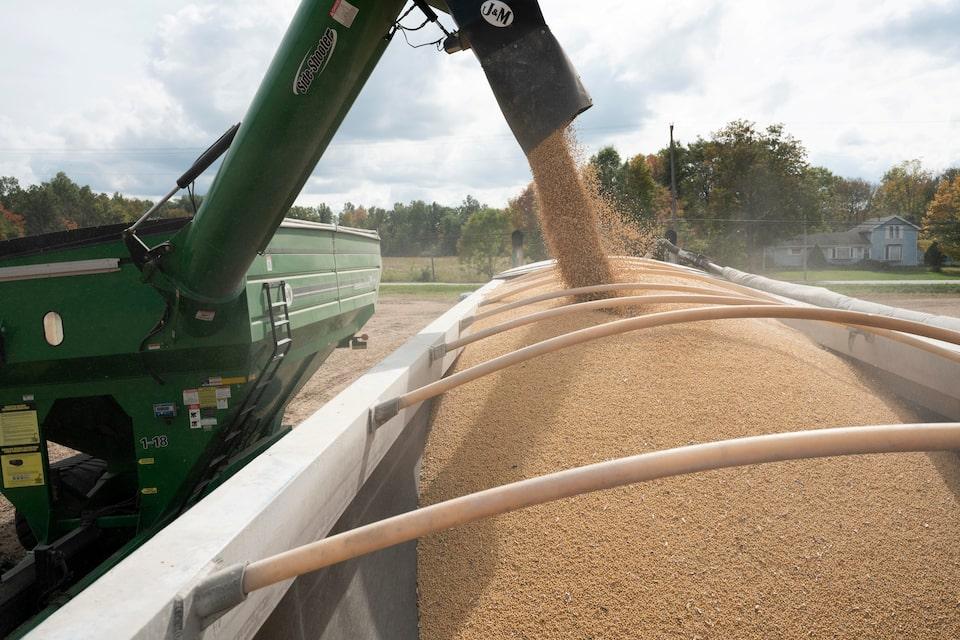
SHANGHAI, Nov 6 (Reuters) - China's state-owned COFCO held a soybean procurement signing ceremony on Thursday morning, the head of a Chinese agriculture business association told a U.S.-China forum. Cao Derong, the president of the China Chamber of Commerce for the Import and Export of Foodstuffs, Native Produce and Animal By-Products, made the comment at the U.S.-China Agricultural Trade Cooperation Forum, which is taking place in Shanghai as part of the China International Import Expo. Sign up here. He did not give provide details about the signing ceremony, such as how much was purchased or the identity or nationality of the seller. "China-U.S. bilateral trade has gone through many twists and turns and is now able to proceed normally again," he said, adding there was "light at the end of the tunnel." COFCO did not immediately respond to a request for comment. The White House said after a meeting between Chinese President Xi Jinping and U.S. President Donald Trump in South Korea that China would purchase at least 12 million metric tons of U.S. soybeans in the last two months of 2025 and at least 25 million tons in each of the next three years. China has not confirmed those figures and traders are watching closely for signs of large-scale purchases. On Wednesday, China said it will suspend retaliatory tariffs on U.S. imports, including duties on farm goods but that imports of U.S. soybeans will still face a 13% tariff. https://www.reuters.com/world/china/cofco-held-soybean-procurement-signing-ceremony-association-official-tells-us-2025-11-06/
2025-11-06 07:44
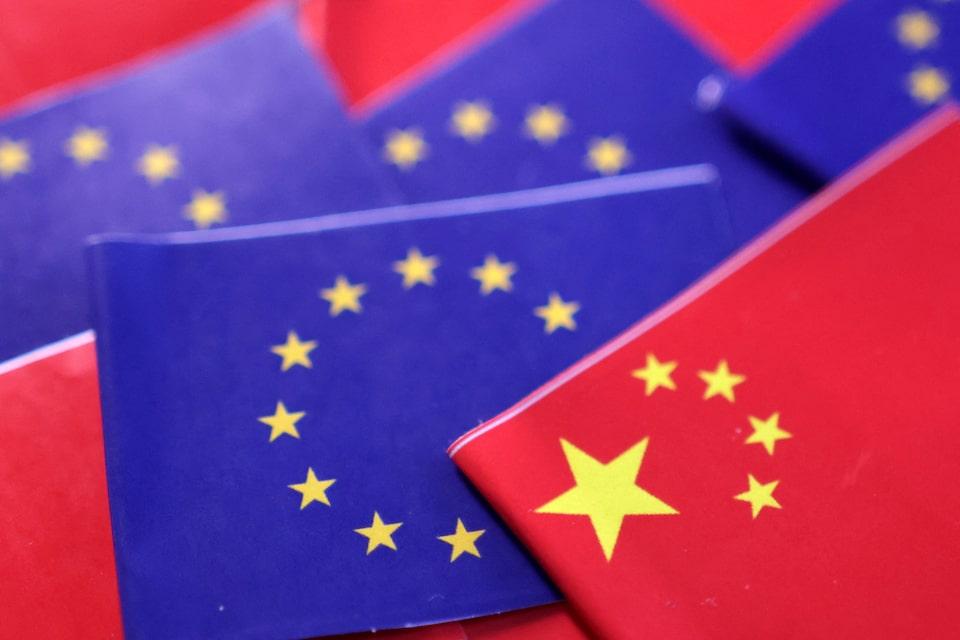
BEIJING, Nov 6 (Reuters) - China's Commerce Ministry said on Thursday the country is willing to explore the possibility of various trade and investment agreements with the European Union. Ministry spokesperson He Yadong told a press conference that the two sides share "extensive common interests and huge space for cooperation." Sign up here. The comment followed remarks by Chinese Foreign Minister Wang Yi on Tuesday, who told his Estonian counterpart in Beijing that China was ready to negotiate and sign a free trade agreement with the bloc. https://www.reuters.com/world/china/china-says-it-is-willing-explore-trade-investment-agreements-with-eu-2025-11-06/