2025-11-05 06:48
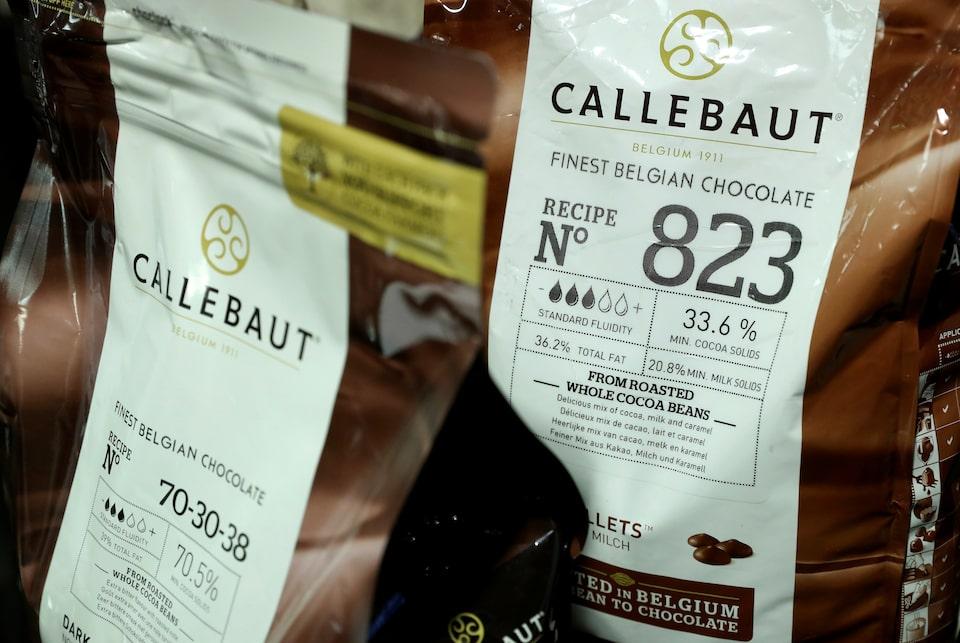
Nov 5 (Reuters) - Barry Callebaut (BARN.S) , opens new tab said on Wednesday that it expected a mid single-digit percentage decline in sales of cocoa products in its upcoming financial year, as it continues to face pressure from high cocoa prices. The company, which supplies chocolate for Unilever's (ULVR.L) , opens new tab soon-to-be-spun-off Magnum ice creams and Nestle's (NESN.S) , opens new tab KitKat bars, also forecast recurring core earnings (EBIT) growth in a low to mid single-digit percentage, measured in local currencies, for the 2025/26 financial year. Sign up here. The company, whose ingredients are present in one out of four chocolate and cocoa products consumed worldwide, said its sales volume fell 6.8% to 2.1 million tonnes in the financial year that ended in August. Analysts were expecting 2.1 million tonnes on average, a company-provided poll showed. Volumes fell 8% in the fourth quarter between June and August, according to a Reuters calculation. NEW GUIDANCE, OLD PROBLEMS Analysts had contrasting reactions to the new forecast the Zurich-based company provided. Vontobel's Matteo Lindauer said the the new guidance was a "welcome shift" from last year's unattainable targets. However, Kepler Cheuvreux's Jon Cox called the targets cautious and said the stock may come under pressure as a result. Barry Callebaut's shares were seen falling 3% in premarket indications as of 0713 GMT. "Industry conditions stay challenging, as underscored by recent commentary from key customers such as Mondelez and Hershey," Lindauer said. In October, Mondelez (MDLZ.O) , opens new tab cut its annual profit forecast, citing weakening spending among value-conscious consumers in North America and Europe, while higher cost of cocoa added pressure. https://www.reuters.com/business/barry-callebaut-reports-full-year-sales-volumes-decline-2025-11-05/
2025-11-05 06:27
Wall Street stocks end higher US private payrolls data exceeds expectations Bitcoin up after Tuesday's losses NEW YORK, Nov 5 (Reuters) - Major stock indexes gained on Wednesday as corporate earnings and U.S. private payrolls data were stronger than expected, while Treasury yields surged following the day's economic data. U.S. private payrolls increased by 42,000 jobs in October, exceeding expectations of a 28,000 gain, according to a Reuters poll of economists. However, some industries such as professional business services shed jobs for a third straight month. Sign up here. Aside from the private payrolls numbers, data showed U.S. services sector activity picked up in October amid a solid increase in new orders. A congressional impasse has resulted in what is now the longest-ever U.S. government shutdown, which has forced investors and the data-dependent Federal Reserve to rely on private sector indicators. An index of semiconductors (.SOX) , opens new tab was up 3% after falling sharply on Tuesday. Shares of Advanced Micro Devices (AMD.O) , opens new tab ended 2.5% higher after the company late Tuesday gave an upbeat revenue forecast. Among other earnings reports, drugmaker Amgen (AMGN.O) , opens new tab reported a profit that beat estimates and its shares gained 7.8%. "Today is a bit of a relief rally you might say," said Peter Cardillo, chief market economist at Spartan Capital Securities in New York. "The ADP numbers... suggested that maybe if these numbers align with the official numbers - when they finally do come out - and that perhaps the fear over the jobs market may have been somewhat overstated," he said, referring to the ADP National Employment Report. Investors were also paying close attention as U.S. Supreme Court justices raised doubts over the legality of U.S. President Donald Trump's sweeping tariffs in a case with implications for the global economy. The Dow Jones Industrial Average (.DJI) , opens new tab rose 225.76 points, or 0.48%, to 47,311.00, the S&P 500 (.SPX) , opens new tab rose 24.74 points, or 0.37%, to 6,796.29 and the Nasdaq Composite (.IXIC) , opens new tab rose 151.16 points, or 0.65%, to 23,499.80. Analysts now see aggregated S&P 500 earnings growth of 16.2% year-on-year for the July-September period, more than double the growth expectations at the beginning of the quarter, according to LSEG. MSCI's gauge of stocks across the globe (.MIWD00000PUS) , opens new tab rose 1.07 points, or 0.11%, to 997.89. The pan-European STOXX 600 (.STOXX) , opens new tab index rose 0.23%. Enthusiasm for generative artificial intelligence has swept across stock markets worldwide this year, drawing comparisons to the dotcom bubble. U.S. Treasury yields rose after the data surprises showed continued economic resilience. The Treasury Department on Wednesday said it expected to keep its nominal coupon and floating rate note auction sizes steady for at least the next several quarters, but was beginning to consider future increases. Benchmark 10-year yields rose by nearly seven basis points to 4.159%. The dollar was little changed against major currencies. The dollar has strengthened against the euro since last week when the Fed cut interest rates by 25 basis points and Fed Chair Jerome Powell said a December cut was not a foregone conclusion. The dollar index , which measures the greenback against a basket of currencies including the yen and the euro, fell 0.01% to 100.16. Sterling was about flat on the day versus the dollar . The Bank of England meets on Thursday, and with market pricing showing a roughly one-in-three chance of a 25-basis point rate cut, whatever the BoE decides could cause a knee-jerk reaction in the pound. Leading cryptocurrency bitcoin rose 3% to around $103,144, after bouncing back from earlier losses. It slid 6.1% on Tuesday to below $99,000 for the first time since June 22. Oil prices fell as worries about global oversupply overshadowed data showing signs of strong U.S. demand for fuel. U.S. crude fell 96 cents to settle at $59.60 a barrel and Brent fell 92 cents to $63.52. https://www.reuters.com/world/china/global-markets-global-markets-2025-11-05/

2025-11-05 06:23
A Reuters poll expected growth of 5% in Q3 y/y Household spending, key GDP component, cooled slightly in Q3 Mining sector contracted due to global coal demand slump, copper production drop Investment growth slows from four-year high, driven by machinery investments JAKARTA, Nov 5 (Reuters) - Indonesia's economic growth decelerated slightly in the third quarter, official data showed on Wednesday, highlighting a challenge for the government to boost growth to 8% by 2029. Growth slowed to 5.04% in the third quarter from 5.12% in the second quarter. That means that the fourth quarter will be key if the country is to meet its full-year target of 5.2% and carry that momentum into 2026, which has a goal of 5.4% growth. President Prabowo Subianto has pledged to get growth up to 8% by 2029. Sign up here. A Reuters poll had expected growth of 5% for the third quarter, which included deadly anti-government protests across the country. And in early September, pro-growth economist Purbaya Yudhi Sadewa was brought in to replace Sri Mulyani Indrawati, a conservative, as finance minister. Growth in household spending, which makes up over half of Indonesia's gross domestic product, cooled slightly to 4.89% in the third quarter from 4.97% in the previous quarter, according to Moh. Edy Mahmud, a senior official with Statistics Indonesia. While manufacturing, agriculture and trade contributed to third-quarter growth, mining - a key sector in resource-rich Indonesia - experienced a contraction, Edy said, which was attributable to a slump in global demand for coal and a drop in copper production in the Papua region. He did not mention the Grasberg gold and copper mine run by Freeport Indonesia (FCX.N) , opens new tab, but it experienced a mudflow disaster, which killed seven people in September. Operations at the mine, one of the world's largest, have been halted since then. Investment grew 5.04% from a year earlier in the third quarter, decelerating from a four-year high of 6.99% in the previous quarter, supported by investment in machinery, Edy said. Government spending was up 5.49% after logging a narrow contraction in the previous quarter. Meanwhile, exports were up 9.91% thanks to shipments of vegetable oil, steel and automotive products. On a non-seasonally adjusted, quarter-on-quarter basis, gross domestic product growth eased to 1.43% in the third quarter, Statistics Indonesia said. The government unveiled a 24.44 trillion rupiah ($1.5 billion) stimulus package in June and exports grew every month from July to September even as a 19% tariff on Indonesian exports to the U.S. took effect in August. The government has unveiled more stimulus worth nearly $3 billion for the fourth quarter, while Bank Indonesia cut rates in three successive meetings before taking a pause last month. Analysts see further room for BI rate cuts. "We don’t expect the BI to change its stance, keeping the door open for further rate reductions," said Radhika Rao, executive director and senior economist at DBS Bank, after the third-quarter data was released. https://www.reuters.com/world/asia-pacific/indonesia-q3-gdp-growth-504-yy-official-data-shows-2025-11-05/

2025-11-05 06:15
PERTH, Nov 5 (Reuters) - Australia's Woodside Energy (WDS.AX) , opens new tab expects its sales of oil and gas to climb by 50% by 2032 to meet rising demand for energy, particularly in Asian markets, company CEO Meg O'Neill said on Wednesday. Over the next seven years, sales should rise to 300 million barrels of oil equivalent per year, from 203.5 million boe a year in 2024, O'Neill said in a presentation during the company's Capital Markets Day. Sign up here. That is a 6% increase annually in sales, the presentation showed. It aims for $9 billion of free cash flow by 2032. O'Neill said despite forecasts suggesting LNG export overcapacity for the rest of the decade Woodside had signed export contracts each year to 2030 and "we do think the market is very elastic and there is quite significant capacity for the market to absorb incremental supply coming online". "If those customers thought the market was going to be awash in LNG they would not be signing up for long term offtake agreements," she said. She pointed to Woodside's Louisiana LNG site, which will add 16.5 million metric tons a year of export capacity by 2029, and the Scarborough gas field start up in 2026 as key projects, along with the Trion oil field in Mexico. Woodside's presentation forecast total Chinese natural gas demand by 2040 to be over 60 billion cubic feet per day. “We would fully expect that as LNG remains attractive for them and when pricing is within the range that their buyers want to pay, that China will be able to absorb quite a bit of LNG into the market place,” O'Neill said. In terms of expected economic returns, Louisiana LNG is considered Woodside's best investment prospect, according to O’Neill. The first phase was approved earlier this year. A second phase will take export capacity to 27.5 million tons per year. Over 90% of its production in the 2030s will be fossil fuels as Woodside has scaled back clean energy projects thanks to lack of commerciality and changes under the new U.S. administration, leaving only one clean ammonia project that will initially be emissions intensive. https://www.reuters.com/business/energy/woodside-energy-forecasts-sales-rise-by-50-by-2032-2025-11-05/

2025-11-05 06:08
China ends retaliatory tariffs on US agricultural products China keeps 10% tariffs on all US goods China diversifies soybean imports, cuts US reliance US soy futures hit June 2024 high on hopes for sales BEIJING, Nov 5 (Reuters) - China will suspend retaliatory tariffs on U.S. imports, including duties on farm goods, after last week's meeting of the two countries' leaders, Beijing confirmed on Wednesday, but imports of U.S. soybeans still face a 13% tariff. The tariff commission of the State Council, or cabinet, will scrap duties of up to 15% imposed on some U.S. agricultural goods from November 10, while keeping levies of 10% introduced in response to President Donald Trump's "Liberation Day" duties. Sign up here. Investors on both sides of the Pacific were relieved when Trump met Chinese leader Xi Jinping in South Korea, easing fears that the world's two largest economies might abandon talks to resolve a tariff war that has disrupted global supply chains. Trump and the White House were quick to issue their take on the meeting, but the Chinese side did not immediately give a detailed summary of what it had agreed. "Broadly, it's a great sign that the two sides are making rapid progress in putting the deal into effect," said Even Rogers Pay, a director at Beijing-based Trivium China. "It shows they're aligned and that the agreement is likely to hold up." U.S. soybean futures reached their highest level since June 2024 on hopes for Chinese buying. However, Beijing's decision to leave its 13% tariff on soybeans keeps U.S. shipments to China too expensive for commercial buyers, compared to Brazilian alternatives, analysts said. "We don't expect any demand from China to return to the U.S. market with this change," said one trader at an international trading company. "Brazil is cheaper than the United States and even non-Chinese buyers are taking Brazilian cargoes." After the meeting, the White House said China would purchase at least 12 million metric tons of U.S. soybeans in the last two months of 2025 and at least 25 million tons in each of the next three years. Beijing has yet to confirm those figures, and traders are watching closely for signs of large-scale purchases. The White House and U.S. Department of Agriculture did not immediately respond to requests for comment on Wednesday. CHEAPER BRAZILIAN BEANS Chinese importers recently bought 20 cargoes of cheaper Brazilian soybeans as South American prices eased on expectations of a resumption of U.S. sales to the world's largest soybean importer. With China's tariff in place, U.S. soybeans are well over a dollar per bushel more expensive than Brazilian old-crop supplies, said Arlan Suderman, chief commodities economist for commodity firm StoneX. Unless Beijing waives the retaliatory duty, China's state grain buyer Sinograin will need to bear the burden of meeting the obligation of purchasing 12 million tons of U.S. soybeans by the end of the year, Suderman said. Sinograin is essentially immune to the tariff and makes purchases for China's soybean reserve, he said. "That would be an optimistic outlook for Sinograin to buy that quantity in such a short time," he said. Brazilian soybeans for December shipment were quoted at a premium of $2.25 to $2.30 over the January Chicago contract , compared with $2.40 a bushel being offered for U.S. beans shipped from the U.S. Gulf Coast, traders said. Before last week's meeting, state trader COFCO made China's first purchases from this year's U.S. harvest, an act analysts saw as a goodwill gesture. In 2024, China bought roughly 20% of its soybeans from the United States, down from 41% in 2016, the year before Trump's first presidential term, customs data showed. This year, China has largely shunned U.S. crops from the autumn harvest due to high tariffs, costing American farmers billions of dollars in lost exports. In a meeting with a U.S. agricultural trade delegation on Tuesday, China's senior trade negotiator Li Chenggang attributed "fluctuations" in agricultural trade between the two countries to U.S. tariffs, a summary of the meeting issued by China's commerce ministry showed. China and the United States are "important agricultural trade partners", Li said, adding that he hoped Washington could work with Beijing to create favourable conditions for cooperation. China's cabinet said it would also suspend for one year the 24% additional tariffs it imposed on U.S. goods in April. China will also remove or suspend for a year some non-tariff retaliatory measures, including export control measures announced in March and April against some U.S. entities, the commerce ministry said on Wednesday. https://www.reuters.com/world/china/china-confirms-suspension-24-tariff-us-goods-retains-10-levy-2025-11-05/

2025-11-05 06:05
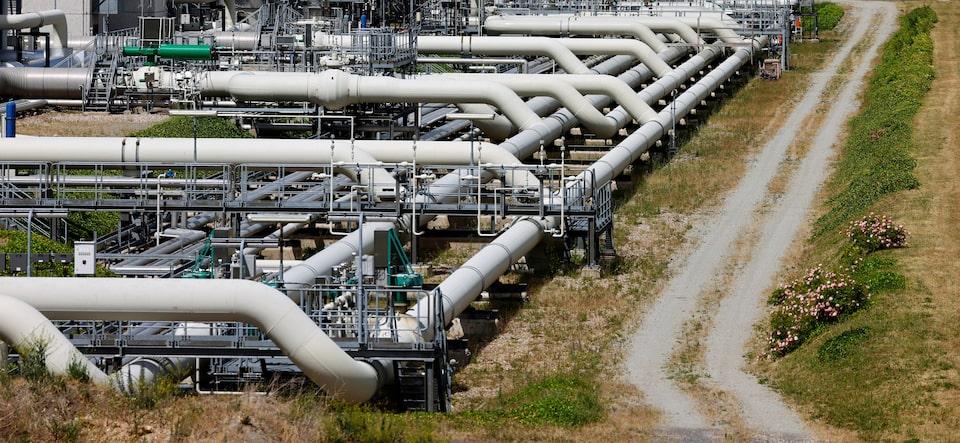
LITTLETON, Colorado, Nov 5 (Reuters) - Germany's highest gas-fired power generation levels since 2021 are scuppering regional efforts to replenish natural gas stockpiles ahead of the peak season for gas-fired power demand. Below-normal European natural gas inventories - which are usually at their annual peaks by this point in the year - leave the region exposed to power price volatility heading into winter when power demand across the continent is highest. Sign up here. An enduring slump in power generation from wind farms and hydropower plants is the main driver behind the jump in Germany's gas use, which has climbed by around 15% over the first 10 months of 2025 from the year before, LSEG data shows. Continued sub-par wind power output heading into winter may force German utilities to sustain their recent higher levels of gas-fired generation, and could trigger a tightening in regional gas supplies and higher power prices for consumers. GASSED UP Over the first 10 months of 2025, Germany's gas-fired power generation was 41.6 gigawatt hours (GWh), data from LSEG shows, which is the highest for that period since before Russia's invasion of Ukraine in 2022 snarled regional gas markets. Germany was previously the top destination for Russian pipelined gas supplies, but was a key driver of European efforts to cut purchases of Russian energy exports in response to the attacks on Ukraine. In the immediate wake of the cuts to Russian gas flows, Germany's power system dialed down gas use to multi-year lows, with gas-fired plants accounting for just under 15% of utility electricity supplies in 2022 compared to over 17% in 2021. However, the country has struggled to adapt its energy systems to the sudden dearth of gas supplies, and has replaced much of the lost Russian volumes with imports from other suppliers, including in the form of much-pricier LNG. The rebound in overall gas supplies has triggered a steady recovery in Germany's gas use, and so far in 2025 gas accounted for 19% of electricity supplies, which is the highest for the January to October period since at least 2015, Ember data shows. CLEAN CUTS A lengthy stretch of sub-par generation from wind farms and hydro dams has also forced utilities to burn more gas. During January to October, combined power generation from wind and hydro assets dropped by 7% from the same months in 2024, to the lowest for that period since 2022, LSEG data shows. Combined wind and hydro output accounted for 34% of Germany's total power generation in the first 10 months of 2024, but so far in 2025 accounted for just under 31%. To offset that drop in clean power, German utilities have been forced to raise generation from all fossil fuels, with coal-fired output up by around 4% from the year before and total fossil fuel output up 6%, according to LSEG. TAKING STOCK The sustained higher levels of gas-fired generation this year have resulted in a slower replenishment of both Germany's and Europe's gas storage levels, which offer critical buffers against global gas market gyrations during high demand periods. Roughly 25% of Europe's total gas storage capacity is in Germany, which is the most of any country on the continent and means that the pace of German stock building has an impact on gas stockpile levels across the region. Germany's gas storage system is currently around 86% full, but storage tanks are usually full to the brim by this point of the year due to the expected need for higher gas generation during the winter. Indeed, LSEG data shows that Germany's gas storage tanks have averaged 108% of nameplate capacity as of the end of October for the past three years, indicating that current inventories remain sharply below normal. Lower gas stocks in Germany are also being reflected in Europe's overall gas storage system, which is only around 83% full compared to an average of 96.5% full at this point in the year since 2022, data from LSEG shows. WIND WATCH German wind farms will have a key say over whether Germany's gas stockpiles will be sufficient to meet the country's power needs heading into 2026. So far in 2025, total wind power output in Germany is down around 4% from the year before due to below-normal wind speeds at turbine level for much of the year so far, LSEG data shows. However, the winter months typically lead to breezier conditions which usually lift wind generation levels sharply heading into the new year. The latest short-term LSEG forecasts for German wind output call for generation to remain well below average through the middle of this month, which raises the chance of continued high levels of gas-fired power output over the near term. Longer-range forecasts through next spring still call for wind generation to come in close to the long-term average, which if correct should help cap the need for gas-fired output over the coming winter. If Germany's wind farms remain prone to lengthy stretches of sub-par output, however, further spells of elevated gas power generation may result, which could trigger further draws on gas stockpiles and fresh increases in regional gas prices. The opinions expressed here are those of the author, a columnist for Reuters. Enjoying this column? Check out Reuters Open Interest (ROI), your essential new source for global financial commentary. ROI delivers thought-provoking, data-driven analysis of everything from swap rates to soybeans. Markets are moving faster than ever. ROI can help you keep up. Follow ROI on LinkedIn , opens new tab and X , opens new tab. https://www.reuters.com/markets/commodities/germanys-higher-gas-use-hampers-europes-stockpiling-drive-2025-11-05/