2025-11-04 22:20
Nov 4 (Reuters) - Mediterranean restaurant chain Cava Group (CAVA.N) , opens new tab on Tuesday cut its annual same-store sales growth forecast for the second time this year, signaling sluggish spending on dining out by budget-conscious customers. Shares of the company were down 4% after the bell. Sign up here. The company expects full-year same-restaurant sales to rise between 3% and 4%, down from its prior forecast of 4% to 6%. Fast-casual brands such as Chipotle Mexican Grill (CMG.N) , opens new tab and Cava have warned of margin pressures and slowing demand while fast-food chains such as Burger King and Domino's Pizza have gained from their focus on value-menu items. Customers aged 25 to 35 are also under strain and pulling back on spending amid rising unemployment, resumed student loan payments and higher rents, Cava CFO Tricia Tolivar told Reuters, echoing comments by Chipotle executives last week. Cava's quarterly restaurant-level profit margin fell to 24.6% from 25.6% a year earlier, partly hurt by higher food, beverage, and packaging expenses linked to tariffs. The company also lowered its annual restaurant-level profit margin forecast to 24.4%–24.8% from 24.8%–25.2%. "In the current quarter, there's about a 20-basis-point impact related to tariffs, largely for our imported beef that we've served to our guests every day," Tolivar said. Revenue for the third quarter was $289.8 million, missing estimates of $292.59 million, according to data compiled by LSEG. Cava posted quarterly earnings of 12 cents per share for the period ended October 5, compared with analysts' estimates of 13 cents. https://www.reuters.com/business/restaurant-chain-cava-cuts-sales-forecast-again-younger-diners-pull-back-2025-11-04/
2025-11-04 22:07
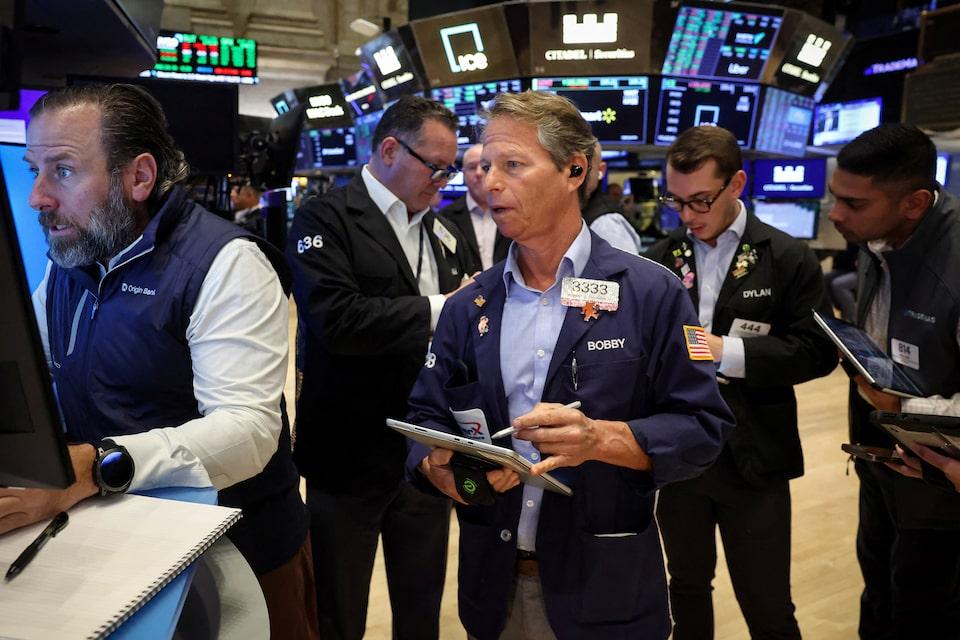
ORLANDO, Florida, Nov 4 (Reuters) - Wall Street succumbed to a tech-led selloff on Tuesday, slammed by warnings of a market pullback from top U.S. bank CEOs and a steep slide in AI darling Palantir, while the dollar continued its climb and Treasuries drew some safe-haven demand. In my column today, I look at deepening splits at the Fed, and how the polarization of opinions on where rates should go poses a major test of consensus-builder and Fed Chair Jerome Powell's leadership and skills of persuasion. Sign up here. If you have more time to read, here are a few articles I recommend to help you make sense of what happened in markets today. Today's Key Market Moves Today's Talking Points * U.S. government shutdown matches record The government shutdown entered its 35th day on Tuesday, matching a record set during President Trump's first term for the longest in history. Food assistance for the poor has now been halted, federal workers across the spectrum are going unpaid, and airspace in certain parts of the country may soon be shut down. At the macro level, the CBO estimates an eight-week shutdown will reduce Q4 annualized real GDP growth by 2 percentage points, although much of that will be recovered. Meanwhile, the Fed is flying blind owing to the economic data drought. You can see why investors might want to take some chips off the table. * Wall Street and a democratic socialist mayor? New York City chooses its next mayor, most likely Zohran Mamdani, a 34-year-old Muslim democratic socialist who has pledged to hike taxes on people making over $1 million a year and raise corporation tax. According to the Empire Center think tank, Mamdani's income tax hike will affect about 1% of filers, and the corporate tax hike would affect about 1,000 of the city's 250,000 businesses. Wall Street heavyweights Bill Ackman and Dan Loeb have warned that Mamdani will be a disaster for New York. Others have warned the rich will leave the city and take their money with them. Online prediction platform Polymarket puts the probability of a Mamdani win at 95%. * British budget blues Tax rises in Britain are coming. In a speech on Tuesday ahead of the annual budget later this month, Chancellor Rachel Reeves warned of the "hard choices" she faces to protect public services, avoid austerity, and bring down the national debt. One of Labour's main election pledges last year was not to raise any of the major taxes, so Reeves is in a difficult spot. Investors aren't particularly impressed, and sterling slumped - growth might suffer and the BoE may be forced to offset tighter fiscal policy with looser monetary policy. Fed divisions threaten Powell's era of consensus Disagreement and dissent among the Federal Reserve's 19-strong monetary policymaking committee are deepening as the fog of economic uncertainty thickens, putting Chair Jerome Powell's consensus-building skills to the ultimate test. The Fed's decision last week to cut interest rates was unexceptional, but the meeting was historic. The 10-2 vote to cut rates by a quarter of a percentage point was only the third time since 1990 that voting Fed members dissented in favor of both tighter and looser monetary policy. Trump-appointed governor Stephen Miran voted to cut by 50 basis points, while Kansas City Fed President Jeffrey Schmid voted for no change. These fissures were underscored by Powell in his post-meeting press conference. He told reporters that officials hold "strongly differing views about how to proceed," meaning easing in December is not the "foregone conclusion" markets had been pricing in. Indeed, December's decision may boil down to a coin-flip between another 25-basis-point rate cut or no change. This all comes at a challenging moment. Not only are investors navigating an economic data drought caused by the U.S. government shutdown – set to become the longest on record – but the indicators that are available show both a weakening labor market and sticky inflation. Meanwhile, the Fed is being heavily politicized, with the Trump administration attacking the central bank's independence as it also prepares to nominate Powell's successor next year. It's a perfect storm that markets don't need, especially ones priced for perfection. HAWKS VS DOVES There is always going to be a wide range of views on a 19-member committee, with 12 voting members at any one time, including a mix of Fed governors and presidents of the 11 regional Fed banks. Broadly speaking, the current division between the "doves" and the "hawks" appears loosely to have governors on one side and regional bank presidents on the other. Both sides contain centrists, but the governors are leaning in favor of easier policy, with the regional Fed presidents more apt to be cautious about further rate cuts. Since the Fed's meeting last Wednesday, concerns about cutting rates have been voiced by Dallas Fed President Lorie Logan, Kansas City Fed President Jeffrey Schmid, Cleveland Fed President Beth Hammack and Chicago Fed President Austan Goolsbee. Meanwhile, Governors Miran, Christopher Waller, and Michelle Bowman have publicly supported the decision to cut last week and backed further easing. Waller and Bowman are on Treasury Secretary Scott Bessent's short list to replace Powell, whose term as Chair ends in May. 'ROWDY AND DISORDERLY' Powell's leadership and ability to pull together a consensus in this climate will be severely tested, as recent policy meetings attest. Governors Waller and Bowman dissented in favor of a rate cut in July, and then there was the historic two-way dissent last month. It's true that non-voting regional Fed presidents are flexing their muscles, but it remains to be seen how effective that will ultimately be. As Tim Duy, chief U.S. economist at SGH Macro Advisors, points out, "the power flows from the Board". "It's more difficult for Powell to create a consensus in this space," Duy says, adding that Powell has done a "great job" in doing just that over the years of his chairmanship. If this policy polarization intensifies, many investors operating today will be in unfamiliar territory, having grown accustomed to well-telegraphed, consensus-driven Fed policy. James Egelhof, chief U.S. economist at BNP Paribas, argues that the "very high level of consensus" investors are used to might prove "elusive" in the months ahead. Egelhof still expects the Fed to deliver further rate cuts, including in December, but he also thinks we could see a "rowdy and disorderly" process leading to a "bumpier and more unpredictable" path than investors typically face. "Polarization leads to uncertainty," he says. Of course, greater policy uncertainty tends to fuel market volatility and increased risk aversion, which, in theory, should be reflected in rising risk premiums or widening spreads. That hasn't happened yet. But if the emerging splits on the FOMC continue to widen, we could see just that. Don't say you weren't warned. What could move markets tomorrow? Want to receive Trading Day in your inbox every weekday morning? Sign up for my newsletter here. Opinions expressed are those of the author. They do not reflect the views of Reuters News, which, under the Trust Principles , opens new tab, is committed to integrity, independence, and freedom from bias. https://www.reuters.com/world/china/global-markets-trading-day-graphic-2025-11-04/
2025-11-04 21:59
LOS ANGELES, Nov 4 (Reuters) - U.S. ocean shipping company Matson (MATX.N) , opens new tab has paid $6.4 million in port fees to China since they were implemented on October 14, CEO Matt Cox said on Tuesday. President Donald Trump and President Xi Jinping last week agreed to put those tit-for-tat levies on pause for 12 months, starting on November 10. Media outlets in China had reported that Hawaii-based Matson, one of a handful of global shipping firms with U.S.-built and -flagged vessels, was the first to pay the fees in China. Sign up here. Matson expects the U.S. Trade Representative and the China Ministry of Transport to publish specific instructions, including any refund programs, regarding port entry fees shortly, Cox said on the company's quarterly earnings call. Early this year, the Trump administration announced plans to levy fees on China-linked ships to loosen the country's grip on the global maritime industry and bolster U.S. shipbuilding - a move vessel operators warned would disrupt trade flows and ultimately drive up costs for consumers. China retaliated with fees on ships with links to the United States, and started charging them on October 14 - the same day U.S. fees went into effect. "This is a welcome development," Cox said of the deal struck between the leaders of the world's largest economies, which also trimmed U.S. tariffs on Chinese goods and put China's rare earth export curbs on hold. If the levies had not been put on hold, Matson could have paid $80 million annually in port fees in both 2026 and 2027, Cox said. China's state-owned COSCO (600428.SS) , opens new tab container shipping line was most exposed to U.S. port fees, which analysts said could cost the firm $1.5 billion annually. https://www.reuters.com/world/asia-pacific/matson-has-paid-64-million-port-fees-china-since-levies-started-october-2025-11-04/

2025-11-04 21:59
Nov 4 (Reuters) - Utility Entergy's (ETR.N) , opens new tab unit and pipeline firm Energy Transfer (ET.N) , opens new tab have signed a 20-year agreement to deliver natural gas to North Louisiana, the companies said on Tuesday. The U.S. is poised to see a record surge in power demand this year and in 2026, led by data centers' outsized energy needs, the U.S. Energy Information Administration estimates. Sign up here. The companies said the pipeline would supply gas to Entergy's new plants and serve projects such as Meta's (META.O) , opens new tab data center in Richland Parish. Energy Transfer will initially provide 250,000 million British thermal units (MMBtu) per day of transportation service beginning in February 2028 and continuing through January 2048. The deal also provides an option to Entergy to expand delivery capacity in the region to meet future energy demand. https://www.reuters.com/business/energy/entergy-energy-transfer-sign-long-term-natural-gas-transportation-deal-2025-11-04/

2025-11-04 21:35
Nov 4 (Reuters) - Ukraine's military said on Tuesday it struck an oil refinery in Russia's Nizhny Novgorod region east of Moscow. The General Staff of Ukraine's armed forces, in a post on Telegram, said the military had hit the Lukoil refinery in the town of Kstovo. It said the facility provided supplies for the Russian military. Sign up here. The extent of the damage was being assessed, it said. There was no official Russian acknowledgement of the attack, but the governor of Nizhny Novgorod region, Gleb Nikitin, said Russian air defence units had repelled an attack by 20 drones near Kstovo. The Ukrainian General Staff also said Ukrainian drones had caused "considerable damage" at a petrochemical plant in Bashkortostan in central Russia. Regional authorities in Bashkortostan, about 1,500 km (930 miles) from the Ukrainian border, said Ukrainian drones had damaged the Sterlitamak petrochemical plant, but it was still operating. https://www.reuters.com/world/ukrainian-military-says-it-struck-refinery-russias-nizhny-novgorod-2025-11-04/

2025-11-04 21:33
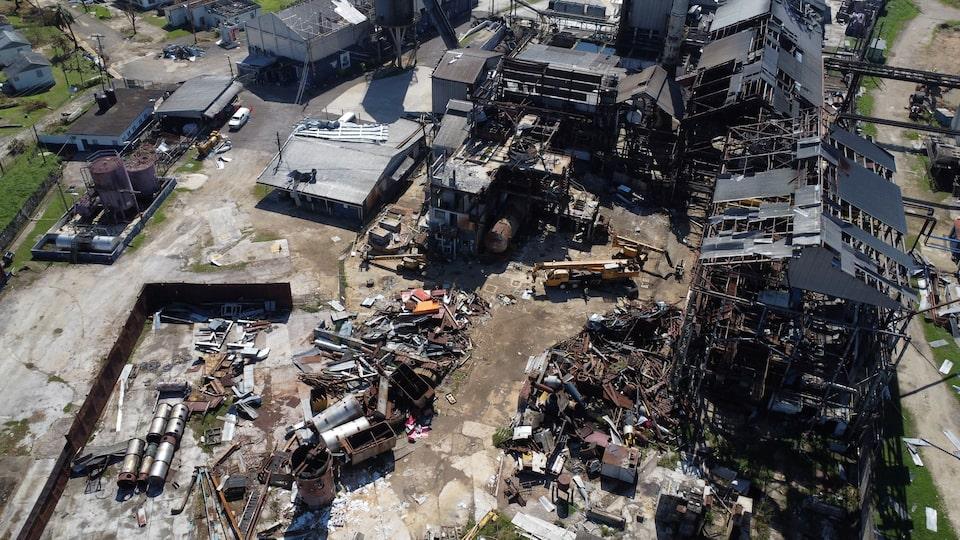
WASHINGTON, Nov 4 (Reuters) - The United States is providing $24 million in emergency assistance for Jamaica, Haiti, the Bahamas and Cuba after the countries were hit by Hurricane Melissa last week, the State Department said on Tuesday. The department deployed teams to help with the emergency response and assess humanitarian needs after the Category 5 hurricane sowed widespread devastation, cut off communities and killed at least 50 people across the Caribbean. Sign up here. The Trump administration has now authorized $12 million of assistance for Jamaica, $8.5 million for Haiti and $500,000 for the Bahamas, the State Department said in a statement. "Our teams on the ground have been assessing damage, and we're going to announce additional assistance packages over the coming days as they figure out where best to target it," a senior State Department official said, adding that they expected to announce additional aid for Jamaica and Haiti. Another $3 million was authorized for Cuba and is being distributed with the help of the Catholic Church, after Secretary of State Marco Rubio issued a declaration of humanitarian need for the country and said Washington would seek to deliver aid directly to the country's people. President Donald Trump has taken a hard line toward the communist-run island. His administration said it would enforce a ban on U.S. tourism to Cuba while supporting an economic embargo of the country. The State Department is working with the church to ensure it is able to get access to U.S.-funded supplies to distribute to the people of Cuba, the official said. The Cuban government has not requested assistance from Washington, the official added. "Regardless of what the Cuban regime says, we care about the Cuban people, and we are heartened that so far the Cuban government has not interfered with the provision of assistance," the official said. Hurricane Melissa is the largest natural disaster to hit the region since President Donald Trump's administration dismantled the U.S. Agency for International Development earlier this year. Disaster response is now managed by the State Department, which has sent Disaster Assistance Response Teams to several countries to coordinate the aid response and deployed specialist Urban Search and Rescue teams to Jamaica. https://www.reuters.com/world/us/us-provide-24-million-caribbean-countries-hit-by-hurricane-melissa-2025-11-04/