2025-11-04 07:14
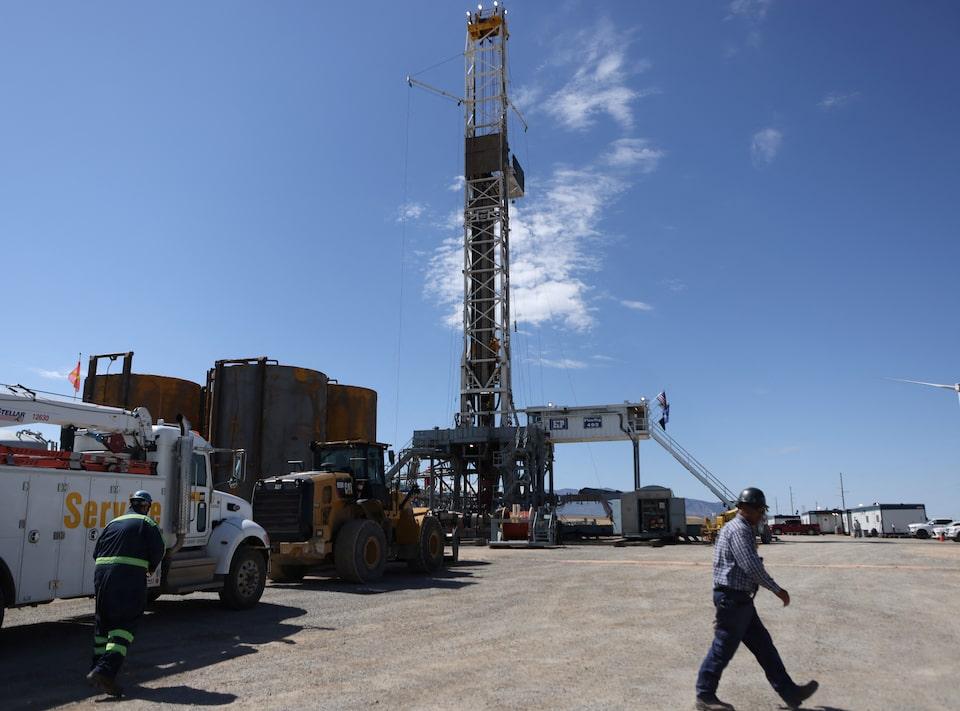
HOUSTON, Nov 4 (Reuters) - Oil prices settled lower on Tuesday as weaker manufacturing numbers and a stronger dollar weighed on demand, while the OPEC+ decision to pause output hikes in the first quarter of next year could signal the group's concern about a potential supply glut. Brent crude futures closed 45 cents, or 0.7% lower at $64.44 a barrel. U.S. West Texas Intermediate crude was down 49 cents, or 0.8%, at $60.56. Sign up here. "Crude futures are feeling the pressure today from high U.S. dollar valuation. The U.S. stock market is also seeing a heavy downside correction in the early trade as the government shutdown may be beginning to add downside pressure, which could eventually hurt domestic fuel demand," said Dennis Kissler, senior vice president of trading at BOK Financial. The dollar climbed to a four-month high against the euro on Tuesday as raised doubt about the prospect of another rate cut this year. A stronger U.S. currency makes dollar-priced assets such as oil more expensive to those holding other currencies. Wall Street fell sharply following warnings of a market selloff from some big U.S. banks. The U.S. entered its 35th day, matching a record set during President Donald Trump's first term for The toll is mounting. Food assistance for the poor was halted for the first time, federal workers from airports to law enforcement and the military are going unpaid and the economy is flying blind with limited government reporting. In Asia, Japan's manufacturing activity shrank in October at the fastest pace in 19 months, a private-sector survey showed. French oil major TotalEnergies On Sunday, OPEC+, the Organization of the Petroleum Exporting Countries and allied producers, agreed to a small oil output increase for December and a pause in increases in the first quarter of 2026. On Tuesday, a Reuters survey found that OPEC's oil output rose further in October after an OPEC+ agreement to raise production. The scale of the increase slowed sharply from and the summer months. The boost to oil prices from the U.S. sanctions on Russian energy companies Lukoil and Rosneft was fading, chief analyst of commodities Bjarne Schieldrop at SEB Research said in a note. "Come Nov 21 when the sanctions (on other companies that continue to trade with the Russian companies) go into force they will likely evaporate, disappear or be pushed out in time." Market participants are now awaiting the latest U.S. inventory data from the American Petroleum Institute (API), due later in the day. A preliminary Reuters poll showed U.S. crude oil stockpiles were expected to have risen last week. https://www.reuters.com/business/energy/oil-steadies-market-digests-opec-output-plans-2025-11-04/
2025-11-04 06:57
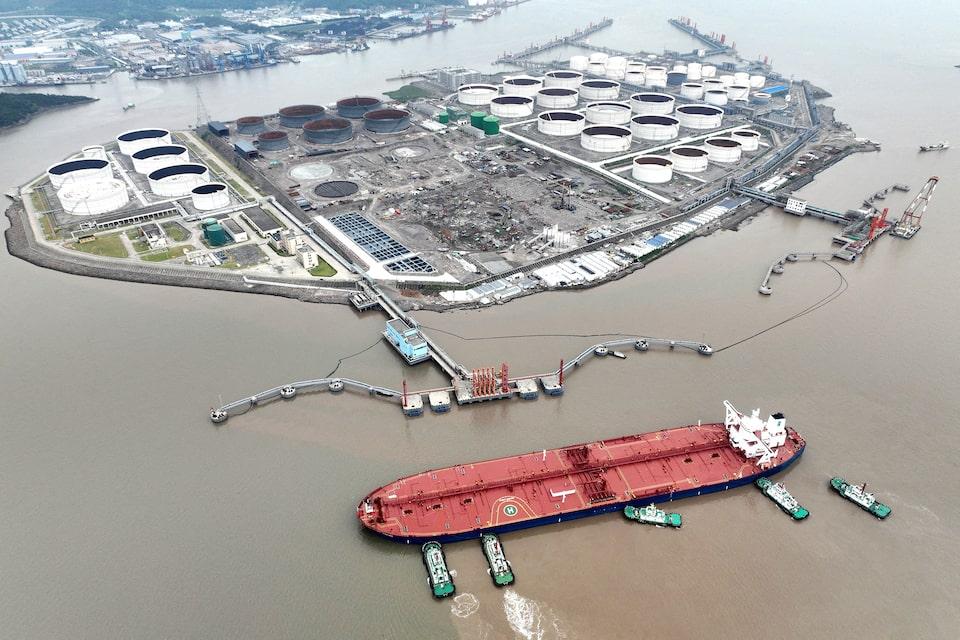
Wall Street indexes end lower, led by decline in Nasdaq Traders cautious after recent equities run up Bitcoin falls; yields dip NEW YORK, Nov 4 (Reuters) - Major stock indexes dropped on Tuesday, with chip stocks lower as the CEOs of Goldman Sachs (GS.N) , opens new tab and Morgan Stanley (MS.N) , opens new tab cautioned that equities could be heading for a pullback, while the dollar climbed to a four-month high against the euro. U.S. Treasuries rose, pushing yields lower, amid a flight to safety, which also helped to support the dollar. Sign up here. Cryptocurrency bitcoin fell more than 6%, slipping below $100,000 for the first time since June. Bank CEOs warned at an investment summit in Hong Kong of the prospect of a stock market correction of more than 10% over the next two years. The comments stoked fears about stretched valuations and a potential market bubble. Shares of Nvidia (NVDA.O) , opens new tab were down 4%, while an index of semiconductors (.SOX) , opens new tab also fell 4%. Shares of Palantir Technologies (PLTR.O) , opens new tab dropped more than 8% despite the data analytics provider reporting strong quarterly results. The company, which has more than doubled in value this year, forecast fourth-quarter results above market expectations as the rapid adoption of artificial intelligence is boosting demand for its services. "Big Short" investor Michael Burry, known for his successful bets against the U.S. housing market in 2008, has placed bearish bets on Nvidia and Palantir, according to a regulatory filing on Monday. The S&P 500 finished more than 1% lower, and the Nasdaq dropped more than 2%. The Nasdaq is still up about 21% for the year so far. "There's definitely a risk-off tone with a lot of AI stocks down, and so a little bit of flight to quality with regard to Treasuries," said Greg Faranello, head of U.S. rates strategy at AmeriVet Securities in New York. The Dow Jones Industrial Average (.DJI) , opens new tab fell 251.44 points, or 0.53%, to 47,085.24, the S&P 500 (.SPX) , opens new tab fell 80.42 points, or 1.17%, to 6,771.55 and the Nasdaq Composite (.IXIC) , opens new tab fell 486.09 points, or 2.04%, to 23,348.64. After the closing bell, shares of Advanced Micro Devices (AMD.O) , opens new tab were down more than 2%, even as the company forecast fourth-quarter revenue above analysts' estimates. The stock ended the regular session down 3.7%. MSCI's gauge of stocks across the globe (.MIWD00000PUS) , opens new tab fell 11.51 points, or 1.14%, to 996.34. The pan-European STOXX 600 (.STOXX) , opens new tab index fell 0.3%. Optimism about AI deals has been helping stocks. On Monday, stocks gained following Amazon.com's (AMZN.O) , opens new tab $38 billion cloud services deal with ChatGPT creator OpenAI. The U.S. dollar was underpinned in part by reduced bets for near-term Federal Reserve easing, with divisions within the Fed raising doubt about the prospect of another rate cut this year. The Fed lowered rates last week but Chair Jerome Powell said a December rate cut was not a foregone conclusion. Traders are betting on a 65% chance of a rate cut in December, compared with 94% a week earlier, CME FedWatch showed. The euro fell for the fifth straight session, and was down 0.3% at $1.1483, its weakest since August 1. Against the yen, the dollar was 0.4% lower at 153.60 yen, though the Japanese currency remained near a recent 8-1/2-month low. Sterling tumbled after the UK finance minister pointed to "hard choices" in her upcoming budget. Sterling fell 0.9% to $1.3015. U.S. Treasury yields declined amid the broader risk-off tone in financial markets. Because of the U.S. federal government shutdown, a closely watched monthly jobs report from the Bureau of Labor Statistics will not be available on Friday, as previously scheduled. In afternoon trading, the benchmark 10-year yield was last at 4.089%, about 1.8 basis points lower on the day. Oil prices fell as the dollar gained. U.S. crude fell 49 cents to settle at $60.56 a barrel and Brent fell 45 cents to settle at $64.44. Spot gold fell 1.69% to $3,933.67 an ounce. https://www.reuters.com/world/china/global-markets-global-markets-2025-11-04/
2025-11-04 06:35
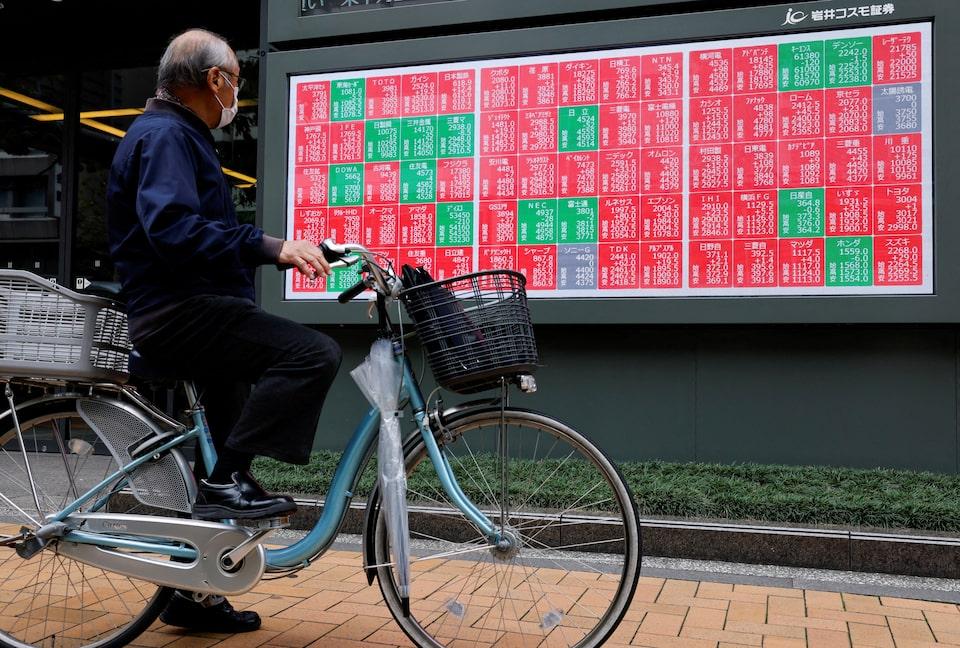
US ADP employment report due on Wednesday Benchmark U.S. 10-year yields slip from 3-week high Nov 4 (Reuters) - Gold prices trimmed session's losses on Tuesday, helped by a pause in the dollar's rally and lower Treasury yields, while investors waited for U.S. economic data due this week for more cues on the interest rate path. Spot gold lost 0.2% to $3,993.19 per ounce, as of 1107 GMT, after declining 0.9% earlier. U.S. gold futures for December delivery eased 0.3% to $4,003.40 per ounce. Sign up here. "Gold is consolidating in the region of $4,000 and the next few weeks will be crucial for understanding if there's space for more rally or we see a correction," said Carlo Alberto De Casa, external analyst at banking group Swissquote. "We're seeing a stronger U.S. dollar and expectations for a cut in December going down. Also, yields are going up and this is affecting gold." The dollar index (.DXY) , opens new tab eased after hitting a three-month high against its rivals, making gold less expensive for other currency holders. Benchmark U.S. 10-year yields retreated from a three-week high on Monday. The Federal Reserve last week cut rates for the second time this year, but Chair Jerome Powell said another reduction this year was "not a foregone conclusion". Market participants now see a 65% chance of another rate cut in December, down from over 90% prior to Powell's remarks, per CME's FedWatch Tool. Non-yielding gold thrives in a low-interest-rate environment and during times of economic uncertainty. Investors now eagerly await the release of ADP U.S. employment data, due on Wednesday, and ISM PMIs this week for cues on rate cuts. "The initial break below that level ($4,000) triggered a wave of technical selling and unwinding of long positions," Fawad Razaqzada, market analyst at City Index and FOREX.com, said in a note. Elsewhere, spot silver was down 0.6% at $47.78 per ounce, platinum eased 0.6% to $1,556.50 and palladium fell 2.5% to $1,408.86. https://www.reuters.com/world/india/gold-holds-under-4000-dollar-resilience-fed-rate-cut-outlook-2025-11-04/

2025-11-04 06:26
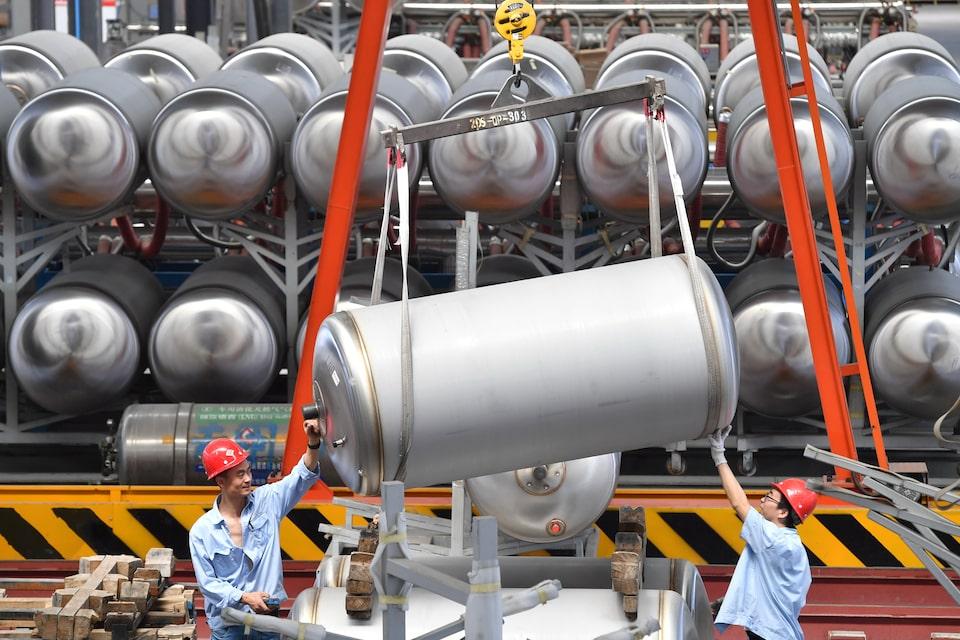
Reuters Open Interest (ROI) is your essential source for global financial commentary. LAUNCESTON, Australia, Nov 4 (Reuters) - Asia's imports of liquefied natural gas (LNG) fell in October from the same month a year earlier, as top buyer China extended a run of weakness that has stretched for a year. In contrast to the soft demand in the world's top-importing region, demand for the super-chilled fuel has been robust in Europe as the continent builds inventories ahead of the northern winter. Sign up here. Asia's LNG imports were estimated at 22.84 million metric tons in October, up slightly from 22.47 million in September but down from the 24.39 million from October last year, according to data compiled by commodity analysts Kpler. October arrivals were still down from September on a per day basis at 737,000 tons from 749,000. China, the world's biggest LNG buyer, saw imports of 5.57 million tons in October, up a touch from 5.32 million in September, but down from 6.47 million in October 2024. China's LNG imports have declined from the same month a year earlier since November 2024, according to Kpler data. For the first 10 months of the year, Asia's LNG imports were 225.8 million tons, down 14.02 million from 239.82 million in the corresponding period a year earlier, according to Kpler. But Europe's appetite has more than compensated for Asia's weakness, with imports for the January to October rising 16.75 million tons to 101.38 million, according to Kpler. The strength in Europe's demand has meant that spot prices have remained at relatively elevated levels in Asia, which in turn has trimmed demand in price-sensitive buyers. Spot LNG for delivery to North Asia was assessed at $11.10 per million British thermal units (mmBtu) in the week ended October 31, down slightly from $11.20 the prior week. The spot price has held above $10 per mmBtu since April 2024, and the low point so far in 2025 of $10.60 in early October is still well above the 2024 low of $8.30 and $9.00 from June 2023. A spot price of above $10 per mmBtu renders LNG uncompetitive against domestic natural gas and pipeline imports from Russia and central Asia in China. China's spot purchases of LNG have fallen in 2025, with most imported cargoes being priced on long-term contracts that are cheaper than current spot prices. INDIA SLIPS India, Asia's fourth-largest LNG importer, is also viewed as a price-sensitive buyer, and its October imports also showed a decline in year-on-year terms. India imported 2.15 million tons in October, down from 2.37 million a year earlier, and while it was slightly up on the 2.12 million tons in September, it was lower on a per day basis. The higher spot prices in Asia largely reflect the rising appetite for LNG in Europe, which is able to pay more in order to draw cargoes away from Asia. Europe's imports in October were assessed by Kpler at a seven-month high of 10.63 million tons, up from 8.66 million in September and 7.53 million in October last year. Europe is turning to LNG to compensate for the loss of the bulk of pipeline supplies from Russia in the aftermath of Moscow's 2022 invasion of Ukraine. While the United States supplied more than half of Europe's LNG in October, it's worth noting that the continent is still buying from Russia, with 1.0 million tons arriving in the month, the highest since June. Europe is likely to keep buying high volumes of LNG as winter approaches, with Kpler estimating that November will see arrivals of 10.9 million tons, which would be the most since March. Asia is also likely to ramp up imports in the coming months, especially in Japan and South Korea, the next biggest buyers after China. November LNG imports are on track to reach 25.01 million tons in Asia, according to Kpler, and if this forecast proves accurate it will be the first year-on-year increase since August. The seasonal demand for LNG is likely to keep spot prices well supported over the winter period, as the expected surge in supply won't hit the market until later in 2026 and 2027. Enjoying this column? Check out Reuters Open Interest (ROI), your essential new source for global financial commentary. ROI delivers thought-provoking, data-driven analysis of everything from swap rates to soybeans. Markets are moving faster than ever. ROI can help you keep up. Follow ROI on LinkedIn , opens new tab and X , opens new tab. The views expressed here are those of the author, a columnist for Reuters. https://www.reuters.com/markets/commodities/asia-lng-imports-slip-weak-china-europe-gain-compensates-2025-11-04/
2025-11-04 06:19
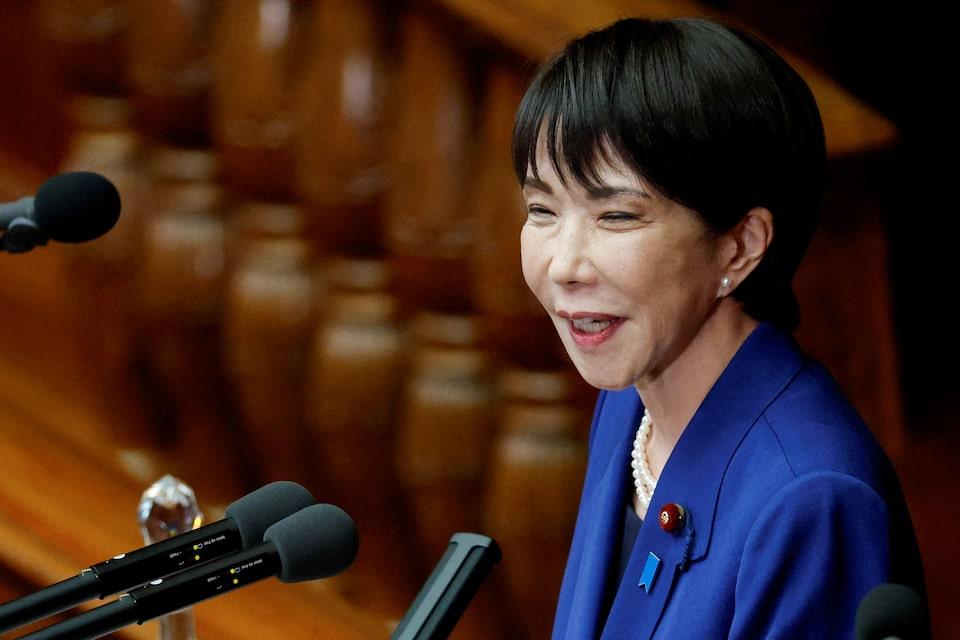
Takaichi says hopes BOJ guides policy to stably hit price goal Govt will 'strategically' deploy spending to prop up economy Remarks may affect BOJ's decision on how soon to raise rates Governor Ueda scheduled to speak in Nagoya on December 1 BOJ's next policy meeting on December 18-19 TOKYO, Nov 4 (Reuters) - Japanese Prime Minister Sanae Takaichi said on Tuesday the country has yet to achieve sustainable inflation accompanied by wage gains, signaling her preference for the central bank to go slow in raising interest rates. While consumer inflation continues to hover around 3% due to rising food costs, Japan is still "half way" in achieving sustainable and stable price growth backed by solid wage gains, Takaichi told parliament. Sign up here. "I hope the Bank of Japan conducts appropriate monetary policy towards sustainably and stably achieving its 2% inflation target," said Takaichi, who has advocated expansionary fiscal and monetary policy. She was questioned by Yoshihiko Noda, head of the largest opposition party and a former prime minister, who said preventing the BOJ from raising interest rates could push up import costs and inflation more broadly by weakening the yen. Takaichi also said her administration will "strategically" deploy fiscal spending to increase household incomes, improve consumer sentiment and strengthen the economy. She voiced caution about lowering Japan's consumption tax rate - an idea proposed by some opposition parties, saying there were several challenges such as time needed by retailers to adjust their equipment to a new rate. Takaichi's remarks on monetary policy may affect the BOJ's decision on whether to resume rate hikes as soon as its next meeting on December 18-19, as some market players predict. BOJ Governor Kazuo Ueda is scheduled to deliver a speech and hold a news conference in Nagoya, central Japan, on December 1, where he could drop hints on the likelihood of a near-term hike. The BOJ ended a massive, decade-long stimulus last year and raised interest rates to 0.5% in January on the view Japan was on the cusp of sustainably achieving its 2% inflation target. It has kept rates steady since then, including at last week's policy meeting, to ensure Japan makes further progress in durably hitting its price goal backed by solid wage gains. Critics blame the slow pace of BOJ rate hikes as having helped weaken the yen and push up import costs, thereby keeping inflation above its 2% target for well over three years. In a news conference after last week's policy meeting, Ueda said the likelihood of the BOJ's baseline projection materialising has "heightened somewhat," sending the strongest signal yet that a rate hike was possible as soon as December. But the yen slumped as Ueda's comments were not as strong as some market participants had expected. That led to Japan's finance minister warning against excessive declines in the currency. Japan's core consumer prices rose 2.9% year-on-year in September. While nominal wages have risen due to a tight job market, stubbornly high costs of living have weighed on consumption. Analysts also expect higher U.S. tariffs to start hurting exports with some projecting Japan's economy to suffer a deep contraction in the third quarter. https://www.reuters.com/sustainability/sustainable-finance-reporting/japan-yet-achieve-durable-wage-driven-inflation-pm-takaichi-says-2025-11-04/
2025-11-04 06:07
LITTLETON, Colorado, Nov 4 (Reuters) - Breakthroughs in drilling methods and heat extraction techniques are widening the appeal of geothermal power systems across the world, and geothermal generation capacity is on track to double once projects currently in development are completed. Currently, only around 2% of global energy generation comes from geothermal projects, according to Energy Institute data, which places the technology squarely in the niche category of the global energy mix. Sign up here. However, around 35 countries or territories are constructing or have plans to build new geothermal capacity, according to Global Energy Monitor (GEM), creating the potential to make geothermal generation a more mainstream affair. Of that total, 18 of those locations are already familiar with the technology and are within tectonically-active regions with high-temperature rock deposits relatively close to the earth's surface. However, a nearly equal number of locations will be developing geothermal projects for the first time, which is a testament to the growing appeal of geothermal to power suppliers and the growing suitability of the technology to more locations. Below is a roundup of the key geothermal hotspots around the world and the main markets to track for rapid expansions to geothermal generation capacity in the years ahead. GEOTHERMAL GIANTS Just 10 countries account for 94% of global geothermal capacity currently in operation. In descending order of capacity, those countries are: the United States, Indonesia, the Philippines, Turkey, New Zealand, Mexico, Italy, Kenya, Iceland and Japan, GEM data shows. Just over 16,000 megawatts (MW) of geothermal capacity is operating globally, according to GEM, with around 15,200 MW of that located within the top 10 geothermal producers. All the top 10 countries are within tectonically-active zones that allow geothermal developers to tap high-heat zones just below the earth's surface, and draw that heat up to create steam that drives turbines and generates power. Because of that existing geothermal expertise, around 75% of the roughly 15,350 MW of new planned geothermal projects are slated to be within those top 10 geothermal producing countries. The U.S. leads the way with close to 4,300 megawatts (MW) of new geothermal capacity that is either already under construction or is in advanced planning stages. Indonesia, Kenya and the Philippines have the next largest geothermal development pipelines, followed by Turkey and New Zealand. DIGGING DEEPER AND WIDER While most of the new geothermal projects are in countries already familiar with the technology and in locations with tectonic seams that allow developers to tap adjacent sub-surface heat zones, there are new frontiers in play. Thanks in part to advancements that build on U.S. fracking techniques - which pioneered horizontal drilling and high-pressure fracturing of rock formations - geothermal projects can now be deployed outside of tectonically-active areas. Fracking techniques allow developers to create new underground reservoirs in hot rock formations that can store water or can be adapted to closed-loop pipe systems that can drive steam turbines above ground. The ability to accurately drill far deeper than ever before also means that seams of high-temperature rock formations are now accessible in nearly all countries, and not just near natural hot springs. These innovative approaches are leading to geothermal projects being developed outside the core areas in new markets such as Slovakia, the United Kingdom, Laos and Dominica, GEM data shows. The deep drilling capabilities are also helping to boost the economics of geothermal projects, as the deeper reservoirs can heat water and steam to far higher temperatures than shallow projects, and lead to sharply higher energy output per well. Deeper reservoirs are also often larger than formations nearer the surface, and so can keep larger volumes of water heated for longer than smaller wells located nearer the surface. Mazama Energy, which is developing a geothermal project in Oregon, last month reported a well base temperature of 629 degrees Fahrenheit (331 degrees Celsius), which it claims is the hottest geothermal resource ever recorded. The hot zone was tapped at around 10,000 feet (nearly 3 km) and is assumed to be replicable in other regions given the consistency of temperatures at that depth. Drilling so far into the earth can be highly expensive and requires top-tier geologists and engineers on hand. But such techniques have the merit of requiring far fewer drill holes than conventional geothermal systems, as super-hot wells can often produce multiple times the amount of energy than wells sourced from cooler rock formations. As more pilot projects refine approaches and share results with the wider community, additional cost declines and efficiency gains are expected. In turn, even more geothermal projects are expected to turn up in developer pipelines, potentially setting the stage for a years-long boom in geothermal project growth that could lift the technology from niche and localized to far more mainstream. The opinions expressed here are those of the author, a columnist for Reuters. Enjoying this column? Check out Reuters Open Interest (ROI), your essential new source for global financial commentary. ROI delivers thought-provoking, data-driven analysis of everything from swap rates to soybeans. Markets are moving faster than ever. ROI can help you keep up. Follow ROI on LinkedIn , opens new tab and X , opens new tab. https://www.reuters.com/markets/commodities/going-underground-tour-global-geothermal-projects-progress-2025-11-04/