2025-11-04 06:04
EU ministers meet to try to pass new climate target Bloc's credibility at risk ahead of COP30 climate talks Countries struggling to reconcile green agenda and industry Deal will require compromise on foreign carbon credits BRUSSELS, Nov 4 (Reuters) - EU climate ministers will make a last-ditch attempt to pass a new climate change target on Tuesday, in an effort to avoid going to the U.N. COP30 summit in Brazil empty-handed. Failure to agree could undermine the European Union's claims to leadership at the COP30 talks, which will test the will of major economies to keep fighting climate change despite opposition from U.S. President Donald Trump. Sign up here. Countries including China, Britain and Australia have already submitted new climate targets ahead of COP30. But the EU, which has some of the world's most ambitious CO2-cutting policies, has struggled to contain a backlash from industries and governments sceptical that it can afford the measures alongside defence and industrial priorities. EU members failed to agree a 2040 climate target in September, leaving them scrambling for a deal days before European Commission President Ursula von der Leyen meets other world leaders at COP30 in Belem, Brazil, on November 6. "The geopolitical landscape has rarely been more complex," EU climate policy chief Wopke Hoekstra told a gathering of climate ministers in Canada on Saturday, adding that he was confident the bloc would approve its new goal. "The European Union will continue to do its utmost, even under these circumstances, in Belem to uphold its commitment to multilateralism and to the Paris Agreement," he said. A MORE FLEXIBLE EU TARGET The starting point for talks is a European Commission proposal to cut net EU greenhouse gas emissions by 90% from 1990 levels by 2040, to keep countries on track for net-zero by 2050. Italy, Poland and the Czech Republic are among those warning this is too restrictive for domestic industries struggling with high energy costs, cheaper Chinese imports and U.S. tariffs. Others, including the Netherlands, Spain and Sweden, cite worsening extreme weather and the need to catch up with China in manufacturing green technologies as reasons for ambitious goals. The draft compromise ministers will discuss, seen by Reuters, includes a clause demanded by France allowing a weakening of the 2040 goal in future, if it becomes clear EU forests are not absorbing enough CO2 to meet it. Brussels has also vowed to change other measures to attempt to win buy-in for the climate goal. These include controlling prices in an upcoming carbon market and considering weakening its 2035 combustion engine ban as requested by Germany. A deal on Tuesday will require ministers to agree on the share of the 90% emissions cut countries can cover by buying foreign carbon credits - effectively softening efforts required by domestic industries. France has said credits should cover 5%, more than the 3% share originally proposed by the Commission. Other governments argue money would be better spent on supporting European industries than buying foreign CO2 credits. Support from at least 15 of the 27 EU members is needed to pass the goal. EU diplomats said on Monday the vote would be tight and could depend on one or two flipping positions. Ministers will try first to agree the 2040 goal, and from that derive an emissions pledge for 2035 - which is what the U.N. asked countries to submit ahead of COP30. https://www.reuters.com/sustainability/cop/eu-last-minute-talks-set-new-climate-goal-cop30-2025-11-04/

2025-11-04 06:04
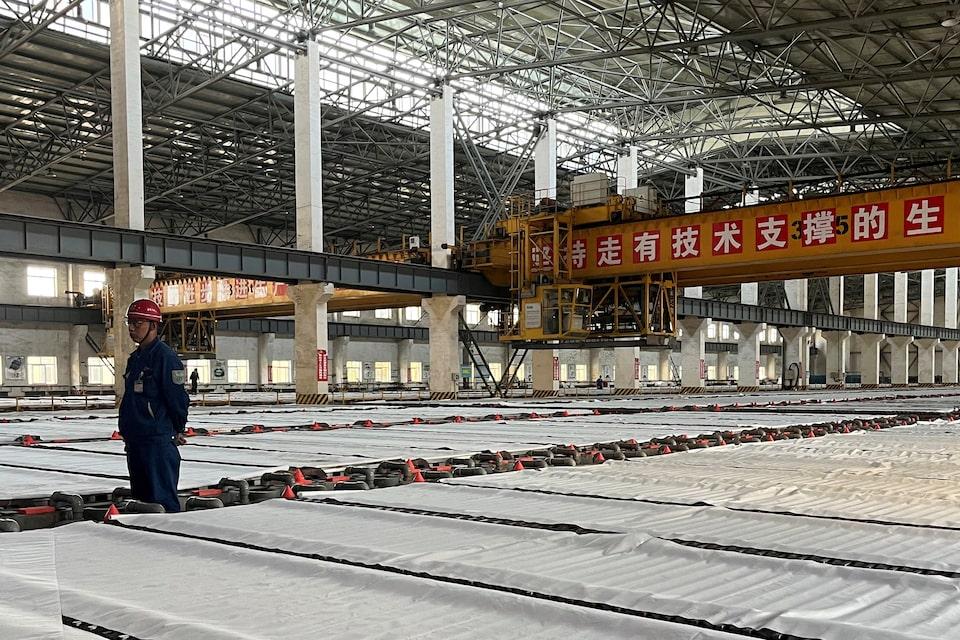
LONDON, Nov 4 (Reuters) - Could Beijing's solution to overcapacity in China's aluminium sector be a template for other metals? Yes, according to China's state-backed non-ferrous metals industry association (CNMIA), which is recommending aluminium-style capacity caps for the country's copper, lead and zinc smelters. Sign up here. Chinese processing capacity in all three metals has grown far faster than mine capacity, creating a raw materials crunch that is biting into smelter margins. Multiple Western smelters have reduced operating rates or fully curtailed plants and it's clear that Chinese operators are now also feeling the pain caused by their collective investment exuberance. "INVOLUTION" IN ACTION "Intense 'involution-style' competition has undercut companies' negotiation power in raw materials procurement, squeezing profits and threatening a sustainable industry development," according to Duan Shaofu, a CNMIA official quoted in state media. In Beijing "involution" translates as excessive, self-destructive competition in sectors where too much capacity is chasing too little feed. Which is as accurate a description of the copper raw materials sector as you'll find. China's massive expansion in smelter capacity has lifted the country's refined output by 12% year-on-year in the first nine months of 2025, according to local data provider Shanghai Metal Market (SMM). But the flip side has been ferocious competition for feedstock. Spot treatment and refining charges, which would normally represent a core revenue stream for smelters, have been negative for many months. Benchmark terms, covering larger volumes over longer periods, have collapsed to zero. Chinese smelters agreed with Chilean miner Antofagasta (ANTO.L) , opens new tab to process its concentrates for free in mid-year negotiations. Zinc treatment charges turned negative at the end of 2024 but have since recovered to around $87 per metric ton, still low by historical standards. Lead treatment charges are totally bombed out at a record low of minus $115 per ton for imported raw material, according to SMM. The common theme is one of Chinese smelters chasing the market ever lower as they battle for survival in an ever more challenging raw materials squeeze. LOW UTILISATION Capacity utilisation in China's primary aluminium smelting sector is currently over 96%, according to SMM, as production runs just below the mandated 45 million ton annual cap. Despite much industry scepticism, the cap appears to be a hard one, give or take some collective amperage flex. The Shanghai aluminium price has risen by 8% since the start of the year, while the alumina price has slumped by 48%. In times gone by the wide price margin between output and core input would have seen Chinese smelters aggressively lift production. This year, though, annualised production has edged up by only a marginal 370,000 tons with national output growth slowing from 4.2% last year to 2.2% in the first nine months of this year, according to the International Aluminium Institute. Capacity utilisation in China's copper smelter sector, by contrast, was 84% in September, according to SMM. Moreover, that headline figure masks a very divergent performance within the sector. SMM estimates that large copper smelters operated at 88% of capacity, medium-sized smelters at 79% and smaller operators at just 60%. Operating rates at China's secondary lead smelters, a big part of the battery metal's supply dynamic, fell as low as 22.3% in September, according to SMM. FUTURE MARKER CNMIA's public call for capacity caps is an official acknowledgement of the problems created by China's excessive build-out of new smelter capacity. It also places sectors such as copper, zinc and lead in the crosshairs of Beijing's broader "anti-involution" campaign. But the key question is how long it will take to translate into official policy and where any caps will be set. In the case of aluminium, the cap was announced in 2017 and is only now starting to act as a tangible brake on the sector's previously fast growth rate. Beijing probably doesn't have that much time to play with when it comes to sectors such as copper, where smelters are facing potentially negative terms in next year's benchmark deals, when they tend to lock in most of their raw material volumes. That said, any cap is likely to be set in a way that discourages further investment in new capacity rather than forces the closure of existing capacity. That offers little immediate relief to smelters outside of China which are feeling the full impact of the country's smelting "involution". Andy Home is a Reuters columnist. The opinions expressed are his own. Enjoying this column? Check out Reuters Open Interest (ROI) for thought-provoking, data-driven commentary on markets and finance. Follow ROI on LinkedIn , opens new tab and X , opens new tab. https://www.reuters.com/markets/commodities/china-eyes-capacity-caps-copper-lead-zinc-smelters-2025-11-04/
2025-11-04 05:48
TOKYO, Nov 4 (Reuters) - Japanese trading house Mitsubishi Corp (8058.T) , opens new tab reported a six-month net profit of 356 billion yen ($2.4 billion) on Tuesday, down 42% from last year, due to a weaker Australian steelmaking coal business and the absence of capital gains. The company, in which Berkshire Hathaway (BRKa.N) , opens new tab holds a stake, kept its net profit forecast for the fiscal year ending March unchanged at 700 billion yen. Sign up here. Mitsubishi, a shareholder with Russia's Sakhalin-2 liquefied natural gas project, would continue discussions with the Japanese government and partners regarding its stake in the asset, Chief Executive Katsuya Nakanishi said. The U.S. last month urged Japan, along with other Russian energy buyers, to stop imports, as it pushes the Kremlin towards ending the war in Ukraine. Japan's long-term contracts with Sakhalin-2 cover about 9% of its LNG imports. Major Japanese utilities can secure supplies elsewhere, from existing contracts to the spot market, in an event of a supply halt, executives said last week. Most of Japan's Sakhalin-2 supply contracts expire between 2028 and 2033. ($1 = 150.7800 yen) https://www.reuters.com/sustainability/climate-energy/japans-mitsubishi-corp-reports-42-on-year-fall-six-month-net-profit-2025-11-04/
2025-11-04 05:44
Russian state-owned Rosneft is a Sakhalin-1 shareholder US sanctioned Rosneft, Lukoil last month Marubeni co-owns SODECO, a Sakhalin-1 shareholder Marubeni's 6-mo profit up on strong performance in financial, food businesses TOKYO, Nov 4 (Reuters) - Marubeni (8002.T) , opens new tab plans to follow the guidance of the Japanese government regarding its involvement in Russia's Sakhalin-1 oil project after the U.S. government sanctioned the project's key shareholder Rosneft, its CEO said on Tuesday. Last month, the U.S. hit Russia's major oil companies Rosneft (ROSN.MM) , opens new tab and Lukoil (LKOH.MM) , opens new tab with sanctions, the most recent step to force the Kremlin to end the war in Ukraine. The U.S. will allow operations with Rosneft and Lukoil to wind down until , opens new tab November 21. Sign up here. Marubeni is a shareholder with Japan's SODECO consortium, a Sakhalin-1 co-owner. Other Japanese stakeholders in SODECO include Itochu (8001.T) , opens new tab, Japan Petroleum Exploration (1662.T) , opens new tab, Inpex (1605.T) , opens new tab and the industry ministry. "I am very concerned about the recent changes," Marubeni CEO Masayuki Omoto told a briefing. "I will firmly ally with the Japan government's response (to the latest sanctions)." ExxonMobil (XOM.N) , opens new tab, which used to own a 30% stake in Sakhalin-1 and had led the project since it started in the 1990s, took an impairment charge of $4.6 billion to exit its Russian businesses after Moscow sent troops into Ukraine in February 2022. In October that year, the Kremlin appointed Rosneft subsidiary Sakhalinmorneftegaz-shelf as the new operator of Sakhalin-1. Last year, Russian President Vladimir Putin signed a decree extending the sale period for the unclaimed Exxon stake in Sakhalin-1 until 2026. Before Exxon's exit, Rosneft and India's ONGC Videsh (ONVI.NS) , opens new tab owned a 20% in the project each and the SODECO consortium controlled a 30% stake. PROFIT UP Omoto made the comments during Marubeni's earnings briefing. The company reported a 28% rise in its first-half net profit to 305.5 billion yen ($2 billion), helped by a stronger performance in its financial, real estate and food businesses. The company, in which Berkshire Hathaway (BRKa.N) , opens new tab owns a stake, kept its annual net profit forecast unchanged at 510 billion yen, including a 30 billion yen cushion for contingencies. Marubeni plans total asset divestments of 250 billion yen this fiscal year, including in its natural resources segment, more than double the already achieved 96.2 billion yen of divestments so far. ($1 = 150.7800 yen) https://www.reuters.com/sustainability/climate-energy/japans-marubeni-reports-28-on-year-rise-six-month-profit-2025-11-04/

2025-11-04 05:41
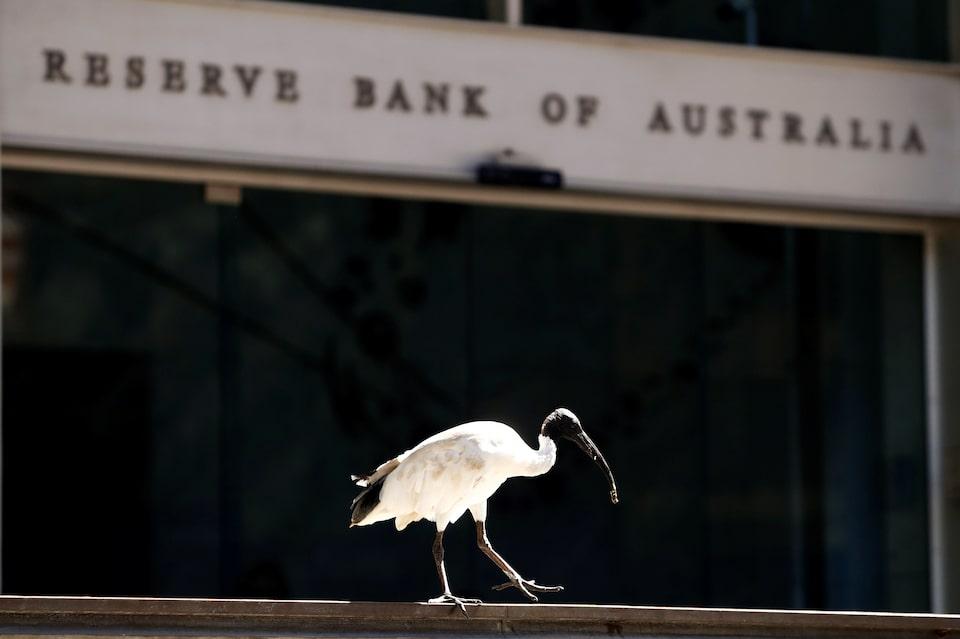
RBA cautious on easing due to inflation revival Governor Bullock says possible no more rate cuts Market sees low chance of rate cut before May 2026 SYDNEY, Nov 4 (Reuters) - Australia's central bank on Tuesday left its cash rate steady as expected at 3.60%, saying it was cautious about easing further given higher inflation, firmer consumer demand and a revival in the housing market. Wrapping up a two-day policy meeting, the Reserve Bank of Australia (RBA) said recent data suggested inflationary pressures could remain in the economy, adding that it would update its view as data evolves. Sign up here. Markets had seen little chance of a rate cut this week following an uncomfortably hot reading on third-quarter inflation, and now see scant prospect of an easing until May next year. At a press conference, Governor Michele Bullock said the central bank does not have a bias on policy and even though the current cash rate is still judged to be a little restrictive, it is fraught with uncertainties. "It's possible there's no more rate cuts. It’s possible there's some more but as I said earlier, we didn’t go as high, we might not have to come down as far," said Bullock. The spike higher in inflation means the RBA does not see core inflation returning to the target band of 2-3% until the second half of 2026, a reason that policymakers are cautious about further easing. The lack of any surprises left the Australian dollar a touch softer at $0.6526, while the bonds took a bigger fall, with three-year government bond futures down 5 ticks to 96.29, near a five-month low. Swaps imply just a 10% chance for a move in December, with some betting that the entire easing cycle is over. STILL POSITIVE ON JOBS The RBA has cut interest rates three times this year after assessing quarterly inflation data, but in the third quarter, core inflation surged to 3%, hitting the top of the 2-3% target band, as market services and housing costs stayed elevated. Home prices jumped by the most in more than two years in October, adding to signs that financial conditions might not be as tight as thought. The RBA has said the cash rate of 3.6% was only slightly restrictive. Complicating the picture for policymakers, the jobless rate spiked to a four-year high of 4.5% after a long period of holding largely steady. The consumer spending recovery also appears to be patchy. Bullock said the labour market has eased but that there is still tightness, playing down the spike in unemployment. "The RBA isn’t hitting the panic button on inflation just yet... But nor is it willing to fully discount the recent lift in inflationary pressures," said Sally Auld, group chief economist at the National Australia Bank. "On net, the RBA's delivery of a soft landing still stands, but the combination of trend GDP growth, full employment and core inflation sustainably in the target band now takes longer to achieve." NAB expects the RBA to be on hold before a final cut in May 2026, while the Commonwealth Bank of Australia has said the current easing cycle is over. Westpac tipped two more cuts next year. https://www.reuters.com/sustainability/sustainable-finance-reporting/australias-central-bank-holds-rates-steady-cautious-about-inflation-2025-11-04/
2025-11-04 05:38
NEW DELHI, Nov 4 (Reuters) - India's push to lead the clean industrial transition among emerging economies is facing significant hurdles, despite having one of the largest project pipelines, a new report by the clean‑industry alliance Mission Possible Partnership shows. India has 53 clean‑industry projects in development, tied with Australia for the highest number in the "new industrial sunbelt," a group of renewables‑rich countries seen as key to the next wave of global decarbonisation. Sign up here. However, none of these projects have reached final investment decision this year, the Mission Possible Partnership, which is an alliance of companies and climate action organizations focusing on advancing decarbonisation in high-emission sectors, said. Outdated construction rules and slow regulatory changes are holding back India's cement industry from adopting cleaner technologies such as calcined clay and low‑carbon cement blends, the report said. High financing costs in emerging markets such as India limit the bankability of clean‑industry projects, it added. Some projects in India have already lined up buyers for clean energy and partial funding, but are still waiting for clear rules, permits and access to power transmission and other infrastructure, the study said. The report also pointed to the lack of demand‑side regulation in India, such as blending mandates or green procurement rules, which are critical to creating markets for clean industrial products. The study identified 70 projects outside China as "poised" for investment, representing a $140 billion global opportunity, with India among key markets. But the report warned that without enabling policy frameworks, India risks missing out on the industrial transformation already underway in other regions. China, in comparison, accounted for 12 of the 19 clean‑industry final investment decisions recorded globally this year, the report said. https://www.reuters.com/sustainability/climate-energy/indias-cleanindustry-pipeline-hampered-by-financing-regulatory-delays-report-2025-11-04/