2025-11-03 22:07
ORLANDO, Florida, Nov 3 (Reuters) - Wall Street was mixed on Monday, with bumper corporate dealmaking activity and another mega AI-related tie-up offset by murky signals around the path for U.S. growth and interest rates, while the dollar crept up to a fresh three-month high. In my column today, I look at whether Big Tech's big spend on AI will generate the big returns investors are clearly hoping for. No one has a crystal ball, of course, but the huge sums being spent mean the bar for decent returns is very high too. Sign up here. If you have more time to read, here are a few articles I recommend to help you make sense of what happened in markets today. Today's Key Market Moves Today's Talking Points * Tech debt In September, Oracle tapped the bond market for $18 billion, last week Meta announced its largest ever bond sale of up to $30 billion, and on Monday Google's owner Alphabet said it is raising debt finance. Media reports put the multi-tranche issue at around $22 billion. Investors are lining up to lend to these tech giants, of course, but the borrowing does raise questions around how much their collective AI capex splurge is eating into cash flows. If Big Tech borrows big in the months ahead, could that affect demand for U.S. Treasury debt? * Do you want to make a deal? Kimberly-Clark is buying Band-Aid maker Kenvue in a deal worth nearly $50 billion, something of a surprise move given the premium paid and some of the controversies and difficulties facing Kenvue. Dealmaking appetite is strong - Wall Street is booming, the Fed is cutting rates, and financial conditions are the loosest in years. Deals targeting U.S.-based companies totaled $1.7 trillion, according to LSEG, up 36% year-on-year and second highest since LSEG records began in 1970. Justified, or is irrational exuberance creeping in? * Fed fissures Uncertainty around the Fed's next step is rising, and understandably so. The U.S. government shutdown is about to extend to a record-matching 35 days on Tuesday, and online betting market Polymarket is predicting it won't end until December 2. No data means very little visibility. Add to that the growing differences between FOMC hawks and doves, and little wonder the probability of a December cut has slumped to 65% from 90% last week. Few would bet against it being closer to a 50-50 call soon. Big Tech, big spend. But big returns? The reaction of most "Magnificent Seven" tech giants' shares to their latest earnings suggests the artificial intelligence boom is far from over. Yet doubts about the future returns from these firms' astronomical AI expenditures are gnawing deeper. The third-quarter earnings season has seen these tech behemoths continue to rake in huge profits and offer sunny guidance. Some investors may baulk at the Mag 7's lofty valuations, but today's tech leaders – unlike the superstar firms of the 1990s dotcom bubble – appear to have sustainable business models. Federal Reserve Chair Jerome Powell reiterated as much last week, saying that their AI investments are a major source of U.S. economic growth. Just four "hyperscalers" alone - Microsoft(MSFT.O) , opens new tab, Amazon (AMZN.O) , opens new tab, Meta (META.O) , opens new tab and Alphabet (GOOGL.O) , opens new tab - are expected to spend a combined $350 billion this year, and Goldman Sachs estimates global AI-related infrastructure spending could reach $4 trillion by 2030. The more these firms splurge on data centers, cloud computing capabilities, and the gamut of AI technologies, the loftier investors' expectations will get. At some point, they will be impossible to meet. The financial benefits and cost savings for society resulting from that are one thing; which companies actually profit is another. It is important, therefore, to distinguish between "value creation" and "value capture". "The value creation is certainly there," says Daniel Keum, associate professor of management at Columbia Business School. "But will that value flow back to the companies that are making these AI investments right now? For me, the clear answer is no." DO THE MATH It's early days in the AI supercycle, but Big Tech's AI outlays are already eating into hyperscalers' cash flows. Torsten Slok, chief economist at Apollo Global Management, estimates that aggregate capex at Amazon, Google, Microsoft, Meta and Oracle as a share of their operating cash flow is now a record 60% – and rising. Amazon reported strong earnings last week, and its stock surged double digits to hit a new high on Friday. But buried in the report was a slide showing that trailing-12-month free cash flow has fallen almost 70% over the last year. Ross Hendricks, analyst at independent research firm Porter & Co, estimates that hyperscalers' free cash flow in the first quarter of next year will be down more than 40% from the same period this year. "The whole sector faces the same basic problem," says Bob Elliott, co-founder of Unlimited Funds. "The math is pretty simple, unless there is a surge in revenues from these activities, Big Tech is going to pump nearly all their free cash flow into capex in just a few years." This creates several potential problems. It intensifies the pressure to generate high returns on these investments, but until those materialize, non-AI-related activities are also under pressure to produce significant returns. And this leaves hyperscalers vulnerable in the event of a sharp economic or market downturn. HIGHER BAR The fate of these megacaps will, of course, have a significant impact on the broader economy, not only because these companies' capex is helping to drive growth but also because almost everyone with a retirement fund is exposed to them. Nvidia's share of the total S&P 500 market cap is a stunning 8%, while that of the "Mag 7" is a record 37%. Investors are well aware of how much these shares have appreciated. The Philadelphia Semiconductor Index has more than doubled from its April low. But expensive markets can always get more expensive. It will take a brave fund manager to tell clients that they're reducing exposure to what have effectively become cash-printing machines. Of course, whether these companies can continue printing money as fast as they're spending it is the big question. For example, Meta's announced capex this year is around $70 billion, but Unlimited Funds' Elliott notes that the company's income is only $3 billion to $5 billion higher, based on underlying trends, than it was before they started spending all this cash. That's a pretty "mediocre" return on investment. Of course, CEO Mark Zuckerberg might argue that this is long-term investment and that not spending now could be more costly down the line if the AI revolution lives up to the hype. But it is unclear how much patience investors will have. Smaller businesses overall seem to be faring better. A Wharton Business School study published last month found that 74% of businesses say generative AI investment is already producing positive returns, especially smaller enterprises in digital-based sectors like tech and finance. "Confidence remains strong ... but future gains must now be justified by clear performance outcomes," the authors said. The bar for Big Tech giants with market caps of trillions of dollars and capex budgets of hundreds of billions is higher though. Much higher. What could move markets tomorrow? Want to receive Trading Day in your inbox every weekday morning? Sign up for my newsletter here. Opinions expressed are those of the author. They do not reflect the views of Reuters News, which, under the Trust Principles , opens new tab, is committed to integrity, independence, and freedom from bias. https://www.reuters.com/world/china/global-markets-trading-day-graphic-2025-11-03/

2025-11-03 21:51
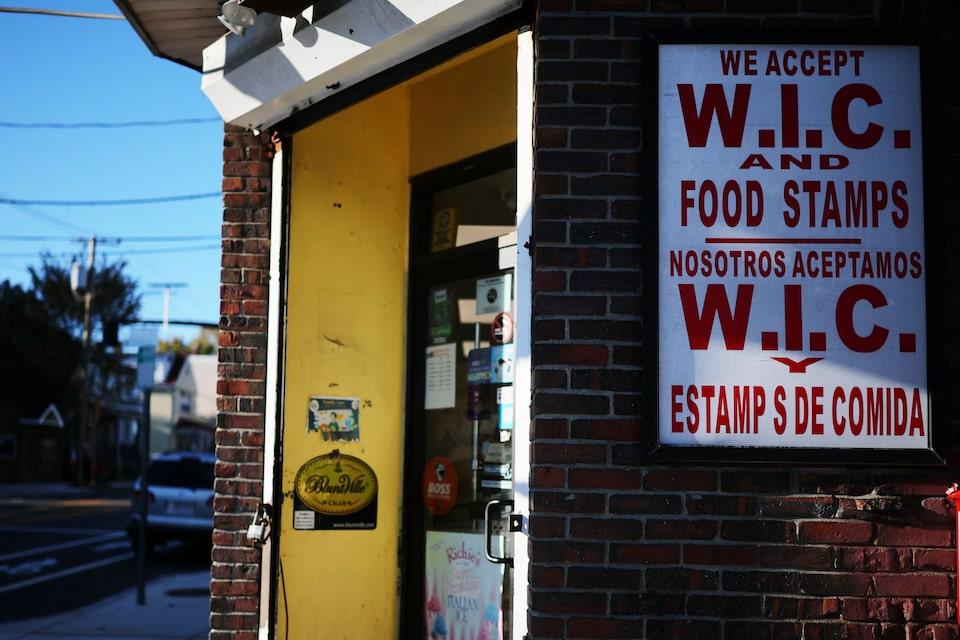
Partial SNAP payments unprecedented in program's 60-year history States may face delays in distributing reduced benefits Democratic-led states and officials push for full SNAP funding Nov 3 (Reuters) - President Donald Trump's administration said on Monday it plans to partially fund November food benefits for millions of Americans, but warned it could take some states weeks or months to calculate and distribute the aid. The administration laid out the Department of Agriculture's plan in a filing , opens new tab in federal court in Rhode Island after a judge ordered it on Friday to use emergency funds to at least partially cover November's Supplemental Nutrition Assistance Program or SNAP benefits. Sign up here. But a USDA official warned in the filing that at least some states, which administer SNAP benefits, would need weeks to months to make system changes that would allow them to calculate and issue the reduced benefits. In the meantime, some states have hurried to pay benefits themselves or buoyed support for food banks. Partial payments are unprecedented in the program's 60-year history, which provides assistance to nearly 42 million low-income Americans. Changes in the system that states need to implement to provide reduced benefits "will take anywhere from a few weeks to up to several months," said the filing from Patrick Penn, deputy under secretary for food, nutrition, and consumer services at the USDA. SNAP benefits, also known as food stamps, lapsed for the first time ever on November 1 during the federal shutdown. CONTINGENCY FUNDS A coalition of Democratic-led states sued the administration last week to draw on contingency funds and other sources of funds to pay for the benefits after the USDA said last month it would suspend SNAP benefits starting November 1. The U.S. Department of Justice said on Monday that the USDA is complying with U.S. District Judge John McConnell's order and "will fulfill its obligation to expend the full amount of SNAP contingency funds today." While the administration said it would fully deplete the $5.25 billion in contingency funds, it would not use other funding that would allow it to fully fund SNAP benefits, which cost $8 billion to $9 billion per month. Separately, the administration on Friday made $450 million in tariff revenue available to fund three weeks of the Special Supplemental Nutrition Program for Women, Infants, and Children, known as WIC, according to federal funding records seen by Reuters on Monday. Penn said in the court filing that the sums required to fully fund SNAP were too large to draw on tariff revenue, some of which is earmarked for other child nutrition programs. Skye Perryman, CEO and president of Democracy Forward, which represented the plaintiffs in the case, said in a statement the group is "considering all legal options to secure payment of full funds." Senator Amy Klobuchar, top Democrat on the Senate Agriculture Committee, also said full benefits should be paid. "It is not enough to do the bare minimum — the administration should stop playing politics with hunger and use all available resources to ensure Americans can put food on the table," Klobuchar said in a statement. The administration said $600 million would be used to fund states' administrative costs in administering SNAP benefits, leaving $4.65 billion to cover 50% of eligible households' current allotments. UNPRECEDENTED PAYMENTS States will need to calculate the partial benefit amount for recipients and then transmit that information to their contracted Electronic Benefit Transfer processor, which then loads SNAP recipients' EBT cards with their benefits. Conduent, an EBT processor that works with 37 states, said it would be able to move quickly once it receives updated benefit information from states. SNAP benefits are paid out monthly to eligible Americans whose income is less than 130% of the federal poverty line, or $1,632 a month for a one-person household and $2,215 for a two-person household in many areas. McConnell and another judge in Boston, U.S. District Judge Indira Talwani, said on Friday the administration had the discretion to also tap a separate fund holding around $23 billion. Penn said in the court filing the agency is carefully considering using those funds but determined they must remain available for child nutrition programs instead of SNAP. STATES STEP IN Alaska and Maryland on Monday joined Vermont, Virginia and a handful of other states that have said they will free up state funds to pay for November SNAP benefits. Alaska Governor Mike Dunleavy issued a state disaster declaration to make funds available to be loaded onto SNAP recipients' EBT cards on a weekly schedule, according to a press release. New Jersey Governor Phil Murphy said members of the state National Guard would be deployed to support food banks with distribution. Other states including Connecticut, New Mexico and West Virginia have said they will send additional money to food banks, which are already under strain as higher food costs strain low-income households. https://www.reuters.com/world/us/trump-administration-use-emergency-funds-pay-partial-food-aid-benefits-2025-11-03/
2025-11-03 21:39
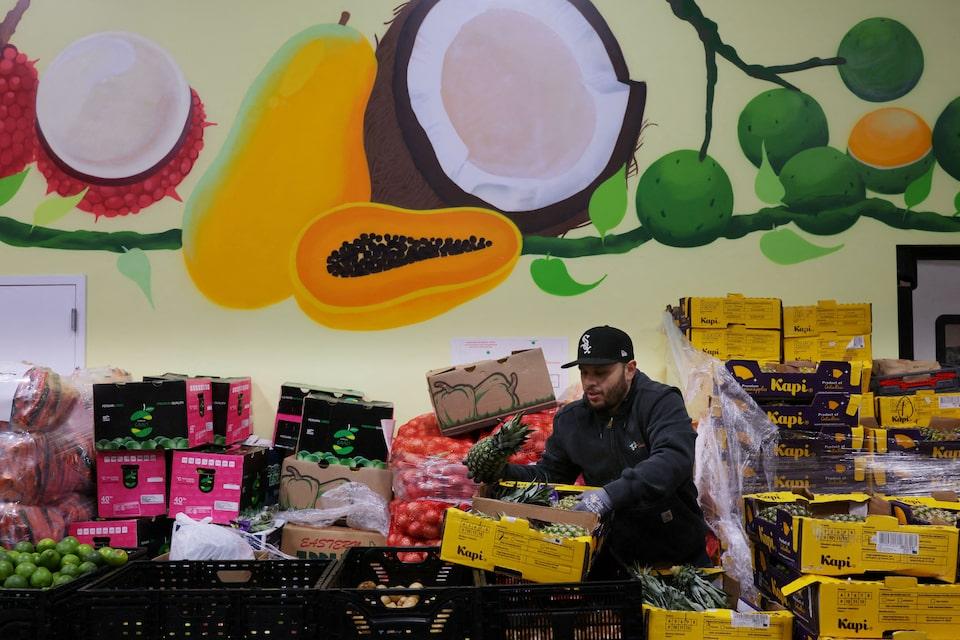
Nov 3 (Reuters) - Oil and gas firm Coterra Energy (CTRA.N) , opens new tab missed Wall Street estimates for third-quarter profit on Monday, as lower oil prices offset a jump in production, but raised its annual production forecast. Shares of the company were down 3% at $23.66 in after-market trading. Sign up here. U.S. President Donald Trump's trade policies fueled uncertainty across the energy industry, as escalating trade tensions threatened to slow global economic growth and weaken energy demand. Crude prices averaged $68.33 per barrel in the July-September quarter, down more than 13% from a year earlier, after OPEC+ accelerated output hikes and raised concerns about oversupply. The Houston-based company reported an average oil price of $64.10 per barrel, down about 13% from a year earlier, whereas production was at 166,800 barrels per day, up about 49% from last year. However, the company raised its full-year production forecast to between 772,000 to 782,000 barrels of oil equivalent per day, on the back of strong natural gas demand. Average natural gas prices rose to $3.25 per million British thermal units in the quarter, up 26% from a year earlier, driven by record power demand. The United States is poised to see a record surge in power demand this year and in 2026, led by data centers' outsized energy needs, the U.S. Energy Information Administration estimates. The company's adjusted profit was 41 cents per share for the three months ended September 30, compared with the analysts' average estimate of 44 cents per share, according to data compiled by LSEG. https://www.reuters.com/business/energy/coterra-energy-misses-third-quarter-profit-estimates-2025-11-03/
2025-11-03 21:32
Nov 3 (Reuters) - Diamondback Energy (FANG.O) , opens new tab on Monday beat estimates for quarterly profit and said it would sell its subsidiary Viper Energy's (VNOM.O) , opens new tab non-Permian assets for $670 million to an affiliate of GRP Energy Capital and Warwick Capital Partners. U.S. shale producers are turning to asset sales as shareholders increasingly favor disciplined spending and steady returns over rapid growth in an uncertain oil market. Sign up here. The transaction, set to close in the first quarter of 2026, is expected to bring Diamondback closer to achieving its target of raising $1.5 billion from divestitures and reduce debt. Last month, Diamondback sold its Environmental Disposal Systems for $694 million and divested its stake in pipeline operator EPIC Crude Holdings for $504 million. Viper Energy in June acquired Sitio Royalties in an all-stock deal valued at about $4.1 billion, to expand its presence across top U.S. oilfields including the Permian Basin. Diamondback's total output jumped over 65% to 942,946 barrels of oil equivalent per day (boepd) in the third quarter. However, CEO Kaes Van't Hof said in the current macro environment he believed there was no need for incremental oil barrels until there is a proper price signal. Van't Hof said he would keep oil volumes roughly flat and focus on maximizing free cash flow to pay dividends, buy back shares and reduce debt. The producer raised its annual production forecast by 2% to 910,000 to 920,000 boepd. During the quarter, Diamondback's realized price for oil fell 11.7% to $64.60 per barrel. The average Benchmark Brent crude dropped more than 13% from a year earlier, as OPEC+ output hikes and slowing global demand weighed on prices. Melius Research analyst James West said though the results were solid, "they may not have been enough". Shares of the company slipped 1.6% in trading after the bell. The Midland, Texas-based company posted an adjusted profit of $3.08 per share in the third quarter, compared with analysts' average expectations of $2.93, according to data compiled by LSEG. https://www.reuters.com/business/energy/shale-producer-diamondback-energy-tops-third-quarter-profit-estimates-2025-11-03/

2025-11-03 20:38
Nov 3 (Reuters) - Vulcan Elements has struck a partnership with the U.S. government and ReElement Technologies to expand domestic rare earth magnet production, the latest effort to secure supplies of critical minerals and cut reliance on China. North Carolina-based Vulcan said it would build and operate a 10,000-metric-tonne magnet facility in the U.S. with investments from the Pentagon and a $50 million investment from the Department of Commerce under the Chips Act in exchange for a stake. Sign up here. The financing will include a $620 million direct loan from the Pentagon's Office of Strategic Capital and $550 million in private capital. ReElement Technologies, a U.S.-based refiner of rare earth and critical minerals, will receive a $80 million direct loan from the Office of Strategic Capital matched by private capital to expand its recycling and processing capabilities. Rare earth magnets are used to make motors in electric vehicles, wind turbines, hard disk drives, as well as medical devices like MRI machines. Earlier this year, Vulcan agreed to buy a supply of critical minerals from ReElement that will be sourced outside of China for five years, beginning in 2026. https://www.reuters.com/business/energy/us-vulcan-elements-ink-deal-boost-rare-earth-magnet-supplies-2025-11-03/

2025-11-03 20:36
USDA to use tariff revenue for temporary WIC funding SNAP aid lapses, no tariff funds allocated for November benefits Shutdown affects nearly 7 million low-income Americans relying on WIC WASHINGTON, Nov 3 (Reuters) - The administration of President Donald Trump has made $450 million in tariff revenue available for a childhood nutrition program imperiled by the federal government shutdown, according to federal funding records. The shutdown, now in its 34th day, has compromised benefits for nearly 7 million low-income Americans who are pregnant, breastfeeding or who have children under age 5 who receive food, nutrition counseling and other support through the Special Supplemental Nutrition Program for Women, Infants, and Children, known as WIC. Sign up here. The money was transferred to the WIC program on Friday, according to the records from the White House Office of Management and Budget. It was drawn from a pool of tariff revenue made available to the U.S. Department of Agriculture for commodity and disaster assistance, and will cover about three weeks of benefits, said the National WIC Association. The USDA previously drew on that funding source in mid-October to send states about $300 million for two weeks of WIC benefits. State agencies are expected to receive the funds in the next two days, the NWA said. The additional funds come as food aid under the Supplemental Nutrition Assistance Program, also known as food stamps, remains delayed. The Trump administration on Monday said it would draw on contingency funds to partially pay for November SNAP benefits, but that some states could take weeks or months to calculate and distribute the aid. "We anticipate the disruptions in SNAP may lead additional families to certify (for) WIC or families to run through their WIC benefits faster, so we will be keeping a really close eye on these resources because we know that WIC can't fill the gap that SNAP plays for families," said Nell Menefee-Libey, senior public policy manager at the NWA. The White House did not immediately respond to a request for comment. NO TARIFF MONEY FOR SNAP SNAP aid for nearly 42 million low-income Americans lapsed for the first time in the program's 60-year history on November 1 after neither Congress nor the Trump administration acted to fund the benefits during the shutdown. The administration said in a court filing on Monday that while it has drawn on tariff revenue to fund WIC, it will not draw on the pool for the $4 billion required to fully fund November SNAP benefits. The tariff revenue also supports child nutrition programs like school lunches, and moving billions to SNAP would threaten that funding, said Patrick Penn, deputy under secretary for food, nutrition, and consumer services at the USDA, in the filing. "Creating a shortfall in Child Nutrition Program funds to fund one month of SNAP benefits is an unacceptable risk, even considering the procedural difficulties with delivering a partial November SNAP payment, because shifting $4 billion dollars to America's SNAP population merely shifts the problem to millions of America’s low income children that receive their meals at school," Penn said. https://www.reuters.com/legal/litigation/trump-administration-injects-more-temporary-funding-child-nutrition-program-2025-11-03/