2025-11-03 07:18
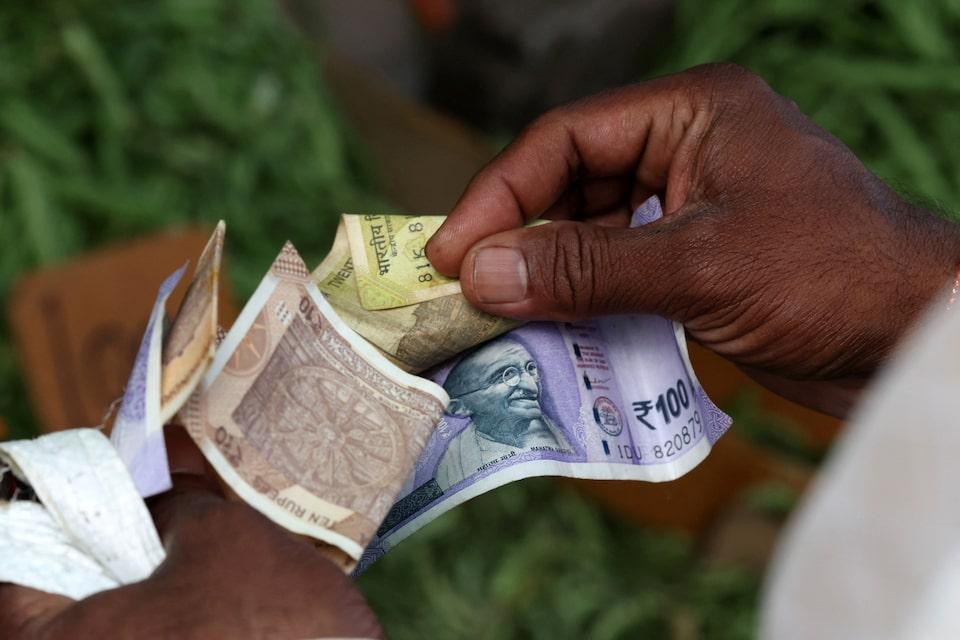
MUMBAI, Nov 3 (Reuters) - Goldman Sachs is advising clients to take a bullish position on the Indian rupee, using an exotic option structure, despite its latest slide toward its all-time low. Taking positive cues from developments in India-U.S. trade negotiations - such as the reduction of Russian oil purchases by state-run refiners - analysts at Goldman Sachs expect the rupee to appreciate by 1-2% if U.S. tariffs on Indian goods are set at or below 25%. Sign up here. The upbeat view comes despite the currency on Monday dipping near its lifetime low of 88.80 to the U.S. dollar. BY THE NUMBERS The firm recommends buying a put option on the dollar-rupee pair with a strike price of 88, expiring in March 2026 and with a European knock-out at 85.5. The option is essentially a bet on a rally in the rupee. It pays off if the rupee appreciates, though it would be knocked out — or expire worthless — if the dollar/rupee exchange rate drops below 85.50 at any point before expiry. The knock-out helps lower the cost of the option. The analysts also recommend one more bullish wager on the rupee - a relative-value position that bets the Indian currency will outperform its Indonesian peer over the next 3 months. WHY IT'S IMPORTANT The rupee has been the worst-performing major Asian currency this year, having fallen about 3% so far due to concerns over steep U.S. trade tariffs and heavy outflows from local shares. Goldman is counting on better news on the tariff front. KEY QUOTES "In a scenario where tariff discussions stall, we expect the RBI to manage the pace of INR depreciation and intervene more aggressively near 88.80 in the near term, a level which RBI had been defending recently," the analysts said in a note. "We believe any INR appreciation will likely be capped due to the RBI’s preference to trim forward book shorts in an appreciating INR environment, along with higher corporate hedging activity." GRAPHIC https://www.reuters.com/world/india/goldman-sachs-backs-bullish-indian-rupee-wager-banking-tarriff-turnaround-2025-11-03/
2025-11-03 07:15
Oil majors’ refining earnings rise sharply in Q3 Russian fuel exports drop after months of attacks on its refineries US, European sanctions offer further boost to oil majors LONDON, Nov 3 (Reuters) - Top Western oil companies are enjoying a windfall from the expanding attacks on Russia's oil industry – both literal and economic – that have boosted global refining profit margins and mitigated concerns over a looming supply glut. Waves of Ukrainian drone strikes on Russia's vast network of refineries and export terminals since July have hammered the country's exports of refined fuel, such as diesel and fuel oil. Russia's seaborne refined product exports in September dropped by 500,000 barrels per day from their 2025 highs to around 2 million bpd, the lowest level in over five years, according to Kpler data. Sign up here. Curtailed Russian exports have boosted global refining margins, benefiting energy giants like Shell (SHEL.L) , opens new tab, Exxon Mobil (XOM.N) , opens new tab, Chevron (CVX.N) , opens new tab and France's TotalEnergies (TTEF.PA) , opens new tab, which jointly operate nearly 11 million bpd, over 10% of global refining capacity. The four companies posted a combined 61% rise in profits from refining operations in the third quarter compared with the previous quarter, which contributed in large part to their 20% rise in overall profits. Exxon, the largest U.S. oil company, saw earnings in its energy product division rise more than 30% on a quarterly basis to $1.84 billion, driven by strong refining margins "due to supply disruptions," the company said on Friday. BP (BP.L) , opens new tab will report results on Tuesday, and it also looks set to benefit from these positive global refining trends. The British firm’s refining indicator margin, a gauge for its global operations, rose to $15.8 per barrel in the three months through September, a 33% quarter-on-quarter increase, and this figure is running at $15.1 per barrel in the fourth quarter thus far. Stronger refining earnings will help offset declines in oil prices as the market appears to enter a period of significant oversupply. The volatility in energy markets created by Western sanctions and other geopolitical conflicts has also benefitted the trading divisions of the oil majors, in particular Shell, BP and TotalEnergies. These trading desks can generate huge profits by rapidly responding to small changes in supply and demand dynamics. Shell, the world's largest oil trader, does not disclose the division’s profits. However, it reported that stronger trading and refining margins boosted adjusted earnings in its chemicals and products division by $706 million in the third quarter compared with the previous three months. BENEFICIAL BANS Refining margins are apt to stay elevated in the near term in response to the recent escalation in Western governments’ efforts to pressure Moscow to end the war in Ukraine. The European Union stepped up its economic warfare against Russia in July when it announced plans to ban imports of fuels produced from Russian crude oil as of January 2026. The EU is seeking to close a loophole in previous sanctions packages that allowed refiners in India, Turkey and elsewhere to use discounted Russian feedstock to produce diesel and jet fuel that was then often sold to Europe. The ban, which the EU formally approved earlier this month, again puts the Western oil majors in an advantageous position as non-Russian crude – including refined products made with non-sanctioned crude – will now be in higher demand. Western energy giants then got another positive surprise last month when U.S. President Donald Trump on October 22 sanctioned Russia's two top oil companies, Rosneft and Lukoil, which together account for 5% of global crude supply and 3.3 million bpd of crude and refined product exports, roughly half of Russia's total. The sanctions boosted oil prices and refining margins as buyers of Russian crude and products, particularly in India and Turkey, scrambled to find alternative supplies. Does the combination of escalating Western sanctions and Ukrainian drone strikes mean the oil market should expect to see a repeat of the huge price rally that shook the market in the immediate aftermath of Russia's invasion in 2022, leading to record profits for the oil majors? Probably not. The oil market today is well supplied and far better equipped to adapt to the impact of sanctions, especially given the expansion of the so-called “shadow fleet” of tankers that has been able to circumvent Western sanctions to sell Russian oil. But the targeting of Russia’s oil and gas industry should, nevertheless, continue to be a boon to Western oil majors, which benefit from large upstream oil production as well as sprawling refining and trading operations. Want to receive my column in your inbox every Monday and Thursday, along with additional energy insights and links to trending stories? Sign up for my Power Up newsletter here. Enjoying this column? Check out Reuters Open Interest (ROI), , opens new tabyour essential new source for global financial commentary. ROI delivers thought-provoking, data-driven analysis. Markets are moving faster than ever. ROI , opens new tab can help you keep up. Follow ROI on LinkedIn , opens new tab and X. , opens new tab https://www.reuters.com/markets/commodities/big-oil-gets-big-boost-escalating-economic-war-russia-2025-11-03/
2025-11-03 07:02
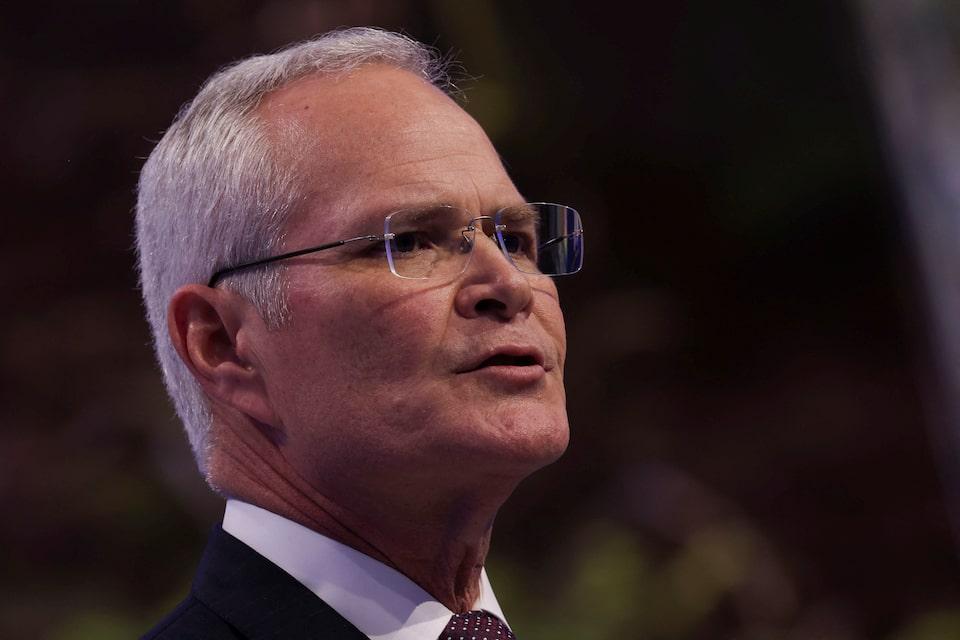
ExxonMobil CEO warns EU law could force exit from Europe EU law demands climate plan aligned with Paris Agreement, Woods says Qatar threatens again to halt LNG supply to Europe over sustainability law ABU DHABI, Nov 3 (Reuters) - Executives at two of Europe's top gas suppliers, ExxonMobil and QatarEnergy, on Monday warned they could stop doing business with the European Union if it does not significantly loosen a sustainability law that could impose fines of 5% of their global revenue. Exxon CEO Darren Woods told Reuters on the sidelines of the ADIPEC meeting in Abu Dhabi that the EU's Corporate Sustainability Due Diligence Directive would have "disastrous consequences" if adopted in its current form. Sign up here. The directive requires companies doing business in the bloc to address human rights and environmental risks across their supply chains, and aims to hold companies accountable for harm even in operations outside Europe. "If we can't be a successful company in Europe, and more importantly, if they start to try to take their harmful legislation and enforce that all around the world where we do business, it becomes impossible to stay there," Woods said. Qatar's Energy Minister Saad al-Kaabi, who is also QatarEnergy's CEO, told Reuters at the same conference that the gas giant has contingency plans in place if it decides to halt European shipments - a threat Kaabi has repeatedly warned is not a bluff. 'WE CAN'T REACH NET ZERO' Speaking at ADIPEC on Monday, Kaabi reissued a threat to halt supplying Europe with liquefied natural gas, saying it will not be able to continue doing business in Europe if the EU doesn't change or cancel the law. "We can't reach net zero, and that's one of the requirements, among other hosts of things," said Kaabi. "Europe needs to understand that, I think, they need the gas from Qatar. They need gas from the U.S.," he said. "They need the gas from many places around the world ... it's very important that they look at this very seriously." Woods said the legislation demands that large companies like ExxonMobil implement climate transition plans aligned with the Paris Agreement's goal of limiting global warming to 1.5°C above pre-industrial levels - a requirement he described as technically unfeasible. "What's astounding to me is the overreach not only requires us to do that for the business that we're doing in Europe, but it would require me to do that for all my business around the world, irrespective of whether it touches Europe or not," he said. COMPANIES AMONG EUROPE'S TOP SUPPLIERS ExxonMobil and QatarEnergy are among Europe’s top LNG suppliers, with the U.S. major contributing to the roughly 50% of EU imports from American producers in 2024, while Qatar has supplied between 12% and 14% of the bloc’s LNG since Russia’s 2022 invasion of Ukraine. Europe is also a significant market for both companies, with Exxon saying last year it had invested 20 billion euros ($23.32 billion) in the region in the previous decade, while QatarEnergy has long-term supply contracts with Britain's Shell (SHEL.L) , opens new tab, France's TotalEnergies (TTEF.PA) , opens new tab, and Italy's ENI (ENI.MI) , opens new tab. The two companies, whose gas shipments to the continent ramped up sharply after it cut off supplies from Russia, are now pushing the bloc to abandon part of its green strategy. The governments of Qatar and the U.S. last month urged European heads of state to reconsider the law, which they said threatens Europe's supply of reliable, affordable energy. The European Parliament has agreed to negotiate further changes to the law, and the EU aims to approve the final changes by year-end. "We would love to serve Europe. We have been committed to Europe," Kaabi said. "We're not asking for anything special, we're saying we want to compete in a market that is fair." https://www.reuters.com/sustainability/exxonmobil-ceo-warns-eu-sustainability-law-could-end-europe-operations-2025-11-03/
2025-11-03 06:46
PERTH, Australia, Nov 3 (Reuters) - U.S. independent ConocoPhillips (COP.N) , opens new tab began drilling its first exploration well as part of larger campaign searching for natural gas offshore eastern Australia, 3D Energi (TDO.AX) , opens new tab, its junior partner in the project, said on Monday. Work began over the weekend on the Essington-1 well, which will take 32 days to drill down to 2,650 metres (8,694 feet), 3D Energi said in a filing to the ASX. Sign up here. The well is the first in the Otway Exploration Drilling Program to develop new gas for Australia’s eastern domestic market, the company said. Eastern and southern Australia are facing supply shortfalls before the end of the decade, causing tension between gas exporters and domestic manufacturers. The campaign represents one of the first major offshore exploration campaigns in East Coast waters in almost seven years as the old fields in the Bass Strait offshore the state of Victoria run dry. Under the Otway program, Conoco will drill two wells this year, out of a total of six planned, and an option for four additional wells if needed. The tight domestic eastern gas market has been a source of political tension for many years. An "Australian Domestic Gas Mechanism" trigger was introduced in late 2017, limiting the export of spot cargoes when gas was tight from the three liquefied natural gas consortia in Queensland fed by the state’s onshore coal seam gas fields, with backup from Victorian gas supplies. ConocoPhillips is operator of one, Australia Pacific LNG. The current Labor government has considered expanding export controls since its first term in 2022. Japan has argued against controls as it is Australia’s largest LNG buyer. https://www.reuters.com/business/energy/conocophillips-begins-natural-gas-drilling-campaign-offshore-eastern-australia-2025-11-03/

2025-11-03 06:41
Dow ends lower; S&P 500 and Nasdaq up Dollar up slightly; Fed officials give conflicting views on economy Earnings focus on tech firms NEW YORK, Nov 3 (Reuters) - Most major stock indexes climbed on Monday following news that Amazon.com (AMZN.O) , opens new tab will supply cloud-computing services to OpenAI, and the dollar rose to a three-month high versus the euro due to waning expectations for hefty U.S. interest rate cuts. The Federal Reserve last week eased rates as expected, but Chair Jerome Powell said another cut in December was "not a foregone conclusion," contrary to some investors' view that it was essentially a done deal. Sign up here. Fed officials on Monday continued to give conflicting views on where the economy stands and the risks facing it, a debate set to intensify as the ongoing U.S. government shutdown prevents the release of official data. Traders are pricing in a roughly 70% chance of a 25 basis point cut in December, down from about 94% a week ago. The multi-year $38 billion Amazon-OpenAI deal provided support to equities, with Amazon's stock ending 4% higher. "We're still looking at this as a market driven by the technology revolution that is certainly in full swing given AI," said Tim Ghriskey, senior portfolio strategist at Ingalls & Snyder in New York. "I don't see that slowing down at all. The bigger companies have these massive R&D budgets that are just going to keep cranking out new things. We will continue to see that for the foreseeable future." TRUMP'S TARIFFS The U.S. Supreme Court is considering the legality of President Donald Trump's global tariffs, with arguments set for Wednesday. Under one legal authority or another, Trump's tariffs are expected to stay in place long-term. The Dow Jones Industrial Average (.DJI) , opens new tab fell 226.19 points, or 0.48%, to 47,336.68, the S&P 500 (.SPX) , opens new tab rose 11.77 points, or 0.17%, to 6,851.97 and the Nasdaq Composite (.IXIC) , opens new tab climbed 109.77 points, or 0.46%, to 23,834.72. MSCI's gauge of stocks across the globe (.MIWD00000PUS) , opens new tab rose 1.47 points, or 0.15%, to 1,007.70. The pan-European STOXX 600 (.STOXX) , opens new tab index rose 0.07%. Investors will also get more quarterly results from technology companies this week. After the closing bell, shares of data analytics company Palantir Technologies (PLTR.O) , opens new tab were up about 1% as the company reported results and forecast fourth-quarter revenue above analysts' estimates. Advanced Micro Devices (AMD.O) , opens new tab, Qualcomm (QCOM.O) , opens new tab, Uber (UBER.N) , opens new tab and McDonald's (MCD.N) , opens new tab are also due to report this week. U.S. megacap companies delivered a mixed bag of results last week, and investors are looking for a return on the extensive capital spending on AI. DOLLAR GAINS AGAINST MAJOR CURRENCIES The dollar extended its gains from last week against the euro amid doubts about the outlook for another Fed rate cut this year. The euro , which slipped as low as $1.1505 against the dollar, its weakest since August 1, pared losses to trade down 0.1% at $1.152225. That followed Institute for Supply Management data showing U.S. manufacturing contracted for an eighth straight month in October as new orders remained subdued, and suppliers were taking longer to deliver materials to factories against the backdrop of tariffs on imported goods. The dollar index , which measures the greenback against a basket of currencies, rose 0.08% to 99.89. Against the Japanese yen , the dollar strengthened 0.13% to 154.2. Sterling weakened 0.12% to $1.3135, ahead of a Bank of England rate decision later this week. Cryptocurrency bitcoin was down 2.6% at $107,152. U.S. Treasury yields rose amid high corporate debt issues and as the government bond market kept last week's bearish tone. The Treasury Department released its quarterly borrowing estimate of $569 billion in the fourth quarter, $21 billion less than its July estimate. The benchmark 10-year yield was last at 4.107%, slightly higher than late last week. The two-year yield of 3.6% was almost unchanged from Friday. The closely watched part of the yield curve that plots two-year and 10-year Treasuries steepened to 51 basis points. U.S. crude rose 7 cents to settle at $61.05 a barrel, while Brent crude futures rose 12 cents to $64.89. Investors weighed news that OPEC+ plans to end its supply increases. Spot gold fell 0.03% to $4,000.26 an ounce. https://www.reuters.com/world/china/global-markets-wrapup-1-2025-11-03/
2025-11-03 06:25
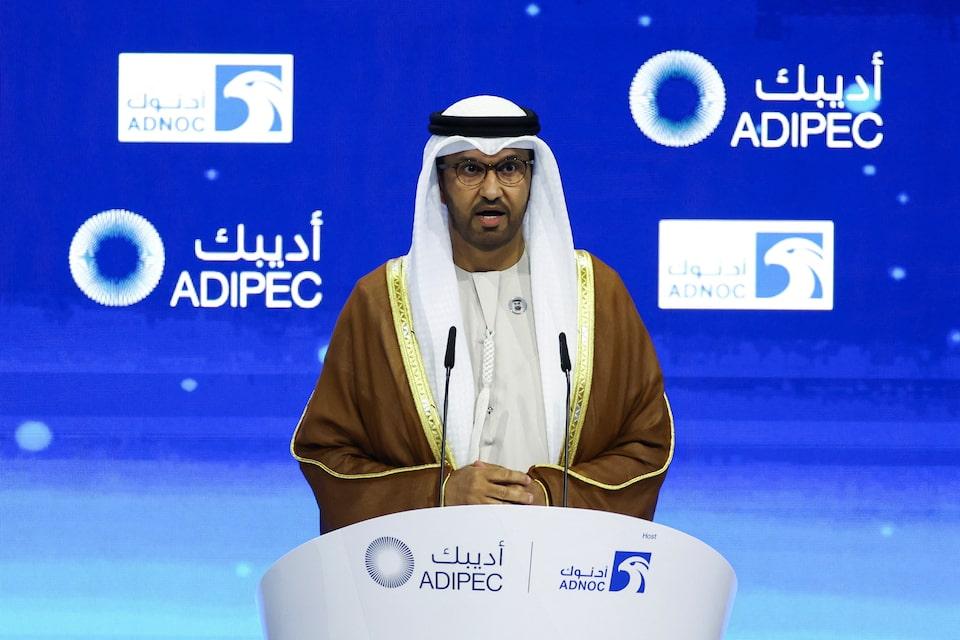
OPEC+ pauses output increases amid supply glut fears UAE emphasizes need for energy investment and balance Volatility in energy market seen as constant by ADNOC CEO ABU DHABI, Nov 3 (Reuters) - More oil demand is expected going into 2026, the United Arab Emirates' energy minister said on Monday at the ADIPEC energy conference in Abu Dhabi, after OPEC+ decided to pause output increases in the first quarter of next year. When asked about the possibility of an oil glut in 2026, Suhail al-Mazrouei said: "I think all of what we are seeing is more demand." Sign up here. The UAE is one of eight OPEC+ countries that agreed to increase December output targets, though it halted the increases in the first quarter as it moderates plans to regain market share on fears of a supply glut. New Western sanctions on OPEC+ member Russia are adding to the challenges, as Moscow may struggle to further raise output after the U.S. and Britain imposed fresh measures on top producers Rosneft and Lukoil. Mazrouei said OPEC+ is trying to achieve balance, but investments are needed because artificial intelligence and data centres require more energy. "There is a requirement for more energy ... and we need to make sure the environment for investment is allowed to do that," he said. "If we're not achieving a balance between the price and what you would require, we will not have (a sufficient flow of investment) to do it." 'VOLATILITY IS THE NORM' UAE oil firm ADNOC's chief executive said volatility became a constant due to geopolitics and near-term uncertainty was real. But long-term demand remained strong, he said, adding that oil demand would stay above 100 million barrels a day beyond 2040. "While we may face headwinds in the months ahead, the long-term outlook shows demand growth for every form of energy across every market," Sultan Al Jaber said. Al Jaber said that cost discipline needed to be balanced with capital investment. Electricity demand will keep surging through 2040 as the power required by data centres continues to grow, but a shortage of gas turbines is turning a supply crunch into a "choke point" that is sending electricity prices higher, Al Jaber said. More than $4 trillion in capital investment is needed annually to cover grids, data centres and all sources of energy supply, he added. The capital is available but needs to be derisked, Jaber added, saying the right structures need to be in place to ensure the flows are going where they are needed. He added that "dormant capital" tied up in existing energy infrastructure needs to be freed up. XRG, ADNOC's international investment arm, continues to look for opportunities across the gas value chain. https://www.reuters.com/business/energy/oil-demand-will-stay-above-100-million-bpd-beyond-2040-uaes-jaber-says-2025-11-03/