2025-10-31 20:47
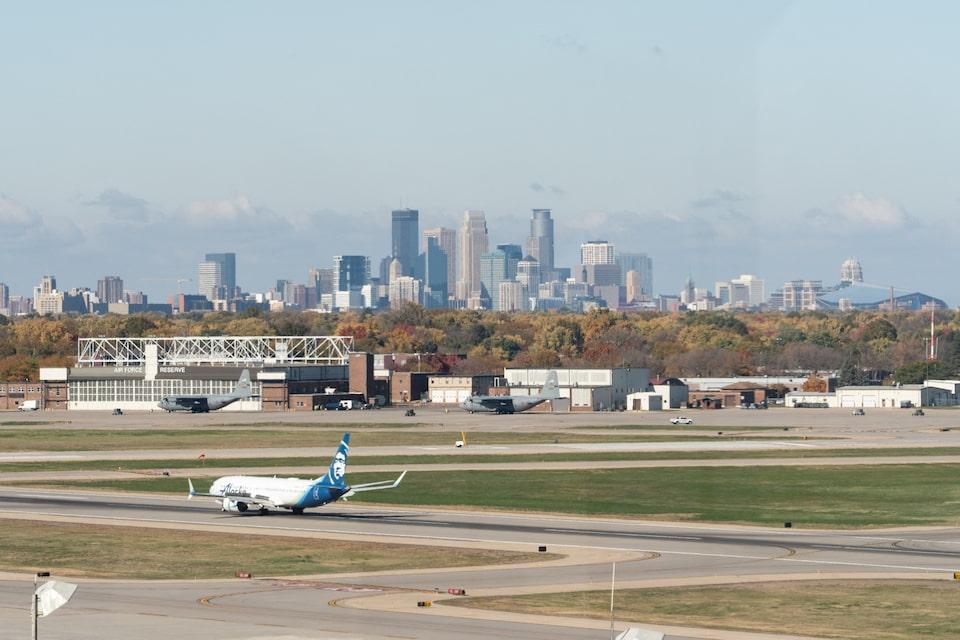
Oct 31 (Reuters) - Alaska Air Group (ALK.N) , opens new tab said on Friday it is partnering with Accenture (ACN.N) , opens new tab to conduct an audit of its IT systems, after an outage earlier this week grounded its flights across the U.S. The disruption stemmed from a global outage affecting Microsoft's (MSFT.O) , opens new tab Azure platform, which has impacted Alaska Air's key systems, including its websites. Sign up here. The outage had forced the airline to cancel more than 400 flights, which halted travel for more than 49,000 passengers. Alaska Air will update its forecast for the fourth quarter in early December, "once the full financial impact of the recent IT disruptions is understood," it said in a regulatory filing. Last week, the carrier lowered its annual profit forecast and missed Wall Street expectations for third-quarter adjusted profit on higher fuel costs. The company did not host or reschedule its third-quarter earnings call. https://www.reuters.com/business/alaska-airlines-audit-it-systems-after-global-outage-2025-10-31/
2025-10-31 20:38
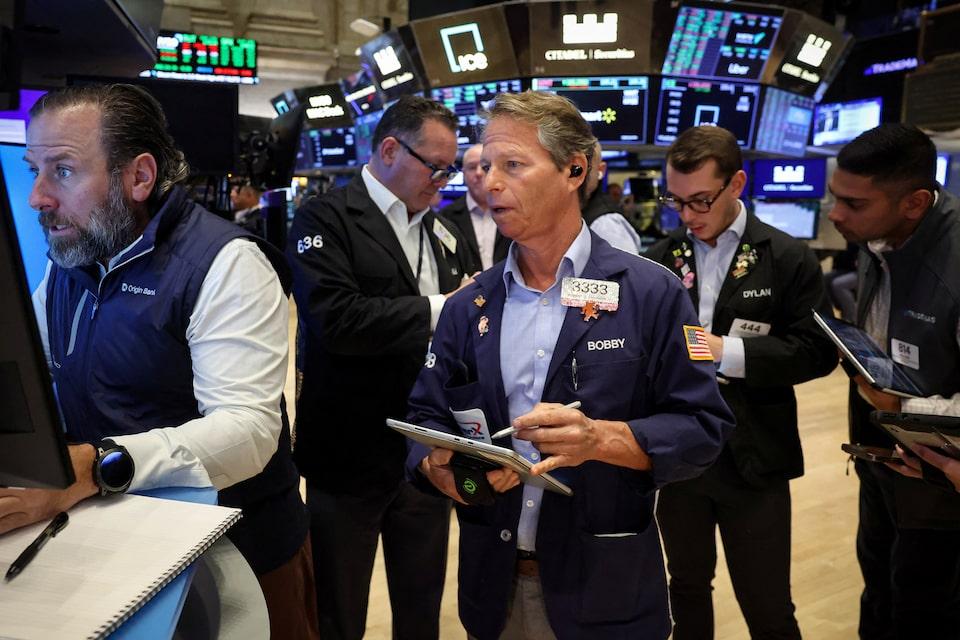
Solid Q3 earnings season sees 130 more S&P 500 reports next week Meta, Microsoft shares stumble after results; Alphabet, Amazon gain Private data including ADP employment in focus as shutdown set to delay jobs report NEW YORK, Oct 31 (Reuters) - A resilient U.S. stocks rally heads into a busy week of corporate results, with investors concerned about the strength of the artificial intelligence trade and about how aggressively the Federal Reserve will cut interest rates. The S&P 500 (.SPX) , opens new tab on Friday ended October up 2.3% for the month, its sixth straight month of gains, despite wobbling this week after megacap companies posted mixed results. Doubt also grew that more interest rate cuts were imminent after the Fed eased by a quarter point on Wednesday, as expected. Sign up here. Following the October monetary policy meeting, Fed Chair Jerome Powell said an interest rate cut at the next meeting in December was "not a foregone conclusion." Investors had expected that move to be almost a done deal. Corporate earnings have broadly topped expectations. Third-quarter S&P 500 profits are on pace for a 13.8% increase from a year earlier, according to LSEG IBES. More than 130 index companies will report in the coming week. Making some investors nervous, the rally has lifted the S&P 500's forward price-to-earnings multiple above 23, putting the market's valuation around its highest since the dot-com bubble 25 years ago, according to LSEG Datastream. "If we assume that we're getting close to the ceiling on valuations as investors may be reluctant to pay multiples closer to what they were in the tech bubble, I think earnings will have to do the heavy lifting to drive returns forward," said Angelo Kourkafas, senior global investment strategist at Edward Jones. The first week of November kicks off a traditionally rosy period for stocks. Since 1950, November ranks as the best-performing month and December the third-best for the S&P 500 on average, according to the Stock Trader’s Almanac. November has an average gain of 1.87% in that time, with December averaging an increase of 1.43%, just behind April’s 1.47%. Given the strong performance so far in 2025, some investors question whether some year-end cheer has been pulled forward. The S&P 500 is up 16% year-to-date, while the Nasdaq Composite (.IXIC) , opens new tab has gained about 23%. But history suggests stocks could push higher into year end. Since 1950, there have been 21 times that the S&P 500 has increased at least 15% through the first 10 months of the year. In all but one instance the index has also posted gains in the final two months, according to Truist Advisory Services. With 44% of S&P 500 companies that reported as of Wednesday, 83% exceeded earnings expectations. That beat rate would be the sixth highest on record if it holds, according to strategists at Ned Davis Research. There have been hiccups. On Thursday, shares of Meta Platforms (META.O) , opens new tab and Microsoft (MSFT.O) , opens new tab slid following their quarterly reports. Both announced spending increases to fuel AI expansions. Alphabet (GOOGL.O) , opens new tab also boosted its projected capital spending, but its shares rose as investors were more accepting of the Google parent's ability to fund its plans from its cash flow. Amazon(AMZN.O) , opens new tab shares also surged on Friday after strong growth at its cloud unit, while easing fears it was falling behind in the AI race. Enthusiasm over AI has helped drive the S&P 500 up 90% since the bull market began just over three years ago. But investors are wary of potential overexuberance tied to the theme and eager for evidence that AI investments are paying off. "Investors want to know not only what the growth prospects look like, which has been the focus as these stocks have skyrocketed ... but also how much are they spending and what sort of return does that imply," said Eric Kuby, chief investment officer at North Star Investment Management. Tech companies reporting next week include semiconductor firms Advanced Micro Devices (AMD.O) , opens new tab and Qualcomm (QCOM.O) , opens new tab and data analytics company Palantir Technologies (PLTR.O) , opens new tab. Palantir and AMD shares both have more than doubled this year, while Qualcomm shares are up about 18%. Other companies set to report next week include McDonald's (MCD.N) , opens new tab and Uber (UBER.N) , opens new tab. Investors concerned about a weakening labor market are particularly on guard for corporate staffing announcements because the government shutdown has halted release of most official economic reports. Amazon said this week it will reduce its global corporate workforce by about 14,000 people, with more cuts expected next year. "With a lack of data from the United States government on anything really, and then these signs that companies are laying people off, that makes me a bit nervous," said Robert Pavlik, senior portfolio manager at Dakota Wealth Management. The U.S. shutdown, which started on October 1, is now the second-longest ever behind the 2018-2019 shutdown that lasted 35 days. Monthly jobs data scheduled for release on November 7 is set to be delayed, so investors gauging the economy's health will rely more on alternative data, including the ADP employment report and University of Michigan consumer sentiment reading. That data takes on added significance after Powell's comments left prospects for future cuts more in doubt. "We are in a data vacuum, so these alternative sources are gaining more importance as the Fed is trying to calibrate its path for interest rates," Kourkafas said. https://www.reuters.com/business/wall-st-week-ahead-resilient-stocks-rally-faces-earnings-wave-after-ai-fed-2025-10-31/
2025-10-31 20:31
Bitcoin set for nearly 5% decline in October Largest crypto liquidation in history after Trump's tariff announcement Bitcoin still up over 16% this year despite October decline Oct 31 (Reuters) - Bitcoin on Friday was on track for a monthly loss in October for the first time since 2018, snapping a seven-year streak of gains that had earned the month a lucky reputation among cryptocurrency traders. Bitcoin, the world's largest cryptocurrency, is set for a nearly 5% decline this month, as the digital asset has struggled in recent weeks amid broader market jitters and muted investor risk appetite. Sign up here. Cryptocurrencies "came into October, tracking gold, tracking stocks near all-time highs, and then as uncertainty hit people for the first time maybe this year, they didn't rotate back into bitcoin en masse," said Adam McCarthy, a senior research analyst at digital market data provider Kaiko. October saw the largest crypto liquidation in history after U.S. President Donald Trump announced a 100% tariff on Chinese imports and threatened export controls on critical software. Bitcoin fell as low as $104,782.88 during the October 10-11 period, after setting a fresh record high just days earlier above $126,000. "That washout on the 10th, it really reminded people that this asset class is very narrow," said McCarthy. "It's bitcoin and (ether), and even those can still have 10% drawdowns in 15, 20 minutes." A whirlwind October is set to end with spooked investors unsure of the global monetary policy path in the near term, as the U.S. Federal Reserve pushed back against market bets that it would continue to cut rates this year as the government shutdown blocks crucial economic data. Meanwhile, several influential figures have expressed concerns about high valuations in equity markets. JPMorgan Chase (JPM.N) , opens new tab CEO Jamie Dimon earlier this month warned of a heightened risk of a significant correction in the U.S. stock market within the next six months to two years. "Participants remain hesitant as they process what has become the largest liquidation event on record. This caution persists amid ongoing speculation about specific vulnerabilities that may still exist in the system," said Jake Ostrovskis, head of trading firm Wintermute's over-the-counter desk. Despite its October decline, bitcoin is still up more than 16% so far this year. Cryptocurrencies have generally enjoyed a boost this year as Trump has embraced digital assets, which has led to the dismissal of a spate of lawsuits against prominent crypto platforms and a shift by Trump's financial regulators to create specialized rules to accommodate digital assets. https://www.reuters.com/business/finance/bitcoin-breaks-october-streak-with-first-monthly-loss-since-2018-2025-10-31/

2025-10-31 20:24
Fed's Standing Repo Facility usage hits record $50.35 billion Analysts expect funding pressures to ease next week Fed to end quantitative tightening on December 1, says Chair Powell Oct 31 (Reuters) - Federal Reserve liquidity facilities caught fire on Friday as month-end pressures pushed a key lending tool to a record level of usage. The Fed’s Standing Repo Facility lent a total of $50.35 billion on Friday to eligible financial firms in two separate availabilities, the highest-ever usage since the tool was put in place in 2021 to provide fast loans collateralized with Treasury or mortgage bonds. At the same time, financial firms also parked a considerable amount of cash on Fed books, with the reverse repo facility seeing inflows of $51.8 billion. Sign up here. The level of volatility in markets was not a surprise as month- and quarter-ends are often buffeted by volatility as firms move cash around for a variety of reasons, with some firms paring lending and related activities. On Friday, a number of key lending rates shot up well over the 4% top end of the fed funds target rate range. “Ironically, the number of securities given to the Fed about equals the amount of cash received,” said Scott Skyrm, of money market trading firm Curvature Securities. “This was the first time the SRF functioned as designed.” Analysts like Wrightson ICAP expect funding pressures to ease next week. And given how calendar dates traditionally influence money markets, SRF and reverse repo activity should ease relatively quickly. The unusually heavy use of the Fed liquidity tools comes after the central bank said on Wednesday it would soon stop drawing cash out of markets. The central bank said that the drawdown of its balance sheet, called quantitative tightening, or QT, will end on December 1. "Our long-stated plan has been to stop balance sheet runoff when reserves are somewhat above the level we judge consistent with ample reserve conditions," Federal Reserve Chair Jerome Powell said at a press conference following the Federal Open Market Committee gathering. "Signs have clearly emerged that we have reached that standard in money markets," he added. ANXIETY OVER SRF USAGE The Fed has shrunk its holdings from a peak of $9 trillion in the summer of 2022 to the current level of $6.6 trillion. It did so by allowing Treasury and mortgage bonds bought as part of COVID-19 pandemic stimulus to mature and not be replaced. The Fed’s goal was to draw out enough liquidity to allow for firm control of the federal funds rate and normal volatility in short-term lending rates. Markets had expected QT to run into early next year. But a rise in money market rates, most notably an increase in the federal funds rate within its official range, was a signal to central bankers that they’d reached where they wanted to be. “The decision to end asset runoff was one I supported,” said Dallas Fed President Lorie Logan, who spoke Friday. “Money market conditions indicate the Fed’s balance sheet is now much closer to a normal size, following the expansion in response to economic and financial stresses during the pandemic and the subsequent runoff.” Logan, who managed the implementation of monetary policy before coming to the Dallas Fed, also said that she had some concerns about how the SRF fared over recent days. The tool was meant to be a shock absorber for liquidity that users would turn to when private lending rates were above what the Fed offered. But that has not been happening, and even in periods of high short-term rates, SRF usage has been light. Logan said she was “disappointed” the SRF has gone largely untapped at times when it should have been an attractive source of funds. “With rates averaging higher than they were just a few months ago, the likelihood of the SRF rate becoming economical on some days is higher,” Logan said, adding “dealers may now need to step up their readiness to access the SRF in response to rate moves.” Speaking separately, Cleveland Fed chief Beth Hammack was also downbeat about how the SRF had fared. “It is disappointing when we put tools out there” that the major banks said they wanted and they don’t really get used, Hammack said. When it comes to the future of the SRF and banks, "I'd like to see them take advantage of it to help redistribute reserves throughout the system.” https://www.reuters.com/business/finance/banks-tap-fed-standing-repo-facility-record-numbers-amid-month-end-pressures-2025-10-31/
2025-10-31 19:54
Unclear whether benefits will be paid from November 1 Judges told administration to report back by Monday US judge says administration decision not to tap contingency funds is arbitrary BOSTON, Oct 31 (Reuters) - President Donald Trump's administration cannot suspend food aid for millions of Americans during the ongoing government shutdown, two federal judges ruled on Friday, saying the government must use contingency funds to pay for the benefits. The dual rulings by judges in Massachusetts and Rhode Island came in a pair of lawsuits seeking to block the U.S. Department of Agriculture's suspension on Saturday of Supplemental Nutrition Assistance Program benefits, known as SNAP or food stamps. Sign up here. Democrats and Republicans in Congress have been trading blame for the prolonged shutdown, which has put SNAP benefits in jeopardy. It was not immediately clear whether the rulings mean that benefits will be paid on November 1. Both judges ordered the administration to report back to them on Monday on how it will comply with their decisions. Trump said on social media that the federal government likely does not have legal authority to pay SNAP benefits during the government shutdown, and that his lawyers are asking courts "to clarify how we can legally fund SNAP as soon as possible." "If we are given the appropriate legal direction by the Court, it will BE MY HONOR to provide the funding," Trump wrote. SNAP benefits are available to Americans whose income is less than 130% of the federal poverty line, or $1,632 a month for a one-person household and $2,215 for a two-person household in many areas. States are responsible for the day-to-day administration of the benefits, which are paid out monthly. JUDGES SAY EMERGENCY FUNDING CAN BE USED The USDA has said insufficient funds exist to pay full benefits to 42 million low-income Americans, as they cost $8.5 billion to $9 billion per month. The administration said the agency lacked authority to pay them until Congress passes a spending bill ending a government shutdown that began October 1. But U.S. District Judge John McConnell in Providence, at the end of a hearing in a lawsuit brought by cities, nonprofit organizations and a union, said the administration's decision not to tap $5.25 billion in contingency funds to fund November benefits was arbitrary. "There is no doubt and it is beyond argument that irreparable harm will begin to occur if it hasn't already occurred in the terror it has caused some people about the availability of funding for food, for their family," McConnell said. He said the agency must distribute the emergency money "as soon as possible," and if the money is insufficient, the agency should determine if money from a separate fund with around $23 billion could be used. Minutes earlier, U.S. District Judge Indira Talwani in Boston ruled , opens new tab that the administration was wrong in saying it was legally barred from using the contingency funds to pay for SNAP benefits during the shutdown. The Boston ruling came in a lawsuit brought by 25 Democratic-led states and the District of Columbia. The judge, who like McConnell was appointed by Democratic President Barack Obama, said the "suspension of SNAP payments was based on the erroneous conclusion that the contingency funds could not be used to ensure continuation of SNAP payments." AGRICULTURE SECRETARY DISPUTES DEMOCRATS ON FUNDING The USDA's shutdown plan, released last month, had said contingency funds were available to keep funding SNAP benefits if Congress did not enact spending legislation to avert the lapse in funding that began October 1. But the department last week updated its website to say that no benefits would be issued on November 1 and that "the well has run dry," prompting the filing of the lawsuits. Agriculture Secretary Brooke Rollins said on Friday morning that the argument by Democrats in Congress and Democratic-led states - that the USDA has money to spend on November SNAP benefits - was a "lie." "It is a contingency fund that can only flow if the underlying appropriation is approved," Rollins told reporters, speaking on Capitol Hill alongside House of Representatives Speaker Mike Johnson. During a Thursday hearing, Justice Department attorney Jason Altabet warned that partial payments, unprecedented in the program's history, could be difficult, saying that officials were "legitimately scared" about whether the antiquated systems some states use could handle their distribution. "The agency thinks it would be catastrophic," he said. Both McConnell and Talwani indicated, however, that the administration had the ability to fund SNAP benefits in full if it used its discretion to tap other funding to cover the shortfall. https://www.reuters.com/legal/government/us-judge-blocks-trump-administration-suspending-food-aid-benefits-2025-10-31/

2025-10-31 19:33
LONDON, Oct 31 (Reuters) - The London Metal Exchange said on Friday it had fined a unit of Japanese financial group Mizuho 265,000 pounds ($356,000) for a breach of rules following an investigation into alleged misconduct. Mizuho Securities USA, a Category 2 LME member, failed to report the over-the-counter positions of two of its affiliates between September 5, 2022 and December 20, 2024, the LME said in a notice. Sign up here. Exchange rules require members to report information about the OTC metals business of their clients, affiliates or themselves to the LME on a weekly basis. Mizuho's failure to submit the reportable OTC positions was due to "a gap in its internal system and controls", breaching its obligations to establish and maintain appropriate and adequate risk management systems, the LME said, adding that Mizuho had since carried out remedial action. The fine is part of a settlement with Mizuho that has been approved by the LME's enforcement committee, said the notice from the LME's head of market surveillance, Joe Morrison. Mizuho declined to comment. ($1 = 0.7451 pounds) https://www.reuters.com/sustainability/lme-fines-mizuho-265000-pounds-rules-breach-2025-10-31/