2025-10-31 19:14
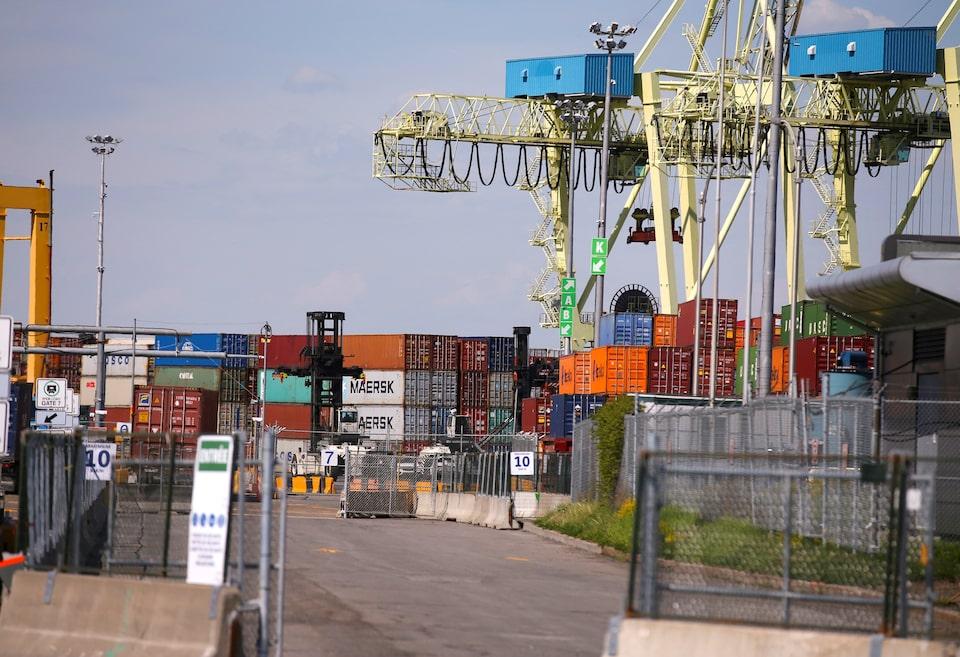
Trump says he ordered Pentagon to prepare for potential attack on Nigeria US president says Nigeria has not done enough to stop killings of Christians Nigerian President Tinubu rejects claims of religious intolerance Nigeria vows to keep fighting violent extremism WASHINGTON/ABUJA, Nov 1 (Reuters) - U.S. President Donald Trump on Saturday said he has asked the Defense Department to prepare for possible "fast" military action in Nigeria if the West African nation fails to crack down on the killing of Christians. The U.S. government will also immediately stop all aid and assistance to Nigeria, Africa's most populous nation and top oil producer, Trump said in a post on Truth Social. Sign up here. If the United States sends in military forces, it would go in "'guns-a-blazing,' to completely wipe out the Islamic Terrorists who are committing these horrible atrocities," Trump wrote, without providing any evidence of specifics about the treatment of Christians in Nigeria. Trump called Nigeria a "disgraced country" and warned its government must move quickly. "If we attack, it will be fast, vicious, and sweet, just like the terrorist thugs attack our CHERISHED Christians!" he wrote. Abuja had no immediate reaction to Trump's threat of military action. The White House also had no immediate comment on the potential timing of any U.S. military action. Although the U.S. Department of Defense referred Reuters to the White House for comment on Trump's threat, U.S. Defense Secretary Pete Hegseth released a social media post of his own. "The Department of War is preparing for action," Hegseth wrote on X. "Either the Nigerian Government protects Christians, or we will kill the Islamic Terrorists who are committing these horrible atrocities." Trump's post on Nigeria came a day after his administration added Nigeria back to a "Countries of Particular Concern" list of nations that the U.S. says have violated religious freedom. Other nations on the list include China, Myanmar, North Korea, Russia and Pakistan. Before Trump posted his attack threat, Nigerian President Bola Ahmed Tinubu earlier on Saturday pushed back against claims of religious intolerance and defended his country's efforts to protect religious freedom. "The characterization of Nigeria as religiously intolerant does not reflect our national reality, nor does it take into consideration the consistent and sincere efforts of the government to safeguard freedom of religion and beliefs for all Nigerians," Tinubu said in a statement, citing "constitutional guarantees to protect citizens of all faiths." Nigeria's Foreign Ministry, in a separate statement, vowed to keep fighting violent extremism and said it hoped Washington would remain a close ally, saying it "will continue to defend all citizens, irrespective of race, creed, or religion. Like America, Nigeria has no option but to celebrate the diversity that is our greatest strength." The U.S. military footprint in West Africa was significantly diminished when about 1,000 troops withdrew from Niger last year. While the U.S. sometimes has small groups of troops in the region to take part in drills, the largest U.S. military base on the continent is in East Africa in Djibouti, which hosts over 5,000 troops and is used for operations in the region. TRUMP PUT NIGERIA ON 'CONCERN LIST' DURING FIRST TERM Trump had designated Nigeria a country of concern during his first term in the White House. His Democratic successor Joe Biden removed it from the U.S. State Department list in 2021. On Friday, Trump said "thousands of Christians" were being killed in Nigeria by radical Islamists, but offered no details. Nigeria, which has 200 ethnic groups practicing Christianity, Islam and traditional religions, has a long history of peaceful coexistence, but it has also seen flare-ups of violence among groups, often exacerbated by ethnic divisions or conflict over scarce resources. The extremist Islamist armed group Boko Haram has also terrorized northeast Nigeria, an insurgency that has killed tens of thousands of people over the past 15 years. Human rights experts have said most Boko Haram victims have been Muslims. U.S. lawmakers such as Representative Tom Cole, a Republican who chairs the U.S. House of Representatives Appropriations Committee, hailed Trump's move on Friday, citing what they called "the alarming and ongoing persecution of Christians across the country." The committee's fiscal 2026 national security appropriations bill included increased funding for international religious freedom programs and support for programs supporting communities in Nigeria targeted by extremist violence. Trump's re-designation of Nigeria as a country of concern opens the door to a range of policy responses such as sanctions or waivers, but they are not automatic. Some religious groups pressed Trump for the re-designation in a letter last month, according to a copy on the Hudson Institute think tank's website. "Christianity is facing an existential threat in Nigeria. Thousands of Christians are being killed. Radical Islamists are responsible for this mass slaughter," Trump wrote without offering any specifics. He also called on the U.S. House of Representatives Appropriations Committee to investigate. https://www.reuters.com/world/china/trump-says-christians-face-existential-threat-nigeria-adds-country-watch-list-2025-10-31/
2025-10-31 16:57
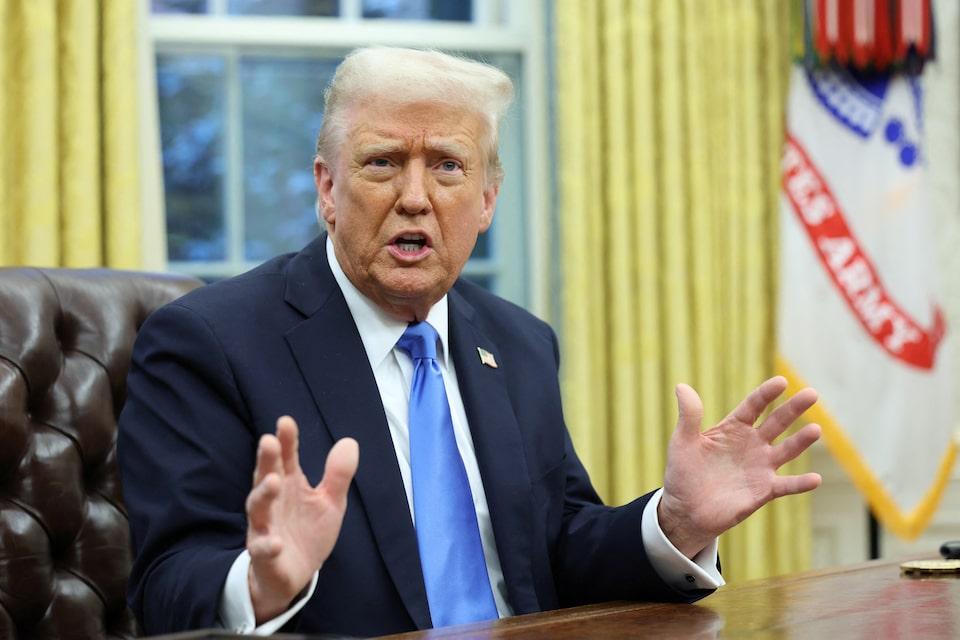
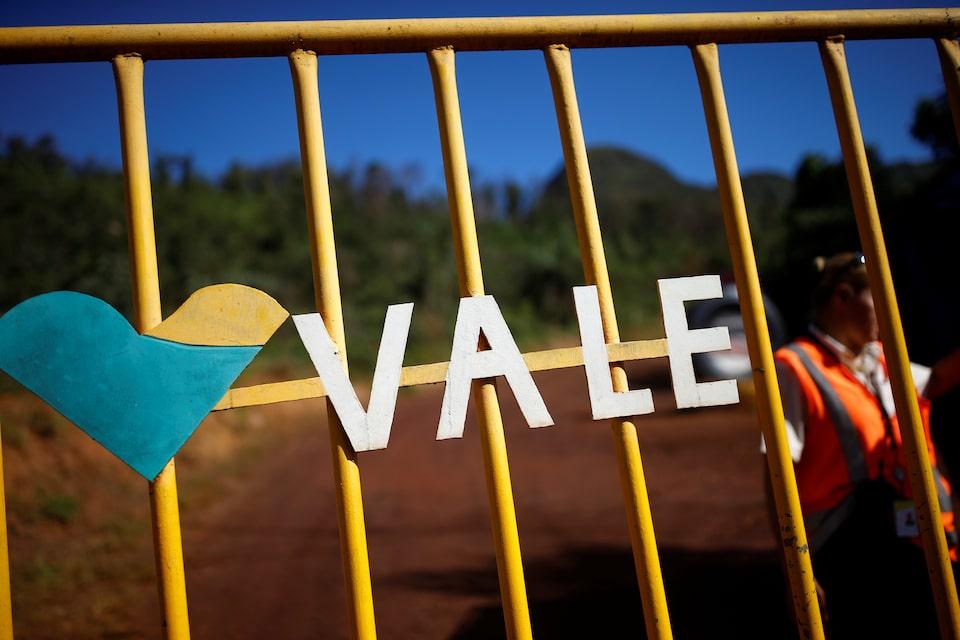
SAO PAULO/RIO DE JANEIRO, Oct 31 (Reuters) - Vale (VALE3.SA) , opens new tab is likely to announce extraordinary dividends in the coming months, Chief Financial Officer Marcelo Bacci said during a call with analysts on Friday, following the release of the Brazilian miner's third-quarter results. The prospect follows stronger-than-expected cash flow early in the year and comes as iron ore prices have consistently held up above $100 per metric ton, Bacci said. Sign up here. Vale, one of the world's largest iron ore miners, reported on Thursday an 11% year-over-year increase in net profit, beating market forecasts. Executives said the firm is on track to meet all its full-year outlooks. Asked whether potential extraordinary dividends could be affected by a Brazilian bill seeking to impose a 10% withholding tax on dividends sent abroad, executives said they were closely monitoring developments to minimize any impact on shareholders. They noted, however, that the overall effect would be limited. Bacci also said that Vale does not anticipate changes to its expanded net debt policy in the short term, as the current framework and range are considered appropriate for present conditions. The miner noted that its expanded net debt is currently trending towards the mid-range of its target of $10 billion to 20 billion. On the same call, CEO Gustavo Pimenta ruled out potential mergers and acquisitions. "We don't need to do that, we have the resources here," he said. Sao Paulo-traded shares of Vale rose about 2% on Friday. https://www.reuters.com/world/americas/brazils-vale-likely-announce-extraordinary-dividends-soon-cfo-says-2025-10-31/
2025-10-31 15:06
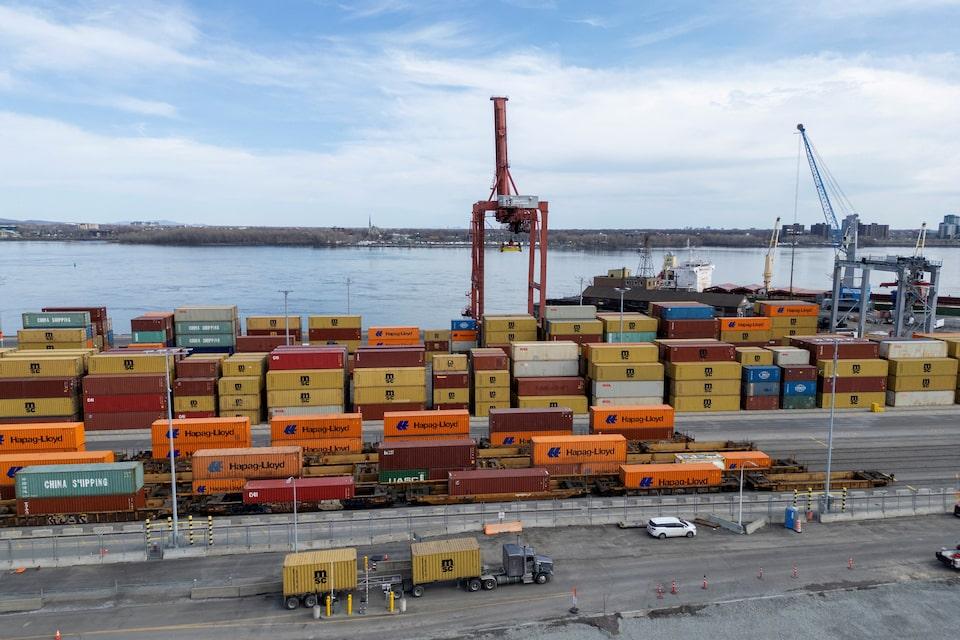
OTTAWA, Oct 31 (Reuters) - Canada recorded a higher C$11.07 billion ($7.89 billion) budget deficit for the first five months of the 2025/26 fiscal year as government expenditures grew faster than revenues, the finance ministry said on Friday. By comparison, the deficit in the same period a year earlier had been C$9.84 billion, it said in a statement. Sign up here. Program expenses rose 4.1% on increases across all major categories of spending. Public debt charges fell by 0.8% largely because of lower interest rates on treasury bills, the ministry said. Year-to-date revenues grew by 2.5%, largely reflecting higher custom import duties due to retaliatory tariffs on the U.S. and corporate and personal income tax revenue. Custom import duties increased by 156.9% in the April to August period to C$5.79 billion. On a monthly basis, Canada posted a deficit of C$3.28 billion in August, compared to a C$2.55 billion deficit in August 2024. ($1 = 1.4024 Canadian dollars) (([email protected] , opens new tab)) Keywords: CANADA BUDGET/ https://www.reuters.com/world/americas/canada-budget-deficit-over-first-five-months-202526-rises-c1107-bln-2025-10-31/
2025-10-31 13:46
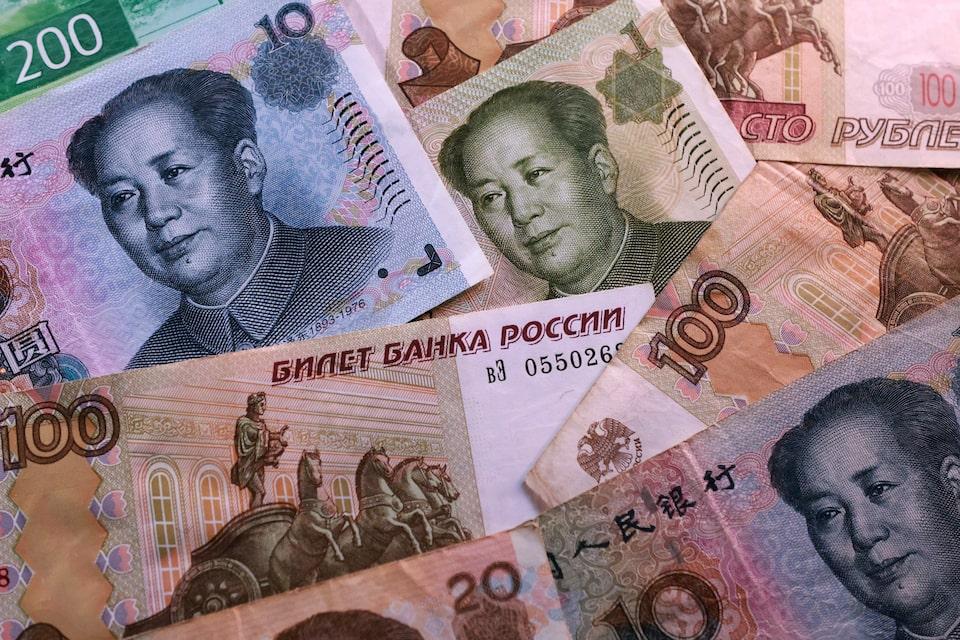
Issue offers investment option for vast amounts of yuan liquidity Finance Ministry plans up to four issues Issues to have combined amount of up to 400 billion roubles MOSCOW, Oct 31 (Reuters) - Russia is planning to issue its debut yuan-denominated bond on the local market this year, sources told Reuters, offering an investment option for the vast amounts of yuan liquidity accumulated by exporters and banks from Russian energy sales to China. Three financial market sources said the Finance Ministry plans up to four issues for a combined amount of up to 400 billion roubles ($5 billion) with maturities of between three and 10 years. Sign up here. "The deal is planned for early December. They are aiming for the widest range of investors, from banks and asset management companies to brokers operating in the retail client market," said one of the sources. Another source said that the Ministry of Finance has held meetings with potential buyers, including banks and other institutional investors, presenting them with the potential parameters of the yuan bonds. Transactions with the bonds could be also conducted in Russian roubles at the current exchange rate. The preparations are taking place at a time when two U.S.- sanctioned Russian oil firms, Rosneft, and Lukoil are repatriating their yuan earnings ahead of November 21, when sanctions take effect. Analysts from data agency Cbonds calculated that there were yuan-denominated corporate bonds worth 166 billion roubles currently in circulation in Russia. Finance Minister Anton Siluanov said last May that 90% of all trade between Russia and China is conducted in roubles and yuan, without specifying the yuan share. Trade between Russia and China reached a record $245 billion last year. The bonds will be issued on the Moscow Stock Exchange (MOEX), which is under Western sanctions, and will be off-limits for a majority of foreign investors, including those from China and other Asian countries. THE ISSUE IS IN THE WORKS Russia has been negotiating with China to create a "bridge" between the two countries' financial markets that would enable Chinese investors to access Russian assets without being monitored by Western regulators. Negotiations have so far yielded no results, despite strong political ties between Russia and China and the "no upper limits partnership policy" declared by President Vladimir Putin and China's President Xi Jinping. A source at the Finance Ministry, who declined to be identified due to the sensitivity of the matter, confirmed that the issue is in the works and will soon be announced. The Finance Ministry and MOEX did not respond to a request for comment. Analysts are expecting strong demand for the bonds from Russian exporters, including major energy firms, many of whom are currently holding their yuan earnings in bank deposits, pushing yuan interest rates inside Russia to a record low. The placement will also mitigate some foreign-currency risk for the banking system, which is swelling with yuan liquidity from Russian energy sales to China, and help banks meet regulatory requirements, Renaissance Capital analysts said. ($1 = 81.3000 roubles) https://www.reuters.com/markets/europe/russia-plans-issue-debut-sovereign-yuan-denominated-bonds-sources-say-2025-10-31/
2025-10-31 13:00
LONDON, Oct 31 (Reuters) - Everything Mike Dolan and the ROI team are excited to read, watch and listen to over the weekend. From the Editor Sign up here. Hello Morning Bid readers! Wall Street got spooked on Thursday, with Microsoft and Meta both seeing their share prices fall on concerns about the AI capex binge. However, the big news of the week was chip giant Nvidia becoming the first company to see its market cap eclipse $5 trillion, having hit $4 trillion only three months ago. With U.S. equity futures up before the bell on Friday, it looks like Halloween may be more “treat” than “trick." The week began with news that we would likely see an agreement between U.S. President Donald Trump and his Chinese counterpart Xi Jinping. And we saw just that on Thursday following a meeting described as a “12 out of 10” by the U.S. president. The two settled on a deal that would see reduced U.S. tariffs on Chinese goods and a delay of China’s rare earths curbs, among other promises. But don’t get too excited, warns ROI Markets Columnist Jamie McGeever, the U.S.-China story has been here before. Another big news item this week came courtesy of Federal Reserve Chair Jay Powell. While the Fed’s decision to cut interest rates by 25 basis points on Wednesday was widely expected, the Chair also signalled that a December cut was far from a slam dunk. This may be an acknowledgement that interest rate cuts will likely be a pretty lousy tool if the Fed’s goal is to support an economy suffering from labor supply issues. The Fed’s hawkish tone gave another boost to the U.S. dollar – which is on track for a roughly 2% gain this month – something that likely won’t go down well with the Trump administration, or so argues ROI editor-at-large Mike Dolan. In energy markets, OPEC will meet this Sunday and is expected to announce another output increase. Saudi Arabia, OPEC’s de facto leader, appears to be caught between Donald Trump and a hard place, argues ROI Energy Columnist Ron Bousso, as the U.S. president’s latest oil sanctions on Russia force Riyadh to weigh competing geopolitical and economic priorities. Staying on sanctions, how useful have those on Russia actually been? ROI Asia Commodities Columnist Clyde Russell considered this question earlier in the week, arguing that it all depends on how success is measured. On the renewables side, ROI Energy Transition Columnist Gavin Maguire this week discussed how China’s electric vehicle output and exports may now hit reverse following a significant policy pivot. Finally, in the metals markets, copper made headlines again as the London Metal Exchange price hit an all-time nominal high of $11,200 per metric ton on Wednesday. As we head into the weekend, check out the ROI team’s recommendations for what you should read, listen to, and watch to stay informed and ready for the week ahead. I’d love to hear from you, so please reach out to me at [email protected] , opens new tab . , opens new tab This weekend, we're reading... CLYDE RUSSELL, ROI Asia Commodities and Energy Columnist: This excellent Reuters special report shows how a small insurer in New Zealand is a key link in the dark fleet responsible for shipping Iranian and Russian oil. MIKE DOLAN, ROI Financial Markets Editor-at-Large: Former IMF and World Bank top official Anne Krueger's column for Project Syndicate this week makes a powerful case for an alternative global trading system without America - a "Global Trade Organisation" or GTO , opens new tab – to replace the hobbled WTO, supporting the push by Canadian Prime Minister Mark Carney. GAVIN MAGUIRE, ROI Global Energy Transition Columnist: This recent report from the Centre for Research on Energy and Clean Air (CREA) , opens new tab explains how China, India and Indonesia - three of the world's largest coal consumers - could all hit peak power sector emissions by 2030. ANDY HOME, ROI Metals Columnist: Copper prices hit a new all-time high in London this week, so here's a timely overview of the market from the International Copper Study Group , opens new tab. Everything you wanted to know about copper but were too afraid to ask. We're listening to... RON BOUSSO, ROI Energy Columnist: I highly recommend the Reuters Econ World podcast in general, but especially the latest instalment where the Reuters Russian bureau chief and commodities editor discuss the intensifying energy war that has developed between Russia and Ukraine. They discuss its impact on the Russian economy as well as the global energy market. And we're watching... JAMIE MCGEEVER, ROI Markets Columnist: In the latest episode of the ‘Monetary Matters’ podcast , opens new tab hosted by Jack Farley, former New York Fed desk trader Joseph Wangdissects the Fed’s latest decision, particularly the call to stop reducing its balance sheet on December 1. Wang explains the stress he sees in repo markets which, in his view, will soon prompt the Fed to start expanding its balance sheet again. Fair warning, this gets a bit wonky. Want to receive the Morning Bid in your inbox every weekday morning? Sign up for the newsletter here. You can find ROI on the Reuters website , opens new tab, and you can follow us on LinkedIn , opens new tab and X. , opens new tab Opinions expressed are those of the authors. They do not reflect the views of Reuters News, which, under the Trust Principles , opens new tab, is committed to integrity, independence, and freedom from bias. https://www.reuters.com/business/finance/global-markets-view-usa-corrected-2025-10-31/
2025-10-31 12:45
August GDP drops by 0.3%, September growth likely to be 0.1% Both services and goods sectors contracted, StatsCan said Annualized Q3 growth likely 0.4%, following 1.6% drop in Q2 OTTAWA, Oct 31 (Reuters) - Canada's GDP contracted in August against a consensus estimate of flat growth, data showed on Friday, and an advance estimate suggested the economy might escape a recession in the third quarter. The economy shrank by 0.3% in August following upwardly revised growth of 0.3% in the prior month, Statistics Canada said, effectively nullifying any growth so far in the current quarter. Sign up here. This was the fourth monthly contraction in five months and was led by a drop in growth in both the services and goods sectors. An advance indicator suggested that the monthly GDP would likely expand by 0.1% in September, taking the total annualized growth of the third quarter to 0.4%. The advance estimate is not always accurate and could change. The annualized quarterly estimate is based on industrial output data while StatsCan will publish the annualized quarterly GDP based on income and expenditure. A likely growth in GDP in the third quarter, which hinges on the economy boosting its output in September, means Canada could avoid slipping into recession. Two quarterly contractions in a row are considered to constitute a recession. Canada's GDP had shrunk in the second quarter by 1.6% as the impact of tariffs and general trade uncertainty reduced exports and hurt growth. "Canada's economy is on the precipice of a recession," said Michael Davenport, Senior Economist at Oxford Economics, adding he expected the economy to struggle in the near term. Some economists hope that next week's federal budget could help in boosting spending and demand and help to grow the economy. The Canadian dollar weakened further after the data and was trading down 0.27% at 1.4022 to the U.S. dollar, or 71.32 U.S. cents. Yields on two-year government bonds dropped by 1.5 basis points to 2.397%. The manufacturing sector, which is the hardest hit due to U.S. tariffs and accounts for almost a tenth of the GDP, contracted by 0.5% in August, data showed. The biggest drop, however, was seen in mining, quarrying and oil and gas extraction, which contracted by 0.7%, primarily due to a 1.2% drop in metal ore mining and a 5% drop in coal mining. Within the services sector, the main contractions were seen in transportation and warehousing, in part because of an airline strike, as well as wholesale trade. However, growth in retail trade and real estate and rental and leasing helped offset some of the drop in the sector. https://www.reuters.com/world/americas/canadas-gdp-contracts-august-might-avoid-recession-third-quarter-2025-10-31/