2025-10-30 23:08
BEIJING, Oct 31 (Reuters) - Tianyu Jiang took a 2,000-km (1,200-mile) road trip this month during China's national holiday week, driving in his electric vehicle from the southwestern Sichuan basin to Beijing for the first time. "I used to drive a petrol car and had never taken an EV for such a big trip, but long-distance driving for an EV doesn’t feel like a problem anymore," Jiang said. Sign up here. He is among tens of millions of Chinese increasingly taking to EV vehicles, who benefited from expanded charging infrastructure to reverse the usual boom in gasoline use during the October holiday known as "Golden Week". Far from a peak, China's gasoline demand is estimated to have fallen 9% in October on the year to 12.5 million tons, with average daily use roughly flat with September, according to Chinese consultancy Sublime China Information (SCI). The sagging holiday demand is symptomatic of the broader decline in Chinese fuel use stemming from wider EV adoption, heralding the approaching end of its decades-long role as the main driving force of new global oil demand. Gasoline consumption in the world's biggest importer of crude peaked in 2023 and the research unit of state oil company Sinopec expects demand to fall more than 4% this year from 2024. During the first nine months of the year, EVs and hybrids made up almost half of all new car sales. A fifth of the 63.5 million car trips during the eight-day holiday break were in electric or hybrid vehicles, the transport ministry says. Daily use of electricity by charging stations, a proxy for EV use, rose 45.73% during Golden Week this year, versus 2024. EV adoption has benefited from China's push to build charging infrastructure, with some 18 million charging ports by the end of September, up 54.5% on the year. "During travel peaks, both charging and refuelling mean waiting," said Jiang. "If you really need a charge, exit the highway and you will find charging stations within 10 km (6 miles), and it's cheap." https://www.reuters.com/business/energy/evs-put-an-end-chinas-usual-holiday-surge-gasoline-use-2025-10-30/

2025-10-30 22:03
Oct 30 (Reuters) - Weyerhaeuser (WY.N) , opens new tab reported an increase in third-quarter profit on Thursday, helped by higher sales and a recovery in its timberlands and real estate segments. Housing activity has been recovering amid hopes that easing mortgage rates would stimulate demand for new construction, boosting sales at companies such as Weyerhaeuser, which sells timber and other wood products. Sign up here. The company's net sales rose more than 2% to $1.72 billion during the third quarter. Adjusted core profit from its timberlands segment came in at $148 million, compared with $122 million a year earlier, while that of the real estate unit jumped more than 18% to $91 million. The results come after the Trump administration imposed tariffs of 10% on imported timber and lumber. Weyerhaeuser owns or controls about 10.5 million acres of timberlands in the U.S., primarily in the West, South and Northeast. The company said it completed two acquisitions totaling $459 million during the third quarter, while also advancing three divestiture packages of non-core timberlands worth $410 million. It posted a profit of $80 million, or 11 cents per share, for the quarter ended September 30, compared with $28 million, or 4 cents per share, a year earlier. https://www.reuters.com/business/timber-firm-weyerhaeusers-quarterly-profit-rises-higher-sales-2025-10-30/

2025-10-30 21:43
Oct 31 (Reuters) - Australia's Origin Energy (ORG.AX) , opens new tab on Friday posted a sequential first-quarter revenue drop from its LNG joint venture in Queensland, weighed down by lower volumes and prices, which sent shares lower. Shares of Sydney-based company fell as much as 6.3% to A$11.81, marking its weakest trading session since early April. The stock also fell to its lowest level in more than two months. Sign up here. The power producer reported revenue from the APLNG project — a joint venture with U.S. oil and gas major ConocoPhillips (COP.N) , opens new tab and China's state-owned Sinopec (600028.SS) , opens new tab — of A$482 million ($313.20 million) for the three months ended September 30, compared with A$547 million in the June quarter. Overall revenue of the joint venture has also dipped 5% sequentially in the September quarter, largely guided by lower sales volumes due to LNG inventory movements and timing of contracted cargoes, with lagging realised oil prices. Liquefied natural gas prices hit multi-week lows over the quarter as lackluster demand across Asia persisted, especially from major LNG consumer and Australia's largest trading partner, China, while production remained healthy alongside ample stockpiles. Origin realised $10.08 per metric million British thermal units (mmBtu) in the quarter for its LNG product from the APLNG project in Queensland, compared with $10.26 per mmBtu in the June quarter. The energy retailer's total production share from the project remained stable in the three months compared to the previous quarter, while total sales slipped 1% sequentially to 44.4 petajoules. ($1 = 1.5389 Australian dollars) https://www.reuters.com/business/energy/australias-origin-energy-logs-12-sequential-fall-first-quarter-aplng-revenue-2025-10-30/

2025-10-30 21:35
SAO PAULO, Oct 30 (Reuters) - Vale (VALE3.SA) , opens new tab, one of the world's largest iron ore miners, posted on Thursday a third-quarter net profit that landed above analysts' estimates, while also cutting its full-year cost projections for copper and nickel. Rio de Janeiro-headquartered Vale posted a $2.69 billion net profit for the July-September period, up 11% year-over-year and above the $2.10 billion expected by analysts polled by LSEG. Sign up here. Adjusted earnings before interest, taxes, depreciation and amortization (EBITDA) stood at $4.4 billion in the period, a 21% increase, also beating estimates of $4.1 billion. Vale released its sales and output data last week, with iron ore production reaching the highest since the fourth quarter of 2018 at 94.4 million metric tons. "Overall, Vale posted strong results, driven by better realized prices in iron ore and byproducts, robust iron ore and copper sales volumes, and lower cost and expense," Santander analysts led by Yuri Pereira wrote in a note to clients. The analysts said they expected a positive share reaction on Friday. The results were released after the market closed on Thursday. Third-quarter net revenue rose 9% to $10.4 billion, with Vale's main iron ore business rising 6%, while its base metals unit - mostly copper and nickel - jumped 26%. Analysts had projected $10.3 billion of revenue for the miner. Vale also cut its estimate for all-in copper costs this year to between $1,000 and $1,500 per ton, attributing the move to higher gold prices, as gold is a byproduct of Vale's copper production. The previous projection was between $1,500 and $2,000 per ton. The company also projected its all-in nickel costs between $13,000 and $14,000 per ton, down from a previous range of $14,000-$15,500 per ton, citing solid operational performance and strong metals prices. https://www.reuters.com/business/brazilian-miner-vale-posts-11-rise-q3-net-profit-2025-10-30/

2025-10-30 21:32
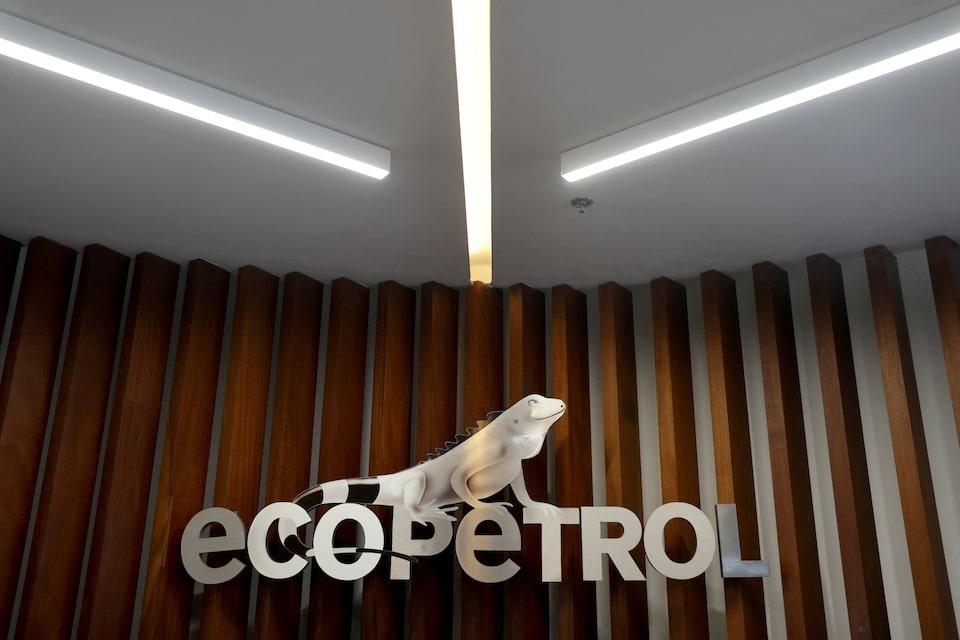
BOGOTA, Oct 30 (Reuters) - Colombia's state-run energy company Ecopetrol and Brazil's state-run oil firm Petrobras announced on Thursday a partnership for the joint marketing of natural gas from Colombia's Sirius project. The Sirius block is owned by Ecopetrol, which holds a 55.6% stake, while Petrobras owns the remaining 44.4% and acts as the project's operator. The project, which has an estimated 6 billion cubic feet of gas and a projected investment of $5 billion, is expected to begin operation between 2029 and 2030. Sign up here. Ecopetrol President Ricardo Roa said the two companies have agreed to market up to 249 million cubic feet per day for a period of up to six years. "This mechanism seeks to guarantee the efficient, public, and objective allocation of natural gas from the Sirius field," he added. The project is key to increasing Colombia's limited gas reserves, as the country has been forced to increase fuel imports to meet domestic demand. Development of the project is ongoing. In mid-October, Petrobras Colombia's president, Alcindo Moritz, stated that about 50% of the required "prior consultations" had been completed. The number of these consultations increased from an initial 116 to 120 in September. In Colombia, a prior consultation is a fundamental right that allows ethnic communities to participate in decision-making on projects that may directly affect their territories, culture and rights. https://www.reuters.com/business/energy/ecopetrol-petrobras-announce-joint-venture-market-natural-gas-colombias-sirius-2025-10-30/
2025-10-30 21:05
ORLANDO, Florida, Oct 30 (Reuters) - Tech shares on Wall Street took a beating on Thursday after some megacap earnings reports, while the dollar and U.S. bond yields rose further following the Fed's "hawkish" rate cut as investors also digested the outcome of the U.S.-China leaders' summit. In my column today, I consider one overlooked reason why the Fed may not cut rates again in December. If cheaper credit is aimed at supporting the labor market, and the labor market is softening due to supply rather than demand issues, then rate cuts won't work. Sign up here. If you have more time to read, here are a few articles I recommend to help you make sense of what happened in markets today. Today's Key Market Moves Today's Talking Points * Trump-Xi meeting reality U.S. President Donald Trump said his 100-minute meeting with Chinese counterpart Xi Jinping was a "12" out of 10 score. But with little being announced that wasn't flagged in advance or generally expected, the reality may be rather less rosy. Underwhelming, even. The "truce" does de-escalate tensions for now and buys time for further talks on a more lasting deal. But Eurizon's Stephen Jen sums up the bigger picture well: "Make no mistake, the two countries are drifting apart and are frantically building their own autonomous economic ecosystems." * Monitoring U.S. money markets The Fed has said its QT program will end on December 1, as scrutiny intensifies on money market liquidity, the plumbing of the financial system - interbank rates, repo, bank reserves - and the Fed's ability to keep the policy rate within its target range. Bank reserves are declining and the "SOFR" overnight rate has spiked above the upper limit of the Fed's target range, indicating that money market liquidity is tightening. Keen to avoid a repeat of the late 2019 liquidity crunch, the Fed could be ready to provide liquidity as and when and how it sees fit. * Big Tech and the pAIn trade With Apple and Amazon releasing earnings after the bell on Thursday, six of the "Magnificent Seven" U.S. tech megacaps have now reported. Nvidia, which this week became the world's first $5 trillion company, will report in three weeks. It's a mixed picture so far, with investors desperately seeking a clearer sense of how the massive - and still growing - capex binge around artificial intelligence will boost future earnings. Is Meta's 11% slump on Thursday a warning that the extraordinary AI-led boom may be about to lose steam? The cuts don't work - why the Fed may pause in December Federal Reserve Chair Jerome Powell surprised many market-watchers on Wednesday when he declared that another interest rate cut in December was not a slam dunk. Perhaps even more surprising was his apparent suggestion that if boosting the labor market is the goal, rate cuts might not be that useful. In the press conference after the central bank lowered its fed funds policy target range by 25 basis points, Powell cited several reasons why a similar move in December is "far from" a done deal. These included "strongly different" views among rate-setters, limited data visibility due to the government shutdown, above-target inflation, and doubts about how quickly the labor market is slowing. He also noted that policy may be close to neutral after 150 basis points of easing. But perhaps the most telling reason was the most simple: cutting rates won't work. At least, doing so won't address the current problem, which is supporting the softening labor market. Alluding to this, Powell admitted that the job market is weakening primarily because of shrinking labor supply rather than cooling demand for workers. But lower borrowing costs are designed to boost demand for workers. If the job market's problems are "mostly" a function of labor supply, as Powell said, then cutting interest rates is akin to pushing on a string. "So the question then is what does our tool do, which supports demand? Some people argue that this is supply, and we really can't affect it much with our tools. But others argue, as I do, that ... we should use our tools to support the labor market when we see this happening," Powell told reporters. "It's a complicated situation." 'K-SHAPED' ECONOMY The current U.S. economic picture is indeed complicated. Job growth has slowed in the U.S. over the past year, but this has been offset by a steep decline in the number of people looking for work. That's a result of the tighter immigration controls, increased deportations, and both young people and retirees leaving the labor force. In the last official monthly jobs report, which was for August, the unemployment rate climbed to a four-year high of 4.3%. But that's only one tenth of a percentage point up on the previous year, and is still ultra-low by historical standards. Powell also said there's no evidence of a worrisome deterioration in the broader labor market, though the recent announcement of some high-profile corporate layoffs may suggest otherwise. At the same time, economic indicators such as business investment and retail sales still appear fairly healthy. Both are strongly linked to the booming stock market - big companies' rising share price and profits fund their capex, and the asset-owning top 10% continue to drive around half of all U.S. consumer spending. What we appear to see taking shape is a so-called 'K-shaped' economy: the rich are getting richer from the asset price boom, while the rest are struggling. This curious balance is new for the Fed and a tricky one to navigate, especially with the government shutdown reducing visibility even further. Just as the Fed's blunt interest rate tool doesn't fix supply-side issues in the jobs market, it may not do much to support lower-income households and individuals either, even though ensuring a stronger labor market is the "best thing" the Fed can do for the American people. Cheaper money is also likely to benefit the richest cohorts by inflating asset prices even more, which may also push already lofty valuations to unsustainable levels. Six weeks is a long way off, but a third successive rate cut in December is suddenly in the balance. If the subtext of Powell's press conference is anything to go by, that may be for the best. What could move markets tomorrow? Want to receive Trading Day in your inbox every weekday morning? Sign up for my newsletter here. Opinions expressed are those of the author. They do not reflect the views of Reuters News, which, under the Trust Principles , opens new tab, is committed to integrity, independence, and freedom from bias. https://www.reuters.com/world/china/global-markets-trading-day-graphic-2025-10-30/