2025-12-12 12:37
PARIS, Dec 12 (Reuters) - France imposed stricter controls and expanded vaccination zones to contain the spread of contagious lumpy skin disease in cattle amid mounting farmer protests in the southwest against the policy of culling entire herds when outbreaks are detected. Lumpy skin disease is a virus spread by insects that affects cattle and buffalo, causing blisters and reducing milk production. While not harmful to humans, it often results in trade restrictions and severe economic losses. Sign up here. By December 9, France had detected 109 outbreaks of the disease, according to the ministry's website. Several outbreaks were confirmed this week in southwestern France, including at a farm with over 200 cows in the Ariege region. Authorities ordered all cows culled, sparking protests from farm unions who called the policy exaggerated and cruel. "It is clear that the State's strategy is not effective, despite the systematic culling carried out as a precaution as soon as an infected bovine is detected in a herd," Coordination Rurale union said in a statement, calling for nationwide protests. France says that total culling of infected herds, alongside vaccination and movement restrictions, is necessary to contain the disease and allow cattle exports. "The depopulation of their herd is a dramatic event, of which the public authorities are fully aware: psychological support is therefore offered to the farmers," the ministry said in a statement on Friday. The head of farm union FNSEA, Arnaud Rousseau, called for calm. In a video on X, he backed government policy, stressing the need to prevent restrictions that could lower meat and dairy prices. The ministry said on Friday it had created a new regulated area covering six departments in southwestern France where movements would be restricted and surveillance enhanced. It has regularly pointed to illegal movement of animals as a likely cause for the disease's spread in France. https://www.reuters.com/business/healthcare-pharmaceuticals/france-toughens-cattle-lumpy-skin-disease-rules-amid-farm-protests-2025-12-12/

2025-12-12 12:22
NEW DELHI, Dec 12 (Reuters) - India's cabinet on Friday permitted the export of coal as the country's power plants have a surplus, information minister Ashwini Vaishnaw said. Power plants that have access to coal supply will be permitted to export up to 50% of their allocation and use coal flexibly across group companies. Sign up here. India, the world’s second-largest coal producer, has been opening its coal sector to private players and commercial mining to meet rising energy demand and reduce import dependence. The move to allow export of domestic coal comes as the country's coal-fired power generation, which typically accounts for about 75% of India's electricity output, has fallen on an annual basis in seven out of 11 months this year, the most since 2020. The move will also benefit the country's top coal miner, Coal India (COAL.NS) , opens new tab, which accounts for about three quarters of the country's production. India is the world's No.2 coal producer and consumer after China. Indian power plants have comfortable stock levels because domestic coal production is strong and electricity demand growth has slowed, iEnergy Natural Resources said this week in a report. The cabinet on Friday also approved the auction of coal for any industrial use. The policy will allow domestic buyers to secure long-term coal supplies through auctions without end-use restrictions, except for coking coal, which will not be offered under the scheme. Traders will be barred from participating, the government said. The move aims to accelerate coal reserve utilisation, ease business processes and cut reliance on imports, the government said in a statement. https://www.reuters.com/business/energy/india-start-coal-exports-first-time-2025-12-12/

2025-12-12 11:59
Inflation below RBI's target band for third straight month Food prices fall 3.91% Core inflation at 4.2% to 4.3% Economists expect another rate cut by RBI in Feb NEW DELHI, Dec 12 (Reuters) - India's retail inflation rose in November from a record low in the prior month but stayed below the central bank's target range for the third straight month, data showed on Friday, leaving scope for another interest rate cut. The print suggests that retail price rise may undershoot the Reserve Bank of India's 2% inflation forecast for this fiscal year by about 15 to 20 basis points, opening space for another 25 basis point rate cut, economists said. Sign up here. Annual inflation (INCPIY=ECI) , opens new tab quickened to 0.71% in November from 0.25% a month ago as the pace of decline in food prices slowed. The print was in line with a Reuters poll of economists. The Reserve Bank of India cut interest rates by 25 basis points earlier this month, saying the Indian economy is in a "rare goldilocks" phase of strong economic growth and moderate inflation. In 2025, the RBI's rate-setting panel has lowered rates by 125 bps. Whether growth slows in the second half of the fiscal year due to steep U.S. tariffs will be the focus for the central bank going forward, Paras Jasrai, an economist at India Ratings and Research, said. Indian Prime Minister Narendra Modi's policies, including consumer tax cuts and labour reforms, are expected to limit the impact of U.S. tariffs on the South Asian economy. Earlier this month, the RBI lowered its inflation projection for the fiscal year ending March 31 to 2% from 2.6% earlier and raised the growth forecast to 7.3% from 6.8%. In November, food prices fell 3.91% year-on-year after a decline of 5.02% a month ago. Vegetable prices fell 22.20% after a 27.57% decline in the previous month. Core inflation, which excludes volatile items such as food and energy and is an indicator of demand in the economy, was at 4.2%-4.3% in November compared with 4.4% in October, according to two economists. Core inflation stayed elevated partly because of firm gold prices, they said. Cereal prices increased 0.1% in November against a 0.92% rise in October, while prices of pulses dropped 15.86% after a decline of 16.2% in the previous month. The impact of consumer tax cuts and ample food supply could lead to inflation averaging below 3% in the remaining part of the fiscal, said Sakshi Gupta, principal economist at HDFC Bank. "This should provide room for the RBI to deliver another rate cut in the February policy if growth shows signs of losing momentum post the festive season," Gupta said. The RBI's next policy meeting is on February 4-6. India will start publishing retail inflation data based on new base year, with updated data sources, from February 2026, which is expected to lower the weight of food, and raise it for non-food components. Currently, food and beverages have a weight of 46% on the index. https://www.reuters.com/world/india/indias-november-retail-inflation-rises-071-stays-below-central-bank-target-range-2025-12-12/

2025-12-12 11:41
MUMBAI, Dec 12 (Reuters) - India needs to be cautious towards stablecoins, as they pose significant macroeconomic risk while serving no purpose that fiat money cannot, the Reserve Bank of India Deputy Governor, T. Rabi Sankar, said on Friday. Stablecoins gained global prominence after the U.S. passed a law to create a regulatory framework for dollar-pegged cryptocurrency tokens, boosting their popularity and pushing the global market cap of such tokens above $300 billion. Sign up here. India has diverged from large global and regional economies, including Japan and the European Union, in framing laws around cryptocurrencies, fearing that bringing the digital assets into its mainstream financial system could raise systemic risks. "Beyond the facilitation of illicit payments and circumvention of capital measures, stablecoins raise significant concerns for monetary stability, fiscal policy, banking intermediation, and systemic resilience," Sankar said in a speech in Mumbai. "Stablecoins do not serve any purpose fiat money cannot," he said. Such tokens are yet to establish the benefits their proponents claim and remain inferior to fiat money, he said, adding India will continue to approach these innovations with caution. REGULATING CRYPTO At present, crypto exchanges can operate in India after registering locally with a government agency tasked with due diligence to check money laundering risks. Taxes are imposed on gains from cryptocurrencies. Despite the regulatory caution, crypto trading has gained popularity in India, with crypto exchanges pointing to increased participation from users outside major urban centres. "Cryptocurrencies have no intrinsic value. Since they do not have any underlying cash flows, they are not financial assets as well," Sankar said in his speech, in which he argued in favour of central bank digital currencies. "CBDCs are inherently superior to stablecoins," Sankar said. India is currently running a retail and wholsesale pilot for its central bank digital currency, which has about 7 million users. When asked why the central bank and the government do not bar trading in cryptocurrencies altogether, Sankar said that the views of different stakeholders need to be taken into account. "It is under consideration and (a decision) will be taken. We have to all finalise our approaches and actions based on what that decision is," he said. https://www.reuters.com/world/india/india-central-bank-deputy-warns-stablecoin-risks-dismisses-claims-utility-2025-12-12/
2025-12-12 11:38
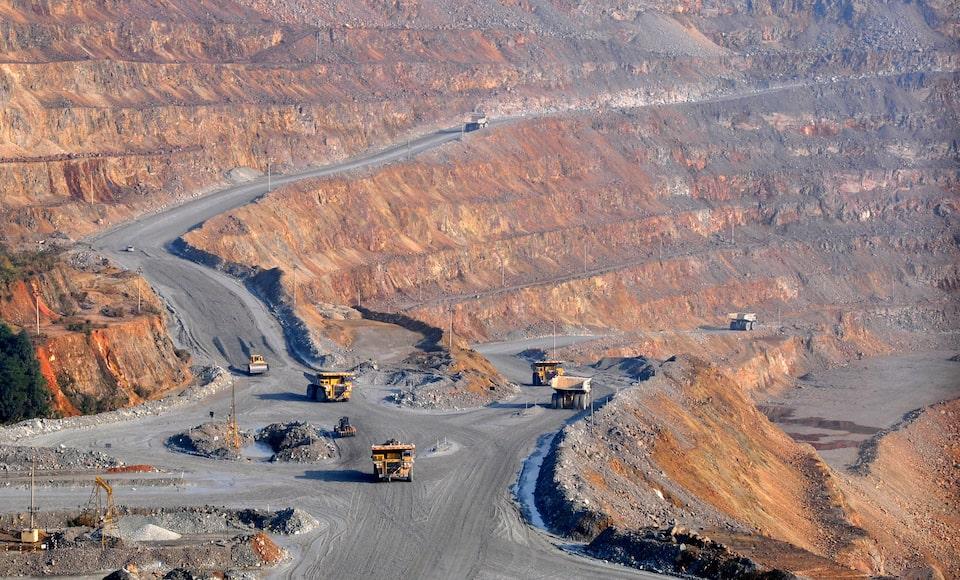
Dec 12 (Reuters) - SolGold (SOLG.L) , opens new tab said on Friday it was "minded to recommend" an improved offer from its top shareholder, Jiangxi Copper (600362.SS) , opens new tab that values the gold and copper miner at about 842 million pounds ($1.13 billion), amid a global race for copper assets. Jiangxi Copper's increased offer of 28 pence per share marks the Chinese company's third proposal to acquire SolGold and a 7.7% increase from its previous 26-pence-per-share bid that was rejected last month. Sign up here. Ecuador-focused SolGold said its board would tell shareholders to accept if Jiangxi Copper (JCC) makes a firm offer on those terms. JCC's pursuit of SolGold is part of a global scramble for copper assets, with miners investing billions into acquisitions as copper demand is expected to rise on the back of investments in artificial intelligence and electric vehicles. Miners are racing to secure copper supplies, with Anglo American (AAL.L) , opens new tab and Canada's Teck Resources (TECKb.TO) , opens new tab still awaiting regulatory approval for their proposed $53 billion merger to create the world's fifth-largest copper company. SHARES FALL AS INVESTORS WEIGH DEAL Despite the sweetened proposal, SolGold's shares fell more than 10% to 25.1 pence on Friday, trading below the bid price amid broader investor scepticism over big-ticket mining takeovers. JCC's bid requires Chinese regulatory approval for outbound investment, a process the state-backed miner has already begun, though such approvals have become more complex as Beijing scrutinises overseas acquisitions. The acquisition would give JCC control of SolGold's flagship Cascabel project in Imbabura Province, home to one of the world's largest undeveloped copper-gold deposits in South America. JCC, whose footprint extends beyond China and Hong Kong to regions such as Peru, Kazakhstan and Zambia, holds a 12.2% stake in SolGold. It has won support from other top shareholders BHP (BHP.AX) , opens new tab, Newmont (NEM.N) , opens new tab, and Maxit Capital, collectively representing 40.7% of shares. https://www.reuters.com/world/china/jiangxi-copper-raises-takeover-bid-solgold-113-billion-2025-12-12/
2025-12-12 11:36
NEW DELHI, Dec 12 (Reuters) - India's federal cabinet approved sweeping changes to its atomic energy laws and fully opened the insurance sector to foreign investors, two government sources said on Friday, key policy moves aimed at attracting billions of dollars in two critical sectors. India, which plans to expand nuclear power capacity 12-fold by 2047, is relaxing rules to end a decades-old state monopoly and overcome a stringent liability provision to allow private participation and attract foreign technology suppliers. The changes in the nuclear sector are a part of a larger push to boost nuclear capacity to 100 gigawatts by 2047, as the country looks to cut coal dependence and meet its climate commitments. In the insurance sector, the government has proposed increasing foreign direct investment to 100% from the existing 74%. Both changes to laws are listed for approval in the ongoing winter session of parliament. Sign up here. https://www.reuters.com/sustainability/boards-policy-regulation/india-cabinet-approves-opening-nuclear-insurance-sectors-private-investment-2025-12-12/