2025-10-30 16:20
ECB holds deposit rate at 2%, markets shrug Traders expect ECB to keep rates on hold through 2026 Euro zone growth outlook stable, risks to growth abating, says ECB LONDON, Oct 30 (Reuters) - Traders were confident in their view that the European Central Bank would keep rates on hold for now after it left policy unchanged, flagging a more resilient economy and appearing more relaxed about the growth outlook. The ECB held the deposit rate at 2% for a third straight meeting on Thursday, having cut by 200 basis points since it began easing in June 2024, with President Christine Lagarde repeating it is in a "good place". Sign up here. All this left traders betting that the ECB will more likely hold interest rates, than cut again in this cycle. Traders now price in about 10 basis points of rate cuts by mid-2026, implying about a 40% chance of another quarter-point rate cut, down from about 50% on Monday. Economic activity remains resilient despite risks from trade and geopolitical tensions. Inflation is also back under control after the post-COVID spike and is close to the ECB's 2% target. "They're in a sweet spot, this Goldilocks scenario, from a monetary policy perspective," said Brown Brothers Harriman senior markets strategist Elias Haddad. "The inflation and economic backdrop in the euro zone argues for the ECB to continue standing pat here." NO MORE CUTS? "The market is right, if there is a move in the next six months it's likely to be a cut," said Frederik Ducrozet, head of macroeconomic research at Pictet Wealth Management, adding that another cut was not his baseline forecast but a risk. The euro rose slightly as traders trimmed their bets, but remained down 0.3% against the dollar at $1.1572. The dollar was broadly higher a day after Federal Reserve Chair Jerome Powell introduced some uncertainty over a December rate cut. Germany's rate-sensitive two-year yield was up 2 basis points at around 2%, benchmark 10-year Bund yields were also up 2 bps at 2.64%, while European stock markets (.STOXX) , opens new tab were a touch lower on the day. Those moves have been helped by expectations for more hawkish Fed policy, given U.S. influence on the global economy. This week's thawing in U.S.-China trade tensions and more robust euro zone growth data have also tempered rate cut bets. DOWNSIDE RISKS TO GROWTH ABATE The euro zone economy grew quicker than expected in the third quarter, official data showed, as buoyant consumption offset faltering exports and persistent struggles in Germany. The growth outlook has remained stable and many economists expect it to improve next year due to Germany's fiscal boost, as well as a lessening of trade tensions between the U.S. and major trading partners. Lagarde told the press conference that recent trade deals meant downside risks to growth were abating, although acknowledged that major areas of uncertainty persisted. Schroders Eurozone economist Irene Lauro said the improving growth outlook will keep the ECB on hold next year. "Uncertainty on the external outlook is diminishing, so the risks to growth are probably more skewed to the upside," Lauro said, adding: "We might start to think about the ECB hiking rates in 2027 with downside risks to growth dissipating". Germany's spending boost was also expected to give a lift to inflation next year, meaning the window for the ECB to lower borrowing costs could be closing. Euro zone inflation rose to 2.2% in September, above its target for the first time since April, as services prices rose and energy cost declines slowed. ECB staff see inflation averaging 1.7% next year and staying below the target through mid-2027. A flash estimate of October inflation for the bloc is due on Friday. https://www.reuters.com/world/euro-zone-markets-steady-ecb-offers-no-clues-outlook-2025-10-30/

2025-10-30 15:34
Most non-US cbanks hold rates on inflation, trade challenges SNB maintains 0% rate, inflation exceeds forecast Bank of Canada cuts rates, signals end to easing LONDON, Oct 31 (Reuters) - The U.S. Federal Reserve has moved back into line with other major rate setters after it cut rates by a quarter point on Wednesday but pushed back against market bets that it would keep going as the Washington shutdown fogs up its forecasting lens. The Bank of Japan and European Central Bank left rates unchanged on Thursday. Sign up here. Here's where 10 major central banks stand after the latest round of meetings: 1/ SWITZERLAND The Swiss National Bank cut its key rate to 0% in June and is widely expected to hold steady with markets pricing a long pause. In its first set of minutes detailing its rate setting discussions, published last week, the SNB quashed market speculation that it would return to negative rates to stop the strong franc pushing the sluggish economy into deflation. 2/ CANADA The Bank of Canada, battling an economic slowdown exacerbated by U.S. tariffs and the inflationary impact of the trade war, cut rates to a more than three-year low of 2.25% on Wednesday. It also sent strong signals that easing ends here and traders see more than 60% odds on the BoC standing pat until December 2026. 3/ SWEDEN Sweden's Riksbank meets next week after to 1.75% in September and saying it expects that elevated inflation will prove transitory. Money markets price in less than a one in five chance of further easing before 2026 as domestic inflation stays sticky, which has sent traders piling in to Sweden's crown . The currency has risen 15% against the dollar year-to-date. 4/ NEW ZEALAND The Reserve Bank of New Zealand cut rates by a punchy 50 basis points (bps) to 2.5% this month in an attempt to prop up a frail economy. Markets see a good chance of a further cut in late November, though inflation sitting at the top of the RBNZ's 1-3% target band could be a complication. 5/ EURO ZONE The ECB on Thursday matched traders' expectations and held the bloc's main deposit rate at 2% for a third straight meeting. Traders viewed this ECB easing cycle as almost over, pricing in less than a 50% chance of further easing by July 2026. 6/ UNITED STATES The Fed on Wednesday executed a widely flagged 25 bps cut but pushed back against market bets for more by warning that data gaps caused by the U.S. government shutdown were clouding its forecasting lens. "If you're driving in the fog you slow down," Chair Jerome Powell said in his post-announcement press conference. The rate cut drew dissent from two policymakers, with Stephen Miran again calling for a deeper reduction and Kansas City Fed President Jeffrey Schmid favoring no cut given above-target inflation. Traders price a 70% probability of a 25 bps December cut, down from 84% ahead of Wednesday's decision. 7/ BRITAIN The Bank of England is another major rate setter that is signalling cautious moves from here as it kept rates unchanged at its last meeting and said inflation risks remained high. Traders expect another hold on November 6 but markets price a 60% chance of a December cut after above-target UK inflation at least held steady in September. 8/ AUSTRALIA The Reserve Bank of Australia has cut rates by 75 bps since February but hotter-than-expected inflation encouraged it to hold rates steady and turn more hawkish in September. That trend has continued, pushing expectations for the next cut forward to at least February 2026. . 9/ NORWAY Norway's central bank eased borrowing costs by 25 bps to 4.0% in September but signalled further cuts were less likely because underlying inflation was rising. That has helped the crown keep powering higher against the dollar, with a 12% gain for the year so far . 10/ JAPAN The Bank of Japan, the sole central bank in hiking mode, kept rates steady on Thursday but repeated its pledge to keep increasing borrowing costs if the economy moves as it projects, shifting investor focus to December's meeting. The yen weakened after the announcement. U.S. Treasury Secretary Scott Bessent this week called for speedier BOJ rate hikes to avoid weakening the currency too much. https://www.reuters.com/business/finance/global-markets-cenbank-graphic-2025-10-30/

2025-10-30 14:49
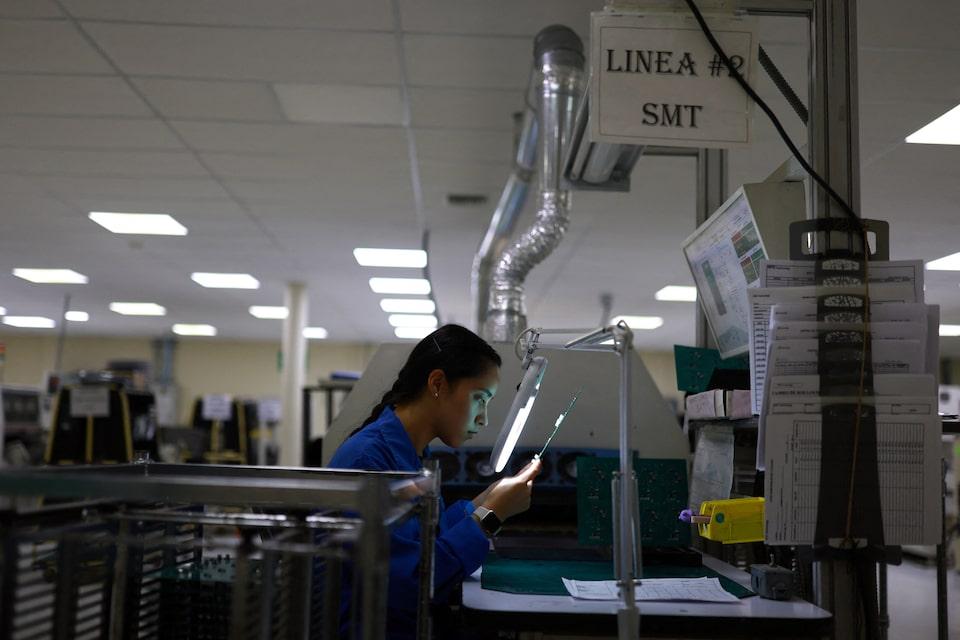
MEXICO CITY, Oct 30 (Reuters) - Mexico's economy contracted 0.3% in the third quarter from the previous three-month period, preliminary data showed on Thursday, marking its first year-on-year quarterly decline since 2021 and raising prospects its central bank will press ahead with a fresh interest rate cut next week. Mainly impacted by a slowdown in industrial activity, Latin America's second-largest economy broke two consecutive quarters of gross domestic product growth, though data from the national statistics agency INEGI was in line with forecasts from economists polled by Reuters. Sign up here. Secondary or manufacturing activities were down 1.5% on a sequential basis, the data showed, offsetting growth of 3.2% in the economy's primary sector, which includes farming, fishing and mining. Services, meanwhile, expanded 0.1%. The data was released ahead of the Bank of Mexico's November 6 monetary policy decision. Policymakers last month cut borrowing costs to their lowest level since May 2022 and indicated they would consider further easing. Concerns over global trade tensions and sluggish economic growth have weighed on recent decisions by the central bank, also known as Banxico. Kimberley Sperrfechter, an emerging markets economist at Capital Economics, said the GDP contraction and a dip in inflation in early October make it likely the central bank will cut its key interest rate by 25 basis points to 7.25% next week. "With the economy likely to remain relatively weak and inflation set to remain within the target range, we think that Banxico will cut its policy rate to a below-consensus 6.25% by the end of next year," she added. Compared with the same period a year earlier, the Mexican economy shrank 0.2% in the third quarter - the first year-on-year contraction since early 2021, when global economic activity was still reeling from the pandemic. Economists at Banamex said they expect a moderate economic recovery in coming quarters, but warned about "high uncertainty due to both external and internal factors." They forecast GDP to grow 0.4% this year and 1.5% in 2026. https://www.reuters.com/world/americas/mexican-economy-contracts-third-quarter-industrial-activity-slows-2025-10-30/
2025-10-30 12:51
WASHINGTON, Oct 30 (Reuters) - U.S. Treasury Secretary Scott Bessent on Thursday applauded the Federal Reserve's decision to cut interest rates by a quarter percentage point, but said comments casting doubt on another rate cut this year showed the institution needed a major revamp. Bessent told Fox Business Channel's "Mornings with Maria" that he would carry out a second round of interviews of candidates to replace Fed Chair Jerome Powell in early December, allowing President Donald Trump to choose a replacement by Christmas. Sign up here. The goal, he said, was to find a new leader for the U.S. central bank who would overhaul the entire institution. "The decision by the Federal Reserve yesterday - the decision to cut rates by 25 basis points, I applaud, but the language that went with it, tells me that this Fed is stuck in the past. Their inflation estimates have been terrible so far this year," he said. "Their models are broken." Bessent said he could not understand why the Fed was signaling that it didn't want to cut rates at its December meeting, saying their estimates of gross domestic product and inflation had been "consistently wrong." "We're going to find a leader who is going to revamp the entire institution in terms of process and inner workings," he said. Powell told reporters on Wednesday that a policy divide within the U.S. central bank and a lack of federal government data may put another interest rate cut out of reach this year. The Fed on Wednesday cut interest rates by a quarter of a percentage point, as expected, as a way to temper any further weakening of the job market. But the central bank's new policy statement included several references to the lack of official data during a federal government shutdown. Powell said policymakers are likely to become more cautious if it deprives them of further job and inflation reports. Trump, who has been critical of Powell's leadership of the Fed since before starting his second term, on Tuesday blasted the central banker as "incompetent" during a meeting with business leaders in Tokyo. On Monday, Bessent told reporters there were five finalists to replace Powell when his term as Fed chair ends in May: White House economic adviser Kevin Hassett, former Fed Governor Kevin Warsh, current Fed Governor Christopher Waller, Fed Vice Chair for Supervision Michelle Bowman and BlackRock executive Rick Rieder. https://www.reuters.com/business/us-treasurys-bessent-says-feds-language-shows-they-are-stuck-past-2025-10-30/

2025-10-30 12:47
LONDON, Oct 30 (Reuters) - Sterling steadied on Thursday against both the dollar and euro after two days of sharp depreciation, but looks set for further choppiness ahead of next week's Bank of England meeting. The pound was last at $1.3182, a touch above Wednesday's intraday over-five-month low of $1.3142. Sign up here. It was at 88.1 pence per euro, again just shy of Wednesday's 88.16 pence per euro, its softest since May 2023. The British currency this week has been shaped by traders and analysts' efforts to digest last week's raft of economic data - most notably softer than expected inflation figures - ahead of next week's BoE session. Goldman Sachs, for example, on Wednesday changed its BoE call and now expects a rate cut. Markets currently see around a one in three chance of a 25 basis point BoE rate cut next week, leaving the pound vulnerable to moves in either direction on the BoE's decision or as pricing shifts more firmly in favour of, or against, a cut. Also in the mix are rumours and speculation about the scale of tax rises and spending cuts British chancellor Rachel Reeves will have to pursue in her late November budget - greater fiscal tightening could lead to the BoE lowering rates more quickly. BofA analysts expect the BoE to keep rates on hold next month, which should buoy sterling. "However, with budget news-flow intensifying and (sterling) risk premium rising, we think this will be headwind to a (sterling) recovery," they wrote in a Thursday note. Further complicating the picture, they added, are month-end flows as asset managers rebalance their portfolios after this month's market moves and the "breach of key technical support levels in sterling crosses". As well as falling to a more than two-year low on the euro on Wednesday, the pound also hit multi-year lows on the Swiss franc as well as the Swedish and Norwegian crowns. , , https://www.reuters.com/world/uk/sterling-steadies-multi-month-lows-after-two-days-falls-2025-10-30/

2025-10-30 12:40
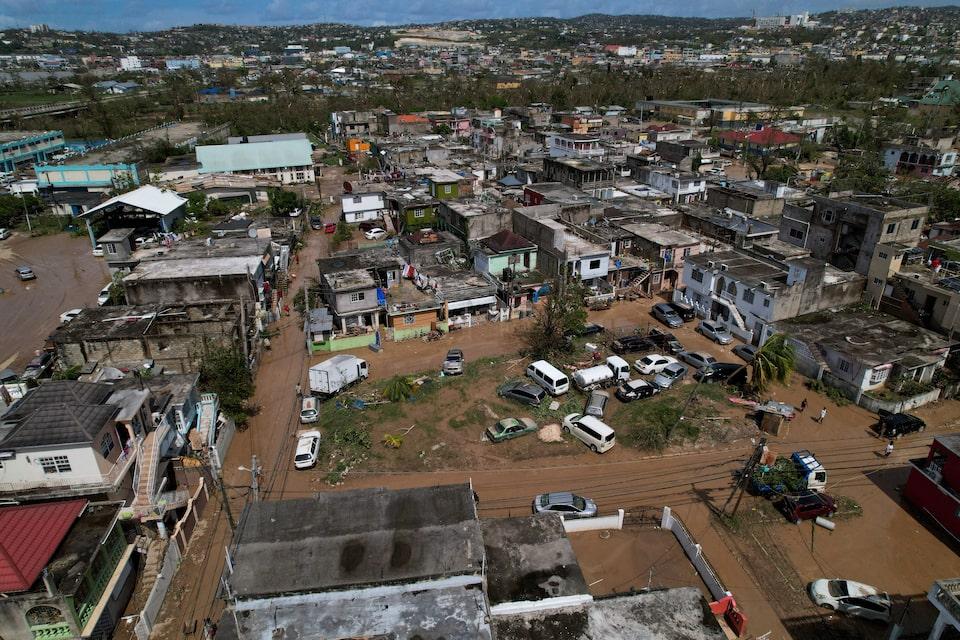
At least 30 confirmed dead in Haiti, 19 in Jamaica Forecaster estimates up to $52 billion in damages Melissa was among strongest-ever storms at landfall Hurricane passing to the west of Bermuda PORT-AU-PRINCE/KINGSTON/HAVANA, Oct 30 (Reuters) - Hurricane Melissa's confirmed death toll climbed to 49 on Thursday, according to official reports, after wreaking destruction across much of the northern Caribbean and picking up speed as it headed past Bermuda in the North Atlantic. Authorities in Haiti, which was not directly hit but nevertheless suffered days of torrential rains from the slow-moving storm, reported at least 30 deaths and 20 more missing. Sign up here. At least 23 people, including 10 children, died in Haiti's southern town of Petit-Goave when a river burst its banks. Roads, houses and farmlands were also damaged by the rains. Jamaica's information minister confirmed at least 19 deaths, but said authorities were continuing search and rescue efforts. The storm left hundreds of thousands without power, ripped roofs of buildings and scattered fields with rubble. Jamaica's military has called on reserve personnel to report for duty to help with relief and rescue operations. Melissa made landfall in southwestern Jamaica on Tuesday as a powerful Category 5 hurricane, the Caribbean nation's strongest-ever storm to directly hit its shores, and the first major hurricane to do so since 1988. Windspeeds were well above the minimum level for the strongest hurricane classification. Forecasters at AccuWeather said it tied in second place for strongest-ever Atlantic hurricane on record in terms of windspeed when in struck land. The forecaster estimated $48 billion to $52 billion in damage and economic loss across the western Caribbean. Melissa also hit eastern Cuba, where some 735,000 evacuated, but as of Thursday, no deaths were reported there, despite extensive damage to homes and crops. At 11:00 p.m. (0300 GMT), Melissa was a Category 2 storm 264 km (164 miles) west of the North Atlantic British island territory of Bermuda, according to the U.S. National Hurricane Center, packing maximum sustained winds of 100 mph (161 kph). Residents in Bermuda had remained calm as the storm was expected to give the island a relatively wide berth. Authorities said they would close its causeway Thursday night and shut schools and ferries on Friday "out of an abundance of caution." In the Bahamas, which Melissa cut through Wednesday night, authorities lifted storm warnings but did not give the "all clear". An official said authorities expected to decide by Saturday whether it was safe for the hundreds of people who evacuated off affected islands to return to their homes. WADING BAREFOOT THROUGH MUD The front page of Thursday's Jamaica Observer newspaper read: "DEVASTATION." Densely populated Kingston was spared the worst damage. Its main airport was set to reopen on Thursday, as was the capital's port. Relief flights and aid had begun to flow into Jamaica's airports, authorities said. But across the country, more than 130 roads remained blocked by trees, debris and electric lines, authorities said, forcing the military to clear roadways on foot into isolated areas, with ambulances following close behind. Satellite imagery showed swaths of trees and homes devastated in the hardest-hit areas of Jamaica, sparse remaining greenery defoliated and most structures destroyed. In a neighbourhood of the island's Montego Bay, 77-year-old Alfred Hines waded barefoot through thick mud and debris as he described his narrow escape from the rising floodwaters. "At one stage, I see the water at my waist and (after) about 10 minutes time, I see it around my neck here and I make my escape," he told Reuters on Wednesday. "I just want to forget it and things come back to normal." In western parts of the island, people crowded by supermarkets and gas stations to fill up on supplies. "Montego Bay hasn't got any petrol. Most of the petrol stations are down," British tourist Chevelle Fitzgerald told Reuters, adding it took her at least six hours to cross the 174 km (108 miles) to Jamaica's capital. "The highway was closed. You had some blockage on the road and trees falling down," she said. Over 70% of electrical customers in Jamaica remained without power as of Thursday morning, said Energy Minister Daryl Vaz, with power lines felled across the island's roadways. Many schools remained without power or water, officials in the capital Kingston said. IMMEDIATE HUMANITARIAN AID Scientists say hurricanes are intensifying faster with greater frequency as a result of warming ocean waters caused by greenhouse gas emissions. Many Caribbean leaders have called on wealthy, heavy-polluting nations to provide reparations in the form of aid or debt relief. Despite the U.N. setting up a fund for developing nations to quickly access reliable financing for more extreme weather events in 2023, donations have not met targets. U.S. forecaster AccuWeather said Melissa was the third most-intense hurricane observed in the Caribbean, as well as its slowest-moving, compounding damages for affected areas. U.S. search and rescue teams were headed for Jamaica on Thursday to assist in recovery efforts, Jamaican authorities said. U.S. Secretary of State Marco Rubio said the U.S. was prepared to offer "immediate humanitarian aid" to the people of Cuba, a long-time U.S. foe. Authorities in Cuba - which Melissa struck in the night as a Category 3 storm - said they were "awaiting clarification on how and in what way they are willing to assist." At least 241 Cuban communities remained isolated and without communications on Wednesday following the storm's passage across Santiago province, according to preliminary media reports, affecting as many as 140,000 residents. Residents of Santiago, Cuba's second-largest city, began returning to repair their homes. Authorities had evacuated 735,000 people to shelters outside the hurricane's cone and relocated tourists in northern cays to inland hotels. https://www.reuters.com/business/environment/hurricane-melissa-smashes-through-caribbean-accelerates-towards-bermuda-2025-10-30/