2025-10-30 11:34
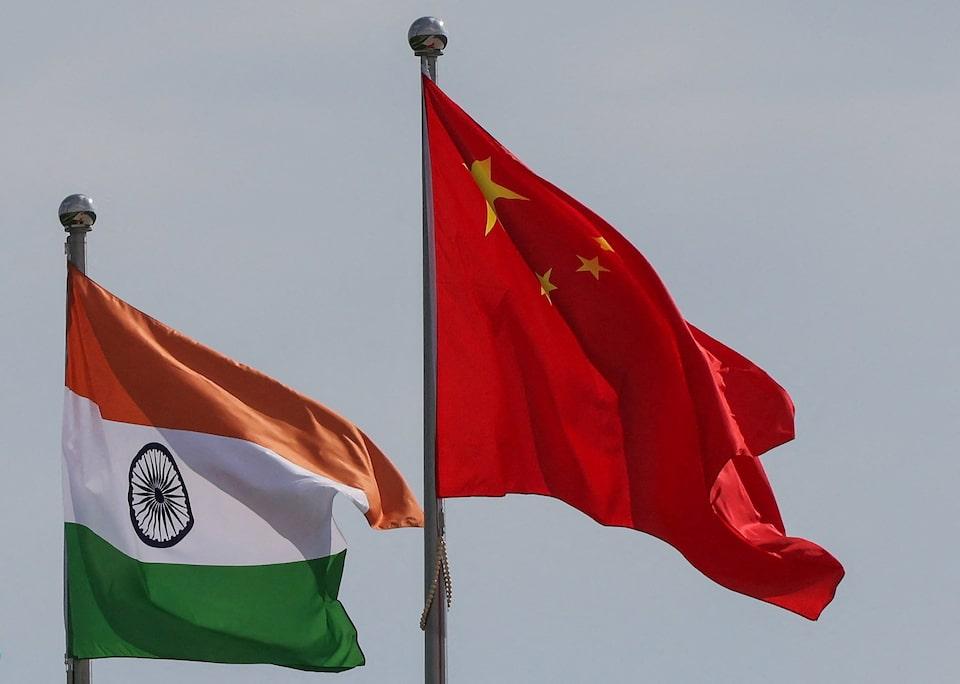
NEW DELHI, Oct 30 (Reuters) - Indian companies have received licences for importing rare earth magnets from China, India's foreign ministry said on Thursday, signalling some easing in Beijing's export control. Rare earths, a group of 17 elements that play a crucial role in cars, planes and weapons, have become one of China's most powerful tools of leverage amid its trade tensions with the U.S. Sign up here. India's foreign ministry spokesperson Randhir Jaiswal announced the licencing decision at a media briefing but did not provide details on the companies that got approval, the number of licences issued or the conditions attached. While rare earth elements are not scarce, China maintains a near-absolute dominance over the technology that processes the minerals into magnets. Beijing has tightened exports of these processed materials to major economies, including India, this year in an effort to reinforce its geopolitical influence. Earlier in the day, China agreed to delay the introduction of its latest round of rare earth export controls as part of a deal agreed between U.S. President Donald Trump and Chinese leader Xi Jinping, but previous restrictions remain in place. Beijing significantly expanded its rare earths export controls this month to include five new elements and added dozens of refining technologies to its control list. The rules also require foreign producers that use Chinese materials to comply with China's export-control system. China's export control announcements on October 9 also included new restrictions on electric battery equipment and industrial diamonds. The battery-related restrictions triggered a rush among global customers, including India's Reliance Industries (RELI.NS) , opens new tab, to accelerate shipments before the early-November deadline. China's export controls on rare earths have highlighted the risks of being dependent on one supplier. The curbs, introduced in April, triggered shortages that threatened to disrupt global car production. https://www.reuters.com/world/china/india-says-some-companies-have-got-license-import-rare-earth-magnets-china-2025-10-30/
2025-10-30 11:24
Trump says tariffs on China cut to 47% from 57% US Federal Reserve delivers 25-bp rate cut Palladium gains 3% Oct 30 (Reuters) - Gold prices jumped 2% on Thursday, helped by dollar weakness after a Federal Reserve rate cut and as investors remained uncertain regarding the outcome of a trade deal between China and the United States. Spot gold climbed 1.3% to $3,980.00 per ounce as of 1109 GMT. U.S. gold futures for December delivery slipped 0.2% to $3,991.50 per ounce. Sign up here. "Gold appears to be pushing higher as investors digest the outcome of the Trump-Xi meeting and the Fed's decision to cut interest rates for the second time this year," said Lukman Otunuga, senior research analyst at FXTM. The U.S. central bank delivered a 25-basis-point rate cut on Wednesday, taking the benchmark overnight rate to a target range of 3.75%–4.00%. "Regarding monetary policy, traders are still pricing in a 70% probability of a cut by December despite Powell attempting to cool expectations around further rate cuts," Otunuga added. Fed Chair Jerome Powell said officials are struggling to reach a consensus about what lies ahead for monetary policy and cautioned that markets should not assume another rate cut in December. Non-yielding gold thrives in a low-interest-rate environment and during economic uncertainties. Meanwhile, U.S. President Donald Trump said he had struck a deal to lower tariffs on China in exchange for Beijing resuming U.S. soybean purchases, keeping rare earths exports flowing and cracking down on illicit fentanyl trade. China for its part agreed to delay the introduction of its latest round of rare earth export controls, but earlier restrictions on the critical minerals that have upended global trade remain. Trump's remarks came after face-to-face talks with Xi in Busan, South Korea, marking the finale of his whirlwind Asia trip, on which he also touted trade breakthroughs with South Korea, Japan and Southeast Asian nations. Elsewhere, spot silver rose 1% to $48.03 per ounce, platinum gained 1% to $1,600.66 and palladium climbed 2.9% to $1,441.99. https://www.reuters.com/world/india/gold-ticks-up-dollar-retreat-trump-xi-meeting-focus-2025-10-30/
2025-10-30 10:39
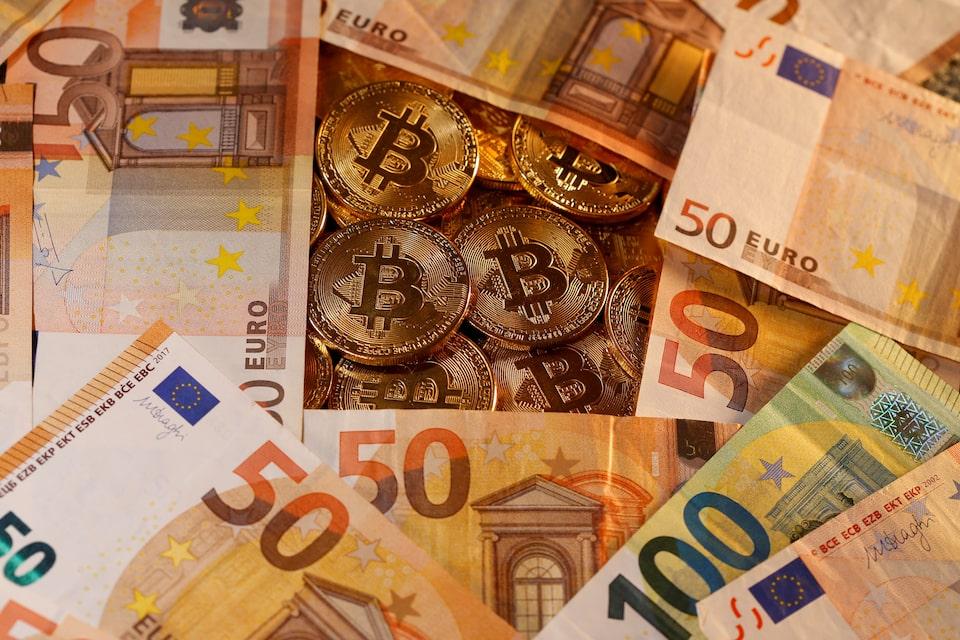
FLORENCE, Italy, Oct 30 (Reuters) - The European Central Bank said on Thursday it could launch a pilot of its digital currency in 2027 provided it can secure timely approval from lawmakers for a project it deems vital for the euro zone's financial autonomy. The ECB has presented it as a strategic alternative to private, U.S.-dominated means of payment such as credit cards and stablecoins — a move it says is increasingly important in an era of heightened geopolitical friction, where financial autonomy and resilience are seen as key to safeguarding Europe's economic sovereignty. Sign up here. After four years of study and preparation, the ECB said it was now looking at carrying out a pilot, meaning some transactions in digital euros may be carried out as soon as mid-2027, before a full-scale launch two years later. "A pilot exercise and initial transactions could take place as of mid-2027," the ECB said in a statement. "The whole Eurosystem should then be ready for a potential first issuance of the digital euro during 2029." But this was conditional on European Union lawmakers – who include the European Parliament, Council and Commission – passing legislation providing a basis for the digital euro next year. Securing that has proven difficult, with lawmakers picking up concerns from banks that the digital euro may hollow out their coffers and cost too much to set up. EU governments have claimed a last say on whether a digital currency should be launched at all and how many such euros residents will be able to own. The ECB, which estimates the cost for the industry will be between 4 billion euros ($4.66 billion) and 5.77 billion euros after taking into account savings and synergies, said it would continue to work with legislators. ($1 = 0.8575 euros) https://www.reuters.com/business/finance/ecb-hopes-launch-digital-euro-pilot-2027-2025-10-30/
2025-10-30 09:25
LONDON, Nov 25 (Reuters) - British finance minister Rachel Reeves is expected to raise tens of billions of pounds in taxes in her budget on Wednesday to stay on track for her self-imposed fiscal rules, a key issue for bond investors, and fund a likely increase in welfare spending. Following are options Reeves is reportedly considering or has been urged to introduce to plug a budget shortfall and to increase her buffer against economic shocks. Any spending cuts are likely to be small. Sign up here. INCOME TAX Reeves and Prime Minister Keir Starmer told voters last year they would not raise taxes for "working people." That promise has come under threat as the outlook for the public finances has worsened. Reeves said on November 4 that "each of us must do our bit", raising expectations of broad tax hikes. But on November 14, a government source said Reeves had no plans to raise income tax rates due to improved fiscal forecasts. Instead, Reeves is expected to extend a freeze on the thresholds at which people pay basic and higher income tax rates by two years until 2030, raising about 8 billion pounds ($10.5 billion) a year. PENSIONS Reeves plans to reduce the income workers can divert from salaries into their pension pots without paying a social security levy, media reported. The Financial Times said on November 21 the change would raise 3-4 billion pounds a year. Legal & General CEO Antonio Simoes has urged Reeves not to deter pension savers. Money managers have seen a rise in people making cash withdrawals from their pensions on fears that they might be taxed more heavily. PROPERTY A surcharge on a local tax paid by homeowners will be introduced for properties worth more than 2 million pounds, media reported. Reeves initially planned a 1.5 million-pound threshold for the surcharge, affecting three times as many homes, The Times said on November 25. VAT Value-added tax could be simplified by ending lower or zero rates for products such as food and children's clothes. But that could add to what is already the highest inflation rate among big, rich economies. Tax experts say a lower starting point for businesses paying VAT would bring in more revenue and remove a barrier for growth among small firms. FUEL DUTY Fuel duty has been frozen since 2011. It is a big revenue-raiser, bringing in around 25 billion pounds a year, so ending the freeze could boost revenues. The Times said on November 4 that Reeves might scrap a temporary relief introduced in 2022. BANKS Think tanks have called for higher taxes on banks to claim back some of the billions of pounds of interest that lenders have received on reserves held at the Bank of England. Such a move could hurt lending and slow growth, bankers say. Reeves said on October 16 she wanted to ensure there was a "competitive environment" for financial services firms. The FT reported on November 24 that banks would be spared from a tax raid. ELECTRIC CARS Electric cars will face a new charge of 3 pence per mile driven, equivalent to 250 pounds a year for the average motorist, under a tax that will be announced to take effect in 2028, the Telegraph reported on November 6. 'SIN TAXES' Taxes on alcohol, tobacco, gambling and vaping could rise. Other options are air travel, plastics and sugary drinks. Higher "sin" taxes could prompt consumers to change their spending and limit the extra tax revenues. They could also be inflationary. THE WEALTHY Reeves has ruled out a new wealth tax but said on October 15 that higher taxes on the wealthy "will be part of the story", leading to speculation that she might increase taxes on capital gains and other income sources. EXIT TAX The Times said on October 31 that Reeves might impose a 20% tax on wealthy people leaving the country, based on the value of their business assets, similar to taxes in other countries. The Sunday Times said on November 23 that the idea was supported by aides of Reeves but she had pushed back against it. SAVINGS ACCOUNTS A 20,000-pound tax-free limit for cash Individual Savings Accounts will be cut to 12,000 pounds in the hope of driving more money into the British stock market. LAWYERS AND ACCOUNTANTS The Times said on October 21 that Reeves was considering an increase in tax on people in limited liability partnerships, typically used by partners at large accountancy and law firms, angering professional bodies. The Times said on November 14 the plan was considered unworkable and had been dropped. ($1 = 0.7613 pounds) https://www.reuters.com/business/finance/uk-tax-options-finance-minister-reeves-november-budget-2025-10-30/

2025-10-30 07:51
Q3 adjusted earnings $5.4 billion vs forecast $5.1 billion To maintain pace of share buyback in fourth quarter Strong gas results helped to limit hit from lower oil prices LONDON, Oct 30 (Reuters) - Shell (SHEL.L) , opens new tab beat third-quarter profit forecasts on Thursday, helped by strong results from its gas division, and said it would maintain the pace of its share buyback programme at $3.5 billion over the next three months. The oil major said adjusted earnings, its definition of net profit, fell 10% year-on-year to $5.4 billion in July to September due to lower prices. But that topped analysts' average estimate of $5.09 billion in a poll of analysts provided by the company. Sign up here. The buyback pledge marks the 16th consecutive quarter when Shell will have returned at least $3 billion to shareholders via repurchasing shares. Shell, the world's largest liquefied natural gas trader, reported quarterly cash flow from operations of $12.2 billion, down from $14.7 billion during the same quarter last year. Profit at its integrated gas business came in at $2.14 billion, above analysts' estimate of $1.97 billion, but below last year's $2.87 billion. Upstream unit profit of $1.8 billion also beat analysts' forecast of $1.6 billion, but were down from last year's $2.44 billion. Brent futures averaged around $68 per barrel in the quarter, down from last year's average of around $78 per barrel in the same period, according to LSEG data and Reuters calculations. The benchmark Dutch front-month gas contract at the TTF hub averaged 33.04 euros per megawatt hour in the quarter, versus 35.6 euros per MWh in the third quarter of 2024. Front-month gas futures on the New York Mercantile Exchange averaged $3.07 per million British thermal units in quarter, versus $2.23 per mmBtu in the same quarter last year. https://www.reuters.com/sustainability/sustainable-finance-reporting/shell-third-quarter-profit-beats-expectations-54-billion-2025-10-30/
2025-10-30 07:51
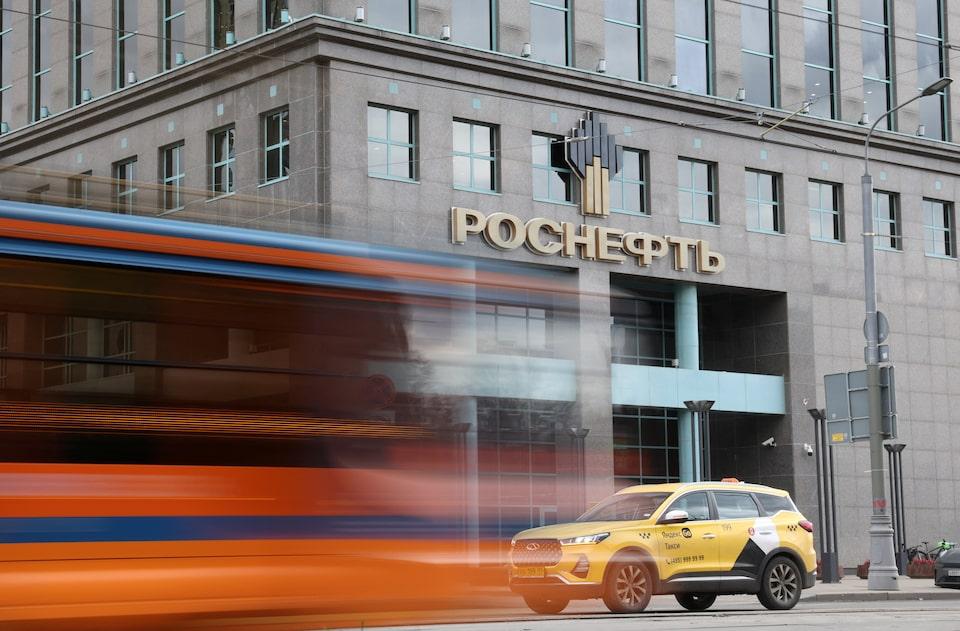
Russia's Rosneft controls key flow of oil to Germany Rosneft swept up in Trump sanctions on Russia Berlin now mulls sidelining Rosneft BERLIN/FRANKFURT, Oct 29 (Reuters) - U.S. sanctions on Russian oil producer Rosneft (ROSN.MM) , opens new tab have rekindled discussions in Germany about nationalising the company's business there, including a refinery that Berlin depends on for most of its fuel, two sources familiar with the talks told Reuters. The situation highlights the complex web linking Germany with Russia, which supplied Europe's industrial powerhouse with energy in the decades leading up to the war in Ukraine. Sign up here. The U.S. Treasury said on Wednesday it had issued a licence exempting Rosneft's German arm from the U.S. sanctions until April 2026. Securing a permanent exemption remains Berlin's preferred option, but German officials are also examining potentially seizing the operations and selling them to a foreign investor, the two people said. A spokesperson for the economy ministry said the government had been in "very intensive" contact with the U.S. authorities, that the license granted was "a first step" and that they were in talks about a further such approval beyond April next year. Rosneft's German arm owns a controlling stake in the Schwedt oil refinery which supplies most of Berlin's fuel, including to its airport, petrol to pumps across eastern Germany and key ingredients to the local chemicals industry. It also has stakes in the MiRo and Bayernoil refineries. These assets were placed in a trusteeship giving the German government control in 2022 following Moscow's invasion of Ukraine, which rocked Germany's decades-long energy ties with Russia. The trusteeship arrangement is renewed every six months but could be overturned in court because, with each renewal, the legal basis for what was supposed to be a temporary, emergency measure is examined. So far, Berlin has shied away from seizing Rosneft's local assets due to concerns about having to pay compensation to Moscow. MULTI-BILLION-DOLLAR BUSINESS Russian media have put the value of Rosneft's German assets at around $7 billion, though one of the two sources said the true value may be less than half of that. Moscow has warned Europe against any seizure of its property. German companies with factories and other investments in Russia could bear the brunt of any response from the Kremlin. Rosneft has been trying to sell the business since March 2024, to no avail. It did not respond to a request for comment on Wednesday. Michael Kellner, a Green Party lawmaker in Germany's parliament who worked in the last coalition government, overseeing Rosneft, urged the government to nationalise the business. "It is systemically important for Germany," Kellner told Reuters. "The government needs to nationalise Rosneft's business in Germany in order to have certainty over its future." Kellner said he had wanted to nationalise the business while in government and that Qatar and Kazakhstan had signaled interest in buying it in 2024. It is unclear, however, whether those countries were still interested. Germany used to buy oil directly from Russia. Rosneft in Germany now buys oil from Kazakhstan. However, Russia controls the pipeline used to deliver it. https://www.reuters.com/business/energy/germany-examines-nationalising-rosneft-arm-after-trump-sanctions-say-sources-2025-10-29/