2025-10-29 23:18
Oct 29 (Reuters) - Microsoft's (MSFT.O) , opens new tab Azure said it was seeing strong improvement in regions that were affected by an outage, impacting the tech giant's suite of productivity software and a range of industries worldwide. Alaska Airlines (ALK.N) , opens new tab earlier on Wednesday said it experienced a disruption to key systems, including its website, due to the Azure outage and was bringing systems back online once Microsoft resolved the issue. Sign up here. Britain's Heathrow Airport's website was back online after issues had affected it earlier in the day. Vodafone (VOD.L) , opens new tab had also been impacted due to the outage. Azure is seeing "strong signs of improvement across affected regions and are tracking toward full mitigation" by 7:20 p.m. ET, it said on its status page. Affected services include Azure Communication Services and Media Services, among others. The Microsoft outage follows last week's disruption at Amazon (AMZN.O) , opens new tab AWS, which caused global turmoil among thousands of sites and some of the web's most popular apps, such as Snapchat (SNAP.N) , opens new tab and Reddit (RDDT.N) , opens new tab. Microsoft 365 had said that its services were experiencing downstream impact related to the Azure outage. A recent configuration change to a portion of Azure infrastructure is causing the outage, it said on its status page. Beginning at about 12 p.m. ET, Azure said its customers and Microsoft services that leverage Azure Front Door, a global cloud-based content and application delivery network, had experienced issues resulting in timeouts and errors. The number of users reporting issues with Azure had dropped to 230 as of 6:49 p.m. ET, from a peak of over 18,000 earlier in the day, according to Downdetector, which tracks outages by collating status reports from a number of sources. The outage at Microsoft 365 had eased to 377 users reporting issues as of 6:49 p.m., down from nearly 11,700, Downdetector's website showed. Its numbers are based on user-submitted reports and the actual number of affected users may vary. The AWS outage was the largest internet disruption since last year's CrowdStrike malfunction hobbled technology systems in hospitals, banks and airports, highlighting the vulnerability of the world's interconnected technologies. https://www.reuters.com/technology/microsoft-azure-down-thousands-users-downdetector-shows-2025-10-29/
2025-10-29 23:07
Russia is second-biggest diesel exporter US sanctions on Rosneft, Lukoil will lead to changes in diesel flows New EU measures force Indian refiners to replace Russian crude LONDON, Oct 30 (Reuters) - A new wave of Western sanctions on Russia’s oil industry has roiled the diesel market, sending refining margins soaring, but global supplies are unlikely to be severely disrupted for long. U.S. President Donald Trump last week sanctioned Russia's two largest oil companies, Rosneft and Lukoil, following a similar move by Britain. These are Trump’s first punitive measures against Moscow over its full-scale invasion of Ukraine in 2022. Sign up here. Russia is the world's third-largest exporter of crude oil and the second-biggest diesel exporter, shipping over 800,000 barrels per day of the transport fuel so far this year, around 3% of global demand. The U.S. measures are exacerbating existing turmoil in the diesel market sparked by the European Union’s adoption earlier this month of a new sanctions package that includes a ban on imports of fuels produced from Russian crude. This ban, which takes effect in January 2026, closes a loophole that primarily benefited refiners in India and Turkey. In combination, the EU and U.S. sanctions are forcing traders to scramble to find alternative sources of supply, particularly for Europe, the world’s largest diesel-importing region. As a result, profit margins for processing crude oil into diesel have surged by nearly 20% over the past week to around $29 a barrel, the highest since February 2024, according to LSEG data. But if recent history is any guide, this price spike is unlikely to last. REROUTING AND REBRANDING Rosneft and Lukoil have exported an average of 182,000 bpd and 138,000 bpd of diesel, respectively, so far this year, collectively accounting for 39% of total Russian exports, according to shipping analytics firm Kpler. Turkey is the largest buyer of Russian diesel, responsible for 36% of its seaborne exports, followed by Brazil at 18%. While large companies in Turkey, Brazil and other countries may reduce imports of Russian diesel to avoid violating sanctions, many local importers with no exposure to U.S. financial institutions will continue purchasing Russian diesel. China, which has a well-developed network of traders and tankers to circumvent Western sanctions, will likely absorb some of the excess diesel from Rosneft and Lukoil, which will probably be sold at a significant discount to international prices. Any remaining Russian diesel will likely make its way into the shadow market where it will be blended with diesel from different sources, or it will simply be rebranded. In the meantime, refiners around the world are apt to quickly respond to the surge in diesel prices by adjusting operations to maximize diesel output, for example by using different crude feedstocks, further mitigating any supply concerns. INDIAN REFINING GOES OFF RUSSIAN DIET The U.S. and EU restrictions will nevertheless have a heavy impact on India, which is the top buyer of Russian seaborne crude as well as a major exporter of diesel to Europe since the bloc stopped importing Russian diesel in 2023. India has exported 583,000 bpd of diesel so far this year, around 8% of global seaborne volumes, of which 106,000 bpd went to Europe, making India the region’s fourth-largest overseas source of diesel, according to Kpler data. In the face of Western sanctions pressure, Indian refineries have started to rapidly replace Russian Urals crude, which produces high diesel yields. This should generate stronger demand among refiners for alternative crudes that have similar diesel yields. Such medium-sour grades are produced mostly by Middle Eastern OPEC members Saudi Arabia, the United Arab Emirates, Kuwait and Iraq. They have all sharply increased production this year, offering ample alternatives to Russian crude. To be sure, the greater competition for medium-sour grades will likely lead to higher diesel prices, but the availability means most refineries will be able to sustain their output levels. For example, Reliance Industries, which operates the world's biggest refining complex in India’s western Gujarat state, has said it will comply with all western sanctions, yet has no plans to reduce output. Reliance accounts for three-quarters of India’s diesel exports, meaning that the bulk of Indian sales to Europe should remain steady next year – though they may come with a higher price tag. However, not all Indian companies can pivot so easily. Another major Indian refiner, Nayara Energy – which accounts for nearly 10% of India’s diesel exports – is 49% owned by Rosneft and relies solely on Russian crude. It is being forced to sharply reduce its output in the wake of the sanctions, sources told Reuters. Collectively, though, Indian refiners appear to have ramped up exports last month to 748,000 bpd in September, their highest since March 2022, in the immediate aftermath of Russia's invasion, according to Kpler. European traders appear to be stocking up on Indian diesel before the EU sanctions kick in next January, more than doubling purchases in September from the previous two months to 317,000 bpd. They may not need to worry though. Any price spikes in the diesel market are apt to be short-lived, which may be bad news for global refiners but good news for European consumers. Want to receive my column in your inbox every Monday and Thursday, along with additional energy insights and links to trending stories? Sign up for my Power Up newsletter here. Enjoying this column? Check out Reuters Open Interest (ROI), , opens new tab your essential new source for global financial commentary. ROI delivers thought-provoking, data-driven analysis. Markets are moving faster than ever. ROI , opens new tab can help you keep up. Follow ROI on LinkedIn , opens new tab and X. , opens new tab https://www.reuters.com/markets/commodities/diesel-rally-sparked-by-western-sanctions-russia-will-be-short-lived-2025-10-29/
2025-10-29 22:06
Oct 29 (Reuters) - Agrichemicals company FMC Corp (FMC.N) , opens new tab on Wednesday forecast lower-than-expected adjusted profit for the year after reporting a third-quarter loss, sending its shares down more than 20% in extended trading. Earlier this year, the company said it would divest its commercial business in India, in response to challenges in the country. Sign up here. FMC's India business divestiture and pricing adjustments led to nearly a 50% decline in net sales, which came in at $542.2 million for the quarter. Excluding the impact of the India business sale, net sales came in 10% lower than last year at $961 million, and below analysts' expectations of $1.06 billion, according to data compiled by LSEG. FMC, a key player in the insecticide and fungicide market, has also been facing intensified competition in key markets, prompting it to reduce prices. The company is one of the largest crop-protection product makers in the United States and competes with industry giants such as Syngenta, as well as German firms BASF (BASFn.DE) , opens new tab and Bayer (BAYGn.DE) , opens new tab in the agrichemicals sector. For the third quarter, the company reported a net loss attributable to shareholders of $569.3 million, compared with a year-ago profit of $65 million. FMC forecast current-year adjusted profit to be in the range of $2.92 to $3.14 per share, which also missed analysts' estimates of $3.50 per share. https://www.reuters.com/world/india/fmc-forecasts-downbeat-2025-profit-posts-quarterly-loss-india-divestiture-shares-2025-10-29/

2025-10-29 21:59
Oct 30 (Reuters) - Australia's Ampol (ALD.AX) , opens new tab reported a 22.2% quarter-on-quarter increase in third-quarter refining margins at its Lytton refinery on Thursday, helped by improved operational performance and higher profit margins for producing fuels in Asia. The country's largest fuel retailer said its Lytton refinery margin increased to $10.64 per barrel in third quarter, up from $8.71 in previous quarter. Sign up here. The company attributed the rise in refining margins to strengthening of Singapore refined cracks as compared to the first half of the fiscal year. It reported total production of 1,252 million litres for the third quarter from the refinery, lower than the 1,406 million litres in the last quarter. Ampol said replacement cost earnings before interest and tax for the three months had exceeded the first half's quarterly average due to stronger margins at the fuel and infrastructure business excluding Lytton. This was further aided by better results at the refinery. https://www.reuters.com/business/energy/australias-ampol-reports-over-22-sequential-rise-third-quarter-lytton-margins-2025-10-29/
2025-10-29 21:46
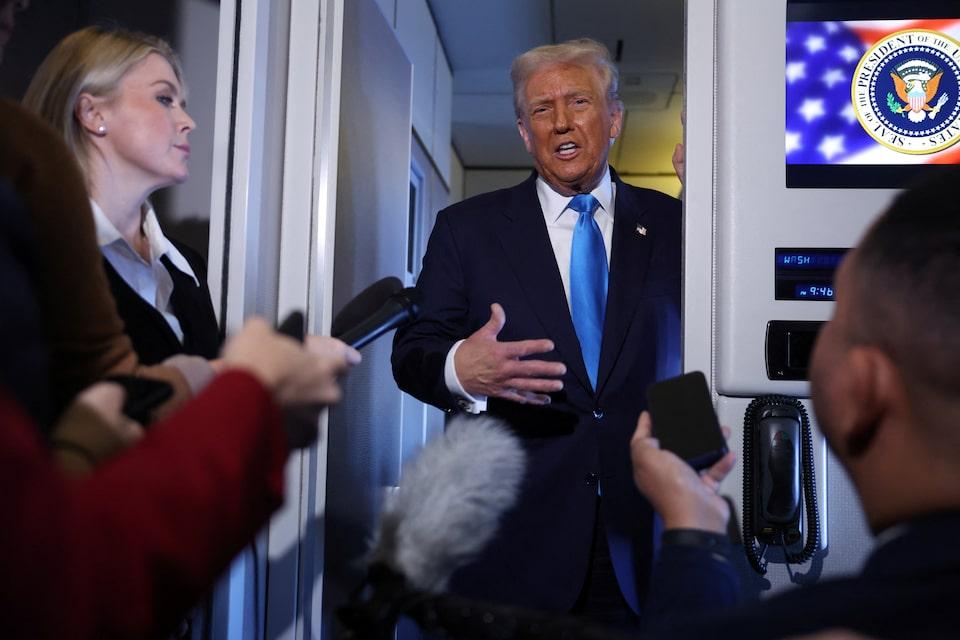
South Korea also seeks US permission for nuclear fuel reprocessing US only shared nuclear sub tech with UK in 1950s Experts question necessity of South Korea's nuclear sub acquisition SEOUL/WASHINGTON, Oct 30 (Reuters) - U.S. President Donald Trump said on Thursday he has given South Korea approval to build a nuclear-powered submarine, a dramatic move that would admit Seoul to a small club of nations possessing such vessels. The submarine will be built in a Philadelphia shipyard, where South Korean firms have increased investment, Trump wrote on social media. The U.S. president, who has been meeting with South Korean President Lee Jae Myung and other regional leaders during his visit, also said Seoul had agreed to buy vast quantities of U.S. oil and gas. Trump and Lee finalized details of a fraught trade deal at a summit in South Korea on Wednesday. Lee had also been seeking U.S. permission for South Korea to reprocess nuclear fuel. NUCLEAR RESTRICTIONS EASING? Seoul is barred from reprocessing without U.S. consent, under a pact between the countries. "I have given them approval to build a Nuclear Powered Submarine, rather than the old fashioned, and far less nimble, diesel powered Submarines that they have now," Trump wrote on his Truth Social platform on Thursday. South Korea's Industry Ministry said its officials had not been involved in any detailed discussions about building the submarines in Philadelphia. While South Korea has a sophisticated shipbuilding industry, Trump did not spell out where the propulsion technology would come from for a nuclear-powered submarine, which only a handful of countries currently possess. The U.S. has been working with Australia and Britain on a project for Australia to acquire nuclear-powered submarines involving technology transfers from the United States. The U.S. has so far only shared that technology with Britain, back in the 1950s. Lee said when he met Trump on Wednesday that allowing South Korea to build several nuclear-powered submarines equipped with conventional weapons would significantly reduce the burden on the U.S. military. He also asked for Trump's support to make substantial progress on South Korea being allowed to reprocess spent nuclear fuel, or on uranium enrichment, something currently not allowed under the nuclear agreement between the two countries, even though South Korea possesses nuclear reactors to generate power. APPROVAL RAISES QUESTIONS Lee's predecessors had wanted to build nuclear-powered submarines, but the U.S. had opposed this idea for decades. Daryl Kimball, executive director of the Washington-based Arms Control Association, said the issue of South Korea acquiring such submarines "raises all sorts of questions.” "As with the AUKUS deal, (South Korea) is probably looking for nuclear propulsion services suitable for subs, including the fuel, from the U.S," he said. Kimball said such submarines usually involved the use of highly-enriched uranium and would "require a very complex new regime of safeguards" by the International Atomic Energy Agency, which has a key role in implementing the Treaty on the Non-Proliferation of Nuclear Weapons (NPT). "It remains technically and militarily unnecessary for South Korea to acquire the technology to extract weapons-usable plutonium from spent fuel or to acquire uranium enrichment capabilities, which can also be used to produce nuclear weapons," he said. "If the United States seeks to prevent the proliferation of nuclear weapons worldwide, the Trump administration should resist such overtures from allies as strongly as it works to deny adversary access to these dual-use technologies." Jenny Town, who heads 38 North, a Korea-focused research group in Washington, said it was inevitable that South Korean demands for U.S. cooperation on nuclear issues would grow, given recent allegations about Russian technical cooperation to help nuclear-armed North Korea make progress towards acquiring nuclear-powered submarines. Kim Dong-yup, a North Korea studies professor at Kyungnam University, said the Lee-Trump summit had formalized a "transaction scheme of security guarantees and economic contributions" for maintaining the extended deterrence and alliance in exchange for South Korea's increased defense spending and nuclear-powered subs and U.S. investments. "In the end, this South Korea-U.S. summit can be summarized in one word: the commercialization of the alliance and the commodification of peace," he said. "The problem is that the balance of that deal was to maximize American interests rather than the autonomy of the Korean Peninsula." Sign up here. https://www.reuters.com/world/china/trump-says-south-korea-has-approval-build-nuclear-powered-submarine-2025-10-29/
2025-10-29 21:17
Oct 29 (Reuters) - Rare earths firm REalloys has received a letter of interest from the U.S. Export-Import Bank (EXIM) for a loan worth up to $200 million to fund processing and magnet facilities, in what would be Washington's latest move to bolster American production of the specialized materials. The loan, if approved, could boost U.S. access to magnets used in electric vehicles, cell phones, fighter jets and thousands of other products. Those magnets are at the center of global trade conflict as China uses them as leverage in negotiations with the Trump administration. Sign up here. In a letter dated September 18 and seen by Reuters, privately held REalloys has met initial requirements to apply for the $200 million EXIM loan and, if approved, would have a 15-year repayment term, longer than the company likely would have with private financing. EXIM, which acts as the U.S. government's export credit agency, confirmed the letter of interest on Wednesday, the same day REalloys announced the loan potential. The project would need to obtain U.S. customers for its magnets in order to receive the loan, the letter said. The Ohio-based company, which was formed in 2023, plans to process rare earths in Saskatchewan into metal from either mined ore or recycled electronics. It signed an agreement earlier this month to source ore from a Greenland mine that Critical Metals Corp (CRML.O) , opens new tab aims to develop. That metal would then be taken to Ohio, where it would be turned into an alloy and then magnets. REalloys plans to provide cost details next month for its two facilities. The company's goal is to produce 10,000 metric tons per year of magnets by 2029, roughly the same volume planned by MP Materials (MP.N) , opens new tab, which is receiving price support from the U.S. government. REalloys has not received any guarantees on price protection, a company representative said. https://www.reuters.com/world/asia-pacific/us-export-import-bank-considers-200-million-loan-rare-earths-firm-realloys-2025-10-29/