2025-10-29 21:03
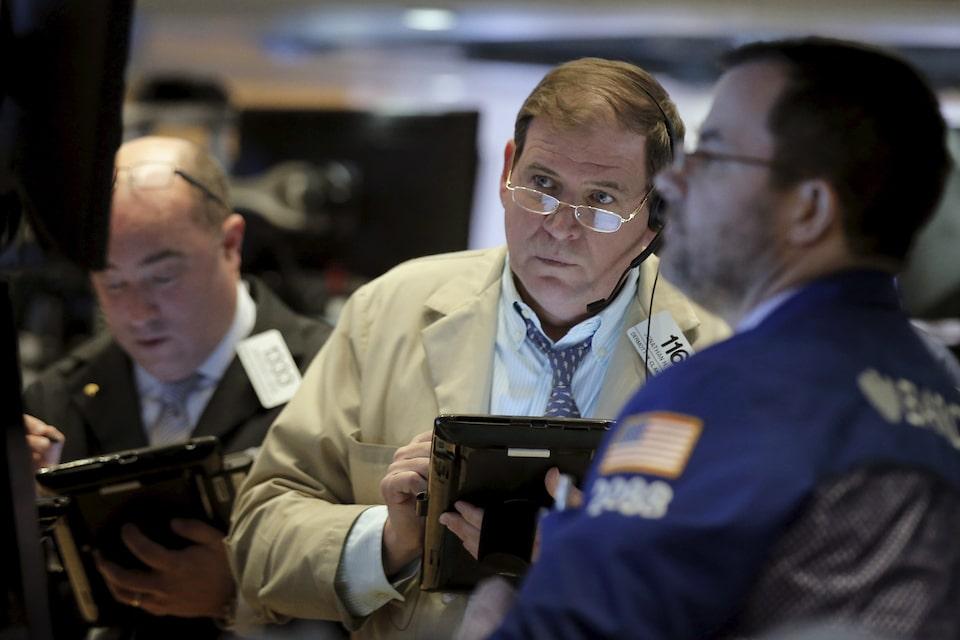
ORLANDO, Florida, Oct 29 (Reuters) - Wall Street was mixed on Wednesday after the Federal Reserve lowered interest rates but signaled a cut in December was in the balance, while Nvidia became the world's first $5 trillion company. Investors now turn their attention to Thursday's meeting between U.S. President Donald Trump and Chinese President Xi Jinping. In my column today, I look at the U.S. job market is now moving from a 'no hire, no fire' landscape towards 'no hire, more fire' territory. Sign up here. If you have more time to read, here are a few articles I recommend to help you make sense of what happened in markets today. Today's Key Market Moves Today's Talking Points * The $5 trillion club... Chipmaker Nvidia is the world's first $5 trillion company, only three months after it reached the $4 trillion mark. Its market cap is up 12-fold since the launch of ChatGPT in 2022, and is now worth around half of the entire benchmark European Stoxx 600 index. UBS and BofA are among those significantly raising their price targets still. The firm's importance to U.S. growth, power and national security is increasingly evident. CEO Jensen Huang unveiled $500 billion in AI chip orders and said he plans to build seven supercomputers for the U.S. government, while President Trump says he will speak to Chinese President Xi Jinping about Nvidia's state-of-the-art Blackwell AI chip on Thursday. * ...and Wall Street's historic imbalance Contrast Nvidia and the 'Mag 7' AI megacaps with the wider market. Tuesday was a historic day on the S&P 500 for a very different, but related, reason - even though the index rose, 398 of its constituents fell. Analysts say that's the worst market breadth for an 'up' day since at least 1990, maybe ever. The latest surge at the top has meant the equal-weight S&P 500 has lagged badly, so much so, it is now underperforming the benchmark market-weight index by the widest margin since May 2003. How long can literally two handfuls of stocks keep lifting such a heavy weight? * Fed cools on December cut The Federal Reserve lowered interest rates by 25 basis points on Wednesday, as expected, but Fed Chair Jerome Powell said another cut in December is not a done deal. "Far from it." Wall Street pared its gains and rates traders dramatically reduced the probability of a December cut to 65% from 85% before the Fed meeting. It was over 90% earlier this week. The Fed's next meeting is in six weeks, which is a long time for policymakers, especially in the fog of a government shutdown. US job market is now 'no hire, more fire' The U.S. labor market has been characterized as a 'no hire, no fire' landscape for much of the past year. But 'no hire, more fire' increasingly looks more accurate, providing further ammunition for the Federal Reserve to cut interest rates. Retail giant Amazon on Tuesday announced 14,000 layoffs, with more to come next year, while delivery service UPS revealed that it has cut a whopping 48,000 employees over the past year. The reasons cited include protecting margins, employing more artificial intelligence, and reversing pandemic-era over-hiring. These aren't the only eye-opening announcements recently: around 25,000 workers are being let go at Intel, 15,000 at Microsoft, and 11,000 at Accenture. The Trump administration is also firing swathes of government workers. In total, U.S. employers announced almost 950,000 job cuts in the January-September period, according to global placement firm Challenger, Gray & Christmas, with the top affected sectors being government, tech and retail. While most of that was earlier in the year, these figures suggest the labor market is truly cracking, lending credence to Fed Chair Jerome Powell's view that downside risks to employment outweigh upside risks to inflation. FLYING BLIND The Fed resumed its interest rate-cutting cycle in September after a nine-month hiatus and is expected to continue easing into next year due to concerns about labor market weakness. While the unemployment rate hasn't risen much, that is mainly because cooling demand for workers has been offset by shrinking labor supply, as the Trump administration has cracked down on immigration and increased deportations. In normal times, job cuts at individual firms might not be on policymakers' radar. But these are not normal times. We're in the midst of the second-longest government shutdown in U.S. history. This has prevented the release of almost all labor market data – including monthly payrolls, the unemployment rate, job openings and labor turnover survey (JOLTS) and weekly jobless claims – for four weeks. Fed officials are flying blind. With no official incoming data for guidance, specific corporate announcements could take on extra significance. Troy Ludtka, senior U.S. economist at SMBC Nikko Securities Americas, says the Amazon and UPS announcements may not move the policy dial just yet, but they should confirm Fed officials' "anxieties" over the labor market. "The question now is, just how aggressive will other companies be in reducing headcount?" WARNING BELLS As the Fed waits for the answer to that question, the few official economic indicators available are already ringing warning bells. The Chicago Fed's economic model – which uses private data when official government statistics are unavailable – showed that 'Layoffs and Other Separations' as a share of employed workers are grinding higher and that the 'Hiring for Unemployed Workers' as a share of total unemployed is falling. Both of these are levels not seen for four years. Meanwhile, U.S. private payrolls increased by an average of just 14,250 jobs in the four weeks ending October 11, the ADP National Employment Report's weekly preliminary estimate showed on Tuesday. ADP, which usually publishes monthly reports, said it will now publish weekly preliminary estimates every Tuesday, based on its high-frequency data. That's a paltry increase, effectively signaling no job growth at all – although it is better than the 32,000 decline in ADP's last monthly report for September. All told, the labor market picture appears to justify lower interest rates. But easier policy is not without risks. Wall Street, led by tech and AI stocks, is booming, with financial conditions the loosest in years. And inflation is still a full percentage point above the Fed's target. Rate cuts may be well-intentioned, with the goal of protecting potentially millions of workers at risk of losing their jobs, but easing will pour fuel on the ongoing 'melt up' rally. So while it remains unclear how much these cuts will actually support the labor market, they are almost certain to boost wealthy asset holders' portfolios. What we also know for sure is that the more companies announce sweeping layoffs, the more likely the Fed is to act. What could move markets tomorrow? Want to receive Trading Day in your inbox every weekday morning? Sign up for my newsletter here. Opinions expressed are those of the author. They do not reflect the views of Reuters News, which, under the Trust Principles , opens new tab, is committed to integrity, independence, and freedom from bias. https://www.reuters.com/world/china/global-markets-trading-day-graphic-2025-10-29/
2025-10-29 20:56
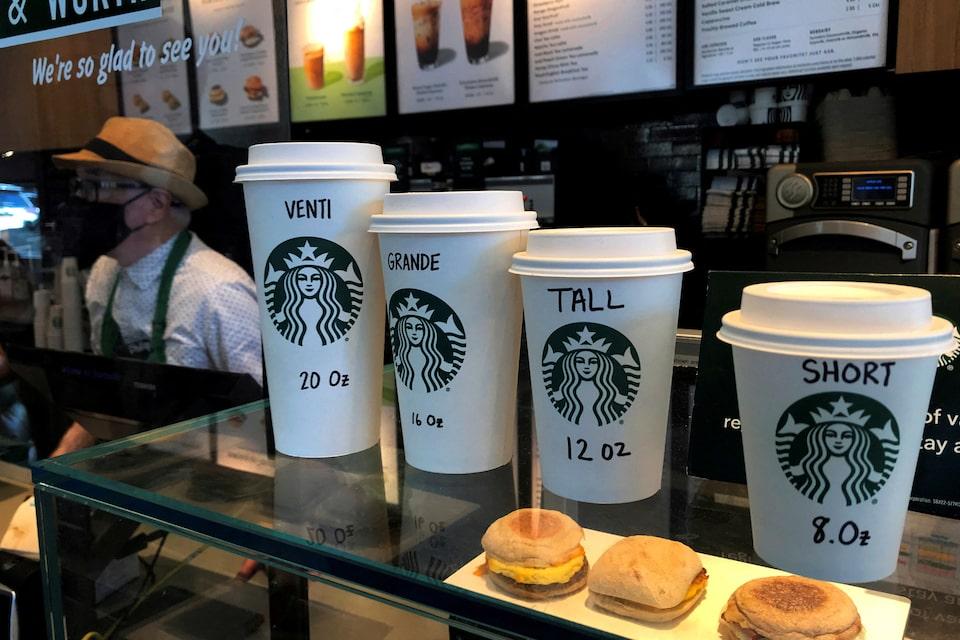
U.S. sales flat, average spend per customer fell Margins hit by rising coffee prices, tariffs, investment costs China sales rise 2%, facing competition from local chains Oct 29 (Reuters) - Starbucks (SBUX.O) , opens new tab posted on Wednesday its first quarter of gains in global comparable sales after nearly a year and a half, led by international markets, though growth still eluded its U.S. operation, and margins came under pressure from the surging cost of wholesale coffee beans. The results follow several quarters of falling sales that spurred the hiring of Brian Niccol as CEO in August 2024, who embarked on a brand reset known as "Back to Starbucks." Since taking the top job, Niccol has closed hundreds of stores, simplified the menu and made efforts to speed up service. He told analysts the quarter "marks a turn" for the coffee chain's U.S. operations. Sign up here. However, the high cost of coffee beans will act as a headwind for at least the next two quarters, executives said. Global prices for raw arabica beans are up more than 20% this year after soaring 70% in 2024. That, along with hefty tariffs on imported goods and the cost of its revamp, squeezed margins. Global comparable sales rose 1%, but in the United States, its largest market, comparable sales were flat and the average spending per customer fell. U.S. consumers are increasingly watchful about spending on dining out, as economic uncertainty and inflation squeeze budgets. Burrito chain Chipotle Mexican Grill (CMG.N) , opens new tab cut its annual targets for the third time this year, and said households earning below $100,000 have pulled back sharply. Niccol said Starbucks would be judicious with price increases next year and said he did not expect any broad menu price hikes. CFO Cathy Smith said the chain's turn away from discounts last year increased average transaction amounts. "Turnarounds are difficult to forecast, and while we have good reason to believe that our U.S. company-operated comparable sales should build through the year, we know recoveries are not linear," Smith said on a post-earnings call. The company said in July it would invest more than half a billion dollars of additional labor hours into its U.S. company-operated stores over the next year. While Starbucks hedges against a rise in coffee prices, the commodity has faced supply snags due to geopolitical volatility, including U.S. President Donald Trump's 50% tariffs on top grower Brazil, and climate issues. "Their cost structure — with rent, labor, and coffee — is challenging. There are so many competitors, whether in coffee or other caffeinated drinks, that they don't have the pricing power they used to. At least management is realistic about the challenges ahead of them," said Brian Jacobsen, chief economist at Annex Wealth Management. Restaurant industry consultant John Gordon said his takeaway from the results is that Starbucks’ recovery will take “a lot longer” than Wall Street expected, given the contraction in operating margin. Starbucks' shares edged lower in extended trading after its fourth-quarter earnings of 52 cents a share missed estimates of 56 cents according to LSEG data. Its operating income margin fell to 2.9%, down from 14.4% at the same time a year ago. RESTRUCTURING CONTINUES The company expanded its restructuring efforts in September to close underperforming stores, including its flagship, unionized Seattle roastery. It said on Friday that it had closed 627 stores in the fourth quarter as part of that plan. CFO Smith said the company expects to provide a financial outlook at an investor event in January. Starbucks suspended guidance shortly after Niccol took the helm. Starbucks is also in a stalemate with the union representing baristas at about 550 stores in the U.S., with talks hitting an impasse last year, and the union planning to vote this week on whether to authorize an unfair labor practice strike. Both sides blame the other for ending talks late last year and say they are ready to return to discussions. In China, Starbucks' second-largest market outside of the United States, the company reported a 2% rise in comparable sales, after a return to growth in the metric last quarter. Starbucks has lowered prices for non-coffee products in China, and has been trying to offer more customization and local flavors. The company is nearing a sale of a majority stake in its China business, as its market share has declined in recent years due to fierce competition from local coffee chains that offer cheaper products amid an economic slowdown that has changed consumer habits. https://www.reuters.com/world/china/starbucks-beats-global-comparable-sales-estimates-2025-10-29/
2025-10-29 20:52
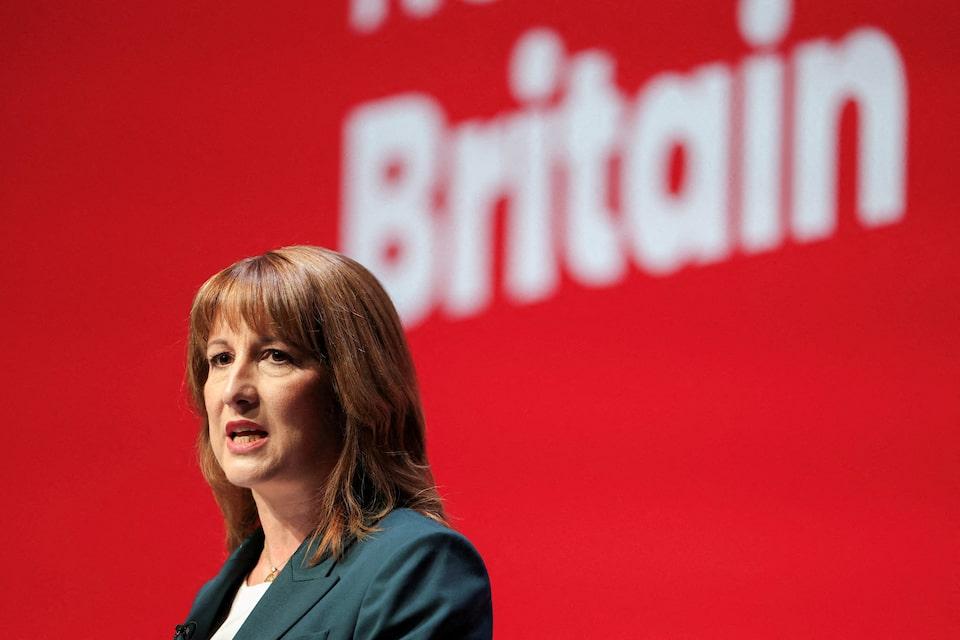
Oct 29 (Reuters) - Britain's finance minister, Rachel Reeves, could scrap a windfall tax on the country's oil and gas industry a year earlier than planned, the Financial Times reported on Wednesday. Reeves is believed to be considering a range of options to remain on course for her target of balancing day-to-day spending with tax revenues by the end of the decade. Sign up here. She could use her annual budget next month to scrap the energy profits levy in March 2029 instead of March 2030, the Financial Times said, citing people familiar with her thinking. But, the newspaper added, Reeves was seeking assurances from energy companies that such a move would spur new investment, jobs and future tax revenues. Reuters could not immediately verify the report. A spokesperson for Reeves' office said in an emailed statement: "We do not comment on speculation around changes to tax ahead of the Budget." Introduced in 2022 after a surge in energy prices following Russia's invasion of Ukraine, the levy raised the effective tax rate on North Sea producers to 78%. Industry body Offshore Energies UK has argued that ending the temporary tax sooner could unlock 40 billion pounds ($53.68 billion) of investment across 90 projects. Economists have said Reeves may have to break the government's promise and raise income tax, a move that would break the commitment Labour made to voters before winning the election in 2024. Prime Minister Keir Starmer earlier on Wednesday declined to commit to the previous pledge not to raise taxes, saying upcoming forecasts would show the economy was in a worse state than thought. Britain's budget watchdog is expected to cut its productivity forecast by a larger-than-expected 0.3 percentage points, people familiar with the situation told Reuters on Tuesday, potentially leading to a 20 billion-pound hit to the public finances. ($1 = 0.7451 pounds) https://www.reuters.com/business/energy/uks-reeves-looks-scrap-windfall-tax-oil-gas-industry-ft-reports-2025-10-29/
2025-10-29 20:51
Revoked permits cover gold, iron ore, bauxite, uranium, rare earths Mines ministry says affected firms non-compliant Mining sector disruption could impact foreign investment ACCRA, Oct 29 (Reuters) - Mali has revoked more than 90 mining exploration permits, including those held by subsidiaries of international mining companies, according to an official decree seen by Reuters. Companies affected include local subsidiaries of Harmony Gold (HARJ.J) , opens new tab, IAMGOLD (IMG.TO) , opens new tab, Cora Gold (CORAC.L) , opens new tab, Birimian Gold, and Resolute Mining (RSG.AX) , opens new tab. Sign up here. The holders failed to comply with new legal requirements, the mines ministry said in a statement on Wednesday. The decree does not give reasons for the revocations but states that all rights conferred by the permits are "released", and the areas covered by them are now open for reallocation. “Permit holders were asked to submit required documents under new mining rules, but after verification, authorities found widespread non-compliance,” the statement said. “As a result, the government has canceled the permits in line with mining legislation.” The ministry did not clarify whether companies can appeal or reapply. PERMIT PURGES, TOUGHER RULES RESHAPE AFRICA MINING Guinea and several other African countries have recently reformed their mining sectors, cancelling dormant or non-compliant permits. Some have also introduced tougher regulations to boost earnings from natural resources, part of a broader push to tighten oversight and reclaim control over strategic assets. Mali's decree, signed by Mines Minister Amadou Keita on October 13 and reviewed by Reuters on October 29, cancels permits issued between 2015 and 2022 for the exploration of gold, iron ore, bauxite, uranium, rare earths, and other minerals. The decree lists the affected permits by number and location but does not specify the total area covered or the estimated value of the exploration activities. Cora Gold told Reuters it had relinquished the affected permits over two years ago and had not received formal notice. It added that the delayed cancellation had no impact on its operations and did not warrant a response. Harmony Gold, IAMGOLD, Birimian Gold, and Resolute did not immediately respond to requests for comment. Mali is one of Africa's top gold producers, with mining a major source of revenue and exports, though recent regulatory crackdowns and insecurity have disrupted foreign investment. Industrial gold output is projected to fall short of its 2025 target due to disruptions at Barrick's (ABX.TO) , opens new tab Loulo-Gounkoto mine, the country’s largest gold asset. The military-led government has recently moved to deepen ties with Russia through energy and mining agreements, including a deal to supply 160,000 to 200,000 metric tons of petroleum and agricultural products amid an Islamist-militants-imposed fuel blockade that has crippled transport and forced nationwide school closures. The agreement follows earlier Russian-backed initiatives in Mali's mining sector, such as joint ventures in gold, uranium, and lithium, and the construction of a state-controlled gold refinery , opens new tab in Bamako. https://www.reuters.com/world/africa/mali-revokes-over-90-mining-exploration-permits-2025-10-29/

2025-10-29 20:43
Oct 29 (Reuters) - U.S. nuclear power generation is set to rise, analysts at Wood Mackenzie said, as surging demand driven by data centers strains grids across the country and a wave of tech companies sign deals to source power from the zero-carbon resource. A flurry of announcements in nuclear energy investments - most recently an $80 billion U.S. government partnership with the owners of Westinghouse Electric - underscore the rising interest in the sector. The power industry is grappling with increasing electricity demand from energy-intensive data centers, rising temperatures and electrification. Sign up here. “Technology companies are now becoming energy providers by necessity to meet this growing demand, especially in the U.S. where nuclear power is emerging as a preferred solution,” said Lindsey Entwistle, principal research analyst at Wood Mackenzie. NextEra Energy reached a partnership deal this week with Google to restart an Iowa nuclear plant, while other tech giants like Microsoft have also signed deals for next-generation nuclear technologies. But many of these will take time to complete construction, Entwistle said. Wood Mackenzie expects U.S. nuclear generation will remain steady until 2035, and then increase 27% through 2060. Globally, data center power demand is expected to hit 700 TWh in 2025, rising to 3,500 TWh by 2050 – equal to the current combined electricity demand from India and the Middle East - according to the firm's latest energy transition outlook. Global nuclear capacity is expected to grow from 400 GW currently to between 800 GW and 1,600 GW by 2060. Small modular reactors in particular are viewed as cheaper, quicker to build, and can be co-located with data centers, removing the need for additional power infrastructure, said James West, managing director at Melius Research. However, the nuclear industry will face multiple challenges to stay competitive, including project and permitting delays, cost overruns and labor shortage. For newer technologies like small modular reactors, ensuring policy support and funding for first-of-a-kind projects will also be a challenge, said Entwistle. https://www.reuters.com/business/energy/us-nuclear-generation-grow-27-post-2035-data-centers-fuel-power-demand-woodmac-2025-10-29/
2025-10-29 20:39
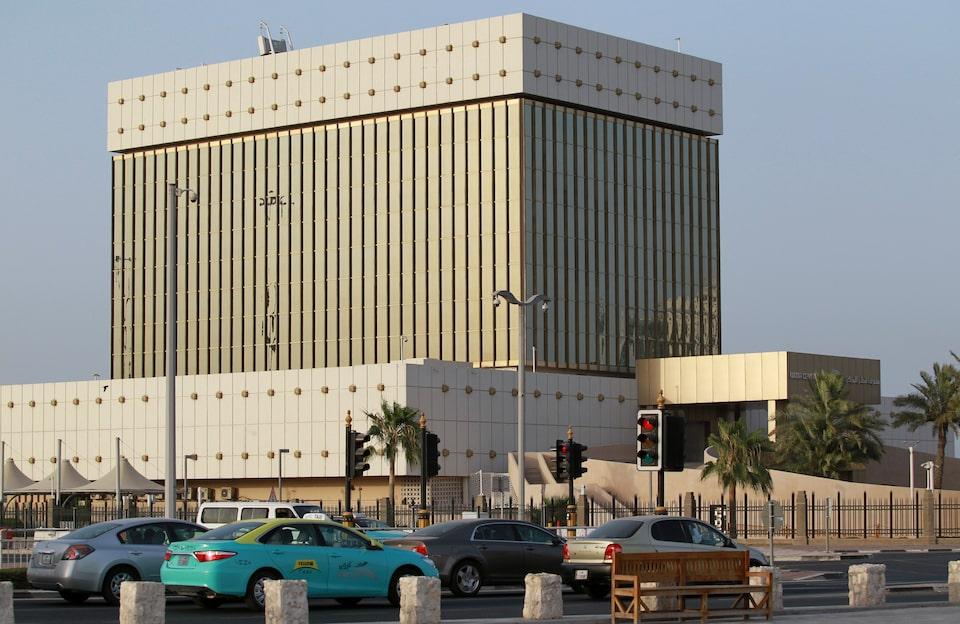
CAIRO, Oct 29 (Reuters) - Most Gulf central banks cut key interest rates on Wednesday after the U.S. Federal Reserve moved to reduce rates by a quarter of a percentage point, its second rate cut decision this year. The Fed's decision to cut rates by 25 basis points drew dissents from two policymakers and Chair Jerome Powell said a further reduction in interest rates in December was far from a foregone conclusion. Sign up here. The oil and gas exporters of the Gulf Cooperation Council generally follow the Fed's lead on interest rate moves as most regional currencies are pegged to the U.S. dollar. Only the Kuwaiti dinar is pegged to a basket of currencies, which includes the U.S. dollar. Saudi Arabia, the region's biggest economy, cut its repurchase agreement (repo) rate by 25 bps to 4.50% and its reverse repo rate also by 25 bps to 4%. The United Arab Emirates' central bank reduced the base rate applied to its overnight deposit facility to 3.9%, effective Thursday. Shielded from stubbornly high inflation elsewhere, the Gulf region is expected to benefit from lower interest rates to stimulate economic activity and bolster non-oil growth. All have embarked on ambitious programmes to diversify domestic economies away from hydrocarbons and develop sectors such as real estate, tourism and manufacturing, which require billions in financing and investment. The central banks of Qatar, Bahrain and Oman all followed the Fed move and cut key rates by 25 basis points. The Central Bank of Kuwait decided to hold rates steady and said monetary policy was consistent with local economic conditions. https://www.reuters.com/world/middle-east/most-gulf-central-banks-cut-key-rates-by-25-basis-points-after-fed-move-2025-10-29/