2025-10-29 20:00
Nvidia hits $5 trillion in market value Alphabet, Microsoft and Meta report after the close Caterpillar shares jump after results Indexes: Dow down 0.2%, S&P 500 flat; Nasdaq up 0.6% NEW YORK, Oct 29 (Reuters) - The Dow ended lower and the S&P 500 finished flat on Wednesday after the Federal Reserve cut interest rates but Fed Chair Jerome Powell said another rate cut in December is far from assured. The Nasdaq registered another record closing high, boosted by Nvidia (NVDA.O) , opens new tab after the AI chipmaker made history as the first company to reach $5 trillion in market value. Sign up here. In earlier trading, stocks rose and then added to gains after the Fed cut interest rates by a quarter of a percentage point, as expected, and said it will restart limited purchases of Treasury securities. Fed policymakers also noted the limits in their decision-making process due to the U.S. federal government shutdown. The Fed lowered the overnight benchmark rate to a target range of 3.75% to 4.00%, the second time the U.S. central bank eased this year. After Powell spoke, traders pared bets on a December rate cut, giving it a 71% chance, down from 90%. "Chairman Powell indicated that another rate cut is not a foregone conclusion," said Oliver Pursche, senior vice president and advisor for Wealthspire Advisors in Westport, Connecticut. "But no rate cut is ever a foregone conclusion. So, to me, that is not an inappropriate comment. The (Fed) is data dependent." Nvidia's stock ended the session up 3% at $207.04, giving it a stock market value of $5.03 trillion. It has risen more than 50% this year, leading the artificial intelligence rally on Wall Street. The Dow Jones Industrial Average (.DJI) , opens new tab fell 74.37 points, or 0.16%, to 47,632.00, the S&P 500 (.SPX) , opens new tab lost 0.30 points to 6,890.59 and the Nasdaq Composite (.IXIC) , opens new tab gained 130.98 points, or 0.55%, to 23,958.47. "The rate cut was expected. Powell’s remarks took some shine off the market," said Michael Rosen, chief investment officer at Angeles Investments in Santa Monica, California. "But this is a temporary reaction. It is earnings that ultimately drive equities, and those earnings have been strong." The majority of U.S. earnings results so far this reporting period have beaten analysts' expectations. Of the 222 companies in the S&P 500 that have reported so far, some 84.2% have posted earnings above Wall Street estimates, according to data compiled by LSEG as of Wednesday. That is above the 77% average from the past four quarters. Among Wednesday's key results, Caterpillar (CAT.N) , opens new tab reported a third-quarter profit that beat expectations, and its shares jumped 11.6%. After the closing bell, shares of Meta Platforms (META.O) , opens new tab, Microsoft (MSFT.O) , opens new tab and Alphabet (GOOGL.O) , opens new tab were mixed following quarterly reports by the three megacaps. Shares of Meta Platforms were down more than 8% in extended trading, while Microsoft was down 1% and Alphabet was up about 5%. Meta recorded a nearly $16 billion one-time charge that hurt third-quarter profits and said its capital expenditure next year would be "notably larger" than in 2025. Strong AI demand helped Alphabet's financial results, while Microsoft's AI infrastructure spending soared to a record in the September quarter and deepened investor cost concerns. Declining issues outnumbered advancers by a 2.16-to-1 ratio on the NYSE. There were 476 new highs and 170 new lows on the NYSE. On the Nasdaq, 1,453 stocks rose and 3,306 fell as declining issues outnumbered advancers by a 2.28-to-1 ratio. Volume on U.S. exchanges was 20.71 billion shares, compared with the 21 billion average for the full session over the last 20 trading days. https://www.reuters.com/business/sp-nasdaq-futures-up-nvidia-eyes-5-trillion-mark-ahead-big-tech-results-2025-10-29/

2025-10-29 17:00
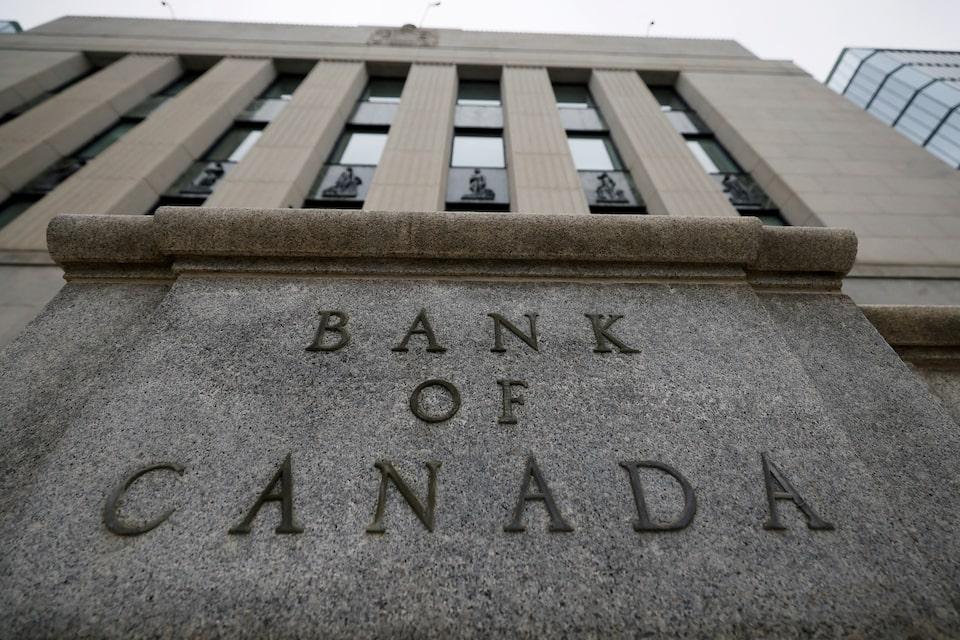
BoC reduces benchmark rate by 25 basis points to 2.25% Reduces economic growth outlook for this year and next Projects annualized growth of 0.5% in Q3 and 1% in Q4 The bank estimated inflation to average 2% over the year OTTAWA, Oct 29 (Reuters) - The Bank of Canada signaled on Wednesday an end to its cutting cycle after trimming its key overnight interest rate to 2.25%, but Governor Tiff Macklem said he would be ready to respond if Canada's economic outlook changed materially. The 25-basis-point cut, the second in a row, brings the rate down to the lowest since July 2022. Sign up here. Macklem said the easing was designed to help the economy deal with the disruption from U.S. tariffswhile keeping inflation close to the bank's 2% target. In January, the bank had forecast the economy would grow by 1.8% in both 2025 and 2026. But, citing U.S. trade policy, it now says growth in 2025 will be just 1.2%, dropping to 1.1% in 2026, before recovering to 1.6% in 2027. "If inflation and economic activity evolve broadly in line with the October projection, Governing Council sees the current policy rate at about the right level to keep inflation close to 2% while helping the economy through this period of structural adjustment," the bank said in its rate announcement. Economists said while rate cuts have paused for now, there could be more easing in the next year. "Though it's still unclear how the balance of risks between inflation and growth plays out, the policy rate needs to be lower as excess capacity in the economy remains wide," said Andrew DiCapua, principal economist at the Canadian Chamber of Commerce. Macklem, however, said the bank would need to see evidence of a materially altered economic outlook to respond further. "We recognize there's a lot of uncertainty out there, and if the outlook changes we're prepared to respond," he said. Macklem said while the trade war was depressing demand, it had also added costs for many businesses. The bank expected these forces to offset each other, he told reporters. Canada's economy contracted in the second quarter by 1.6% and early indicators suggest it might barely avoid another contraction in the third quarter. "The weakness we're seeing in the Canadian economy is more than a cyclical downturn. It is also a structural transition," Macklem said, adding this limited the ability of monetary policy to boost demand while keeping inflation at 2%. The bank sees annualized growth of 0.5% in the third quarter and 1% in Q4. It returned on Wednesday to the practice of issuing detailed quarterly economic forecasts after suspending them in March due to economic uncertainty. The BoC aims to keep the rate of annual inflation anchored at 2%, the mid-point of its 1% to 3% target range. In its forecasts, the bank estimated inflation would average 2% over the year. Consumer prices are expected to average around 2.1% in 2026, the bank said. The Canadian dollar firmed after the monetary policy decision and was trading up 0.22% to 1.3915 to the U.S. dollar, or 71.86 U.S. cents. Money markets are not pricing in any probability of rate cuts until March next year. https://www.reuters.com/world/americas/bank-canada-trims-key-interest-rate-hints-end-cuts-2025-10-29/

2025-10-29 15:24
LONDON, Oct 29 (Reuters) - The pound hit its weakest in nearly three months against the dollar and in more than two years versus the euro on Wednesday as rising expectations for a rate cut from the Bank of England by year-end pushed the currency through closely watched levels. Sterling was last down 0.5% on the dollar at $1.3209, its lowest since August 1. Sign up here. Meanwhile the euro gained 0.34% to 88.10 pence, its highest since May 2023, building on its 0.5% gain the previous day, on lower food inflation and reports that the British finance minister will have a larger-than-previously-thought fiscal hole to fill in her budget next month. Analysts at Goldman Sachs said the break above the 88 pence level had provided a "technical element to the move" as well as news suggesting slowing inflation in Britain. "We think that dynamic can continue for sterling, where softer data and a reassessment of Bank of England easing can drive underperformance on European crosses," they said, though they said the BoE meeting next week was a reason for near-term caution. Goldman economists also changed their BoE call on Wednesday, and they now see the central bank cutting rates by 25 basis points at next week's meeting. Markets still only see around a 40% chance of the BoE cutting rates at that meeting but they do see a 70% chance of a cut in either November or December. Until last week's softer-than-expected inflation data, markets had seen a rate cut this year as unlikely. The pound also weakened against other European peers. It is at its lowest against the Swiss franc and Swedish crown since the aftermath of Britain's mini-budget crisis in 2022. https://www.reuters.com/world/uk/sterling-weakest-months-versus-dollar-lowest-years-against-euro-2025-10-29/
2025-10-29 14:07
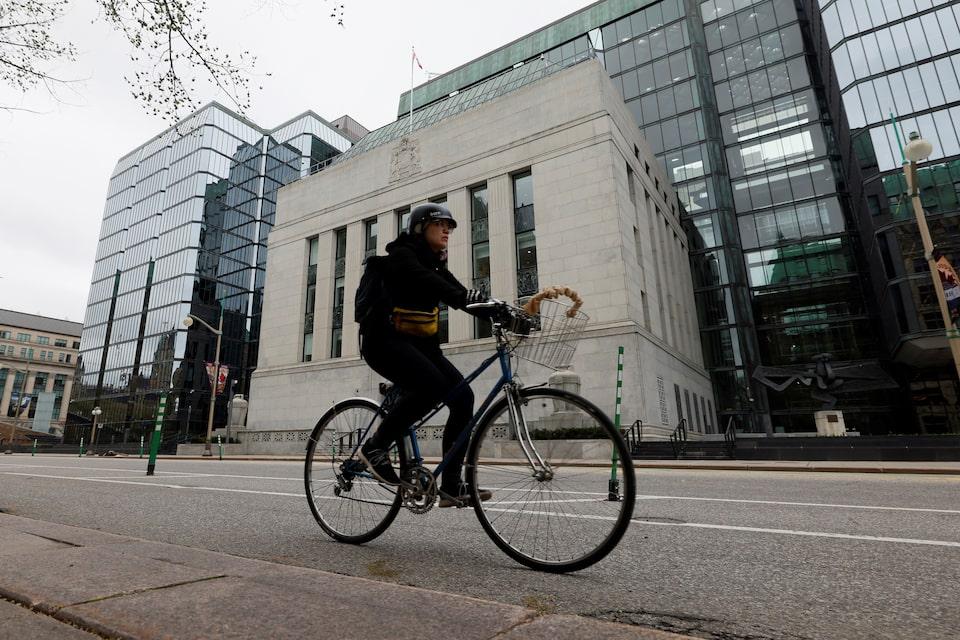
OTTAWA, Oct 29 (Reuters) - The Bank of Canada released the following statement on Wednesday: "The Bank of Canada today reduced its target for the overnight rate by 25 basis points to 2.25%, with the Bank Rate at 2.5% and the deposit rate at 2.20%. Sign up here. "With the effects of US trade actions on economic growth and inflation somewhat clearer, the Bank has returned to its usual practice of providing a projection for the global and Canadian economies in this Monetary Policy Report (MPR). Because US trade policy remains unpredictable and uncertainty is still higher than normal, this projection is subject to a wider-than-usual range of risks. "While the global economy has been resilient to the historic rise in US tariffs, the impact is becoming more evident. Trade relationships are being reconfigured and ongoing trade tensions are dampening investment in many countries. In the MPR projection, the global economy slows from about 3¼% in 2025 to about 3% in 2026 and 2027. "In the United States, economic activity has been strong, supported by the boom in AI investment. At the same time, employment growth has slowed and tariffs have started to push up consumer prices. Growth in the euro area is decelerating due to weaker exports and slowing domestic demand. In China, lower exports to the United States have been offset by higher exports to other countries, but business investment has weakened. Global financial conditions have eased further since July and oil prices have been fairly stable. The Canadian dollar has depreciated slightly against the US dollar. "Canada's economy contracted by 1.6% in the second quarter, reflecting a drop in exports and weak business investment amid heightened uncertainty. Meanwhile, household spending grew at a healthy pace. US trade actions and related uncertainty are having severe effects on targeted sectors including autos, steel, aluminum, and lumber. As a result, GDP growth is expected to be weak in the second half of the year. Growth will get some support from rising consumer and government spending and residential investment, and then pick up gradually as exports and business investment begin to recover. "Canada’s labour market remains soft. Employment gains in September followed two months of sizeable losses. Job losses continue to build in trade-sensitive sectors and hiring has been weak across the economy. The unemployment rate remained at 7.1% in September and wage growth has slowed. Slower population growth means fewer new jobs are needed to keep the employment rate steady. "The Bank projects GDP will grow by 1.2% in 2025, 1.1% in 2026 and 1.6% in 2027. On a quarterly basis, growth strengthens in 2026 after a weak second half of this year. Excess capacity in the economy is expected to persist and be taken up gradually. "CPI inflation was 2.4% in September, slightly higher than the Bank had anticipated. Inflation excluding taxes was 2.9%. The Bank’s preferred measures of core inflation have been sticky around 3%. Expanding the range of indicators to include alternative measures of core inflation and the distribution of price changes among CPI components suggests underlying inflation remains around 2½%. The Bank expects inflationary pressures to ease in the months ahead and CPI inflation to remain near 2% over the projection horizon. "With ongoing weakness in the economy and inflation expected to remain close to the 2% target, Governing Council decided to cut the policy rate by 25 basis points. If inflation and economic activity evolve broadly in line with the October projection, Governing Council sees the current policy rate at about the right level to keep inflation close to 2% while helping the economy through this period of structural adjustment. If the outlook changes, we are prepared to respond. Governing Council will be assessing incoming data carefully relative to the Bank's forecast. "The Canadian economy faces a difficult transition. The structural damage caused by the trade conflict reduces the capacity of the economy and adds costs. This limits the role that monetary policy can play to boost demand while maintaining low inflation. The Bank is focused on ensuring that Canadians continue to have confidence in price stability through this period of global upheaval." ((Reuters Ottawa bureau, +1 647 480 7921; [email protected] , opens new tab)) Keywords: CANADA CENBANK/RATES https://www.reuters.com/world/americas/full-text-bank-canada-lowers-key-rate-225-2025-10-29/
2025-10-29 13:54
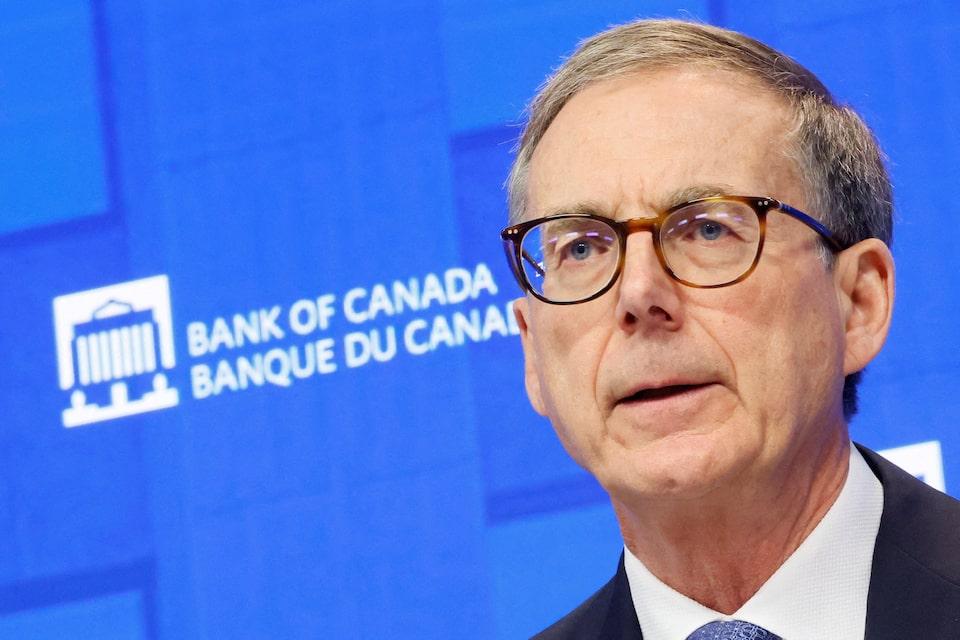
OTTAWA, Oct 29 (Reuters) - The Bank of Canada released the following statement by Governor Tiff Macklem on Wednesday: "Good morning. I'm pleased to be here with Senior Deputy Governor Carolyn Rogers to discuss today's monetary policy decision. Sign up here. "Today, the Bank lowered the policy interest rate a further 25 basis points, bringing it to 2¼%. This was our second straight cut, and reflects ongoing weakness in the economy and contained inflationary pressures. "Today we also published our outlook for the Canadian economy. "We have four main messages. "First, US tariffs and trade uncertainty have weakened the Canadian economy. We expect very modest growth through the rest of the year, with some pickup in 2026. "Second, while this weakness is restraining price increases, the trade conflict is also adding costs for many businesses, putting upward pressure on inflation. We expect these opposing forces to roughly offset, keeping inflation close to the 2% target. "Third, to support the economy through this period of adjustment, we have lowered our policy rate by 50 basis points over our last two meetings and by 100 basis points since the start of the year. "And finally, the weakness we're seeing in the Canadian economy is more than a cyclical downturn. It is also a structural transition. The US trade conflict has diminished Canada's economic prospects. The structural damage caused by tariffs is reducing our productive capacity and adding costs. This limits the ability of monetary policy to boost demand while maintaining low inflation. "For the first time since January and the start of the trade conflict, the Bank is publishing a baseline outlook for economic growth and inflation, rather than alternative scenarios. It has now been more than six months since we have been living with US tariffs. And while US trade policy remains unpredictable, its impacts are becoming clearer. "Let me expand on what we're seeing in the economy, and how that played into our deliberations. "While the global economy has been resilient to the rise in US tariffs and increased uncertainty, the impacts are becoming more evident. Trade relationships are being reconfigured and uncertainty is dampening investment in many countries. "In Canada, the impacts of US trade policy are already clearly apparent. GDP contracted 1.6% in the second quarter as tariffs and uncertainty reduced exports and business investment. US trade actions are having severe effects on targeted sectors including autos, steel, aluminum and lumber. Household spending was resilient in the second quarter, with strong consumer spending and a pickup in residential investment. "The labour market is soft. Employment gains in September followed two months of sizeable losses. Job losses have been concentrated in trade-sensitive sectors and hiring has been weak across the economy. The unemployment rate remained at 7.1% in September, and wage growth has slowed. "In the second half of this year, GDP growth is expected to resume, but remain weak, averaging about ¾%. It should then pick up on a quarterly basis in 2026 as exports and investment recover, and average about 1½% by 2027. This implies excess supply is only taken up gradually. "Even as growth recovers, the entire path for GDP is lower than it was before the shift in US trade policy. By the end of 2026, the level of GDP is about 1½% lower than forecast in January. About half of this downward revision reflects lost capacity as a result of the trade disruption. The other half is due to weaker demand. "CPI inflation was 2.4% in September, slightly higher than the Bank had anticipated. The Bank's preferred measures of core inflation have been sticky around 3% but upward momentum has dissipated. Looking at a broader range of indicators, underlying inflation looks to be around 2½%. The Bank expects inflationary pressures to ease in the months ahead and CPI inflation to remain near 2% over the projection horizon. "If the economy evolves roughly in line with the outlook in our MPR, Governing Council sees the current policy rate at about the right level to keep inflation close to 2% while helping the economy through this period of structural adjustment. We will be assessing incoming data carefully relative to the Bank’s outlook. "US trade policy remains unpredictable, as events over the weekend reminded us. There continues to be considerable uncertainty, both about US tariffs and their impacts. The range of possible outcomes is wider than usual — we need to be humble about our forecast. If the outlook changes, we are prepared to respond. "Canadian businesses and households are feeling the consequences of increased US protectionism. It is difficult, and ongoing uncertainty is compounding the difficulty. For many months, we have been stressing that monetary policy cannot undo the damage caused by tariffs. Increased trade friction with the United States means our economy will work less efficiently, with higher costs and less income. Monetary policy can help the economy adjust as long as inflation is well-controlled, but it cannot restore the economy to its pre-tariff path. "The Bank of Canada is focused on ensuring Canadians continue to have confidence in price stability through this period of global upheaval. "With that, the Senior Deputy Governor and I would be pleased to take your questions." ((Reuters Ottawa bureau, +1 647 480 7921; [email protected] , opens new tab)) Keywords: CANADA CENBANK/MACKLEM https://www.reuters.com/world/americas/full-text-bank-canada-head-says-rate-cut-aimed-helping-economy-2025-10-29/
2025-10-29 13:52
OTTAWA, Oct 29 (Reuters) - The Bank of Canada on Wednesday slashed its growth forecasts for both 2025 and 2026, citing the effect of U.S. trade policy, and predicted the economy would recover slightly in 2027. In its quarterly annual monetary policy report, the central bank said 2025 growth would be 1.2%, sharply down from the 1.8% predicted in January, the last time it released detailed economic forecasts. Sign up here. It said growth in 2026 would drop to 1.1%, down from the 1.8% forecast in January, before recovering to 1.6% in 2027. "Roughly half of the downward revision relative to the January report reflects the negative impact of tariffs and uncertainty on potential output," it said. "The remainder reflects weaker demand conditions, mainly caused by the negative effect of U.S. trade policies." Annual inflation in 2025 will average 2.0%, less than the 2.3% forecast in January, before edging up to 2.1% in 2026 and staying at that level in 2027. ((Reuters Ottawa bureau, +1 647 480 7921; [email protected] , opens new tab)) Keywords: CANADA CENBANK/FORECASTS https://www.reuters.com/world/americas/bank-canada-cuts-2025-2026-forecasts-cites-us-trade-policy-2025-10-29/