2025-10-28 07:32
Win raises prospect of structural change for Argentina Investors eye long-term commitments in mining, energy, infrastructure Currency instability remains a risk NEW YORK/LONDON, Oct 28 (Reuters) - After riding a wave of market gains for most of the first two years of Argentine President Javier Milei's government, investors expect him to turn his party's redrawing of the electoral map into sweeping labor and tax reforms that could unlock billions of dollars in foreign investment. The decisive midterm victory for Milei's party on Sunday has raised the prospect of structural change on a scale Argentina has not seen in decades. After acknowledging the need to build bridges within the legislature, Milei said in his victory speech that the newly elected group of legislators would be "the most reformist Congress in Argentine history." Sign up here. The combination of Milei's strengthened mandate and explicit U.S. support - to the tune of up to $40 billion - will lure investors to consider longer-term exposure to Argentine assets despite the country's track record of policy whiplash, analysts said. "The momentum is 100% with him, and he is in a stronger position than he's ever been to push reforms in Congress," said Gustavo Medeiros, head of research at Ashmore Group. "The big problem is, every two years you have this gun on your head that people are worried about - the major change in the political dynamics (and) a major change in economic policies," Medeiros said. Milei's decisive victory - if followed by an aggressive push to complete the economic overhaul he has started - could permanently break the cycle, he said. For years, foreign direct investment in Argentina has been held back by an unpredictable policy landscape and quick boom-and-bust cycles, usually linked to elections or the agricultural commodities cycle. But the midterm win has given Milei's government the kind of political leverage Argentina has rarely seen, with investors not asking whether reforms will happen, but how far and how fast they will go. A simpler tax system, more flexible labor laws and lower pension costs could lower longstanding barriers to Argentina's competitiveness. For companies weighing capital commitments in mining, energy or technology, the ability to plan years ahead would mark a decisive break from the past. Recently, artificial intelligence company OpenAI vowed an investment of up to $25 billion for a data center project and Chevron Corp (CVX.N) , opens new tab recommitted to its investment in the Vaca Muerta shale formation. The U.S. International Development Finance Corporation said last week it was discussing with the government strategic investment across a range of industries, including critical minerals and infrastructure. "Mining projects for copper and lithium and rare earths, those take a decade to come to fruition," said Graham Stock, senior sovereign strategist at RBC Global Asset Management in an interview. "You need more than a two-year horizon to make that commitment. And now there's a reasonable chance that we have that." Shamaila Khan, head of fixed income for emerging markets and Asia Pacific at UBS, also said Argentina could emerge as more of a "destination for long-term investments" if Milei can build the needed legislative coalitions to pass reforms. THE PESO QUESTION One of the biggest risk factors hanging over Argentine financial markets remains the currency, which many economists view as overvalued. With the backdrop of a $20 billion U.S. swap line and years-long similar support from China, the currency has nonetheless remained under pressure. An initial post-election rally strengthened the interbank exchange past 14% to 1,300 per dollar, but it ended the Monday session at 1,430, 4% stronger on the day, after having closed last week at 1,491.5. Many investors see room for a more flexible exchange rate, or even for the current band to stay in place supported by fresh inflows. Others would prefer a weaker currency, especially to support exporters. "The key risk is that the Milei administration sticks to the current exchange rate regime," said emerging markets economist Kimberley Sperrfechter at Capital Economics in a note. "That would leave the peso severely misaligned, lead to a further deterioration in the current account position and complicate the central bank’s efforts to accumulate FX reserves." Gross FX reserves stand around $40 billion while net reserves, accounting for certain foreign currency liabilities, are in the red. Milei's victory, while impressive, won't be a gamechanger unless he can generate the kind of lasting stability needed to allow for Argentina's vast resources - agricultural, energy and mineral - to entice a constant flow of foreign investment, analysts said. "Argentina has massive potential, but to attract foreign direct investment, the type of investment that's making decisions on a very long-term horizon, that level of confidence can only be built with time," said Gorky Urquieta, senior portfolio manager and global co-head of emerging markets debt at Neuberger Berman in an email to Reuters. "It's a very optimistic starting point, but there’s still a lot of ground to cover." https://www.reuters.com/world/americas/investors-anticipate-new-wave-argentine-reforms-after-mileis-midterm-victory-2025-10-28/

2025-10-28 07:04
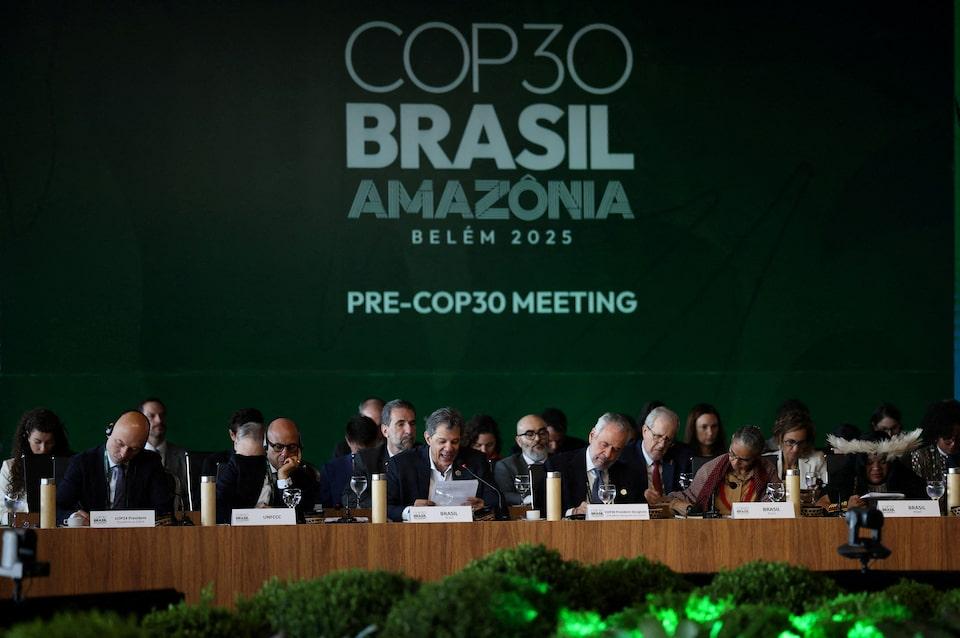
UN sees global emissions falling 10% by 2035 Reflects new climate pledges, including from China First time UN climate body forecasts emissions decline U.S. emissions trajectory uncertain under Trump BRUSSELS, Oct 28 (Reuters) - The latest climate pledges by governments will cause global greenhouse gas emissions to start to fall in the next 10 years, but not nearly fast enough to prevent worsening climate change and extreme weather, the U.N. said on Tuesday. The analysis by the United Nations' climate change secretariat (UNFCCC) suggested that, if countries' plans for tackling climate change are carried out, the yearly amount of planet-warming gases added to the atmosphere would decrease 10% by 2035, from 2019 levels. Sign up here. The calculation marked the first time the UNFCCC has forecast a steady decline in global emissions, which have consistently increased since 1990. The projected 10% cut is far short of the 60% emissions drop needed by 2035 to limit global warming at 1.5 degrees Celsius above pre-industrial temperatures - the threshold beyond which scientists say it would unleash far more severe impacts. That shortfall adds pressure ahead of next month's COP30 climate summit in Brazil for countries to step up their efforts – even as the United States rolls back climate policies under President Donald Trump. "Humanity is now clearly bending the emissions curve downwards for the first time, although still not nearly fast enough," UNFCCC head Simon Stiell said. "It's now for COP30 and for the world to respond and show how we are going to speed up," Stiell said in a statement. Many countries have been slow to submit more ambitious climate targets, amid economic and geopolitical challenges. The UNFCCC also published a detailed report of the 64 countries who met a September deadline to submit final climate plans, but those accounted for just 30% of global emissions. To offer a more complete assessment, the UNFCCC said it had produced the global analysis, including targets countries have announced but not yet formally submitted, such as from China and the EU. That assessment still includes uncertainties. For example, it included the 2024 U.S. emissions-cutting pledge that Trump is expected to scrap, leaving the future U.S. emissions trajectory unclear. China, which now produces about 29% of annual global emissions, pledged last month to cut emissions by 7% to 10% from their peak by 2035, but did not say when that peak would happen. Some analysts suggested Beijing could deliver far more. "China tends to under-commit," said Norah Zhang, climate policy analyst at the research group NewClimate Institute, noting that the country met its 2030 target to expand wind and solar energy six years early. https://www.reuters.com/sustainability/cop/countries-new-climate-plans-start-cutting-global-emissions-un-says-2025-10-28/
2025-10-28 06:58
US President Trump set to meet Xi Jinping on Thursday Trump announces deals with Southeast Asian nations FOMC policy meeting on Wednesday Oct 28 (Reuters) - Gold fell more than 2% to a three-week low on Tuesday, as optimism over easing trade tensions lifted risk appetite and squeezed demand for safe-haven bullion, while investors turned their attention to the Federal Reserve policy meeting this week. Spot gold was down 1.4% at $3,924.99 per ounce, as of 1140 GMT, hitting its lowest level since October 6. Sign up here. U.S. gold futures for December delivery lost 2% to $3,940.20 per ounce. "Hopes of avoiding a full-out trade war between the U.S. and China ... (are) driving a rally for risk-related assets like shares. On the other side, it's negatively impacting the demand for safe-haven assets like gold," said ActivTrades analyst Ricardo Evangelista. U.S. President Donald Trump on Monday said he thought a trade agreement would be reached with China, and announced a flurry of deals on trade and critical minerals in Malaysia with four Southeast Asian nations. Top Chinese and U.S. economic officials hashed out the framework of a trade deal on Sunday for Trump and his Chinese counterpart Xi Jinping to decide on when they meet on Thursday. Asian shares consolidated recent hefty gains on Tuesday as hopes for thawing global trade tensions kept risk appetite keen. Meanwhile, the Fed is widely expected to cut interest rates at the end of its policy meeting on Wednesday, with investors awaiting any forward-looking commentary from Chair Jerome Powell. Gold, a traditional safe-haven, benefits from low-interest environments as it is a non-yielding asset. Spot prices have gained about 53% this year, reaching an all-time peak of $4,381.21 on October 20, before falling 3.2% this week. Citi analysts on Monday lowered their zero-to-three month forecast for gold prices to $3,800/oz from $4,000/oz, while Capital Economics reduced their forecast to $3,500/oz for the end of 2026. Elsewhere, spot silver fell 0.9% to $46.47 per ounce, its lowest in over a month, while platinum slipped 1.6% to $1,565.20 and palladium lost 2.4% to $1,368.48, a more than three-week low. https://www.reuters.com/world/india/gold-reclaims-4000-level-softer-us-dollar-rate-cut-prospects-2025-10-28/

2025-10-28 06:54
HYDERABAD, India, Oct 28 (Reuters) - India's Bharat Petroleum Corporation Ltd (BPCL) (BPCL.NS) , opens new tab will issue a spot crude purchase tender in 7-10 days as a replacement for Russian oil, a source familiar with the matter said on Tuesday. The source said BPCL will buy Russian oil only if it is supplied by non-sanctioned entities. Sign up here. https://www.reuters.com/business/energy/indias-bpcl-issue-spot-crude-tender-replacement-russian-oil-source-says-2025-10-28/

2025-10-28 06:50
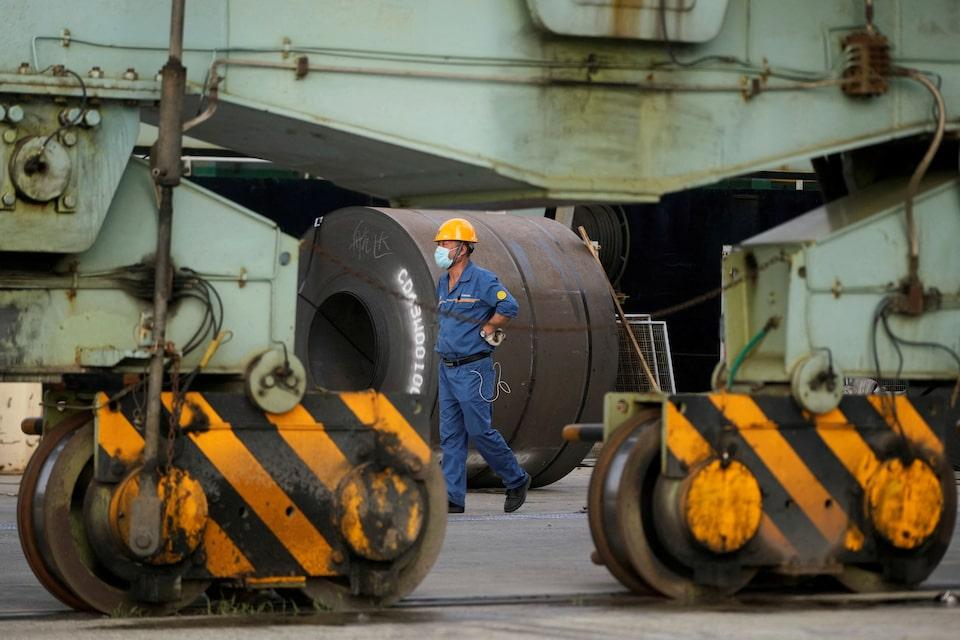
LAUNCESTON, Australia, Oct 28 (Reuters) - China's imports of iron ore are on track for another robust month in October, following on from September's record arrivals, with the strength standing in stark contrast to weak steel output. October imports are forecast to reach 113.06 million metric tons by commodity analysts Kpler, a figure that if matched by official data would be second only to the all-time high of 116.33 million in September. Sign up here. China imports about 75% of global seaborne iron ore and uses the raw material to produce around half of the world's steel. Iron ore imports have picked up pace in recent months after a weak start to the year, with the last four months all seeing official arrivals exceeding 100 million tons. This has taken the year-to-date figure to almost the same as last year, with imports for the first nine months coming in at 917.69 million tons, down 0.1% from the same period in 2024. A strong October will push the year-to-date figure into positive territory, even though steel production is struggling. China's steel output slipped to a 21-month low in September, with official data showing production of 73.49 million tons, down 4.6% from the same month in 2024 and also a drop of 5% from August's 77.37 million. For the first nine months of the year China produced 746.25 million tons, down 2.9% from the same period in 2024. That pace puts China on track for total steel output of close to 1 billion tons in 2025, consistent with the production levels of the past five years and meeting an unofficial government target that output should not exceed that of the previous year. SENTIMENT BOOST? The question for the market is why has China picked up the pace of iron ore imports in recent months even as steel output softens? Price moves offer a partial explanation, with benchmark Singapore Exchange contracts dropping to an eight-month low of $93.35 a ton on July 1. The lower price would have encouraged steel mills and traders to increase imports, but this momentum may be fading given the price has trended higher in recent weeks, ending at $105.66 a ton on Monday, not far off the eight-month high of $107.30 reached on October 13. There is also some evidence of rising stockpiles, with port inventories monitored by consultants SteelHome reaching 133.6 million tons in the week to October 24, having risen since the 18-month low of 130.1 million in the seven days to August 8. Domestic iron ore production has also been modestly lower, dropping 3.8% to 761.43 million tons in the first nine months of the year. However, the modest gain in inventories and the small drop in domestic output aren't enough to justify the recent strength in imports. It's likely that sentiment is playing a bigger role with optimism growing that China's economy is weathering the trade storms unleashed by U.S. President Donald Trump. The prospects of some form of truce between Washington and Beijing on the trade front are likely to boost support for iron ore and steel bulls. Officials from the world's two largest economies are reported to have worked out a framework deal for Trump and his Chinese counterpart Xi Jinping to consider later this week, with the two leaders due to meet on Thursday on the sidelines of the Asia-Pacific Economic Cooperation summit in Gyeongju, South Korea. While there are concerns that any deal may be short on substance and long on rhetoric, any sign that both sides are pulling back from hardline positions would be seen as a positive boost to sentiment. Enjoying this column? Check out Reuters Open Interest (ROI), your essential new source for global financial commentary. ROI delivers thought-provoking, data-driven analysis of everything from swap rates to soybeans. Markets are moving faster than ever. ROI can help you keep up. Follow ROI on LinkedIn , opens new tab and X , opens new tab. The views expressed here are those of the author, a columnist for Reuters. https://www.reuters.com/markets/commodities/chinas-ravenous-appetite-iron-ore-remains-steel-output-slips-2025-10-28/
2025-10-28 06:40
Late rains damage mature crops, threaten farmers' livelihoods Crop losses may halve agricultural growth in December quarter Farmers forced to sell damaged crops below minimum support price DHARASHIV, India, Oct 28 (Reuters) - Indian farmers' hopes for bumper crops following this year's abundant monsoon rains were dashed by heavy downpours just before harvest that damaged their fields, crushing the dreams of millions who rely solely on agriculture for their livelihoods. The losses to crops such as cotton and soybean are expected to slow agricultural growth, boost farmers' debt and cap rural consumption, which had been set to rise after New Delhi slashed taxes on hundreds of consumer items. Sign up here. "We had hoped to harvest 10 to 12 quintals of soybean per acre, but now we'll be lucky to get 2 to 3 quintals — and even that will require significant additional expenses," said farmer Kishore Hangargekar, using a unit equivalent to 100 kg (220 lb). He was speaking after two days of unrelenting rain flooded his fields and submerged his crops in the district of Dharashiv in the western state of Maharashtra. Until then, the soybean crop had been thriving, and farmers were readying for harvest. The reduction in yields from excessive rainfall is likely to halve agricultural growth to 3% to 3.5% in the December quarter, down from 6.6% a year earlier, said Garima Kapoor, economist at Mumbai-based Elara Securities. Summer-sown crops such as soybean, cotton, rice, pulses and vegetables mature from September, a month that saw rains of 15% above average this year, with some regions getting as much as 115% more than normal. While agriculture contributes just 18% to India's economy of nearly $4 trillion, almost half its population of 1.4 billion relies on farming to earn a living. NO RESPITE FROM RAIN Now farmers are scrambling to harvest summer crops ahead of winter sowing set to begin next month, but more untimely rain forecast this week could delay planting and damage late-maturing summer crops. The rain-damaged crops are earning prices well below the government's minimum support price, as quality has deteriorated. "Traders are buying the damaged crops for throwaway prices, and we have no choice but to sell," said farmer Sachin Nanaware, who sold his soybean at a rate of 3,200 rupees ($36) for 100 kg (220 lb), below the government-fixed rate of 5,328 rupees. Nanaware said he had hoped to buy a motorcycle and a television, but is now worried about repaying his bank loan. The excessive rain has boosted soil moisture for winter-sown crops such as wheat, rapeseed and chickpea, but many farmers say they lack funds for seeds and fertilisers. "We need money to buy seeds and fertilisers and to prepare the land," said farmer Chaya Jawale as she collected cotton bolls brought down from plants prematurely by the rain. "So, we have no choice but to mortgage our gold jewellery." Damage to soybean and cotton crops is expected to boost India's vegetable oil imports in the marketing year from November by 1.5 million tons to a record 18 million, says industry analyst Thomas Mielke of Oil World. ($1=87.8950 Indian rupees) https://www.reuters.com/business/environment/monsoon-promise-turns-sour-indias-crops-ruined-by-late-downpours-2025-10-28/


