2025-10-28 06:32
ASTANA, Oct 28 (Reuters) - Kazakhstan's authorities are determining how to deal with Russian oil producer Lukoil's (LKOH.MM) , opens new tab stakes in projects and could make a decision soon, the chairman of sovereign wealth fund Samruk Kazyna said on Tuesday. Lukoil said on Monday it would sell its international assets following sanctions over Ukraine announced last week by the United States. Sign up here. "The sanctions are being studied and their impact on companies and the economy remains to be fully assessed," the fund's chairman, Aidar Ryskulov, told reporters in Astana. "I think we will take (a decision) in the near future, by the end of this week," he added. Lukoil's planned sale of assets is the most consequential action so far by a Russian company in the wake of Western sanctions over Russia's war in Ukraine, which started in February 2022. The Russian oil major is a stakeholder in Kazakhstan's Tengiz and Karachaganak fields, as well as in the Caspian Pipeline Consortium, which carries Kazakh oil to Russia's port of Novorossiisk for export. https://www.reuters.com/business/energy/kazakhstan-weighing-how-deal-with-lukoils-stakes-local-projects-2025-10-28/
2025-10-28 06:25
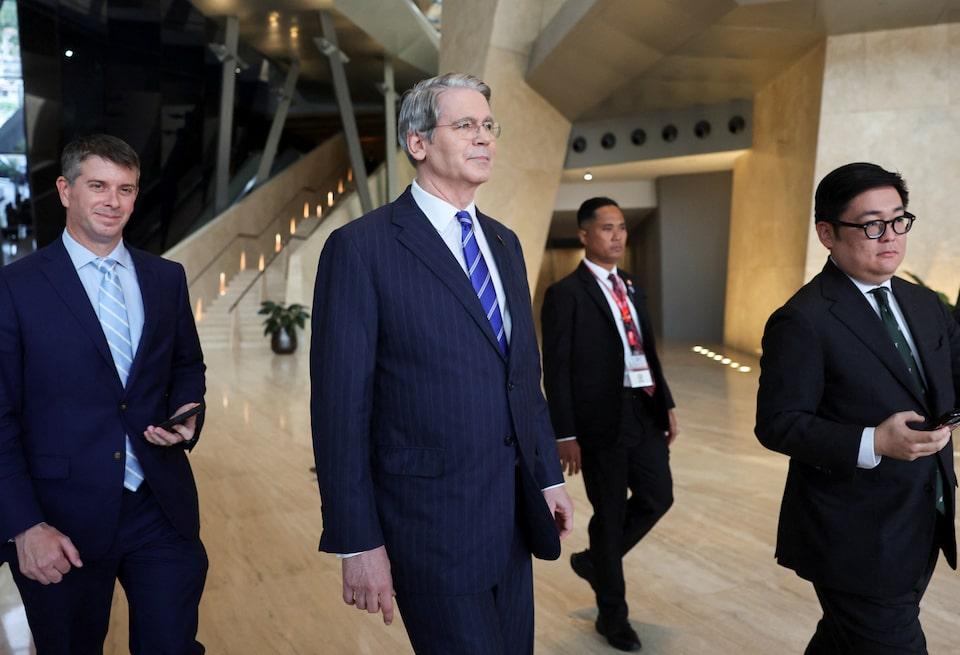
Bessent calls on BOJ to anchor inflation expectations Says Japan's economy different from when Abenomics deployed Remarks echo Bessent's past calls for higher BOJ rates Japan's Katayama says Bessent wasn't prodding BOJ to hike rates Markets expect BOJ to keep rates steady this week TOKYO, Oct 28 (Reuters) - U.S. Treasury Secretary Scott Bessent called for "sound monetary policy" during a meeting with Japanese counterpart Satsuki Katayama, his department said on Tuesday, in the latest swipe at the slow pace of interest rate hikes by the Bank of Japan. The remarks briefly pushed up the yen and come ahead of the BOJ's two-day policy meeting ending on Thursday, when markets widely expect the central bank to hold off on raising interest rates. Sign up here. "Secretary Bessent highlighted the important role of sound monetary policy formulation and communication in anchoring inflation expectations and preventing excess exchange rate volatility," the U.S. Treasury Department said in a statement. The matter was critical since Japan's economic conditions were substantially different from when former premier Shinzo Abe deployed his "Abenomics" stimulus measures 12 years ago, the statement quoted Bessent as saying during Monday's discussions. BOJ FACES NEW POLITICAL REALITY The remarks have revived market expectations Washington may keep pressuring Japan to tighten monetary policy more quickly. When asked about the Treasury Department's statement, Katayama said on Tuesday the meeting did not directly discuss how the BOJ steers monetary policy. "I believe Mr. Bessent spoke on the assumption that each country's central bank holds independence" in setting monetary policy, Katayama said. "I don't think he intended to prod" the BOJ into raising rates, she added. An advocate of Abenomics, Japan's new prime minister Sanae Takaichi has urged the BOJ to cooperate with government efforts to boost demand in remarks seen by analysts as pushing back against the central bank's rate-hike plans. After exiting a decade-long, massive stimulus launched as part of Abenomics in 2024, the BOJ raised interest rates twice through January, but still keeps borrowing costs at 0.5%. Critics have blamed the slow pace of its rate hikes for weakness in the yen currency, which has become a political headache by pushing up import costs and broader inflation. Complicating the argument, Japan's economic revitalisation minister, Minoru Kiuchi, said on Tuesday a weak yen has benefits to the economy, signaling the administration's sanguine view over the cost of prolonged yen declines. Bessent's comments come as rising costs of food and raw materials have kept Japan's core inflation above the central bank's 2% target for well over three years, causing some BOJ policymakers to worry about second-round price effects. In overseeing Washington's trade and exchange-rate talks with Tokyo, Bessent has repeatedly signalled his preference for tighter Japanese monetary policy. The yen would find its own level if the BOJ follows "proper monetary policy" Bessent said during annual IMF meetings this month. In August, he had said the BOJ was behind the curve in tackling the risk of inflation. Some analysts see Washington pursuing a weak-dollar policy that would boost U.S. exports, thereby applying pressure on Japan to allow the yen to appreciate against the dollar. While Governor Kazuo Ueda has signaled the BOJ's resolve to keep raising rates, he has stressed the need to tread cautiously due to uncertainty over how slowing U.S. growth and President Donald Trump's tariffs could affect Japan's economy. "If Japan were to correct a weak yen, it would have to be through currency intervention or monetary policy," said Shota Ryu, FX strategist at Mitsubishi UFJ Morgan Stanley Securities. "But the market's consensus is for the BOJ to next raise rates in December or January next year and, after a pause, push up borrowing costs to 1%. It's hard for the BOJ to increase rates to around 3% to 4%, like in Europe or the United States." https://www.reuters.com/world/asia-pacific/uss-bessent-highlights-need-sound-monetary-policy-japan-talks-2025-10-28/
2025-10-28 05:48
Japanese yen gains after comments from Japanese minister and U.S. Treasury Secretary BOJ expected to hold rates steady, focus on future rate hike clues Investors watch U.S.-China trade deal prospects ahead of Trump-Xi meeting NEW YORK, Oct 28 (Reuters) - The Japanese yen gained on Tuesday, rebounding from seven consecutive days of losses against the U.S. dollar, after comments from a Japanese minister and U.S. Treasury Secretary Scott Bessent eased some concerns about more expansionary fiscal and monetary policy in the country. Japan's new economic revitalization minister, Minoru Kiuchi said that Japan can boost its long-term potential growth by stimulating demand and keeping the labor market tight while being mindful of the need for fiscal discipline. Kiuchi also said that the government is closely monitoring the impact of currency moves on Japan's economy. Sign up here. “That has helped to improve sentiment around both the JGB (Japanese government bond) market and the yen," said James Lord, head of FX and emerging market strategy at Morgan Stanley. "I think foreign investors in particular have had a view that the Takaichi administration may be a little bit more stimulative when it comes to fiscal policy. These comments today are leaning in the other direction, that perhaps A, there may not be as much fiscal stimulus and B, the government is sensitive to movements in the yen,” Lord said. The Japanese currency was further supported as Bessent highlighted the important role of "sound monetary policy formulation." "Bessent is stating a clear preference for conventional policy tools like interest rate hikes rather than FX intervention, that took dollar/yen down," said Kamal Sharma, senior FX strategist at Bank of America. The comments came during a meeting with Japanese counterpart Satsuki Katayama, in the latest swipe at the slow pace of interest rate hikes by the Bank of Japan (BOJ). “That was interpreted by the market as maybe encouraging the BOJ to hike rates,” said Morgan Stanley's Lord. The Bank of Japan is expected to hold rates steady when it concludes its two-day meeting on Thursday, but the focus will be on whether it provides clues on the timing of the next hike. The Japanese yen was last up 0.44% against the greenback at 152.18 per dollar. The European Central Bank is also expected to leave rates unchanged on Thursday while the U.S. Federal Reserve is likely to cut rates on Wednesday. The greenback whipsawed against the euro on Tuesday amid multiple U.S. economic releases. The dollar gained after the ADP National Employment Report's inaugural weekly preliminary estimate showed that U.S. private payrolls increased by an average of 14,250 jobs in the four weeks ending October 11. It turned negative, however, after the Conference Board said U.S. consumer confidence eased in October as households worried about the availability of jobs over the next six months and persistently higher prices because of tariffs on imports. The dollar index was last down 0.08% at 98.69, with the euro up 0.14% at $1.1659. The single currency also hit the highest level against the British pound since May 2023 and sterling dropped against the dollar to the lowest since August 1. Britain's budget watchdog is expected to cut a key productivity forecast by 0.3 percentage points, potentially leading to a 20 billion-pound ($26.8 billion) hit to the public finances. The Bank of Canada is also widely expected to cut rates on Wednesday, though Morgan Stanley holds a nonconsensus view that it will leave rates unchanged. “We think it is likely that they are going to take a skip this time, largely because the data's been better than expected. So, we're short USD/CAD,” Lord said. The Canadian dollar was last up 0.34% versus the greenback at C$1.39 per dollar. Traders are also focused on the prospect of trade deal between the United States and China ahead of a meeting between Trump and Chinese President Xi Jinping in South Korea on Thursday. The Australian dollar , often seen as a proxy for risk appetite, strengthened 0.46% versus the greenback to $0.6586, the highest since October 9. In cryptocurrencies, bitcoin gained 0.17% to $114,719. https://www.reuters.com/world/asia-pacific/dollar-soft-traders-brace-trump-xi-central-bank-meetings-2025-10-28/
2025-10-28 05:44
SINGAPORE, Oct 28 (Reuters) - Thailand has yet to approve transmission charges for an extension to a deal to send hydropower from Laos to Singapore, the country's deputy energy secretary said on Monday. The Lao PDR-Thailand-Malaysia-Singapore Power Integration Project, first unveiled in 2022, has been recognised as a precursor to an ASEAN Power Grid, an attempt to reduce Southeast Asia's growing reliance on fossil fuels for power generation. Sign up here. Earlier in October, Malaysia's energy minister said approval could come as early as next month. On the sidelines of an event in Singapore on Monday, Sompop Pattanariyankool, Thailand's deputy permanent secretary at the Ministry of Energy, said Thai authorities still needed to give their approval to the second phase of the power project. "Wheeling charges from Malaysia to Singapore is already done," Pattanariyankool said. "For Thailand, it needs to be approved." Pattanariyankool said he could not provide a timeline for the approval, which depends on a decision by the National Energy Policy Council. Its membership changed when a new government took office last month. Wheeling charges refer to costs imposed on the transmission of electricity through a grid. The lack of a wheeling agreement between Singapore and Thailand would block exports from Laos until a settlement is reached, as the power generated is transmitted through Thailand. Earlier this month, Malaysia's energy minister said political changes had delayed the resumption of power exports from Laos to Singapore. On Monday, Singapore said a resumption was expected soon, without providing further details. https://www.reuters.com/business/energy/thailand-has-yet-approve-transmission-charges-regional-power-deal-2025-10-28/

2025-10-28 05:28
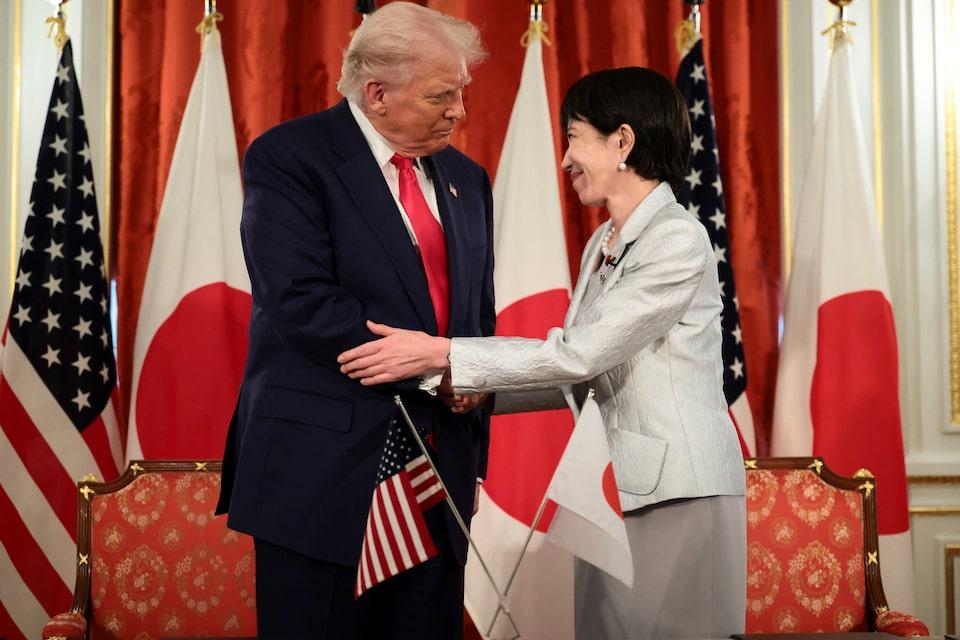
China expands curbs on rare earths Rare earths, critical minerals are key electronic components Essential for items from cars to fighter jets U.S. presses Japan to curb Russian energy imports Japan steps up U.S. LNG investments TOKYO, Oct 28 (Reuters) - U.S. President Donald Trump and Japanese Prime Minister Sanae Takaichi signed a framework agreement on Tuesday for securing the supply of rare earths, as both countries aim to reduce China's dominance of some of the key electronic components. The leaders signed the documents, which included critical minerals, at the neo-Baroque-style Akasaka Palace in Tokyo, beneath three chandeliers decorated from top to bottom with gold ornamentation, as aides applauded. Sign up here. No direct mention was made publicly by the leaders about China, which processes over 90% of the world's rare earths, making it the source of each country's concern about its mineral supply chain. Beijing has recently expanded export curbs. Trump and Chinese President Xi Jinping are set to meet on Thursday on the sidelines of the Asia-Pacific Economic Cooperation in South Korea to discuss a deal that would pause steeper U.S. tariffs and Chinese rare earths export controls. Japan and the U.S. would use economic policy tools and coordinated investment to speed up the "development of diversified, liquid, and fair markets for critical minerals and rare earths", and aim to provide financial support to selected projects within the next six months, the White House said. Both countries would consider a mutually complementary stockpiling arrangement and cooperate with other international partners to ensure supply chain security, it added in a statement. While dominated by China, the U.S. and Myanmar control 12% and 8% of global rare earth extraction, according to Eurasia Group, and Malaysia and Vietnam cover another 4% and 1% of processing, respectively. U.S. ENERGY SUPPLIES Japan has pledged a $550 billion investment into the U.S. economy, part of the wider bilateral trade deal, which could include power generation and liquefied natural gas, among other areas, according to sources familiar with the talks. Ahead of Trump's Asia trip, the U.S. called on Russian energy buyers, including Japan, to cease imports, and imposed sanctions on Moscow's two biggest oil exporters - Rosneft (ROSN.MM) , opens new tab and Lukoil (LKOH.MM) , opens new tab - to push the Kremlin to the negotiation table to end the war in Ukraine. Japan has stepped up U.S. LNG purchases in the last few years as it tries to diversify away from its key supplier Australia and prepare for supply contract expirations from Russia's Sakhalin-2 LNG project, which Mitsui (8031.T) , opens new tab and Mitsubishi (8058.T) , opens new tab helped to launch in 2009. In June, JERA, Japan's top LNG buyer, agreed to buy up to 5.5 million metric tons per annum of U.S. LNG under 20-year contracts, with deliveries starting around 2030. This is roughly the same amount Japan imports annually from Sakhalin-2. Most supply from Sakhalin-2, which covers 9% of Japan's gas needs, ends in 2028-2033. Japan buys less than 1% of its oil imports from Russia under a sanctions waiver, with the bulk of its oil supply covered by the Middle East. Last week alone, Japan's biggest city gas supplier, Tokyo Gas (9531.T) , opens new tab, signed a preliminary deal to buy 1 million metric tons per annum of LNG from the Alaska LNG project, following a similar announcement from JERA in September. JERA pledged $1.5 billion for gas assets in Louisiana in its first foray into upstream production in the U.S., where Tokyo Gas and Mitsui are already present. To keep electricity prices in check, Japan wants to continue Sakhalin-2 LNG imports, a senior official has said, as it takes only a few days to deliver LNG to Japan compared to around a week from Alaska and roughly a month from the U.S. Gulf Coast. "The U.S. said it wants Japan to stop importing Russian energy - but this is Japan's closest LNG source and which is also cheap," said Nobuo Tanaka, chief executive with Tanaka Global, Inc. advisory. "I think the question should be framed this way: can the U.S. provide Japan with LNG as cheap as what currently comes from Russia? Can gas from Alaska be that affordable?" https://www.reuters.com/world/asia-pacific/trump-takaichi-agree-rare-earth-critical-minerals-supply-2025-10-28/
2025-10-28 05:09
Oct 27 (Reuters) - Citigroup (C.N) , opens new tab and cryptocurrency exchange Coinbase (COIN.O) , opens new tab plan to collaborate on digital asset payment solutions for the U.S. bank's institutional clients, to expand the offering to global clients in the future. The partnership will initially focus on enabling users to deposit and withdraw traditional currencies (commonly referred to as "fiat" in crypto) through Coinbase's services, marking a significant step as it allows smooth transitions between traditional money and digital assets like cryptocurrencies, the two companies said in a joint statement on Monday. Sign up here. Additionally, the collaboration will streamline payment operations, Citi said. "By combining their reach with Coinbase's leadership in digital assets, we're creating solutions that can simplify and expand access to digital asset payments," said Brian Foster, global head of Crypto as a Service at Coinbase. Citi said more details on specific features, including exploring ways to convert traditional currency into stablecoins, will be disclosed in the coming months. Stablecoins are digital tokens designed to keep a constant value. They are often backed by traditional assets such as the U.S. dollar or government debt. They have surged in popularity, and their demand is expected to increase further after the U.S. passed its GENIUS Act in July that sets federal rules for stablecoins. Dealmaking within the digital assets industry has picked up pace this year as a crypto-friendly Trump administration encourages companies to expand their business in the U.S., providing a favorable environment for growth and investment. Coinbase, one of the world's largest cryptocurrency exchanges, shelled out $375 million to buy investment platform Echo, while earlier this year it had struck a $2.9 billion deal for crypto options provider Deribit. https://www.reuters.com/business/finance/citi-tie-up-with-coinbase-boost-digital-payments-institutional-clients-2025-10-28/