2025-10-24 17:41
Oct 24 (Reuters) - Public utility company Santee Cooper said on Friday it has approved a letter of intent from Brookfield Asset Management (BAM.TO) , opens new tab to enter into talks over resuming construction of two AP1000 nuclear reactors in Fairfield County, South Carolina. Both the companies will initiate a six-week feasibility period during which they will select a project manager, evaluate construction providers, and engage potential buyers for the carbon-free power the reactors could generate. Sign up here. The project was scrapped in July 2017 after two utilities, Santee Cooper and South Carolina Electric and Gas Co (SCE&G), had spent about $9 billion developing it. "Brookfield came to Santee Cooper with a proposal that set out the path to turn our prior nuclear investment," said Peter McCoy, Santee's chairman. The decision to maintain the equipment over the past eight years positions the Fairfield units for a quicker and less costly path to completion, the company said In January, the company was seeking buyers for the two partially built nuclear units at the V.C. Summer Nuclear Station in Jenkinsville. The Wall Street Journal reported the news earlier in the day. https://www.reuters.com/business/energy/santee-cooper-talks-sell-inactive-reactors-brookfield-wsj-reports-2025-10-24/

2025-10-24 14:22
Oct 24 (Reuters) - General Dynamics (GD.N) , opens new tab on Friday beat Wall Street estimates for third-quarter profit and revenue, driven by strong business jet deliveries as affluent customers continued to spend on high-end air travel. Shares of the Gulfstream jet maker rose more than 4% in early trading hours. Sign up here. Recently, American Express (AXP.N) , opens new tab, Delta Air Lines (DAL.N) , opens new tab and Hilton (HLT.N) , opens new tab signaled wealthier consumers were driving sales and increasingly making up a bigger portion of profits. General Dynamics' adjusted profit came in at $3.88 per share for the quarter, above analysts' estimate of $3.70 per share, according to data compiled by LSEG. The company's aerospace segment continued to recover from supply chain challenges, while its certification timelines reduced, enabling it to ramp up deliveries in the quarter ended September 28. While the company posted a rise in earnings across all segments, "the Aerospace segment in particular performed impressively," CEO Phebe Novakovic said, noting "very strong" order activity for business jets. New aerospace bookings during the quarter were 1.3 times its billing, indicating strength in the segment's order book. The segment's quarterly revenue rose 30.3% as Gulfstream aircraft deliveries jumped to 39 units in the third quarter from 28 a year ago. Defense manufacturers are seeing strong demand for weapons and other equipment due to the geopolitical uncertainty and ongoing conflicts in the Middle East, with some predicting strong profits for the rest of this year. Among its defense units, General Dynamics' nuclear-powered submarine-making marine systems segment saw a 13.8% rise in revenue. Revenue within the combat systems segment of the defense business - which makes land combat vehicles, weapons systems, and munitions - rose 1.8%. The Reston, Virginia-based company reported a 10.6% rise in quarterly revenue to $12.91 billion, which also beat Wall Street analyst estimates of $12.57 billion. The company has forecast total revenue of $52 billion for fiscal year 2025, up from its previous forecast of $51.2 billion. It maintained its operating margin outlook of 10.3%. The company did not provide any further forecast for annual profit and segment-wise revenue forecasts. "The uncertain duration and future potential impacts of the government shutdown creates a lack of clear visibility," CEO Novakovic said on a call with investors. "So forecasts in this environment are difficult at best, and less reliable than one would hope." https://www.reuters.com/business/aerospace-defense/general-dynamics-quarterly-profit-rises-strong-business-jet-deliveries-2025-10-24/

2025-10-24 13:42
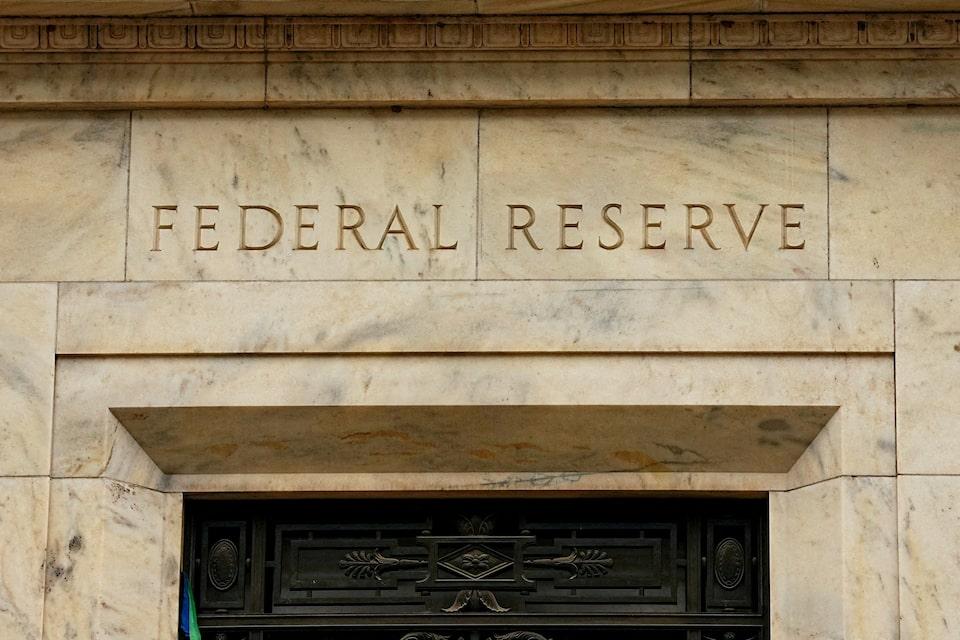
Oct 24 (Reuters) - The Federal Reserve will likely deliver quarter-point interest rate cuts at each of its next three meetings, traders bet on Friday after a U.S. government report showed consumer inflation rose a little less than expected last month. The Consumer Price Index climbed 3.0% in the 12 months through September, the Labor Department's Bureau of Labor Statistics said on Friday, a tick up from its 2.9% increase in August but below the 3.1% expected by economists polled by Reuters. Sign up here. That may give even the central bank's more hawkish policymakers comfort that continuing to ease borrowing costs to support the labor market won't reignite inflation, analysts said. "As odd as it may seem, the Fed will be happy with inflation staying around 3% for the next couple of months," said Olu Sonola, Fitch Ratings' head of U.S. economic research. Futures contracts that settle to the Fed's policy rate reflected near-100% certainty that the Fed will cut its policy-rate range to 3.75%-4.00% at its meeting next week, and a 95% chance of a further cut in December. After the softer-than-expected September inflation reading, traders put about a 55% chance on another rate cut at the Fed's January meeting, up from less than 50% previously. https://www.reuters.com/business/fed-rate-cut-bets-rise-after-inflation-rose-less-than-expected-september-2025-10-24/
2025-10-24 13:34
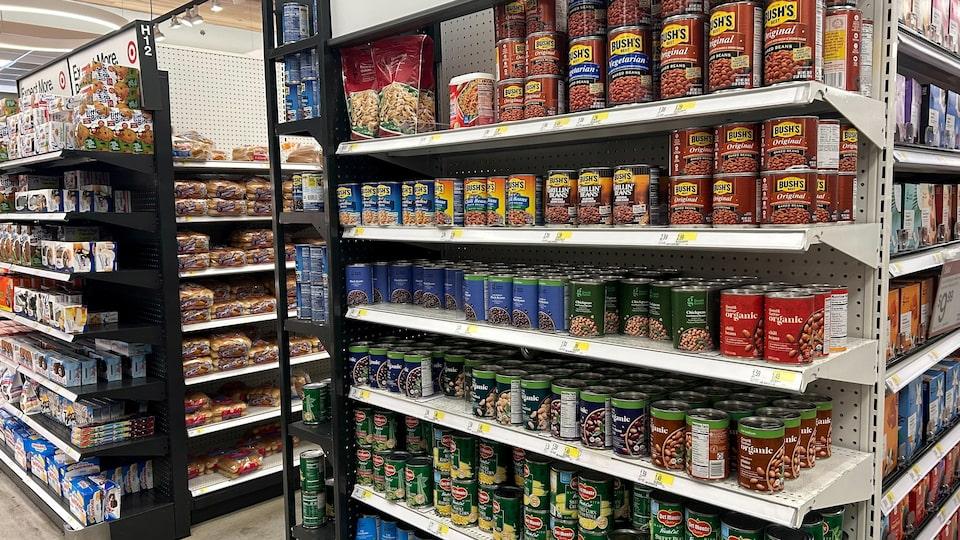
NEW YORK, Oct 24 (Reuters) - U.S. consumer prices rose slightly less than expected in September, preserving market expectations the Federal Reserve will cut interest rates at its policy meeting next week. The Consumer Price Index (CPI) rose 0.3% last month after climbing 0.4% in August, the Labor Department's Bureau of Labor Statistics said on Friday. In the 12 months through September, the CPI increased 3.0% after advancing 2.9% in August. Sign up here. Economists polled by Reuters had forecast the CPI increasing 0.4% and rising 3.1% year-on-year. Excluding the volatile food and energy components, the CPI gained 0.2% after rising 0.3% in August. The so-called core CPI increased 3.0% year-on-year after rising 3.1% in August. The report was delayed due to the government shutdown but was eventually published in order to help the Social Security Administration calculate its 2026 cost-of-living adjustment for millions of retirees and other benefits recipients. MARKET REACTION: STOCKS: S&P 500 E-mini futures climbed and were last up 44.75 points, or 0.66%. BONDS: U.S. Treasury yields initially fell before paring declines and the 10-year yield was last downunchanged to 3.989% and the two-year yield fell 1.5 basis points to 3.467%. FOREX: The dollar index weakened and was last off 0.07% to 98.87. COMMENTS: JEREMY SCHWARTZ, SENIOR US ECONOMIST, NOMURA, NEW YORK: “It was weaker than we expected, but I think a lot of signs of underlying inflation pressure are still there. So, some of the misses were driven by noisy rent components. We expect that you're not going to get too much more disinflation from that. “Meanwhile, tariffs do seem to be gradually passing into a lot of consumer goods prices. You saw apparel continuing to tick higher. That's been one of the categories where the pass-through hasn't happened so quickly, but we think it's very likely to continue through year end. And so, the signs there of those lingering pressures are still pretty clear in this report. “As long as you're in that mode where you're tolerating a little bit more inflation, this is a good report. This is going to encourage (the Fed) to keep on that path of insurance cuts or normalization, depending how you view it. In the absence of any other tier one data until the government shutdown concludes, I think it's very likely that they deliver something close to the dot plot until the data can start to be published again to prove them otherwise.” ERIC GERSTER, CHIEF INVESTMENT OFFICER, ALPHACORE WEALTH ADVISORY, RIVERSIDE, CONNECTICUT: "It's quite positive (the data) and going forward, it certainly clears the way for the Fed to cut rates next week as they were going to anyway and it certainly leads to a higher expectation of at least two more rate cuts (By March). With the government shutdown. we don't have a lot of other data other than private data and so this is a good scenario for the Fed if inflation is maintaining at this level and not spiking that they can focus more on the employment." WASIF LATIF, CHIEF INVESTMENT OFFICER, SARMAYA PARTNERS, NEW JERSEY: "So far the number seems to be a relief for the market because it came in less than expected, at least the headline number. And when you look at some of the components it looks housing contributed to some of the softness here. Without having a full picture across the other economic components, this data by itself is a relief and you see that in the futures market, bonds and commodities - gold is off its lows. It's early in the session and we will see how the market digests the details of this number. But the initial reaction is good because it gives the Fed a little bit more breathing room to cut rates. "Ultimately, this market has been driven by expectations of rate cuts. And as that breathing room for the Fed gets more and more, the market likes that because that is supportive of more liquidity through rate cuts and the possibility of other types of monetary accommodation. The bond market is down which helps in the fiscal side of things, helping with government funding and future bond auctions. So net and net, the number is good." MONA MAHAJAN, HEAD OF INVESTMENT STRATEGY, EDWARD JONES, NEW YORK: "It's nice to see CPI come in a tick lower than expectations. It gives the Fed a little more cover to pursue the rate cutting path it outlined in September even with the lack of full labor market data. Some of the trends that we did see in reports like ADP or even the ISM survey data have shown some softening in labor, and the CPI data today helps confirm that we're not seeing an outsized move higher in inflation that could give the Fed some pause. So, that part of the story remains intact. "The Fed is on this path towards neutral and probably wants to get the Fed funds rate somewhere in the three and a half percent range over the next year or so. "We're still above the Fed's 2% target. We still have to see fully the tariff impact work through goods inflation. But goods makes up about a third of the CPI basket, and two thirds is services inflation, and that continues to look like it's remaining contained. That'll help support the overall narrative. "We want to be mindful that we are in period of government shutdown, and the economy can slow during this period as well. Now this inflation data doesn't reflect that quite yet, but we'll be watching for that kind of slowdown in the economy as well." MARC CHANDLER, CHIEF MARKET STRATEGIST, BANNOCKBURN CAPITAL MARKETS, NEW YORK: "The headline was a bit softer than expected. The dollar was sold on the news, even though the market had nearly 100% confidence before the report that the Fed would cut rates, not only next week, but in December. "My guess would be that the dollar firms up again as the session progresses. Because the market has priced in the Fed cuts, this kneejerk pushback in the dollar I don't think is going to be sustained." PETER CARDILLO, CHIEF MARKET ECONOMIST, SPARTAN CAPITAL SECURITIES, NEW YORK: “These numbers reveal nothing new. Inflation remains sticky. The good news is that the core rate only rose 0.2% which was in line with what we were looking for, and on a year-to-year basis 3%. “Headline inflation was in line with consensus, but the year-to-year was a little bit higher. This tells us that the tariff inflation continues to weigh on the consumer's pocketbook and that inflation remains sticky, although it's not running wild and that's a good thing. “In terms of the Fed, we're looking at a 25 basis point cut next week and they will have enough time from now to December to evaluate the inflation data that is coming in and even if it's delayed. “But it's quite clear that the Fed has indicated that for now they've abandoned the inflation fight to prop up the jobs market from deteriorating any further, which means further rate cuts ahead.” JOE SALUZZI, CO-MANAGER OF TRADING, THEMIS TRADING, CHATHAM, NEW JERSEY: "It was a good number and, I think, considering that we haven't had anything over the past two or three weeks, people were getting a little anxious as to what this could have been. So you've finally got something and it kind of confirms everybody's theory as to what's going on. Inflation is relatively tame, right? And you've still got a problem in the jobs market, there's no question about it, which I think is why the Fed is going to continue doing what they're doing. "It looks around 88% now for two more cuts this year. So, it's gonna happen. Well, the market likes that. The S&P rallied pretty quickly. We got almost about seven tenths of 1% right now on the upside. So, overall, it's good. It keeps the fuel in the rally. It could have went the other way, right? Had we gotten a really hot number, then you could have had a potential big problem here. But, overall, I'd say the market is really liking this one." https://www.reuters.com/world/africa/view-us-consumer-prices-increase-less-than-expected-september-2025-10-24/
2025-10-24 12:53
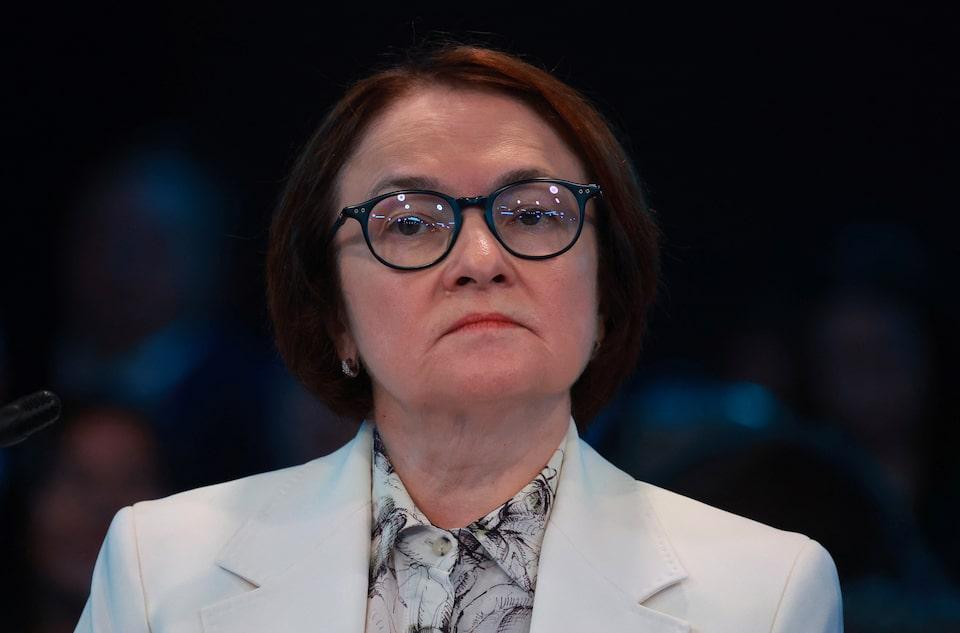
MOSCOW, Oct 24 (Reuters) - Russian Central Bank Governor Elvira Nabiullina and her deputy Alexei Zabotkin addressed a news conference on Friday after the central bank cut its interest rate by 50 basis points to 16.5%. Nabiullina and Zabotkin spoke in Russian. The quotes below were translated into English by Reuters. Sign up here. NABIULLINA ON THE OPTIONS FOR FRIDAY'S RATE DECISION "Three options were considered in detail: 16%, 16.5%, and an unchanged rate of 17%. "There were many arguments for these choices, but the differences in positions can probably be reduced to the assessment of stable inflation and the degree of concern about the scale of possible secondary effects from one-off pro-inflationary factors." NABIULLINA ON THE IMPACT OF WESTERN SANCTIONS "The sanctions are primarily aimed at restricting exports of our raw materials. It's difficult to predict the exact impact of these sanctions, but we view them as a negative external factor. "Much will depend on how we adapt to these sanctions. We know from previous periods that it takes a certain amount of time, but adaptation did happen. Therefore, it isn't necessary yet to assess whether this will require any changes in monetary policy decisions. We will see how the situation develops." NABIULLINA ON FUTURE RATE DECISIONS "I believe that we are in a cycle of monetary policy easing, either way. It may happen with pauses, but you can see the trajectory of the rate that we have set for next year, which is a continuation, albeit a more cautious one, of monetary policy easing... We see that demand growth is slowing down, demand overheating is subsiding, and we expect the demand gap to close in the first half of next year. "Our forecast, if you look at the trajectory of the key rate, including for this year, suggests the possibility of both an additional reduction at the December (rate-setting) meeting and an unchanged rate." NABIULLINA ON THE LABOUR MARKET "...tensions on the labour market are also easing slightly... We see that the number of vacancies is decreasing. The (labour market) survey shows that the share of companies experiencing a shortage of personnel is also decreasing. Although the number of these companies remains high, there is a certain trend towards a reduction in tension in the labour market." NABIULLINA ON THE IMPACT OF OIL PRICES ON MONETARY POLICY "The budget rule essentially neutralises the impact of these oil price fluctuations on our economy. It absorbs, if not all, then the lion's share of this volatility...(the mechanism) works as long as there are sufficient funds in the National Welfare Fund to neutralise this impact, to compensate for the loss of oil and gas revenues...And if the funds are exhausted, then the effectiveness of the budget rule as insurance against a temporary decline in prices will also be exhausted. "Therefore, in this regard, we welcome the government's plan to gradually reduce the cut-off price, as this will help to protect the economy in the long term, to protect the economy and the budget more reliably from oil price fluctuations and from scenarios in which the long-term export price of oil may fall below $60 per barrel." NABIULLINA AND ZABOTKIN ON HOW INFLATION EXPECTATIONS COULD DECREASE Nabiullina: "People's expectations that inflation will be high will decline only if they see that prices in stores are not constantly rising. If they continue to rise, no matter what we say, people will have high inflation expectations. Therefore, it is essential for us to continue reducing inflation. Lowering and stabilising inflation and inflation expectations at low levels will allow us to reduce the key rate more quickly." Zabotkin: "If inflation expectations are low and anchored, the Central Bank needs to react less with interest rates to short-term fluctuations in inflation in order to keep inflation low in the future. The more anchored inflation expectations are, the less monetary policy needs to react to demand shocks." *NABIULLINA AND ZABOTKIN ON GEOPOLITICS' IMPACT ON ROUBLE EXCHANGE RATE Nabiullina: "We must admit that our exchange rate has become more volatile. Depending on the combination of these factors, it can react to them in completely different ways. The exchange rate fluctuates within a relatively stable range. In fact, we should not look at these short-term fluctuations, but rather at longer periods. "I would like to point out that, in addition to exports, imports, capital flows, and our monetary policy, structural factors are now influencing the exchange rate...Internal factors include import substitution, protectionism, localisation requirements, and requirements to purchase domestic products within the public sector and for government orders. These factors will objectively restrict imports and, all other things being equal, will objectively lead to a smaller share of imports in GDP. It should be understood that this will result in a stronger exchange rate. "The second long-term factor is a decline in demand among our citizens for foreign assets - currency, foreign securities, industrial assets in 'unfriendly countries' - due to sanctions risks and restrictions. And third, an increase in the budget cut-off price. In essence, this means more active use of oil and gas rents. This also leads to a structurally stronger real exchange rate. " Zabotkin: "Here I will repeat once again what we constantly remind ourselves of: if our monetary policy is aimed at low inflation, it automatically protects the purchasing power of the national currency not only in relation to goods and services, but also in relation to other foreign currencies, except for severe external shocks, which, of course, can lead to changes. But overall, exchange rate stability is a consequence of a policy aimed at low inflation -- and only that." https://www.reuters.com/business/finance/russias-nabiullina-future-rate-decisions-2025-10-24/
2025-10-24 12:39
Oct 24 (Reuters) - U.S. stock index futures extended gains on Friday after consumer prices for September came in cooler-than-expected. A Labor Department report showed that the Consumer Price Index rose 0.3% on a monthly basis in September versus a 0.4% increase forecast by economists polled by Reuters. It stood at 3% on a year-on-year basis, compared with an estimated 3.1% rise. Sign up here. The core figure, excluding volatile food and energy components, rose 0.2% on a monthly basis, compared with expectations for a 0.3% advance. It came in at 3% on a year-on-year basis, versus an estimated 3.1% increase. At 08:31 a.m., Dow E-minis were up 235 points, or 0.5%, Nasdaq 100 E-minis were up 246.5 points, or 0.98, and S&P 500 E-minis were up 47 points, or 0.7%. https://www.reuters.com/business/snapshot-wall-st-futures-extend-gains-after-september-inflation-data-2025-10-24/