2025-12-08 11:18
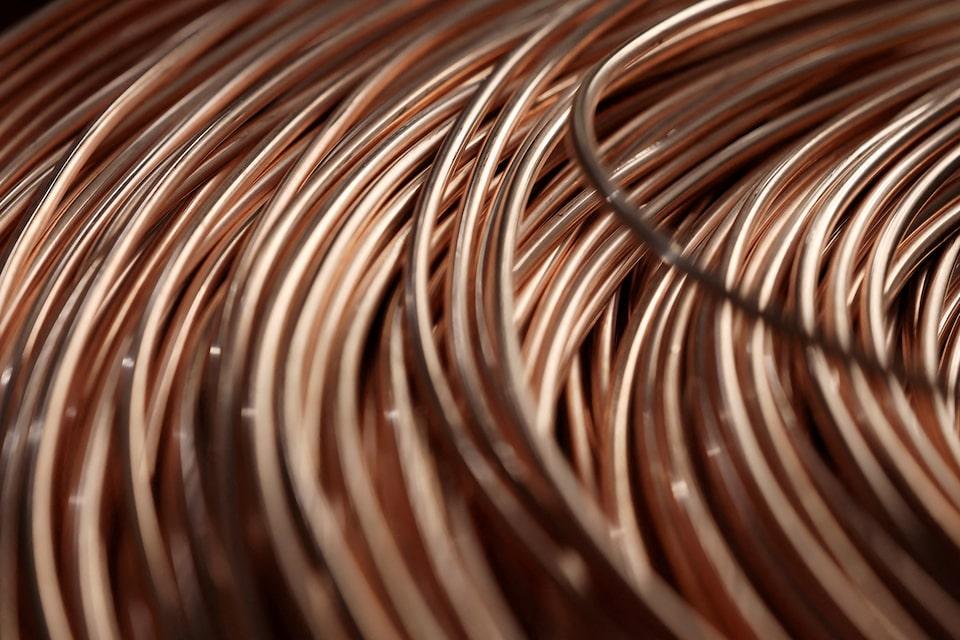
BRUSSELS, Dec 8 - The European Union plans to delay to December 16 legal proposals to expand its carbon border levy and potentially weaken a 2035 ban on new CO2-emitting cars, according to a draft European Commission agenda, seen by Reuters. The plans are being watched closely by carmakers and governments, including Germany and Italy, which have demanded the EU revise its 2035 autos CO2 emissions policy, which in its current form would effectively ban sales of new combustion engine cars. Sign up here. The proposals had initially been due for publication on Wednesday. Commission officials were still negotiating the timings on Monday, and the draft agenda could still change before it is published. Some EU officials suggested the autos proposals could be delayed further, into 2026. A Commission spokesperson declined to comment on the draft agenda seen by Reuters. Brussels is preparing proposals to expand its upcoming carbon border tariff to more downstream products such as washing machines, and attempt to prevent foreign companies from circumventing the world-first measure. The autos proposals are being prepared amid lobbying from European carmakers for greater flexibility on the 2035 car policy, including by allowing sales of plug-in hybrids, and combustion engine cars that run on so-called CO2-neutral fuels, to continue beyond this deadline. Europe's auto industry says it needs this flexibility to cope with slower than expected electric vehicle sales, and fierce competition from China. But weakening the policy could hamper the EU's climate targets, since it would mean more CO2-emitting cars remain on Europe's roads by 2050, when the EU has committed to reach net zero emissions across its economy. https://www.reuters.com/sustainability/climate-energy/eu-delay-proposals-carbon-border-tariff-auto-industry-draft-document-shows-2025-12-08/

2025-12-08 11:17
No reason to change policy for months Exchange rate pass through may be smaller than thought Projected undershooting in 2026 not a worry No point in trying to overengineer policy FRANKFURT, Dec 8 (Reuters) - The European Central Bank has no reason to change interest rates for months and should be mindful of some upside inflation risks, including from slower wage moderation and a smaller impact from the euro's firming, Slovak policymaker Peter Kazimir said. The ECB has been holding interest rates steady since cutting them by 2 percentage points in the year to June, debating whether it has done enough to keep inflation at 2% after taming runaway price growth. Sign up here. "I see no reason to move in the coming months," Kazimir told Reuters in an interview. "Definitely not in December, then we’ll see." He argued that the economy and prices are developing broadly as expected but there have been some upside surprises that require attention. "The labour market remains tight, growth is a bit better and wage moderation is somewhat slower than we expected," Kazimir, considered a policy hawk on the 26-member Governing Council, said. While inflation risks are broadly balanced, he argued that being 'vigilant' to upside risks has become more important. His comments are likely to solidify already ample investor bets that the ECB is done cutting interest rates. Markets now see virtually no chance of any further policy easing even next year after growth and price data both surprised on the upside. Kazimir's comments echo a message from ECB board member Isabel Schnabel, who argued that the ECB's next move is likely to be a hike, rather than a cut, but not anytime soon. Some have argued that the euro's strength against the dollar is making imported goods and energy cheaper, fuelling disinflation and raising the risk that euro zone price growth dips below target. But Kazimir warned that the exchange rate impact may be smaller than some expect and the ECB should in any case not react to inflation bumps caused by energy base effects. "We continue monitoring the exchange rate pass-through to goods inflation, as it may not be as strong as expected," Kazimir added. "Firms might not entirely reflect developments in the exchange rate markets in their final prices." The euro is up 6% in a year on a trade-weighted basis and it is also 11% stronger against the dollar, the currency used to price key energy commodities. Still, inflation could dip below 2% next year, even if temporarily, and this is why some policymakers worry about downside risks. Kazimir, however, pushed back, arguing that the labour market is tight, the output gap is closed, growth is at potential and wage moderation is slow, all reducing the chance of inflation going too low. "The projected undershooting doesn’t worry me at all," he said. "There is no need to react to small deviations, especially if they are because of energy." "Monetary policy needs to provide certainty and trying to overengineer policy around small bumps in inflation would actually create uncertainty," he said. https://www.reuters.com/business/ecb-must-be-vigilant-about-some-upside-risks-inflation-kazimir-says-2025-12-08/

2025-12-08 11:06
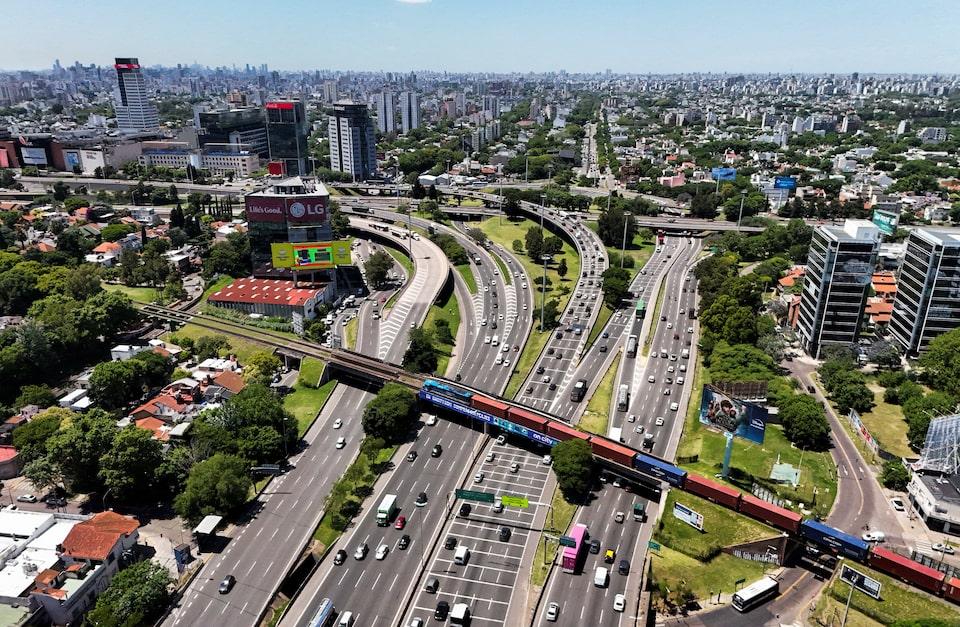
Tender to operate freight lines to be launched in 2026 Revitalization key to Milei plans to transform Argentine economy Significant investment will be needed after years of neglect BUENOS AIRES, Dec 8 (Reuters) - Argentina, a major global food supplier, plans to supercharge its grain and mining exports with privatization and an ambitious modernization of its aging railway network, which industry leaders say will halve freight costs from regions far from ports. The first tender is for the Belgrano Cargas network, which operates the country's three largest freight train lines. To be launched early next year, the initiative could expand production of global exports like soybeans, corn, copper and lithium. It also could help transport sand to Vaca Muerta, a huge shale formation in Argentina's southwest. Sign up here. Privatization of the network is part of President Javier Milei's plan to transfer struggling state-owned enterprises to private hands and attract investment to replenish reserves depleted after years of economic crisis. LESS FREIGHT "BY TRAIN" THAN IN 1970 Modernizing the railway system after years of neglect will be an enormous challenge. "The volume of cargo transported (by train) today is below that of 1970, although agricultural production has increased almost six times in the same period," said Alejandro Núñez, president of state-run Belgrano Cargas y Logística that runs the Belgrano Cargas network. The network includes three lines that span nearly 8,000 kilometers (5,000 miles) and currently transport about 7.5 million tons of cargo per year, of which 60% are agricultural products and derivatives. At times, trains travel so slowly on the dilapidated tracks that soybean loads are easily hijacked. Derailments are common. A further 11,000 kilometers (6,800 miles) of lines will be put out to tender. These are currently out of service entirely. Most cargo in Argentina is shipped by road. Rail freight transports only 5% of the total, minuscule compared to 20% in Brazil and more than 40% in the U.S. and Canada. BIDDING INTEREST The government sees improving the railways as vital to its target of increasing total annual exports by $100 billion in seven years, according to Foreign Minister Pablo Quirno. This year, Argentina has reported total exports of $71.5 billion through October. Privatization may help by lowering the costs of transporting goods from farms in the north and west of the country to the key ports area around the city of Rosario. Per ton, it currently costs more to transport cargo from the northern province of Salta to Rosario than to ship it from Rosario to Vietnam, said Gustavo Idígoras, president of grain export chamber CIARA-CEC. Improving the railways will not be cheap. Núñez estimated an investment of at least $800 million would be needed to upgrade the infrastructure. One probable bidder for the tender is Grupo México Transportes (GMXT), which operates Mexico's largest rail network and several freight lines in the U.S., said a source with direct knowledge of the matter who declined to be named. Given the magnitude of the upgrade needed, GMXT plans to invest $3 billion if it wins, the source said. An agricultural consortium made up of Bunge Global, Cargill Inc., Louis Dreyfus Co., Asociación de Cooperativas Argentinas and Aceitera General Deheza SA has also expressed interest in the bidding, as has Anglo-Australian mining company Rio Tinto (RIO.AX) , opens new tab, according to local media reports. Representatives of the companies declined to comment. EXPANDING THE FRONTIER According to Alfredo Sesé, technical secretary of the transportation commission at the Rosario Stock Exchange, lower freight costs could help expand the agricultural frontier in the north of the country. At least half of Argentina's agricultural production takes place more than 300 kilometers from Rosario. Sesé estimated that transporting a ton by truck costs between 7 to 9 cents per kilometer, while doing so by rail costs less than 5 cents. The further the farm, the greater boost a modernized railway could bring. Argentina's mining sector could also benefit. Argentina is the world's No. 4 lithium exporter and has copper mining projects that could begin production in the next several years. "The mining industry needs logistical solutions that allow it to supply projects and move production," said Roberto Cacciola, president of the Argentine Chamber of Mining Companies. https://www.reuters.com/business/autos-transportation/argentinas-railway-privatization-dreams-face-long-haul-ahead-2025-12-08/
2025-12-08 10:52
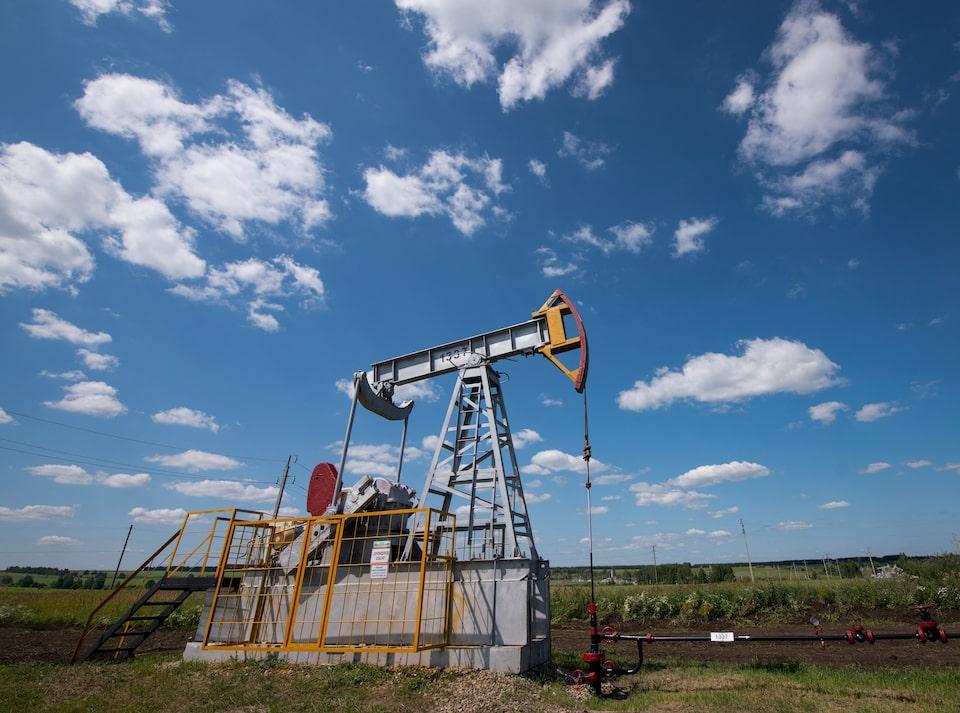
MOSCOW, Dec 8 (Reuters) - The Kremlin said on Monday that India would continue buying oil wherever it was profitable to do so in order to ensure its own economic interests. U.S. President Donald Trump doubled tariffs on Indian goods to 50% in August to punish New Delhi for buying Russian oil, which Washington said was helping to fund Russia's war in Ukraine. Sign up here. On a visit to New Delhi last week, Russian President Vladimir Putin offered India uninterrupted fuel supplies. In a call with reporters, Kremlin spokesman Dmitry Peskov said: "India, as a sovereign state, conducts foreign trade operations and purchases energy resources where it is beneficial for India, and as far as we understand, our Indian partners will continue this policy to ensure their economic interests." https://www.reuters.com/business/energy/kremlin-says-india-will-continue-buy-russian-oil-if-its-profitable-2025-12-08/
2025-12-08 10:33
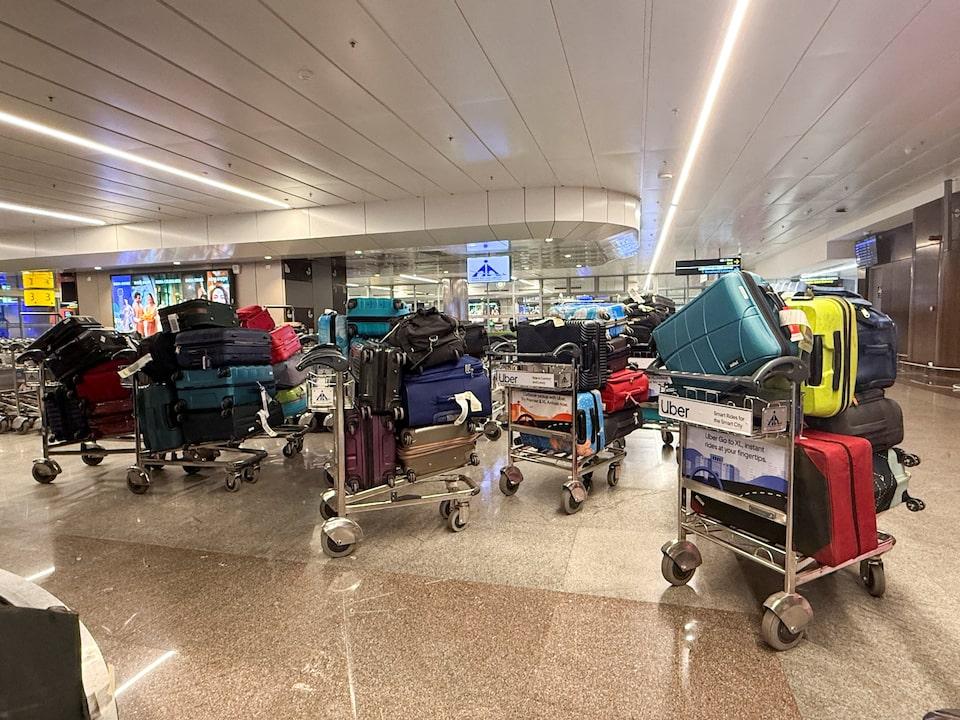
Indian airline IndiGo battles worst crisis in 20-year history IndiGo cancelled more than 2,000 flights last week Customers complain they are not able to find their luggage Government orders IndiGo to deliver luggage promptly NEW DELHI/BENGALURU, Dec 8 (Reuters) - India's IndiGo (INGL.NS) , opens new tab is battling growing passenger fury over delays in finding and delivering thousands of stranded bags, with social media flooded with photos of luggage piling up at airports after last week's large-scale flight disruptions. IndiGo, which has 65% of the domestic market, has apologised after cancelling more than 2,000 flights as it failed to plan in time for stricter rules governing pilot rest, leading to crew shortages. The delays jolted tens of thousands of people, hitting travel, holiday and wedding plans in one of the worst disruptions in Indian aviation history. Sign up here. But last-minute cancellations and the multiple connecting flights used to reroute passengers, has also left thousands of suitcases and bags misplaced, some containing valuable items such as passports, house keys and medicines. PASSENGERS FURIOUS AS BAGS LOST, WEDDING CLOTHES MISSING Social media posts showed security-tagged bags piled up in terminal areas in New Delhi, Mumbai and Bengaluru airports with many furious passengers seeking help from IndiGo's social media team on X. "Delhi Left Holding The Bag", read the headline of a Times of India newspaper photo that went viral showing hundreds of bags in an area typically meant for passengers to sit. The Indian government in a statement late on Sunday said it had ordered IndiGo to "trace and deliver all baggage separated from passengers due to disruptions within 48 hours." By Saturday, the airline had delivered 3,000 pieces of baggage to passengers across India, the government said. NO RESPONSE ON HELP LINES, PASSENGER SAYS Vikash Bajpai, 47, said he had been waiting for four days for the luggage he and his 72-year-old mother checked in for their flight home to Pune from Kanpur city where they had attended a wedding. They only reached home after spending a night in a New Delhi hotel, taking a series of connections to Mumbai, and then a taxi to Pune. There was no sign of their bags when they landed in Mumbai. "I was given a number to call, but nobody answers the phone. The luggage has expensive wedding clothes and shoes, and my mother's medication," Bajpai told Reuters, estimating the contents were worth 90,000 rupees ($1,000). "I am extremely upset." A senior IndiGo executive told Reuters on condition of anonymity the airline was working "round the clock" to clear the bags and ensure they reached their customers. Deepak Chetry said he finally got his bags from IndiGo on Saturday, but only after waiting an entire night outside the Bengaluru airport. "All we got was a bottle of water and juice," Chetry said. https://www.reuters.com/world/india/wheres-my-bag-indias-indigo-battles-passenger-fury-over-luggage-lost-chaos-2025-12-08/
2025-12-08 07:48
LAUNCESTON, Australia, Dec 8 (Reuters) - China's imports of major commodities were on divergent tracks in November, with crude oil and iron ore powering ahead but copper and coal losing steam. The contrasting outcomes make it difficult to come up with a single narrative for demand in the world's biggest buyer of natural resources. Sign up here. Rather than underlying demand for commodities, the main driver of China's imports appears to be price, with crude oil and iron ore enjoying stable prices in recent months, but copper and coal moving higher. Crude oil imports reached the equivalent of 12.38 million barrels per day (bpd) in November, a 27-month high, according to customs data released on Monday. This was up 8.7% from the 11.39 million bpd in October and also above the 11.81 million bpd from November last year. Imports were also up 3.2% in the first 11 months of the year to the equivalent of 11.41 million bpd. Steady crude prices in recent months, with global benchmark Brent futures anchored around $65 a barrel since easing after the spike caused by the brief Israel-Iran conflict, have encouraged China to purchase oil for stockpiles. China's surplus crude was about 900,000 bpd in the first 10 months of the year, according to calculations based on official data for imports, domestic output and refinery processing. Similar to crude oil, inventory builds appear to be at work in iron ore, with imports of the key steel raw material remaining robust in November. Iron ore arrivals were 110.54 million tons in November, stronger on a per day basis than the 111.31 million for October, and also 8.5% higher than the 101.86 million from November 2024. China's port inventories of iron ore rose to 142.4 million tons in the week to December 5, the most since late February and 9.5% higher than the 18-month low of 130.1 million hit in August. Also similar to crude oil, iron ore prices have been relatively steady in recent months, with futures traded on the Singapore Exchange in a range between $100 and $108 a ton since early August, and were at $106.45 in Asian trade on Monday. COPPER, COAL Price may be a factor in the soft imports of refined copper, which dropped to 427,000 tons in November, down from October's 438,000 and 528,000 in November last year. London copper prices have been trending higher in recent months, gaining almost 40% from the low so far in 2025 of $8,105 a ton in April to a record high of $11,705 on December 5. Even though China is the world's largest importer and producer of copper, the price moves are being driven by rising imports in the United States, with traders and producers taking advantage of higher prices for the industrial metal there amid fears that President Donald Trump will impose new tariffs in 2026. U.S. imports of refined copper more than doubled year-on-year to 1.19 million tons in the first eight months of the year, with the trend likely to continue as long as the arbitrage opportunity encourages the flow from the rest of the world. China's coal imports rose to 44.05 million tons in November from October's 41.74 million, but were still down almost 20% from 54.98 million in November last year. Over the first 11 months of 2025 imports of all grades of coal have dropped 12% to 431.68 million tons. Imports of thermal coal are largely influenced by China's domestic production and prices, and lower prices earlier in the year dragged down seaborne grades to four-year lows in July. Since then seaborne coal prices have recovered in line with China's domestic prices, which has capped volumes at lower levels than for the same months in 2024. Enjoying this column? Check out Reuters Open Interest (ROI), your essential new source for global financial commentary. ROI delivers thought-provoking, data-driven analysis of everything from swap rates to soybeans. Markets are moving faster than ever. ROI can help you keep up. Follow ROI on LinkedIn , opens new tab and X , opens new tab. The views expressed here are those of the author, a columnist for Reuters. https://www.reuters.com/markets/commodities/chinas-major-commodities-tell-story-prices-inventories-2025-12-08/