2025-10-24 04:03
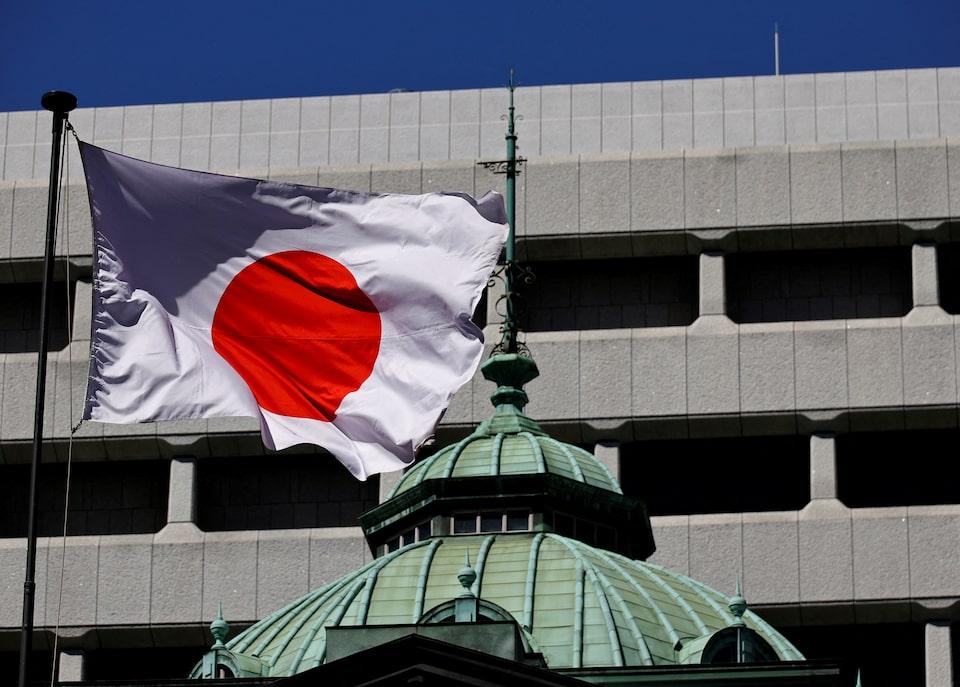
BOJ decision due 0330-0500 GMT October 30 Many analysts expect BOJ to keep rate steady at 0.5% Hawkish board members to repeat proposal for hike to 0.75% Board seen revising up this year's growth forecast Governor Ueda to brief media 0630 GMT TOKYO, Oct 24 (Reuters) - The Bank of Japan is likely to debate next week whether conditions are ripe to resume rate hikes as worries about a tariff-induced recession ease, though political complications may keep it on hold for now. Data so far has shown little evidence that higher U.S. levies were hurting the economy with exports rising in September, business confidence improving in the third quarter and companies maintaining bullish spending plans. Sign up here. But most analysts expect the central bank to keep interest rates steady at 0.5% at the October 29-30 meeting given jabs from new Prime Minister Sanae Takaichi, who has called for BOJ cooperation in achieving inflation driven more by wage gains. In a speech earlier this month, BOJ Governor Kazuo Ueda also warned of risks clouding the outlook, such as uncertainty over the U.S. economy and the hit to growth from tariffs that is seen intensifying ahead. "With U.S. economic data not coming out due to the government shutdown, I don't think Ueda's concerns would be dispelled by next week's meeting," said Naomi Muguruma, chief bond strategist at Mitsubishi UFJ Morgan Stanley Securities. "It's also hard to believe the inauguration of Takaichi's administration won't have any impact on the BOJ's rate-hike timing," she said. But Ueda may face growing calls from within his board to pull the trigger with stubbornly high food prices, prospects of sustained wage gains and receding fears of U.S. recession convincing some that conditions for a hike are falling into place. Two hawkish members, Naoki Tamura and Hajime Takata, are likely to repeat their proposals made in September - and voted down by the nine-member board - to hike rates to 0.75%. Accounts of the BOJ's July and September meetings showed the board leaning toward a near-term rate hike with discussions focused on broadening inflationary pressure. "The BOJ may already be somewhat behind the curve in addressing inflationary risks, which is causing some distortions in the economy," former BOJ executive Eiji Maeda told Reuters. Another complication could come from recent yen declines, driven partly by market expectations that pressure from Takaichi will slow the pace of BOJ rate hikes. Some analysts bet the BOJ could hike rates if yen falls accelerate, as such moves would push up import prices and accelerate inflation. U.S. President Donald Trump will visit Tokyo next week accompanied by Treasury Secretary Scott Bessent, who has repeatedly signaled his preference for a stronger yen and tighter monetary policy in Japan. Japan's new finance minister Satsuki Katayama said on Friday she plans to meet Bessent during his stay in Tokyo next week. The BOJ last year exited a decade-long, massive stimulus programme and raised short-term interest rates to 0.5% in January on the view Japan was close to durably hitting its 2% inflation target. It has kept policy steady since then. A majority of economists polled by Reuters expect the BOJ to raise rates in the fourth quarter, while nearly 96% of them expect borrowing costs to increase by end-March. In a quarterly outlook report due on October 30, the BOJ is likely to slightly revise up its economic growth forecast for the current fiscal year and maintain its view the economy is on course for a moderate recovery, sources have told Reuters. The board may discuss changing language on the course and timing for when underlying inflation is likely to approach its target reflecting the views of hawkish members Tamura and Takata. In the current report issued in July, the BOJ said it expects underlying inflation to hit 2% in the latter half of the three-year projection period through March 2027. Tamura said last week the target could be achieved earlier at around the latter half of fiscal 2025, while Takata said Japan has already roughly achieved the BOJ's inflation target. https://www.reuters.com/world/asia-pacific/bank-japan-consider-best-timing-next-rate-hike-2025-10-24/
2025-10-24 02:49
All 10 analysts expect SBP to stand pat on rate on Monday Flood, border disruptions likely to fuel food inflation Base-effect pressures offset easing flood risks, low oil prices KARACHI, Oct 24 (Reuters) - Pakistan's central bank is expected to keep its key interest rate unchanged at 11% on Monday, a Reuters poll showed, as analysts said flood-driven food inflation and a low base effect are likely to limit the scope for further monetary easing. All 10 analysts surveyed expect the State Bank of Pakistan (SBP) to keep the policy rate unchanged, extending its pause as recent floods ravaged farmland and border closures with Afghanistan drove up prices of staples like tomatoes and apples. Sign up here. "An elevated inflation reading in September, incorporating the impact of the recent floods, is likely to incline the MPC to keep the policy rate at the same level," said Fawad Basir, head of research at KTrade, adding that the next cut was likely in the last quarter of FY26, starting July 2026. FOOD PRESSURES, BASE EFFECT WEIGH ON OUTLOOK Since October 11, border closures with Afghanistan following clashes have disrupted trade and deepened food shortages, intensifying inflationary pressures. The SBP last held rates in September, warning floods could push inflation above its 5%–7% target. Pakistan's headline inflation rate accelerated to 5.6% on a year-on-year basis, up 2% from the previous month. Floods, in August, swamped Punjab's farmland and industrial hubs, killing more than 1,000 people, displacing 2.5 million and damaging crops and factories. CAUTIOUS POLICY PATH AHEAD The central bank has room to stay on hold as real interest rates remain comfortably positive after inflation eased earlier this year, analysts said. "While receding flood risks and lower global oil prices have improved the near-term inflation outlook, last year's low base is expected to push monthly readings higher," said Amreen Soorani of Al Meezan Investments. "Given the central bank's preference to keep a real interest margin of around 300 basis points, there is little room for a rate cut," she added. The central bank has lowered rates by 1,100 basis points since June 2024, when they peaked at 22% after inflation neared 40% the year before. Its last 100-bps cut came in May, followed by holds in June, July, and September amid uncertainty over energy and food prices. https://www.reuters.com/world/asia-pacific/pakistans-central-bank-likely-hold-rate-11-cautious-inflation-outlook-2025-10-24/

2025-10-24 02:20
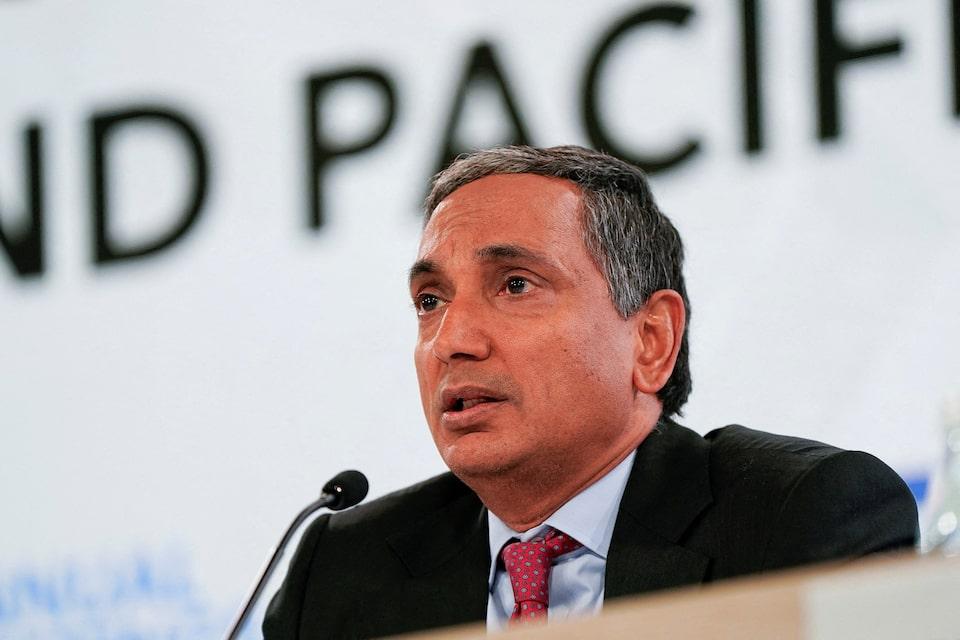
Low rates, weak dollar helped Asia weather tariff shock so far Rise in dollar, yields could push up debt costs in Asia Governments must avoid burdening central banks with too many goals Oct 24 (Reuters) - Asia may see its resilience to U.S. tariffs challenged if a rally in the dollar and a rebound in low interest rates lead to tighter financial conditions, a senior International Monetary Fund official told Reuters. If the U.S. Federal Reserve continues to cut interest rates, a subsequent dollar decline could allow Asian central banks to loosen monetary policy and support their economies without worrying about the risk of capital outflows, said Krishna Srinivasan, director of the IMF's Asia and Pacific Department. Sign up here. Low interest rates and declining long-term yields have also helped Asian governments and companies borrow cheaply and weather the hit from higher U.S. tariffs, he said. But Srinivasan warned such favourable financial conditions could change. "If interest rates start rising, especially the longer-term rates, that could have a significant impact on Asia, where debt servicing costs as a share of revenue has been pretty high. That's a problem," Srinivasan said in an interview conducted in Washington last week. "If the dollar appreciates, it could affect Asia too," he said. "Financial conditions have been very supportive, but they could change. That is a big risk for Asia." The interview was embargoed until the release on Friday of the IMF's regional economic outlook report for Asia. The IMF expects Asia's economy to expand 4.5% in 2025, slowing from 4.6% last year but up 0.6 percentage point from its estimate in April, due to strong exports driven in part by front-loading of shipments ahead of higher U.S. tariffs. But the report warned risks were tilted to the downside, and projected growth to slow to 4.1% in 2026. Additional monetary easing may be expected in many countries to bring inflation back to target and ensure inflation expectations are well anchored, the report said. Inflation in Asia has been more modest than in other parts of the world, even when a rebound in demand after the pandemic and surging raw material prices from Russia's war in Ukraine drove up prices. This showed how Asian central banks were able to anchor inflation expectations and bring inflation down because of public trust they were independent from government interference, Srinivasan said. "It's important for central banks to have independence so that they can meet their objectives, notably price stability," Srinivasan said. "But when you talk about independence, they should also be accountable to the public at large. It's also important that they are not burdened with multiple mandates," he said. https://www.reuters.com/world/asia-pacific/reversal-weak-dollar-may-test-asias-resilience-tariffs-imf-says-2025-10-24/
2025-10-24 01:09
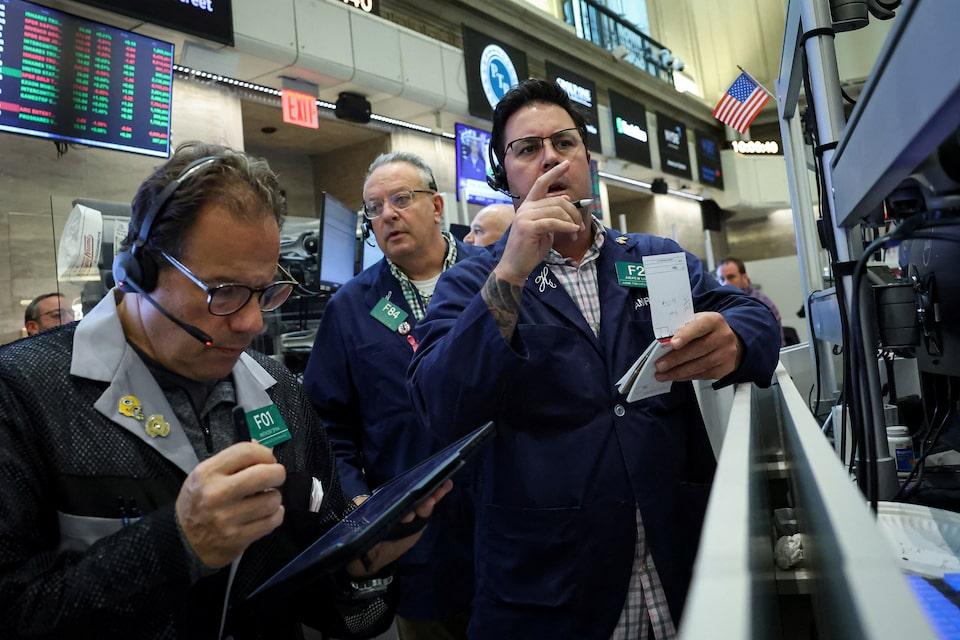
Indexes up: Dow 0.31%, S&P 500 0.58%, Nasdaq 0.89% White House confirms Trump-Xi meeting as part of next week's Asia trip IBM slumps on cloud slowdown Crude jumps, energy stocks rise after US sanctions Russian oil Quantum computing firms gain on report of US govt stake talks NEW YORK, Oct 23 (Reuters) - Wall Street advanced on Thursday as investors mulled a mixed batch of corporate earnings and shifting geopolitical concerns. All three major U.S. stock indexes closed higher, with tech strength nudging the Nasdaq into the lead. But the small-cap Russell 2000 (.RUT) , opens new tab was the clear outperformer. Sign up here. The indexes gained some momentum after the White House confirmed U.S. President Donald Trump will meet Chinese President Xi Jinping next week as part of his trip through Asia. Trade tensions between Washington and Beijing have been escalating in recent days, marked by tit-for-tat retaliatory measures announced by both sides. Confirmation that the two leaders would meet next week appeared to ease those tensions. Trump announced sanctions against Russian oil companies, marking a sharp policy shift in ramping up the pressure on Moscow over its war against Ukraine, ratcheting up geopolitical strife and sending world oil prices jumping. "The Trump-Xi confirmation is clearly positive," said Zachary Hill, head of portfolio management at Horizon Investments in Charlotte, North Carolina. "That's a good checkpoint for sentiment, which has been really up-and-down on trade and that's obviously playing a role today." "Additionally, earnings have been really strong in general," Hill added. "And that's supporting the market from a fundamental perspective." The Dow Jones Industrial Average (.DJI) , opens new tab rose 144.20 points, or 0.31%, to 46,734.61, the S&P 500 (.SPX) , opens new tab gained 39.03 points, or 0.58%, to 6,738.43 and the Nasdaq Composite (.IXIC) , opens new tab gained 201.40 points, or 0.89%, to 22,941.80. Third-quarter reporting season has hit full stride. Tesla shares (TSLA.O) , opens new tab rebounded, gaining 2.3% following its third-quarter profit miss. The electric-vehicle maker was the first of the "Magnificent Seven" group of megacap momentum stocks that account for more than a third of the S&P 500's market cap. IBM (IBM.N) , opens new tab dropped 0.9% after reporting a slowdown in its key cloud software segment, eclipsing its earnings beat. So far, just over a quarter of the companies in the S&P 500 have reported third-quarter results. Of those, 86% have beaten consensus expectations, according to LSEG data. In aggregate, analysts currently expect S&P 500 third-quarter earnings growth of 9.9% year-on-year, up from their 8.8% growth estimate as of October 1, per LSEG. In other earnings, health insurer Molina Healthcare (MOH.N) , opens new tab plunged 17.5% after slashing its annual profit forecast. Honeywell (HON.O) , opens new tab raised its annual profit forecast on strong aerospace demand, sending its shares up 6.8%. American Airlines (AAL.O) , opens new tab shares advanced 5.6% after the carrier raised its annual profit forecast, while Southwest Airlines (LUV.N) , opens new tab slipped 6.3% despite posting a surprise quarterly profit and record current-quarter sales. T-Mobile (TMUS.O) , opens new tab dipped 3.3% even after the telecom's wireless subscriber adds surpassed analyst expectations. Dow (DOW.N) , opens new tab reported a smaller-than-expected quarterly loss as cost cuts and higher volumes helped offset weakness in chemical prices. Its stock jumped 13.0%. Quantum computing firms jumped after the Wall Street Journal reported that the Trump administration was in talks with several of them to take equity stakes in exchange for federal funding. IonQ (IONQ.N) , opens new tab, D-Wave Quantum (QBTS.N) , opens new tab, Quantum Computing (QUBT.O) , opens new tab and Rigetti Computing (RGTI.O) , opens new tab added between 7.1% and 13.8%. Energy companies (.SPNY) , opens new tab, buoyed by spiking crude prices in the wake of Trump's sanctions on Russian oil, enjoyed the biggest percentage gain among the 11 main sectors of the S&P 500, rising 1.3%. Oil majors Exxon Mobil (XOM.N) , opens new tab and Chevron (CVX.N) , opens new tab advanced 1.1% and 0.6%, respectively. Independent oil refiner Valero Energy (VLO.N) , opens new tab, which reported better-than-expected third-quarter profits, rose 7.0%. Rising geopolitical turmoil has benefited aerospace and defense stocks over the past year. The S&P 500 Aerospace and Defense index (.SPCOMAED) , opens new tab advanced 2.2%. Advancing issues outnumbered decliners by a 2.05-to-1 ratio on the NYSE. There were 259 new highs and 55 new lows on the NYSE. On the Nasdaq, 3,009 stocks rose and 1,618 fell as advancing issues outnumbered decliners by a 1.86-to-1 ratio. The S&P 500 posted 15 new 52-week highs and 4 new lows while the Nasdaq Composite recorded 70 new highs and 75 new lows. Volume on U.S. exchanges was 19.07 billion shares, compared with the 20.62 billion average for the full session over the last 20 trading days. https://www.reuters.com/business/wall-street-futures-subdued-after-tesla-ibm-results-2025-10-23/
2025-10-24 00:21
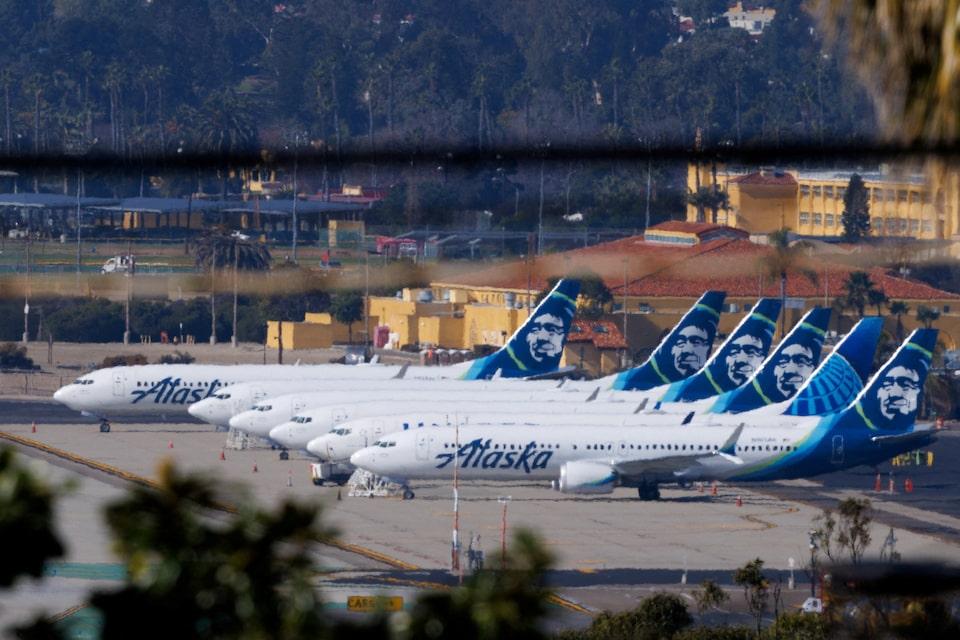
Oct 23 (Reuters) - Alaska Air Group (ALK.N) , opens new tab lowered its 2025 profit forecast on Thursday as higher fuel costs and operational challenges, including adverse weather, weighed on its margins. The carrier also forecast its fourth-quarter profit well below analysts' expectations. Sign up here. Refinery outages on the U.S. West Coast have significantly tightened fuel supplies, sending prices sharply higher and adding pressure to airlines already grappling with rising operational costs. "Fuel, it's volatile, and that's one of the things that we're having to manage through in terms of making an estimate for earnings in the fourth quarter," Alaska Air CFO Shane Tackett told Reuters. Operational disruptions have increasingly pressured U.S. carriers this year, with storms and strained air traffic control capacity leading to costly disruptions across the industry. The company now expects its annual adjusted profit per share to be at least $2.40, compared with its previous forecast of more than $3.25. It also expects fourth-quarter adjusted profit of at least 40 cents a share, compared with analysts' estimate of 88 cents, according to data compiled by LSEG. A major IT outage also hit Alaska Air in July, disrupting hundreds of flights and stranding thousands of passengers during the peak summer travel season. However, the industry's efforts to curb seat supply and counter discounting pressures following a demand slump in the first half of the year have started to bear some fruit. "We expect to have positive unit revenues in the fourth quarter," Tackett said. The company's yields, a key gauge for pricing power, rose about 1.4% in the quarter through September, while its unit costs excluding fuel were up about 8.6%. "Costs will meaningfully improve sequentially on a unit cost basis from Q3," he added. The carrier posted quarterly adjusted profit of $1.05 per share, falling short of analysts' average estimate of $1.13 apiece. Total third-quarter operating revenue rose 23% to $3.77 billion from a year ago, compared with expectations of $3.76 billion. https://www.reuters.com/business/alaska-air-cuts-annual-profit-forecast-higher-fuel-costs-2025-10-24/
2025-10-23 23:48
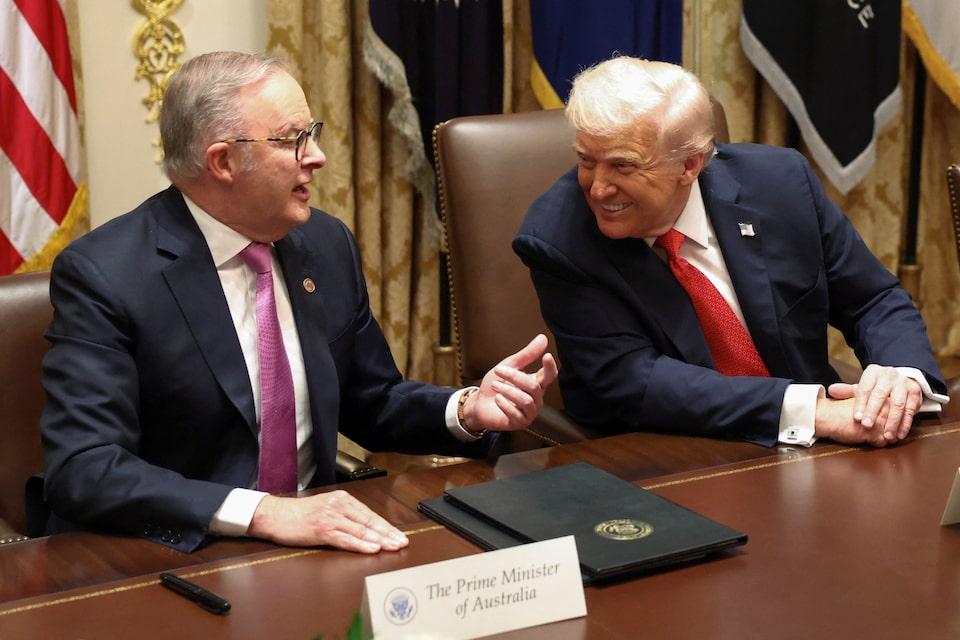
Oct 24 (Reuters) - Australia's Sunrise Energy Metals (SRL.AX) , opens new tab said on Friday it has granted U.S. defence contractor Lockheed Martin (LMT.N) , opens new tab an option to purchase up to 15 tonnes of scandium oxide produced over five years from its onshore Syerston Scandium Project. Shares of Sunrise were up as much as 15.6% to A$5.49 by 2333 GMT, set for their strongest trading session since early October. Sign up here. Under the agreement, the Australian diversified miner said the option to purchase will be subject to the conclusion of binding offtake agreements between the two parties, with full exercise of the option representing about 25% of the project's annual production capacity. Earlier, rare earths miner NioCorp (NB.O) , opens new tab said it is working with Lockheed to develop a scandium and aluminum alloy for use in military equipment as part of a Pentagon‑funded program. Scandium is already used widely for defence, aerospace and energy applications, but nearly all supply comes from China, Russia and Ukraine. The U.S. has not mined scandium since 1969. "We are pleased to be working with Lockheed Martin on this important initiative, one which underscores the importance of the U.S.-Australia critical minerals pact, signed by President Trump and Prime Minister Albanese at the White House only a few days ago," said Robert Friedland, co-chair of Sunrise Energy Metals. Testing and qualification work will seek to accelerate adoption of scandium-containing components in Lockheed Martin product platforms, Sunrise added in its statement. https://www.reuters.com/business/energy/australias-sunrise-energy-signs-five-year-scandium-option-with-lockheed-martin-2025-10-23/