2025-10-23 06:11
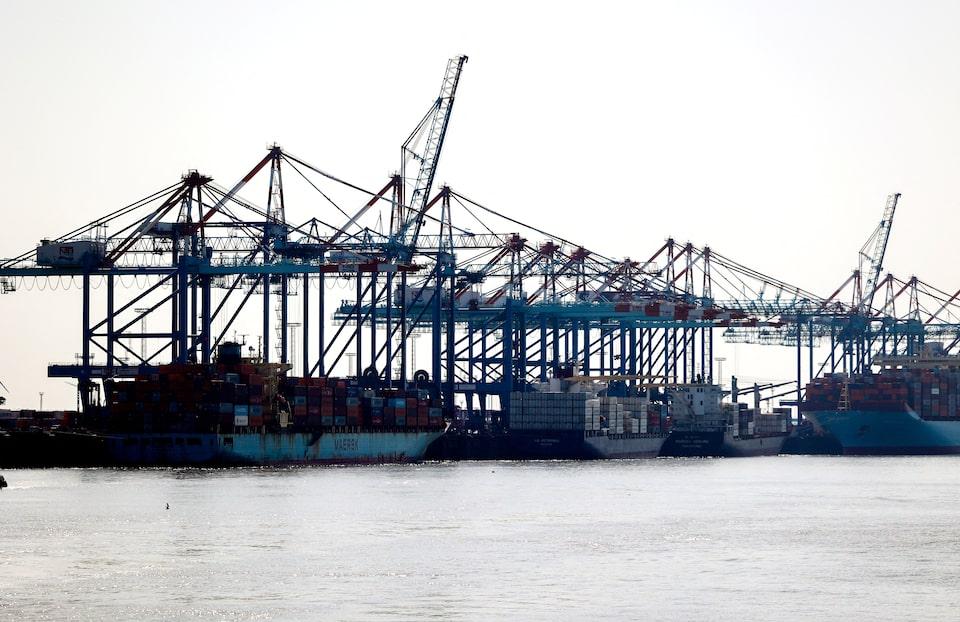
LONDON, Oct 23 (Reuters) - Europe's economy is walking a precarious tightrope between geopolitics and global economic power plays, which will either force it to diversify its trade and become more self-reliant or get toppled by ferocious crosswinds. The European Union has chosen to "eat" U.S. President Donald Trump's tariff sweep rather than retaliate, perhaps because of the need to keep Washington onside in the region's security standoff with Russia over Ukraine. Sign up here. But it risks indirectly eating some of the U.S. tariffs on China too. If Beijing reroutes its massive industrial overcapacity toward Europe, this could undercut the bloc's domestic manufacturers and create disinflationary risks to boot. China overtook the U.S. as Germany's largest trading partner in the first eight months of 2025, regaining the top spot it had previously held for eight years. German exports to the U.S. dropped by more than 7% year-on-year in this period, likely because of the higher U.S. tariffs. German exports to China also fell during these months and by an even larger 13.5%, but imports from China jumped more than 8%. UniCredit points to Chinese data showing that while exports to America in the six months through September have fallen 25% annually, shipments to the EU as a whole have risen by almost 10%. The EU has already threatened to impose its own tariffs on China's steel , opens new tab and autos, and it is likely to turn up the heat if Chinese goods do indeed start to flood its markets. 'US-CHINA-EU REALPOLITIK' What's more, China's close ties with Russia further complicate any EU embrace of trade with the world's second-largest economy, whether due to the bloc's own security concerns or even those of Washington. These security fears were on full display this month as the Dutch government seized control of chipmaker Nexperia, citing fears the company's technology would be taken by Chinese owner, Shanghai-listed Wingtech (600745.SS) , opens new tab. China, where most of Nexperia's chips are packaged, responded by blocking exports of the company's finished products, alarming European automakers that rely on these goods and leading to warnings of production stoppages. While this is just one vignette, it comes as China has been curbing exports of critical rare earth metals, a key bargaining chip in its tense standoff with Washington. Even if U.S. industry is the target, the export controls negatively affect Europe too. "A delicate balancing act for European policymakers has barely started," said UniCredit economist Andreas Rees, adding that the "complexity of U.S.-China-EU realpolitik has already been on full display" over the Nexperia row. Rees argues that if Europe overtightens its import and investment barriers against China, Beijing would retaliate by limiting access to its markets and further restricting access to rare earths. "EU policymakers may therefore want to act surgically and avoid blunt-force measures," he wrote. RULES AND ROW On its face, there appears to be little room for Europe's big exporting economies to maneuver, caught as they are between feuding superpowers. But one option would be doubling down on a reboot of the bloc's own domestic demand and tech capacity, key features of the EU economic reform agenda sketched out last year by former European Central Bank boss Mario Draghi. Germany has moved in this direction. Its own fiscal bazooka is now locked and loaded, though it has yet to be fired, with the earmarked money set to start flowing from this quarter through 2026. Some argue that the best solution would instead be the development of a more tri-polar world economy in which Europe concentrates its already substantial trade with smaller economies other than the U.S. and China. A working paper published by Brussels-based think tank Bruegel , opens new tab late last month points out that together the U.S. and China account for 30% of all EU value-added exports. That's a sizeable risk given the current climate, but it leaves 70% of EU value-added trade with other countries. "The EU already has an extensive network of trade agreements, covering 74% of trade with partners other than the U.S. and China. Deepening these relationships and forging new partnerships should be priorities," the paper said. "Offering a stable and rules-based trade regime can help offset losses from reduced integration with the U.S. and China," it concluded. The rules-based trading system is "at risk of derailment" according to U.N. Secretary-General Antonio Guterres. For Europe to keep it on track, it may need to look beyond Washington and Beijing. The opinions expressed here are those of the author, a columnist for Reuters -- Enjoying this column? Check out Reuters Open Interest (ROI), your essential new source for global financial commentary. Follow ROI on LinkedIn. Plus, sign up for my weekday newsletter, Morning Bid U.S. https://www.reuters.com/markets/europe/europes-economy-caught-100-mph-trade-winds-2025-10-23/
2025-10-23 06:10
All transactions with local distributors must be settled in yuan, sources say China unit had previously settled in foreign currencies such as US dollar Nexperia seeking alternative packaging capacity outside China, sources say BEIJING/TAIPEI, Oct 23 (Reuters) - Dutch chipmaker Nexperia's Chinese unit has resumed supplying semiconductors to local distributors, according to two people briefed on the matter, having previously halted all shipments when Beijing banned exports following an ownership dispute. But as part of the resumption, which is confined to domestic trade, all sales to distributors must now be settled in Chinese yuan, the people said, whereas transactions had previously only used foreign currencies such as the U.S. dollar. Sign up here. The Chinese unit also instructed distributors to transact with their customers only in yuan, in an apparent bid to stabilise supply in China and operate more independently from its Dutch parent, one of the people said. Nexperia, now under Dutch government control, produces large volumes of chips in the Netherlands widely used in the automotive industry and consumer electronics. The majority are packaged in China and sold mostly to distributors. Nexperia is now seeking alternative packaging partners outside China as the dispute with its Chinese subsidiary shows little sign of a quick resolution, the people said. Nexperia has also warned customers in China that it does not guarantee the quality of products sourced from its Chinese subsidiary, the second person said. They spoke on condition of anonymity because of the sensitivity of the matter. The temporary sales halt and the resumption with settlements in yuan had not been reported previously. A Nexperia spokesperson declined to comment on the actions of its Chinese unit and said its efforts to seek packaging partners outside China predated the dispute and were not part of a move away from its Chinese factory. On quality, the spokesperson said it had to inform customers of potential risks, but it had stopped short of saying they should not buy from its Chinese unit. Nexperia's Chinese unit did not respond to a request for comment. After the Reuters story about it resuming sales was published on Thursday, it issued a statement on its WeChat account that said it was operating independently and its "manufacturing and business activities are proceeding in an orderly manner". The unit also accused its Dutch parent of raising "groundless doubt" on product compliance and said it would pursue legal options. DUTCH GOVERNMENT SEIZES CONTROL The Dutch government took control of Nexperia on September 30 and removed its Chinese CEO, Zhang Xuezheng, citing concerns its technology might be appropriated by Nexperia's Chinese parent, Wingtech Technology (600745.SS) , opens new tab. Court filings showed that the seizure came after rising U.S. pressure on Nexperia after Wingtech was placed on a restricted export list, though Dutch authorities say governance shortcomings were the trigger. On October 4, China's commerce ministry blocked Nexperia from exporting chips from China. Following the order, Nexperia's Chinese unit suspended shipments from its main Dongguan factory to all distributors, the first person said. The dispute has fuelled concerns about supply chain disruptions across the global auto industry. Nexperia is one of the largest makers globally of basic chips that are not technically sophisticated but are needed in large volumes. On Thursday, the Japan Automobile Manufacturers Association said Japanese automobile component makers had been notified by a Dutch semiconductor manufacturer that it may not be able to guarantee chip deliveries, which could seriously impact global production. The German economy ministry said on Wednesday it would have a call with automakers and suppliers to discuss developments related to Nexperia. On Tuesday, the Dutch economy minister said he had spoken with his Chinese counterpart but failed to reach a solution. https://www.reuters.com/world/china/nexperias-china-unit-resumes-chip-sales-domestic-distributors-sources-say-2025-10-23/

2025-10-23 06:10
US imposes sanctions on Russian producers Rosneft, Lukoil India is biggest buyer of seaborne Russian oil since Ukraine war India's Russian oil buys a key Trump irritant in trade talks NEW DELHI, Oct 23 (Reuters) - Indian refiners are poised to sharply curtail imports of Russian oil, industry sources said on Thursday, following new U.S. sanctions on two major Russian producers aimed at squeezing Moscow's revenue to fund its war in Ukraine. India has become the biggest buyer of discounted seaborne Russian crude in the aftermath of Moscow's 2022 invasion of Ukraine, importing about 1.7 million barrels per day in the first nine months of this year. Sign up here. Russian oil is a main irritant for U.S. President Donald Trump in prolonged trade talks with India. Half of his 50% tariffs on Indian goods are in retaliation for those purchases. Privately-owned Reliance Industries (RELI.NS) , opens new tab, the top Indian buyer of Russian crude, plans to reduce or halt completely its import of Russian oil, according to two sources familiar with the matter. "Recalibration of Russian oil imports is ongoing and Reliance will be fully aligned to GOI (Government of India) guidelines," a Reliance spokesman said in response to a query on whether the company plans to cut its crude imports from Russia. India's oil ministry did not immediately respond to a request for comment. Indian state refiners are also reviewing their Russian oil trade documents to ensure no supply will be coming directly from Rosneft and Lukoil after the U.S. sanctioned the oil companies, a source with direct knowledge of the matter said on Thursday. President Trump on Wednesday imposed Ukraine-related sanctions on Russia for the first time in his second term, targeting Lukoil (LKOH.MM) , opens new tab and Rosneft (ROSN.MM) , opens new tab as his frustration grows with Russian President Vladimir Putin. The U.S. Treasury has given companies until November 21 to wind down their transactions with the Russian oil producers, according to a release on the sanctions on Wednesday. "There will be massive cut. We don't anticipate it will go to zero immediately as there will be some barrels coming into market" before the deadline, a refinery source said. State refiners including Indian Oil Corp (IOC.NS) , opens new tab, Bharat Petroleum Corp (BPCL.NS) , opens new tab, Hindustan Petroleum Corp (HPCL.NS) , opens new tab and Mangalore Refinery and Petrochemicals (MRPL.NS) , opens new tab, are reviewing bills of lading for Russian crude arriving after November 21 to make sure it is not coming directly from Rosneft or Lukoil, one of the sources said. The companies did not immediately respond to requests for comment. Indian state refiners rarely buy Russian oil directly from Rosneft and Lukoil as their purchases are typically done through intermediaries, trade sources said. Reliance, which operates the world's biggest refining complex at Jamnagar in western Gujarat state, has a long-term deal to buy nearly 500,000 bpd of crude oil from Russian oil major Rosneft. The refiner also buys Russian oil from intermediaries. Nayara Energy, whose biggest shareholder is Rosneft, also buys oil from the company. Nayara did not immediately respond to a request for comment. https://www.reuters.com/business/energy/indian-refiners-review-russian-oil-contracts-after-us-sanctions-source-says-2025-10-23/

2025-10-23 06:07
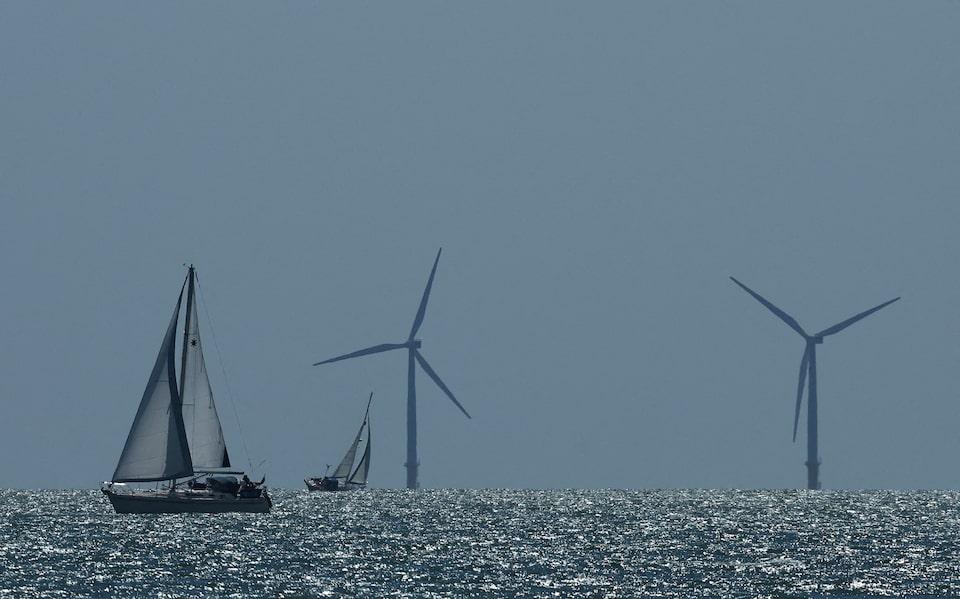
Chinese firm dominate wind supply chain from turbines to magnets Europe weighs allowing Chinese firms access to infrastructure Britain to decide on future of Ming Yang's Scotland plant LONDON, Oct 23 (Reuters) - European governments seeking to expand offshore wind power are increasingly wary of Chinese companies’ involvement. Countering China’s dominance will be time-consuming and expensive, but political pressure and national security concerns may give the region little choice. Offshore wind is a cornerstone of northern Europe’s clean energy strategy, offering a reliable alternative for more windy and less sunny countries striving to cut greenhouse gas emissions and reduce reliance on imported fossil fuels. Sign up here. Since Russia’s invasion of Ukraine in 2022, Europe has dramatically slashed its purchases of Moscow’s oil and gas, but it has mostly replaced this with imports of U.S. liquefied natural gas, meaning it has traded one dependence for another. However, wind technology also relies on a foreign power, given China's central role in the wind power supply chain from rare earth magnets to turbines and blades. The role of China in this sector has become a source of debate between European governments and the industry. Nowhere more so than in Britain, which aims to triple its offshore wind generation by 2030 to between 43 and 50 gigawatts from around 15GW today. Chinese wind turbine manufacturer Ming Yang Smart Energy announced on October 10 plans to invest up to $2 billion in a plant in Scotland, just a month after Britain’s largest electricity supplier Octopus Energy signed an agreement with Ming Yang to explore opportunities to develop 6 GW of wind. In its announcement, Ming Yang said the turbine manufacturing facility at Ardersier still requires the British government's approval. TRICKY TIMING Prime Minister Keir Starmer faces a challenging decision. Approving this major wind deal should support the government’s green energy ambitions and hopes to tighten trade relations with Beijing, but it also risks running afoul of the growing push for energy nationalism. Ming Yang faces no direct allegations that it poses a security threat. Starmer's government already faces political backlash from prosecutors' decision earlier this month to abandon the trial of two British men charged with spying for China in parliament. At the same time, U.S. President Donald Trump has urged countries to avoid doing business with China as trade tensions between the world’s two largest economies deepen. Beijing, on its part, is unhappy with the British government's continued delays to approve plans for a new Chinese embassy in London. So while Britain might welcome Ming Yang’s investment on economic grounds, giving a Chinese firm a central role in the development of critical UK energy infrastructure is bound to spark further political debate. GONE WITH THE WIND Britain is not the only country rethinking China’s role in its wind industry. The European Commission last year launched a review into Chinese turbine manufacturers in response to industry concerns that cheaper imports could threaten the competitiveness of European firms. Additionally, in August, Hamburg-based asset manager Luxcara scrapped a deal with Ming Yang to supply turbines for its Germany North Sea wind farm. To be sure, investor enthusiasm for the offshore wind sector, once seen as the posterchild of the energy transition, has ebbed in recent years due to rising costs and regulatory uncertainties. President Trump's personal dislike of "windmills" has further undermined the industry, which in the past year has seen huge projects shelved from the U.S. East Coast to Britain, Poland, Taiwan and South Korea. The International Energy Agency recently revised lower its forecast for growth in offshore wind over the next 5 years by 25% to 140 GW due to cost challenges and policy changes in the United States. But given Northern Europe’s geography, wind remains one of its best clean energy options. The continent is expected to add 43 GW of offshore wind capacity over the next five years, nearly doubling its total installed capacity to 80 GW, according to industry group WindEurope. IT COMES WITH A COST While China is the world's biggest deployer of offshore wind technology, it does not dominate the industry as decisively as the solar market. Chinese turbine manufacturers already face strong competition from European rivals including Vestas and Siemens Gamesa. Chinese turbines costs can be 30% to 40% lower than their European peers, according to consultancy Rystad Energy , opens new tab, but the price advantage in Europe is likely inflated, as European-supplied turbines benefit from lower transport costs and premiums for insurance and financing. And then there is the looming concern about cybersecurity risks. Turbine manufacturers typically supply the software to manage offshore wind farms and the connections with power grids. With cybersecurity becoming a central strategic concern – particularly with the rapid growth in artificial intelligence – western governments may be increasingly wary of allowing Chinese firms access to their most critical energy infrastructure. DIVERSIFICATION To reduce this dependency, European governments could put in place policies and subsidies to encourage the further development of domestic supply chains, particularly for complex components such as turbines and software technologies. But this will, of course, take time. Additionally, western turbine manufacturers still need access to rare earth metals and magnets. The production of which is, once again, dominated by China. That dependence could fade if western governments successfully develop independent rare earth supply chains, but again, that isn’t going to happen overnight. Wind power may ultimately help Europe develop affordable, secure and clean energy, but China's current dominance of this industry means Europe's path to this goal will be anything but straightforward. The opinions expressed here are those of the author, a columnist for Reuters. Want to receive my column in your inbox every Monday and Thursday, along with additional energy insights and links to trending stories? Sign up for my Power Up newsletter here. Enjoying this column? Check out Reuters Open Interest (ROI), , opens new tabyour essential new source for global financial commentary. ROI delivers thought-provoking, data-driven analysis. Markets are moving faster than ever. ROI , opens new tab can help you keep up. Follow ROI on LinkedIn , opens new tab and X. , opens new tab https://www.reuters.com/business/energy/europes-offshore-wind-sector-faces-dilemma-over-chinas-grip-sector-2025-10-23/
2025-10-23 06:00
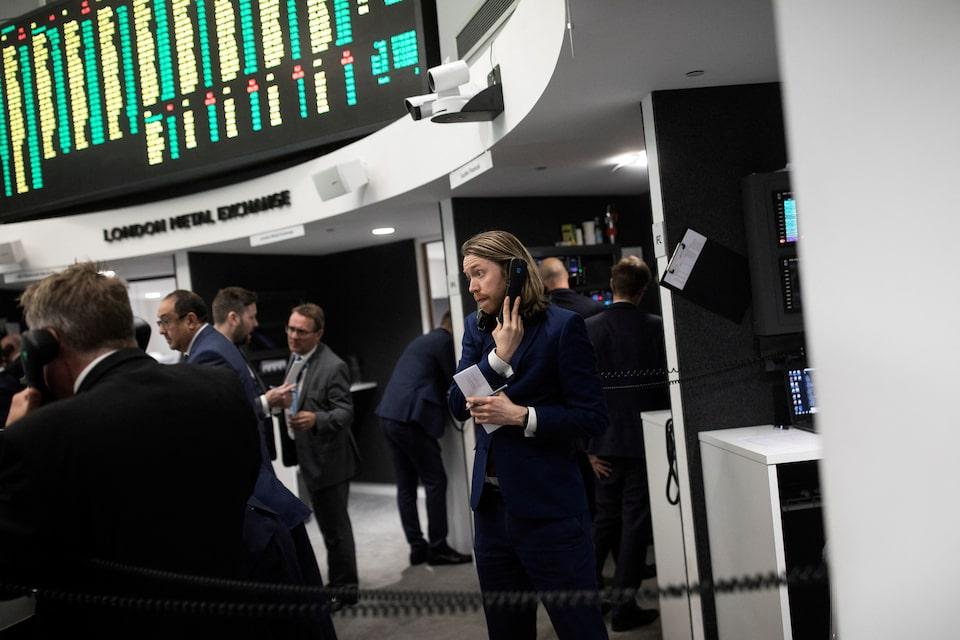
LONDON, Oct 23 (Reuters) - The London Metal Exchange zinc contract has taken a walk on the wild side this week with time-spreads flaring out to record levels against a backdrop of depleted exchange stocks. The zinc market has been sleep-walking towards this storm for several months, confident that falling LME inventory wasn't a true reflection of a market in growing supply surplus. Sign up here. Yet metal has continued flowing out of LME warehouses, leaving just 35,300 metric tons, barely enough to cover one day's worth of global consumption. Arrivals have been minimal despite the widening premium for cash delivery. The result is a ferocious squeeze as bears pay the painful price of mistiming zinc's shifting dynamics. SINGAPORE SLING This time last year there were 300,000 tons of zinc sitting in LME warehouses, most of it in Singapore, where warehouse operators were engaged in fierce competition for storage revenue. There was huge stocks churn over the course of 2024 as metal was pushed and pulled by warehouse incentives, often in the form of rent-sharing deals with trade houses. Almost 700,000 tons of zinc moved in and out of Singapore warehouses last year but the net change in inventory was a small 35,550-ton rise. Something, however, changed around the start of this year. Zinc was leaving LME registered stocks but not appearing in the off-warrant shadows ready for renewed warranting at a different warehouse. Rather, Singapore's trade data show rising exports of refined zinc to destinations as far afield as Djibouti in east Africa and Guatemala in central America. Since the city doesn't have any zinc smelters or refineries, it's a fair bet that what has left LME stocks has been slung out to the rest of the world. SMELTERS POWER DOWN So how come the rest of the world is short of a metal that is supposed to be in supply surplus? The clues lie within the latest biannual statistical update from the International Lead and Zinc Study Group. While zinc demand growth is flat-lining and mine supply is booming again after two years of contraction, Western smelters have been powering down or closing altogether. ILZSG expects global metal output to rise by 2.7% this year but this is all down to China, where refined zinc production is on course to surge by 6.2%. Quite evidently, production outside of China has been falling as smelters reduce run rates or, in the case of Toho Zinc's (5707.T) , opens new tab Annaka smelter in Japan and Glencore's (GLEN.L) , opens new tab secondary zinc operations in Italy, close completely. The result is that this year's projected supply surplus is a relatively modest 85,000 tons and it's all in China. SURPLUS TOMORROW, PAIN TODAY Given the regional imbalance in availability, it's no surprise that the London premium over the Shanghai Futures Exchange zinc price has been widening. Chinese exports to LME warehouses are the most obvious way of reconciling the disconnect with the market outside of China. The bad news for LME short position holders is that physical arbitrage takes time and they need metal today. Which is why the cash premium over three-month metal has exploded to over $300 per ton, the tightest market conditions since the launch of the LME special high grade contract in the late 1980s. There is no single dominant long but rather six of them holding cumulative cash positions amounting to over three times available stocks. The tension with short position holders is clear to see in the so-called "tom-next" spread. The cost of rolling a short position overnight has been as high as $30 per ton this week. There will be more pain until stocks rebuild in a meaningful way. Surplus is coming. ILZSG forecasts a massive production excess of 271,000 tons in 2026. But it's not here now. Or certainly not where LME short position-holders need it to be. Andy Home is a Reuters columnist. The opinions expressed are his own. https://www.reuters.com/markets/commodities/lme-zinc-turns-wild-after-bears-sleep-walk-into-squeeze-2025-10-22/
2025-10-23 05:50
Yen slips to one-week low as traders weigh fresh US sanctions Traders eyeing Friday readout of US inflation data Oil price rise boosts Norwegian crown NEW YORK, Oct 23 (Reuters) - The dollar drifted higher against the yen on Thursday as traders waited for the delayed release of U.S. consumer inflation data on Friday and weighed fresh U.S. sanctions on Russian oil companies, which boosted oil prices. The U.S. currency was last up 0.38% on the yen at 152.525 yen , while the U.S. dollar index, which measures the greenback against a basket of currencies, was last nearly flat at 98.925. Sign up here. The week's main scheduled focus is the inflation data being released despite the U.S. shutdown, to assist the U.S. Social Security Administration with its annual cost-of-living adjustment for 2026. Although the Federal Reserve's policy-setting focus has shifted from inflation to the state of the U.S. labor market, the numbers will be closely watched. "The data will be significant for slightly different reasons to normal. Clearly the Fed has moved on from CPI, but we can still take that data and make some assumptions about consumer spending and growth," Nick Rees, head of macro analysis at Monex Europe, said. YEN ON THE SLIDE New U.S. sanctions on major Russian suppliers Rosneft (ROSN.MM) , opens new tab and Lukoil (LKOH.MM) , opens new tab over Russia's war in Ukraine sent oil prices up nearly 5% on Thursday, following British sanctions on the same two companies last week. The U.S. Treasury Department said it was prepared to take further action as it called on Moscow to agree immediately to a ceasefire. Multiple trade sources told Reuters that Chinese state oil majors had suspended purchases of seaborne Russian oil from the two companies, providing a further boost to prices. The new sanctions were weighing on the yen, as well as other currencies tied to oil imports, said Marc Chandler, chief market strategist at Bannockburn Capital Markets. "Japan's a big importer of oil, and higher oil prices hurt," he said. Domestic factors also weighed on the yen, which was heading back towards last week's seven-month low of 153.29 yen per dollar, which it hit this week after Sanae Takaichi, widely viewed as a fiscal and monetary dove, was chosen to lead Japan's ruling party. Now that Takaichi is installed as prime minister, the market is awaiting details of a stimulus package. "Buying based on policy hopes from a Takaichi government has already run its course," said Yutaka Miura, senior technical analyst at Mizuho Securities. "The market is now at a point where it needs to assess concrete policies and their feasibility." OIL PRICE RISES Smaller European currencies also attracted some market attention on Thursday, with the Norwegian crown appreciating on the rise in oil prices. The dollar was last down 0.42% on the Norwegian currency at 9.9717 crowns, dipping below the 10-crown level for the first time in two weeks, while the euro hit a one-month low of 11.568 crowns. , Elsewhere, sterling was down 0.25% at $1.332 having bounced back from some of its Wednesday fall on weaker-than-expected consumer inflation data that caused markets to increase their bets on another Bank of England rate cut this year. The euro was up 0.06% at $1.162. The Swiss National Bank's first published meeting minutes did little to move the franc, which was weaker at 0.7949 per dollar. https://www.reuters.com/world/africa/dollar-edges-up-ahead-cpi-trade-news-yen-slips-2025-10-23/


