2025-10-23 05:07
US stocks end higher Oil surges as US, EU impose fresh sanctions on Russian energy White House says Trump to meet Xi in South Korea in Asia trip NEW YORK, Oct 23 (Reuters) - Oil prices surged more than 5% to a two-week high on Thursday after Washington imposed sanctions on major Russian companies over the Ukraine war, while major stock indexes climbed as gains in U.S. and European energy shares helped to offset some mixed earnings news. The sanctions, announced late Wednesday, were placed on major Russian suppliers Rosneft (ROSN.MM) , opens new tab and Lukoil (LKOH.MM) , opens new tab. European Union countries also approved a 19th package of sanctions on Moscow that included a ban on Russian liquefied natural gas imports, while Britain hit Rosneft and Lukoil with sanctions last week. Sign up here. Wall Street stocks ended higher, with indexes gaining momentum after the White House confirmed U.S. President Donald Trump will meet Chinese President Xi Jinping next week as part of his trip through Asia. Trade tensions between Washington and Beijing have been escalating, marked by tit-for-tat retaliatory measures announced by both sides. Confirmation that the two leaders would meet next week appeared to ease those tensions. Energy (.SPNY) , opens new tab led sector gains on the S&P 500 index, and ended 1.3% higher. A clutch of positive earnings reports also helped to support stocks. Shares of Honeywell (HON.O) , opens new tab gained 6.8% after the company lifted its 2025 profit forecast. However, International Business Machines (IBM.N) , opens new tab shares eased 0.9% after the company recorded a slowdown in growth in its key cloud software segment. "In general, the (stock) market is responding to earnings, which for the most part continue to be good. And the other factor is that Trump placed severe sanctions on major Russian oil companies, which is being applauded by the market. You can see that in the energy sector," said Peter Cardillo, chief market economist at Spartan Capital Securities in New York. The Dow Jones Industrial Average (.DJI) , opens new tab rose 144.20 points, or 0.31%, to 46,734.61, the S&P 500 (.SPX) , opens new tab gained 39.04 points, or 0.58%, to 6,738.44 and the Nasdaq Composite (.IXIC) , opens new tab advanced 201.40 points, or 0.89%, to 22,941.80. MSCI's gauge of stocks across the globe (.MIWD00000PUS) , opens new tab rose 4.32 points, or 0.44%, to 995.09. The STOXX 600 index closed at a record high, led by gains in energy stocks. The pan-European STOXX 600 (.STOXX) , opens new tab index advanced 0.37% to 574.43 points. Also helping sentiment, shares of Kering (PRTP.PA) , opens new tab jumped after the Gucci owner said sales in the previous quarter declined less than analysts had expected. Oil futures registered their biggest daily percentage gains since mid-June and their highest closes since October 8. U.S. energy data showed Russia was the world's second-biggest crude oil producer in 2024 after the U.S. U.S. crude gained 5.6% to settle at $61.79 a barrel. Brent gained 5.43% to settle at $65.99. U.S. Treasury yields rose, with those on the long end advancing after falling three straight sessions. Investors also braced for a report on the U.S. Consumer Price Index on Friday. The U.S. Bureau of Labor Statistics said last week it would publish the CPI report despite the government shutdown - now on its 23rd day - to assist the Social Security Administration with its annual cost-of-living adjustment for 2026 for millions of retirees and other benefits recipients. In afternoon trading, the yield on the benchmark U.S. 10-year Treasury note rose 4.4 basis points (bps) to 3.995% after hitting a session high of just above 4%. The geopolitical risks renewed demand for safe-haven gold. Spot gold rose 0.76% to $4,125.00 an ounce. Helping offset some of the angst over geopolitical flashpoints and trade tensions is the firm belief among investors that the Federal Reserve will continue to cut U.S. interest rates. The dollar index was last little changed. It has been edging higher in recent months as investors have become more confident the Fed will act to protect the economy. The U.S. currency was last up 0.38% on the yen at 152.525 yen , while the U.S. dollar index, which measures the greenback against a basket of currencies, was last nearly flat at 98.925. https://www.reuters.com/world/china/global-markets-wrapup-1-2025-10-23/
2025-10-23 04:46
Oct 23 (Reuters) - Foreigners channelled investments into Japanese stocks for a third consecutive week ended October 18 in anticipation of a victory for fiscal dove Sanae Takaichi at the parliamentary vote to become the country's first female prime minister. Foreigners snapped up Japanese stocks worth a net 752.6 billion yen ($4.99 billion) during the week, adding to 1.87 trillion yen weekly net purchase the prior week, data from Japan's Ministry of Finance showed. Sign up here. The Nikkei 225 index (.N225) , opens new tab hit a record high of 49,945.95 on Tuesday as Takaichi, a hardline conservative, was elected the prime minister on Tuesday, bolstering expectations of Japan's return to Abe-style government stimulus to jumpstart an economy struggling with slow growth and rising prices. Foreigners have so far pumped about 5.28 trillion yen into Japanese stocks so far this year, more than a twofold increase from an approximately 2.12 trillion yen net purchase in the year-ago period. Foreigners, meanwhile, pulled out a marginal 700 million yen from Japanese long-term bonds in their first weekly net sales since September 27. Japanese short-term bills, however, drew nearly 1.63 trillion yen worth of foreign inflows. At the same time, Japanese investors divested foreign stocks of a net 288.1 billion yen, logging their fourth weekly net sales in five weeks. They also shed foreign long-term bonds of 669.7 billion yen, registering a third weekly net disposal in four weeks. ($1 = 150.7800 yen) https://www.reuters.com/world/asia-pacific/foreign-investors-pile-into-japan-stocks-ahead-historic-pm-vote-2025-10-23/
2025-10-23 04:41
A look at the day ahead in European and global markets from Gregor Stuart Hunter Investors might feel a little tender this morning after a grinding after-hours session pounded tech megacaps and high-flying meme stocks alike. Sign up here. Beyond Meat (BYND.O) , opens new tab plummeted 11.4% in after-hours trading as the heavily-shorted fake-meat company reversed course after a retail-investor frenzy that has pushed its shares up as much as 1,479% during the past week alone. And it's not just meme stocks under pressure: Tesla (TSLA.O) , opens new tab shares fell 3.8% in after-hours after the electric car maker reported profit that failed to live up to analysts' expectations, despite record third-quarter revenue that beat estimates. Streaming firm Netflix (NFLX.O) , opens new tab, which left investors unimpressed with its outlook for the upcoming quarter, saw its stock slide by more than 10% on Wednesday. Though the megacaps have disappointed investors, the vast majority of companies that have reported so far have beaten analysts' estimates. That's helped S&P 500 e-mini futures edge up 0.2% in Asian trading, stabilising after two days of declines for U.S. stocks on Wall Street. But Asian markets reeled, with Chinese stocks (.CSI300) , opens new tab down as much as 1.1% before rebounding, after a Reuters report that the White House is considering a plan to curb an array of software-powered exports to China to retaliate against Beijing's latest round of rare earth export restrictions. MSCI's broadest index of Asia-Pacific shares outside Japan (.MIAPJ0000PUS) , opens new tab narrowed earlier losses of as much as 0.6% after U.S. President Donald Trump said he still expected to reach agreement with Chinese President Xi Jinping when they meet in South Korea next week. Sanctions news also rattled the energy markets, with Brent crude up 2.7% at $64.28 per barrel after the White House imposed Ukraine-related sanctions targeting Russian oil companies Lukoil and Rosneft on Wednesday. In early European trades, pan-region futures were trading flat, German DAX futures were down 0.2% and FTSE futures were 0.1% lower. Key developments that could influence markets on Thursday: Earnings: Lloyds Banking Group plc, Unilever, Intel Corporation, Freeport-McMoRan Inc, T-Mobile US Inc, Blackstone Inc Economic data: France: Business Climate for October U.K.: CBI Business Optimism for Q4, GfK Consumer Confidence for October Euro Zone: Consumer Confidence Flash for October Debt auctions: U.K.: 5-year government debt auction https://www.reuters.com/world/china/global-markets-view-europe-2025-10-23/

2025-10-23 02:05
BOJ may be already behind the curve on inflation, Maeda says Moving too slowly in rate hikes could cause distortions BOJ likely to raise rates to 0.75% in December or January BOJ seen raising rates to 1% in summer next year TOKYO, Oct 23 (Reuters) - The Bank of Japan is likely to raise interest rates as soon as December as expansionary fiscal policy expected under new Prime Minister Sanae Takaichi will help the economy weather the hit from U.S. tariffs, former BOJ executive Eiji Maeda said. Maeda also said the central bank should proceed steadily with further rate hikes as the slow pace of increase is creating side effects such as soaring property prices in big cities and a weak yen that is driving up households' cost of living. Sign up here. "The BOJ may already be somewhat behind the curve in addressing inflationary risks, which is causing some distortions in the economy," he told Reuters in an interview on Wednesday. "Moving too slowly in policy normalisation would hurt people's livelihoods by weakening the yen and accelerating inflation," he said, adding the BOJ must be vigilant not just to downside economic risks but upside price risks. While a weak yen gives exports a boost, it has been a source of concern for policymakers as it pushes up import costs. Maeda said he expects Japan's economy to continue expanding moderately as the hit to growth from U.S. tariffs is proving smaller than initially feared, and companies are seen retaining their upbeat capital expenditure and wage hike plans. "The BOJ is likely to raise interest rates again either in December this year or January next year," said Maeda, who oversaw the BOJ's monetary policy drafting as its executive director until May 2020 and remains in close contact with incumbent policymakers as the head of think tank Chibagin Research Institute. By then, the BOJ will have more data, including information on the U.S. economy that is now lacking due to the government shutdown, as well as Japan's "tankan" business survey in early December, he said. Clues on next year's wage plans from big automakers, which are trend-setters of corporate Japan, will also become available in December, he added. The BOJ will hold its next policy meeting on October 29-30, when the board will debate whether to keep rates steady at 0.5% and issue new quarterly growth and price forecasts. A subsequent rate-setting meeting will be held on December 18-19. After raising rates to 0.75%, the BOJ is likely to hike them again around summer next year to 1% - entering its estimated 1% to 2.5% range of Japan's neutral rate, or the level that neither cools nor overheats the economy, Maeda said. Once its policy rate reaches 1%, the BOJ may move slowly in further rate hikes to scrutinise how the economy responds to higher borrowing costs, he added. The BOJ last year ended a massive, decade-long stimulus and raised interest rates to 0.5% in January on the view Japan was on the cusp of sustainably achieving its 2% inflation target. While it has kept rates on hold since then, markets expect the BOJ to hike sometime by January as stubbornly high food costs have led to inflation above its target for well over three years. Some analysts believe the BOJ could delay rate hikes to avoid causing friction with Takaichi, an advocate of expansionary fiscal and monetary policy. Sources have told Reuters Takaichi is preparing an economic stimulus package that is likely to exceed last year's $92 billion to cushion the blow from rising living costs. Such stimulus could drive up inflation in an economy already having achieved near-full employment due partly to a dwindling working-age population, Maeda said. "The government may be responsible for overall economic policy. But past experience and examples of other countries show central banks should be responsible for achieving price stability," he said. (This story has been corrected to fix the rate to 0.75%, not 0.5%, in the third bullet point) https://www.reuters.com/world/asia-pacific/boj-likely-raise-rates-soon-december-ex-central-bank-executive-says-2025-10-23/
2025-10-23 00:57
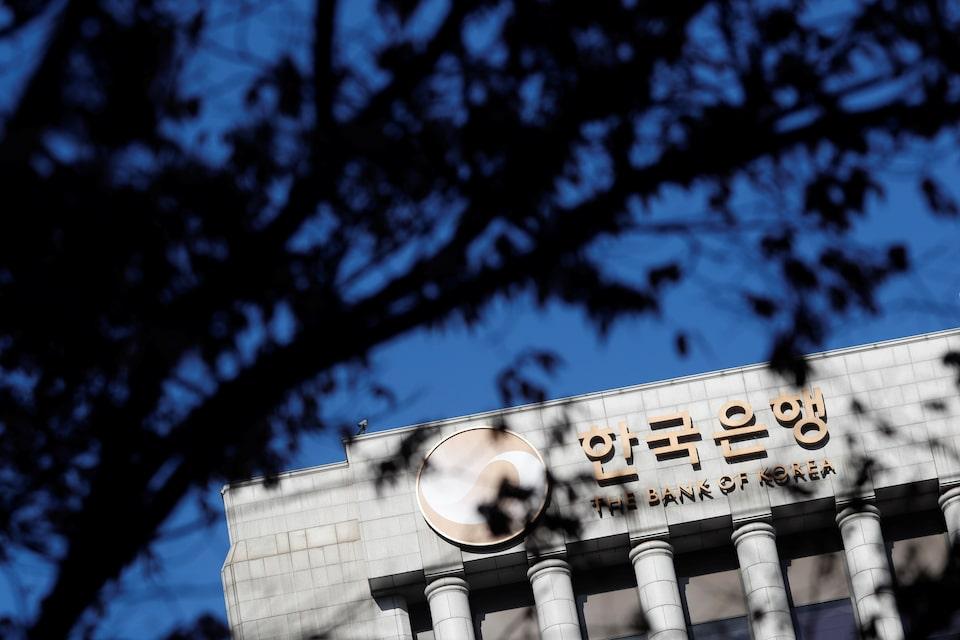
BOK votes 6-1 to hold policy rate at 2.50% Governor Rhee leaves door open for another rate cut Kospi hits another record high while won declines to May-low SEOUL, Oct 23 (Reuters) - South Korea's central bank kept policy interest rates unchanged on Thursday, wary of worsening an overheating housing market and a declining currency, but left the door open for another cut, pushing the won down even further against the dollar. At its policy meeting, the Bank of Korea voted to keep its benchmark interest rate (KROCRT=ECI) , opens new tab unchanged at 2.50%, as polled by Reuters. Sign up here. However, governor Rhee Chang-yong said a majority of the bank's board members remained open to another rate cut in the next three months. "Looking ahead for the next three months, four of the six board members, myself excluded, are open to taking interest rates to 2.25% or lower while two see interest rate of 2.5% level to be maintained," Rhee said at a news conference. The BOK's surprisingly dovish tone pushed the benchmark Kospi (.KS11) , opens new tab to a fresh record high, putting it up 62% so far this year, but dragged the won to about a six-month low. The median expectation is now for one more cut in November and then a prolonged pause, as analysts expect policymakers to put more emphasis on managing risks related to financial stability amid an overheating housing market and uncertainty over a U.S. trade deal. "The Board will maintain its rate cut stance to mitigate downside risks to economic growth and adjust the timing and pace of any further base rate cuts while closely monitoring changes in domestic and external policy conditions and examining the resulting impact on inflation and financial stability," the BOK said in a statement. South Korean policymakers have been taking a tactical approach to supporting an economy hit by former President Yoon Suk Yeol's martial law decree and trade uncertainties. Since October 2024, the BOK has cut interest rates a cumulative 100 basis points. Yet the potential for renewed home price upswings is problematic for any further easing, particularly as the won, faces downward pressure against the dollar, analysts say. "Market participants had been expecting a unanimous hold today because of (the Governors') recent emphasis on financial stability," said Paik Yoon-min, an analyst at Kyobo Securities in Seoul. "But the presence of one dissenter and those seeing further rate cuts in the forward guidance part made things a bit cloudy." South Korea is projected to post the slowest economic growth this year since 2020 when the economy contracted by 0.7% amid the pandemic, as "the impacts of U.S. tariffs on exports are likely to expand gradually," the bank said in the statement. The construction industry, traditionally a driver of economic growth, is in a downturn due to rising costs of labour and equipment, leading to a shortage of new housing supply in Seoul. While that has pushed home prices higher, it has also slowed economic activity. The Lee Jae Myung government announced its third property market curbs in just four months this month as the price-to-income ratio of an apartment in Seoul exceeded both London and Sydney. https://www.reuters.com/world/asia-pacific/south-korea-holds-key-rate-expected-2025-10-23/
2025-10-23 00:41
MELBOURNE, Oct 23 (Reuters) - BHP Group (BHP.AX) , opens new tab said on Thursday it would be forced to take "difficult decisions" for its metallurgical coal business in Australia if there were no regulatory changes to support it, its CEO said at its annual general meeting on Thursday. BHP last month said it would suspend operations and cut 750 jobs at a Queensland coking coal mine it shares with a unit of Mitsubishi, blaming low prices and high state government royalties that have dented its returns. Sign up here. "Without change, there's without doubt going to be more difficult decisions that are going to be made," CEO Mike Henry said at the miner's annual general meeting. Incoming chair Ross McEwan of the world's top miner and Australia's biggest company said that the critical minerals deal between the U.S. and Australia this week was a "good start". U.S. President Donald Trump and Australian Prime Minister Anthony Albanese signed a critical minerals agreement aimed at countering China on Monday. "I think, it's a little bit early to actually see the outcomes of what we see as a good meeting between the prime minister of Australia and the president of the United States. But I think it was a very good meeting to start those conversations," McEwan said. BHP is a large producer of copper, iron ore and steelmaking coal, rather than in niche critical minerals markets, he added, although copper is increasingly regarded as a strategic metal given its outsize role in the energy transition. Australia is quite well positioned to support the U.S. as it tries to derisk its critical mineral supply chain, Henry said, after he and two top Rio Tinto (RIO.AX) , opens new tab executives met with Donald Trump and Interior Secretary Doug Burgum in the Oval Office on August 19. "I was impressed on just how fierce the focus is in the U.S. on getting more ... mines and processing facilities up and going," Henry said. BHP is looking with partner Rio Tinto to build the Resolution copper mine in Arizona, which could account for a quarter of U.S. demand for the metal. "I think we should see (the agreement) as symbolically significant, in that it goes to just how seriously this issue has been put down and the position that Australia can play in supporting the U.S.," Henry said. https://www.reuters.com/world/asia-pacific/bhp-flags-difficult-decisions-ahead-australian-metallurgical-coal-business-2025-10-23/