2025-10-23 00:17
SYDNEY, Oct 23 (Reuters) - Critical minerals, and especially rare earths, as well as the ongoing need to decarbonise and a bigger role for governments are the three top areas of concern for the global mining industry. Those are the key takeaways from this week's IMARC event in Sydney, which brings together more than 10,000 industry participants in what is one of the world's biggest mining conferences. Sign up here. Events such as IMARC are useful for companies to network and generate business deals, but they also provide platforms for participants, ranging from miners to buyers to governments and suppliers, to express their concerns and where they see the industry heading. Three broad themes emerged from this year's event. 1. Critical minerals and rare earths are the main buzz. Part of IMARC's huge convention floor is given over to what resembles a farmer's market, but instead of selling organic vegetables and artisan cheese, the stalls are touting mining projects. The companies represented at the booths tend to be junior explorers seeking to raise capital from investors in order to advance their projects. This year's event was dominated by companies developing critical mineral mines, with several rare earths projects, as well as some speciality minerals and more conventional energy transition metals such as lithium. The investor marketplace is a good indicator of where the hot money is going chasing the next big thing in mining. Some five years ago, gold was the flavour of IMARC, while about 10 years ago it was battery metals such as cobalt, nickel and lithium. While not all of the projects on display will progress to actual mines, some will and this means that supply outside of China of these critical minerals is likely to increase in coming years. 2. Decarbonisation still matters, but must make economic sense. A major theme of the extensive agenda of presentations and panels at IMARC was the imperative to decarbonise mining operations. In some ways this may be seen as a bit of a surprise given the return to power of climate change denier Donald Trump in the United States, and the rising influence of far-right parties in some European countries. Indeed, one panelist who is a director of a junior mining company said many companies that he was aware of had scaled back their decarbonisation efforts to just the bare minimum required by law. But that wasn't the common position, with most mining companies keen to promote green credentials and what they are doing to transition operations to net-zero carbon emissions. However, there was also a shift in emphasis, with mining service companies working in the decarbonisation space emphasising the main benefit of switching is lower operational costs, with the reduction in emissions a welcome side benefit. This focus on cost-savings may actually work in favour of accelerating decarbonisation, as there isn't a miner out there that doesn't want to save money. 3. Governments have a major role to play in mining. IMARC started this week just hours after Trump and Australian Prime Minister Anthony Albanese signed an agreement to provide investment in critical mineral mining and processing. The deal will see up to $8.5 billion invested in a variety of projects to boost the supply of critical minerals, with a common theme of reducing reliance on China's dominance of the sector. In effect, what the two governments are doing is de-risking investment in the mining supply chain, and while the agreement was widely welcomed at IMARC, the view was very much that this is a first step and much more needs to be done. Building a supply chain outside China will be expensive and the refined metals produced are likely to be more costly than what can be sourced from China. The basic question that Western governments and companies that use these metals have to answer is how much are they prepared to pay for a supply chain outside of Beijing's influence? How that question is answered is likely to shape the future of investment in mining and processing in coming years. A final thought from IMARC is sometimes what is not in evidence is as important as what is visible. Notable for their absence this year were anti-mining environmental protests. In past years IMARC has attracted noisy but peaceful demonstrations by activists opposed to the industry. Their absence this year is being taken as a sign that environmentalists have recognised that the energy transition depends on mining, and that bogeyman status has now been transferred to the oil and gas industry. Enjoying this column? Check out Reuters Open Interest (ROI), your essential new source for global financial commentary. ROI delivers thought-provoking, data-driven analysis of everything from swap rates to soybeans. Markets are moving faster than ever. ROI can help you keep up. Follow ROI on LinkedIn , opens new tab and X , opens new tab. The views expressed here are those of the author, a columnist for Reuters. https://www.reuters.com/markets/commodities/critical-minerals-decarbonisation-government-de-risking-dominate-mining-wish-2025-10-23/

2025-10-23 00:15
WELLINGTON, Oct 23 (Reuters) - New Zealand's weather agency issued rare red wind warnings and officials declared a state of emergency in the Canterbury region as a powerful spring storm brought destructive gales and heavy rain to the South Island and lower North Island on Thursday. Flights in and out of Wellington, the capital, and Christchurch, in Canterbury, have all been cancelled, some train services have been suspended and several government facilities such as libraries have been closed. New Zealand Transport Agency also shut several roads and there have been significant power outages. Sign up here. Media showed images of toppled silos, blown down fences, a truck overturned and surface flooding in affected areas. MetService said severe north-westerlies were expected to produce damaging gusts up to 150 kph (93 mph) near Christchurch and in coastal parts of the lower South Island and up to 140 kph in parts of Wellington and Wairarapa on Thursday, with heavy rain also forecast for parts of the country. A red warning is only issued in the most extreme events and people have been asked, where possible, to shelter in place, and government buildings such as libraries and parks have been closed in areas worst affected. The National Emergency Management Agency said a state of emergency for the Canterbury region took effect late Wednesday, allowing authorities to mobilise resources and issue directions as conditions intensify. Fire crews continue to battle wildfires in Hawke’s Bay, on the east coast of the North Island, and these have largely been contained, according to a post from Hawke's Bay Fire and Emergency. TVNZ reported that a large vegetation fire has also broken out near Hanmer Springs, on the east coast of the South Island, which Fire crews are struggling to get to because the road is blocked by fallen trees. Fire and Emergency New Zealand (FENZ) said in a statement it had crews out responding to several incidents and asked people to watch for falling trees, powerlines, debris flying around and to stay off the roads. https://www.reuters.com/business/environment/new-zealand-issues-rare-red-warnings-amid-destructive-spring-storm-2025-10-23/

2025-10-22 23:41
Oct 23 (Reuters) - U.S.-based gas pipeline operator Williams (WMB.N) , opens new tab will invest $1.9 billion in Woodside Energy's (WDS.AX) , opens new tab $17.5 billion liquefied natural gas production and export terminal under construction in Louisiana, the companies said. Under the agreement, Williams will own a 10% stake in the project's infrastructure company and 80% of the Driftwood pipeline that will supply natural gas to the Louisiana LNG project. Sign up here. Woodside's ownership of the Louisiana LNG project will be reduced to 50%, as the Australian energy company sold a 40% stake to U.S. investor Stonepeak for $5.7 billion in April. Woodside said it expected total proceeds of $378 million from the latest deal, cutting its total capital spending on the project to $9.9 billion from a previous estimate of $11.8 billion. Shares in the Australian company gained as much as 4.1% to A$24.11 in Sydney on Thursday, hitting their highest level since September 17. Williams will receive a 1.5 million metric tons per annum (mtpa) share of production from Louisiana LNG as well as 10% of a 1 mtpa offtake deal Woodside previously signed with Uniper (UN0k.DE) , opens new tab, the companies said. U.S. President Donald Trump's administration has looked to boost oil and gas production and exports. Since Trump returned to office in January, more than 65 mtpa of additional U.S. LNG capacity has gotten the financial go-ahead. Louisiana LNG, which is expected to have a capacity of 16.5 mtpa when it produces first LNG in 2029, was the first export project to get to a final investment decision in the U.S. in 2025. Trump has urged trade partners to boost imports of American energy and has issued a flurry of executive orders to accelerate domestic oil and gas production. https://www.reuters.com/business/energy/williams-pumps-19-billion-into-woodsides-louisiana-lng-venture-2025-10-22/

2025-10-22 23:41
First Ukraine-related sanctions on Russia in Trump's 2nd term Targets Russia's top two oil companies EU bans Russian LNG imports in 19th sanctions package US sanctions can't be effective if "one and done" - analyst WASHINGTON/BRUSSELS, Oct 22 (Reuters) - U.S. President Donald Trump on Wednesday imposed Ukraine-related sanctions on Russia for the first time in his second term, targeting oil companies Lukoil and Rosneft as his frustration grows with Russian President Vladimir Putin over the war. The move came after EU countries on Wednesday approved a 19th package of sanctions on Moscow for its war against Ukraine that included a ban on Russian liquefied natural gas imports. Trump's measures also followed Britain's sanctioning last week of Rosneft and Lukoil. Sign up here. The U.S. Treasury Department said it was prepared to take further action as it called on Moscow to agree immediately to a ceasefire in Russia's war in Ukraine, which began in February 2022. "Given President Putin’s refusal to end this senseless war, Treasury is sanctioning Russia’s two largest oil companies that fund the Kremlin’s war machine," Treasury Secretary Scott Bessent said in a statement. "We encourage our allies to join us in and adhere to these sanctions." Oil prices jumped more than $2 a barrel after the U.S. measures, with Brent crude futures extending gains after settlement, rising to about $64. The sanctions are a major policy shift for Trump, who had not put sanctions on Russia over the war and instead relied on trade measures. Trump earlier this year imposed additional 25% tariffs on goods from India in retaliation for its purchasing discounted Russian oil. The U.S. has not imposed the tariffs on China, another major buyer of Russian oil. A $60 price cap on Russian oil imposed by Western countries after Russia's invasion has shifted Russia's oil customers in recent years from Europe to Asia. Trump told reporters in the Oval Office on Wednesday he had canceled a planned summit in Hungary with Putin because it didn't feel like it was the right time. Trump also said he hopes the sanctions on Russian oil companies will not need to be in place for a long time. Trump said last year that he likes to remove sanctions quickly because of the risks to the dominance of the dollar in global transactions that the measures can bring. Russia has often asked for payments for oil in other currencies. 'CAN'T BE ONE AND DONE' Analysts said the measures were a big step and long overdue. "This can't just be one and done," said Edward Fishman, a former U.S. official who is now a senior research scholar at Columbia University. He said the question was whether the U.S. now threatens sanctions on anyone doing business with Rosneft and Lukoil. Jeremy Paner, a former sanctions investigator at the Treasury Department and now a partner at law firm Hughes Hubbard & Reed, said the absence of banks and Indian or Chinese oil purchasers in Wednesday's sanctions means they "will not get Putin’s attention." A senior Ukrainian official, however, said the step was “great news” and that the two Russian energy companies were among U.S. sanctions targets proposed by Kyiv in the past. The Treasury also sanctioned dozens of Rosneft and Lukoil subsidiaries. The measures block U.S. assets of those designated and prevent Americans from doing business with them. The Russian embassy in Washington and the Russian mission to the United Nations in New York did not immediately respond to a request for comment on the sanctions. EU TARGETS RUSSIA'S SHADOW FLEET The EU's LNG ban will take effect in two stages: short-term contracts will end after six months and long-term contracts from January 1, 2027. The full ban comes a year earlier than the Commission's proposed roadmap to end the bloc's reliance on Russian fossil fuels. The new EU package also adds new travel restrictions on Russian diplomats and lists 117 more vessels from Moscow's shadow fleet, mostly tankers, bringing the total to 558. The listings include banks in Kazakhstan and Belarus, the presidency said. EU diplomatic sources told Reuters that four entities linked to China's oil industry will be listed but the names will not be made public until the official adoption on Thursday. These include two oil refineries, a trading company and an entity which helps in the circumvention in oil and other sectors. https://www.reuters.com/business/energy/us-hits-top-russian-oil-companies-with-sanctions-eu-bans-russian-lng-2025-10-22/
2025-10-22 23:38
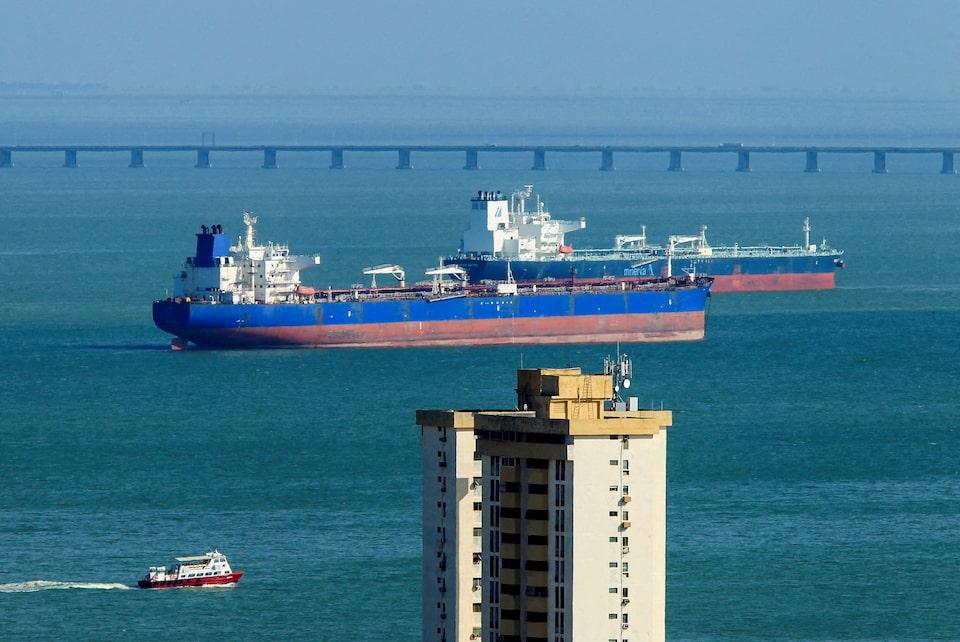
Saudi Arabia, Iraq, and Kuwait drive Mideast Gulf fuel oil imports to record highs in August and September Refiners seek alternatives to dwindling Venezuelan crude supplies US residual fuel oil stocks fall since sanctions on Russian oil HOUSTON, Oct 2 (Reuters) - (This October 2 story has been refiled to fix an incorrect picture caption, with no changes to text) Fuel oil imports to the U.S. Gulf Coast surged to a two-and-a-half-year high in September, driven by a jump in cargoes from the Middle East, as refiners seek alternatives to dwindling Venezuelan crude supplies, according to preliminary ship tracking data, analysts and a refinery source. Sign up here. U.S. Gulf Coast refiners are ramping up fuel oil imports to fill a widening gap left by declining heavy crude supplies, particularly from U.S.-sanctioned Venezuela. Meanwhile, domestic fuel oil stocks have been in decline after the U.S. sanctioned Russian crude and oil products following its invasion of Ukraine in 2022, cutting off a key fuel oil supplier and forcing refiners to find alternative barrels. Fuel oil imports into the U.S. Gulf Coast, home to more than 55% of total U.S. refining capacity, have been on the rise since July and were on track to reach 541,000 barrels per day last month, marking their highest since February 2023, according to Kpler. In August and September, fuel oil imports from Gulf countries hit record highs, bolstered by volumes from Saudi Arabia, Iraq and Kuwait, per Kpler. Shipping Iraqi high-sulfur fuel oil to the U.S. Gulf Coast on Suezmax tankers has been economically viable since early July, according to Sparta commodity owner Hoa Nguyen, referring to tankers that can ship up to a million barrels. The end of the power generation season in the Middle East has also freed up more high-sulfur residual fuel oil barrels to meet strong demand on the U.S. Gulf Coast, Nguyen added. "In short, there is way more availability of high-sulfur residuals right now, which the U.S. refining system is hungry for and which will help boost the diesel yield there," Nguyen said. A drop in available crude supplies from Venezuela and more available fuel oil from the Mideast, coupled with strong product margins have led some U.S. Gulf Coast refiners to run more fuel oil in the last couple of months, according to a refinery source. Gulf Coast refineries are designed to process heavy, sour crude, qualities typical of Latin American grades. When those supplies tighten, refiners can pivot to fuel oil, which secondary units can process into higher-value products like gasoline and diesel. Crude imports to the refining hub have been in decline since July, falling 143,000 bpd on the month to just 880,000 bpd in September, according to preliminary Kpler data, their lowest since November 2022. U.S. crude imports from Venezuela fell to 6,000 bpd in July, according to the Energy Information Administration, following the South American country's cancellation of cargoes to U.S. producer Chevron(CVX.N) , opens new tab, ahead of a deadline set by the Trump administration to wind down oil transactions. The Chevron authorization was reinstated with restrictions in late July but volumes have yet to recover, with weekly U.S. imports totaling just 49,000 bpd last week, compared with the 2025 high of 416,000 bpd in January, per EIA data. "This has deprived U.S. Gulf refiners of precious heavy crude supplies, forcing them to turn to residual imports," said Roslan Khasawneh, senior oils analyst at Kpler. Weekly U.S. residual fuel oil stocks fell 487,000 barrels last week to 20.63 million barrels, compared with 29.2 million in the same week in 2021, prior to Russia's invasion of Ukraine, according to EIA data. https://www.reuters.com/business/energy/us-gulf-coast-fuel-oil-imports-hit-25-year-high-amid-venezuelan-russian-2025-10-02/
2025-10-22 23:34
Mongolia court rules parliamentary vote to remove PM was unconstitutional Decision deepens political deadlock over economy, analyst says Economists urge reforms to reduce reliance on mining BEIJING, Oct 23 (Reuters) - Mongolia's top court ruled a parliamentary vote to oust the prime minister last week was unconstitutional, a move analysts say could spur further turmoil in the coal-rich country as factions in the ruling party feud over the economy. The Constitutional Court said a motion passed by the State Great Khural or parliament last Friday to dismiss Prime Minister Zandanshatar Gombojav had no legal basis, the official Montsame news agency reported on Thursday. Sign up here. The court sided with President Khurelsukh Ukhnaa, who on Monday vetoed the parliament's resolution to dismiss Zandanshatar, citing procedural irregularities, including the use of an "incorrect voting formula." Zandanshatar, nominated by President Khurelsukh and named as prime minister in June, is expected to be able to fend off reformists within the Mongolian People's Party led by former parliamentary speaker Amarbayasgalan Dashzegve, said Xu Tianchen, a senior analyst at the Economist Intelligence Unit. Zandanshatar is seeking to push through a more conservative economic policy ahead of the next election in 2027, resisting calls for stronger anti-corruption measures and progressive taxation. But the confrontation could lead to an economically damaging policy stalemate, analysts say, worsening a cost-of-living crisis and delaying efforts to diversify the economy beyond mining, as government instability hampers long-term planning and deters foreign investment. The Mongolian People's Party also faces pressure to address public discontent over allegations that government officials misappropriated state funds and were engaged in corruption. Those concerns sparked large-scale street protests in urban centers, including the capital Ulaanbaatar, which ultimately prompted parliament to vote to remove Prime Minister L. Oyun-Erdene four months ago. "I'm afraid that the turbulence will last until 2027, as the factional conflict within the Mongolian People's Party continues," said Xu. "President Khurelsukh has tried to defend his people, but his influence will diminish as he approaches the end of his presidency," he added. "Amarbayasgalan and his fellows will try hard to dominate the political landscape." COAL-POWERED POLITICS Parliament moved to dismiss Zandanshatar after his government proposed changing the mining royalty calculation from international benchmark prices to lower domestic prices for key materials, particularly coal. The plan would reduce government revenue but increase profits for domestic and foreign mining companies, limiting the state's ability to finance social welfare initiatives and infrastructure. Mongolia exported a record 80 million tons of coal, worth $8.6 billion, in 2024, customs data show, cementing the commodity as the country's top export. About 90% went to China. In September, the International Monetary Fund said unpredictable Chinese coal demand - owing to a slowing economy and Beijing's efforts to curb coal overcapacity - and falling coal prices were weighing on Mongolia's growth prospects, urging officials to push through structural reforms. Eric Olander, co-founder of the China-Global South Project, said China was unlikely to be fazed by the politics across its northern border, as long as the eventual winner remains favourable to Beijing and can ensure mineral supplies. That said, the growing number of countries around China where young people have taken to the streets to protest the erosion of the social contract between government and society could start to raise concerns, Olander added. "They don't want yet another country along its periphery to become a variable," Olander said, citing the 'Gen-Z' uprisings in Indonesia, the Philippines and Nepal, as well as instability along China's borders with Myanmar and India. "Young people in many countries feel they are getting screwed by their governments, a sort of populist backlash. We haven't seen that yet in either Vietnam or China, where the social contracts are generally much stronger, but they are definitely not immune." (This story has been refiled to add a dropped word in paragraph 18) https://www.reuters.com/world/china/mongolias-top-court-rules-parliament-vote-ousting-prime-minister-is-2025-10-22/