2025-10-22 19:58
US plans to make weapons-grade plutonium available US expects to begin saying who gets material by December 31 Nuclear safety experts concerned about proliferation Previous US plutonium MOX fuel effort failed WASHINGTON, Oct 22 (Reuters) - The U.S. Department of Energy expects to begin announcing by December 31 which companies will take about 19.7 metric tons of surplus Cold War-era plutonium for eventual processing into nuclear reactor fuel, a document showed on Wednesday. Reuters reported in August that the Trump administration planned to offer the weapons-grade plutonium to companies as a potential fuel for reactors. The department issued a document on Tuesday, seen by Reuters, that indicates applications are due by November 21 and selections would begin by the last day of the year. Sign up here. The plan, if successful, would follow through on an executive order signed by President Donald Trump in May ordering the government to halt much of its existing program to dilute and dispose of surplus plutonium, and instead provide it as a fuel for reactors. It would take companies several years at least to convert the plutonium into fuel. The U.S. Energy Department holds surplus plutonium at heavily guarded weapons facilities. Plutonium has a half-life of 24,000 years and must be handled with protective gear. The plutonium would be offered to industry at little to no cost, but companies will pay for processing and manufacturing the fuel. The idea of using surplus plutonium for fuel has raised concerns among nuclear safety experts who argue it comes with proliferation risks and that a previous similar effort failed. "It would be incredibly dangerous, complicated, and expensive to convert these impure plutonium materials into fuel that is safe enough for use in reactors," said Edwin Lyman, a physicist at the Union of Concerned Scientists. Under a 2000 agreement with Russia, the U.S. initially planned to convert surplus plutonium to mixed oxide fuel (MOX) for reactors. But in 2018, the first Trump administration killed the contract for a MOX project that it said would have cost more than $50 billion. Still, at least two companies are hoping to develop and invest in facilities to turn the plutonium into reactor fuel. Bonita Chester, a spokesperson for Sam Altman-backed nuclear technology firm Oklo (OKLO.N) , opens new tab, said her company is reviewing the application and its planned small reactor called Aurora could run on the fuel. Stefano Buono, CEO and founder of start-up Newcleo, said his firm was encouraged that the U.S. is making plutonium available and that it can bring "safe, efficient and secure operations to the U.S. nuclear ecosystem and to our partners." https://www.reuters.com/business/energy/us-announce-by-end-2025-companies-taking-surplus-plutonium-nuclear-reactor-fuel-2025-10-22/

2025-10-22 19:53
BRUSSELS, Oct 22 (Reuters) - EU countries approved a 19th package of sanctions against Russia for its war against Ukraine that includes a ban on Russian liquefied natural gas imports, the Danish rotating presidency of the EU said on Wednesday. "We are very pleased to announce that we have just been notified by the remaining member state that it’s now able to lift its reservation on the 19th sanctions package," it said. Sign up here. Slovakia was the final holdout after EU countries agreed on the final text last week. Slovakia's Prime Minister Fico wanted assurances from the European Commission on high energy prices and aligning climate targets with the needs of carmakers and heavy industry. A Slovak diplomat said the country's demands were met in new clauses added to the final communique for the EU leaders summit on Thursday. "Consequently, a written procedure for Council approval has been launched. If no objections are received, the package will be adopted tomorrow by 8 am," it added. The LNG ban will take effect in two stages: short-term contracts will end after six months and long-term contracts from January 1, 2027. The full ban comes a year earlier than the Commission's proposed roadmap to end the bloc's reliance on Russian fossil fuels. The new package also adds new travel restrictions on Russian diplomats and lists 117 more vessels from Moscow's shadow fleet, mostly tankers, bringing the total to 558. The listings include banks in Kazakhstan and Belarus, the presidency said. EU diplomatic sources told Reuters that four entities linked to China's oil industry will be listed but the names will not be made public until the official adoption on Thursday. These include two oil refineries, a trading company and an entity which helps in the circumvention in oil and other sectors. https://www.reuters.com/world/china/eu-approves-19th-package-russian-sanctions-including-lng-ban-2025-10-22/

2025-10-22 19:16
Settlement talks could prevent need for regulatory hearing Dispute stems from budget overruns during Trans Mountain's expansion Tolling uncertainty has cast doubt on ability of Canadian government to attract pipeline buyer CALGARY, Oct 22 (Reuters) - The operator of Canada's Trans Mountain pipeline and oil shippers are in talks to resolve a shipping cost dispute that has deterred usage of Canada's only east-west pipeline and hindered the government's plan to sell it. Documents filed with the Canada Energy Regulator on Tuesday by Trans Mountain Corp and a group of oil shippers including Cenovus Energy (CVE.TO) , opens new tab, Canadian Natural Resources (CNQ.TO) , opens new tab, and ConocoPhillips Canada said the parties are having "active commercial discussions." Sign up here. The talks could settle how much the companies pay to ship oil on the expanded 890,000-barrel-per-day pipeline, which offers direct access to China and other Asian markets at a time Canada is trying to diversify oil exports away from the United States. A Trans Mountain spokeswoman confirmed in an email on Wednesday that talks are underway and said the company is requesting regulatory proceedings be halted to allow time for an agreement. Canada's Energy Regulator said it is reviewing the request. The shippers did not immediately reply to a request for comment. The more than two-year-old tolling dispute has added uncertainty to the Canadian government's plans to eventually sell the Trans Mountain pipeline. Ottawa, which bought the pipeline for C$4.5 billion ($3.21 billion) in 2018 to rescue the expansion project after years of regulatory delays and cost increases, began informal talks in 2023 with Indigenous groups along the pipeline's route to explore their interest in a potential equity stake. Analysts say it would be difficult for an Indigenous group or private sector buyer to commit to purchasing the pipeline until the tolling dispute is settled and Trans Mountain's long-term revenue potential is clear. FINAL TOLL UNCERTAINTY The completed in 2024 tripled the pipeline's capacity, but the final price tag was nearly quintuple a 2017 estimate. While approximately 70% of cost overruns will be borne by Trans Mountain Corp, the remaining more than $9 billion are to be covered by tolls under a formula agreed to by shippers and approved by the Canada Energy Regulator more than a decade ago. Contracted shippers now pay nearly twice what Trans Mountain had estimated in 2017. Spot shippers pay even higher rates. Some shippers have pushed back against the higher tolls, arguing they are not responsible for cost overruns incurred during construction. The Canada Energy Regulator had been set to hold a hearing on the tolls next month. Since the expansion's startup in May 2024, the Trans Mountain pipeline has been less full than its operator had earlier forecast, in part because its higher tolls are deterring utilization. If the final toll structure comes in below what Trans Mountain is looking for, it will make it harder for the pipeline to recoup its construction costs and could impact its potential selling price, analysts say. Trans Mountain CEO Mark Maki said in June he believes the Canadian government can recover its investment in the pipeline, but should hold off on the sale until uncertainties around tolling and utilization are resolved. ($1 = 1.4024 Canadian dollars) https://www.reuters.com/business/energy/trans-mountain-pipeline-canada-oil-shippers-talks-resolve-shipping-cost-dispute-2025-10-22/

2025-10-22 18:57
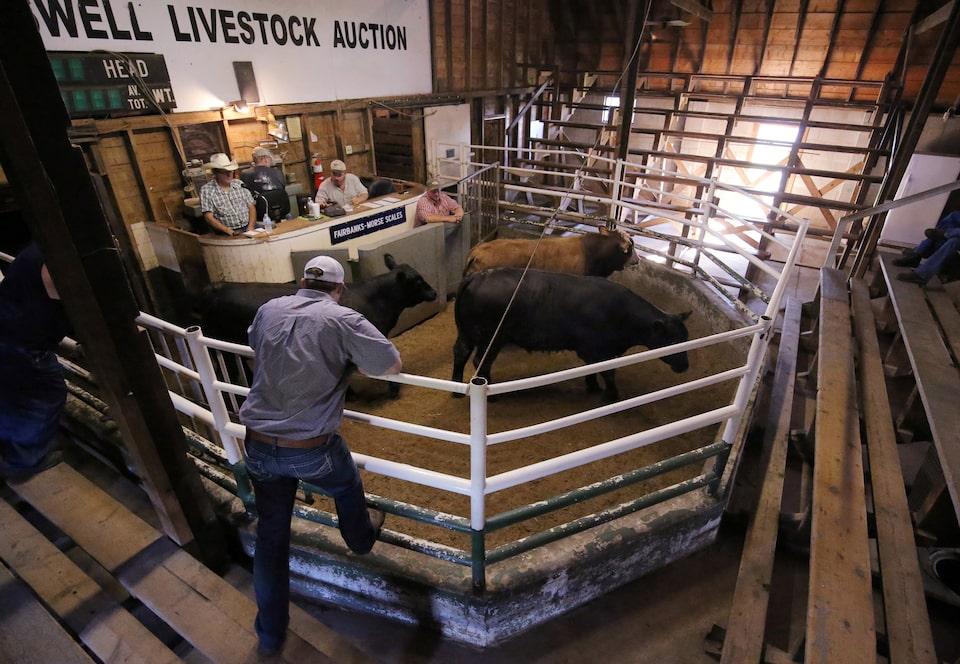
Trump says ranchers do not understand they are doing well because of tariffs Cattle prices set records after drought forced ranchers to slash herds Officials look to expand cattle grazing to rebuild herd Economists say there is no quick way to increase supply WASHINGTON, Oct 22 (Reuters) - The administration of U.S. President Donald Trump on Wednesday continued its campaign to cut the cost of beef, with Trump urging cattle ranchers to lower prices while several agencies announced an effort to rebuild the country's decimated cattle herd. Earlier this week, Trump said the administration was considering importing Argentine beef as a means of lowering record-high consumer beef prices. The suggestion angered U.S. ranchers. U.S. farmers also recently lost out to Argentina on soybean sales to China. Sign up here. Trump said in a post on Truth Social on Wednesday that cattle ranchers were benefiting from tariffs he has imposed on imports but must lower prices to encourage American consumers to buy their beef. "The Cattle Ranchers, who I love, don’t understand that the only reason they are doing so well, for the first time in decades, is because I put Tariffs on cattle coming into the United States, including a 50% Tariff on Brazil," Trump wrote. "They also have to get their prices down, because the consumer is a very big factor in my thinking, also!" Cattle and beef prices have surged after a years-long drought burned up grazing land and hiked feeding costs, forcing ranchers to slash their herds. Ranchers and economists said there were no easy ways to quickly boost cattle supplies. The departments of Agriculture, Interior, Health and Human Services, and Small Business Administration said in a plan released on Wednesday that they would take steps to boost the U.S. cattle supply, like exploring the expansion of grazing on federal lands and increasing payments in some livestock programs. The USDA will also begin enforcing compliance with voluntary "Product of USA" claims on January 1, 2026, to ensure domestic ranchers benefit from any price premiums for homegrown beef products. Eight Republican members of Congress sent a letter to Trump on Tuesday asking for more information on his plan to import Argentine beef. "(We) urge your administration to ensure that any future decisions are made with full transparency, sound science, and a firm commitment to the U.S. cattle industry," said the letter, led by Representative Julie Fedorchak of North Dakota. NO QUICK FIX Economists said there was no quick way to lower U.S. cattle prices, even if more land was available for grazing, in part because it takes about two years to produce full-grown cattle. "The economics and the biology of it are really a tough nut to crack," said David Anderson, agricultural economist at Texas A&M University. Though Trump called for lower prices, high prices are needed to incentivize ranchers to expand their herds, economists said. "He needs to take a class in supply and demand," said Arlan Suderman, chief commodities economist for StoneX. "Cattle prices are high because demand is stronger than the supply. If you want to increase the supply of beef long-term, you don't do it by lowering prices." Trump's tariffs this summer on imports of goods from Brazil decreased the supply of beef coming into the U.S. from Brazil, prompting meat importers to pay higher prices to other suppliers, traders said. "That certainly contributed to the higher cost of beef at the retail level," Suderman said. "It doesn't mean more profits to people feeding out cattle." U.S. feeder cattle futures set a record high last week. On Wednesday, after Trump's post, futures dropped by their daily maximums. https://www.reuters.com/world/us/trump-urges-us-cattle-ranchers-lower-prices-2025-10-22/
2025-10-22 18:16
T. Rowe Price's first crypto ETF targets multiple digital currencies ETF aims to outperform FTSE Crypto US Listed Index Government shutdown will stall crypto ETF approvals Oct 22 (Reuters) - T. Rowe Price (TROW.O) , opens new tab is seeking regulatory approval to launch an actively managed exchange-traded fund tied to multiple digital currencies, according to a filing with the U.S. Securities and Exchange Commission on Wednesday. It is the first foray into the cryptocurrency space by the $1.77 trillion asset management firm, nearly two years after the SEC's approval of spot bitcoin ETFs. Sign up here. "It's a surprise to see them as a relatively late entrant, but they're planning to offer something differentiated to try and break into the space," said Bryan Armour, an ETF analyst at Morningstar. While asset managers have flooded the SEC with applications to launch ETFs tied to individual coins, it remains rare to see proposals for new multi-coin products that are actively managed, Armour added. The proposed ETF would offer investors exposure to anywhere from five to 15 coins that meet the fund's eligibility standards, a list that currently ranges from bitcoin and ether to solana, dogecoin and Shiba Inu, according to the prospectus. Managers would seek to outperform the FTSE Crypto US Listed Index and use fundamental, valuation and momentum factors to determine which assets to hold and their relative weights within the portfolio, a spokesman told Reuters. As outflows continue from its traditional mutual funds, T. Rowe Price has been seeking to diversify into new areas, Armour said. It has launched 24 ETFs in recent years, and last month announced a new partnership with Goldman Sachs (GS.N) , opens new tab to explore ways to develop new private market products for retail investors. As part of that agreement, Goldman said it will buy up to 3.5% of T. Rowe shares, an investment that could top $1 billion. "This is a firm looking for new niches," said Armour. T. Rowe Price has been monitoring developments in the digital assets space closely and developed the ability to trade digital assets in recent years, the firm's spokesman said. In 2022, it hired Blue Macellari, a former crypto hedge fund executive, to become head of its digital assets strategy. "It's exciting to see them expand their ETF lineup beyond stock and bond exposure," said Todd Rosenbluth, head of research at VettaFi, an ETF market analysis firm. Scores of cryptocurrency ETFs await SEC approval in the midst of a government shutdown that has reduced the agency's staffing to skeletal levels. They are unlikely to get the green light until the shutdown ends, in spite of the SEC's adoption of new listing standards clearing the way for a host of new products such as the T. Rowe Price ETF. https://www.reuters.com/business/t-rowe-price-files-actively-managed-crypto-etf-2025-10-22/

2025-10-22 16:50
Investors in funding round include Apollo Global Management, Oppenheimer, HSG Kraken targets Q1 2026 for IPO Fundraising valued Kraken at $15 billion Oct 22 (Reuters) - Apollo Global Management, Oppenheimer, Jane Street and HSG, formerly known as Sequoia Capital China, invested in crypto exchange Kraken's recent funding round that valued the company at $15 billion, said two sources familiar with the matter. Fortune reported last month that Kraken closed the $500 million round, but Reuters is naming the firms, which are major investors and financial players, for the first time. Sign up here. Their participation underscores how institutional players are moving into the digital asset sector, which has benefited from U.S. President Donald Trump's pro-crypto stance and his administration's push for friendly regulations. Qube Research & Technologies; Kraken's co-CEO Arjun Sethi; and Tribe Capital, a venture capital firm that Sethi co-founded, also bought into the fundraising round, which paves the way for the crypto firm to go public in coming months, one source said. Spokespeople for Kraken, Qube and Jane Street declined to comment. Spokespeople for Apollo, Oppenheimer, HSG and Tribe Capital did not provide comment. Kraken, one of the world's largest crypto trading platforms, is expected to confidentially file a registration statement for an initial public offering with the U.S. Securities and Exchange Commission by year-end, with plans to go public in the first quarter, one of the sources added, although it was unclear how the U.S. government shutdown might affect that timeline. Several other crypto companies including Circle, Gemini and Bullish have capitalized on crypto exuberance with IPOs this year. Kraken has been expanding aggressively, buying retail futures trading platform NinjaTrader for $1.5 billion in May and futures exchange Small Exchange from IG Group for $100 million this month, paving the way for the company to launch a fully U.S.-based derivatives platform. Growing institutional and corporate participation in crypto markets has helped push up the value of major tokens over the last year. Bitcoin, the world's largest cryptocurrency, is up more than 20% so far this year, after hitting a record high above $126,000 this month. https://www.reuters.com/world/asia-pacific/hsg-jane-street-among-investors-krakens-september-fundraising-sources-say-2025-10-22/