2025-10-22 09:44
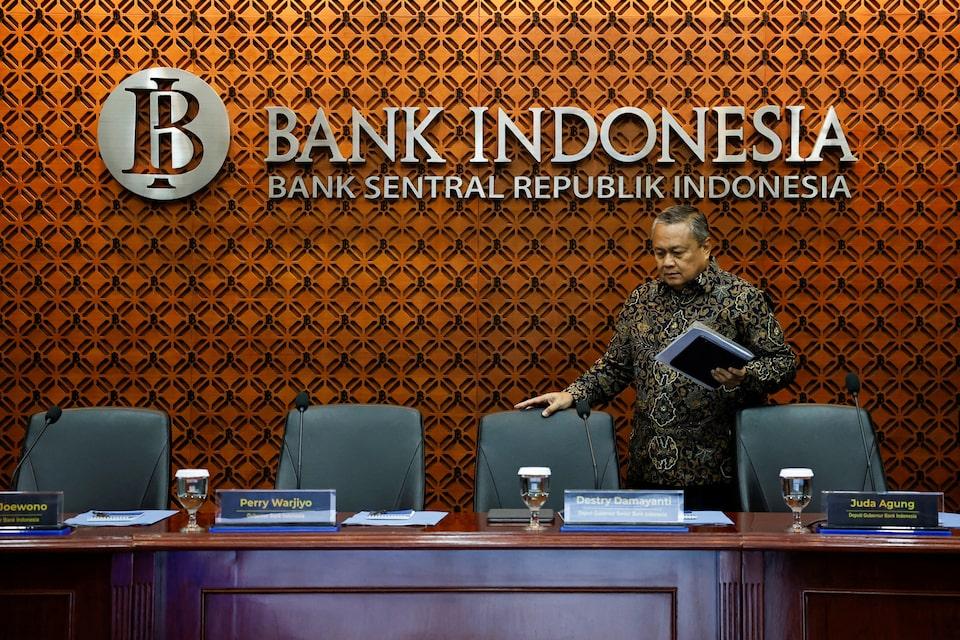
BI focusing on transmission of past rate cuts Liquidity incentive planned for banks committed to cutting rates BI has intervened to defend rupiah amid capital outflows Some economists predict more cuts through 2026 JAKARTA, Oct 22 (Reuters) - Indonesia's central bank unexpectedly kept key interest rates unchanged on Wednesday, pausing after three successive cuts, as policymakers assess the impact of previous reductions. Bank Indonesia kept the benchmark 7-day reverse repurchase rate (IDCBRR=ECI) , opens new tab at 4.75%. Of 28 economists polled by Reuters, 21 had expected a 25 basis points cut, with the rest predicting no change. The overnight deposit (IDCBID=ECI) , opens new tab and lending (IDCBIL=ECI) , opens new tab rates were also kept unchanged. Sign up here. Governor Perry Warjiyo said there was still room for further rate cuts due to expected low inflation through 2026, but BI's current goal was to get commercial banks to lower their lending rates to ease pressure on businesses and households. "After six rate cuts, our focus now is on strengthening transmission of monetary policies that we have carried out," Warjiyo told an online press conference. The decision to hold rates steady was consistent with the central bank's efforts to maintain rupiah stability while also working to improve monetary policy transmission, the central bank said in a statement. Since September 2024, Bank Indonesia has lowered rates six times, totalling 150 basis points. However, banks have on average only lowered borrowing rates by 15 bps so far this year, while undisbursed loans stood at 2,374.8 trillion rupiah ($143.32 billion), BI said. To strengthen transmission, BI from December 1 will expand its liquidity incentive to banks that commit to cutting their interest rates in line with benchmark rates. Currently, banks that lend to certain sectors can reduce required reserve level by up to 5 percentage points. BI will add 50 bps additional reduction for banks committing to lowering lending rates. The current reserve requirement ratio is 9%. BI maintains the outlook for 2025 GDP at slightly above the mid-point of the 4.6% to 5.4% forecast range and anticipates higher growth in 2026. CURRENCY INTERVENTION AMID CAPITAL OUTFLOWS The rate pause also took into account the rupiah's movements amid market uncertainties, including the impact of U.S. tariffs on global trade, Warjiyo said. The rupiah erased earlier losses on Wednesday to trade 0.1% stronger after the decision. The currency is down by 3% against the dollar this year, one of the weakest in emerging Asia. Analysts have flagged fiscal management and central bank independence as key concerns. Warjiyo said BI had intervened to defend the currency, especially as the central bank recorded $5.26 billion net portfolio outflows between September and October 20. Some economists still see BI continuing to cut rates through 2026. "While counting on gradual policy transmission and other macroprudential measures, we still retain our call for at least one more cut this quarter to underscore the BI's growth-supportive stance," DBS Bank economist Radhika Rao said, maintaining her forecast for 50 bps in cuts between this quarter and next. President Prabowo Subianto seeks to lift economic growth to 8% during his term, from around 5% in the post-pandemic era. For 2026, he has set a target of 5.4%. Finance Minister Purbaya Yudhi Sadewa has said BI should be able to lower its benchmark rate to 3.5% if inflation remains stable at 2.5%. BI targets inflation within a 1.5% to 3.5% range. The September annual inflation rate was 2.65%. ($1=16,570.0000 rupiah) https://www.reuters.com/world/asia-pacific/indonesias-central-bank-surprises-with-decision-hold-rates-steady-2025-10-22/
2025-10-22 07:24
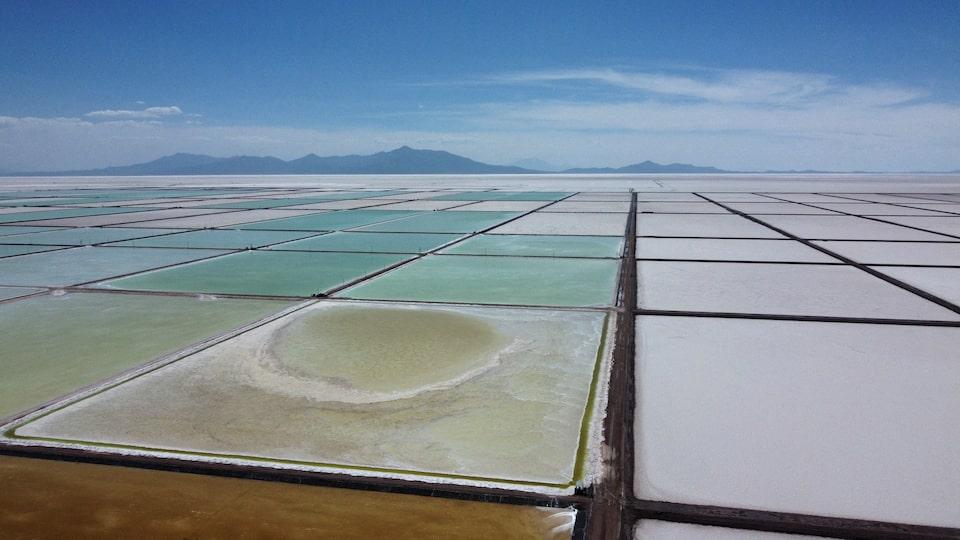
Paz presidency begins November 8 in more market-friendly push Paz needs a detailed policy plan for the world's largest lithium resources -expert Challenges include state control law, technical extraction issues Paz to scrutinize China, Russia lithium deals for transparency Oct 21 (Reuters) - Bolivia's election of centrist Rodrigo Paz is raising cautious hopes that a more market-friendly leader could pave the way for international investment in the country's ample lithium reserves after years of false starts under two decades of socialist rule. Bolivia holds the world's largest resources of the ultralight metal used in electric vehicle batteries, but development has been hamstrung by political opposition and a law mandating state control of the sector that has chilled broad investor interest. Sign up here. Lithium deals under outgoing President Luis Arce with companies from allies China and Russia were blocked in Congress, and Paz has said he would scrutinize the contracts to ensure transparency, a move that could create fresh opportunities but also spark investor jitters. To be sure, Paz's campaign focused less on lithium than on other priorities such as maintaining cash transfers to the poor, decentralizing government and private sector-led growth, part of an effort to not alienate former supporters of leftist Evo Morales who founded the ruling MAS party. In that vein, Paz has also vowed not to "sell out" the vast Uyuni salt flat famed for its dazzling fields of white salt, a nationally beloved symbol of Bolivia's national sovereignty and Indigenous heritage. Beyond calling for foreign investment that benefits the local Potosi region, he has not discussed a policy plan for Bolivia's 23 million metric tons of lithium resources. Diego von Vacano, a Bolivia expert at Texas A&M University, said Paz needs to announce details within the first few months of his presidency for the global mining community to take him seriously. "Otherwise, investors will say, okay, it's more of the same ... and Bolivia might be seen again as having missed the boat," he said. LEGAL ROADBLOCKS AND TECHNICAL CHALLENGES Among other issues, Paz faces a decision on whether to modify a Bolivian law dictating that only the state can extract lithium, which has cramped investor interest both locally and abroad. Changing it would require constitutional referendum or reform. Paz and his advisors have yet to weigh in on the question. There are technical challenges, too, in tailoring extraction technology to the exact composition of the salty brine deposits that hold Bolivia's lithium. Past efforts with traditional evaporation ponds proved inefficient due in part to high naturally occurring concentrations of magnesium. State-run lithium company YLB opened its first plant at the end of 2023 and last year brought in $15.6 million with production of 2,000 metric tons of the battery metal, a fraction of commercial scale. Chile, the world's second-largest producer, turned out nearly 300,000 tons of lithium last year while Argentina, which ranks fourth globally, produced 70,000 tons. Although Bolivia missed the 2022 peak of lithium prices, it could theoretically ramp up some production in time to latch on to demand that is expected to grow in the coming years in line with EV sales. Lithium companies will carefully watch Paz's first moves once he takes office on November 8. His Christian Democratic party does not hold a majority in the legislature, which will now be dominated almost entirely by centrist and right-wing groups after the loss of seats for the outgoing ruling party, MAS. That could help accelerate more investor-friendly rules if infighting does not prevail. SEEKING STABILITY Teague Egan, CEO of U.S. lithium company Energy X, which lost a prior bid for a Bolivia project, welcomed Paz's U.S.-friendly stance, but said that scrapping the Russia and China deals could set a worrisome precedent for what could happen under the next president in five years. "If he annuls those contracts, I would be very hesitant to re-enter Bolivia," Egan said. The Bolivian salt flats are large enough to offer numerous areas for exploration, but projects could be constrained by the government's limited capacity to award contracts and oversee production. Russian state nuclear corporation Rosatom, which signed a lithium deal with Bolivia in 2023, defended its project in a statement to Reuters as beneficial to the economy and local communities. "We view our cooperation with Bolivia as a long-term partnership that will bring tangible benefits," Rosatom said. "We are ready to continue constructive cooperation and remain committed to the successful implementation of the project on mutually beneficial terms." Chinese battery maker CATL, which also inked a major Bolivia lithium agreement in 2023, did not reply to a request for comment. Felipe de Mussy, South America president for U.S. lithium technology firm Lilac, which lost a prior bid in Bolivia, said he would look at fresh opportunities if Paz ensured stable regulation and transparency. "With clearer rules and openness to new technologies, Bolivia could unlock its vast lithium potential," he said. Bolivia could be a good fit for smaller companies aiming to prove their technology, as well as larger companies with the financing backing to absorb risk, said Chilean mining lawyer Pablo Hamilton, who is aiming to help connect foreign investors with energy and lithium opportunities in the new government. He is hopeful that Paz's centrist position could bring advantages, compared to conservative rival Jorge "Tuto" Quiroga. "Although he's less clear on what he wants to do, he's in a better position to speak with people from both sides of the spectrum – the right and the left – in order to bring more stability for investors," he said. Analysts also see a potential opening for the U.S. just as President Donald Trump is attempting to ramp up influence in critical minerals, including lithium , opens new tab, to counter China's dominance. U.S. Secretary of State Marco Rubio congratulated Paz and said the Trump administration was interested in bilateral investment, without detailing in which sectors. "After two decades of misguided administrations, the election of Rodrigo Paz marks a transformative opportunity for both nations," he said in a statement. https://www.reuters.com/world/china/bolivias-new-president-rekindles-cautious-hope-long-stalled-lithium-dreams-2025-10-21/
2025-10-22 07:16
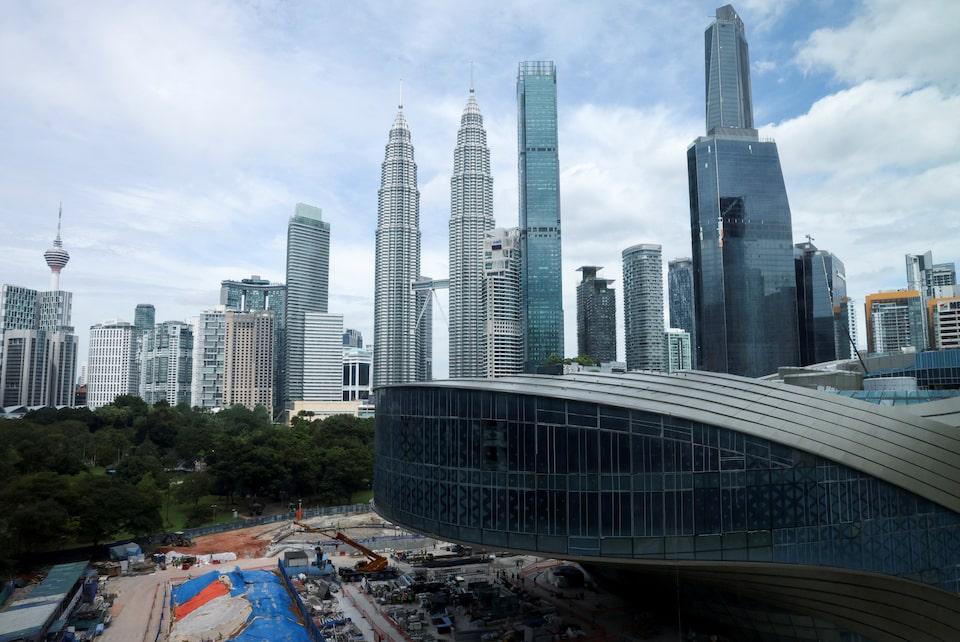
KUALA LUMPUR, Oct 22 (Reuters) - Malaysia is open to foreign companies establishing joint ventures with local firms to develop rare earths in the country, state media reported on Wednesday, citing the trade minister. The Southeast Asian country has some 16.1 million metric tons of rare earth deposits, according to government estimates, but lacks the technology to mine and process them. Sign up here. Malaysia is aiming to develop midstream processing capabilities in a sector dominated by China, which earlier this month tightened its restrictions on rare earth exports. Reuters reported exclusively earlier this month that the government was in talks with China on rare earths processing, saying Malaysian sovereign wealth fund Khazanah Nasional [RIC:RIC:KHAZA.UL] would partner with a Chinese firm to build a refinery in Malaysia. In his 2026 government budget speech to parliament on October 10, Prime Minister Anwar Ibrahim said 10 million ringgit ($2.37 million) would be allocated to continue the mapping of rare earth resources, with Khazanah looking to develop downstream activities in the sector through international collaborations. Trade Minister Tengku Zafrul Aziz said Khazanah is engaging with Chinese companies to explore opportunities in downstream rare earth development, state news agency Bernama reported on Wednesday. "We want to invite companies to come and invest here, and we want to get more Malaysians involved, not just in terms of the supply chain but also in terms of economic interests, meaning having some equity and shareholding as well in this venture," he was quoted as saying. Malaysia's ban on companies from exporting raw rare earths to prevent the loss of resources will effectively compel firms to set up operations within its borders, Tengku Zafrul added. However, he said the trade ministry had yet to receive proposals to set up new processing facilities in the country. Tengku Zafrul also said the government will not prevent Australia's Lynas Rare Earths (LYC.AX) , opens new tab, which has a processing plant in Malaysia's central state of Pahang, from exporting to markets of its choice. ($1 = 4.2240 ringgit) https://www.reuters.com/world/asia-pacific/malaysia-seeks-foreign-partnerships-develop-rare-earth-sector-state-media-2025-10-22/
2025-10-22 07:05
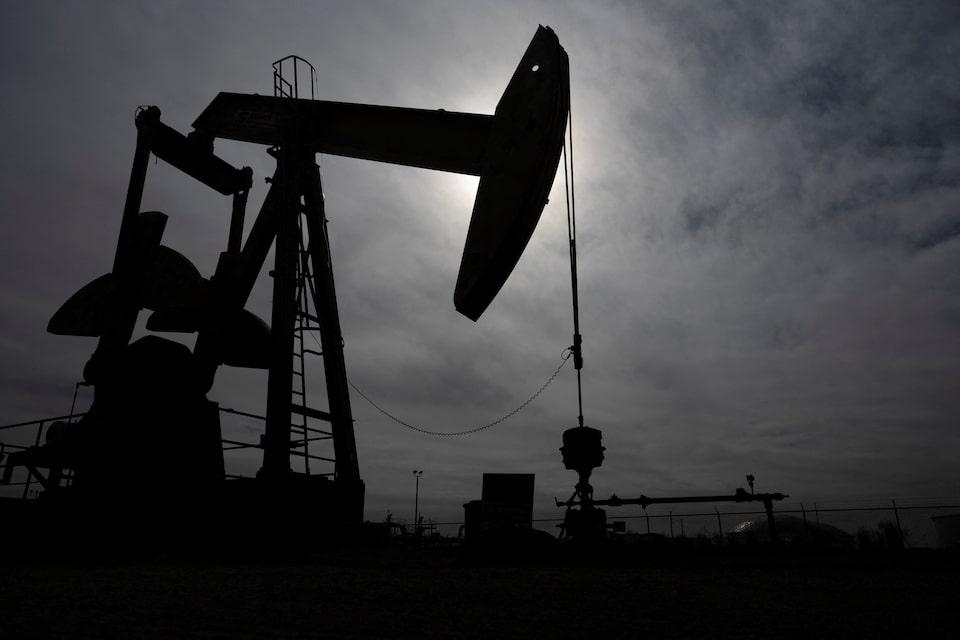
US imposes sanctions targeting Russia's largest oil companies Trump to meet Chinese President Xi in South Korea US crude stocks, gasoline and distillate inventories fell last week, EIA says NEW YORK, Oct 22 (Reuters) - Oil prices extended gains after settlement on Wednesday after the U.S. imposed Ukraine-related sanctions on Russia, targeting oil companies. Brent crude futures were up $3.03 or 4.94% at $64.35 after settlement at 6 p.m. EDT (2200 GMT) and U.S. West Texas Intermediate crude futures climbed $1.42 or 2.43% to $59.92. Sign up here. Earlier, Brent futures settled $1.27, or 2.07%, higher at $62.59 a barrel, while U.S. West Texas Intermediate crude futures climbed $1.26, or 2.20%, to $58.50. "Given President Putin’s refusal to end this senseless war, Treasury is sanctioning Russia’s two largest oil companies that fund the Kremlin’s war machine," Treasury Secretary Scott Bessent said on Wednesday. The new sanctions target Lukoil and Rosneft, two of Russia's largest oil companies. Oil prices were also supported by growing U.S. energy demand. U.S. crude oil, gasoline and distillate inventories fell last week as refining activity and demand strengthened, the Energy Information Administration said on Wednesday. Crude stocks fell by 961,000 barrels to 422.8 million barrels last week, compared with analysts' expectations in a Reuters poll for a 1.2 million-barrel rise. "We have got total oil demand above 20 million bpd. Very impressive for shoulder season. It shows the demand side of the equation of oil is robust," said Phil Flynn, a senior analyst with Price Futures Group. Shoulder season, which typically spans from late September to November, sees relatively soft energy demand. Investors were also closely watching the progress of U.S.-China trade talks as officials from both countries are set to meet this week in Malaysia. U.S. President Donald Trump said on Monday he expected to work out a fair trade deal with Chinese President Xi Jinping, whom he was due to meet in South Korea next week. On Wednesday, Trump said he has a long meeting scheduled with Xi during an upcoming trip to South Korea. Supply concerns flared on news that a summit between Trump and Russian President Vladimir Putin had been put on hold, and on disruption fears as Western governments pressured Asian buyers to reduce their purchases of Russian oil. Trump said he spoke with Indian Prime Minister Narendra Modi on Tuesday, adding that Modi assured him India would be limiting its oil purchases from Russia. "Oil prices climbed after reports suggested the U.S. and India are close to finalising a trade deal that could see India gradually cut imports of Russian crude, potentially lifting demand for other grades," MUFG analyst Soojin Kim said. India's Mint newspaper reported on Wednesday that the two countries were nearing a long-stalled trade agreement that would reduce U.S. tariffs on Indian imports to 15-16% from 50%. https://www.reuters.com/business/energy/oil-maintains-gains-supply-risks-us-plan-refill-strategic-reserves-2025-10-22/
2025-10-22 07:01
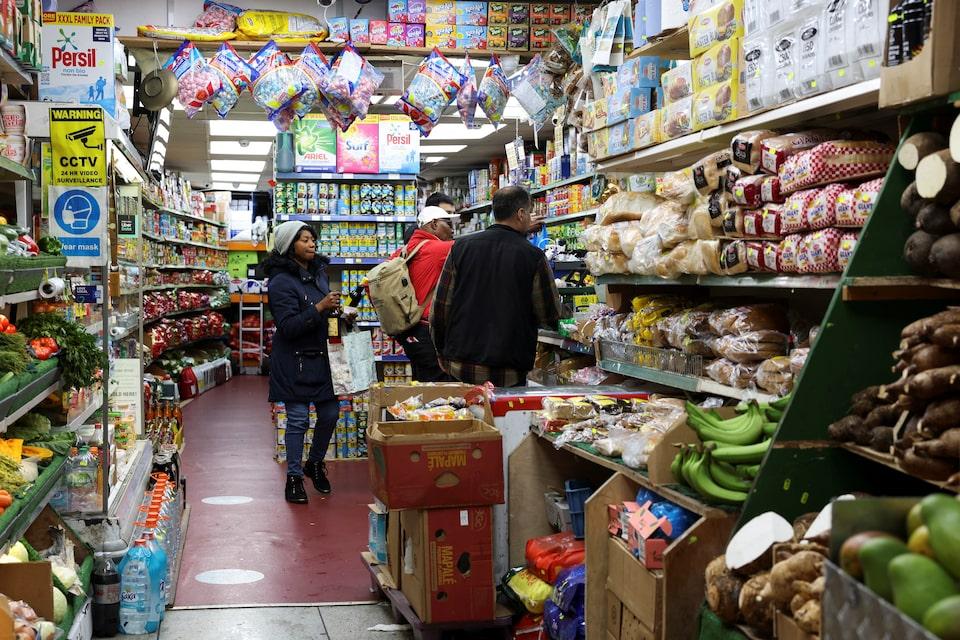
CPI holds at +3.8% in September Bank of England and Reuters poll had pointed to +4.0% Services inflation also unexpectedly holds steady Sterling weakens, investors bring forward rate cut bets LONDON, Oct 22 (Reuters) - British inflation unexpectedly held steady in September, raising the prospect of a Bank of England interest rate cut this year and offering some relief to finance minister Rachel Reeves ahead of her budget in November. Annual consumer price inflation remained at 3.8% for the third month running, its joint highest since the start of 2024, the Office for National Statistics said on Wednesday. Sign up here. Price growth in Britain remains the fastest among the world's rich advanced economies but the Bank of England and most economists polled by Reuters had expected a further rise to 4.0%. Inflation in the services sector - closely watched by the BoE as a gauge of underlying price pressures in the economy - stayed at 4.7%, also below the Reuters poll forecast of a rise to 4.9%. 'THIS IS THE PEAK', ECONOMIST SAYS Sterling slid by more than half a cent against the U.S. dollar and investors moved to price a 75% chance of the BoE cutting rates at its December meeting, up sharply from a 46% probability before the inflation data was published. "On balance the UK's inflation problem looks slightly less bad now than it did a few weeks ago," Luke Bartholomew, deputy chief economist at investment firm Aberdeen said. Ellie Henderson, an economist at bank Investec, said the year-long climb in British inflation appeared to be over. "A 3.8% headline inflation rate is still uncomfortable for the Bank of England – it is nearly double its 2% inflation target. However we are of the view that this is the peak," Henderson said. As well as complicating the BoE's attempts to support a weakening economy with lower borrowing costs, Britain's high inflation has added to the government's huge debt costs at a time when other demands on public spending are rising. BUDGET COULD TACKLE COST OF LIVING Reeves is likely to increase taxes in her budget on November 26 in order to show jittery investors that she remains on course to meet her fiscal targets, and analysts have warned that some options could push up inflation next year. Shortly after Wednesday's data was published, Reeves said she was not satisfied and suggested she was preparing measures in her budget to help bring down the cost of living. "For too long, our economy has felt stuck, with people feeling like they are putting in more and getting less out," Reeves said in a statement. "That needs to change. All of us in government are responsible for supporting the Bank of England in bringing inflation down. I am determined to ensure we support people struggling with higher bills and the cost of living challenges." The International Monetary Fund said last week that Britain's inflation rate would be the highest among the Group of Seven economies in 2025 and 2026. The BoE has previously said it expects British consumer price inflation to gradually weaken from now on but only hit its 2% target in the April-to-June period of 2027. Wednesday's data showed transport pushed up the headline inflation rate while recreation and culture and food and non-alcoholic beverages made the largest downward contributions. Britain's labour market is losing steam but BoE policymakers have been split on how much inflation heat remains in the economy, with inflation expectations among the public rising in recent months. The BoE says those expectations are sensitive to rises in food prices. The ONS data showed that in the 12 months to September food prices increased by 4.3%, slower than August's 4.8% climb. Separate figures from the ONS showed factory gate prices rose by 3.4% in the 12 months to September, speeding up from 3.1% in August. https://www.reuters.com/world/uk/uk-inflation-holds-38-september-2025-10-22/
2025-10-22 06:56
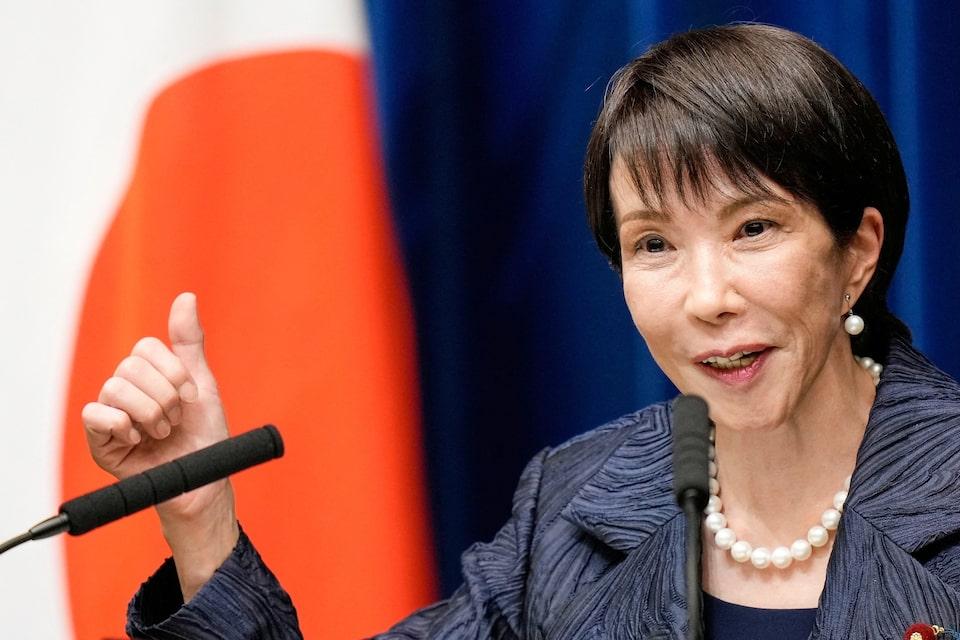
Trump to meet Japan's new PM Takaichi in Tokyo early next week Japan says substance, not amount, of defence spending important Japan will also offer list of possible U.S. investments TOKYO, Oct 22 (Reuters) - As Japan's new premier Sanae Takaichi got to work on Wednesday, her government began finalising a purchase package, including U.S. pickups, soybeans and gas, to present to President Donald Trump in trade and security talks next week, two sources said. She will not, however, commit to any new defence spending target at the meeting, which comes as Washington presses Japan and other allies to do more, said one of the sources with knowledge of the preparations. Sign up here. The two leaders will sit down in Tokyo early next week during Trump's first visit to Japan since his re-election, following an agreement by her predecessor, Shigeru Ishiba, to invest as much as $550 billion in the U.S. in return for lower auto tariffs. "The alliance with the United States is the cornerstone of Japan's foreign and security policy," Takaichi said on Tuesday at her inaugural press conference as prime minister. "It would be premature to comment on any discussions during President Trump’s visit," a Japanese government spokesperson said when asked about the planned purchase package and potential investments. The White House did not immediately respond to requests for comment. DIPLOMATIC TEST The sweeteners Takaichi plans to offer Trump in her first major diplomatic test include the purchase of Ford (F.N) , opens new tab F150 pickup trucks, an idea floated by Trump, and an agreement to buy more U.S. soybeans, which U.S. Commerce Secretary Howard Lutnick requested in a call with his Japanese counterpart last week, said the sources, who asked not to be identified because they are not authorised to talk to the media. Beijing curbs of U.S. soybean imports have hurt American farmers reliant on Asian markets. In September, exports to China dropped to zero for the first time in almost seven years. Tokyo could trim purchases of Brazilian soybeans to make room for more U.S. imports, which already account for 70% of Japan's consumption, one of the sources told Reuters. The F-150s, designed for wider U.S. roads, may be used in Japan as snow plows. INVESTMENT AND DEFENCE SPENDING Japan also plans to buy more U.S. liquefied natural gas (LNG), although not for now from an Alaskan pipeline project championed by Trump. Officials will also present a list of candidate investment projects under the $550 billion deal, which both governments will review before Trump makes a final pick, the source added. During the ruling Liberal Democratic Party leadership race, Takaichi was the only one of the five candidates to suggest the agreement, which gives the U.S. the lion's share of returns, was unfair. After her victory she said she would honour the pact. "Even with a one-to-nine profit split, if the risk is low, it can still make business sense," a separate Japanese government source said. On defence the hardline conservative premier has said she wants to deepen security ties with Washington. Japan already hosts the biggest concentration of U.S. military power, including an aircraft carrier, a U.S. Marine expeditionary force and scores of fighter jets. At next week's meeting she will signal Japan's willingness to accelerate its defence build-up beyond the 2% of GDP target set for 2027, the first source said. Takaichi yesterday said she will instruct defence officials to review three 2022 strategy documents that underpin what is already Japan's biggest military expansion since World War Two. Asked on Wednesday whether Japan would review the national security documents, Foreign Minister Toshimitsu Motegi said: "It’s not about the amount or the ratio to GDP. What matters is the substance of our defence capabilities.” Trump arrives in Japan on Monday and leaves Tuesday. He will also meet Emperor Naruhito. The U.S. leader and Takaichi are expected to travel to Malaysia for an Association of Southeast Asian Nations gathering from Sunday, and later to South Korea, which is hosting an Asia-Pacific Economic Cooperation (APEC) summit. https://www.reuters.com/world/asia-pacific/japans-new-leader-woo-trump-with-pickups-soybeans-2025-10-22/