2025-10-22 06:55
Gold fell more than 5% on Tuesday Focus on US inflation data, due on Friday Planned Trump-Putin summit on hold Oct 22 (Reuters) - Gold prices extended declines on Wednesday, following their steepest daily fall since 2020 in the previous session, after an initial recovery gave way to renewed selling with investors locking in profits and a stronger dollar adding pressure. Spot gold was down 2.6% at $4,017.29 per ounce, as of 1103 GMT, reaching a near two-week low, after rising as much as $4,161.17 earlier in the session. U.S. gold futures for December delivery fell 1.9% to $4,032.80 per ounce. Sign up here. The U.S. dollar index (.DXY) , opens new tab rose 0.2% to a one-week high, making dollar-priced bullion more expensive. Bullion prices fell 5.3% on Tuesday, after notching a record high of $4,381.21 in the preceding session. Prices have gained 54% so far this year, supported by geopolitical and economic instability, U.S. rate-cut expectations, and robust ETF inflows. "Strong gains that we saw in recent weeks meant that from a technical perspective, gold prices had entered the overbought territory and this led many traders to close positions in order to lock in profits," said ActivTrades analyst Ricardo Evangelista. On the technical front, gold is supported by the 21-day moving average at $4,005. Investors are awaiting the U.S. Consumer Price Index (CPI) report, due on Friday, which could offer insights into the Federal Reserve's trajectory for rate cuts. Gold, a non-yielding asset, tends to benefit in low-interest rate environments. A Reuters poll of economists suggests the Fed will lower its key interest rate by 25 basis points next week and again in December. Meanwhile, a planned summit between U.S. President Donald Trump and his Russian counterpart Vladimir Putin was put on hold on Tuesday, while uncertainty surrounds a possible meeting between Trump and Chinese President Xi Jinping. "We are still in an era that is fraught with uncertainties, and that will most likely mean that any substantial dips... will generate fresh buying interest," StoneX analyst Rhona O'Connell said. In other metals, spot silver dropped 1.8% to $47.84 per ounce. It slipped 7.1% on Tuesday. Platinum fell 1.4% to $1,530.35, while palladium was down 1.2% to $1,391.00. https://www.reuters.com/world/india/gold-extends-retreat-record-high-profit-booking-trade-optimism-2025-10-22/
2025-10-22 06:53
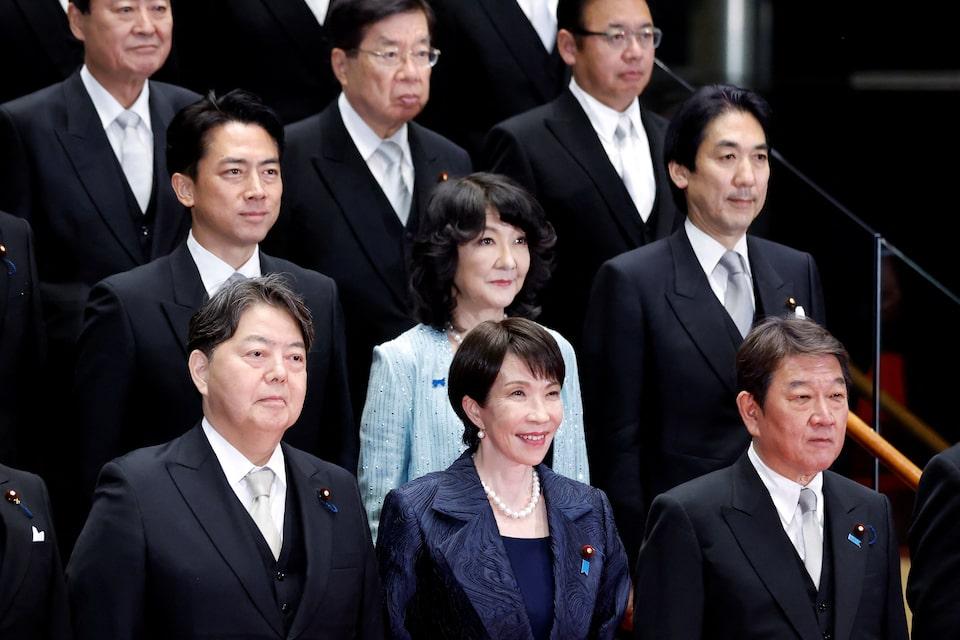
TOKYO, Oct 22 (Reuters) - Japan's new Prime Minister Sanae Takaichi is preparing an economic stimulus package that is likely to exceed last year's $92 billion to help households tackle inflation, government sources familiar with the plan said on Wednesday. The package of more than 13.9 trillion yen ($92.19 billion) marks Takaichi's first major economic initiative since the advocate of big fiscal spending took office on Tuesday, reflecting her commitment to what she calls "responsible proactive fiscal policy." Sign up here. It will be built around three main pillars: measures to counter inflation, investment in growth industries, and national security, the sources said, declining to be identified because the matter is still private. Japan's Nikkei share gauge (.N225) , opens new tab erased losses and turned higher , opens new tab on Wednesday afternoon following the Reuters report, while the yen pared morning gains and was little changed. Investors are closely watching her spending plans as Japan is one of the world's most indebted economies. As part of its core inflation relief measures, the Takaichi administration plans to swiftly abolish the provisional gasoline tax rate. It also aims to expand local government grants, with a focus on supporting small and medium-sized companies that are unable to benefit from existing tax incentives for wage hikes. The package will also include investments in growth sectors such as artificial intelligence and semiconductors as the government focuses on strategic economic development. The exact scale of the package is still being finalised, the sources said. It could be announced as early as next month. To fund the measures, the government is moving ahead with drafting a supplementary budget for the current financial year through March, with an eye toward passing it during the upcoming extraordinary parliament session. If additional spending exceeds initial expectations, the government may need to issue deficit-covering bonds, raising questions about how to balance economic growth with fiscal discipline. The plan "is consistent with Takaichi's policy list during the campaign (in the ruling party's leadership race)," said Shigeto Nagai, head of Japan economics at Oxford Economics. It's not so different from previous administrations, which have used all the additional tax revenue from higher inflation for large supplementary budgets to support vulnerable households, rather than working toward its goal of achieving a primary fiscal surplus, Nagai added. Takaichi was elected Japan's first female prime minister on Tuesday. The parliament vote drove down the yen and bond yields on expectations Takaichi's presence could delay further interest rate hikes by the Bank of Japan. A long-time advocate of late Prime Minister Shinzo Abe's "Abenomics" stimulus policies, Takaichi has called for higher spending and tax cuts and pledged to reassert government sway over the central bank, which is weighing more interest rate hikes and will hold its next policy meeting on October 29-30. Monetary policy is part of a broader economic policy the government holds final responsibility for, she told a news conference on Tuesday, adding that specific means of monetary policy were up to the BOJ to decide. ($1 = 150.7800 yen) https://www.reuters.com/world/asia-pacific/japans-new-pm-is-preparing-large-economic-stimulus-tackle-inflation-sources-say-2025-10-22/
2025-10-22 06:44
Oct 22 (Reuters) - Britain's Serica Energy (SQZ.L) , opens new tab said on Wednesday it would no longer be able to complete its planned transition from the AIM market to the London Stock Exchange's main market this year, due to regulatory complexities from its recent M&A activity. The company said last week it would buy BP's (BP.L) , opens new tab stake in some North Sea assets for $232 million, and last month announced a deal to purchase UK's North Sea oilfield operator Prax Upstream for $25.6 million. Sign up here. https://www.reuters.com/business/uks-serica-energy-delays-main-market-move-due-ma-hurdles-2025-10-22/

2025-10-22 06:43
Q3 GDP set to register first quarterly fall in more than 2 years Bank of Thailand ready to adjust policies when needed Next monetary policy review set for December BANGKOK, Oct 22 (Reuters) - Thailand's central bank will maintain its accommodative monetary stance to support the economy and remains ready to adjust policy settings as needed, officials said on Wednesday, amid expectations that GDP had fallen in the third quarter. Monetary policy is not an obstacle to economic growth, Deputy Governor Piti Disyatat told a policy forum, adding that the economy needed further fiscal and monetary support. Sign up here. The central bank projects annual growth at 1.5% in the third quarter and 1.3% in the fourth quarter. On a quarterly basis, it expects the economy to register a 0.5% dip in the third quarter followed by only modest growth of 0.5% in the final three months of the year. Despite the expected contraction, the first in 11 quarters, senior director Pranee Sutthasri said, "It's not a sign of danger for the economy." THIRD QUARTER DECLINE CAUSED BY FACTORY CLOSURES The decline was caused by temporary factory closures and production halts aimed at improving efficiency, a situation that also occurred during the pandemic, she said. The economy in the final quarter will be helped by factories reopening and the government's stimulus measures, she said. The central bank expect headline inflation to turn positive in the second quarter of 2026 and return to the target range of 1% to 3% in early 2027, with low risk of deflation. "If deflationary risks begin to emerge, monetary policy will need to change," said Assistant Governor Sakkapop Panyanukul. RATE CUTS STILL FEEDING INTO ECONOMY Earlier this month, the central bank unexpectedly left the one-day repurchase rate unchanged (THCBIR=ECI) , opens new tab at 1.50%. The committee said policy should remain accommodative and noted that the impact of earlier rate cuts was still feeding through to the economy, according to minutes , opens new tab of the meeting. The central bank has cut its key rate four times over the past year to support Southeast Asia's second-largest economy, which is grappling with U.S. tariffs, high household debt, and a strong baht . The central bank said it would ensure the baht moves more in line with economic fundamentals. The bank expects GDP growth to reach 2.2% for the whole of this year and 1.6% next year. Last year's growth of 2.5% lagged peers. Governor Vitai Ratanakorn, who took office at the start of October, has said interest rates could be cut if needed to lift inflation and growth. The next policy review is on December 17, and some economists expect a further rate reduction. https://www.reuters.com/world/asia-pacific/thailand-monetary-policy-should-remain-accommodative-central-bank-minutes-show-2025-10-22/
2025-10-22 06:18
Brent oil prices drift towards $60 a barrel Future contracts have shifted in recent weeks into a contango structure Huge divergence in estimates over OPEC production to put floor on oil price decline LONDON, Oct 22 (Reuters) - Global oil prices are signalling that the market is tipping into a protracted period of oversupply, but the huge disparity in forecasts for OPEC’s production will likely limit the selloff. Prompt Brent oil prices traded near $61 a barrel on Tuesday, the lowest since May. But, just as importantly, futures contracts for February delivery have started trading at a pronounced discount to future prices. That means the market is now in a so-called contango structure, suggesting that traders have finally started to accept the ultra-bearish forecasts for supply and demand in the coming year. Sign up here. The International Energy Agency has for months warned that there will be a severe oil glut in 2025 and 2026, pointing to the ramp-up in production around the world, particularly from members of the OPEC+ alliance. In the IEA’s latest report released last week, the Paris-based agency forecast a surplus of 2.35 million barrels per day in 2025 and 4 million bpd, or nearly 4% of global demand, next year. Investors had until recently failed to price in the expected glut. That’s partly because OPEC analysts were, in contrast to the IEA, forecasting fairly balanced supply and demand this year and next. But it’s mostly because OECD inventories were at relatively low levels earlier in the year while demand was holding up in the face of U.S. President Donald Trump's trade wars. But that dynamic changed in August. Global observed inventories, which include supply from OECD countries and China as well as oil in transit at sea, hit a four-year high that month, having swollen by 225 million barrels from the start of the year, according to the IEA. The rapid increase is largely due to China's aggressive stockpiling since March, which continued in September, albeit at a slower rate. The fact that this build-up occurred in a part of the market where visibility is low helps explain the market caution. THE OPEC ENIGMA This downturn feels less durable than those in the past, however, because of the uncertainty regarding OPEC's crude oil production. That’s a huge blind spot as the group accounted for nearly 30% of global supply last year. The range of estimates for OPEC production has widened significantly since the start of the year, Morgan Stanley noted in a recent report covering seven major agencies and consultancies. This range expanded to 2.5 million bpd in September, or around 9% of the group's production last month, after being negligible for years. While the wide spread may reflect divergent projections for oil demand, it is likely driven largely by uncertainty over the pace of OPEC's production increases this year following years of supply cuts. Indeed, even OPEC itself appears unclear about its production. Kuwait's oil minister last week said the organisation would appoint a “top” consultant to visit member states and assess their production capacity in the coming months. SHADOW MARKET The IEA supply and demand figures suggest the world will face a staggeringly large glut until 2027 with few historical precedents outside of the imbalance created by the abrupt collapse in global demand in the wake of the 2020 COVID lockdowns. But things might not be quite so grim. History tells us that when prices drop and contango kicks in, oil producers rein in spending, particularly companies operating in the U.S. shale basins, where new wells have to be drilled constantly to maintain or grow output. Indeed, with current U.S. oil prices around $57 a barrel, many shale drillers would already be unable to profitably drill new wells. Of course, drilling activity has only modestly declined this year. The U.S. oil rig count has dropped by 13% to 418 since the start of the year to last week, according to energy services firm Baker Hughes. And the U.S. Energy Information Administration is still projecting to rise from a record 13.2 million bpd in 2024 to around 13.5 million bpd in 2025. Moreover, major oil companies including Chevron and TotalEnergies may plan to reduce spending in the face of lower prices, but the sector does not appear to be retrenching, suggesting boards do not expect a prolonged downturn. But what might keep crude prices from falling too far is one of the causes of the recent volatility: the increasing opacity in large swathes of the oil market. Analysing crude flows has become increasingly difficult in recent years. Western sanctions on Russia's oil industry have led to the development of a large shadow market that is often hard to track. And the lack of official data on China's stockpiling has only further complicated things. This challenge was laid bare in the IEA’s latest monthly report when it said it could not account for the whereabouts of 1.47 million bpd of crude. This opacity combined with the lack of certainty about the production levels of the world's largest oil-producing cartel is creating a major challenge for investors. Until data is unequivocally pointing toward a large build-up in oil inventories, traders will likely be wary of making any more big moves, which could keep a floor under oil prices. The opinions expressed here are those of the author, a columnist for Reuters. Want to receive my column in your inbox every Monday and Thursday, along with additional energy insights and links to trending stories? Sign up for my Power Up newsletter here. Enjoying this column? Check out Reuters Open Interest (ROI), , opens new tabyour essential new source for global financial commentary. ROI delivers thought-provoking, data-driven analysis. Markets are moving faster than ever. ROI , opens new tab can help you keep up. Follow ROI on LinkedIn , opens new tab and X. , opens new tab https://www.reuters.com/business/energy/opec-production-confusion-should-put-floor-under-oil-prices-2025-10-22/
2025-10-22 06:13
EU wants big companies to focus on sustainability, due diligence US and Qatar warn rules pose a risk to EU's energy supplies EU Parliament agrees to make further changes to law EU relying more on US, Qatar energy to replace Russian gas Oct 22 (Reuters) - The European Parliament agreed on Wednesday to consider further changes to the EU's corporate sustainability rules, as the U.S. and Qatar stepped up pressure on Brussels to weaken the law. The U.S. and Qatar had urged the European Union to scale back the law and warned on Wednesday that the rules risked disrupting liquefied natural gas trade with Europe. Sign up here. In a vote that had been scheduled before the U.S. and Qatar's intervention, the European Parliament agreed to negotiate further changes to the law. The EU aims to approve the final changes by year-end. The bloc was already considering changes to exempt more companies from the due diligence law, which requires firms operating in the EU to fix human rights and environmental issues in their supply chains, or face fines of 5% of global turnover. But companies including ExxonMobil have demanded the EU go further and fully withdraw the policy, arguing it would lead to businesses leaving Europe. The rules "pose a significant risk to the affordability and reliability of critical energy supplies for households and businesses across Europe and an existential threat to the future growth, competitiveness, and resilience of the EU's industrial economy," Qatar's energy minister Saad al-Kaabi and U.S. Energy Secretary Chris Wright said in a joint open letter to EU countries' leaders. The European Commission did not immediately reply to a request for comment. QATAR WARNS EU LAW WILL HURT LNG SUPPLIES The EU is split over the corporate sustainability due diligence directive (CSDDD), which is a key plank of Europe's efforts to transition to a cleaner economy, and an attempt to use the EU's position as a major marketplace to encourage trading partners to do the same. The leaders of Germany and France have called on the bloc to scrap the law entirely, saying it hurts European businesses' competitiveness, while Spain has urged Brussels to keep the rules intact to support European priorities on sustainability and human rights. The European Parliament had provisionally agreed on changes to the law - but that plan was shelved on Wednesday, when an unlikely coalition of EU lawmakers agreed to reopen the rules to make further changes. Far-right lawmakers demanded further weakening while Green lawmakers want to strengthen the law. The letter from the U.S. and Qatar asked the EU to either repeal the law entirely, or make changes including to remove the law's application to non-EU companies, the penalties for non-compliance, and its requirement for companies to have plans in place to comply with climate change goals. Al-Kaabi told Reuters last week that Qatar would not be able to do business in the EU, including supplying Europe with LNG as it races to replace Russian energy, unless more changes are made to the due diligence law. The EU is also ramping up U.S. imports of LNG to replace Russian supplies. The U.S. was the EU's top LNG supplier last year, providing 45% of its total supply. https://www.reuters.com/business/energy/qatar-us-urge-eu-reconsider-sustainability-rules-lng-trade-2025-10-22/