2025-10-21 21:17
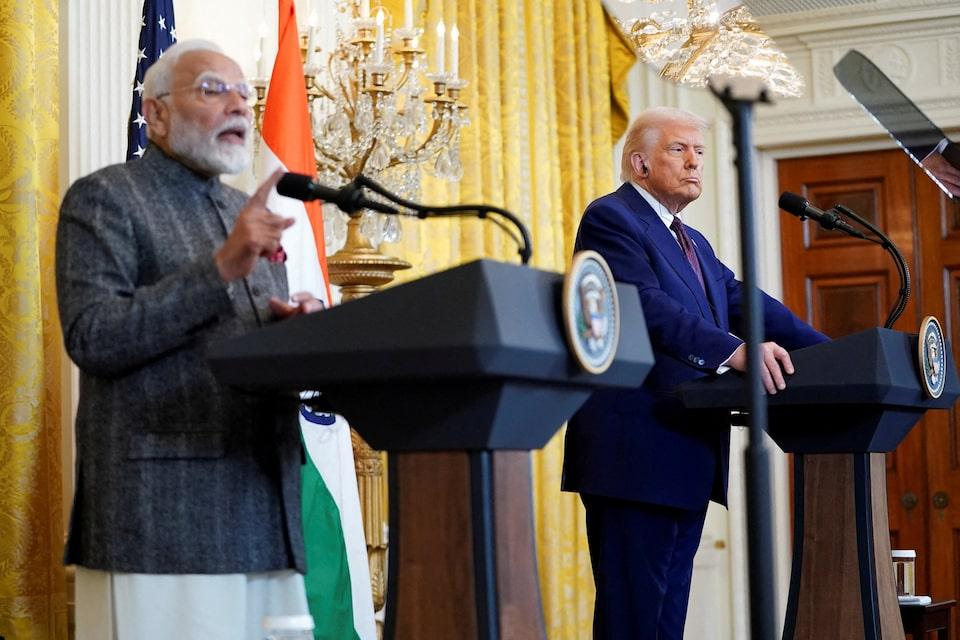
WASHINGTON, Oct 21 (Reuters) - U.S. President Donald Trump said he spoke with Indian Prime Minister Narendra Modi on Tuesday, with their conversation focused largely on trade. "We talked about a lot of things, but mostly the world of trade," Trump told reporters in the Oval Office. Sign up here. Trump added that energy was also part of the discussion, saying Modi assured him that India would be limiting its oil purchases from Russia. "He's not going to buy much oil from Russia. He wants to see that war end as much as I do," Trump said. India and China are the two top buyers of Russian seaborne crude exports. Trump has recently targeted India for its Russian oil purchases, imposing tariffs on Indian exports to the U.S. to discourage the country's crude buying as he seeks to pressure Moscow to negotiate a peace deal in Ukraine. https://www.reuters.com/world/india/trump-says-he-discussed-trade-with-indias-modi-2025-10-21/
2025-10-21 21:09
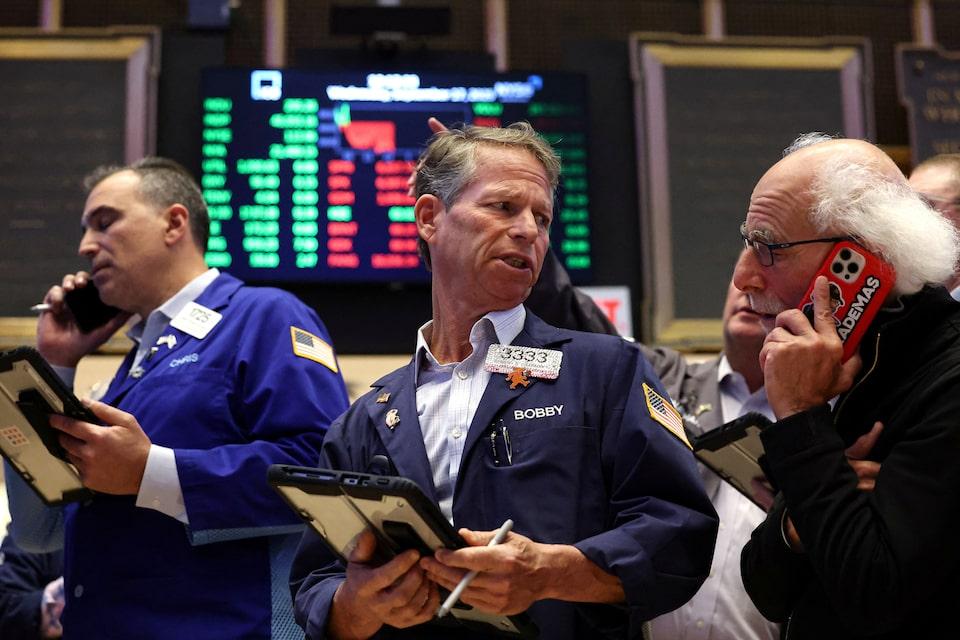
ORLANDO, Florida, Oct 21 (Reuters) - U.S. stocks were mixed on Tuesday, with the global momentum that had lifted Japanese and several other indices to new highs fizzling out, as investors digested a sharp fall in gold prices and the U.S. government shutdown entering its third week. More on that below. In my column today, I look at the Trump administration's purchases of Argentine pesos, which appears to be the U.S. government's first ever unilateral and direct FX market intervention to support an emerging market currency. Why Argentina, and will it work? Sign up here. If you have more time to read, here are a few articles I recommend to help you make sense of what happened in markets today. Today's Key Market Moves Today's Talking Points * U.S.-China tensions Buoyant stocks suggest investors are confident U.S.-China trade tensions will ease, as both sides cool the rhetoric, step away from the brink, and strike a mutually face-saving deal that ensures trade between the world's two largest economies keeps flowing. That may reflect over-confidence, or complacency. The mood at the IMF/World Bank meetings in Washington last week was far less upbeat, with the recent escalation around rare earths and 100% tariffs marking a new and worrying phase. Markets are priced for significant de-escalation, and if that doesn't materialize, volatility could pick up. * Gold finally at a tipping point? Gold fell 6% on Tuesday, its largest decline since August 2020 and second biggest since 2013. After such a steep ascent - its year-to-date gain last week was almost 70% - the inevitable question now is: correction, or crash? Some kind of correction was surely inevitable. Tuesday's slide takes gold back to where it was only a week ago, which is unlikely to fluster the gold bugs. But deeper reversals have to start somewhere, and if the base for the surge is weakening - central bank buying, debasement fears, asset reallocation, "FOMO" buying - there could be more downside to come. * Japan's new-look government Japan has a new-look government, headed by hardline conservative Sanae Takaichi, the country's first female prime minister, and with Satsuki Katayama as the country's first female finance minister. Investors will be focused on how closely the government and Bank of Japan work together, how much fiscal stimulus is coming down the pike, and whether the BOJ sticks to its gradual policy tightening path. The initial verdict, at least, seems clear - looser policy, higher stocks and a weaker yen. Trump sets head-scratching FX intervention precedence in Argentina The Trump administration has engaged in what appears to be the U.S. government's first ever unilateral foreign exchange intervention to support an emerging market currency – and the country in question is Argentina, a poster child for economic volatility. The Treasury on Thursday October 9 sold an unspecified amount of U.S. dollars for Argentine pesos, followed up with a second round of peso-buying intervention on Wednesday October 15, and a third the following day. All three rounds are part of the U.S. administration's broader package of measures to support Argentina's beleaguered economy and battered financial markets. The U.S. has a long history of offering emerging economies financial support, most notably Mexico in the mid-1990s, but almost always via credit lines, loans or currency swap lines. It is the nature of Washington's financial support to Buenos Aires that sets this episode apart. Since the Bretton Woods era of fixed exchange rates ended over 50 years ago, the Treasury has, to the best of our knowledge, never officially waded into the global FX market to unilaterally spend taxpayer dollars on foreign currency, least of all one as volatile as Argentina's peso. 'UNUSUALLY RISKY' What is behind this unprecedented move? It certainly is not close economic ties between the U.S. and Argentina. Total bilateral goods and services trade last year amounted to only around $26 billion, just 0.35% of America's global $7.3 trillion trade activity. For comparison, U.S.-Brazil trade last year was five times larger at around $128 billion. Another suggestion is that the U.S. could be making a long-term strategic move here as part of its rivalry with China. Argentina is home to significant lithium and copper deposits, as well as, potentially, rare earth minerals. If supporting the peso and agreeing to set up a $20 billion swap line helps dilute Beijing's influence in Buenos Aires and the region more generally, then Washington may see it as a price worth paying. But even if competition with Beijing is a motivation here, which the administration hasn't publicly confirmed, there are clearly other factors at play. Namely, President Donald Trump appears to be using the FX markets to back a political ally, Javier Milei, the unorthodox, populist and controversial President of Argentina. Trump suggested as much last week, saying, "we're not going to waste our time" on Argentina if Milei's party doesn't win the October 26 midterm legislative elections. Treasury Secretary Scott Bessent later clarified that U.S. financial support would continue as long as Milei's government pursues "good policies", regardless of the election outcome. But even if the administration is intent on supporting what it deems "good policies", direct purchases of pesos are "unusually risky", says Brad Setser, senior fellow at the Council on Foreign Relations. "The operation seems to be about supporting ideological friends and expanding the set of Latin leaders that support the U.S., and not about helping a large troubled emerging economy fix its very real problems — in this case, a shortfall of reserves and an overvalued currency," Setser says. PESO DEVALUATION - WHEN, NOT IF? The belief that this is mostly a political decision rather than an economic one is why many analysts say Washington's peso-buying spree is doomed. For one, Argentina's macroeconomic situation remains precarious. The country has spent decades battling crippling inflation as well as currency and debt crises. And it currently owes the International Monetary Fund around $57 billion, having defaulted a further two times since its record default in 2001. Milei has implemented a series of aggressive spending cuts, deregulation and privatization reforms since sweeping to power in 2023, and inflation has fallen to 32% from over 200%. But the country is now back in a currency crisis, and pressure to remove the peso from its dollar shackles, currently a trading band, is immense. Letting the currency float would trigger inflation initially, but it should also boost exports, widen the trade surplus, and allow the central bank to accumulate foreign currency reserves again. Bessent says the peso is undervalued, but most market participants think the opposite is true. Despite Washington's intervention, the Argentine currency slid to a record low of 1,476 per dollar on Monday. It thus seems less a question of 'if' the peso's devaluation will come, but 'when'. If the crawling band is indeed scrapped, U.S. Treasury support could then be the peso's only anchor in the immediate term. But it's unlikely to hold for long without other reforms. While the U.S. has long used access to the dollar to pursue foreign policy goals, this direct FX intervention represents a new tactic that, given its likelihood to produce losses, has many investors scratching their heads. What could move markets tomorrow? Want to receive Trading Day in your inbox every weekday morning? Sign up for my newsletter here. Opinions expressed are those of the author. They do not reflect the views of Reuters News, which, under the Trust Principles , opens new tab, is committed to integrity, independence, and freedom from bias. https://www.reuters.com/world/asia-pacific/global-markets-trading-day-graphic-2025-10-21/
2025-10-21 20:58
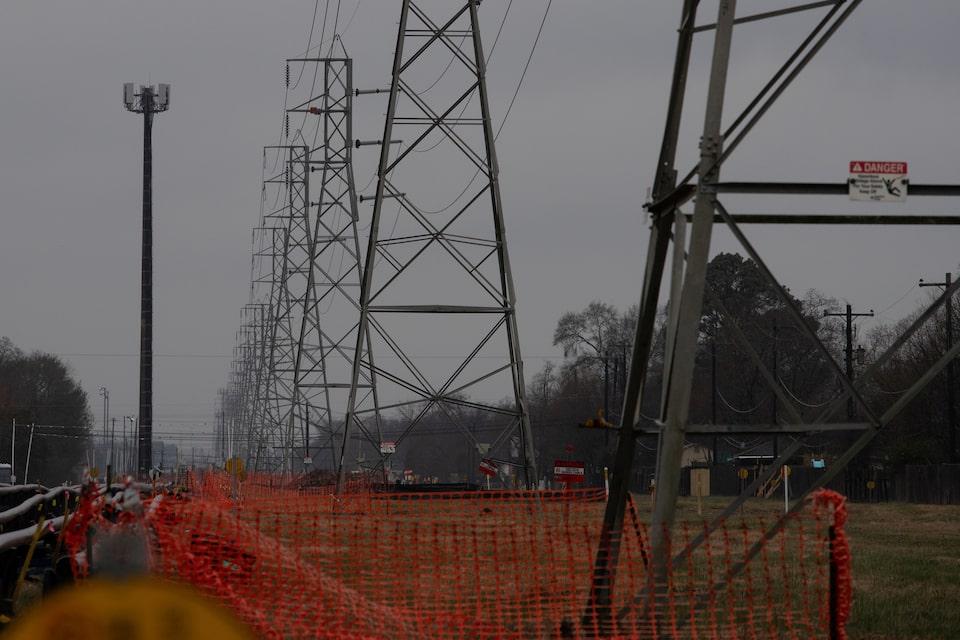
Oct 21 (Reuters) - Eos Energy Enterprises (EOSE.O) , opens new tab and Talen Energy (TLN.O) , opens new tab announced a partnership on Tuesday to develop energy storage capacity across Pennsylvania, to help meet the state's demand for artificial intelligence infrastructure. Shares of Eos jumped 20% in pre-market trading. Sign up here. Big Tech is pouring billions of dollars into AI technologies and data centers needed to run them, which are expected to drive power consumption to record highs over the next two years. The partnership will use Eos' American-made Z3 zinc batteries and Talen's existing power plants, including retired fossil fuel sites, to provide reliable, long-duration storage. Projects could total multiple gigawatt-hours, helping utilities and data centers get more from existing infrastructure while keeping the grid stable. https://www.reuters.com/business/energy/eos-energy-talen-energy-partner-energy-storage-pennsylvania-2025-10-21/
2025-10-21 20:55
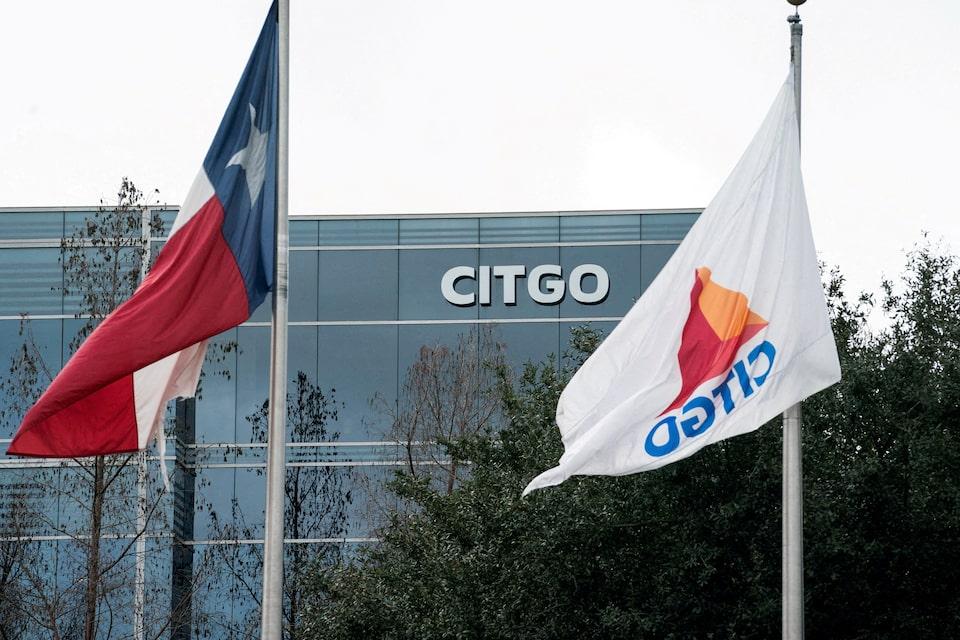
Court officer defends recommendation of Amber's bid Amber needs sale order by early December to preserve pact with bondholders Venezuela, Gold Reserve say risk linked to bondholders' claim is not worth $2 billion Delaware judge expected to select a winner after court hearing HOUSTON, Oct 21 (Reuters) - Bidders pursuing the parent of Venezuela-owned U.S. refiner Citgo Petroleum and creditors waiting to cash proceeds from the court-ordered auction clashed in Delaware on Tuesday over which offer should be approved as the clock ticks to move the process towards a takeover. Following three bidding rounds, the court is trying to complete the auction to compensate up to 15 creditors for debt defaults and expropriations in Venezuela. Citgo's parent PDV Holding was found liable for the South American country's debt as part of the eight-year case. Sign up here. Lawyers representing Citgo and Venezuela asked the court in a hearing to reject a $5.9 billion bid from an affiliate of Elliott Investment Management due to its "low price," which was below a $7.9 billion rival offer from a subsidiary of Gold Reserve (GRZ.V) , opens new tab, and said the sale process was "defective." The bid from Elliott's affiliate Amber Energy was recommended in August by an officer overseeing the auction, a switch from his previous support for Gold Reserve's offer. Objections and challenges have prevented the court from pushing forward the sale process in recent months. A counsel for court officer Robert Pincus said the court conducted "the broadest marketing process of any asset ever." He also said Amber's bid implies a business value of about $9.5 billion and provides the best combination of price and likelihood of transaction completion. Amber's offer includes a side pact to pay $2.1 billion to holders of a defaulted Venezuelan bond. Because the agreement is only valid through early December, Amber, Pincus and some creditors are pressing the court to soon select a winner. "We are here not to overburden the court, but as a supplicant and to ask for the court to be mindful of that date," said Andrew Rossman, counsel for Amber. If the recommended offer does not materialize, a new pact with the bondholders or even re-bidding could be necessary, advisers and lawyers have said. A counsel for the holders said they would stick to the Amber agreement's terms for now. OBSTACLES IN THE ROAD Delaware Judge Leonard Stark this week heard arguments about motions by Venezuela and Gold Reserve to disqualify him, court officer Pincus and two advising firms over alleged conflict of interest. Final arguments over the bids were also presented to the court. Amber's bid "is so low ... that it shocks the conscience of this court and can't be confirmed," Nathan Eimer, counsel for Citgo and PDV Holding, said during the hearing. Gold Reserve also asked the court to reject Amber's bid and approve the offer submitted by its subsidiary instead, which is about $2 billion higher in price but does not include an agreement to pay the Venezuelan bondholders. Gold Reserve's bid intends to distribute auction proceeds among a larger number of creditors in Delaware, instead of settling the bondholders' claim, which is pending a final resolution over the notes' validity in a separate New York case. "It would be a fundamental injustice in the event a substantial amount of value was diverted from the attached judgment creditors here to the 2020 bondholders on the basis of a security, a pledge instrument that might be deemed invalid," said Matthew Kirtland, counsel for Gold Reserve. Both Venezuelan President Nicolas Maduro and the opposition reject the auction. The U.S. Treasury Department, which has shielded Citgo from creditors in recent years, must approve the auction's winner. https://www.reuters.com/legal/litigation/venezuela-asks-us-court-reject-elliott-affiliates-bid-citgo-parent-2025-10-21/
2025-10-21 20:39
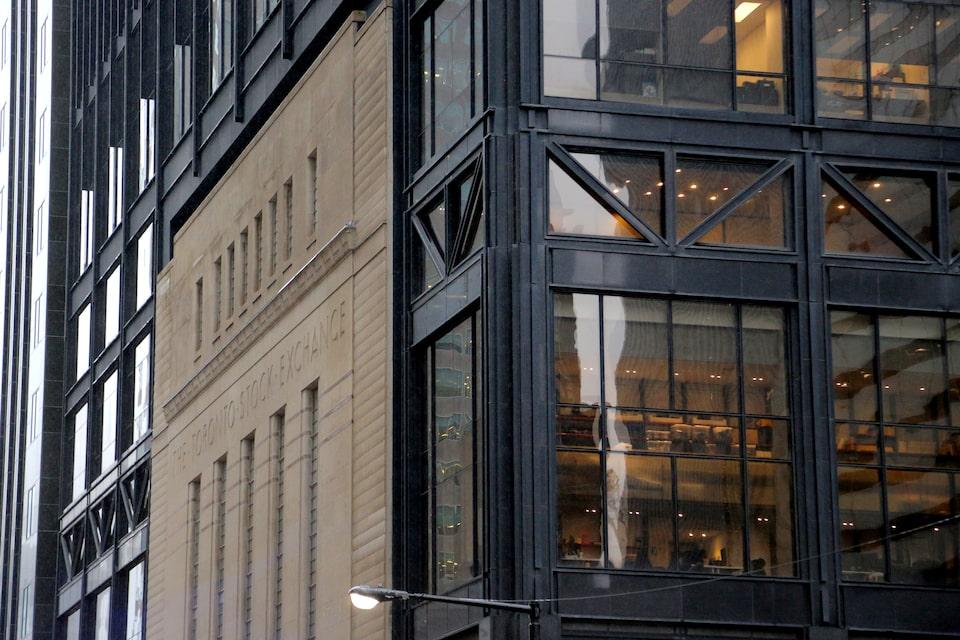
TSX ends down 1.7% at 29,888.82 Inflation rate increases to 2.4% in September BoC rate cut chances edge lower Materials group drops 8.2% as gold slides TORONTO, Oct 21 (Reuters) - Canada's main stock index posted its biggest decline since April on Tuesday as gold prices pulled back sharply and hotter-than-expected inflation data reduced bets on a Bank of Canada interest rate cut. The S&P/TSX composite index (.GSPTSE) , opens new tab ended down 527.62 points, or 1.7%, at 29,888.82, its lowest closing level since October 10. Still, the index has advanced 20.9% since the start of the year. Sign up here. Canada's annual inflation rate increased to 2.4% in September, eclipsing the 2.3% pace that analysts expected and up from 1.9% in August. "Certainly the inflation number, higher than expected, is definitely driving part of that (decline in stocks) because it lowers the probability of an interest rate cut." said Lorne Steinberg, president, Lorne Steinberg Wealth Management Inc. Chances of a Bank of Canada interest rate cut at an October 29 policy decision dipped to 80% from 86% before the inflation report, swap market data showed. Last month, the central bank lowered its benchmark rate to a three-year low of 2.50% "Part of it just feels like a bit of a pullback from an absolutely spectacular run ... Of course, the price of gold is down so the gold stocks are getting hammered today," Steinberg said. Gold fell 5.5% as investors booked profits. Expectations of U.S. interest rate cuts and sustained safe-haven demand drove the metal to a record high in the previous session. The materials group (.GSPTTMT) , opens new tab, which includes metal mining shares, fell 8.2%, with shares of Lundin Gold (LUG.TO) , opens new tab down 14.8%. Technology lost 1.3%, weighed by declines for electronic equipment firm Celestica (CLS.TO) , opens new tab and e-commerce company Shopify (SHOP.TO) , opens new tab. A months-long fight for control of Canada's last pure-play oil sands company took a fresh twist as MEG EnergyMEG.TO , opens new tab postponed a scheduled meeting at which shareholders were set to vote on its proposed takeover by Cenovus Energy CVE.TO , opens new tab. Shares of MEG lost 1% and Cenovus ended 2.1% lower. https://www.reuters.com/business/tsx-futures-dip-commodity-prices-weaken-eyes-cpi-data-2025-10-21/
2025-10-21 20:36
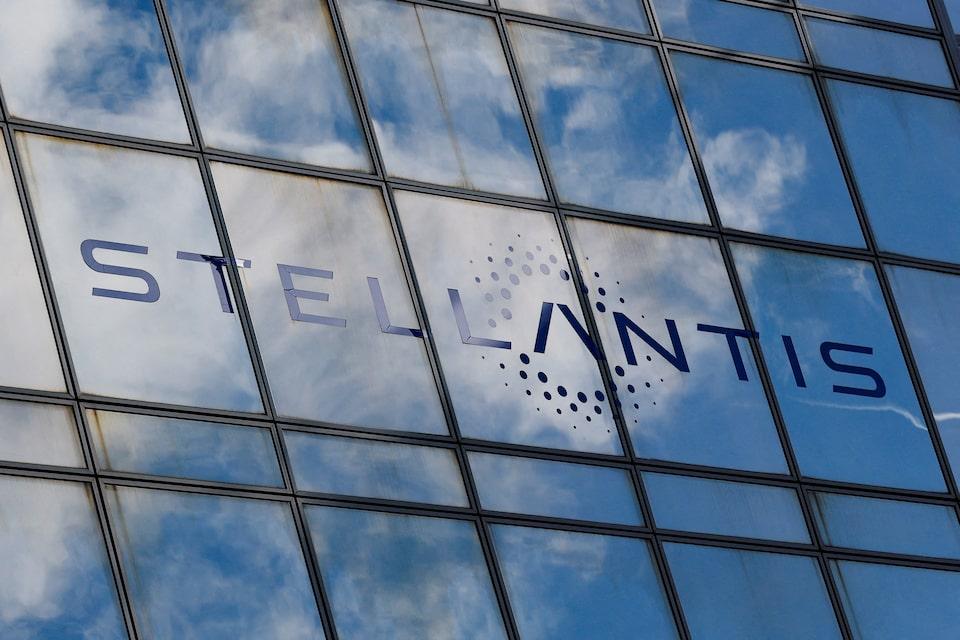
Oct 21 (Reuters) - A Stellantis (STLAM.MI) , opens new tab plant in Michigan will remain shut down for several weeks due to a shortage of key components, Bloomberg News reported on Tuesday. Production at the company's Warren plant, which was halted on October 13, will stay idle until the week of November 3, Bloomberg reported citing an email from Stellantis. Sign up here. The company also cited "a parts shortage" without providing additional details, the report added. Stellantis did not immediately respond to Reuters' request for comment. Novelis, a key aluminum supplier to multiple automakers including Stellantis, earlier this month reported a fire incident at its Oswego plant on September 16, adding that there had been no injuries. https://www.reuters.com/business/autos-transportation/stellantis-factory-halted-after-aluminum-plant-fire-bloomberg-news-reports-2025-10-21/