2025-10-21 16:26
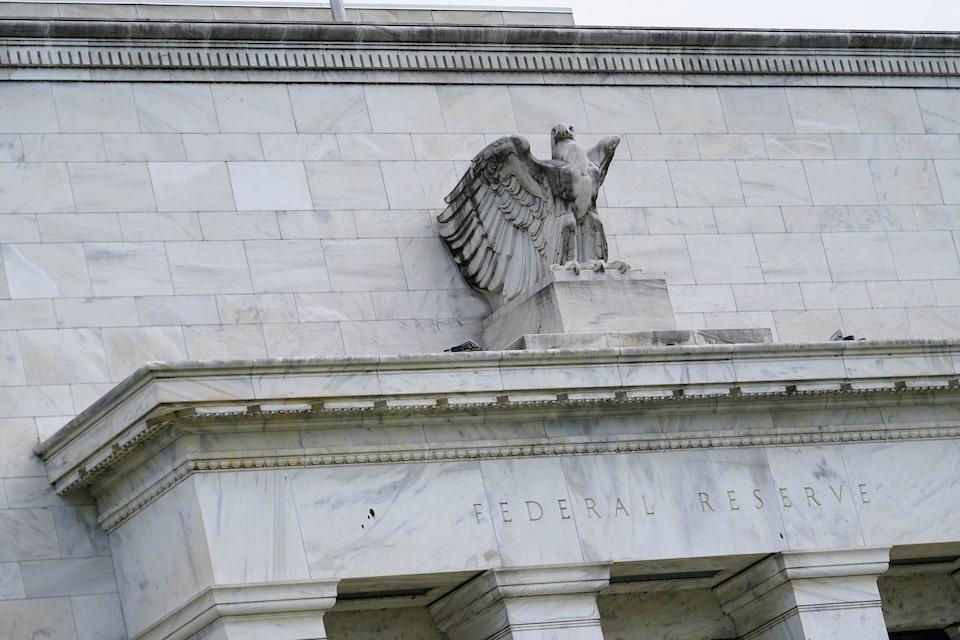
WASHINGTON, Oct 21 (Reuters) - The U.S. Federal Reserve is studying the creation of a new account that would provide access to Fed payment services for firms that currently rely on third parties like banks for that access, a senior official said on Tuesday. Fed Governor Christopher Waller said the so-called "payment account" is a prototype idea that could grant access to firms seeking to utilize the Fed for payment services, without granting them full access to the services and backstops the Fed provides to banks. Waller said the idea is just a prototype currently and could change. But it could provide broader access to Fed payment services typically reserved for banks, potentially opening the door to fintechs and other firms that have sought entry into the system, but faced resistance from a Fed wary of providing master accounts typically reserved for banks to less intensely regulated institutions. Sign up here. "Payments innovation moves fast, and the Federal Reserve needs to keep up," he said in opening remarks at a daylong payments conference hosted by the central bank. Waller, who chairs the Fed's internal payments committee, detailed how these "skinny" master accounts might work, granting firms access to the Fed's payments infrastructure without accompanying services and backstops. For example, the account could be limited in size, not pay interest, and not allow for overdrafts. The accounts also may not have access to the Fed's discount window for emergency lending, but could receive streamlined reviews, he added. "The payments landscape, as well as the types of providers, has evolved dramatically in recent years, and, accordingly, a new payments account could better reflect this new reality," said Waller. https://www.reuters.com/sustainability/boards-policy-regulation/waller-says-fed-staff-studying-streamlined-payment-accounts-2025-10-21/

2025-10-21 15:43
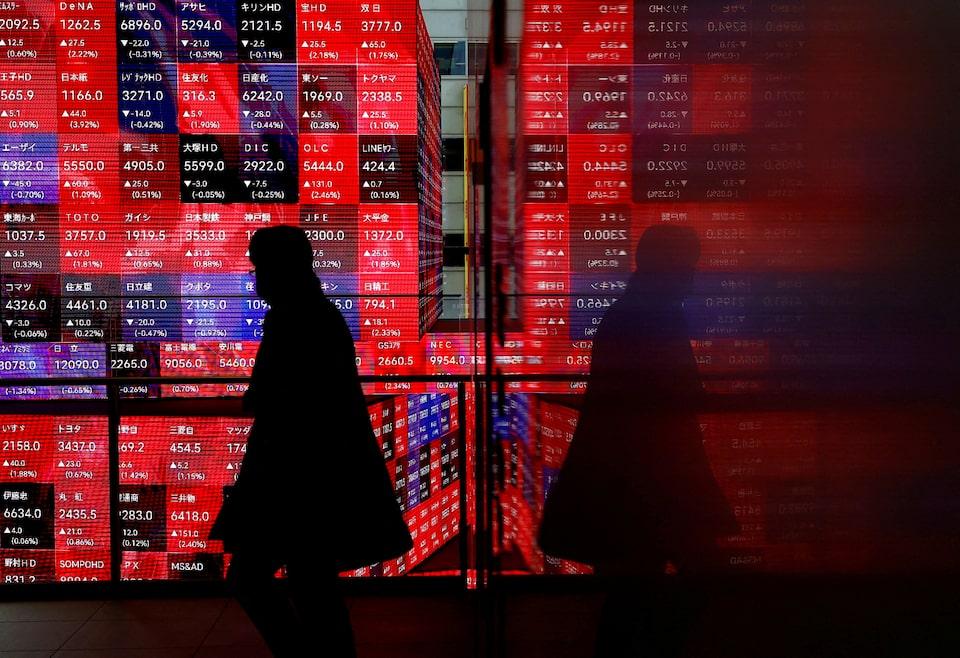
Investors drawn to Japan's stock market due to new government policies Concerns over coalition dynamics and policy consistency in Japan Weak yen impacts foreign investment decisions in Japan SINGAPORE/LONDON/NEW YORK, Oct 21 (Reuters) - Global money managers are circling back to Japan's stock and debt markets, drawn by the promises of its new reflationist government and a desire to diversify from pricier U.S. and European markets. Flows into yen-denominated stocks and bonds have been sustained this month, fund managers said, as investors watched Japan's coalition partners wrangle and cut deals while positioning for right-winger Sanae Takaichi to become the country's premier. Takaichi was eventually elected the country's first female prime minister on Tuesday. Sign up here. Her promises of stimulative spending, tax breaks, low interest rates and investments have powered Japan's Nikkei (.N225) , opens new tab to record highs and are spurring investors to think about diversifying some cash from Europe and a frothy-looking Nasdaq (.IXIC) , opens new tab. Takaichi's election along with "the psychological impact of having finally overcome the ‘lost decades’ of Japanese stocks, can certainly spur inflows," said Boston-based Peter Vassallo, FX portfolio manager at BNP Paribas Asset Management. "It could dovetail with concerns about U.S. valuations and policy uncertainty to encourage some investors to reallocate away from what have become highly concentrated U.S. positions to Japan on the margin." Financial markets have been on a tear since September as the Federal Reserve cuts interest rates, broadening a rally that had until then been concentrated in global technology and artificial intelligence giants. Wall Street's big (.SPX) , opens new tab and small indices, European and Japanese stocks (.STOXX) , opens new tab, gold and bitcoin have all hit record highs recently. Japan's allure lies in its stock market valuation. While the Nasdaq is up 19% this year and trades at 34 times current earnings, the Nikkei is up 24% and cheaper at a price-earnings (P/E) ratio of 22 and Europe's STOXX index is up 13% for the year and at a P/E of 18. Heading into the Japanese leadership election, foreigners bought 4.36 trillion yen ($28.9 billion) worth of Japanese stocks in the two weeks through October 11, the biggest amount of purchases in consecutive weeks since at least 2005. They had been selling for three weeks prior to that. But money managers expect the rotation from other markets into Japan to be measured and selective. The biggest risk to the "Takaichi trade" as it is known is that investors do not yet understand the dynamics between the ruling Liberal Democratic Party and its new coalition partner Ishin, nor are they familiar with the new finance minister, Satsuki Katayama. While ideologically aligned, Ishin advocates a small government and Takaichi has already begun cutting back on her promises of higher spending to revive the economy and support households squeezed by inflation. TRUMP OR TRUSS James Malcolm, a Japan market analyst at financial advisor JB Drax Honore in London, has been inundated with calls from hedge funds and real-money investors since the Japanese election. Money managers who initially worried that conflicting agendas of the coalition partners might mean policy flip-flops, like those that cut short UK Prime Minister Liz Truss' leadership to just 45 days in 2022, now say Takaichi's latest nationalist comments and machinations are also quite like those of U.S. President Donald Trump. "There is a bit of the Trump trade there, there's going to be a lot more stimulus," Malcolm said. "But she has less political latitude, no AI boom and a submerging economy instead to steer." "In the short term, yes, people will look at it as a good thing, and they will look at it as a bad thing when interest rates start to rise more quickly or when the currency weakens." The weakening yen has become the sticking point in investment decisions. In the rates markets, the "Takaichi trade" has been to sell both the yen and longer-term Japanese government bonds (JGBs) for fear of low rates and more stimulus in an economy with one of the highest debt burdens in the developed world. At multi-month lows and down nearly 4% this month, a weak yen helps Japan's export-led economy but is anathema to foreign investors. Nigel Foo, head of Asian fixed income at First Sentier Investors, believes the Bank of Japan will keep raising rates, despite the political pressure not to, and he is bullish on JGBs. "We are always the type who will buy more when everyone else is panicking, because that's when you see value," said Foo. "Especially when you look at the valuation compared to bunds, it's looking very attractive. And also another thing that could be on our side is, if the distrust towards the U.S. government is to continue, I can imagine more Japanese money will come back to their home turf." Van Luu, global head of solutions strategy for fixed income and foreign exchange for Russell Investments in London, also thinks Japanese money invested in Treasuries will move home. "Repatriation of Japanese investments from the U.S. seems the most likely source of reallocations at the time," Luu said. ($1 = 150.7800 yen) https://www.reuters.com/business/finance/global-markets-investors-japan-analysis-2025-10-21/
2025-10-21 14:38
CPI rises on slower fall in gasoline costs, higher food prices Bank of Canada's preferred core measures largely stable in September CPI up 0.1% in September on monthly basis after 0.1% fall in August OTTAWA, Oct 21 (Reuters) - Canada's annual inflation rate increased to 2.4% in September, mainly led by a smaller decline in gasoline prices on a yearly basis when compared with the previous month and a rise in food prices, data showed on Tuesday. The report is the most crucial piece of data to be released before the Bank of Canada meets for its next monetary policy decision later this month, when analysts and investors expect the bank to cut rates for a second time in a row. Sign up here. Analysts polled by Reuters had forecast annual inflation would rise to 2.3% in September from 1.9% in August. The CPI rose 0.1% on a month-over-month basis in September, after a 0.1% decline in August, StatsCan said. Gasoline prices have been on a declining trend on an annual basis after the Canadian government scrapped a carbon levy on the fuel that had kept prices up all of last year. However, the decline in September was less than in August mainly due to a big fall in gasoline prices in September 2024, when the price of the fuel dropped 7.1% on a dour global economic outlook. Excluding gasoline, the CPI rose 2.6% in September following a 2.4% acceleration in August. Economists have focused on the BoC's preferred core measures of inflation, which exclude the impact of tax measures, to gauge price trends. One of the core measures of inflation, the CPI-median, or the centermost component of the CPI basket, was at 3.2% in September, unchanged from the upwardly revised number last month on an annual basis. The other core measure, CPI-trim, which excludes the most extreme price changes, edged up to 3.1% in September from 3.0% in August, StatsCan said. The share of the CPI basket that was above a 3% price rise was 37.9% in last month and the share of the CPI basket that was below a 1% rise was 38.5%. "While there might be scope for debate about inflation, there should be no disagreement that the economy is weak and in need of support," said Royce Mendes, managing director and head of macro strategy at Desjardins. Money markets put a more than 86% probability on a 25-basis-point rate cut on October 29, which would bring the benchmark policy rate down to 2.25%. The Canadian dollar was trading up 0.12% to 1.4018 against the U.S. dollar, or 71.34 U.S. cents. Food prices increased 3.8% annually last month, after a 3.4% increase in August. This rise was mainly due to a 4% increase in food purchased from stores, against a 3.5% increase seen in the previous month. The increase in grocery prices last month marks the largest year-over-year rise since the most recent low in April 2024, the statistics agency said. Rents also contributed to a year-over-year increase in CPI, with a 4.8% jump in September. That move took shelter inflation, the biggest component of the CPI basket, to 2.6%. https://www.reuters.com/world/americas/canadas-annual-inflation-rate-rises-24-september-2025-10-21/

2025-10-21 14:34
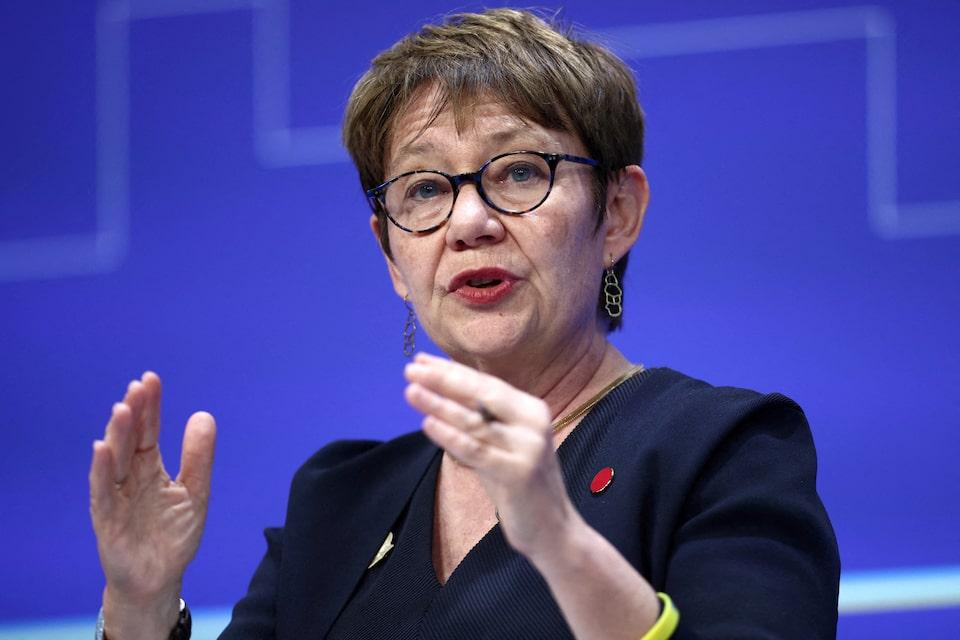
Demand for renewables is increasing, EBRD president says Kambar-Ata 1 is one of largest projects in the region Bank could extend three loans of $500 million each LONDON, Oct 21 (Reuters) - The European Bank for Reconstruction and Development could lend up to $1.5 billion for a Central Asian hydropower plant, its president told Reuters, adding that demand for renewables is rising despite some opposition to funding green energy. The Kambar-Ata 1 project is one of the largest renewables projects in Central Asia, and its combined 1,860 megawatts of capacity is expected to provide power and boost agriculture output across Kyrgyzstan, Kazakhstan and Uzbekistan. Sign up here. Alongside the European Union, the European Investment Bank and the governments of the three countries, the bank has already signed a 900-million-euro ($1.05 billion) memorandum of understanding for the project, which is located in Kyrgyzstan. EBRD President Odile Renaud-Basso said the bank is considering a total of three sovereign loans of up to $500 million each, subject to further discussions with other stakeholders and EBRD board approvals. DEMAND FOR RENEWABLE ENERGY INVESTMENTS GROWING More broadly, she said interest in renewables, battery storage and grids that can connect to green power is rising across the lender's countries of operation as the technologies' costs fall. "We see ... a sort of ramping up of demand in renewable investment in grids in order to be able to connect more renewables," Renaud-Basso told Reuters in an interview on Monday. EBRD funds mostly private-sector projects across emerging economies in Europe and Africa as well as Jordan and Lebanon. The bank has kept the green energy transition and a focus on expanding human capital, including support for women in business, as core priorities despite the hostility of the United States under President Donald Trump toward such projects. Renaud-Basso said borrowers understood the advantages of those initiatives. "They see that as an economic opportunity to diversify ... diversifying energy supply, reduce pollution, have a cheaper source of energy, be able to export energy, and so forth," she said. ($1 = 0.8575 euros) https://www.reuters.com/sustainability/climate-energy/ebrd-could-lend-up-15-billion-central-asia-hydro-plant-2025-10-21/
2025-10-21 14:20
BENGALURU, Oct 21 (Reuters) - The Federal Reserve will lower its key interest rate by 25 basis points next week and again in December, according to a Reuters poll of economists who remain deeply divided on where rates will be by the end of next year. A month ago, economists had expected just one more cut this year. But the new forecast follows a recent shift in expectations by Fed policymakers toward additional reductions. Sign up here. Caught between the dual risks of already-elevated inflation climbing higher due to tariffs and a further weakening of the labor market, the Fed appears to have prioritized the latter, prompting it to cut rates by 25 basis points last month for the first time since December. All but two economists, 115 of 117, predicted the Fed would lower the interest rate again by a quarter point to 3.75%-4.00% on October 29. Two expected a 25 bps cut in October and a 50 bps cut in December. That majority falls to 71% for another cut in December. The poll was conducted on October 15-21. Financial market traders are more convinced, and have fully priced in two more reductions this year to interest rate futures contracts. Many Federal Open Market Committee members, including Fed Chair Jerome Powell, have suggested they will keep focusing on the job market. However, a government shutdown that so far has lasted three weeks has delayed key official data on employment as well as inflation, blurring the economic outlook. "It would be fair to say approximately half of the current FOMC is more focused on the labor market and the other half on inflation risks," said Ryan Wang, U.S. economist at HSBC. "The difficulty for the Fed is whether this job slowdown mainly reflects bigger labor demand versus labor supply. It's harder to be very precise about which factor is the bigger one, and that does have implications for how monetary policy should react to it." Recent private-sector data indicate both layoffs and hiring are modest, suggesting no major change to the job market. Poll medians predict the unemployment rate will average around the current 4.3% each year through 2027, largely unchanged from last month. Inflation, which the Fed targets at 2% on the personal consumption expenditures measure, was expected to average above 2% each year through 2027, according to the latest poll. Delayed official data due on October 24 are expected to show consumer inflation rose to 3.1% last month from 2.9% in August. Economists were split seven ways on where rates would be by the end of next year, ranging between 2.25%-2.50% and 3.75%-4.00%. The increased uncertainty is partly as a result of speculation on who will be the next Fed chair after Powell's term ends in May. A 76% majority of economists, 25 of 33, who answered a separate question said the bigger risk to Fed rate policy by the end of this cycle was that it would take rates too low. President Donald Trump has been pressuring Powell to cut rates aggressively for months. "The risk is we have more rate cuts next year," said Brett Ryan, senior U.S. economist at Deutsche Bank. "The risk of the Fed losing its independence is elevated relative to any prior administration." (Other stories from the Reuters global economic poll) https://www.reuters.com/business/us-fed-trim-rates-twice-more-this-year-2026-rate-path-very-unclear-2025-10-21/
2025-10-21 12:45
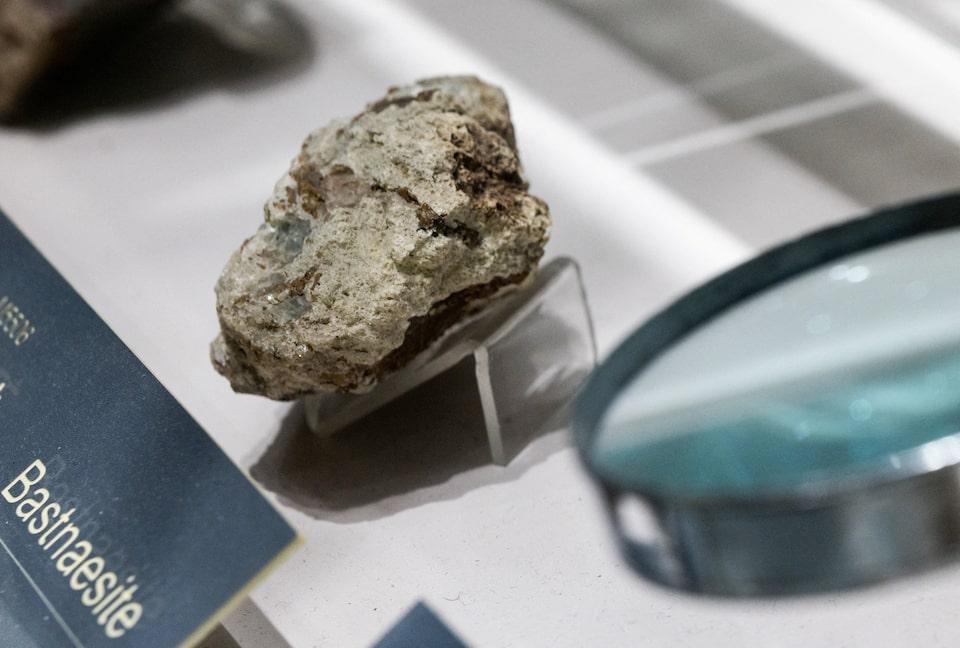
Rare earths disruption of 10% could cut global output by $150 billion Light rare earths could be future targets for curbs China expanded rare earths export controls on October 9 Oct 21 (Reuters) - Goldman Sachs flagged mounting risks to global supply chains of rare earths and other critical minerals, emphasising China's dominance in mining and refining, and outlining challenges for nations seeking to build independent supply chains. China expanded export curbs on rare earths on October 9, adding five new elements and extra scrutiny for semiconductor users ahead of an expected summit of leaders Donald Trump and Xi Jinping. Sign up here. CHINA'S SUPPLY CHAIN LEVERAGE In a note on Monday, Goldman Sachs said China controls 69% of global rare earth mining, 92% of refining, and 98% of magnet manufacturing. Rare earth elements (REEs) have become a flashpoint in geopolitics, as they are critical to high-tech industries and essential in uses from batteries to computer chips, artificial intelligence, and defence equipment. While the rare earth market was valued at $6 billion last year, just a fraction the size of the copper market, which is 33 times bigger, the bank warned that a disruption of 10% in industries reliant on REEs could result in $150 billion in lost economic output, besides inflationary pressures fed by the shortages. MINERALS COULD FACE EXPORT CURBS Goldman Sachs flagged samarium, graphite, lutetium, and terbium as particularly vulnerable to export curbs. Samarium, used in heat-resistant samarium-cobalt magnets, is key for aerospace and defense. Disruptions in supply of widely-used lutetium and terbium also pose risks of GDP losses. The bank highlighted light rare earths, such as cerium and lanthanum, as future targets for curbs, since China has a dominant role in refining and mining. Western producers like Lynas Rare Earths (LYC.AX) , opens new tab and Solvay could ease shortages, it added, but reliance on China remains substantial. CHALLENGES TO INDEPENDENT SUPPLY CHAINS Countries are scrambling to build independent REE and magnet supply chains, but Goldman Sachs saw barriers from geological scarcity to technological complexity and environmental challenges. It said heavy rare earth elements were particularly scarce outside China and Myanmar, with most known deposits being small, lower-grade, or radioactive, while developing new mines requires eight to 10 years. Refining REEs requires advanced expertise and infrastructure, with builds typically taking five years, the bank said. Additionally, magnet production outside China, though expanding in the U.S., Japan, and Germany, faces constraints because of China's control of critical inputs such as samarium. INVESTMENT AND COMMODITY RISKS Goldman Sachs suggested equities as a way for investors to manage rare earth disruption risks, citing Iluka Resources (ILU.AX) , opens new tab, Lynas Rare Earths (LYC.AX) , opens new tab, and MP Materials Corp (MP.N) , opens new tab as key players. The bank forecast a deficit in supplies of Neodymium-Praseodymium Oxide (NdPrO), critical for making magnets, Beyond rare earths, Goldman Sachs warned that commodities such as cobalt, oil, and natural gas faced rising risks of supply disruptions due to geopolitical tension. https://www.reuters.com/world/asia-pacific/goldman-sachs-flags-risk-disruption-supply-rare-earths-key-minerals-2025-10-21/