2025-10-21 11:24
Oct 21 (Reuters) - Aerospace and defense giant RTX (RTX.N) , opens new tab raised its full-year profit and revenue forecast on Tuesday, as rising demand for its missiles and aftermarket services bolstered its ability to weather negative fallout from tariffs. Shares of the company rose 6.3% before the bell, as it also beat Wall Street expectations for third-quarter results. Sign up here. U.S. President Donald Trump's global tariff offensive had pushed RTX to slash its profit outlook in July, and the company expects $500 million in tariff costs this year. U.S. Commerce Secretary Howard Lutnick, meanwhile, said in August that the Trump administration was considering taking stakes in defense contractors. "We're not having those conversations with the government. What we are having conversations with the government about is their need for increased capacity," RTX Chief Financial Officer Neil Mitchill told Reuters in an interview. STRONG SALES FOR DEFENSE, AVIATION PRODUCTS Raytheon, RTX's defense unit, has seen strong demand as geopolitical tensions have escalated. It reported a 10% rise in sales, predominantly from higher sales for its Patriot air defense systems, which are being used on the battlefield in Ukraine. A shortage of new commercial jets is also driving sales at maintenance and repair service providers like RTX, who are banking on airlines flying older, cost-intensive fleets. RTX, which makes the GTF engines and competes with CFM International, has benefited from booming demand from planemakers as they ramp up production. The company's aerospace and avionics division, Collins Aerospace, posted revenue of $7.62 billion in the quarter, up 8% from a year earlier. Sales at its Pratt and Whitney unit, which produces engines for Airbus (AIR.PA) , opens new tab A320neo jets, rose 16% to $8.42 billion. RTX now expects its full-year adjusted sales between $86.5 billion and $87 billion, from its previous forecast of between $84.75 billion and $85.5 billion. It also raised its adjusted profit forecast to between $6.10 and $6.20 per share for 2025, from $5.80 to $5.95. The Arlington, Virginia-based company's total revenues rose 12% to $22.48 billion in the third quarter. Analysts on average had expected $21.31 billion, according to data compiled by LSEG. Its adjusted per-share profit was $1.70, also above expectations of $1.41. https://www.reuters.com/business/aerospace-defense/rtx-raises-2025-forecast-strong-demand-offsets-tariff-worries-2025-10-21/
2025-10-21 11:14
Oct 21 (Reuters) - Halliburton (HAL.N) , opens new tab beat Wall Street estimates for third-quarter profit on Tuesday, helped by steady demand for its oilfield equipment and services in North America. Quarterly revenue from its North America segment was $2.4 billion, flat from a year earlier, but above analysts' average estimate of $2.17 billion. Sign up here. Halliburton said the results were supported by increased stimulation activity in U.S. land and Canada, and higher completion tool sales and increased wireline activity in the Gulf of America. The Houston-based company's shares were up 1.3% at $22.90 in premarket trading. Last week, peer SLB (SLB.N) , opens new tab also beat expectations on strong North America demand, but flagged that it does not expect to see a significant pickup in North American drilling activity due to high production costs at some shale basins. The oil and gas rig count, an early indicator of future output, stood at 548 in North America in the third quarter, up 8 from the previous quarter, according to Baker Hughes data. While North American activity remains stable, international spending, long viewed as the next growth engine, is showing signs of uneven recovery, particularly in the Middle East. Halliburton reported an 8% drop in revenue year-over-year in Middle East/Asia. In July, the company said its international revenue in 2025 is expected to contract by mid-single digits from a year earlier, primarily due to less activity in Saudi Arabia and Mexico. Halliburton reported an adjusted profit of 58 cents per share for the quarter ended September 30, beating analysts' estimate of 50 cents, according to LSEG data. https://www.reuters.com/business/energy/halliburton-beats-third-quarter-profit-estimates-2025-10-21/
2025-10-21 10:53
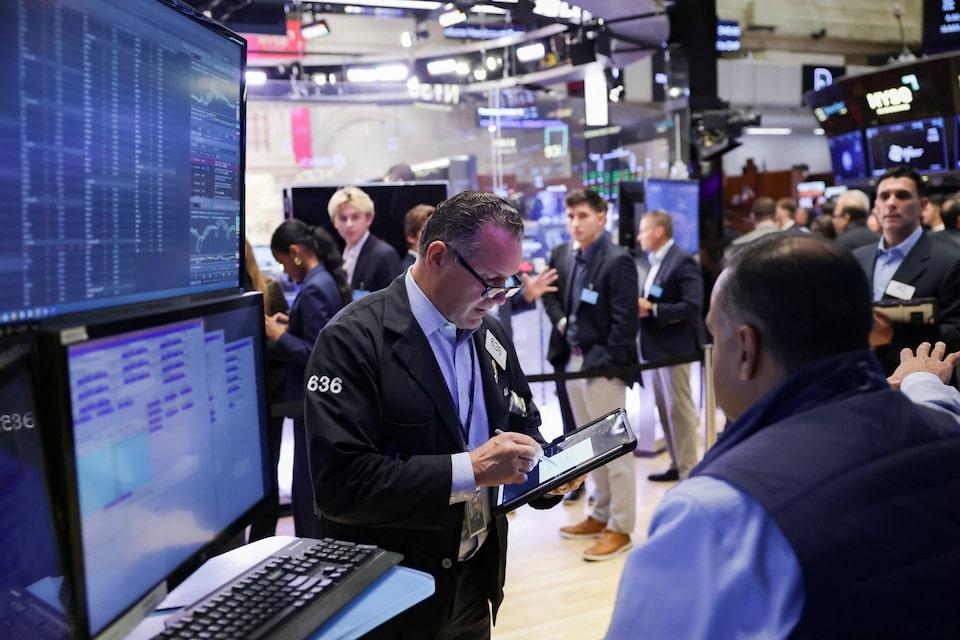
Oct 21 (Reuters) - What matters in U.S. and global markets today By Mike Dolan , opens new tab, Editor-At-Large, Finance and Markets Sign up here. While U.S. and world markets got a bounce to start the week, spurred by optimism on trade, hopes for an end to the Washington shutdown and some relief from regional bank jitters, the Wall Street rally has stuttered early on Tuesday just as a deluge of corporate updates looms. The election of Liberal Democratic Party leader and fiscal expansionist Sanae Takaichi as Japan's first female prime minister on Tuesday sustained Monday's surge in the Nikkei stock benchmark at record highs, but attention quickly switched to her pick for finance minister. The yen continued to weaken even after media reports that Satsuki Katayama was in the frame for the job and has previously advocated a much stronger currency. China's stocks recorded their biggest gain in six weeks, meantime, as U.S. President Donald Trump expressed optimism about a potential fair trade deal with Chinese President Xi Jinping before the latest deadline on draconian tariffs hits on November 1. U.S. Treasury Secretary Scott Bessent is set to meet Chinese Vice Premier He Lifeng this week. This week's Communist Party meeting on a new five-year economic plan has also buoyed markets there. Back stateside, there was some hope for an end to what's now set to be a 21-day government shutdown, now matching the second longest on record, after White House economic adviser Kevin Hassett said it could end as soon as this week. Regional bank jitters also eased a touch as one of the names in the headlines last week, Zions Bancorp, reported decent earnings overnight despite taking a hefty loss on two loans and its stock rose 2% in after-hours trading. But Wall Street stock futures fell back slightly before Tuesday's bell, however, as the corporate earnings really kick in. Netflix tops the diary, but big industrial and defense names are also reported. Helped by a drop in crude oil prices to 5-month lows on Monday, U.S. Treasury yields were softer and the dollar was stronger - mainly on the falling yen. In a rare move these days, gold prices fell over 1% from this week's new records. * Argentina's peso continued to weaken even after the central bank there signed a $20 billion exchange-rate stabilization agreement with the U.S. Treasury Department, six days ahead of a key midterm election. A group of U.S. banks, including JPMorgan, Bank of America and Goldman Sachs is hesitant to lend $20 billion to Argentina without guarantees or collateral, the Wall Street Journal reported. * Euro zone banks may come under pressure if U.S. dollar funding - the lifeblood of financial markets - were to dry up, the European Central Bank's chief economist Philip Lane said on Tuesday amid concern over Trump's policies. Dollar funding fears have been at the back of central bankers' minds since Trump announced a wave of trade tariffs and began putting pressure on the Fed earlier this year. * Trump's backing of Australia's critical minerals will bring much-needed financial support to the industry, but experts say the U.S. president will have to wait longer to shift the supply chain away from China and weaken its market dominance. Goldman Sachs flagged mounting risks to global supply chains of rare earths and other minerals in a note on Monday that emphasized China's dominance - as it controls 69% of rare earth mining, 92% of refining and 98% of magnet manufacturing. In today's column, I take a look at the peculiar market mood, which seems simultaneously bullish and nerv , opens new taby. Today's Market Minute Chart of the day Gold slipped back from its latest record high on Tuesday after an extraordinary 2025 that's seen it gain up to 66% - on course for its best year since 1979. Investment fund demand for gold exposure has been a key feature and data on exchange traded gold fund flows just show how much that has swelled this year. Today's events to watch * Canada September consumer prices (8:30 AM EDT) * Federal Reserve Board Governor Christopher Waller speaks; European Central Bank President Christine Lagarde speaks * U.S. corporate earnings: Netflix, Omnicom, Texas Instruments, Lockheed Martin, Northrop Grumman, Pentair, Halliburton, General Motors, Paccar, Capital One, Nasdaq, 3M, Equifax, EQT, Intuitive Surgical, Quest Diagnostics, Coca-Cola, Philip Morris, Chubb, Danaher, Elevance, RTX, Genuine Parts, Pultegroup Want to receive the Morning Bid in your inbox every weekday morning? Sign up for the newsletter here. You can find ROI on the Reuters website , opens new tab, and you can follow us on LinkedIn , opens new tab and X. , opens new tab Opinions expressed are those of the author. They do not reflect the views of Reuters News, which, under the Trust Principles , opens new tab, is committed to integrity, independence, and freedom from bias. https://www.reuters.com/business/finance/global-markets-view-usa-2025-10-21/
2025-10-21 10:37
Russians estimated to hold 1,000 tons of gold Fintech startups seek to buy gold during rally Government authorised AI-powered automated sales Russians sceptical, see gold as safe asset MOSCOW, Oct 21 (Reuters) - Financial tech firms are using AI to try to persuade Russians to cash in their gold at automated machines, although despite this year's more than 60% price rally they are facing scepticism. Russia, which holds more than a third of its reserves in gold, authorised automated sales of the precious metal last year. But while the companies rolling out the ATMs say interest in selling has risen, Russians have not rushed to part with their gold in the same way as people have elsewhere. Sign up here. Russians are not only hoping for further price rises, some say they see few alternatives to gold in terms of investment safety as sanctions have made it hard for them to invest in Western currencies or other assets. Some Russian families hold gold coins minted by the country's last Tsar, Nicholas II, which have been passed down through generations - surviving the 1917 revolution, Communist purges, World War Two and the collapse of the Soviet Union. But this deep attachment to gold, with Russians estimated to hoard a total of 1,000 metric tons of bullion, is not deterring the entrepreneurs who say they are making it easier to cash in. "Many people, while gold prices are high, are ready to exchange their reserves for real money," said Evgeny Gorodilov, co-founder of Goldexrobot, a startup aiming to install 600 gold ATMs in shopping centres across Russia. Gorodilov said that sales through traditional channels, such as pawnshops or, more recently, electronic trading platforms, have deterred many people due to opaque valuation processes, suspicions of unfair pricing and fraud risks. Goldexrobot's ATMs use AI to carry out spectral, hydrostatic and metal density analyses to verify the authenticity of the gold and then offer a price using the latest quotes for the metal from the Moscow Stock Exchange. To start a transaction, the customer must complete an identification process. A gold item is inserted into a slot for valuation. The proposed price appears on a display, and if accepted, the payment is sent to the customer's bank card. Russia's central bank tested the technology through its regulatory sandbox before it was allowed to enter the market. While Gorodilov said that its customers had grown by about 10% this year, he has not seen explosive growth in private gold sales since most Russians expect prices to rise further. SAFETY CUSHION IN CASE OF HYPERINFLATION Russia removed the value-added tax (VAT) on gold sales for investment purposes in 2022 as Western sanctions took effect, which resulted in sales soaring fivefold in 2023. And sales have continued to rise, with Russia's Finance Ministry advising investors to keep long-term savings in gold. "I bought gold not with the aim of making a profit in the near future, but with the aim of creating a safety cushion for myself in case of hyperinflation," said Dmitry Semenov, a private gold investor. MGKL Group, which owns a network of pawnshops across Russia, said demand for gold jewellery, which it either resells or holds as collateral, doubled in the first nine months of 2025. The metal's wider appeal is also in evidence at the St. Petersburg Stock Exchange, which launched trading in physical gold on October 20, saying that the world's second-largest gold producer needs its own price benchmark. And for some investors the ATMs are not the way forward. "Gold ATM? No, why sell something at a discount when getting full price is possible. In 2026, I am confident there will be further growth in the value of gold. This is related to global instability and increasing rates of inflation," said Semenov. https://www.reuters.com/sustainability/boards-policy-regulation/ai-driven-atms-target-sceptical-russians-cash-their-gold-2025-10-21/

2025-10-21 09:44
LONDON, Oct 21 (Reuters) - Britain's inflation rate looks set to hit 4% in September in data due for release on Wednesday, the highest among the world's big rich economies and double the Bank of England's target. The fast pace of price growth - while a lot lower than a peak of 11.1% in 2022 following Russia's invasion of Ukraine -puts a strain on households and means borrowing costs are likely to stay higher than in other countries, at least in the short term. Sign up here. It also adds to the challenge for finance minister Rachel Reeves who has promised voters that she will ease cost-of-living pressures and speed economic growth but is likely to raise taxes in her budget next month, potentially adding to inflation. Below is an explanation of Britain's price growth problem. WHY IS UK INFLATION SO HIGH? Britain's inflation rate was 3.8% in August, much higher than the euro zone's 2.0%. A driver of British prices has been fast wage growth due in part to a worker shortage since the COVID-19 pandemic and increases to the minimum wage and employer taxes. Like in other countries, energy and food prices rose earlier this year. Energy prices had exerted significant downward pressure on inflation in late 2023 and 2024. WHAT ELSE IS DRIVING UK INFLATION? Government-influenced prices are another factor. Higher sewerage charges, bus fares and vehicle excise duty and the introduction of value added tax on private school fees mean so-called administered prices in Britain have risen more sharply than in the euro zone. Jack Meaning, chief UK economist at Barclays, estimated Britain's inflation rate in August would have been around 2.9 excluding the impact of tax increases in Reeves' budget last year and of administered prices. While the BoE expects regulated electricity and gas prices to stop driving inflation in the coming months, food prices are likely to rise further. Food retailers blame the increase in prices to date on a new packaging tax as well as the hike in employers' social security contributions and the minimum wage and global prices. The BoE fears higher food prices drive up inflation expectations which can lead to price pressures becoming embedded in the economy. WHY DOES IT MATTER? British households - excluding pensioners - have seen very little growth in their living standards since 2010, when taking inflation into account. Wage growth is running not far above inflation and is slowing, limiting any recovery in spending power. High inflation also adds to the government's debt bill - Britain has a bigger proportion of its bonds indexed to inflation than other countries, putting further strain on the budget at a time when other spending demands are rising too. High inflation can slow long-term economic growth if it makes households want to save more to withstand future price shocks and deters businesses from developing longer-term plans. WHAT'S LIKELY TO HAPPEN? The BoE has forecast that consumer price inflation will peak in September but will only return to its 2% target in the April-to-June period of 2027. Governor Andrew Bailey and his colleagues say the outlook for inflation is still unclear, making it hard to predict when interest rates are likely to be cut again. https://www.reuters.com/sustainability/sustainable-finance-reporting/why-is-inflation-so-high-uk-2025-10-21/
2025-10-21 09:07
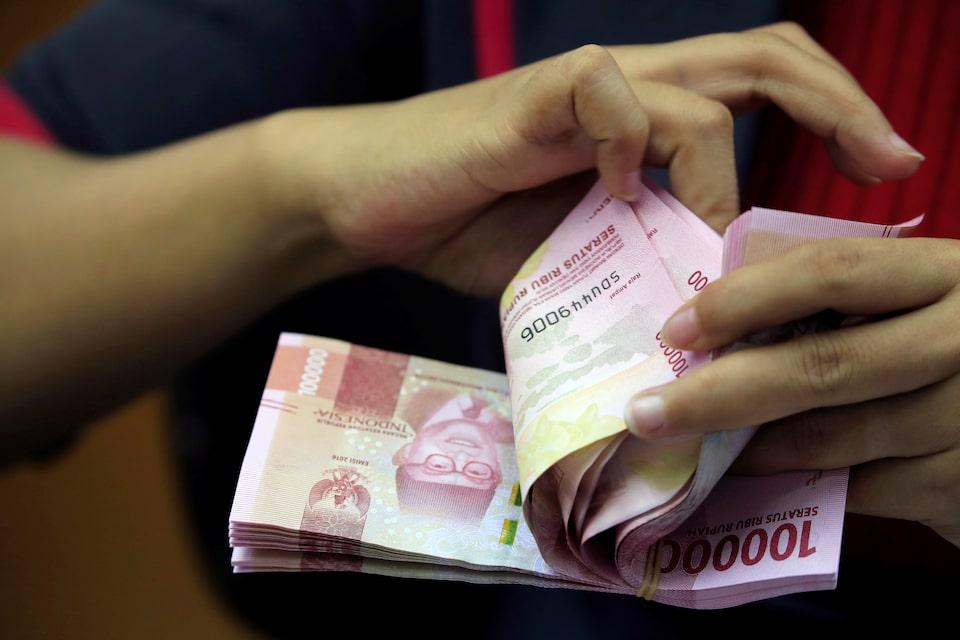
Oct 21 (Reuters) - Asian bonds experienced significant outflows in September, driven by a selloff in Indonesia amid rising fiscal and political concerns, alongside a broader slowdown in regional economic activity that dampened investor sentiment. Foreigners offloaded a net $5.48 billion worth of regional bonds - the most since March 2022 - in Indonesia, Malaysia, Thailand, India and South Korea, data from local regulatory authorities and bond market associations showed. Sign up here. Indonesian bonds recorded a net foreign outflow of $4.6 billion in September, the largest monthly outflow since at least 2016, as fiscal concerns intensified following widespread protests and the abrupt removal of Finance Minister Sri Mulyani Indrawati. Foreigners also shed a net $1.63 billion worth of Malaysian bonds in their biggest monthly disposal since October 2024. Industrial production in most of Asia's major economies weakened in September, weighed down by signs of lacklustre U.S. growth, the anticipated effects of President Donald Trump's tariffs, and persistently soft demand from China. "Weakness in domestic demand will also continue to constrain growth in most of the region," Khoon Goh, head of Asia research at ANZ, said in a report earlier this month. "As a result, Asian assets could be less supported over the medium term," ANZ's Goh said. Last month, South Korean, Indian and Thai bonds saw minor inflows of $563 million, $124 million and $60 million, respectively. https://www.reuters.com/world/asia-pacific/asian-bond-outflows-september-hit-3-12-year-high-slowdown-concerns-2025-10-21/