2025-10-21 07:53
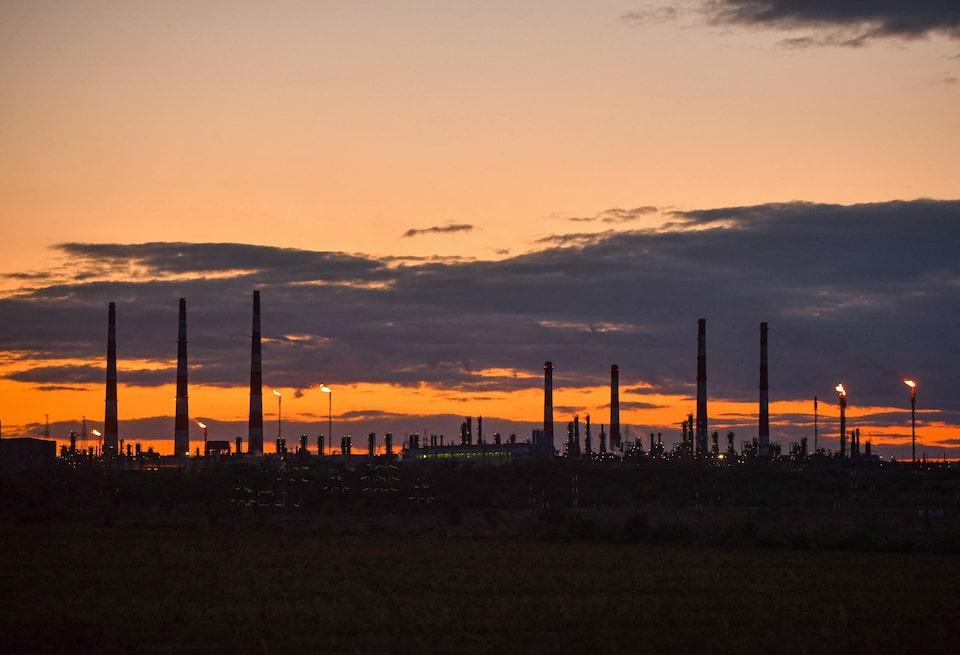
Ukraine drones hit Russia's Orenburg gas processing plant Gas from Karachaganak is being processed at the Orenburg plant Shell, Eni, Chevron are among Karachaganak stakeholders ALMATY/ASTANA, Oct 21 (Reuters) - Oil majors, including Chevron (CVX.N) , opens new tab and Shell (SHEL.L) , opens new tab, have reduced oil and gas output at a top Kazakhstan field after a Ukrainian drone strike damaged a gas processing plant in Russia that supports their operations, the companies said on Tuesday. The strike on the Orenburg gas plant, located about 1,700 km (1,056 miles) east of Ukraine, marks the first known incident in Kyiv's campaign against Russian energy infrastructure to disrupt the operations of Western oil majors abroad. Sign up here. Kazakhstan's energy minister, Erlan Akkenzhenov, said on Tuesday the Karachaganak oil and gas condensate field had reduced daily production by between 8,500 metric tons (66,810 barrels) and 9,000 tons following the strike. He added that he hoped restrictions on production would be lifted within three days. Speaking to journalists in the Kazakh capital Astana, Akkenzhenov said that restrictions on shipping Kazakh gas to the Orenburg plant would have "a certain economic impact", but that it would not affect the domestic fuel market. Raw gas from Karachaganak is usually delivered across the border to the Orenburg processing plant. Oil and gas output at Karachaganak is closely linked, meaning the field is not able to produce much oil if its gas production is down. PRODUCTION CUTS HIT MAJOR OILFIELD Karachaganak is operated by a consortium comprising U.S. major Chevron, which holds 18%, and European energy firms Shell and Eni (ENI.MI) , opens new tab, which both own 29.25% each. Russia's Lukoil and Kazakhstan's KazMunayGaz also hold stakes of 13.5% and 10%, respectively. Energy and minerals giant Kazakhstan accounts for around 2% of global oil production, most of which is shipped to world markets via Russia. The operator of the Karachaganak oil and gas condensate field told Reuters earlier on Tuesday that it cut production volumes following "an incident" at Russia's Orenburg plant. On Monday, two industry sources told Reuters that a Ukrainian drone attack on the Orenburg gas processing plant, one of the world's largest, forced neighbouring Kazakhstan to reduce production at the Karachaganak field by 25% to 30%. KARACHAGANAK FIELD SLASHES DAILY OUTPUT Output at Karachaganak on Monday fell to between 25,000 metric tons (196,500 barrels per day) and 28,000 tons from the usual level of 35,000-35,500 tons, according to two sources who spoke on condition of anonymity due to the sensitivity of the situation. Ukraine, which has stepped up strikes on Russia's energy facilities in recent months, confirmed on Monday that it hit a gas plant in the Orenburg region and an oil refinery in the Samara region. Kazakhstan's energy ministry also said on Monday that Karachaganak trimmed production. The operator did not provide production data. The ministry said production at Karachaganak was expected to return to normal once operations at the Orenburg plant, with gas reception at the facility anticipated soon. Kazakhstan introduced sweeping price controls on fuel and utility tariffs last week, amid accelerating inflation which was at 12.9% in September amid fallout from the Ukraine war. In February, a separate Ukrainian drone strike on a pumping station serving the CPC briefly disrupted oil loadings at Novorossiisk, underlining the vulnerability of regional energy infrastructure to the widening conflict. https://www.reuters.com/business/energy/kazakhstans-karachaganak-cuts-output-after-drone-hits-russian-gas-plant-2025-10-21/
2025-10-21 07:48
Dollar funding volatile, says ECB's Lane No significant liquidity strain so far - Lane Banks have built up dollar liquidity FRANKFURT, Oct 21 (Reuters) - Euro zone banks may come under pressure if U.S. dollar funding - the lifeblood of financial markets - were to dry up, the European Central Bank's chief economist Philip Lane said on Tuesday amid concern over U.S. President Donald Trump's policies. Dollar funding fears have been at the back of central bankers' minds since Trump announced a wave of trade tariffs and began putting pressure on the Federal Reserve earlier this year. Sign up here. Lane said euro zone banks had navigated the turmoil well but could still find themselves in a tight spot given their significant exposure to the dollar, which accounted for anywhere between 7% and 28% of all their liabilities and 10% of assets in the second quarter of the year. Any sudden changes in these net exposures could not be ruled out and could potentially limit banks' lending to the economy, he said. "An increased probability of such a risk event would then generate pressures on both sides of banks’ balance sheets and potentially downward pressure on on-balance sheet exposures like loans to the real economy," Lane added. European banks typically borrow dollars from U.S. banks and other financial institutions. This makes this form of funding less reliable in a crisis than deposits, which tend to move more slowly. ECB supervisors have been telling banks to watch their dollar exposures and reduce any mismatch between their assets, such as loans, and liabilities - each bank's own borrowing. Central bankers from outside the United States have even toyed with the idea of pooling their dollar reserves to backstop banks in case the Fed were to withdraw its emergency swap lines. But any such cooperation, as well as being politically difficult, was unlikely to suffice given the multi-trillion-dollar size of the international market for loans denominated in the U.S. currency. In a bid to avert a dollar squeeze, the Federal Reserve has kept swap lines with other central banks since the last financial crisis. These facilities essentially let commercial lenders outside the U.S. borrow dollars from their own central banks when they cannot source them on the market. Lane noted that euro zone banks had built up their cash buffers in U.S. dollars, with their liquidity coverage ratio, or LCR, rising from some 85% at the end of 2021 to well above 110% now. A ratio above 100% indicates that a bank has enough high-quality, easily sellable assets to cover total net cash outflows over a 30-day stress period. This allowed them to withstand pressure during the market gyrations in April, for example, when U.S. Treasuries sold off at the same time as the dollar weakening, depriving banks of their usual hedge against any losses. "Since the euro area banking system has made progress in increasing their USD LCRs in recent years...it did not experience sizeable liquidity strains even at the height of the exchange rate volatility in early April, though the episode may have altered the algebra of liquidity management for the remainder of the year," Lane said. https://www.reuters.com/business/finance/ecbs-lane-warns-dollar-risk-banks-2025-10-21/

2025-10-21 07:44
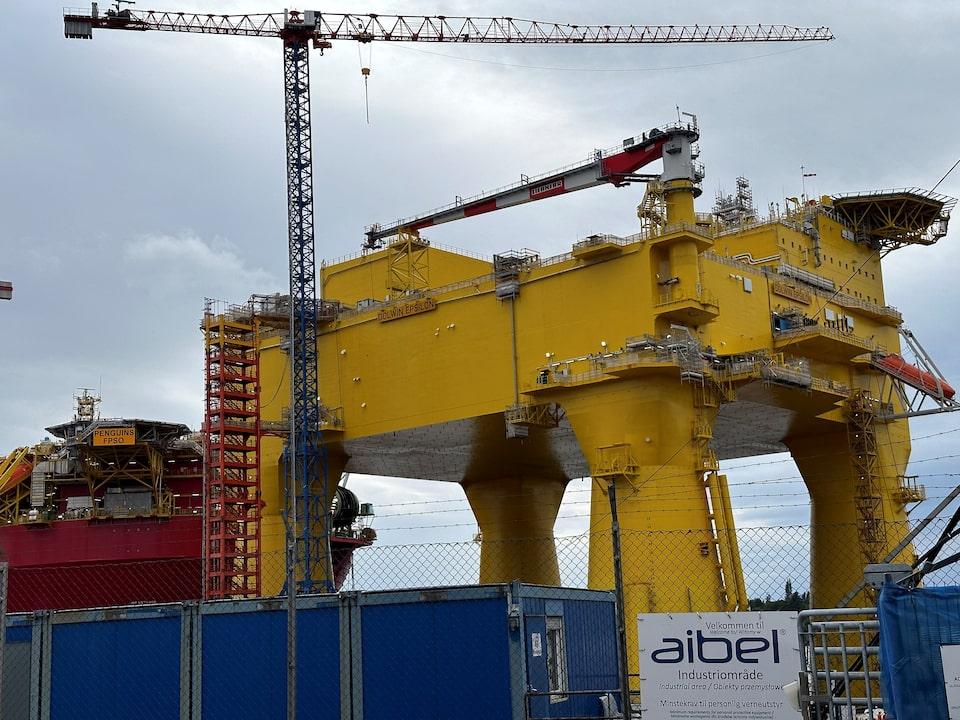
OSLO, Oct 21 (Reuters) - Norway's oil production exceeded an official forecast by 5.4% in September while gas lagged by 1.9%, the Norwegian Offshore Directorate (NOD) said on Tuesday. Norway is Europe's largest supplier of natural gas and a major producer of oil, but output varies from month to month depending on maintenance needs and other stoppages at close to 100 offshore fields. Sign up here. Overall oil, condensate, natural gas liquids and gas output stood at 0.599 million standard cubic metres per day, equivalent to 3.77 million barrels of oil equivalent, an increase of 15.9% year-on-year. Natural gas production in September rose to 282.1 million cubic metres (mcm) per day from 240.8 mcm a year earlier, but lagged a forecast of 287.6 mcm by 1.9%, the regulator said on its website. Crude oil output rose to 1.82 million barrels per day (bpd) in September from 1.60 million bpd in the same month last year, and came in above a forecast of 1.73 million bpd, NOD's preliminary data showed. https://www.reuters.com/business/energy/norway-oil-output-beats-forecast-september-while-gas-lags-2025-10-21/
2025-10-21 07:22
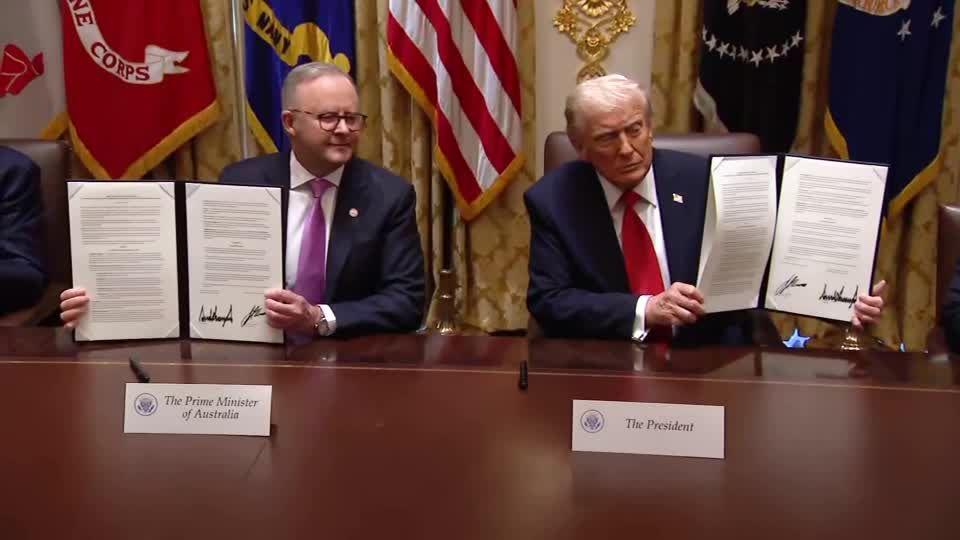
U.S., Australia sign critical minerals agreement Both countries combined commit $3 bln to critical projects Deal aimed at countering China's dominance of the sector Industry welcomes support; doubts if time frame is achievable SYDNEY, Oct 21 (Reuters) - Donald Trump's backing of Australia's critical minerals will bring much-needed financial support to the industry, but experts say the U.S. president will have to wait longer to shift the supply chain away from China and weaken its market dominance. In a wide-ranging agreement signed on Monday, U.S. and Australia committed a combined $3 billion to mining and processing projects, and to a price floor for critical minerals, a step long sought by Western miners. The countries will also sign off on financing that includes offtake rights. Sign up here. The White House said U.S. investments into Australia would unlock deposits of critical minerals worth $53 billion, without offering many details. Trump said in a year they would have "so much critical mineral and rare earths that you won't know what to do with them." "They will be worth about $2," Trump told reporters in a news conference later. Global mining industry experts gathered at a conference in Sydney on Tuesday welcomed the news, which they said would open up investment opportunities, but they were sceptical of Trump's time horizon. "The time frame for various projects to be ready even for 2027 would be heroic, and unachievable in the case of many projects," Barrenjoey analyst Dan Morgan told Reuters. "In general in the rare earths industry nothing can happen quickly. I don’t think we are going to be swamped with supply growth and there’s no way we will be swamped in a year. We might have supply growth in 5-7 years," he said. China accounts for 90% of the world's refining capacity for rare earths which have crucial uses in sectors such as clean energy, defence and automobiles. In a note on Monday flagging risks of supply disruptions, Goldman Sachs noted China also controls 69% of global rare earth mining, and 98% of magnet manufacturing. While rare earths are common in the Earth's crust, China has mastered the technically difficult and environmentally-harmful refining process, comparatively cheaply. With trade tensions and security concerns rising, the U.S. and its Western allies have been looking to loosen China's grip. In April and May, Beijing squeezed global automakers with export curbs on a range of rare earths items and related magnets, and earlier this month expanded its export controls. Benchmark prices in China for the most popular type of processed rare earths, NdPr oxide rallied by 40% to $88 a kilogram in August, after several years of weakness. They have since tailed back to $71, but western world developers are calling for governments to support a higher floor price that will enable them to build production. It's unrealistic to expect prices to drop further and the market to be swamped with supply in the short term, said Dylan Kelly, head analyst at fund Terra Capital. "Prices right now aren’t necessarily reflective of a market dynamic that can see prices fall any further," Kelly said, adding that Monday's announcement had increased the investment allure of Australian projects. "There’s lot out there to sink our teeth into that could really shift the gear on a number of different projects for us." BOOST TO MINERS However, there were some clear winners from the announcement. The U.S. Export-Import Bank (EXIM) sent seven Letters of Interest (LOIs) totalling more than $2.2 billion to miners in Australia, including Arafura Rare Earths (ARU.AX) , opens new tab. Arafura CEO Daryl Cuzzubbo said earlier this month that it need $800 million in equity funding to develop its Nolans project in Western Australia, and he expected about 60% of that would come from cornerstone investors by the end of the year. "It's good for us, and it's good for our industry counterparts," said Arafura CFO Peter Sherrington, speaking at the Imarc mining event. "The big thing it does is derisk raising money from an equity perspective." Full funding is expected by the end of the first quarter next year and Arafura aims to start production in 2029, Cuzzubbo earlier told Reuters. Arafura's biggest shareholder is Australian mining magnate Gina Rinehart, a vocal Trump supporter who attended the president’s inauguration party in Mar-a-Lago in January. However, new critical minerals projects will not be viable without a change in buying priorities from customers, said Syrah Resources (SYR.AX) , opens new tab CEO Shaun Verner. "I would say that if customers don't cure their addiction to lowest possible cost supply from China, then there will be no inducement of projects anywhere else." https://www.reuters.com/world/china/us-australia-rare-earths-deal-is-start-wont-shake-china-dominance-any-time-soon-2025-10-21/
2025-10-21 07:16
OSLO, Oct 21 (Reuters) - Norwegian oil firm Vaar Energi (VAR.OL) , opens new tab reported on Tuesday a stronger-than-expected operating profit for the third quarter and reiterated its production and dividend guidance. Vaar's earnings before interest and tax for the July to September quarter rose to $1.07 billion from $740 million a year earlier, beating the average $906 million forecast in a company-compiled poll of 12 analysts. Sign up here. The company's shares rose 1.7% by 0716 GMT. "With our major projects on stream, the company has never been a better position in terms of its outlook and sustaining the dividend," CEO Nick Walker told reporters. Vaar said it expected to meet its full year production guidance range of 330,000 to 360,000 barrels of oil equivalent per day (boed) as it ramped up new projects, with the fourth quarter output seen at 430,000 boed. Vaar, majority owned by Eni (ENI.MI) , opens new tab, also maintained its previous full-year dividend guidance of $1.2 billion for 2025 and 2026. RBC analysts, however, said in note that investors remained concerned about a dividend cut if oil prices continue to fall. Walker said he saw $60 per barrel as an oil price "floor" as lower levels would lead to curtailment of U.S. shale oil production, while Vaar could adjust its spending if needed. In July, the company said it planned to cut spending by $500 million over the period of 2025-2026. https://www.reuters.com/business/energy/norways-vaar-energi-q3-operating-profit-beats-forecasts-2025-10-21/

2025-10-21 07:06
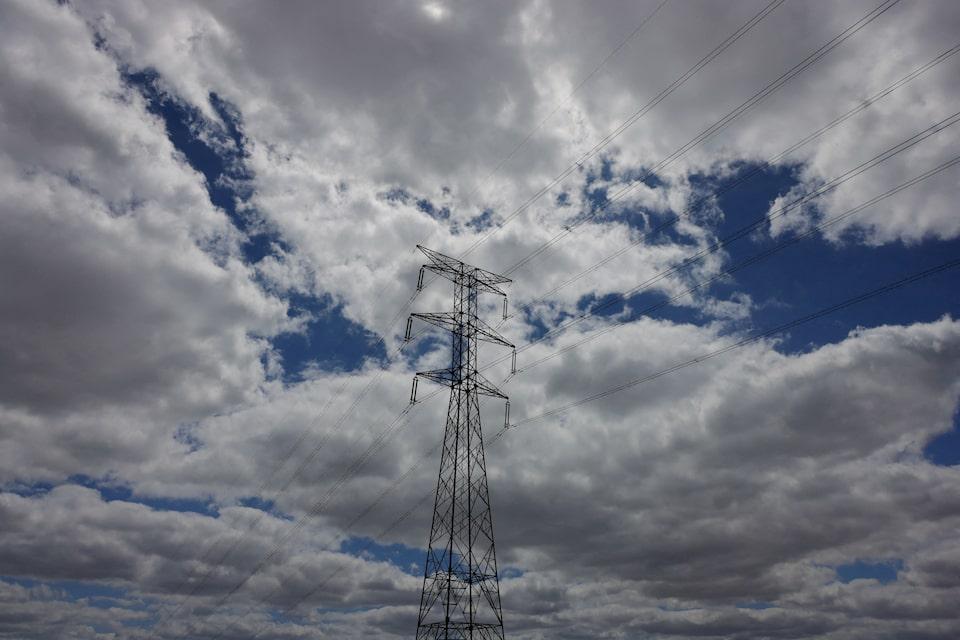
MADRID, Oct 21 (Reuters) - Spain keeps burning more gas to produce electricity and help keep its power grids stable after a major blackout on April 28, gas grid operator Enagas (ENAG.MC) , opens new tab said on Tuesday, boosting the country's overall gas demand. Conventional power plants like gas-fired combined cycle plants provide more stability to the grid's voltage than renewable sources such as wind farms and photovoltaic panels. Sign up here. Gas demand to generate electricity soared almost 37% in the first nine months of the year. In addition, Spain exported more natural gas, in particular to neighbouring France, which needed more gas to fill its underground storages and maintain its regasification terminals, the company said. Overall, Spain's gas demand rose 6.6% from the same period last year, reaching the equivalent of 267.6 terawatt-hours. https://www.reuters.com/sustainability/boards-policy-regulation/spains-power-plants-are-burning-more-gas-since-blackout-sending-gas-demand-up-2025-10-21/