2025-10-21 06:00
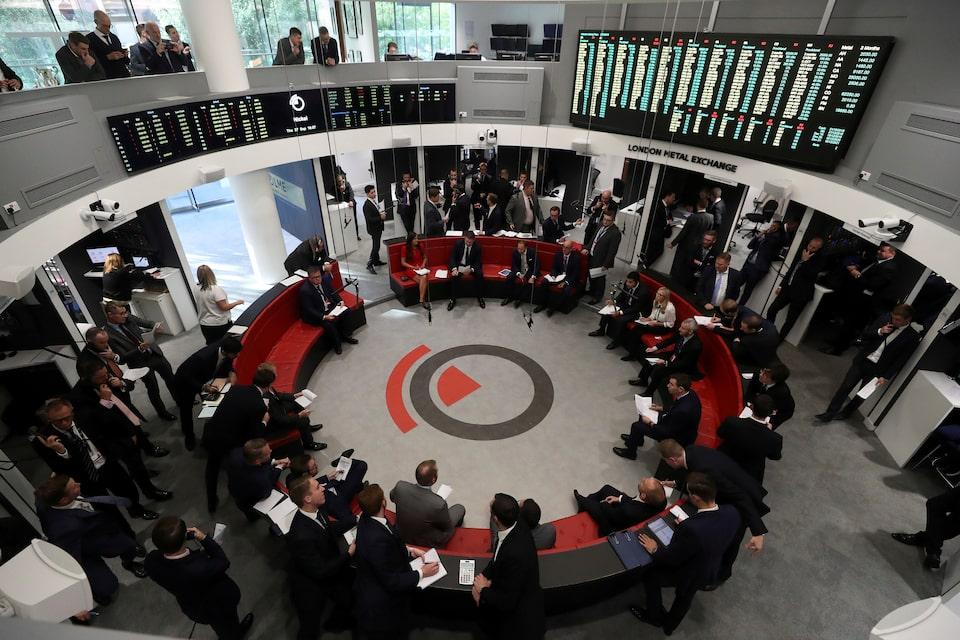
LONDON, Oct 20 (Reuters) - Metals are big news these days. Gold has been punching out record highs with silver playing catch-up. Rare earths sit center stage in the trade stand-off between the U.S. and China and industrial metal supply chains are bending to the new world order of tariffs and geopolitical tension. Sign up here. There was much to discuss at this year's London Metal Exchange (LME) Week seminars and parties. Here are my big five takeaways from last week's annual metals meeting in London. GREEN PREMIUMS The LME's owner, Hong Kong Exchanges and Clearing (HKEx) (0388.HK) , opens new tab, sprang an early LME Week surprise by announcing the creation of a new subsidiary in Dubai. Commodity Pricing and Analysis Ltd (CPAL) will act as pricing administrator for the roll-out , opens new tab of "green" premiums, leveraging the LME's responsible sourcing criteria and trade data from digital platform Metalshub. Metalshub transacted more than $220 million of Class I refined nickel in 2023 and since March 2024 has traded 488 tons , opens new tab of green-ish nickel, defined as metal with a carbon footprint below 20 metric tons per ton of metal. The plan is to use Metalshub prices to generate a sustainable nickel premium, establishing a template for other metals such as copper and aluminium. If there aren't enough trades, CPAL will "apply structured expert judgment" to establish premium levels, assuming they always exist. This is an interesting foray into the world of price reporting agencies such as Fastmarkets, Argus Media and S&P Global Platts. The pivot to Dubai also feels significant, with HKEx presenting it , opens new tab as a way of enhancing connectivity between China and fast-growing metal markets in the Middle East. SMELTERS VERSUS MINERS "You don't have security if you just have stuff in the ground." Smelting is more critical than mining, Richard Holtum, chief executive of trade house Trafigura, said at the LME seminar. If the West wants to break China's chokehold on exotic metals such as gallium and germanium, it will need base metal smelters to produce them, Holtum said. It is an argument that has resonated with the Australian government, which has pledged A$135 million ($87.4 million) to keep two of Trafigura's plants operating. The backdrop is a collapse in smelting fees for copper and, to a lesser extent, zinc. China's aggressive expansion of processing capacity has squeezed margins everywhere else. Spot copper treatment terms are negative, erasing what should be smelters' core revenue stream. Japan, Spain and South Korea issued a rare joint statement on Wednesday expressing deep concerns over the state of affairs in the copper raw materials market. The current benchmark pricing system, where terms are fixed annually or quarterly, may not survive in its current form as smelters look at bespoke bilateral deals or tolling contracts with miners and traders. EVERYONE LOVES DOCTOR COPPER Copper topped the LME seminar poll for the metal with the most price upside. It always does. This year, though, the bulls were out in full force in London. Arguments for higher copper prices include funds reallocating money to hard assets, a dysfunctional raw materials market and low stocks resulting from the redistribution of global inventory to the U.S. Even self-proclaimed contrarians such as Ken Hoffman of consultancy Traubenbach Associates concede the longer-term picture is one of robust demand growth and challenged supply. Global copper demand is set to surge 24% by 2035, according to Wood Mackenzie. The consultancy warns that disruptive sectors such as data centers could "amplify demand and price volatility beyond expectations." A sharp jump in producer premiums for next year's deliveries to European customers helps reinforce the bull narrative. Chilean producer Codelco will charge a premium of $325 per ton over LME cash prices for 2026 term shipments, up from $234 this year. German producer Aurubis (NAFG.DE) , opens new tab had already announced a similar-sized hike to $315 per ton. It's a sign of the tariff times. The mass movement of copper to the U.S. to capitalise on the tariff trade means the rest of the world must pay more to guarantee supply. ALL CHANGE IN ALUMINIUM Jorge Vazquez, head of consultancy HARBOR Aluminum, graced the LME seminar with a maroon knitwear number and surprised the audience even more by turning bullish on the light metal. Vazquez has been consistently bearish in previous years' appearances, but now thinks aluminium will trade above $3,000 per ton, possibly even $4,000, next year, compared with a current price of $2,765 per ton. The change of mind is symptomatic of the market's reappraisal of aluminium supply dynamics. China shows no sign of loosening its smelter capacity cap, and for the first time in decades analysts are starting to worry about whether supply growth will be sufficient to meet demand. GERMANIUM "There is none," according to Theo Ruas, head of global metal sales at U.S. specialty materials company Indium Corp, referring to germanium. China's exports of the chip-making material have plummeted this year after Beijing tightened export restrictions at the end of 2024. The price has soared , opens new tab to 25-year highs, according to Project Blue, but some buyers are struggling to get material at any price, Ruas told attendees at the consultancy's critical materials seminar. Where germanium is today, gallium could be tomorrow. Or any of the other critical minerals dominated by Chinese processing power. Rare earths have emerged as a central bone of contention between the U.S. and China, and Beijing has just upped the ante by adding another five elements to its restricted export list. Even most metal traders have never heard of holmium, erbium, thulium, europium and ytterbium, but now they hold the key to global markets. The opinions expressed here are those of the author, a columnist for Reuters. https://www.reuters.com/markets/commodities/five-key-takeaways-london-metal-exchange-week-2025-10-20/
2025-10-21 05:58
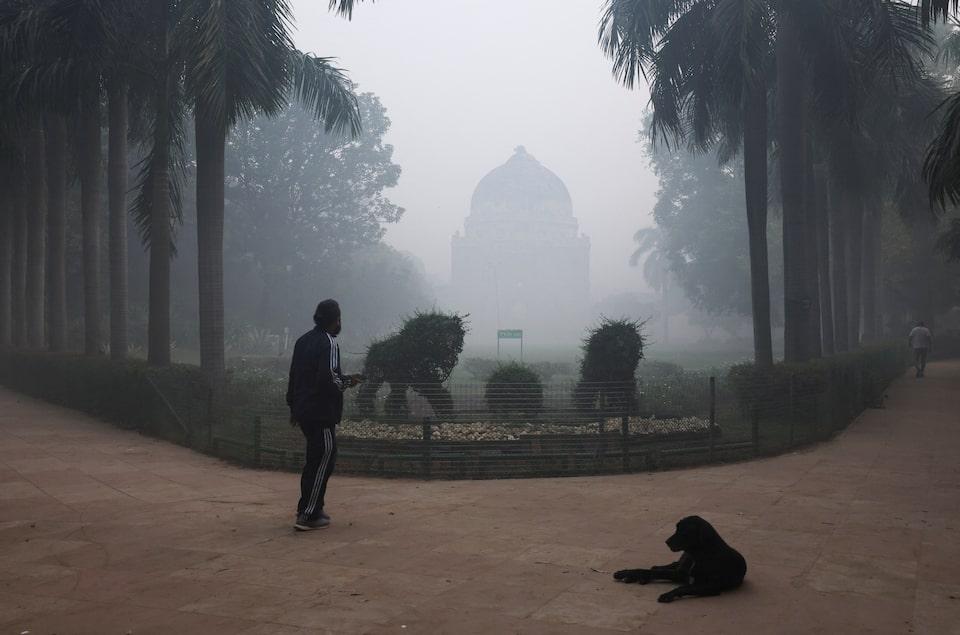
Delhi world's most polluted major city on Tuesday - IQAir Poor air quality partly result of firecrackers Ban on use of firecrackers over Diwali was partly relaxed NEW DELHI, Oct 21 (Reuters) - Air quality in India's capital New Delhi deteriorated to hazardous levels on Tuesday with readings the highest in the world, according to Swiss group IQAir, partly due to the use of firecrackers during Diwali, the Hindu festival of lights. The Supreme Court of India last week relaxed a ban on firecrackers in the city, permitting the use of so-called "green crackers" for a maximum three hours each on Sunday and Monday, although Reuters witnesses saw crackers being set-off outside the allotted times. Sign up here. Emissions from the crackers are 30% to 50% lower than conventional fireworks. IQAir's reading for New Delhi was 442, making the Indian capital the world's most polluted major city. Its PM 2.5 concentration was more than 59 times the World Health Organisation's recommended annual guideline. PM 2.5 refers to particulate matter measuring 2.5 microns or less in diameter that can be carried into the lungs, risking deadly diseases and cardiac problems. India's Central Pollution Control Board (CPCB) also rated the city's air quality "very poor" with an air quality index (AQI) measurement of 350. CPCB considers an AQI of 0-50 as good. Delhi is unlikely to get relief in the coming days, with the earth sciences ministry forecasting air quality will remain in the "Very Poor to Poor" category with AQI levels between 201 and 400. India's capital and its neighbouring districts are prone to a thick smog every winter as cold, heavy air traps construction dust, vehicle emissions and smoke from agricultural fires, leaving many of its 20 million residents struggling with respiratory illnesses. In the past, authorities have closed schools, stopped some building work and placed restrictions on private vehicles to tackle the problem. India is not alone among South Asian nations in battling toxic air. In neighbouring Pakistan's Punjab province, which shares a border with India, the government has implemented an 'emergency plan' to tackle pollution, which includes action against farm fires and smoke-emitting vehicles, and use of anti-smog guns in polluted areas. The air quality reading for Lahore, Punjab's capital, was 234, the second highest in the world, IQAir data showed. "Right now, the major issue is the air coming from Indian Punjab and other parts, which is affecting the air quality in various parts of Pakistani Punjab," said Sajid Bashir, a spokesperson for Punjab's Environment Protection Agency. https://www.reuters.com/sustainability/climate-energy/delhi-air-quality-hazardous-levels-after-diwali-fireworks-2025-10-21/
2025-10-21 05:52
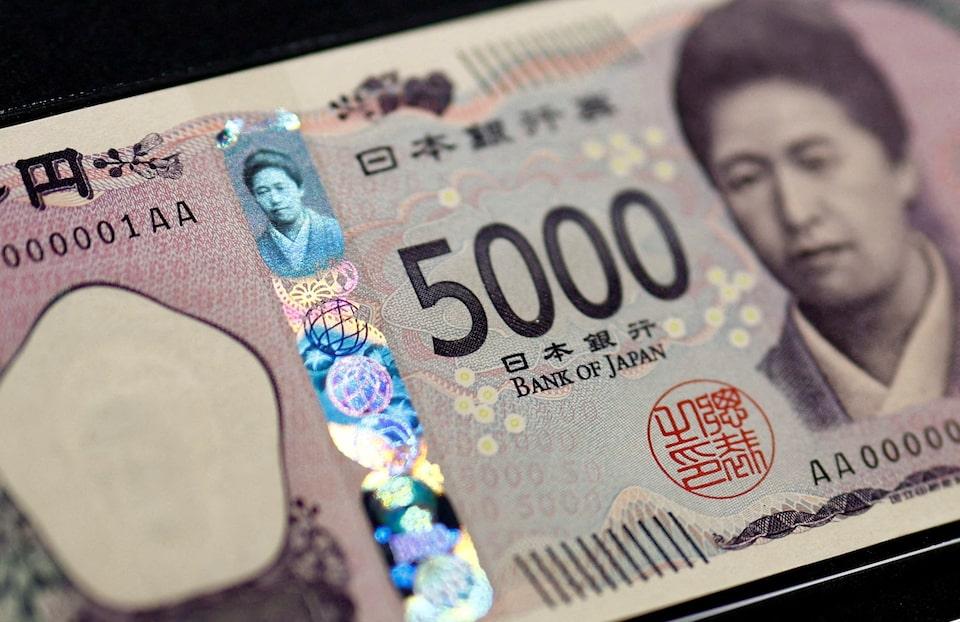
Yen down 0.76% Dollar index hits six-day high as Trump trade deal optimism boosts market mood ECB warns euro zone banks on potential US dollar funding pressures NEW YORK, Oct 21 (Reuters) - The yen eased to a one-week low on Tuesday after hardline conservative Sanae Takaichi was elected as Japan's prime minister, with traders betting her government could muddy the interest rate outlook and bring about a greater fiscal largesse. Takaichi, the first female PM and leader of Japan's ruling Liberal Democratic Party, won the lower house vote on Tuesday to choose the next prime minister. The move was widely expected by investors after she was backed by the right-wing opposition party Ishin. Sign up here. The Japanese currency was last down 0.76% at 151.895 per dollar , after earlier touching its lowest level against the dollar since October 14, in its biggest single-day fall in two weeks. The yen also struggled against the euro and sterling . Earlier on Tuesday, local media reported that Takaichi had finalized a plan to appoint Satsuki Katayama, a former regional revitalisation minister, as finance minister. During an interview with Reuters in March, Katayama signaled her preference for a stronger yen. Her appointment could give markets cause to rethink the idea of pushing the yen too low. "We continue to assume that inflation and the purchasing power of private households will remain important issues for the new government in order to improve public approval," said Volkmar Baur, FX & Commodity Analyst at Commerzbank. "Therefore, the new government is unlikely to support a depreciation of the Japanese yen," Baur added. Still, Takaichi's support for fiscal stimulus and looser monetary policy kept investors on edge and complicates the Bank of Japan's path for rate increases. "From a political perspective ... there may be considerations to delay monetary tightening until fiscal easing gains traction. The BOJ is thus caught between a rock and a hard place," HSBC chief Asia economist Fred Neumann said. DOLLAR FIRMS In the broader market, currencies were mostly rangebound despite an overall upbeat market mood after U.S. President Donald Trump said on Monday he expects to reach a trade deal with Chinese President Xi Jinping. White House economic adviser Kevin Hassett also said that the 20-day U.S. federal government shutdown was likely to end this week. Jitters over credit risks among U.S. banks also dissipated slightly. The dollar index, measuring the currency against six peers drew support from a weaker yen and rose to a six-day high. It was last up 0.312% to 98.921. European Central Bank's chief economist Philip Lane said on Tuesday that euro zone banks may come under pressure if U.S. dollar funding - the lifeblood of financial markets - were to dry up, amid concern over Trump's policies. Dollar funding fears have been at the back of central bankers' minds since Trump announced a wave of trade tariffs and began putting pressure on the Federal Reserve earlier this year. The euro fell 0.3% against a strengthening dollar to $1.161, little helped by easing political uncertainty in France. Sterling was down against the dollar despite data on Tuesday showing Britain's borrowing in the first half of the financial year was the highest since the pandemic, as investors said a tough budget next month is priced in. https://www.reuters.com/world/asia-pacific/yen-guard-ahead-parliament-vote-next-prime-minister-2025-10-21/
2025-10-21 05:46
US stocks mixed and Dow up Gold down sharply as investors take profits Trump-Xi meeting next week NEW YORK, Oct 21 (Reuters) - Major stock indexes were mostly near flat on Tuesday, with upbeat results and forecasts from top U.S. companies providing some support, while gold prices dropped more than 5% as investors took profits after a recent rally. The yen fell to a one-week low after conservative Sanae Takaichi was elected as Japan's prime minister. Japan's Nikkei (.N225) , opens new tab share gauge closed at a record high on Tuesday. Sign up here. Spot gold fell 5.31% to $4,123.85 an ounce, and had its steepest daily percentage fall since August 2020. Prices scaled an all-time peak of $4,381.21 on Monday and have gained about 60% this year. U.S. President Donald Trump said he expected to reach a fair trade deal with Chinese President Xi Jinping when the two meet next week in South Korea, and played down the risks of a clash over the issue of Taiwan. The prospect of a resolution also helped bolster investor sentiment, along with a deal between Australia and the United States for the supply of rare earths minerals. In earnings, GM (GM.N) , opens new tab shares jumped after the company raised its full-year forecast, and Coca-Cola (KO.N) , opens new tab gained after the company posted results that beat analysts' estimates. But the S&P 500 technology sector (.SPLRCT) , opens new tab was down 0.2%, and Michael Green, chief strategist at Simplify Asset Management in Philadelphia, said the reaction to some earnings surprises was modest. "The earnings are better than expected as companies continue to gain slightly in terms of margins, which suggests that (companies) have to be passing through the tariffs or pushing the tariffs back onto the importers," Green said. The Dow Jones Industrial Average (.DJI) , opens new tab rose 218.16 points, or 0.47%, to 46,924.74, the S&P 500 (.SPX) , opens new tab rose 0.22 points, essentially flat, to 6,735.35 and the Nasdaq Composite (.IXIC) , opens new tab fell 36.88 points, or 0.16%, to 22,953.67. MSCI's gauge of stocks across the globe (.MIWD00000PUS) , opens new tab fell 0.84 points, or 0.08%, to 994.85. The pan-European STOXX 600 (.STOXX) , opens new tab index rose 0.21%. Against the Japanese yen , the dollar strengthened 0.81% to 151.96. Takaichi became Japan's first female prime minister and leader of its ruling Liberal Democratic Party on Tuesday. Traders bet that Takaichi's government could muddy the interest rate outlook and bring about greater fiscal spending. The dollar also rose against other currencies. The dollar index , which measures the greenback against a basket of currencies including the yen and the euro, was 0.35% higher at 98.95, with the euro down 0.33% at $1.1602. U.S. Treasury yields eased as investors looked ahead to the Federal Reserve's next moves. The Fed could deliver as many as three rate cuts in the next six months based on market-based expectations, while the European Central Bank, which meets next week, is not expected to deliver a rate cut any time soon. The yield on benchmark U.S. 10-year notes fell 2.9 basis points to 3.959%, from 3.988% late on Monday. Investor confidence was hit hard last week as a clutch of bad loans at U.S. regional banks ignited concern over credit risks that threatened to spill into the broader markets. The prolonged U.S. government shutdown also weighed on risk assets. Oil prices ended higher. Brent crude futures rose 31 cents, or 0.5%, to settle at $61.32 a barrel, while U.S. West Texas Intermediate crude futures for November delivery , which expired on Tuesday's settlement, closed up 30 cents, or 0.5%, at $57.82. https://www.reuters.com/world/china/global-markets-wrapup-1-2025-10-21/
2025-10-21 05:11
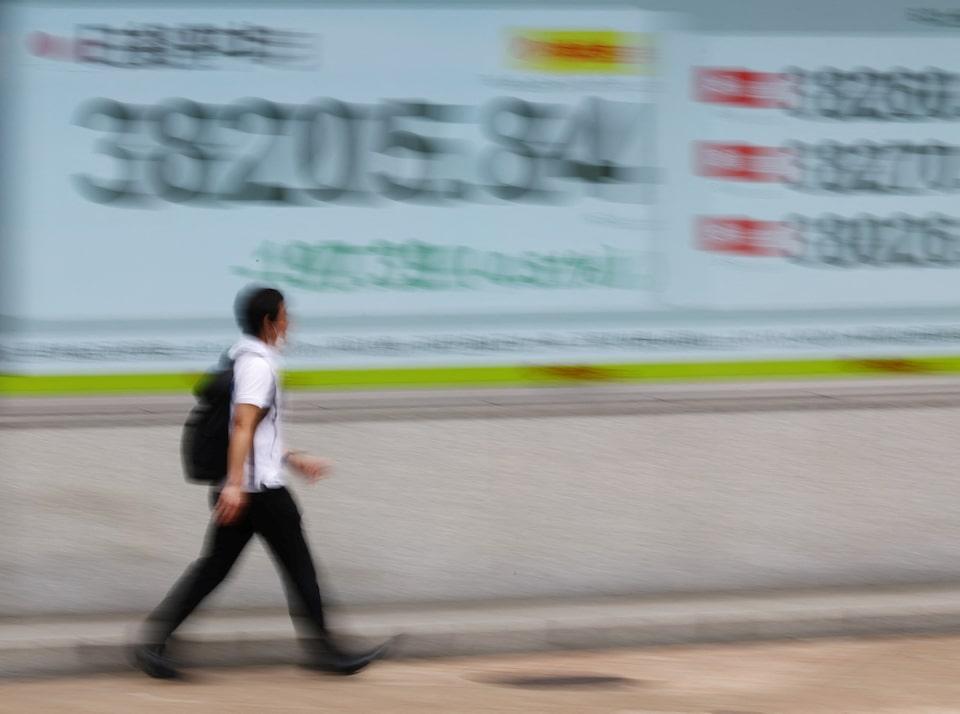
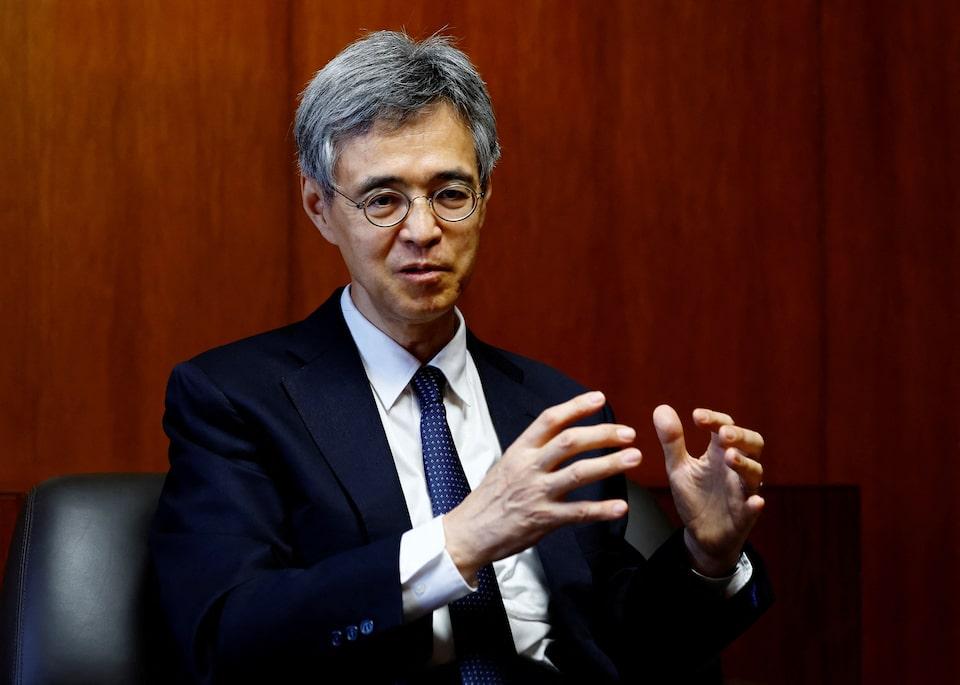
TOKYO, Oct 21 (Reuters) - Global regulators must adapt to new realities in the financial system, such as an increasing ratio of assets held by non-bank financial institutions and the emergence of stablecoins, Bank of Japan Deputy Governor Ryozo Himino said on Tuesday. The G20 major economies repeatedly affirmed their commitment to implement the Basel 3 regulations on the banking system, but the deadlines were extended time and again, Himino said. Sign up here. In the meantime, the global financial system has changed, with half of assets now held by non-bank financial institutions that fall outside the remit of Basel 3, he said. Stablecoins might emerge as a key player in the global payment system, partially replacing the role of bank deposits, said Himino, who was formerly Japan's top banking regulator. "Regulators are doing a lot in these spheres, but much more needs to be done," Himino said in a speech at the 2025 GZERO Summit Japan. "We need to continue to modernise international prudential standards to keep up with the new and emerging realities." U.S. banks, which have by far the strongest dollar deposit bases, have a significant competitive advantage in the international banking market and could take the lead in developing common standards to prevent market fragmentation, Himino said. Authorities must also persuade the public that implementing common financial regulatory standards would be in the best interest of their countries, he added. "Even in the past, there was no fixed formula that solved all problems. Today, there may be more need to tailor our approach to the demands of the task and the circumstances, and to be agile in seizing the opportunities that arise," he said. Basel 3 is a global regulatory framework developed by the Basel Committee on Banking Supervision in response to the global financial crisis in 2007 and 2008. Its primary goal is to strengthen regulation, supervision, and risk management within the banking sector. https://www.reuters.com/sustainability/boards-policy-regulation/bojs-himino-urges-regulators-adapt-new-financial-realities-2025-10-21/
2025-10-21 04:43
A look at the day ahead in European and global markets from Ankur Banerjee And just like that, worries about credit risks are in the rear view. Investors are feeling perky, betting that tensions between the U.S. and China will ease, the Fed will cut rates next week and the earnings season will be strong. Sign up here. That - let's call it optimism - has pushed stocks across Asia-Pacific (.MIAP00000PUS) , opens new tab to record peaks, with Japan's Nikkei just shy of a landmark 50,000 points. Tech-heavy Taiwan (.TWII) , opens new tab and South Korea stocks (.KS11) , opens new tab have also hit record highs after strong overnight gains from U.S. tech shares led by Apple (AAPL.O) , opens new tab. Hardline conservative Sanae Takaichi is set to be voted in as Japan's first female prime minister later on Tuesday and her appointment continues to push Japanese shares higher on hopes that her pro-stimulus plans will be good for equities. An acolyte of former Prime Minister Shinzo Abe, Takaichi is expected to appoint another Abe protege, Satsuki Katayama, to the post of finance chief, local media reported. That may be bad news for yen bears as Katayama has suggested the yen's real value is closer to 120-130 per dollar. The yen was last at 151.07. Over in Europe, the economic calendar is pretty bare and that could be a good thing for risk assets as they take cues from the prospect of the Federal Reserve lowering rates. Traders are ascribing a 98.3% chance of a 25 basis point cut next week. Meanwhile, investors are also taking comfort from the latest comments from U.S. President Donald Trump on China. Trump said he expects to reach a fair trade deal with Chinese President Xi Jinping as he gears up for a planned meeting with Xi on the sidelines of an economic conference in South Korea next week. Next week is shaping up to be news heavy with the spotlight on central bank meetings in the U.S. and Japan as well as the meeting between Trump and Xi. With earnings season in full stride, traders will not only keep an eye on big bellwethers but also parse through reports from regional banks after a turbulent last week where worries over rising credit risk hit sentiment. Some of the firms reported earnings on Monday with investors relatively comforted by the results. Key developments that could influence markets on Tuesday: Earnings: Unicredit, L'Oreal https://www.reuters.com/world/china/global-markets-view-europe-2025-10-21/


