2025-10-20 21:25
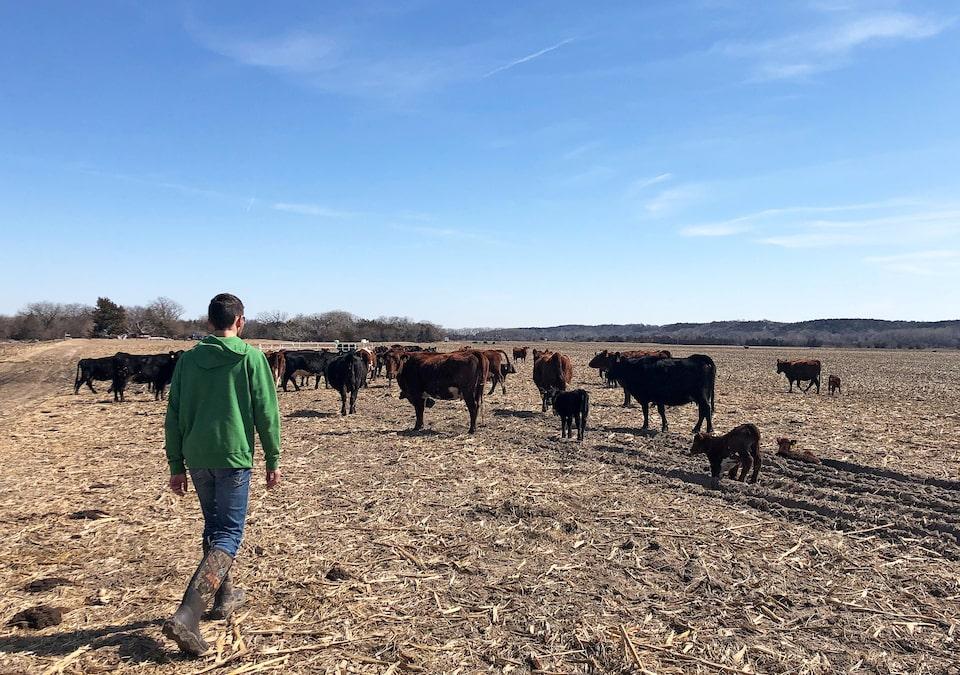
US cattle farmers see beef imports as threat to livelihoods Economists doubt imports will lower US beef prices But imports may discourage US herd expansion, economists warn US cattle herd at lowest in nearly 75 years due to drought WASHINGTON/CHICAGO, Oct 20 (Reuters) - U.S. farmers on Monday criticized President Donald Trump's suggestion that the country may import more beef from Argentina, after they recently lost out to the South American nation on soybean sales to top buyer China. Trump said on Sunday that he was considering imports to reduce U.S. beef prices that have climbed to record highs. His administration earlier extended a $20 billion currency swap lifeline to Argentina, which the president considers an ally. Sign up here. Cattle producers saw the suggestion as a threat to their livelihoods and free markets, at a time when ranchers are profiting from sky-high livestock prices and strong consumer demand. "This plan only creates chaos at a critical time of the year for American cattle producers, while doing nothing to lower grocery store prices," said Colin Woodall, CEO of the National Cattlemen's Beef Association industry group. Last month, the Trump administration frustrated farmers by negotiating financial support for Argentina at a time when Argentina was selling soybeans to China, which has not bought any soy from the autumn U.S. harvest due to its trade conflict with Washington. "The last thing we need is to reward them by importing more of their beef," said Rob Larew, president of the National Farmers Union. Trump floated hiking beef imports aboard Air Force One on Sunday night. "If we buy some beef - I'm not talking about that much - from Argentina, it would help Argentina, which we consider a very good country, a very good ally," Trump said. A U.S. Department of Agriculture spokesperson said the agency is working to lower beef prices while supporting cattle ranchers with disaster aid and other efforts. "These actions coupled with President Trump's work to secure lasting markets for beef producers abroad send a strong message to American cattle producers - raise more beef and rebuild the herd," the spokesperson said. The White House did not respond to a request for more information. U.S. feeder cattle futures tumbled on Friday after Trump first said he was working on a deal to lower beef prices. They hit their lowest level in more than a week on Monday before ending nearly unchanged. In Montana, Jan McDonald, 78, said she plans to take calves to an auction for sale on Saturday and worried that Trump's suggestion could hurt prices. "I don't know where he's coming from," McDonald said. "It makes me very nervous about the future." ECONOMISTS SAY IMPORTS WON'T LOWER PRICES Economists said increased imports from Argentina, which last year represented about 2% of total U.S. beef imports, were unlikely to reduce U.S. beef prices. "The U.S. cannot buy enough beef from Argentina to materially move the needle in the market," Steiner Consulting Group said. Imports could also discourage U.S. producers from expanding their herds to boost domestic beef production, economists said. There is no quick fix to boost U.S. output as it takes about two years to produce full-grown cattle, said Derrell Peel, Oklahoma State University agricultural economist. "Flooding markets with foreign-grown beef could affect our nation's ability to be food independent in the long-term," American Farm Bureau Federation President Zippy Duvall said. U.S. cattle inventories in January dropped to the lowest level in nearly 75 years, after ranchers slashed their herds due to a years-long drought that burned up grazing lands and hiked feed costs. Supplies tightened more as the U.S. since May has mostly suspended imports of Mexican cattle amid concerns about the northward spread of New World screwworm, a flesh-eating pest that infests livestock. U.S. tariffs on goods from Brazil have also slowed imports of Brazilian beef. https://www.reuters.com/world/us/trump-plan-import-argentine-beef-angers-us-farmers-2025-10-20/
2025-10-20 21:07
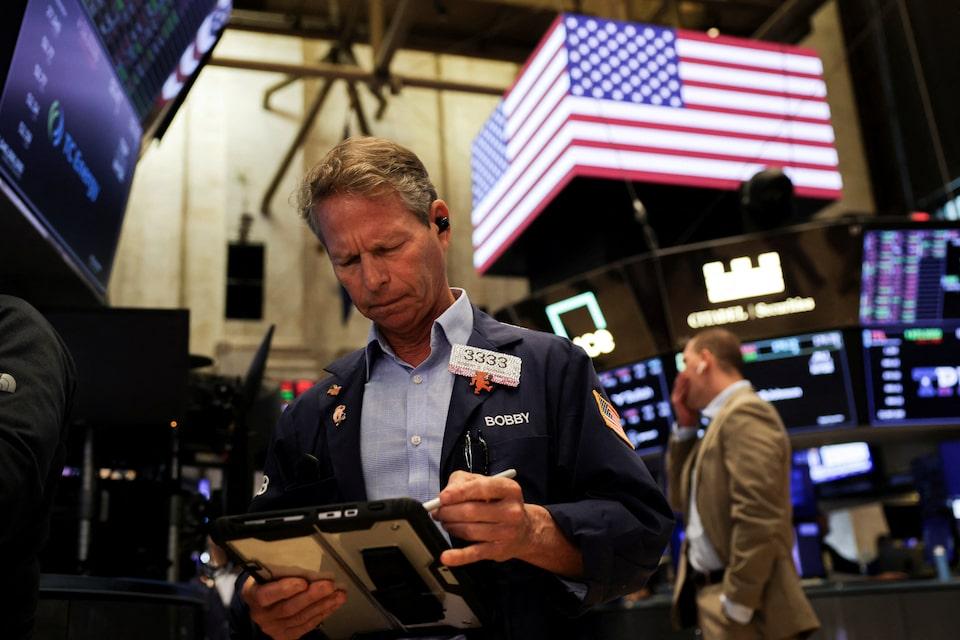
ORLANDO, Florida, Oct 20 (Reuters) - Wall Street and most global equity benchmarks rose sharply on Monday, as optimism around U.S. earnings and easing global trade tensions offset some of last week's worries over frothy asset prices, private credit markets and U.S. regional banks. More on that below. In my column today, I look at the so-called U.S. 'debasement trade'. While debt and deficit worries are real and justified, the bond and currency markets suggest they are overdone. Sign up here. If you have more time to read, here are a few articles I recommend to help you make sense of what happened in markets today. Today's Key Market Moves Today's Talking Points: * U.S. banking system liquidity Debate is intensifying around whether liquidity in the U.S. banking system is shrinking to the point that could soon pose funding, collateral and broader market risks. The Fed could soon end its QT program, bank reserves are below $3 trillion, balances at the Fed's overnight repo facility are almost zero, and usage of the Fed's Standing Repo Facility has ticked up. Some observers say alarm bells are ringing, and point to the recent wobbles in private credit and regional banks as evidence. Others are less worried, noting that while aggregate liquidity may be tightening, it is still plentiful and the Fed has several tools at its disposal should it need them. In short, there's no cause for concern. * Reading China's GDP tea leaves China's headline Q3 GDP figures showed stronger-than-expected quarterly growth of 1.1% and annual growth of 4.8%, which was slower than Q2 but in line with forecasts. On the face of it, China seems to be managing to shrug off the trade tension and tariff uncertainty. But under the surface, there is perhaps more cause for concern. House prices continue to fall, and more importantly, fixed asset investment fell for the first time ever, excluding the pandemic. An "alarming" development that points to downside risks for Q4 GDP, reckons Zhiwei Zhang at Pinpoint Asset Management. * The importance of rare earths Official Chinese data also showed that exports of rare earth magnets fell in September, reigniting fears that the world's top supplier could wield its dominance over a component that is critical for U.S. defense firms and makers of items from cars to smartphones. And increasingly central to U.S.-China trade relations. U.S. President Donald Trump said he expects to secure a "fair" trade deal with China and plans to meet President Xi Jinping in South Korea next week. Trump and Australian Prime Minister Anthony Albanese signed a rare earths deal on Monday, and Trump said he is working on deals with other countries. Debasing the 'debasement' trade The recent surge in gold, cryptocurrencies and stocks to record highs has sparked claims that the U.S. "debasement trade" is in full swing, but the bond and the foreign exchange markets tell a very different story. The upward swing in some "hard" assets this year is undeniable. The 50% spike in gold and even more eye-watering gains in other precious metals, such as silver and platinum suggest investors are getting anxious about something. Many have argued that this "something" is debasement - the fear that an oncoming inflationary storm could erode the dollar's purchasing power and the value of U.S. financial assets. The term "debasement trade" was coined earlier this year by analysts at JPMorgan, though they began flagging the idea last October, arguing that a Republican sweep of the White House and both houses of Congress would be bullish for gold and bitcoin due to expansionary fiscal policy. Fast forward to today, and debasement doomsayers are pointing to increased U.S. government borrowing and rising public debt projections as well as the resumption of Federal Reserve interest rate cuts at a time when inflation is about to enter its sixth consecutive year above the Fed's 2% target. But if we were primarily dealing with debasement fears, the dollar and U.S. bonds would be tumbling and Treasury yields would be spiking - and this isn't happening. WHAT DEBASEMENT? The numbers speak for themselves. The 10-year nominal Treasury yield last week broke below 4.00%, its lowest since April. In fact, Friday's 3.93% was the lowest in over a year if excluding April 4 and 7, the depths of post-"Liberation Day" tariff turmoil. The benchmark 10-year yield is down nearly 60 basis points this year. Even the 30-year yield, which is much more sensitive to the de-anchoring of long-term inflation expectations, has fallen around 20 basis points this year, hardly a sign investors are running for the hills. It's a similar story in "TIPS". The break-even inflation rate on 10-year TIPS, essentially an estimate of where bond investors see inflation a decade from now, last week fell to 2.275%, the lowest since June. More significantly, the 30-year TIPS break-even inflation rate fell to 2.21%, the lowest since May. True, the dollar had its worst start to a year on record in the first half of 2025, but it has been remarkably stable since April, with the dollar index ending last week almost exactly at its six-month average. Moreover, the dollar has significantly outperformed its G10 currency peers over the past month, as Rabobank's Jane Foley points out. "Debasement would imply a move away from the dollar and U.S. Treasuries into assets such as gold, and there is very little evidence to back up these flows," Foley says. To be sure, the dollar is being viewed more skeptically by investors than it was before U.S. President Donald Trump returned to the White House, likely because the world sees the United States as a less reliable economic partner. This is reflected in the fact that as much as 80% of portfolio inflows into the U.S. are now currency hedged, according to UniCredit estimates. All this suggests that investors still want to hitch their wagon to the U.S. economy and stock market, but not the dollar. DESPERATELY SEEKING CLARITY Fears of fiat currency debasement are nothing new, especially those involving the dollar. But they have gained traction since the huge monetary and fiscal responses to the 2007-2009 global financial crisis and the pandemic of 2020-2021. And Trump's unorthodox policy agenda has only added fuel to the fire. But given how markets are actually behaving, what we may truly be seeing is a mix of central bank diversification, private sector portfolio reallocations, or simply momentum-driven buying. Ultimately then, we may be reaching peak "debasement trade". Like other popular terms this year, such as the infamous "TACO" (Trump Always Chickens Out) trade – the "debasement trade" is essentially a simple narrative that can help investors make sense of an increasingly logic-defying world. Even though the $4 trillion global crypto market and $28 trillion gold market may be emitting dollar debasement warnings, the $28 trillion Treasury market and nearly $10 trillion-a-day currency market are not. If you want a simple answer to what's happening in today's financial world, keep looking. What could move markets tomorrow? Want to receive Trading Day in your inbox every weekday morning? Sign up for my newsletter here. Opinions expressed are those of the author. They do not reflect the views of Reuters News, which, under the Trust Principles , opens new tab, is committed to integrity, independence, and freedom from bias. https://www.reuters.com/world/asia-pacific/global-markets-trading-day-graphic-2025-10-20/
2025-10-20 20:52
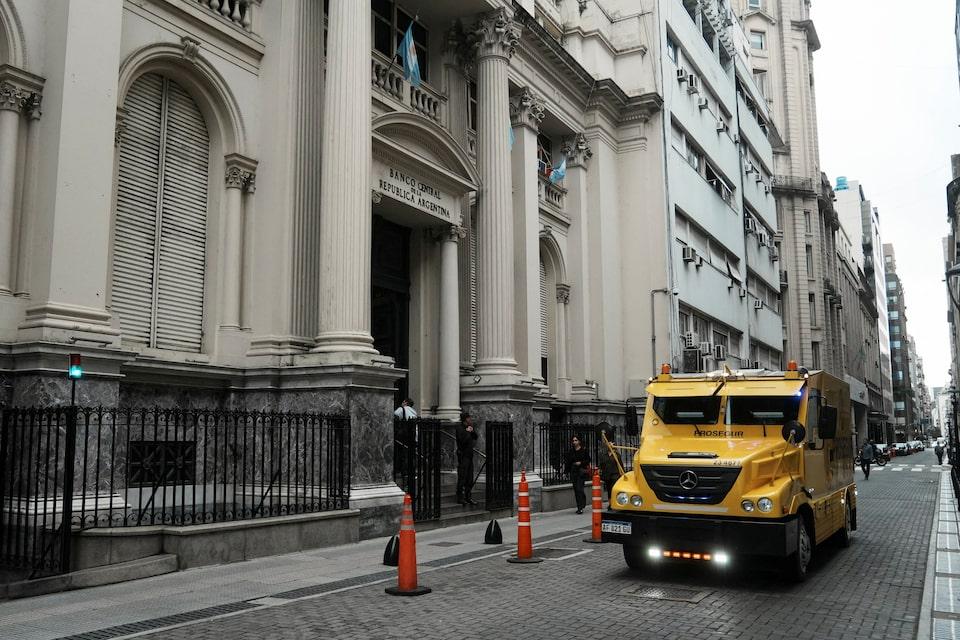
Official Argentine peso posts record closing low versus dollar US Treasury provides no details on swap line, peso purchases Argentine central bank says deal will enable it to respond to volatility Oct 20 (Reuters) - Argentina's central bank said on Monday it signed a $20 billion exchange-rate stabilization agreement with the U.S. Treasury Department, six days ahead of a key midterm election. The central bank's statement , opens new tab said the agreement sets forth terms for bilateral currency swap operations between the U.S. and Argentina, but it provided no technical details. Sign up here. The central bank, the BCRA, said: "Such operations will allow the BCRA to expand its set of monetary and exchange rate policy instruments, including the liquidity of its international reserves." The Argentine peso closed at a record low, down 1.7% on the day to end at 1,475 per dollar. The BCRA said the pact was part of a comprehensive strategy to enhance its ability to respond to foreign exchange and capital markets volatility. The U.S. Treasury did not respond to a request for details on the new swap line and has not issued its own statement about the arrangement. U.S. Treasury Secretary Scott Bessent said last week the arrangement with banks and investment funds would be backed by International Monetary Fund Special Drawing Rights held in the Treasury's Exchange Stabilization Fund that will be converted to dollars. Bessent has said the U.S. would not put additional conditions on Argentina beyond President Javier Milei's government continuing to pursue its fiscal austerity and economic reform programs to foster more private-sector growth. Bessent has announced several U.S. purchases of pesos in recent weeks, but has declined to disclose details. Currency traders said that since the Treasury first purchased pesos on October 9, sales of dollars into the peso market have reached hundreds of billions of dollars, though the source of the selling has not been disclosed. Brad Setser, a former U.S. Treasury official who is now a senior fellow with the Council on Foreign Relations, said there was a "preponderance of evidence is that the peso is significantly over-valued," an assessment shared with other analysts but which Bessent rejects. Setser said these indicators include strong import and outbound tourism growth, Argentines purchasing cheaper goods in neighboring countries and the central bank's failure to meet the IMF's reserve accumulation targets. "It does seem to me that the Treasury is taking an unusually large risk of losing money" in supporting the peso, he added. On Monday, the Wall Street Journal reported that a group of U.S. banks, including JPMorgan Chase (JPM.N) , opens new tab, Bank of America (BAC.N) , opens new tab and Goldman Sachs (GS.N) , opens new tab, was hesitant to lend $20 billion to Argentina without guarantees or collateral. The banks did not immediately respond to Reuters requests for comment. ELECTION THIS WEEKEND Argentine Economy Minister Luis Caputo said last week he hoped the swap deal framework would be finalized before the October 26 midterm parliamentary vote, in which Milei's party will seek to grow its minority presence in the legislature. Milei, who has sought to solve Argentina's economic woes through fiscal spending cuts and dramatically shrinking the size of government, has been handed a string of recent political defeats. U.S. President Donald Trump said last week the U.S. would not "waste our time" with Argentina if Milei's party loses in the midterm vote. The comment briefly shocked local markets until Bessent clarified that continued U.S. support depended on "good policies," not necessarily the vote result. A positive result for Milei's party would help block any policy repeal efforts, he added. https://www.reuters.com/world/americas/argentinas-central-bank-says-it-signed-20-billion-currency-swap-deal-with-us-2025-10-20/
2025-10-20 20:40
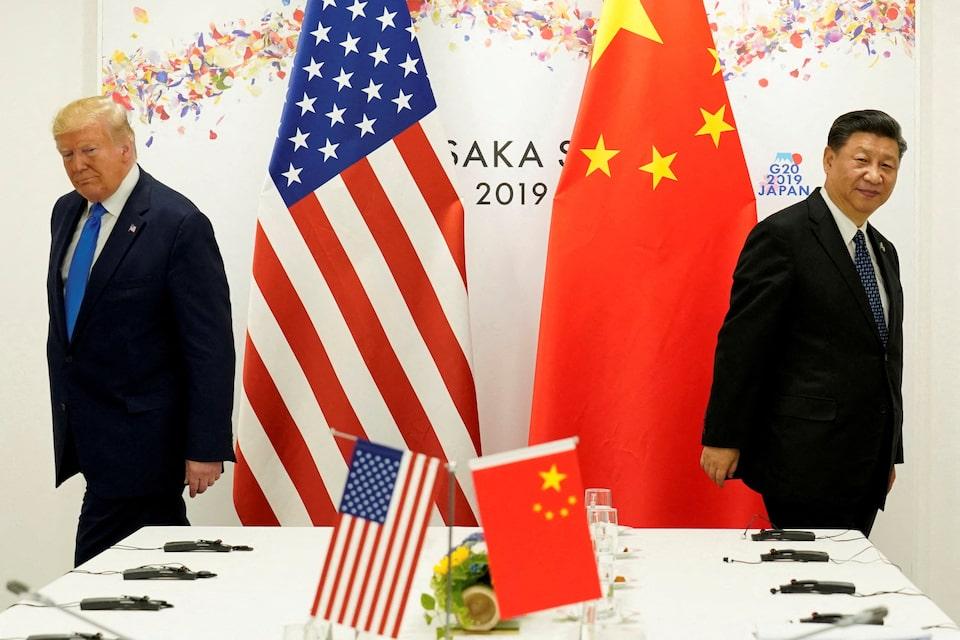
Taiwan could figure in to US-China talks Trade disputes unresolved before Xi-Trump meeting US is Taiwan's most important international backer WASHINGTON, Oct 20 (Reuters) - U.S. President Donald Trump said on Monday he expects to reach a fair trade deal with Chinese President Xi Jinping and downplayed risks of a clash over the issue of Taiwan, even as his top trade negotiator accused Beijing of engaging in "economic coercion." Trump suggested to reporters that China had no designs on invading Taiwan but acknowledged he expected the issue to be on the agenda at a planned meeting with Xi on the sidelines of an economic conference in South Korea next week. Sign up here. Trade tensions between the U.S. and China, the world's two biggest economies, have lingered. Disputes over tariffs, technology and market access remain unresolved days before the meeting. Trump spoke at the start of a meeting with Australian Prime Minister Anthony Albanese where the two signed a critical minerals agreement aimed at countering China. Trump's comments on Taiwan reflect one of the most sensitive issues in U.S.-China relations. Beijing has repeatedly pressed Washington to alter the language it uses when discussing its position on Taiwanese independence. Trump pledged to accelerate deliveries of nuclear submarines to Australia and was asked if U.S. actions in the waters of the Indo-Pacific were a sufficient deterrent to keep Xi from invading Taiwan. "China doesn't want to do that," Trump said, before boasting about the size and strength of the U.S. military. He added: "We have the best of everything and nobody is going to mess with that ... I think we'll end up with a very strong trade deal. Both of us will be happy." But U.S. Trade Representative Jamieson Greer took a tougher line later in the day, warning that the U.S. would respond with unspecified action to what he called a "broader pattern of economic coercion" by Beijing against firms that make strategic investments in critical U.S. industries. Officials in South Korea said last week that China's sanctions on U.S.-linked units of shipbuilder Hanwha Ocean (042660.KS) , opens new tab threatened to impact ambitious plans for shipbuilding cooperation between Seoul and Washington. "Attempts at intimidation will not stop the United States from rebuilding its shipbuilding base and responding appropriately to China's targeting of critical industrial sectors for dominance," Greer said in a statement. TRUMP SAYS TAIWAN COULD COME UP IN CHINA TALKS Asked by a reporter whether the U.S. might adjust its position on Taiwan independence in order to reach a trade deal with China, Trump said, "We're going to be talking about a lot of things. I assume that will be one of them, but I’m not going to talk about it now." Beijing has ramped up a campaign of military and diplomatic pressure on democratically governed Taiwan, which it views as its own territory. China has never renounced the potential use of force to bring Taiwan under its control. The United States is Taiwan's most important international backer and arms supplier despite the lack of formal diplomatic ties. Beijing regularly denounces any shows of support for Taipei from Washington. https://www.reuters.com/business/retail-consumer/trump-says-he-expects-fair-deal-with-china-vows-speedy-deliver-subs-australia-2025-10-20/
2025-10-20 20:20
TSX ends up 1% at 30,416.44, Nine of 10 major sectors notch gains Materials group gains 2.3% as gold rallies Canada offers tariff relief on some products TORONTO, Oct 20 (Reuters) - Canada's main stock index rebounded on Monday, with metal mining shares leading broad-based gains as concerns eased over an escalating global trade war. The S&P/TSX composite index (.GSPTSE) , opens new tab ended up 307.96 points, or 1%, at 30,416.44, after posting declines on Thursday and Friday. Sign up here. Wall Street indexes also rose as investors braced for a wave of corporate earnings. "After last week's volatility, Canadian equities are starting strong, supported by robust corporate results from the U.S. and positive trade developments between the U.S. and China," said Angelo Kourkafas, a senior global investment strategist at Edward Jones. "While near-term challenges persist, the limited market pullback reflects investor optimism for 2026." U.S. President Donald Trump said he expects to reach a fair trade deal with Chinese President Xi Jinping and downplayed risks of a clash between the countries over the issue of Taiwan. Canada offered tariff relief on some steel and aluminum products imported from the United States and China, a government document showed, in an effort to help domestic businesses battered by a trade war on two fronts. The materials group (.GSPTTMT) , opens new tab, which includes fertilizers and metal mining companies, gained 2.3% as the price of gold touched another record high. Shares of copper and gold exploration company NGEx Minerals Ltd (NGEX.TO) , opens new tab added 12.7%. Heavily weighted financials (.SPTTFS) , opens new tab advanced 0.8% and industrials (.GSPTTIN) , opens new tab were up 0.8%. Nine of 10 major sectors ended higher. Consumer staples (.GSPTTCS) , opens new tab was the exception, falling 0.7%. Shares of food and pharmacy retailer Loblaw Companies Limited (L.TO) , opens new tab ended 1.5% lower, snapping an eight-day winning streak. https://www.reuters.com/business/tsx-futures-climb-metal-gains-inflation-data-earnings-focus-2025-10-20/
2025-10-20 20:03
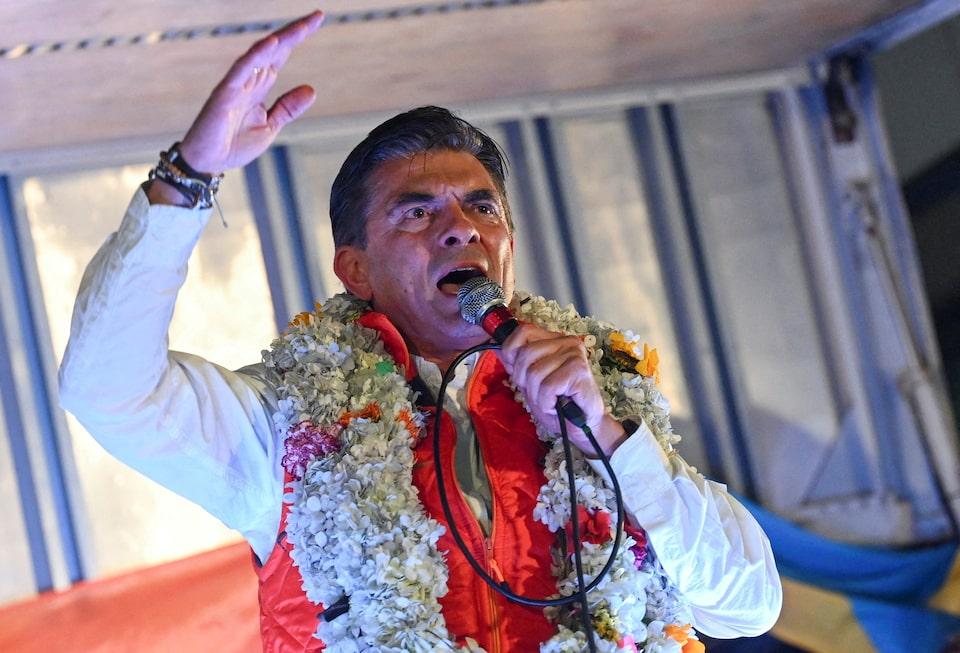
Investors see tough decisions ahead for new President Paz IMF help viewed as vital given current dire state of finances Debt payment crunch looms in March LONDON, Oct 20 (Reuters) - Investors welcomed the Bolivian presidential election win for centrist candidate Rodrigo Paz as markets reopened on Monday, but cautioned he now faces a major challenge fixing the economy, and will likely have to soften his resistance to IMF support. The victory of Paz, a senator from the Christian Democratic Party, in Sunday's run-off vote marked a historic shift for the South American nation, which has been governed almost continuously since 2006 by Bolivia's Movement to Socialism (MAS) party. Sign up here. Paz's moderate platform — pledging to maintain social programmes while boosting private sector-led growth — appeared to resonate with left-leaning voters who would normally vote for MAS, but economists fear it may not be radical enough given the country's plight. Inflation has accelerated to levels not seen since its mid-1980s crisis, the fiscal deficit stands at around 10% of GDP while depleted foreign exchange reserves and diminished gas exports mean the currency now trades at a huge discount to the official rate on the streets. "I don't see much alternative to an IMF programme, but how that comes together is the key question for the market," RBC BlueBay's Graham Stock said, referring to how Paz, 58, had expressed a reluctance during his campaign to deepen engagement with the Fund. Bolivia's bonds rose on Monday according to LSEG data, with the 2028 up 1.4 cents bid at 82 cents on the dollar - still with a yield above 21%. "On debt, I do think Bolivia will restructure," said Brian Seel, senior sovereign analyst at Artisan Partners, adding that estimates made using the official exchange rate widely underestimate the external debt burden. "Given the state of the economy, I think we are looking a multi-year effort to rebuild debt carrying capacity." Paz will take office on November 8. His party does not hold a majority in the legislature, meaning he will be forced to forge alliances to govern effectively, although it will now be dominated by pro-business centrist and right-leaning parties. Jefferies Managing Director Javier Kulesz said in a note it was "a big plus" for Paz, however, that the Congress will now be more ideologically aligned, even if still quite fragmented. The key, however, will be whether the public will accept the measures Paz will now need to prescribe. "Chances are he’ll get the traditional 100-day honeymoon period to push his agenda, but after that, things could get very tough," Kulesz said. Former Socialist president "Evo Morales continues to have his following, potentially becoming a source of political tension and street pressure once the adjustment starts to bite," he added. RESTRUCTURING REQUIRED Analysts at U.S. investment bank Citi said it was more a question of how fast Paz goes to the IMF, rather than if, as some sort of restructuring is now needed. Despite Paz's apparent ruling out of an IMF programme, an IMF official said on Friday that it had talked to both Paz and his election race rival, former president Jorge "Tuto" Quiroga, ahead of the vote. With the economy in disarray and barely enough foreign exchange reserves to cover two months of imports, others have warned the crunch could come in March when Paz's new government will face roughly $380 million worth of debt payments. Markets would favour a "front-loaded fiscal consolidation... alongside a front-loaded exchange rate realignment," analysts at JPMorgan added, saying both were essential to stabilising the economy. "The principal challenges to any adjustment programme arise from Bolivia’s difficult initial conditions and the uncertain level of public support for austerity measures," they said in a note on the election result. https://www.reuters.com/world/americas/investors-see-imf-support-crucial-bolivias-new-president-2025-10-20/