2025-10-20 11:39
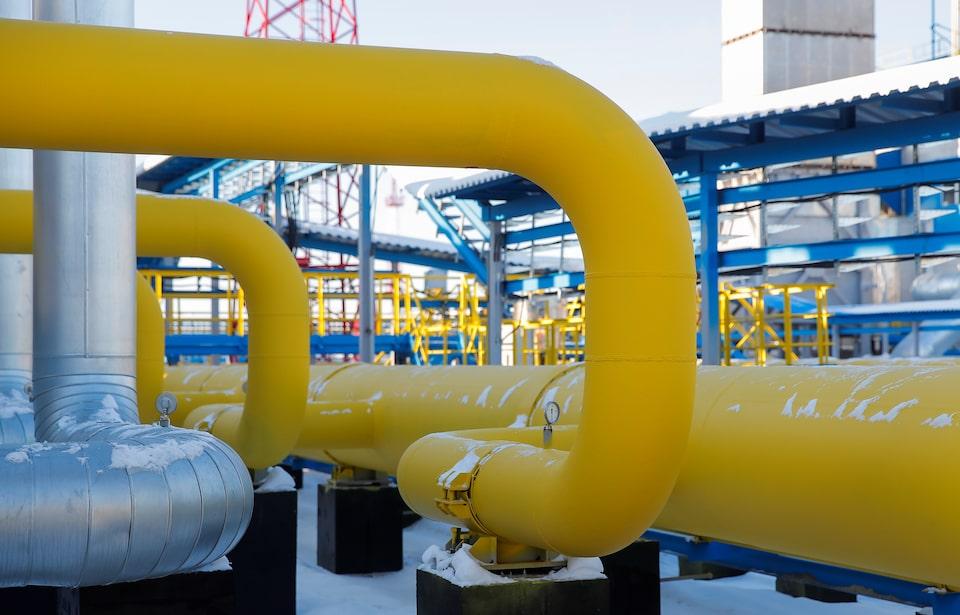
Oct 20 (Reuters) - Evernorth, a new crypto venture backed by digital asset firm Ripple, said on Monday it will list on the Nasdaq through a merger with blank-check firm Armada Acquisition Corp II (AACI.O) , opens new tab and is expected to raise more than $1 billion in proceeds. The digital asset treasury will focus on accumulating XRP, a token linked to Ripple and the fifth-largest cryptocurrency by market cap, according to data from CoinGecko. Sign up here. The move comes months after Wall Street's top regulator ended a high-profile crypto lawsuit, which accused Ripple of selling unregistered securities to institutional investors. Under a crypto-friendly Trump administration, Ripple is looking to scale institutional adoption and presence of the XRP token in capital markets. The deal, expected to close in the first quarter of 2026, will create the largest XRP publicly traded XRP treasury company, Evernorth said. As scores of companies continue to wrap crypto assets into equity, concerns are mounting over the spillover impact of a correction in the equities markets. Earlier this month, crypto assets suffered from their largest selloff ever after U.S. President Donald Trump escalated his trade war with China. "I lost track around how many (asset holding plays) are there around Ethereum," Evernorth CEO Asheesh Birla, a former Ripple executive, told Reuters in an interview. Birla added that he will be stepping down from Ripple's board as he joins Evernorth's. Japanese firm SBI, which was previously affiliated with SoftBank, is providing $200 million of the raise in exchange for equity. "We will look at acquisition opportunities," Birla said, adding that Evernorth will be hiring and building out an investment team as well. The deal also saw participation from Ripple co-founder Chris Larsen and digital asset firms Pantera Capital and Kraken, which have a track record of funding such strategies. https://www.reuters.com/business/ripple-backed-evernorth-set-raise-over-1-billion-us-listing-hoard-xrp-token-2025-10-20/

2025-10-20 11:34
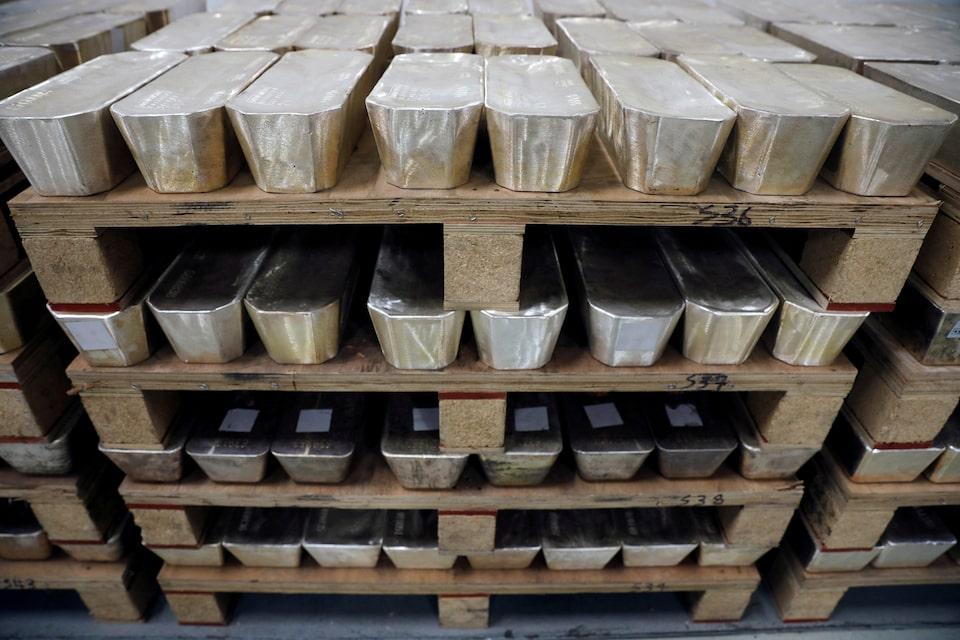
London spot market hit by tight liquidity Lease rates ease, but remain elevated UK competes with India for Chinese silver Spot silver hit a record of $54.5/oz on Friday LONDON, Oct 20 (Reuters) - Large flows of silver from the U.S. and China to London's spot market in the past week are easing a liquidity squeeze in the world's largest over-the-counter precious metals trading hub, traders and analysts said. A shortage of available metal in the London market helped drive silver prices to a premium over U.S. Comex futures a week ago, making deliveries by airplane - usually reserved for much more expensive gold - profitable for sellers. Sign up here. "The major pressure is done for now," said Tai Wong, an independent metals trader. He estimated that around 15 million-20 million troy ounces (311-467 metric tons) of U.S.-based metal had arrived in London over the past week. SILVER PRICES, LONDON BORROWING RATES BOTH HIT RECORD Another source familiar with the matter said at least 1,000 tons of silver had gone into London vaults from the U.S. and China. As tightness in the London market coincided with surging gold prices and strong buying in India, benchmark silver prices hit a record $54.47 per troy ounce on Friday. They were just below $52 on Monday. Meanwhile, short-term silver borrowing rates in London eased by Friday from record highs seen on October 10. London vaults held 24,581 tons of both allocated and unallocated silver, valued at $36.5 billion, as of end-September, the London Bullion Market Association said. According to Morgan Stanley Commodities Strategist Amy Gower, most London inventories are "spoken for" by silver-backed exchange-traded funds. Consultancy Metals Focus estimates that 83% of silver held in London vaults had been allocated to ETFs as of end-September. About 697 tons of silver has left Comex warehouses in the U.S. since stocks there hit a record high of 16,543 tons (531.9 million troy ounces) on October 3. Comex inventories surged earlier this year due to uncertainty over U.S. import tariffs. Further appetite for U.S. stocks outflows depends on the results of a U.S. probe into potential import tariffs on critical minerals, which the market expects this month. UK COMPETES WITH INDIA FOR SUPPLY A China-focused precious metals trader said that about 100-150 tons were on their way out of China, the world's second-largest silver producer after Mexico, as of the last week. Not all the Chinese metal was heading to London, he said, as Britain had to compete with India, the world's biggest consumer, which is also experiencing a shortage of available supply due to its festive season. "Premiums in India have climbed to unprecedented levels, prompting increased air freight," Metals Focus said. Silver inventories in warehouses monitored by the Shanghai Futures Exchange fell 249 tons last week to 920 tons, the lowest since May. That was the largest weekly outflow in 11 years. https://www.reuters.com/world/china/tons-silver-us-china-ease-london-spot-market-squeeze-2025-10-20/
2025-10-20 11:32
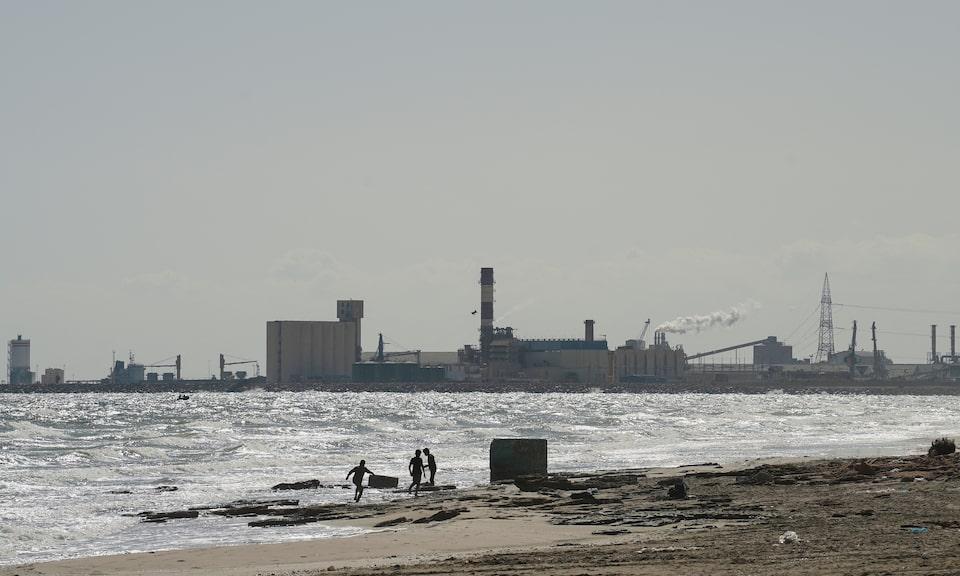
Protests in Gabes a major challenge for President Kais Saied Residents blame spike in cancer, other illnesses on plant emissions Audit seen by Reuters describes environmental 'non-conformities' GABES, Tunisia, Oct 20 (Reuters) - Beneath a smog-choked sky, the once-glistening waters of Gabes in southern Tunisia run dark with rust-coloured streaks. Trees are dying, fish vanishing and a suffocating stench infuses the air. Known a generation ago as an ecological jewel of green oases, today the town is a toxic wasteland rife with cancer, respiratory illness and bone disease. Sign up here. The culprit – residents, environmentalists and officials say – is a phosphates processing plant run by the state-owned Tunisian Chemical Group, or CGT, whose smokestacks loom over rubbish-strewn beaches. This month, anger at the plant exploded into one of President Kais Saied's biggest challenges since he took power in 2019. Police fired tear gas to disperse protesters who stormed the complex, and thousands returned to the streets last Wednesday. Unlike other recent protests, those in Gabes are not demanding civic freedoms but rather an end to conditions they find unbearable. "The plant has poisoned everything – the trees, the sea, the people," Safouan Kbibieh, a local environmental activist, told Reuters during a recent visit. "Even Gabes’ pomegranates now taste like smoke.” Saied has described conditions in Gabes as an "environmental assassination," but blamed a previous government and called on ministries to fix chemical leaks. CGT did not respond to questions sent by Reuters. Tunisia's health ministry could not immediately comment. 'LET US BREATHE' Built a half-century ago, the Gabes complex is Tunisia's biggest phosphates processing plant and accounts for over half of its output. The industry provides vital revenues for a government beset by soaring debt and weak growth. But residents describe a heavy cost. In the towns of Ghannouch and Chott Essalem on the plant's outskirts, it is hard to find families whose lives are not shaped by sickness and loss. Rimel El-Haji, 45, described how her nine-year-old daughter started gasping and walking slower about a month ago, along with dozens of other students apparently affected by toxic emissions. Today the girl relies on her mother to help with even simple movements – the result of neurological damage, Haji said, caused by suffocation. "She can’t walk more than two steps," Haji said. "She’s fading, like a flower under the burning sun." About two kilometers away, Amina Mansour, 53, lives in a modest brick house caked with dust and chemical residue. Inside, her shelves are packed with medicines to treat osteoporosis and the throat cancer she discovered six years ago. "The doctors told me I need to leave this town to survive," she says. "But where would we go? This is our home." She counted six relatives in her family diagnosed with cancer: "This pollution is slowly killing us," she said. Next door, her neighbour Maha Mahmoud clutches an inhaler she calls her "daily bread." "We no longer ask for food or jobs. We want one thing: dismantle the chemical units. Let us breathe," she said. Residents also blame the plant for a collapse of fishing stocks. One fisherman, Sassi Alaya, told Reuters his daily catch used to earn him up to 700 Tunisian dinars ($240) – but he is now lucky to make 20. After more than a quarter-century at sea, he's turned to farming to feed his five children. "The sea was everything — our income and dignity," he said. "Now, it’s a nightmare." 'LIKE A WAR ZONE' A July 2025 expert audit of the plant commissioned by CGT found "serious non-conformities relative to national standards and international requirements," according to a copy seen by Reuters. The complex had dumped 14,000-15,000 tons of phosphogypsum -- a byproduct of processing phosphates -- into the sea and along the coast a day, along with high emissions of ammonia, nitrogen oxides and sulfates, the audit said. The discharges had "greatly damaged marine seagrass beds and led to desertification of large marine areas". Phosphogypsum contains radium, which decays to form radon gas, the website of the U.S. Environmental Protection Agency says, noting that radium and radon are radioactive and can cause cancer. In the United States, the EPA requires that phosphogypsum be managed in engineered piles or stacks to limit public exposure from radon emissions. A lack of studies makes it hard to definitively link the pollution in Gabes to the diseases suffered by residents. But Kraiem Taoufik, a local doctor, confirmed he'd seen illnesses spike as conditions worsened. "The city feels like a war zone," he said. "Where we once saw a few cancer cases quarterly, now they appear daily. Residents live atop a chemical time bomb." Caught between the unrest and flagging state finances, authorities have vowed to rehabilitate the plant. But the plans have done little to soothe activists and residents who say they are at breaking point. "For every ton of phosphate processed, a soul is lost," Kbibieh, the environmental activist, said. "But we won’t abandon our land. We’ll keep fighting until Gabes can breathe again." https://www.reuters.com/sustainability/climate-energy/once-an-idyll-tunisian-protest-hotspot-gabes-now-an-environmental-nightmare-2025-10-20/
2025-10-20 11:14
Oct 20 (Reuters) - Amazon's (AMZN.O) , opens new tab cloud services unit AWS was hit by an outage on Monday that affected major websites and apps globally, the first major internet disruption since last year's CrowdStrike malfunction. Here are some of the biggest tech outages in recent years, in chronological order: Sign up here. BRITISH AIRWAYS IAG-owned (ICAG.L) , opens new tab British Airways was hit by a major computer system failure in May 2017 that stranded 75,000 passengers over a holiday weekend, sparking a public relations disaster and pledges from the carrier that it would do better in future. According to media reports, the blackout was caused by a maintenance contractor who accidentally switched off power. ALPHABET (GOOGL.O) , opens new tab Some of Google's most popular services including YouTube, Gmail and Google Drive were down for an hour during an outage on December 14, 2020. According to outage monitoring website DownDetector, more than 12,000 YouTube users were affected in various parts of the world, including the United States, Britain and India. FASTLY (FSLY.N) , opens new tab In June 2021, thousands of government, news and social media websites across the globe were hit by a widespread hour-long outage linked to U.S.-based cloud company Fastly. The issue affected several high traffic sites including Reddit, Amazon, CNN, PayPal, Spotify, Al Jazeera Media Network and the New York Times with outages ranging from a few minutes to around an hour. AKAMAI (AKAM.O) , opens new tab Websites of dozens of financial institutions and airlines in Australia and the United States were briefly down on June 17, 2021, due to server-related glitches at content delivery network provider Akamai. According to the firm, the problem was caused by a bug in its software. META (META.O) , opens new tab Meta-owned social media platforms Facebook, WhatsApp and Instagram went dark for six hours on October 4, 2021, with 10.6 million users reporting problems worldwide. The company said the outage was caused by a faulty configuration change. X Corp Social media platform Twitter suffered a major outage on December 28, 2022, leaving tens of thousands of users globally unable to access the popular social media platform or use its key features for several hours before services appeared to come back online. Downdetector tracked more than 10,000 affected users from the United States, about 2,500 from Japan and about 2,500 from the UK at the peak of the disruption. CROWDSTRIKE (CRWD.O) , opens new tab A software update by global cybersecurity firm CrowdStrike triggered systems problems for Microsoft customers that resulted in hours-long global computer systems outages on July 19, 2024. Services from airlines to healthcare, shipping and finance were impacted globally. After the outage was resolved, companies were left dealing with backlogs of delayed and canceled flights and medical appointments, missed orders and other issues that took days to solve. AWS Amazon's cloud services unit was hit by an outage on October 20, 2025, disrupting operations across multiple industries around the world and taking down several popular apps including Fortnite and Snapchat (SNAP.N) , opens new tab. AWS said in a 0711 GMT update on its website that it was seeing increased "error rates and latencies" for multiple services. In a later update, it said the underlying issue was fully mitigated and most of its operations were working normally. https://www.reuters.com/technology/major-tech-outages-recent-years-2024-07-19/

2025-10-20 11:13
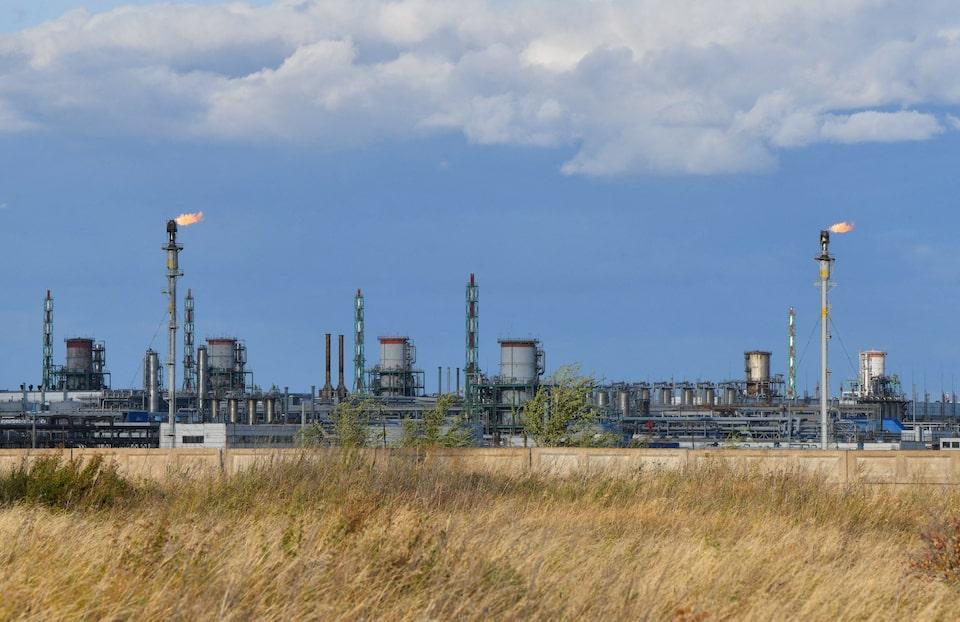
MOSCOW, Oct 20 (Reuters) - A Ukrainian drone attack on Russia's Orenburg gas plant has forced neighbouring Kazakhstan to reduce production at its Karachaganak oil and gas condensate field by 25% to 30%, two industry sources told Reuters on Monday. One of the world's largest gas processing plants, Orenburg was forced to suspend its intake of gas from Kazakhstan after the attack, Kazakhstan's energy ministry said on Sunday. Sign up here. Ukraine confirmed it hit a gas plant in the Orenburg region, some 1,700 kilometres (1,060 miles) east of the Russian border with Ukraine, and an oil refinery in the Samara region. Kyiv has stepped up its attacks on Russian refineries and other energy facilities since August to try to disrupt fuel supplies and deprive Moscow of funding. Output at Karachaganak on Monday was down to between 25,000 and 28,000 metric tons from the usual level of 35,000-35,500, according to two sources who spoke on condition of anonymity due to the sensitivity of the situation. They said Orenburg, which is controlled by gas producer Gazprom (GAZP.MM) , opens new tab, might resume some gas intake from Karachaganak on Monday, however they declined to say when normal levels of supply would be restored. Karachaganak produced around 263,000 barrels of oil per day in 2024. It is exported by the Caspian Pipeline Consortium via a Russian Black Sea terminal, as well as through Russia's Druzhba pipeline to Germany. The field is operated by a consortium which includes U.S. major Chevron (CVX.N) , opens new tab (18%) and European energy firms Shell (SHEL.L) , opens new tab (29.25%) and Eni (ENI.MI) , opens new tab (29.25%). Russia's Lukoil (LKOH.MM) , opens new tab (13.5%) and local firm KazMunayGaz (KMGZ.KZ) , opens new tab (10%) also hold stakes. The consortium, Gazprom, and Kazakhstan's energy ministry did not reply to requests for comment. https://www.reuters.com/business/energy/ukraine-drone-attack-russian-gas-plant-hits-kazakh-output-sources-say-2025-10-20/
2025-10-20 11:11
BRUSSELS, Oct 20 (Reuters) - EU energy ministers on Monday backed a proposal to phase out Russian oil and gas imports to the bloc by January 2028, the Council of the European Union said. The ministers approved the plans, which would phase out new Russian gas import contracts from January 2026, existing short-term contracts from June 2026, and long-term contracts in January 2028, at a meeting in Luxembourg. Sign up here. The law is not yet final. EU countries must negotiate the final rules with the European Parliament, which is still debating its position. The EU wants to phase out Russian energy imports to deprive the Kremlin of revenues to fund its war in Ukraine. Russia currently accounts for 12% of EU gas imports, down from 45% before its 2022 invasion of Ukraine, with Hungary, France and Belgium among the countries still receiving Russian gas. The European Commission designed the proposals to be able to pass despite past opposition from Hungary and Slovakia, the two countries that still import Russian oil. It needed backing from a "qualified majority" of EU member states - meaning at least 55% - so one or two nations alone could not block it. The text approved on Monday allowed specific flexibilities for landlocked member states, which include Hungary and Slovakia. Slovak Prime Minister Robert Fico defended his resistance to the gas and oil import phaseout and sanctions against Russia, which need EU unanimity. Slovakia held up the last sanctions package over demands connected to the planned phase-out of Russian energy imports. Separately, the EU is negotiating a new package of sanctions against Russia that would ban LNG imports one year earlier, from January 2027. The EU's Foreign Policy Chief Kaja Kallas said earlier on Monday the new sanctions package could be approved as early as this week. (This story has been corrected to clarify the reason for Slovakia blocking previous sanctions package in paragraph 10) https://www.reuters.com/sustainability/climate-energy/eu-agrees-gradually-end-russian-gas-imports-by-january-1-2028-2025-10-20/