2025-10-20 05:58
Trump keeps up pressure on India to stop buying Russian oil U.S.-India trade talks 'congenial', Indian official says ABOARD AIR FORCE ONE, Oct 19 (Reuters) - U.S. President Donald Trump reiterated on Sunday that Indian Prime Minister Narendra Modi told him India will stop buying Russian oil, while warning that New Delhi would continue paying "massive" tariffs if it did not do so. "I spoke with Prime Minister Modi of India, and he said he's not going to be doing the Russian oil thing," Trump told reporters aboard Air Force One. Sign up here. Asked about India's assertion that it was not aware of any conversation between Modi and Trump, Trump replied: "But if they want to say that, then they'll just continue to pay massive tariffs, and they don't want to do that." Russian oil has been one of the main irritants for Trump in prolonged trade talks with India - half of his 50% tariffs on Indian goods are in retaliation for those purchases. The U.S. government has said petroleum revenue funds Russia’s war in Ukraine. India has become the biggest buyer of seaborne Russian oil sold at a discount after Western nations shunned purchases and imposed sanctions on Moscow for its 2022 invasion of Ukraine. Trade talks between India and the U.S. are going on in a "congenial" manner, an Indian government official said on Saturday, declining to be identified due to the sensitivity of talks. An Indian delegation which was in the U.S. last week for talks has returned, the official said, declining to share further details. An email to India's trade ministry was not immediately answered on Monday, which was a public holiday. Trump on Wednesday said Modi had assured him that day that India would stop its Russian oil purchases. India's foreign ministry said it was not aware of any telephone conversation between the leaders that day, but said that New Delhi's main concern was to "safeguard the interests of the Indian consumer." A White House official said on Thursday that India has halved its purchases of Russian oil, but Indian sources said no immediate reduction had been seen. The sources said Indian refiners already placed orders for November loading, including some slated for December arrival, so any cut may start showing up in December or January import numbers. India's imports of Russian oil are set to rise about 20% this month to 1.9 million barrels per day, according to estimates from commodities data firm Kpler, as Russia ramps up exports after Ukrainian drones hit its refineries. https://www.reuters.com/world/india/trump-vows-keep-massive-tariffs-india-until-russian-oil-imports-cease-2025-10-20/

2025-10-20 05:32
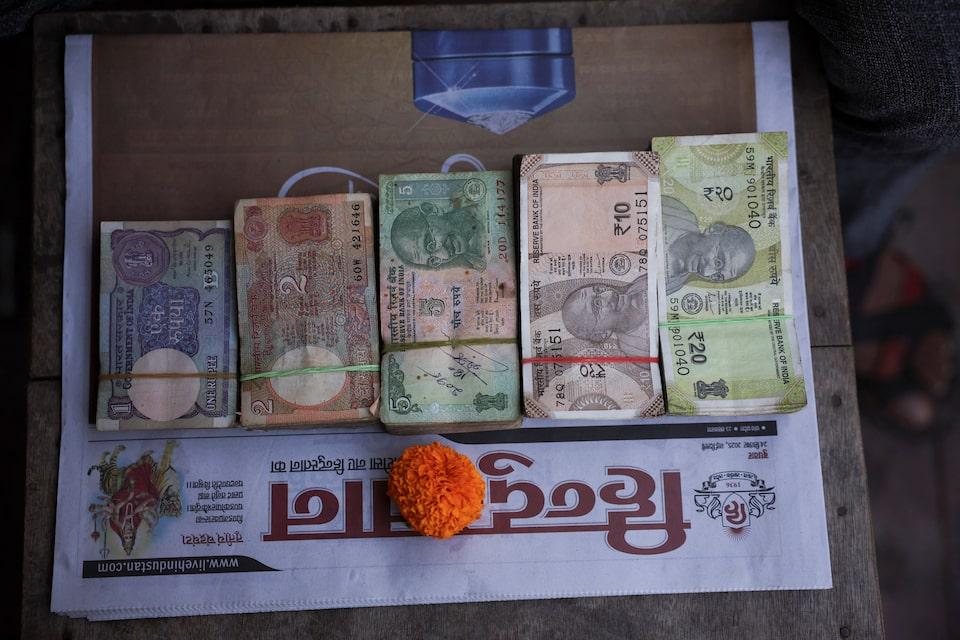
MUMBAI, Oct 20 (Reuters) - The Indian rupee trimmed most of its intraday gains but still ended higher on Monday, with traders citing likely intervention by the Reserve Bank of India through state-run banks to support the currency near the 88/dollar level. The currency opened marginally higher at 87.9350 to the U.S. dollar, up from 87.9750 on Friday. It advanced in early trade to touch the day's high of 87.7475. Sign up here. Traders said the rupee rose with support from state-run banks, likely acting on behalf of the Reserve Bank of India, adding that the unit strengthened after these banks stepped in early and the momentum continued once their dollar sales slowed, before the currency settled at 87.9275. "Once there was clarity that the central bank had become less active, importers took over, which led to a 20-paisa move," a senior trader with a state-run bank said. The RBI had stepped in aggressively last week, conducting pre-market interventions on at least two occasions to stem the rupee's slide past record lows. Dollar sales from the central bank triggered a pullback in USD/INR, flushing out speculative long positions and improving the near-term outlook for the local currency. Equity flows have also turned supportive, with overseas investors buying a net of more than $1 billion over the past week. "The rupee commenced the week on a front footing, buoyed by the resilience of risk assets augmented by foreign fund inflows and the gain was further accelerated by the backdrop of a holiday-truncated week," said Dilip Parmar, a foreign exchange research analyst at HDFC Securities. The discernible, yet susceptible, intervention by the central bank also helped, he added. Meanwhile, the market showed little reaction to U.S. President Donald Trump’s comments, in which he reiterated that India would face "massive" tariffs if it failed to comply. https://www.reuters.com/world/india/rupee-enters-new-week-balancing-rbi-boost-importer-demand-lacklustre-asia-2025-10-20/
2025-10-20 05:32
US CPI data due on Friday Spot gold hit all-time high of $4,378.69/oz last week US government shutdown enters its 20th day Oct 20 (Reuters) - Gold prices rose by over 2% on Monday, buoyed by expectations of further U.S. interest rate cuts and sustained safe-haven demand, as investors awaited upcoming U.S.-China trade talks and inflation data out of the U.S. this week. Spot gold was up 2.3% at $4,346.39 per ounce, as of 1:47 p.m. ET (1746 GMT). U.S. gold futures for December delivery settled 3.5% higher at $4,359.40 per ounce. Sign up here. Gold prices notched a record high of $4,378.69 on Friday, but closed 1.8% lower — their steepest drop since mid-May — after comments from U.S. President Donald Trump alleviated some concerns around U.S.-China trade tensions. Political and economic concerns are driving prices higher after Friday's sharp sell-off, said CPM Group managing partner Jeffrey Christian. "Our expectation is that the price is going to rise higher over the next several weeks and several months, and we wouldn't be surprised at $4,500/oz soon," he added. The U.S. government shutdown stretched to its 20th day on Monday, after senators failed for the tenth time last week to break the impasse. The shutdown has also delayed key economic data releases, leaving investors and policymakers in a data vacuum ahead of the Federal Reserve's policy meeting next week. U.S. consumer price index data, delayed due to the shutdown, is scheduled for Friday. Meanwhile, traders are pricing in a 99% chance that the Federal Reserve will cut interest rates next week, with another cut in December. Gold, a non-yielding asset, tends to do well in low-interest rate environments. Investors are also looking out for further updates on U.S.-China trade talks, after Trump said on Friday that a planned meeting with Chinese President Xi Jinping would go ahead. "I would not be surprised to see gold get to $5,000/oz at some point next year. That would be predicated on ongoing political problems and worsening political problems, which is actually what we have right now," Christian said. Spot silver rose 0.6% to $52.17 per ounce. The metal fell 4.4% on Friday, after hitting a record high of $54.47 earlier that day. Elsewhere, platinum rose 1.9% to $1,640.90 per ounce and palladium gained 1.5% to $1,496.59 per ounce. https://www.reuters.com/world/china/gold-ticks-up-us-rate-cut-hopes-us-china-trade-talks-focus-2025-10-20/

2025-10-20 05:20
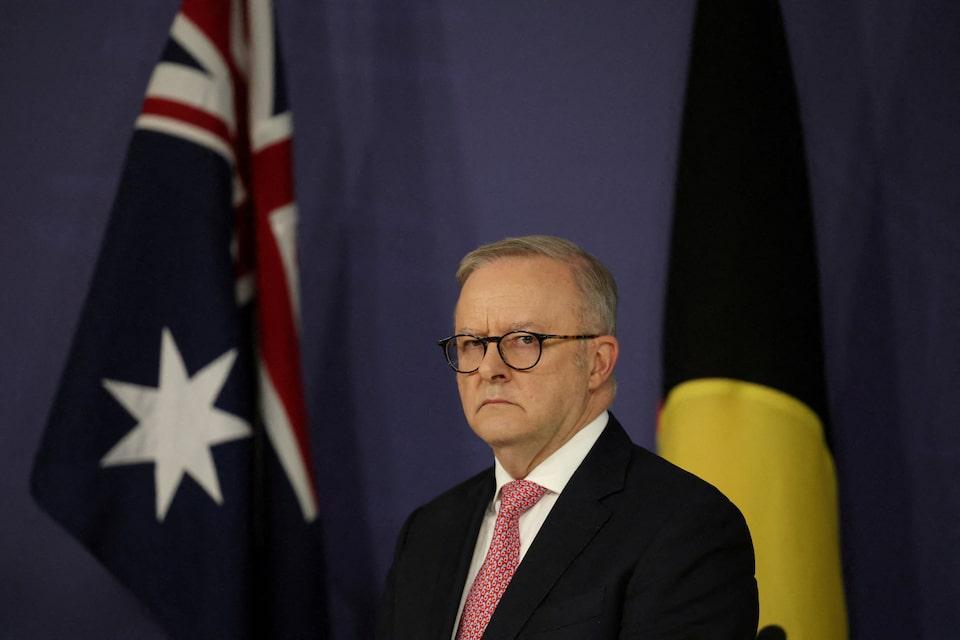
Rare earths deal aims to counter China's supply control US, Australia to invest $1 billion each in mining projects Trump backs AUKUS submarine deal despite prior review Trump tells Ambassador Rudd: 'I don't like you either' WASHINGTON, Oct 20 (Reuters) - U.S. President Donald Trump and Australian Prime Minister Anthony Albanese signed a critical minerals agreement aimed at countering China on Monday at a meeting marked by Trump's jab at Australia's envoy to the United States over past criticism. China loomed large at the first White House summit between Trump and Albanese, with the U.S. president also backing a strategic nuclear-powered submarine deal with Australia to bolster security in the Indo-Pacific. Sign up here. While Trump and Albanese greeted each other warmly, the U.S. president expressed ire about past criticism of him by Australia's U.S. ambassador Kevin Rudd, a former prime minister. Rudd in 2020 called Trump "the most destructive president in history," later deleting the comment from social media. Trump said he was not aware of the critical comments and asked where the envoy was now. Upon seeing him across the table, Trump said, "I don't like you either, and I probably never will." The visit otherwise appeared to go smoothly, with Albanese and Trump signing a minerals deal that Trump said had been negotiated in recent months. Albanese described it as an $8.5 billion pipeline "that we have ready to go." A copy of the agreement released by both governments said the two countries will each invest $1 billion over the next six months into mining and processing projects as well as set a minimum price floor for critical minerals, a move that Western miners have long sought. A White House statement on the agreement added that the investments would target deposits of critical minerals worth $53 billion, although it did not provide details on which types or locations. "In about a year from now, we'll have so much critical mineral and rare earths that you won't know what to do with them," Trump told reporters. China's foreign ministry did not comment directly on the deal but said on Tuesday that market and business choices form the global production and supply chain. "Key mineral resource countries should play an active role in ensuring the safety and stability of the industrial and supply chain, and ensure normal economic and trade cooperation," ministry spokesperson Guo Jiakun told a regular news briefing. EXIM ANNOUNCES OVER $2.2 BILLION IN INVESTMENTS The U.S. Export-Import Bank, which acts as the U.S. government's export credit agency, later announced seven letters of interest totaling more than $2.2 billion to advance critical minerals projects in Australia. It said the letters went to Arafura Rare Earths (ARU.AX) , opens new tab, Northern Minerals (NTU.AX) , opens new tab, Graphinex, Latrobe Magnesium (LMG.AX) , opens new tab, VHM (VHM.AX) , opens new tab, RZ Resources (RRZ.AX) , opens new tab, and Sunrise Energy Metals (SRL.AX) , opens new tab. EXIM said the projects span a range of critical minerals essential to advanced defense systems, aerospace components, communications equipment, and next-generation industrial technologies. The investments would help support the re-industrialization of America’s high-tech manufacturing base, while helping to "counter China's export dominance and ensure Western supply-chain resilience," it said. Additionally, the Pentagon plans to build a gallium refinery in Western Australia. China blocked gallium exports to the United States last December. The United States has been looking to boost its access to critical minerals around the world as China takes steps to strengthen control over global supply. Trade tensions between the United States and China have escalated ahead of Trump's meeting with Chinese President Xi Jinping in South Korea next week. The term critical minerals applies to a range of minerals, including rare earths, lithium and nickel. China has the world's largest rare earths reserves, according to U.S. Geological Survey data, but Australia also has significant reserves. The minerals are used for products ranging from electric vehicles to aircraft engines and military radars. TRUMP SIGNALS SUPPORT FOR SUBMARINE DEAL Albanese got welcome support from Trump for the A$368 billion ($239.46 billion) AUKUS agreement, reached in 2023 under then-President Joe Biden. Under the deal, Australia is to buy U.S. nuclear-powered submarines in 2032 before building a new submarine class with Britain. While Trump has been eager to roll back Biden-era policies, he signaled his intent to back the AUKUS submarine agreement, months after his team launched a review of the deal over concerns about the ability of the United States to meet its own submarine needs. Navy Secretary John Phelan told the meeting the United States and Australia were working closely to improve the original AUKUS framework for all three parties "and clarify some of the ambiguity that was in the prior agreement." Trump said these were "just minor details," adding that "there shouldn't be any more clarifications, because we're just - we're just going now full steam ahead, building." Ahead of Monday's meeting, Australian officials emphasized that their country is paying its way under AUKUS, contributing $2 billion this year to boost production rates at U.S. submarine shipyards, and preparing to maintain U.S. Virginia-class submarines at its Indian Ocean naval base from 2027. The delay of 10 months in an official meeting since Trump took office had caused some anxiety in Australia as the Pentagon urged the Australian government to increase defense spending. The two leaders met briefly on the sidelines of the United Nations General Assembly in New York last month. The rare earths agreement came a week after U.S. officials condemned China's expansion of rare earth export controls as a threat to global supply chains. Resource-rich Australia, wanting to extract and process rare earths, put preferential access to its strategic reserve on the table in U.S. trade negotiations in April. As part of the rare earths agreement, Trump and Albanese agreed to cut permitting for mines, processing facilities and related operations in order to boost production. The deal called for cooperation on the mapping of geological resources, minerals recycling and efforts to stop the sale of critical minerals assets "on national security grounds." This was an oblique reference to China, which has bought major mining assets across the planet in the past decade, including the world's largest cobalt mine in Congo, from U.S.-based Freeport-McMoRan (FCX.N) , opens new tab in 2016. $1 = 1.5368 Australian dollars) https://www.reuters.com/world/asia-pacific/australias-albanese-discuss-rare-earths-security-first-trump-summit-2025-10-20/
2025-10-20 04:46
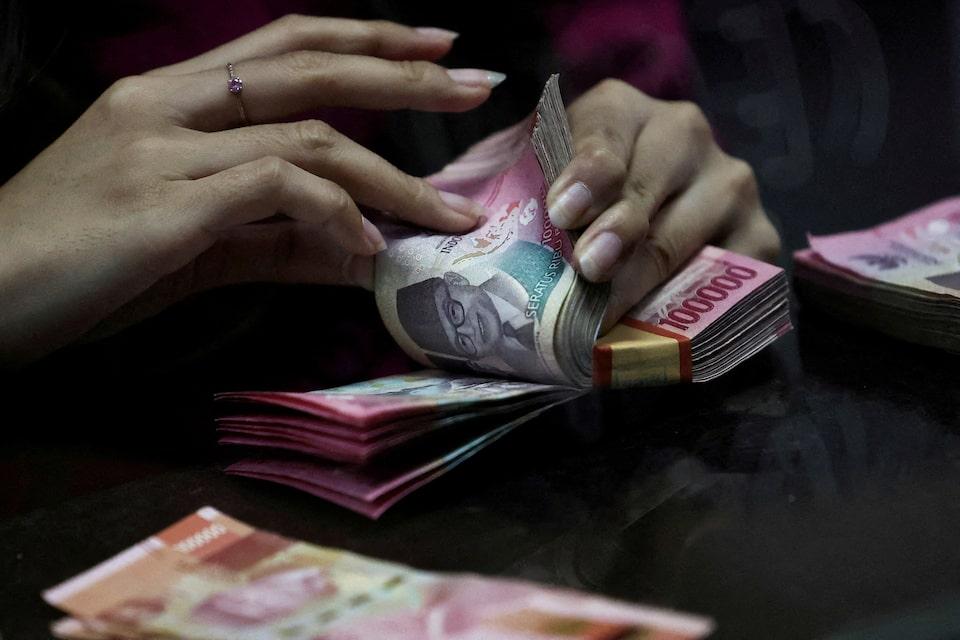
21 of 28 economists expect BI to cut by 25 basis points to 4.50% BENGALURU, Oct 20 (Reuters) - Bank Indonesia (BI) will cut its key interest rate at its fourth consecutive meeting on Wednesday, taking it to 4.50%, as policymakers put greater weight on supporting economic growth despite continued weakness in the rupiah, a Reuters poll of economists showed. Last month, the central bank surprised markets with a rate cut and Governor Perry Warjiyo said it was going "all out" to bolster growth while maintaining financial market stability. Sign up here. The rupiah has regained some ground in the last few weeks due to currency market intervention but is about 3% weaker this year. The central bank is mandated to keep the currency stable. Although second-quarter economic growth exceeded expectations, several economists warned domestic demand is losing momentum. Combined with inflation at 2.65% - within the central bank's 1.5% to 3.5% target range - that has strengthened expectations for another rate cut this week. A majority of economists, or 21 of 28, in the Reuters poll expect BI to lower its benchmark seven-day reverse repurchase rate (IDCBRR=ECI) , opens new tab by 25 basis points to 4.50% on October 22. The rest saw no change from 4.75%. The survey, conducted October 13-20, also showed expectations the overnight deposit and lending facility rates would be trimmed by 25 basis points to 3.50% and 5.25%, respectively, based on a smaller sample. "Officials are placing more weight on concerns about growth," said Jason Tuvey, deputy chief emerging markets economist at Capital Economics. "Low-profile data suggest the economy is losing momentum. Vehicle sales have fallen in recent months, consumer confidence has weakened, and export growth has slowed. Growth concerns alongside the recent appreciation of the rupiah mean we expect BI to deliver a 25 basis point interest rate cut." Median forecasts showed the key policy rate will end the year 50 basis points lower at 4.25% and remain at that level through 2026. "We're expecting a slightly, but not significantly, higher tolerance of rupiah weakness in favor of further monetary easing. While real interbank rates have already come off, there's probably still some more room to move lower," said Adam Ahmad Samdin, an economist at Oxford Economics. While further easing appears likely, economists expressed concern about the central bank's independence following a recent burden-sharing agreement and a draft bill that would increase parliament's role in assessing BI's performance. "If policy easing continues and turns out to be more aggressive than analysts are expecting, that would inevitably raise fears officials are bowing to political pressure," Capital Economics' Tuvey said. "Over time, it would run the risk of the economy overheating, leading to rising inflation, higher risk premia on Indonesian assets and weaker long-term growth." The poll showed Indonesia's economy was expected to expand by about 5% in 2025 and the following two years, which is well below President Prabowo Subianto's ambitious 8% target but broadly consistent with recent trends. Inflation was forecast to average 1.8% this year and rise to around 2.5% in 2026 and 2027. (Other stories from the October Reuters global economic poll) https://www.reuters.com/world/asia-pacific/bank-indonesia-set-cut-rates-again-growth-trumps-rupiah-concerns-2025-10-20/
2025-10-20 04:41
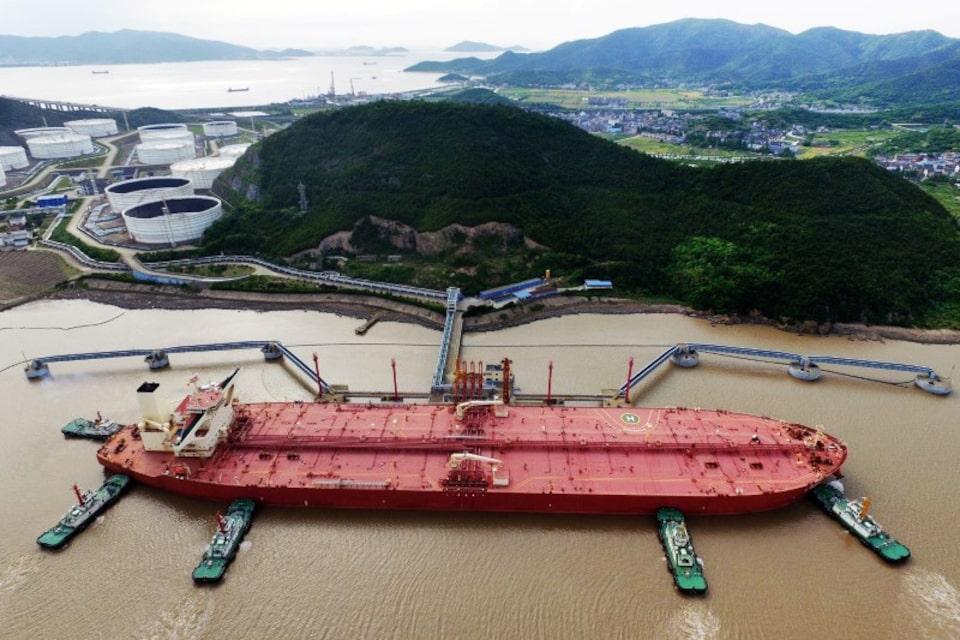
LAUNCESTON, Australia, Oct 20 (Reuters) - China's crude oil stockpile flows dropped sharply in September as lower imports and higher refinery processing cut the surplus that was available for storage. China's surplus of crude stood at 570,000 barrels per day (bpd) in September, down from 1.01 million bpd in August, according to calculations based on official data. Sign up here. The decline in crude imports and the increase in refinery throughput are an example of how China smoothes out the volatility in oil prices. Imports dropped in September to 11.5 million bpd, the lowest level since January, as refiners trimmed purchases after prices surged in June during the brief military conflict between Israel and Iran. Cargoes arriving in September would largely have been arranged at a time when crude prices were elevated, with benchmark Brent futures hitting a six-month high of $81.40 a barrel on June 23. China does not disclose the volumes of crude flowing into or out of its strategic and commercial stockpiles, but an estimate can be made by deducting the amount of oil processed from the total crude available from imports and domestic output. September's domestic oil output was 4.32 million bpd, according to official data released on Monday, giving a total available to refiners from imports and local production of 15.82 million bpd. Refiners processed 15.25 million bpd in September, up from 14.94 million bpd in August, according to data from the National Bureau of Statistics. This means that there was a surplus of 570,000 bpd of crude in September. It is worth noting that not all of the surplus crude was likely to have been added to storage, with some being processed in plants not captured by the official data. But even allowing for gaps in the official data, it is clear that from March onwards, China was importing crude at a far higher rate than it needed to meet domestic fuel demand. For the first nine months of the year, the average volume of surplus crude in China was 930,000 bpd, with the lower surplus in September causing the year-to-date number to drop from 990,000 bpd for the eight months to August. The surplus has been built up after refiners made a rare draw on inventories in January and February, when processing rates exceeded available crude by about 30,000 bpd. This was the first time since September 2023 that throughput exceeded the amount of crude from imports and domestic output. The draw on inventories at the start of 2025 came amid rising oil prices, with Brent futures reaching their highest point so far this year of $82.63 a barrel on January 15, having risen steadily from levels around $70 in early December. MORE STORAGE FLOWS The question for the market is whether China will accelerate its crude stockpiling in light of the declining trend in oil prices. Brent crude dropped to a six-month low of $60.14 a barrel on October 17 and was trading at $61.12 in Asia on Monday. That price is likely low enough to encourage Chinese refiners to continue building their inventories. But there are other factors at work, including mounting pressure on China and India to substantially reduce the volume of Russian crude oil they buy as part of Western efforts to put pressure on Moscow to negotiate an end to the war in Ukraine. It is likely that China could source sufficient crude to keep stockpiling from other suppliers even if it does trim imports from Russia. Prices will be key to what happens next. If oil prices remain in the current downtrend as the eight members of OPEC+ end the bulk of their voluntary production cuts, then history suggests Chinese refiners will move to absorb most of any available surplus. Enjoying this column? Check out Reuters Open Interest (ROI), your essential new source for global financial commentary. ROI delivers thought-provoking, data-driven analysis of everything from swap rates to soybeans. Markets are moving faster than ever. ROI can help you keep up. Follow ROI on LinkedIn , opens new tab and X , opens new tab. The views expressed here are those of the author, a columnist for Reuters. https://www.reuters.com/markets/commodities/chinas-crude-oil-storage-flows-slump-september-2025-10-20/