2025-10-20 04:37
Oct 20 (Reuters) - A look at the day ahead in European and global markets from Wayne Cole. The Takaichi trade has been in full swing since the Liberal Democratic Party did a deal with the Japan Innovation Party to form a coalition government, bringing Japan closer to its first female prime minister. Sign up here. Analysts assume Sanae Takaichi would be pro-stimulus and against further hikes in interest rates, a negative for the yen and bonds but a plus for equities. The Nikkei duly jumped 2.9% to an all-time high, while the yen slipped modestly. Even ultra-long JGBs caught a bid, perhaps on relief there would actually be a government, albeit a minority one. JAPAN BUTTRESSES ASIA MARKETS AFTER MIXED CHINA DATA The jump in the Nikkei helped lead most of Asia higher, with markets successfully navigating a slate of mixed Chinese economic news. The giant economy topped forecasts by growing 1.1% in the third quarter versus three months prior, while the annual pace slowed as expected to 4.8%. Industrial output also beat forecasts, while retail sales were bang in line and home prices remained weak. On face value, the data were solid enough to give China confidence it can outlast the United States in a trade war, with President Trump conceding 100% tariffs were unsustainable. Top Chinese policymakers convene this week to discuss the Five-Year Plan, though investors have long given up on expecting aggressive stimulus. Analysts were also not quite sure what to make of news that China's top trade negotiator Li Chenggang had been removed from his post as the country's permanent representative at the World Trade Organization. US WORKS TO DELIVER DATA AMID GOVERNMENT SHUTDOWN In the U.S., there is no end in sight to the government shutdown and the longer it drags on the more impact it will have on economic growth, even if markets seem complacent about it right now. The statistics bureau is making a special effort to get the CPI out on Friday since it is needed for all sorts of indexing, including for TIPS. An acceleration in core inflation to 3.1% is widely expected and shouldn't move the dial on rate cut expectations given the Federal Reserve has not pushed back on a near 100% probability for a move this month. On the corporate side, companies reporting earnings this week include Tesla (TSLA.O) , opens new tab, Ford (F.N) , opens new tab, GM (GM.N) , opens new tab, Netflix (NFLX.O) , opens new tab, Procter & Gamble (PG.N) , opens new tab and Coca-Cola (KO.N) , opens new tab, along with aerospace and defence giant RTX (RTX.N) , opens new tab and tech stalwarts IBM (IBM.N) , opens new tab and Intel (INTC.O) , opens new tab. The bar is high and markets have a habit of punishing results that don't knock the lights out. Options suggest average share loss of around 6% on the smallest disappointment. BofA is tipping earnings growth of 11%, led by a 20% rise in the tech sector and Nvidia (NVDA.O) , opens new tab alone driving a quarter of growth in total earnings per share. Key developments that could influence markets on Monday: https://www.reuters.com/world/china/global-markets-view-europe-2025-10-20/

2025-10-20 03:27
U.S. soybean imports to China drop to zero amid trade tensions Brazil dominates China's soybean imports with 85.2% share Trade talks between U.S. and China show signs of progress BEIJING, Oct 20 (Reuters) - China imported no soybeans from the U.S. in September, the first time since November 2018 that shipments fell to zero, while South American shipments surged from a year earlier, as buyers shunned American cargoes during the ongoing trade dispute between the world's two largest economies. Imports last month from the U.S. fell to zero from 1.7 million metric tons a year earlier, data from China's General Administration of Customs showed on Monday. Sign up here. Shipments fell because of the high tariffs China has imposed on U.S. imports and as previously harvested U.S. supplies, known as old-crop beans, have already been traded. China is the world's biggest soybean importer. "This is mainly due to tariffs. In a typical year, some old-crop beans would still enter the market," said Wan Chengzhi, an analyst at Capital Jingdu Futures. Brazil arrivals last month jumped 29.9% year-on-year to 10.96 million tons, accounting for 85.2% of China's total imports of the oilseed, customs data showed, while shipments from Argentina rose 91.5% to 1.17 million tons, or 9% of the total. China's soybean imports reached 12.87 million metric tons in September, the second-highest level on record. China has not purchased any U.S. soybean cargoes from this autumn's harvest. The window for U.S. soybean purchases is rapidly closing as buyers secure shipments through November, largely from Brazil and Argentina, helped by Argentina's brief tax holiday. Without a breakthrough in trade talks, U.S. farmers could face billions in losses as Chinese crushers continue sourcing from South America. Beijing, however, may also face a potential supply crunch early next year before Brazil's new crops hit the market. "A soybean supply gap may emerge in China between February and April next year if there's no trade deal in place. Brazil has already shipped a huge volume, and no one knows how much old-crop stock remains," said Johnny Xiang, founder of Beijing-based AgRadar Consulting. Trade negotiations between Beijing and Washington appear to be regaining momentum after weeks of fresh tariff threats and export controls. U.S. President Donald Trump said on Sunday he believed a soybean deal would be reached. For the January-September period, China imported 63.7 million tons from Brazil, up 2.4% year-on-year, and 2.9 million tons from Argentina, up 31.8% year-on-year. Even as Chinese buyers are shunning this year's U.S. harvest, purchases earlier in 2025 mean that year-to-date imports of American beans have totalled 16.8 million tons, up 15.5%, data showed. https://www.reuters.com/world/china/china-imports-no-us-soybeans-september-first-time-seven-years-2025-10-20/

2025-10-20 01:34
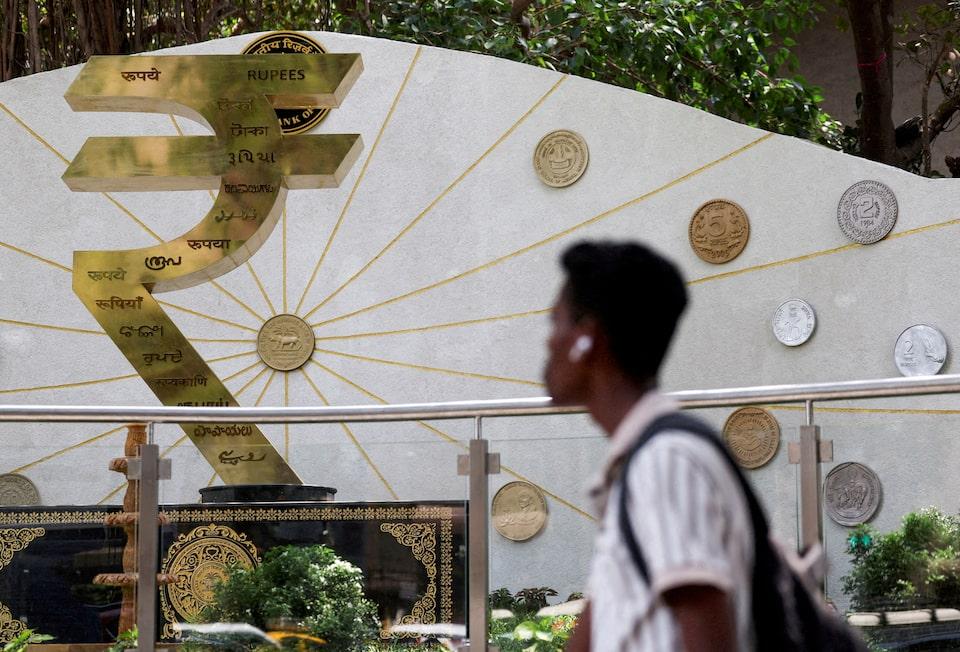
MUMBAI, Oct 20 (Reuters) - Indian rupee traders will focus on the Reserve Bank of India in the holiday-truncated week following its heavy-handed support for the currency, and on potential updates on trade talks with the U.S., while bond yields will hold a tight range. India's debt and foreign exchange markets are shut for local holidays on Tuesday and Wednesday. Sign up here. The RBI's surprise heavy dollar sales last week helped the rupee post its best weekly performance in nearly four months. The rupee was further buoyed by U.S. President Donald Trump's comment that Indian Prime Minister Narendra Modi promised to halt Russia crude imports. The Indian government has not yet confirmed the pledge. India's continued purchases of discounted Russian crude have long been a point of friction with Washington and are a reason Indian goods face tariffs of 50%, among the highest levied by the United States. If the trade narrative turns positive, it adds another tailwind for the rupee, said Kunal Kurani, assistant vice president at FX advisory firm Mecklai Financial. Meanwhile, India's 10-year benchmark 6.33% 2035 bond yield settled at 6.5131% on Friday, down 3 basis points week-on-week. Traders anticipate the benchmark yield to remain in the 6.47% to 6.53% band this week amid limited triggers. Bond yields had eased in anticipation of dovish commentary from the members of India's rate-setting panel in the minutes of October's policy meeting, which were released in the middle of the week. The members flagged room for future rate cuts as the country's inflation outlook eases. RBI Governor Sanjay Malhotra said the benign outlook for headline and core inflation as a result of the downward revision of projections opens up policy space to further support growth. "Given the declining interest rate environment along with the possibility of additional rate cut, investors can add longer-dated government bonds or invest in actively managed long-duration funds in their portfolio in the medium term," said Abhishek Bisen, head of fixed income at Kotak Mahindra Mutual Fund. A majority of market participants now expect a rate cut in December, while Nomura, Capital Economics and MUFG are predicting another reduction in February, which will take the repo rate to 5.00%. Bisen further added that the yield curve is too steep and is likely to flatten going forward. "We were (already) positioned on relatively higher duration than peers in the portfolio." KEY EVENTS: ** India October HSBC manufacturing, services and composite Flash PMI - October 24, Friday (10:30 a.m. IST) U.S. ** September existing home sales - October 23, Thursday (7:30 p.m. IST) ** September consumer price inflation - October 24, Friday (6:00 p.m. IST) (Reuters poll: 3.1%) ** October S&P Global manufacturing, services and composite Flash PMI - October 24, Friday (7:15 p.m. IST) ** September U-Mich sentiment - October 24, Friday (7:30 p.m. IST) ** September new home sales units - October 24, Friday (7:30 p.m. IST) ** Initial weekly jobless claims for week to October 13 - October 23 - 29 (6:00 p.m. IST) https://www.reuters.com/world/india/rupee-take-cues-rbi-after-assertive-action-bonds-seen-rangebound-2025-10-20/
2025-10-20 01:00
Infrastructure cycles mean more fragmented market US, India to drive copper demand as China's growth slows China's copper demand growth to slow, impacting global market LONDON, Oct 20 (Reuters) - Copper consumption in the United States and India is set to emerge from China's shadow over the next decade as demand growth in the world's largest consumer of the industrial metal slows. Beijing's industrial and infrastructure expansion has helped fuel a rally that has seen copper prices rise to above $10,000 a metric ton from $1,500 25 years ago. Sign up here. But while China is forecast to remain the largest market for copper into the next decade and beyond, analysts expect other demand and price influences to increasingly come into play. Changing regional policies, infrastructure cycles and geopolitical shifts are likely to mean producers, consumers, traders and investors need to adapt to a market that has many different drivers. "China will reduce its rate of copper consumption and stockpiling. We are going back to old-fashioned drivers of copper, which is basically replacement cycles outside China," said Panmure Liberum analyst Tom Price. The impact has yet to be seen, but moves by the U.S. and other countries to promote local manufacturing also mean China's export machine and manufacturing activity is expected to slow and weigh on its demand for refined copper, which is estimated at around 15 million tons this year. Meanwhile, the data centres needed to support AI technology and upgrades to power grid infrastructure mean copper demand growth outside China will become the driving force for prices. "China has built its infrastructure, including its power distribution grid. Its activity will drift to a lower level to match (its) requirement," said Price, who forecasts Chinese demand will be 6% lower in 2031 than in 2026. Price predicts China will account for 52% of global consumption of primary copper, at around 27 million tons, in 2031 compared with 57% in 2026. And he expects U.S. copper demand of 2.2 million tons in 2031, up nearly 50% from 2026, while for India, he forecasts copper demand to rise above 1 million tons, representing a rise of more than 30%. 'INCREASING PUSHBACK BY COUNTRIES IN THE WEST' Analysts also expect U.S. President Donald Trump's imposition of 50% tariffs on copper pipes and wiring to help encourage local production. For China, the likely outcome is the loss of a major market for its exports of copper pipe. Trade Data Monitor ranks the U.S. as China's fourth biggest market for the product. Last year, it imported 14.4 million tons of copper tubes and pipes directly from China and in the first seven months of this year these totalled some eight million tons, TDM data shows, underlining the potential loss of a major market for Beijing. "China's output of manufactured goods, particularly for export, is likely to slow down to some extent as a function of increasing pushback by countries in the West," said Duncan Hobbs, research director at Concord Resources. Those exports will include copper wire used for power grid infrastructure. In its last network-infrastructure review a decade ago, the U.S. Department of Energy found 70% of U.S. transmission lines were more than 25 years old. Meanwhile, India is expanding its transmission infrastructure to support its goal of 500 GW of non-fossil fuel-based capacity by 2030. And in Asia, excluding China, consultancy Benchmark Mineral Intelligence expects copper demand to jump 25% to more than 9.2 million tons between 2025 and 2030. For electric infrastructure which includes power grids and generation, data centres and telecoms, BMI expects demand to rise 35% to 2.2 million tons. BMI's forecasts for China are 4% and 11% respectively. MODERNISING INFRASTRUCTURE Grid improvements in the West mainly mean modernising infrastructure. This will be slow and steady and not as copper intensive as building from scratch, as China has been doing. Robert Edwards, principal analyst at metals consultancy CRU has expected China's influence on the copper market to wane for some years. But this did not materialise because of Chinese investment in electric vehicles, renewables and its power grid. CRU expects China's consumption of global mined and recycled copper consumption to fall to 57% of 31.36 million tons in 2030, from 59% of 27.62 million tons this year. "Demand growth potential in China is limited. You should see more growth in the rest of the world," said Edwards. https://www.reuters.com/sustainability/climate-energy/new-copper-demand-drivers-us-india-china-juggernaut-slows-2025-10-20/

2025-10-20 00:51
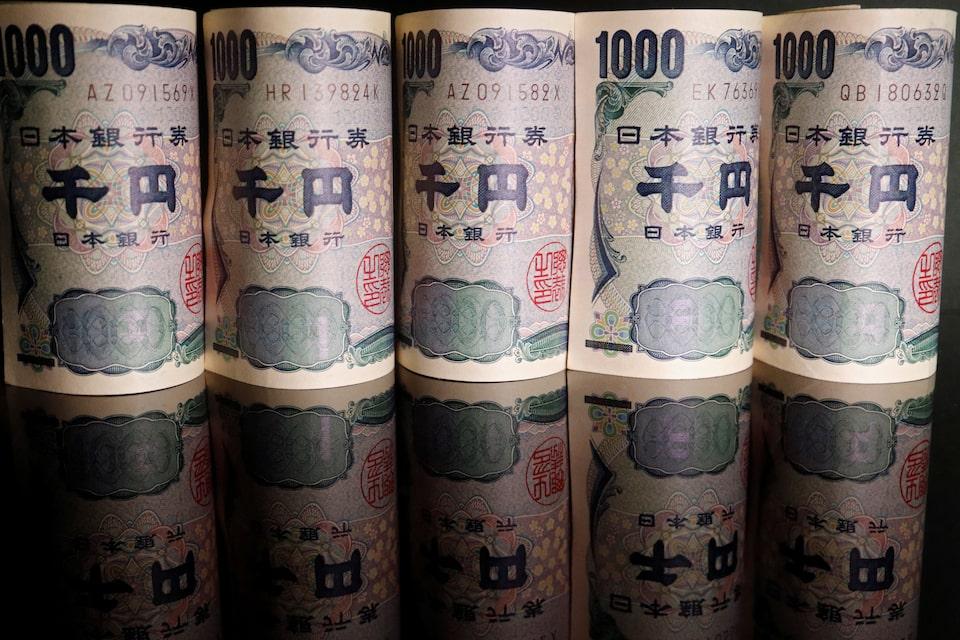
Investors digest US credit risks and US-China trade tensions Politics back in focus as Takaichi looks set to become Japan PM Yen caught between hawkish BOJ and dovish fiscal expectations Markets still wary about French political risks Oct 20 (Reuters) - The dollar edged higher against the yen on Monday as investors shifted their focus to political developments in Japan and the euro area, while U.S. credit risk concerns lingered. The yen edged lower as hardline conservative Sanae Takaichi is almost certain to become Japan's first female prime minister after a decisive parliamentary vote. Sign up here. Her expected premiership, backed by a new coalition with the right-wing Japan Innovation Party, has raised investor concerns over potential fiscal expansion, which could weigh on the yen. "Market participants will now be watching closely to see what fiscal plans are put together by the new coalition government," said MUFG senior currency economist Lee Hardman. The dollar was up 0.08% to 150.710 yen . Bank of Japan board member Hajime Takata, who voted against keeping rates steady in September, reiterated on Monday his case for resuming hikes, giving the Japanese currency some support. Japan's benchmark Nikkei stock index (.N225) , opens new tab closed more than 3% higher, hitting an all-time peak. The BOJ next decides monetary policy on October 30, with market-implied odds of a quarter-point rate increase at 23%, LSEG data shows. The euro edged slightly higher against the dollar as French political tensions eased, but investor caution lingered. Markets have yet to fully price out French risk from the euro, with the government’s decision to freeze pension reform offering only a temporary political breather. The euro was down 0.06% at $1.164. U.S. stock indexes ended higher on Friday after U.S. President Donald Trump said his proposed 100% tariffs on China would not be sustainable, while upbeat quarterly results from regional banks helped ease credit risk concerns. After a turbulent week in which some regional U.S. banks flagged bad loan and fraud issues, investors are now awaiting more earnings to check for signs of wider sector strain. The U.S. dollar index, a measure of its value relative to a basket of other major foreign currencies, rose 0.053% to 98.587. It hit 98.025 on Friday, its lowest level since October 6. "The immediate danger seems to have passed as investors are convinced that the bankruptcies, bad loans and fraud accusations are all isolated incidents, and not part of widespread failings within the banking sector," David Morrison, senior market analyst at Trade Nation, said in a note. Economists said the dollar's resilience will be tested on multiple fronts. "One, the government shutdown is hurting economic activity, both directly and indirectly," said Klaus Baader, global chief economist at Societe Generale Corporate and Investment Banking (SGCIB), adding U.S.-China tensions were a second major concern. "Three, the (import) tariffs that are already in effect continue to feed through, slowing real household income growth and weighing on corporate margins," he said. Barclays flagged that, with no obvious catalyst to end the federal government shutdown in the next few weeks, the stoppage may extend well into November, when political and economic pressures should intensify. The Australian dollar rose 0.48% to $0.652 on Monday, cheered by data from top trade partner China showing its economy reasonably resilient to U.S. tariffs. Official data showed China's economy grew 1.1% in the third quarter, topping forecasts, while industrial output also beat with a 6.5% rise. Although the 4.8% annual growth rate marked the weakest pace in a year, it kept China on track to meet its official target of around 5%. https://www.reuters.com/world/asia-pacific/yen-eases-with-dovish-takaichi-set-become-japan-pm-aussie-gains-2025-10-20/
2025-10-20 00:44
Centrist senator defeats conservative in runoff Bolivia's economic crisis drives voters toward moderate change President assumes office on November 8, faces fiscal challenges Paz's Christian Democratic Party lacks majority, needs alliances to govern LA PAZ, Oct 19 (Reuters) - Centrist Rodrigo Paz won Bolivia's presidential runoff on Sunday, defeating conservative rival Jorge "Tuto" Quiroga, as the country's worst economic crisis in a generation helped propel the end of nearly two decades of leftist rule. Paz, a senator from the Christian Democratic Party, won 54.6% of the vote, ahead of Quiroga's 45.4%, according to early results from Bolivia's electoral tribunal. But Paz's party did not win a majority, forcing him to forge alliances to govern effectively. Sign up here. The new president takes office on November 8. The 58-year-old senator's win marks a historic shift for the South American country, governed almost continuously since 2006 by Bolivia's Movement to Socialism, or MAS, which once enjoyed overwhelming support from the country's Indigenous majority. Paz's moderate platform — pledging to maintain social programs while promoting private sector-led growth — appeared to resonate with left-leaning voters disillusioned by the ruling MAS, founded by former President Evo Morales, but wary of Quiroga's proposed austerity measures. Support for MAS cratered in the August first round amid a deepening economic crisis. "This election marks a political turning point," said Glaeldys Gonzalez Calanche, analyst for the Southern Andes at International Crisis Group. "Bolivia is heading in a new direction," she said. Outside a polling station in La Paz, Lourdes Mendoza said she had grown weary of the MAS era. "My children were born and raised with a single government," she said, "I hope they can see other possibilities and alternatives." Bolivia's fragile economy dominated the runoff campaign. Once plentiful natural gas exports have plummeted, inflation is at a 40-year high, and fuel is scarce. VOTERS WANT ECONOMIC CHANGE Both candidates campaigned to roll back elements of the MAS era, state-led model, but differed over how drastically. Paz favored gradual reform, including tax incentives for small businesses and regional fiscal autonomy, while Quiroga proposed sweeping cuts and an IMF bailout. "We're going for a new stage of Bolivian democracy in the 21st century," Paz told Reuters two days before the election at his family's ranch in the southern gas-producing region of Tarija. "We're going to try to build an economy for the people," he said, one where "the state is no longer going to be the central axis." Like his opponent, Paz has pledged to improve diplomatic ties with Western countries, including the United States, after years where Bolivia had aligned itself with Russia and China. Voters like businesswoman Marcela Martinez, 52, who cast her ballot for Paz on Sunday said she supported his plans to open up the economy to investment. "We're totally cut off from the outside world, " said Martinez. Other voters said they were not convinced that his victory represented a true break from MAS: "I think he's a puppet of the outgoing government," said 21-year-old Esther Miranda from La Paz, who works in a nail salon. "I just hope we get a president who's more decent, someone who helps people," Miranda said. RUNNING MATE'S POPULIST APPEAL BOOSTS PAZ Paz's campaign was boosted by his running mate Edman Lara, a former police officer known for viral TikTok videos exposing corruption. Lara's populist appeal helped Paz connect with younger and working-class voters, analysts said. Economists warn the incoming administration faces immediate challenges, including securing fuel supplies and building coalitions in a fragmented legislature. Outgoing hydrocarbons minister Alejandro Gallardo said last week that the state energy company was struggling to obtain foreign currency for fuel imports. Paz told Reuters he was already addressing the issue through deferred payment agreements with fuel suppliers to ensure diesel and gasoline arrive within days of his inauguration. Paz said he would also begin phasing out universal fuel subsidies. Targeted support would go to vulnerable groups, while bigger industries such as agribusiness would pay market rates for fuel. "The market will have to adjust prices, but there are sectors that will have government support until the economy is reactivated," he said. Bolivia's main labor union, the Central Obrera Boliviana (COB), has previously warned it would oppose any threats to the social and economic gains achieved so far, in a sign of the juggling act before Paz's government to avoid street protests. Paz's PDC won 49 of 130 seats in the lower house and 16 of 36 in the Senate, just ahead of Quiroga's coalition, which secured 43 seats in the lower house and 12 in the Senate. https://www.reuters.com/world/americas/bolivia-centrist-rodrigo-paz-wins-presidential-runoff-early-official-count-shows-2025-10-20/