2025-12-09 10:59
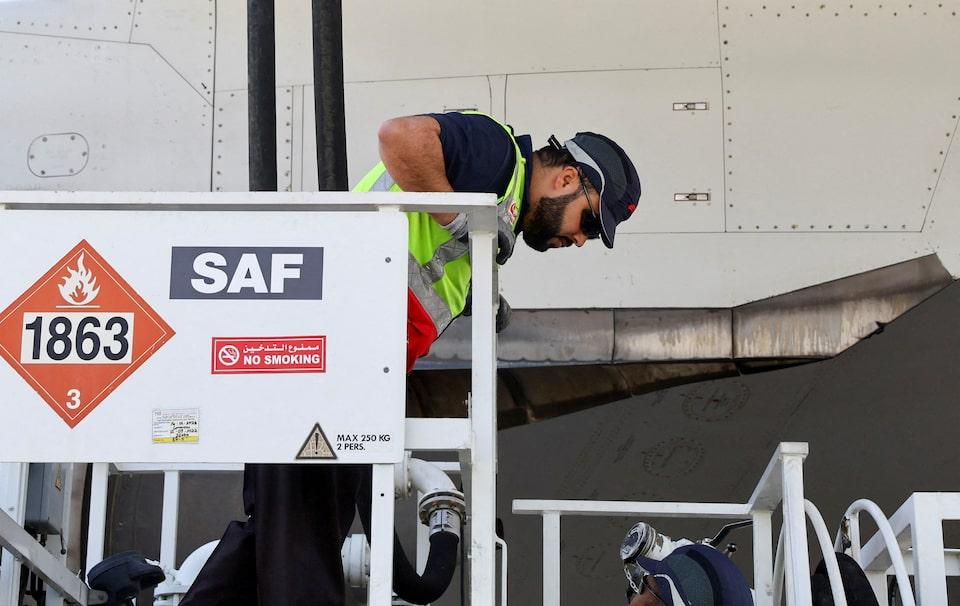
SAF production not meeting expected volumes, says IATA's Willie Walsh SAF currently 0.3% of global jet fuel usage, projected 0.7% by 2025 Airlines blame producers for high SAF prices, insufficient production GENEVA, Dec 9 (Reuters) - The global airline industry is likely to miss its targets for green jet fuel use in the coming years, the International Air Transport Association said on Tuesday, blaming fuel producers and regulators for the "disappointing" progress. Sustainable aviation fuel (SAF), made largely from waste or used cooking oil, can cut emissions significantly compared with traditional jet fuel. However, it remains two to five times more expensive than conventional fuel. Sign up here. IATA expects 2.4 million metric tons of SAF to be available in 2026, covering just 0.8% of total fuel consumption. That means the growth of the SAF sector has slowed - production growth doubled between 2024 and 2025, but will likely only grew by 0.5 million metric tons between 2025 and 2026, IATA said. The wider aviation sector committed in 2021 to achieving net-zero emissions by 2050, relying heavily on a gradual switch to SAF. "We're not seeing SAF produced in the volumes we had hoped for and had expected. That is disappointing," the trade group's director general Willie Walsh told journalists. He had previously warned that the 2050 net zero goal could be at risk. Sustainable aviation fuel accounts for about 0.3% of the world's jet fuel use and was projected to reach only 0.7% by 2025, according to IATA data. Experts say production needs to grow quickly for the sector to meet its emissions goals. Airlines have long said that they are willing to buy all of the SAF available, but accuse jet fuel producers of artificially inflating prices and failing to produce enough of the greener fuel. "It's not an issue of price, it's an issue of availability, and they're just not able to get their hands on the SAF that they require to fulfil the ambition that they expressed," Walsh said. IATA's Chief Economist Marie Owens Thomsen added that regulatory mandates introduced by the European Union and Britain have encouraged fuel producers to raise prices on SAF even further, with Walsh adding that the practice is synonymous with price gouging. https://www.reuters.com/sustainability/climate-energy/airlines-warn-green-fuel-goals-risk-supply-falls-short-2025-12-09/
2025-12-09 10:59
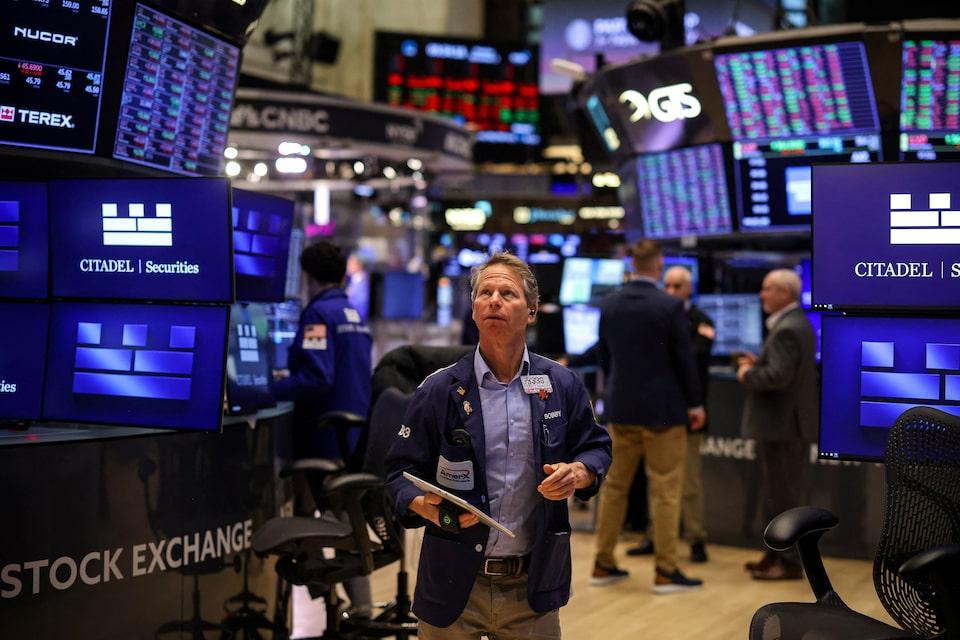
Wall Street banks price in fewer Fed rate cuts in 2026 Holding intermediate US debt presents lower carry costs Investors reduce long duration positioning, JP Morgan says Focus is on Fed 'dot plot'; analysts see few changes to forecasts NEW YORK, Dec 8 (Reuters) - Bond investors are positioning for a shallow easing cycle from the Federal Reserve as it gears up for its final policy meeting of 2025, reducing exposure to long-duration Treasuries and rotating into intermediate maturities for juicier returns. Many Wall Street banks have penciled in fewer Fed interest rate cuts in 2026 on lingering inflation concerns and expectations of a more resilient U.S. economy. Sign up here. Against that backdrop, the shift to the so-called belly of the curve - such as U.S. five-year Treasuries - reflects a view that the typical strategy of loading up on long bonds during rate-cutting cycles may not deliver the same payoff this time. The thinking hinges on inflation and the Fed's evolving policy stance. The U.S. central bank's policy-setting Federal Open Market Committee is widely anticipated to lower its benchmark overnight rate by 25 basis points to the 3.50%-3.75% target range at the end of a two-day policy meeting that starts on Tuesday. Investors will also scrutinize the FOMC statement as well as Fed Chair Jerome Powell's post-meeting remarks for signals that the benchmark rate is close to neutral, the level at which monetary policy is neither accommodative nor restrictive, potentially near 3%. The Fed has reduced rates by a quarter of a percentage point at each of its September and October meetings after a nine-month pause. "We are expecting a shallow path of rate cuts, mainly because inflation is still too high and ... that's a concern for a lot of voting (FOMC) members especially for some rotating in next year," said Collin Martin, head of fixed income research and strategy at the Schwab Center for Financial Research. But the labor market is cooling, although not falling off a cliff, Martin said. Barclays sees the Fed delivering two more 25-bp rate cuts, in March and June, while Deutsche Bank sees the Fed on hold in early 2026, but easing again in September under a new and more dovish leadership. HSBC, on the other hand, said the central bank will pause over the next two years after a rate reduction on Wednesday. When the Fed enters a rate-cutting cycle, investors typically extend bond duration, anywhere from 10-year to 30-year U.S. Treasuries. In periods of easing, shorter-dated yields fall, so investors reach further out the curve to lock in higher long-term rates before they decline further. As such, longer-dated debt has traditionally outperformed shorter-duration Treasuries when the Fed is cutting rates. With the inflation rate remaining above the Fed's 2% target, bond investors anticipate a higher neutral rate of possibly 3%. A structurally higher neutral rate creates a floor for yields, analysts said, particularly 10-year Treasuries. If the neutral rate is higher, the upside for long-duration bonds could be capped, making intermediate maturities or the belly of the curve a more attractive hedge against policy uncertainty and inflation persistence, analysts said. DISINFLATION HAS STALLED "We prefer remaining in the belly across the curve. Because of what's being priced in, the markets being positioned on the front end incurs very steep carry costs," said Dhiraj Narula, U.S. rates strategist at HSBC, noting that inflation is being underpriced by the market right now. When markets expect Fed cuts, being long the front end of the curve incurs high daily costs because the market is priced for yields to fall going forward. "The inflation being driven by tariffs has not been quite as severe as markets are expecting, but overall disinflation has stalled closer to 3% than the Fed's 2% target, and that is quite a strong incentive to keep policy at least closer to neutral," Narula said. The long end, on the other hand, presents its own problems. "It's difficult to have confidence on the long end for a variety of factors such as budget and fiscal concerns," said Greg Wilensky, head of U.S. fixed income and a portfolio manager at Janus Henderson Investors. "You also have concerns about Fed independence as well as all the things going on globally. So we prefer to have that duration exposure away from that part of the curve." Wilensky added that bond portfolio duration at his firm is five years and higher. "We were more overweight twos (two-year notes) versus fives (five-year notes) before and now it's more fives and some twos." JP Morgan's latest Treasury Client Survey showed the percentage of investors that are long duration relative to the their benchmark declined by nine percentage points as of December 1. A survey of all clients also showed the fewest net-long positions since November 3. Investors will also focus on the release on Wednesday of Fed policymakers' quarterly economic projections, including policy rate forecasts, also known as the "dot plot." The "dots" from the September meeting, when the Fed resumed its easing cycle with a 25-bp cut, showed a policy rate of 3.6% by the end of this year, 3.4% at the end of 2026, and 3.1% by the conclusion of 2027. Janus Henderson's Wilensky thinks the Fed will stick to the 3.4% policy rate next year in the dot plot, higher than the 3% being priced by the market. https://www.reuters.com/business/us-bond-investors-bet-mild-easing-cycle-stick-middle-curve-2025-12-08/
2025-12-09 09:27
ABU DHABI, Dec 9 (Reuters) - Hedge fund Balyasny Asset Management's managing partner said on Tuesday that the largest tail risk for the year ahead is if artificial intelligence surprises on the upside or the downside. Dmitry Balyasny, managing partner and the firm's CIO, said if there was a fall-off in demand and AI companies --- especially so-called hyper-scalers -- changed their spending plans because they did not achieve the monetization they needed, this would be a surprise to the downside. Sign up here. Also, an outside risk the hedge fund manager was watching for was if the AI industry took off faster than expected. This could cause job losses before employees were able to retrain for other opportunities, Balyasny said during a fireside chat at Abu Dhabi Finance Week. "Either of those scenarios could create some instability, but I think the more likely outcome is that it continues to grow the way that it has," he said. Balyasny Asset Management manages $31 billion. Balyasny, discussing his newly office location in Abu Dhabi, said the city was at an earlier stage of development than New York or London but said the city was growing as a financial centre. He pointed to how much money was moving into the region, how talent was attracted to the lifestyle in Abu Dhabi and the city's commitment to AI and technology. The hedge fund returned 2.5% in November and is up 15.3% for the year so far, Reuters reported last week. https://www.reuters.com/business/hedge-fund-managing-partner-dmitry-balyasny-taps-ai-largest-tail-risk-2026-2025-12-09/
2025-12-09 08:47
ABU DHABI, Dec 9 (Reuters) - Markets roiled by geopolitical tensions and diverging interest rates present money-making opportunities for the coming year, the heads of hedge funds Man Group and Brevan Howard and the Abu Dhabi Investment Council's chief investor said on Tuesday. U.S. President Donald Trump's return to the White House and an erratic trade policy have whipsawed world markets this year, just as investors try to assess the direction of major central banks such as the U.S. Federal Reserve and Bank of Japan. Sign up here. "With pain comes opportunity," Shiv Srinivasan, who oversees investing for the Abu Dhabi state-backed fund, told attendees at the Abu Dhabi Finance Week conference, noting the rising market volatility brought on by geopolitical events globally and upcoming elections. "So we like macro strategies and those that tend to be long volatility," he said. Srinivasan's hedge fund portfolio is up 13% so far this year, and he favours macroeconomic and trend hedge funds for 2026. "Those strategies did really well for us in 2022, along with CTAs," he said. As stock markets plunged more than 20% in 2022, trend and macro funds returned in some cases over 40%. CTAs, or trend funds, are systematic traders which take small positions in many asset classes to systematically find rising and falling asset prices, and buy them as they go up and sell them as they fall. London-listed Man Group's CEO Robyn Grew, who oversees several macro and trend funds, said volatility provided good trading opportunities. "Yes, we like a bit of volatility. Yes, we like a bit of dispersion," said Grew, who became the CEO of the $214 billion investment manager in 2023. "Hedge funds, alternatives tend to talk about volatility providing opportunities, and I think they do," she added. Aron Landy, the CEO of Brevan Howard, which manages more than $30 billion, said he expected global markets' differing asset values, or dispersion, to grow. "I can't imagine any scenario where the U.S. administration turns around and declares China their new best friend," said Landy. He added that he also saw a big opportunity in the differing value in global interest rates, as well as in cryptocurrency investing. "Of course, it's volatile, but the biggest risk in crypto is to have no exposure at all," said Landy. https://www.reuters.com/markets/wealth/hedge-funds-state-backed-investors-bet-volatility-2026-2025-12-09/
2025-12-09 07:26
Prices likely to hover in near-term tight range, analysts say Russia-Ukraine peace talks still in progress Investors price in high possibility of Fed rate cut on Wednesday NEW YORK, Dec 9 (Reuters) - Oil prices edged lower on Tuesday after falling 2% in the previous session, with investors keeping a close eye on peace talks to end Russia's war in Ukraine, concerns about ample supply and a looming decision on U.S. interest rates. Brent crude futures settled down 55 cents, or 0.88%, at $61.94 a barrel. U.S. West Texas Intermediate crude fell 63 cents, or 1.07%, to $58.25 a barrel. Sign up here. Both contracts fell by more than $1 a barrel on Monday after Iraq restored production at Lukoil's West Qurna 2 oilfield, one of the world's largest. Ukrainian President Volodymyr Zelenskiy's government will share a revised peace plan with the U.S. after talks in London between Zelenskiy and the leaders of France, Germany and Britain. Peace between Ukraine and Russia could lead to the removal of international sanctions on Russian companies and free up restricted oil supply. "Many in the market don't feel that Russia is serious about a peace agreement and they're just simply buying time," said Andrew Lipow, president of Lipow Oil Associates. Power on Tuesday was out for roughly half of the residents in the Ukrainian capital Kyiv after the latest Russian attacks on the country's energy system. Aiming to cut Moscow's oil revenue, the Group of Seven countries and the European Union are in talks to replace a price cap on Russian oil exports with a full maritime services ban, sources familiar with the matter said. Oil cargoes at sea, which have increased by 2.5 million barrels every day since mid-August and are still climbing, continue to put pressure on oil prices, said Bjarne Schieldrop, chief commodities analyst at SEB. "The only reason why Brent crude hasn't fallen faster and deeper is because of the U.S. sanctions related to Rosneft and Lukoil," he said. FOCUS TURNS TO IEA REPORT, FED DECISION The next International Energy Agency report should hold clues on the global supply outlook. "The next (market) driver is likely to be the IEA monthly oil market report for December, released on 11 December, which has predicted a record surplus in the oil market in 2026, highlighted in previous outlook reports," said Kelvin Wong, senior market analyst at OANDA. If the IEA continues to flag surplus risk in the oil market in its December report, WTI crude could drift downwards to test the range support zone at $56.80 to $57.50 a barrel, he added. U.S. crude inventories fell by 4.78 million barrels last week, while gasoline stocks rose by 7 million barrels and distillate inventories rose by 1.03 million barrels, market sources said, citing American Petroleum Institute figures on Tuesday. Weekly data from the Energy Information Administration, the statistical arm of the U.S. Department of Energy, will be released on Wednesday. Also on the radar is the Federal Reserve's policy decision on Wednesday, with markets pricing in an 87% probability of a quarter-percentage-point interest rate reduction. Lower interest rates typically are a positive driver for oil demand given the decrease in borrowing costs, though some analysts were cautious about how much impact this could have on oil prices for now. https://www.reuters.com/business/energy/oil-steadies-ukraine-peace-talks-us-rate-decision-spotlight-2025-12-09/
2025-12-09 07:06
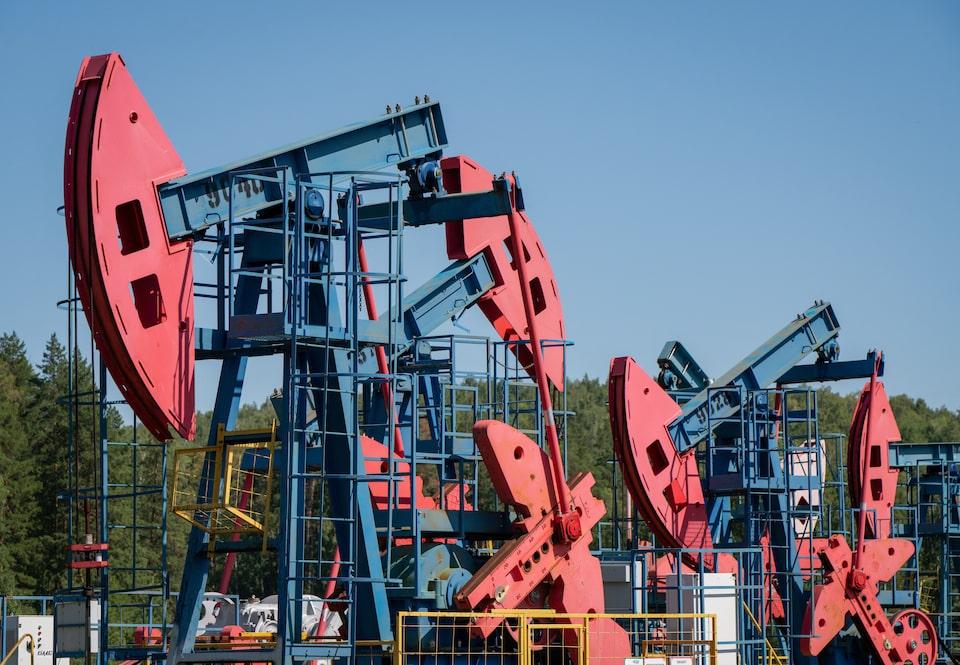
Divestment or spin-off could raise shares by 40%, says source Siemens Energy: values constructive input on creating value Wind unit recovering after quality crisis from two years ago FRANKFURT, Dec 9 (Reuters) - U.S.-based investor Ananym Capital has taken a stake in German power equipment manufacturer Siemens Energy (ENR1n.DE) , opens new tab and is asking the group's management to review its struggling wind division, a person familiar with the matter said on Tuesday. According to Ananym, a divestment or spin-off of the business could raise Siemens Energy's shares by around 40%, the person said. Sign up here. The source did not disclose the size of the stake. Ananym was not immediately available for comment outside business hours. Siemens Energy said in a statement on Tuesday that it "values constructive input for creating sustainable value for shareholders, employees, customers and partners," and that it addressed the development of its wind unit at a recent capital markets day. WIND BUSINESS IS STRUGGLING Ananym was founded last year by Charlie Penner, the architect of a massive three-board-seat victory at Exxon Mobil (XOM.N) , opens new tab in 2021, and former P2 partner Alex Silver. Siemens Gamesa, Siemens Energy's wind division, is still recovering from a quality crisis from two years ago, and posted an operating loss of 1.36 billion euros ($1.58 billion) in the fiscal year ended September. The unit's ongoing losses have repeatedly driven calls by investors to review or even sell the business, but Siemens Energy has so far committed to turning the business around, touting the long-term prospects for wind energy overall. The Financial Times first reported Ananym's engagement. ($1 = 0.8587 euros) https://www.reuters.com/business/energy/ananym-capital-builds-stake-siemens-energy-launches-activist-campaign-ft-reports-2025-12-09/